Seasonal First Impressions: BANG DREAM YUME∞MITA Is Out of This World

Seasonal First Impressions is a column where I detail my thoughts, however brief or long, about a currently-airing anime’s first episode or so.


2026 has been, to undersell it, a strong year for anime thus far. But if we’ve been missing anything, it might be the girl band renaissance that’s consistently been a highlight of the medium’s last few years. A year-ish since the last major show of this genre is not, by any means, a drought, but it felt like we were absolutely swimming in them for a little while, so it can feel like an absence regardless. If you’ve been feeling that way, fear not, the drought is over; Mugendai Mewtype are here. BanG Dream! Yume∞Mita (which I will be spelling without the infinity symbol interpunct, cool as it is, from this point onward) is the latest entry in that longrunning series. It dropped with a gargantuan three-part premiere earlier today, because, well, of course it did. BanG Dream season waits for no one.

Mugendai Mewtype are a bit of an oddity within BanG Dream on the whole, however. This anime is absolutely accessible to anyone who’s not been following them for years—they’ve been active in some form or another since 2022—but it is nonetheless notable that this thing was only made after a retooling of their overall concept. (My very limited understanding, as someone who is a casual BanG Dream fan at best, is that they were originally mostly a VTuber outfit and only became an actual live band later. This anime was, presumably, conceived somewhere after that point.) As such, Mewtype are underdogs of a sort, so it’s nice to see them getting their own story.

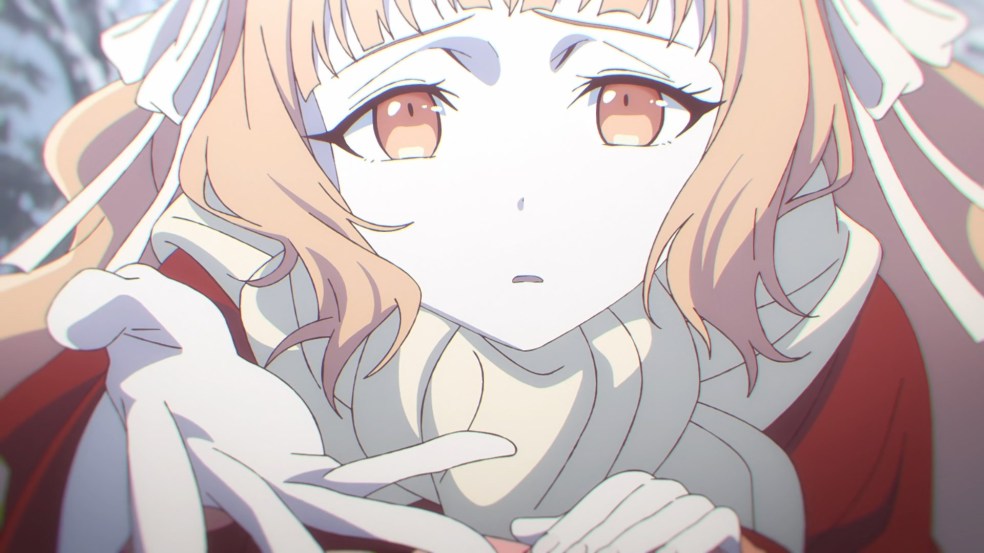
As for what that story is like, I’m going to actually flip my usual script here and talk about the style and tone of the series first, and save the actual plot for the bottom half of this article. Worth mentioning, more than anything, with this multipart premiere, is the show’s extremely expressive visual style. A far cry from the frozen and elegant gothica of Ave Mujica, its immediate predecessor, Yumemita is a cartoon-ass cartoon. Characters bend and stretch to express contentment or shock, other art styles or locations are beamed in for a few seconds for comedic effect, the works. I would go so far as saying that off these three episodes alone it really gives Girls Band Cry a run for its money in terms of being one of the most visually impressive 3DCGI anime to date, not just within its genre but outside it as well. The colors are, similarly and once again in contrast to Ave Mujica, brighter than a fresh lightbulb and more colorful than a pack of Skittles, extremely vibrant and practically radiating off of the screen. Ultimately this is the sort of thing you need to see to truly appreciate, but if my recommendation is worth anything I can safely say that the anime is worth watching for its visuals alone.

From this, you might surmise that Yumemita is on the lighter end of the tonal spectrum. You’d be correct to! Overall, this is a pointedly less heavy affair than the previous two BanG Dream anime have been. That’s not to say there are no stakes (there are, and there’s one delightfully glowering exception to everything I’m about to say that we’ll get to), but there is, for example, no long-simmering backstory involving—spoilers for those two shows, by the way—parental abuse or incestuous niece/aunt romantic pining. Yumemita is thus perhaps more in line with a “normal” BanG Dream anime, if what I’ve seen of the first season is representative. But this isn’t a show content to rest on its laurels. In its more straightforward moments, Yumemita experiments visually, as previously outlined. In its more serious ones, it turns that experimentation toward something more tense. It manages to pull this shift off with surprising ease, and the show’s few (few so far, at least) darker moments read more as deliberate contrast than lack of cohesion.

It’s worth taking a detour to discuss one further aspect of the presentation; the subtitles. Mostly, they’re fine, but seem to be strictly single-line, meaning there are a couple of cases where lines aren’t subbed because they’re spoken under another, usually longer, set of dialog. (There’s a particularly annoying instance of this in the third episode.) In a few cases, pretty important-looking text messages aren’t translated at all. This doesn’t majorly impact the show’s basic comprehensibility in the same way that Ave Mujica‘s truly busted official subs did, but it’s still annoying, and it feels like we’re missing a bit of nuance, and it’s aggravating to have to take time out of so many premiere writeups I do just to note that the subs are scuffed. This may be another one where the wait for fansubs is worthwhile, but I don’t think the officials are bad enough to wave anyone away from entirely. It will come down to personal preference, in the end.

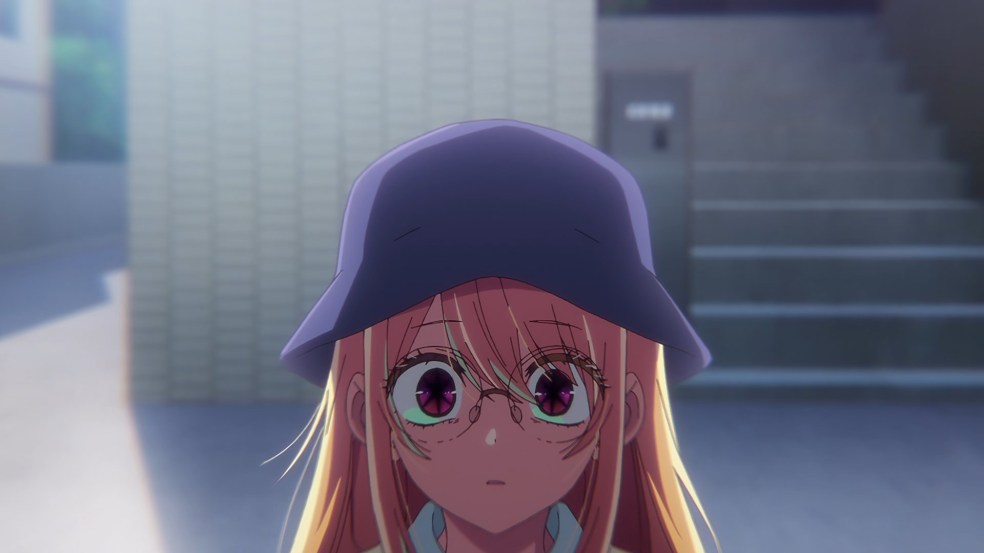
Speaking of the show’s writing, Yumemita also has an exceptional command of comedy, and I’d in fact say that were it not for the aforementioned exceptions you could get away with just calling the series a comedy outright. (As-is it’s more of a dramedy.) Much of this revolves around Arale1, our main protagonist, vocalist of Mugendai Mewtype, and owner of a truly impressive mile-a-minute motormouth that she tries and often fails to keep a lid on. Bandmates Nonoka, a happy, bunny-coded airhead that serves as the group’s guitarist, and Miyako, a mangaka who also does illustrations for Mewtype and is their keyboardist, get their fair share of jokes in, too, however. Final group member Yuno, Mewtype’s DJ and general doodad manipulator, is essentially the group’s collective straight man and is more a subject of comedy than anything else.

(From left to right: Yuno, Arale, Miyako, and Nonoka, rocking out while singing the OP)

With all this said, the actual plot of the show is an interesting beast in its own right, and we shouldn’t discard it. In premise, Mugendai Mewtype’s actual formation is extremely straightforward. Our heroines were individually-successful creators in their own right—Nonoka livestreams, Miyako has her manga and illustrations, Yuno both contributes songwriting and composition to other artists’ projects and was in a previous band of her own, and Arale was also in a previous musical group (a different one, it should be stressed). As would be expected of people who meet as part of, essentially, a business arrangement, none of the Mewtype girls directly knew each other before the events of the first episode, and it feels safe to say that none of them are on the same page. (Although some of them were at least aware of each other. Arale in particular fangirls to hell and back over Miyako’s manga.) In fact, none of them really seemed to know that they were going to be in a band together as such at all. Especially not Miyako, who explicitly simply didn’t read the terms of her contract. (Get a lawyer to go over these things, kids!) Worth mentioning here is also the band’s manager, a horrible little voxel FunkoPop thing, because the band’s actual meetings, you see, occur entirely within something akin to VRChat.

The main point-of-view character for most of these three episodes is Arale herself. Arale’s past experiences with online fame lead to her to be, to put it nicely, a little neurotic about how she acts around other people. Constantly, over the course of the premiere, she wants to say something but doesn’t, or can’t stop herself from saying something that she doesn’t want to. In neither case do either of these cause much issue for Arale in the present at least, but they clearly embarrass her and she spends most of the premiere trying to worm her way out of having to sing as part of Mugendai Mewtype at all. (In fact, in a commonality with the MyGo/Ave Mujica trilogy-to-be, there’s pretty much no actual music in this first trio of episodes aside from the OP and ED themes.) Especially early on when speaking to her IRL schoolmates, she only says a few words out loud while an entire internal monologue plays over top and, indeed, is what’s actually subtitled.

Arale gets up to quite a few antics over the course of these first three episodes, but trying to avoid singing (especially in front of anyone) is her main thing at the moment.

Why? Well, as mentioned, Arale used to be part of a different group. The LaLa Girls, as they were known, were together for a while until they weren’t. We don’t know all the details, but one thing is quite clear: a video of Arale talking shit about both her bandmates and some other, unrelated people was leaked on their Youtube page, and our girl got very cancelled. We first learn of this when she runs into two of her former bandmates. Ritsu, who really seems to miss her and want to reconnect with her, and Viola2 [Kaede Hondo], who is, even in just her brief screentime here, a magnetic presence who seems very determined to make sure that doesn’t happen. Both are part of a new band with a flower theme, we don’t know a ton about them (or there other two members) yet, but it seems like they’ll be an important presence here.

(From left to right: Bell, Viola, Ritsu aka Clematis, and Popo)

Earlier, I mentioned that this series has a largely fairly light atmosphere compared to the last two BanG Dream anime. That’s mostly true, I mentioned an exception, that would be Viola and her general role in this story. Arale has a flashback / bad dream at the start of the second episode that really makes it seem like she’s in the wrong with the whole “leaked video” thing. But a good chunk of Viola’s dialog, and her weird, touchy-feely actions while speaking to Arale (including petting her hair and talking about how she looked better with twintails), definitely imply something weird going on. This comes to its head at the premiere’s conclusion, in a post-credits scene after the third episode. Here, she pretty heavily implies that she either somehow set Arale up, or kept the video in her pocket as a weapon the entire time. Ritsu, in particular, seems very uncomfortable with all of this, and Viola is clearly keeping her under her thumb by threatening to hurt Arale even further unless Ritsu cuts contact. She goes on a monologue here that is just pure cartoon supervillain shit; she strings together a speech about how human civilization rose because the first humans weren’t afraid of fire and how it only takes one spark to set something alight. If she didn’t draw attention to it herself, you could easily miss that this is pretty much entirely just wordplay riffing on the term “getting flamed online.” The performance from her voice actress, the permanent cat smile plastered across her face, and the deployment of the show’s SD squishiness to highlight just how much sadistic joy she’s taking in this all serve to make her almost outlandishly EEEEEEVIIIIIIILLLLL. The only thing she’s missing is an ojou laugh and a threat to kick someone’s dog. It’s quite a contrast from the rest of the show! Arale, in spite of her past mistakes, is trying to better herself and most of the interpersonal issues between Mugendai Mewtype themselves seem comparatively minor! So this is all a bit of a twist, for certain.

It’s not necessarily the only thing in this premiere to suggest some darker directions this series may take—Miyako has an entire subplot about pushing herself to the brink of exhaustion to juggle the band and her existing job as a mangaka, for example—but it’s by far the most obvious.

This is, of course, still nowhere near the kind of hair-raising stuff that happens in, especially, the later parts of Ave Mujica, but the tonal pivot is pulled off with such finesse that’s easy to forget that this is the same show where, an episode earlier, Arale and Nonoka lure Miyako into talking to them by scattering a bunch of candy on the ground in front of her. Or, indeed, earlier in this same episode that same pair of characters convince themselves that Yuno is secretly a highly-advanced AI and try to trick her into revealing herself by making her solve captchas and shit. (This gets a hell of a punchline a couple minutes later where it’s shown that, while Yuno herself is not a robot, she’s perfectly happy to use ChatGPT to reply to Nonoka’s incessant text messages. Ouch.)

Suffice to say, if Yumemita wants to make a more permanent pivot to darker material, it has the tools to do so even if the material in question is a bit different in presentation than that of other recent BanG Dream entries. Viola is being set up as an outright antagonist, and not a ton of band girl anime actually have those! Usually, a character in that position has sympathetic motives of their own, and while it’s very possible that something like that will eventually happen with Viola as well, nothing here telegraphs that at all. So far, she just really seems like a possessive, sadistic bitch! It’s honestly really compelling! If in part, admittedly, because it’s such a contrast to the goofball shit in the rest of the premiere.

Still, I’d hasten to say that I don’t think these two halves of the show contradict each other in any way, either. If the past few years of BanG Dream anime have proven anything, it’s that the wild risks these shows take tend to pay off. I am here for this, and you should be, too.


1: Normally, this is where I credit voice actors. However, to my understanding, all of the Mewtype girls are just credited as the characters themselves in all BanG Dream projects. This seems weird to me! but it’s how they do things with this particular part of the project, for whatever reason. If I had to take a random guess, it relates to their origins as a VTuber group.

2: Viola’s group all have stage names, and given the flower theming, we can guess “Viola” isn’t her real name. Whatever that real name might be, we don’t get it here.


Like what you’re reading? Consider following Magic Planet Anime to get notified when new articles go live. If you’d like to talk to other Magic Planet Anime readers, consider joining my Discord server! Also consider following me on Anilist, BlueSky, or Tumblr and supporting me on Ko-Fi. If you want to read more of my work, consider heading over to the Directory to browse by category.

All views expressed on Magic Planet Anime are solely my own opinions and conclusions and should not be taken to reflect the opinions of any other persons, groups, or organizations. All text is manually typed and edited, and no machine learning or other automatic tools are used in the creation of Magic Planet Anime articles, with the exception of a basic spellchecker. However, some articles may have additional tags placed by WordPress. All text, excepting direct quotations, is owned by Magic Planet Anime. Do not duplicate without permission. All images are owned by their original copyright holders.
Seasonal First Impressions: Let THE WORLD IS DANCING Sweep You Off Your Feet

Seasonal First Impressions is a column where I detail my thoughts, however brief or long, about a currently-airing anime’s first episode or so.


You blink, and two months are gone.

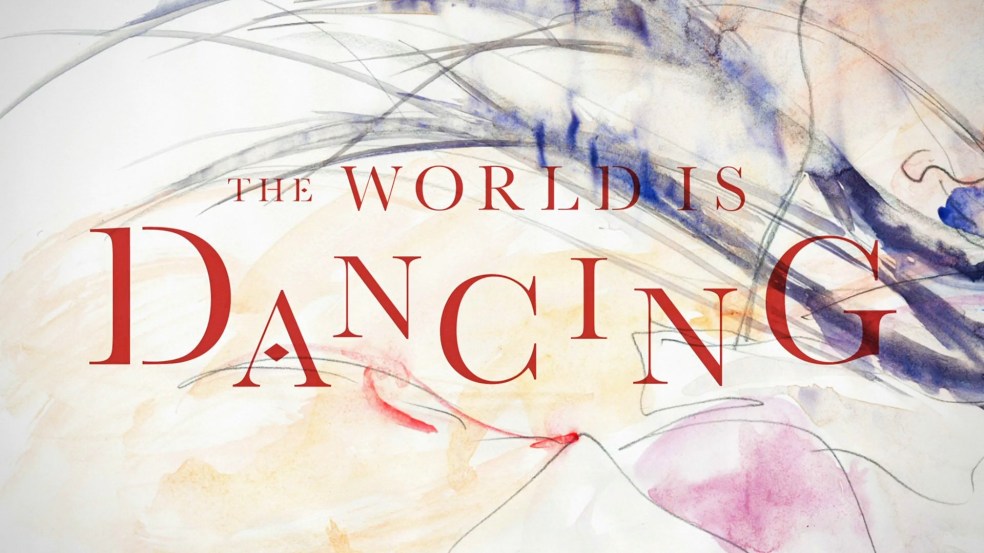
The only thing I’ve written on this site between the start of this season and the last was a stray review of the relatively obscure early-10s anime film Aura. And so it is the case that, with only that piece bridging this season and the last, the Summer 2026 anime season arrives on our doorstep. It actually did several days ago, in fact. The World is Dancing itself premiered yesterday (one of those weird situations where the premiere on streaming is ahead of the TV broadcast, Dancing will be a Thursday show for most of the season), and a few more scattered offerings debuted as far back as a week ago. Still, for me at least, this particular show is the spearhead of what promises to be the best anime season in a number of years. (I feel like I say things like this all the time, to the point where it’s perhaps blunted the impact of me saying them. So I do want to be clear that I think this is shaping up to be the best anime season of the 2020s so far period. We find ourselves in rare times.) The World is Dancing is a period piece, set in 14th-century Japan, following the life of the boy who would, in the future, become the founder of what we now know as Noh Theatre.

That’s two layers deep for our general concept. Nothing crazy, certainly, but enough that a more casual audience might struggle to connect to it a bit. But don’t worry, if your question is something along the lines of “what do people get out of this sort of thing, anyway?”, someone else is right there next to you, asking the same question. And that someone is our main character, Oniyasha [Hanamori Yumiri].

Oniyasha is the son of Kan’ami [Konishi Katsuyuki], the taciturn and stern head of the Kanze peformance troupe. What the Kanze perform is a sort of traditional dance theater called sarugaku (recall, Noh doesn’t exist yet), and much is made of Kan’ami’s attempts to advance the artform and make sure that the place of both his troupe and the style they perform in remains secure in the world. Unfortunately, being quite serious about all of this comes at the cost of a strained relationship with his own son. Oniyasha and Kan’ami do not see eye to eye as we begin our story, and Oniyasha spends much of the performance that opens the main part of the episode spacing out and wondering about the skeletal structure of birds and horses. (Creatures born to fly and run, respectively. Humans, he thinks, are surely not born to dance.) This leads to a bit of chaotic slapstick; in the midst of the performance Oniyasha’s zoning out leads to a chain reaction of fumbling that results in a knife stuck in the flank of a nearby horse. (To his credit, Kan’ami rushes in to save his son from said horse’s understandable wrath.) Oniyasha spends much of the time afterward feeling low, his father is quite upset with him and actually, at one point, chucks a turtle at him (objectively a horrible thing to do, but kind of so ridiculous—down to the turtle popping out of its shell to greet Oniyasha—that it’s hard to take seriously).

Oniyasha spends much of the remainder of the episode in this daze, conversing with acquaintances and friends at various points about what dancing means, and what it’s for. He gets different answers, a boy of roughly his own age that works for his father tells him that when his father dances, the world changes, but Oniyasha can’t really wrap his head around this just yet. (Don’t worry, he’ll understand very well before the end of the episode.) In this early part of the episode I would describe him as almost…Bocchi the Rock-ian? Obviously their starting motivations are quite different, but Oniyasha has that “going through it girl” energy about him, despite being a boy. And there’s a snappy comedy to his head-in-the-clouds mentality throughout much of the episode. (Another obvious comparison, more by design, is Tokiyuki of The Elusive Samurai, another anime that takes place in the 14th century, one that is set to return later this month, in fact.)

The true hook of the episode comes at its end, however, and with it, a swerve into the more serious and contemplative half of this show. After leaving a conversation with his friend Kogane [Uchida Maaya], Oniyasha is lost in thought once again, and soon becomes lost in fact, as well. Not knowing where he is, he asks a farmer—a man with white hair, suspiciously important-looking, all things considered—for directions. The man points him off, and he soon finds himself hearing strange, raspy singing from a cabin in the woods. In it, there is a woman dancing. Dancing in a way he has never seen.

The actual animation of the episode here wobbles out into decoherence (the beginnings of this sequence in particular bring to mind Takopi’s Original Sin‘s use of similar, to very different ends, last year), to take us with Oniyasha as he’s swept away by this surreal and intense display of art. I have spoken often about the convention of the “passion ignited sequence,” the moment in an anime about an artform or sport or the like where we the audience can see the protagonist become enraptured by it. This is a particularly extreme example, as Oniyasha is not just taken with this mysterious woman’s dancing, he’s overwhelmed by it. And he honestly seems more than a little frightened. (The animation, it must be said, really helps sell this, almost more resembling a sequence of paintings than frames in the usual sense. Kuroyanagi Toshimasa‘s team at Cypic really know what they’re doing.) Running out into the night, away from the mysterious woman and her shack, he’s found his answer. If he can capture this, this particular kind of expression, that is what dancing can mean, to him and—as the closing narration hints—soon to many others, as well. Just like that, the seasons change.

The first episode closes with the unusual move of playing what will normally be this anime’s OP and ED sequences back to back. This has a particularly meaningful connotation here; one of the things we see in the “OP” is Oniyasha, dancing as the woman danced, seemingly in the thick of one of the more restrained and formal performances of the type his father’s troupe puts on. Perhaps this is his way forward, perhaps not. In either case, it makes The World is Dancing‘s premiere a very strong first episode in a season that is sure to have many, many more of those. We could hardly ask for a better opening act.


Like what you’re reading? Consider following Magic Planet Anime to get notified when new articles go live. If you’d like to talk to other Magic Planet Anime readers, consider joining my Discord server! Also consider following me on Anilist, BlueSky, or Tumblr and supporting me on Ko-Fi. If you want to read more of my work, consider heading over to the Directory to browse by category.

All views expressed on Magic Planet Anime are solely my own opinions and conclusions and should not be taken to reflect the opinions of any other persons, groups, or organizations. All text is manually typed and edited, and no machine learning or other automatic tools are used in the creation of Magic Planet Anime articles, with the exception of a basic spellchecker. However, some articles may have additional tags placed by WordPress. All text, excepting direct quotations, is owned by Magic Planet Anime. Do not duplicate without permission. All images are owned by their original copyright holders.

(REVIEW) How AURA: KOGA MARYUIN’S LAST WAR Won the Battle

This review contains spoilers for the reviewed material. This is your only warning.


Aura: Koga Maryuin’s Last War, is a simple tale about bullying with a more complex and nuanced worldview than that description alone might imply. The basics are very straightforward: high schooler Satou Ichirou [Shimazaki Nobunaga] was, in his middle school days, deep in the chuunibyou delusion mines. These days, after an incident we remain in the dark about until the final act of the film, he’s cleaned up his act and is a respectably normal guy. Satou Ryouko [Hanazawa Kana]—no relation—is decidedly not normal, herself caught up, imprisoned perhaps, in fantasies of that very same type. Hers are about the “Other Side”, a world in her own mind that she has left to become The Researcher, her wizardly, scholarly, witch persona, versed in scattershot occult knowledge. The bulk of Aura is about these two characters and their relationship, by turns close and relatively rocky, and how they deal with the world around them. Ryouko spends much of the film on an ill-defined quest for what she calls “dragon terminals,” but in a literal sense, this movie is about two misfits breaking through to each other. However, I say “in a literal sense” for a reason, because –

AURA: Koga Maryuin’s Last War, is, also, a bittersweet but ultimately triumphant love story. The tale of The Researcher {Satou Ryouko}, a wise sage from another world, and how she comes to find solace in another who has shared in her supernatural experiences. That other, of course, being Koga Maryuin {Satou Ichirou}. It is the tale of two lost souls—more than that, really, given the gaggle of background characters known as the Dream Soldiers who are, also, reincarnates from the Mirror World—who reach out to understand each other in a world that is hostile to them at every turn. But, of course, such things are rarely so simple.

Bullying, in the most straightforward sense, is the main conflict driver of Aura. Ichirou was bullied in the past for his Koga Maryuin persona. Ryouko is bullied in the present for her Researcher persona. This manifests in all the usual ways; social ostracization, foul graffiti slathered on Ryouko’s desk that calls her a whore and tells her to die, the theft of her shoes, and the occasional more physically direct confrontation. One of these bullies actively beats Ichirou up. Another, a gyaru, is responsible for most of the shoujo manga stock bullying previously aforementioned, and also makes a habit of flicking bits of paper at Ryouko. Late in the film, she even blackmails Ichirou by threatening to leak some embarrassing photos from his Koga days. (Aura must, chronologically, be one of the very last anime to use the old “mean, bitchy gyaru” stereotype as opposed to the more common “nice gyaru” of the present day. Can you imagine, say, Kitagawa Marin doing this shit? Unthinkable.) Complicating matters is teacher Dorisen [Mizushima Daichuu], who essentially assigns Ichirou to watching over Ryouko.

The Dream Soldiers admire him, too, for being willing to stick up for Ryouko. And for a time, especially in the film’s middle third or so, it seems that they might come to some sort of mutual understanding without any dramatic occurrence, two souls in resonance.

However, mere admiration is not enough incentive as the film reaches its climax, as the bullying becomes entirely too much for either of them to bear, and we learn the full truth of the incident that broke Ichirou out of his own chuunibyou persona. One wherein his parents discovered letters he wrote to the “princess” of his persona’s home reality. In them, he describes his parents as mimics, false people in a false reality, and they, of course, react badly. (Neither they, nor the film itself, seem to question why someone would develop a psychological complex in which their parents are impostors. If I have a chief criticism of the film, even “on its own terms,” it’s this.) After cutting off contact for a time, the final confrontation comes with the revelation that Ryouko has climbed onto the school’s roof. She plans to do something drastic.

Suzumiya Haruhi, eat your heart out.

There, she has assembled the Dragon Temple. To even the most mundane eyes, it appears as a school desk Angkor Wat, heaps and heaps of the things piled high into a pseudo-sanctum far too complex for a high schooler to have reasonably assembled alone, much less in a short time. If you are wise enough, if you are looking for the magic, it’s here. Right at this moment, an arcane suicide attempt that doubles as the light shining through a keyhole. AURA could have become bleak here, if it wanted to. It could have been the Bridge to Terebithia anime that never was. But it does not! Ryouko, the Researcher, the witch, here also a princess, is rescued by a dashing dark hero. The day is saved! And he gets the girl.

Ichirou sheds his shame for the sake of the girl he loves. Donning once again the guise of Koga Maryuin, he takes a prop sword and bashes through the desks, cracking Ryouko’s temple apart as he approaches her, pleading that she has to live in the real world with him. To live and suffer, to cherish the adventures they can squeeze out of our mundane reality. He tries his damnedest to make the case that it’s all worth it, but ultimately what gets to her is that simple plea for connection. That the two of them are the same.

AURA, then, stands at a crossroad in more ways than one. Mundane and magical. Of the past and the future.

Indeed, not only in plot but in presentation, Aura resembles an anime of the 00s proper more than one the 2010s, with its somewhat muddy color palette and generally moody emotional timbre. Of course, it is always helpful to keep in mind that every single anime studio did not instantly switch from grays and browns, sharp shadows, and airbrushed metal surfaces to KyoAni-style pop colors and tons of flashy VFX the very second that the calendar flipped over to January 1st, 2010. It is instructive, as the last decade fades into the rearview, to remember that any stylistic trends of a given time period are just that, as opposed to absolutes.

Consider AURA, also, as a magical work. We are never given reason to believe that Ryouko and Ichirou’s fantasy is anything but. But consider that there are multiple senses of the word “fantasy.” Consider, too, that all fiction is equally fictional. It bears repeating, could a high schooler truly have assembled those desks into such a magnificent altar? What of the minor character Kume [Morikubo Shoutarou], responsible for the dragon-shaped nails that spurred the imagination of both Ryouko and Ichirou? He identifies himself as a creator of small wonders, despite acknowledging that such things are rare in this world. And, again, there is the temple of desks that Ryouko constructs.

Depending on your proclivities, these sorts of questions will strike you as either the most fascinating thing about the movie or a heap of totally pointless navel-gazing. It is not hard at all to read Aura as a straightforward anti-escapist fable, a cautionary tale of how things can go wrong if you’re not living in the real world, and how no amount of retreating into your own delusions can solve the problem of loneliness. I suspect that this is more or less the “intended” reading of the film, and am well aware I am swimming against the currents somewhat with this piece.

But, that ignores that it is precisely becoming Koga once more that gives Ichirou the connection to Ryouko he needs to save her. And anyway, who cares solely about “intent?” Once a work of art is released into the world, it grows wings of its own.

So which is it, then? I, your humble reviewer, have tried, here, to represent both ideas in alternating line breaks. I, the writer.

And I, the witch. Ultimately, both are real (or fake) in their own ways. Such is the case, too, with AURA itself.

“As a film”, further criticisms could of course be levied. The directing, from Kishi Seiji at AIC ASTA, is a competent execution of the denpa visual style that, had, by this point, become well-established, but it is perhaps a bit lacking in true personal “oomph” other than its final climactic scene. (Even that feels very SHAFT-indebted, albeit not in a bad way.) There’s a bit of nudity that is beyond unnecessary, even as someone who is normally fine with that kind of thing. You could also argue, perhaps, that the gyaru antagonist has no real arc and is simply shoved to the side as the film ends.

But these are all craftsmanship issues, and I’m not reviewing a table, you understand? This isn’t some functional object, it’s art. None of those flaws being corrected would be worth anything if the film didn’t speak to me. That they’re present doesn’t undermine the fact that it does. AURA is a patently ridiculous movie, there is no shortage of scenes or screenshots you could take out of context to make it seem like the most absurd thing in the world. It’s also brilliant, those two things aren’t mutually exclusive.

If nothing else, it is absolutely fascinating to consider Aura‘s place in the broader continuum of chuunibyou-related pop culture. Because, by any reasonable metric, the chuunis won in the end. Setting aside the most obvious indicators (eg. that light novel adaptations comprise the bulk of anime adaptation today), there is an overall generally more favorable attitude toward these individuals over the past decade and change. You could very, very easily argue that Ryouko is genuinely mentally ill. And yet! The story treats her with no small amount of sympathy! Not that Ichirou’s more grounded perspective isn’t treated so as well, but if we were truly just supposed to write all of this off as Ryouko Being Weird, I don’t think the ending would be written the way that it is. And Aura isn’t unique in this regard! Compare it to its closest cousin, KyoAni’s seminal Love, Chuunibyou, & Other Delusions. Despite the chronology telling us it has to be the reverse, Chuunibyou essentially picks up the thread that this film leaves off, recognizing that the dividing line between the so-called worlds of fantasy and reality is itself somewhat illusory, and that in any case the two halves can exist in harmony. (A rather perfunctory post-credits scene on the part of this film perhaps notwithstanding.) Whether the world today would strictly be kinder to Ichirou and Ryoko I can’t entirely say, the bullies they railed against certainly still exist, but I’d like to think that more than ever, Ichirou would be empowered against them.

Part of Koga’s speech in the film’s final minutes asserts that the enemies of this world are invisible. This is a subtle, but very accurate, distinction. “Material reality”, so to speak, cannot be changed by fighting off dragons, slaying demon lords, unsheathing a cursed sword, or so on. But, it can be changed nonetheless. The weapons are different, the battles unseen, but they rage on, around us, every day. So fight on, Dream Warriors, we will win a kinder world for ourselves yet.


Like what you’re reading? Consider following Magic Planet Anime to get notified when new articles go live. If you’d like to talk to other Magic Planet Anime readers, consider joining my Discord server! Also consider following me on Anilist, BlueSky, or Tumblr and supporting me on Ko-Fi. If you want to read more of my work, consider heading over to the Directory to browse by category.

All views expressed on Magic Planet Anime are solely my own opinions and conclusions and should not be taken to reflect the opinions of any other persons, groups, or organizations. All text is manually typed and edited, and no machine learning or other automatic tools are used in the creation of Magic Planet Anime articles, with the exception of a basic spellchecker. However, some articles may have additional tags placed by WordPress. All text, excepting direct quotations, is owned by Magic Planet Anime. Do not duplicate without permission. All images are owned by their original copyright holders.

Seasonal First Impressions: Tripping Over Myself to Praise THE KLUTZY CLASS MONITOR AND THE GIRL WITH THE SHORT SKIRT

Seasonal First Impressions is a column where I detail my thoughts, however brief or long, about a currently-airing anime’s first episode or so.


I’ve ended up covering a lot of romcoms in the first impressions column over the years here on Magic Planet Anime. I do not say lightly that this one might be the simplest I’ve ever written about at any length, The Klutzy Class Monitor & The Girl With The Short Skirt is a dead-simple romantic comedy with a zany flair, a retro sensibility, and a knack for comedic timing. The whole premise is in the title: there’s a class monitor at a high school who is kind of a klutz despite his position, there is also a girl at that same high school who wears her skirts short and dyes her hair. They clash in the episode’s opening minutes, a very old-school banter volley where the klutz (Sakuradaimon Togo, played by Enoki Junya) and the girl (Kohinata Poem, Akechi Riko) argue about if her skirt length is actually inappropriate or not. Togo, perhaps not the most feminist young man in Japan, argues that it’s too revealing. Too sexy, even! This promptly gets him punched in the gut.

This kind of yelled insult -> girl punches boy comedy is, by this point in the medium’s history, so ancient that seeing it in something that started airing a mere three days ago (and based on a manga from 2019, when this was already well out of fashion), is novel in of itself. You could pretty easily argue that by parroting the points that he does, Togo is upholding sexist double standards about how women are allowed to dress. He honestly is doing that, and if we were supposed to think Togo was right, as opposed to merely well-intentioned but stupid, I don’t think this show would be very good at all. But what makes the series really tick, assuming this first episode is a good indicator, is its timing and sense of style. The whole pervert slap trope has been largely excised from modern romcoms in place of something more subtle and reflective of how relationships actually work. The visual stylings of the show, so willfully retro that the bright colors and sharp lines are complete with printer dots on the backgrounds, make it clear that this is an intentional pastiche. (Were it not for the presence of smartphones, it’d be easy to assume this was set in the 90s or something.) Togo, who despite being a complete tightwad is also sort of a dumbass who isn’t much for academics, makes an active effort to get to know Poem when they both end up in remedial math lessons. Predictably, she starts falling for him. And again, while there’s obviously an element of turbo-hetero wish fulfillment here, the intentionally stiff and simple emotional beats make for a series that’s….oddly refreshing? Togo and Poem might be polar opposites, but you’d never mistake this show for that one, despite the broadly similar premises and some visual language in common. (Not to mention excellent music.)

If Klutz & Skirt calls back to anything in particular, it feels mostly of a piece with the anime comedies of the mid-2000s. These were usually loosely school life-based, too, but they tended toward the absurd or simply the zany as opposed to harboring any deep storylines or thoughts on life. (They even do that thing I love, once common but now rather rare, where the episode is divided in half by a midcard where a character says the name of the show out loud. A favorite little bauble of mine, I miss it!) A useful synecdoche here is the sheer number of times Poem clobbers Togo—about six, if I counted right in these 20-some minutes alone—that kind of physical abuse just isn’t that common in this genre anymore.

Frankly, if the series has accomplished anything of note here, it’s been making me wonder if I don’t kind of miss this stuff. At the end of the day the subtler emotional currents available to the genre that essentially replaced this one are great, and they’re probably my preference, but there is something to be said for the old-school tsundere category that Poem falls into. This is particularly pronounced when they learn each other’s given names. Poem does not want Togo calling her that, since it’s an embarrassing sparkle name. When he makes a habit of doing so anyway, the predictably percussive occurs. The show just has a nice, snappy rhythm to it, even if it’s working in simple archetypes. The director, Iwanaga Daiji, deserves some real credit here for making the show feel so kinetic.

There’s a solid supporting cast here, too, by the looks of it. We haven’t gotten to know any of them deeply yet, but in the last segment of the episode Akina Motoko [Itou Yuina], one of Poem’s friends, develops a big, pervy crush on a hot health rep after he carries her to the infirmary.

She’s normal.

The other girl in Poem’s clique, Tasaki Rui [Fukuhara Ayaka], we haven’t really learned much about yet, but her very short hair makes her GNC AF. So hey, points.

She also seems to enjoy flustering Poem. Just pointing that out.

I think all I’ve said here will clue you in pretty thoroughly to whether you’d get anything out of Klutz & Skirt. There are different kinds of strong anime seasons, and this one in particular has proven to be the sort that absolutely floods the zone with sheer numbers, there are a lot of things airing right now that are good, a few that are great, and even the stuff that’s less essential is still interesting. It’s said that a rising tide lifts all boats, but I do hope that the slightly more niche stuff like Klutz, fellow oddball romcom Kirio Fan Club (which I’d like to write about at some point, stay tuned?), and so on, don’t get lost in the shuffle. Things like this deserve to find their audience just as much as your Witch Hat Ateliers and Akane-banashis, and I hope they do.


Like what you’re reading? Consider following Magic Planet Anime to get notified when new articles go live. If you’d like to talk to other Magic Planet Anime readers, consider joining my Discord server! Also consider following me on Anilist, BlueSky, or Tumblr and supporting me on Ko-Fi. If you want to read more of my work, consider heading over to the Directory to browse by category.

All views expressed on Magic Planet Anime are solely my own opinions and conclusions and should not be taken to reflect the opinions of any other persons, groups, or organizations. All text is manually typed and edited, and no machine learning or other automatic tools are used in the creation of Magic Planet Anime articles, with the exception of a basic spellchecker. However, some articles may have additional tags placed by WordPress. All text, excepting direct quotations, is owned by Magic Planet Anime. Do not duplicate without permission. All images are owned by their original copyright holders.

Seasonal First Impressions: The Magic Never Went Away – The Sorcerous Beginnings of WITCH HAT ATELIER

Seasonal First Impressions is a column where I detail my thoughts, however brief or long, about a currently-airing anime’s first episode or so.


“Magic is a miracle that makes the world vibrant.”

When she was a young girl, Coco [Motomura Rena] purchased a book at a festival. This book, sold by a mysterious magician in a mask, is the inciting object of Witch Hat Atelier‘s story, and Coco obtaining the book in the first place is, thus, where our story begins, at least in a chronological sense.

Witch Hat Atelier‘s first episode isn’t much of one, would be the problem. The practice of releasing double or even triple premieres is an increasingly common thing. It’s often rather exasperating, in fact, but in the case of Witch Hat Atelier specifically, I understand completely why they went this route. Because if you were to only see that first episode, you’d only get half of the picture. Nonetheless, we do have to start at that festival, with that book and the pictures within it, central as they are to this story and, perhaps more importantly, what I want to discuss about this story.

If you want to recap the first episode, that’s very easy. Coco, daughter of a fabric seller, is a young girl obsessed with magic due to her acquiring that book as a very young child. Magic is everywhere in the world of Witch Hat Atelier, lighting up cobblestones beneath one’s feet, purifying a spring so one can drink from it, but the how is a mystery. Coco—everyone, really—is led to believe that magic is a matter of blood. You are born able to use magic, or you aren’t. Those who are so born are witches, and everyone else is just a regular ol’ person.

This is how, just to name an (unfortunate) cultural touchstone, Harry Potter, for example, handles things, with its convoluted throngs of wizarding lineages. (Although the general concept is hardly unique to that series.) Related to its presence there, though, I have always, to my core, hated this approach to magic in fiction. Some of this has to do with my own real-world practice of eclectic neopagan witchcraft, some of it has to do with personal beliefs about the nature of life, the world, talent, and skill. Some of it is just pure preference, in that I think it’s lazy worldbuilding. I also think it often leads to worlds rife with unfortunate, unconsidered implications about what the existence of inborn gifts of that nature might lead to or imply. It is something I have many problems with, to put it mildly.

However, I don’t bring all this up to criticize Witch Hat Atelier. Because what Coco and most others believe is not necessarily what is actually true. One day, a witch named Qifrey [Hanae Natsuki] visits her mother’s shop. While there, he takes a noted interest in her picture book, but mostly, he offers to fix a broken-down carriage—a carriage pulled by flying horses—when some neighborhood kids break it. (Being a handyman is, too, the job of a witch in this world.) Qifrey asks that he be left to the repair alone, he doesn’t want any prying eyes on him. Coco, precocious child that she is, outwardly agrees, but cannot resist the temptation to see magic performed. Sneaking into a crawlspace above him, she watches him work, and she learns the truth as he slowly sketches out a series of magic circles. Magic, in the world of Witch Hat Atelier, is not cast, but drawn. Anyone with a fountain pen, a bottle of special ink, and the proper knowledge can work miracles.

The knowledge of this fact is a secret, of course. Witches are sworn to keep this fact from the public, and this immediately, drastically changes both what magic literally is in the context of the events of the story and also its broader use as a tool of metaphor. There is a reason we devote more or less the whole first episode to this revelation—that and Coco being cute, of course—and it’s because Witch Hat Atelier is very interested in laying out what magic means and can be in very plain terms before it does anything else. Magic can be done by anyone, which nominally makes it accessible and democratic. But the witches themselves keep this knowledge from everyone, so magic is controlled as well. This pulls us back to the “wizard lineage” issue to some extent, but makes it an intentional point of consideration as opposed to a thoughtless byproduct. With this, Witch Hat Atelier wants to get us thinking.

If magic can create great works of beauty and provide numerous benefits to the world—and from what we see here, it can—it can also be terrifying. These are the central tensions that the story returns to over and over, and that last point is the note the episode ends on. Coco, now knowing that magic can be done by anyone, practices copying the many seals depicted in her picture book. She does not actually know what they do, mind you. She’s just trying things out and, essentially, guessing. Her first several spells are minor; a tiny fireworks show, a sprouting flame, but when she realizes that larger circles are more powerful and well-drawn ones even moreso, she gets the idea to simply trace the seals in the book. Nearly as soon as she’s finished attempting this, Qifrey bursts through her window, just in time to save her from a spell gone horribly right. Her entire house, and the fabric shop within, bursts into erupting waves of crystal, turning everything inside into a blue, prismatic, frozen-solid glitter. Qifrey is in time to save Coco, but not Coco’s mother, who is caught in the petrification and turned to a crystal statue instantly.

That is the note that episode one ends on. Coco’s childhood in ruins beneath her as Qifrey holds her tight in the air. Initially, he’s quite set on erasing her memories—by implication, the standard procedure for people who find out about magic but aren’t supposed to—but after some pleading from Coco, and the realization that without her picture book he’s down a lead about “them” (how vague and scary!), he changes his mind. Instead, he will take her as an apprentice. And so the stage is set for our real story.

But, of course, we can’t get to that without all of this. It’s foundational, establishing the contradictions of magic in this world and giving us reasons to both find awe in it and to fear it. The visuals, it must be noted, are laser-focused on getting all of this across. Coco’s first fledgling attempt to draw a magic circle fills her—and us—with a genuine sense of wonder as the circle literally floats off the page and then explodes into a crackle of glittering fireworks.

At the same time, the sense of fear and panic at the cascading crystal waves of Coco’s unintentional petrification of her own home is overpowering, it’s enough to strike genuine terror into a person. We immediately, intuitively, get it. This is the joy magic can bring, this is the danger magic can bring. We understand from the very first episode both the limitless potential for magic and how that potential might be turned to destructive ends; why we might want it to be free and thrive, and why we might want it cordoned off and controlled. As I say, contradictions. (On a less literal level, these are all still true. To me, magic is art, in its infinite capacity to both hurt and heal. But no single one to one metaphor works entirely.)

Something much more straightforward, it must be said, is that all of this is so effective that it should instantly dispel any worries over this adaptation. The Witch Hat Atelier anime was highly anticipated, and it comes to us from BUG FILMS, specifically a team headed by director Watanabe Ayumu (also simultaneously working on Akane-banashi, busy guy) and his assistant director Shinohara Shun. There was some understandable apprehension about BUG’s involvement with the project. Some of this simply stemmed from the long gap between the anime’s announcement and its premiere, but some stemmed from the unfortunate and severe broadcasting delays suffered by BUG’s last and only other TV anime project, Zom 100. (I don’t know if the Zom 100 premiere writeup is the article I’ve penned for this site that’s aged the most strangely. It must at least be up there, though.) Still, I think the fact that the Zom 100 debacle was an entire three years ago, the involvement of a different director here, and the quality of these first two episodes should allay these fears. In addition to the visual strengths I’ve already discussed, there’s also a truly charming use of pop-up storybook animations that mimics the use of similar in the manga without feeling quite one to one. Overall, I’d say this is the rare adaptation that is stridently faithful to the source material without feeling overly staid. That’s a very hard needle to thread, and the team working on the anime should be proud that they’ve accomplished it.

This all continues to be true in the second episode, the more subdued half of the premiere. One thing to know about Witch Hat is that it is a slow story for the most part, and accordingly this second episode is almost entirely about Coco getting settled in to the titular atelier, the small hillside school where she will be learning her new craft. Craft really is the word for it, too, as this episode also goes into more detail about how magic actually works, breaking down the different parts of the seals and how they affect the outcome of a given spell. It is as much science as art, like so many of its analogues in the real world, and getting to see Coco try—and fail!—to learn the basics of the craft is one of Witch Hat‘s little joys.

There’s also quite the primer on the history of magic here. Qifrey explains how, once upon a time, everyone simply knew how to use magic. This, of course, led to spells being developed so horrible that they defy description—the first application of any technology is warfare, after all—until one day, some banded together to put a stop to all this. Somehow—the details are left very vague—they cast a spell that wiped the memory of magic from all but a select few, leading to the current status quo. This is all told in a very broad-stroke way, but a way that’s believable within the series’ context. We are getting, more or less, the “official” version of things here, and we also detour into how Coco will have to pass a handful of trials before she’s considered a true witch and is permitted to enter the Tower of Tomes, the witches’ own Library of Alexandria, where she might perhaps discover the secret to rescuing her mother.

Qifrey also explains what separates permitted from forbidden magic. The short version? Anything cast on the body, other than the spell to erase memories to keep the secret, is forbidden. This means nothing that can harm another person, certainly, but it also means no teleportation, no direct flight, not even healing magic like we might find in so many other fantasy settings. Again, we come to contradictions. It is immediately obvious why anyone would want to keep things this strict and this simple, but it’s also obvious why some might object to this. So far in this narrative, no one does, but the very fact that this magic is “forbidden” as opposed to simply “lost” all but tells us outright that some do.

Whatever that may eventually entail, this is also a rather domestic episode. We also meet Qifrey’s three other students here, carefree and energetic Tetia [Haruki Kurumi], who is the first to greet Coco and does so with open arms, the coolheaded and somewhat detached Richeh [Tsukishiro Hika], who we learn perhaps the least about here, and finally, most importantly, there’s Agott [Yamamura Hibiku].

Agott, serious, disciplined, with inkstained fingers, makes herself immediately known as Coco’s foil. Coco, despite the harrowing experience of accidentally petrifying her home and mother, is still bright-eyed about the prospect of learning magic and is, in some sense, perhaps even naively optimistic about her own ability to reverse her mother’s fate. Agott, like all of Qifrey’s other students, has heard rumors of an Outsider who enacted a forbidden spell and is now being taken in as a witch. Unlike Tetia and Richeh, she is very blunt about how this has colored her perception of Coco; she thinks there’s essentially no chance that she’ll ever see her mother again, and she doesn’t think she’ll ever be a proper peer of Agott herself or the other girls in the atelier.

Whether or not that’s true remains to be seen. The very day after taking in his new apprentice, Qifrey heads off to attend to business at the ‘Great Hall’—whatever that may be the domain of knowledge of manga readers alone, for the time being—and Agott promptly challenges Coco to a test, presumably of her own design. Whatever awaits Coco, it is unlikely that Agott’s skepticism is the last, or most dangerous, thing she will have to face.


Like what you’re reading? Consider following Magic Planet Anime to get notified when new articles go live. If you’d like to talk to other Magic Planet Anime readers, consider joining my Discord server! Also consider following me on Anilist, BlueSky, or Tumblr and supporting me on Ko-Fi. If you want to read more of my work, consider heading over to the Directory to browse by category.

All views expressed on Magic Planet Anime are solely my own opinions and conclusions and should not be taken to reflect the opinions of any other persons, groups, or organizations. All text is manually typed and edited, and no machine learning or other automatic tools are used in the creation of Magic Planet Anime articles, with the exception of a basic spellchecker. However, some articles may have additional tags placed by WordPress. All text, excepting direct quotations, is owned by Magic Planet Anime. Do not duplicate without permission. All images are owned by their original copyright holders.

Seasonal First Impressions: Spring 2026 Roundup

Seasonal First Impressions is a column where I detail my thoughts, however brief or long, about a currently-airing anime’s first episode or so.


It’s been a while since I did a good roundup post! You know how these go, so let’s get on with it.


Akane-banashi: The widely-acclaimed Shonen Jump rakugo manga gets its anime adaptation this season. Depsite the trailers looking rather dull, I was actually quite impressed with this episode itself. However, as much as Akane-banashi at large is the story of its title character Akane [Nagase Anna], this first episode mostly isn’t. Instead, it’s mostly about her father, Osaki Tohru [Fukuyama Jun], stage name Arakawa Shinta. This episode takes place in Akane’s childhood, and it is clear throughout the episode that she loves and admires her father immensely. (And, well, if my dad was voiced by Lelouch Lamperouge I’d probably feel the same way.) She gets into a fight at school over a classmate disrespecting Tohru by calling him a deadbeat with no real job, and, when the kid’s mother wants to know what happened, she responds by acting out the entire scenario herself, in a very rakugo-esque manner, overtly gesturing to the talent she’s already fostering at a young age.

She might, in fact, be a better rakugoka than her father someday. Watanabe Ayumu (a man who is set to have a very busy spring, between directing this and the Witch Hat Atelier anime) and his team take great pains to depict Tohru as someone who is talented but who has to try quite a lot to really tap into that talent. The predominant mood of the episode is not of a preternatural talent here to blow you out of your seat like you’d get in an anime about rock music or such (or indeed like we might get later in this very series), but of effort. The very animation itself has a weathered, almost sepia look to it. A look that also gently implies that money might be an issue for the family. Certainly, it would explain Tohru’s desperation to become a shin’uchi. Rakugo’s third and highest rank, a shin’uchi. That level of accreditation would presumably open some doors for him, certainly.

The sweaty and nervous atmosphere of this guy absolutely bombing his promotion test is perhaps the emotional crux of the episode. Uncomfortable and unenviable, hotter than the spotlight directly on him. Even when things turn around there’s an air of inevitable personal tragedy over the whole thing and, yeah, he fails and gets expelled from the profession. So set is the stage for our true heroine, who we will be meeting in earnest next week. Incidentally, like last year’s Cinderella Gray, you can watch Akane-banashi legally and for free on Youtube. So that’s nice!

Daemons of The Shadow Realm: Fullmetal Alchemist author Arakawa Hiromu‘s latest ongoing, now in anime form! This first episode was, well, it was a fuck of a lot honestly! We start out with a very traditional and straightforward-seeming setup, two siblings born as night turns to day leads to an adolescence where the brother, Yuru [Ono Kenshou], protects his sister Asa [Miyamoto Yume] who lives in some kind of sanctuary inside the mountaintop village they call home. This is a bit odd in its own right, but it’s absolutely blown to pieces when planes and helicopters carrying armed soldiers invade, dropping both conventional modern military fighters and a pair of individuals who command supernatural agents called Daemons into the village to kill Asa and capture Yuru for unspecified purposes. One of these individuals, a woman, succeeds in killing Asa, only for her to inform a shocked Yuru that she is Asa (which Yuru, obviously, does not believe).

We don’t get any answers as to how or even whether that might be true here, though. He flees along with his village’s medicine seller (seemingly someone who’s tapped in about the existence of the modern world outside the village) and the episode ends on an interesting note. The medicine seller gives Yuru a key to a socket in front of the twin statues guarding the village. These, promptly, are brought to life as Yuru’s own Daemons, simply named Left and Right but taking the form of a buff demon man and woman.

There’s a lot to unpack here. The atmosphere of sudden, intense violence when the soldiers invade is classic Arakawa. They are downright ruthless, and the Daemon-wielder they have with them, Gabby, is honestly even worse, commanding her inky Pac-Man monster to chomp most of the village to death. All together I was a little surprised by how much I liked this since I”ve never been a huge Arakawa stan (I liked Fullmetal Alchemist just fine as a teenager, but not so much that I felt the need to seek out her other work, and I liked other things a lot better around that same time).

This show is slated for two consecutive cours and the pacing and plotting here is snappy enough that I’m really interested to see if I can keep it up for 24 whole episodes.

GHOST CONCERT : missing songs: An impressively incoherent full-speed trainwreck from the brain of Symphogear creator Agematsu Noriyasu. Agematsu has a lot of post-Symphogear stuff that is vaguely like this, in that they, like Ghost Concert, are concerned with the intersection of music (and artistic expression more generally) and technology. Ghost Concert piles a near-future sci fi setting where non-AI music is illegal on top of that, and then further adds a Fate-esque twist where the main character is a medium who can see and be possessed by the spirits of famous historical figures.

There is, suffice to say, a lot going on here, and if any of it made any kind of sense it might be great. As it is, well, I did already call it a trainwreck but honestly that’s underselling it a little. I have almost no idea what the different parts of this show have to do with each other, which given that we’re only a single episode in leaves me a bit flabbergasted.

What I will give the series is that it has pretty impressive action animation and direction—the directing here handled by Jinbou Masato and animated by a team at the infamous Studio ENGI—but aside from the fact that I don’t really expect that to last, it’s hard to latch on to empty calorie goodies like cool explosions, aspect ratio-changing AMV sequences, and glowing VFX during the fight scenes when you have no real idea of what’s happening or why. The episode’s actual plot is bizarrely vague, something about our main girl Aiba Seria being possessed by the ghost of Cleopatra and turned into an….evil slut, I guess? (As a side note it drives me crazy when stuff characterizes Cleopatra this way, but that’s more of a pet peeve than anything.) Possessed by Cleopatra and summoning the phantoms of Caesar and Mark Antony for help, she fights a blue-haired girl and a priest for vague reasons. There is singing. After the fight she has a massive row with her friends who I guess did not know she was some kind of medium? It’s all so hurried and haphazard that it barely registers as a story at all.

If nothing else, this at least seems to make the argument that the Symphogear guy doesn’t like genAI. I guess that’s nice, but it’s agreeable in the same way a Macklemore song is. Sure, the general sentiment is nice and some of the technical aspects are impressive. It’s still not anything you’d really ever listen to of your own volition.

SNOWBALL EARTH: I think even just a couple of years ago, I would’ve talked myself into watching a few more episodes of this on the basis that it “has potential” or something, but to be honest, an interesting premise alone a show does not make. We spend this whole first episode getting to that premise in the first place, so even if it did, I have not exactly been rewarded for my 20 minutes here.

The real death knell for the show is just its tone. We want this to be a serious thing about a lonely boy and his obligation to save the world with the help of his giant robot friend and we want it to be sad when the giant robot sacrifices himself at the end of the episode on some Iron Giant shit. But we also want this to be a goofy parody with a lot of knee-slapping corny humor that’s basically just a string of jokes that people made about Shinji in the early 2000s. It commits to neither so the two halves work against each other and the result is a show that mostly just pissed me off. This thing has the audacity to reference the original Gundam in its opening episode which if you’re going to do that, you better have more to show for it than this.

Petals of Reincarnation: Well this was really stupid! I’d say I don’t necessarily mean that in a bad way but, honestly, here I sort of do. It’s about half and half, I guess.

With the constant deluge of narou-kei bullshit I honestly welcome something that’s an edgelord revenge fantasy in a more direct and honestly more imaginative way. Granted, the bar is in the ground so “imaginative” means we’re doing the “powers borrowed from great figures of history” shtick. Fate is usually held to have invented this, but in terms of competence and general responsibility with its historical characters I am expecting something more along the lines of Nobuna-Gun. (This show is where the “Hitler as a little anime boy with a sharingan” image that’s been kicking around the internet lately is from, for reference, if you’ve seen that.)

I won’t go into the events of the narrative because they’re not important, or, honestly, even interesting. But the fights in this first episode were pretty cool, especially for a new studio (BENTEN Film, supposedly mostly ex-Gainax of Fukushima staff) and a team helmed by a not particularly acclaimed director (the Grendizer U guy is doing this). The show has what is for better or wores an extremely distinctive visual style, with some very, very, very bold color choices. Downright garish ones at times. Add in some SHAFT-y dialogue screens and such and you get a series that has the air of being distinctly the budget version of a couple other shows. There are way worse things to be, even if that’s hardly high praise. And the female lead, herself named Haito le Buffett [Maruoka Wakana], proves that if you make Miyamoto Musashi a girl she will always be the coolest character in the room. (Although this version doesn’t hold a candle to Fate‘s, obviously.)

The main thing holding me back here is that the main character is a vacuous edgelord and I kinda hate him in the wrong way. We’ll see how much juice he can get out of Mega Man’ing everyone else’s powers, but honestly how much more of this I watch is going to be down to how cool the action scenes are vs. how annoying I find him and the other characters. Other than Haito, none have left a particularly positive impression so far. Between this, Ghost Concert, and Killed Again, Mr. Detective (which I did not write about here, because I frankly had very little to say), it’s at least proving to be an interesting season for shows that are just very odd above all else. If you like those, you may get some enjoyment out of these. Otherwise, well, there’s always this option:


Like what you’re reading? Consider following Magic Planet Anime to get notified when new articles go live. If you’d like to talk to other Magic Planet Anime readers, consider joining my Discord server! Also consider following me on Anilist, BlueSky, or Tumblr and supporting me on Ko-Fi. If you want to read more of my work, consider heading over to the Directory to browse by category.

All views expressed on Magic Planet Anime are solely my own opinions and conclusions and should not be taken to reflect the opinions of any other persons, groups, or organizations. All text is manually typed and edited, and no machine learning or other automatic tools are used in the creation of Magic Planet Anime articles, with the exception of a basic spellchecker. However, some articles may have additional tags placed by WordPress. All text, excepting direct quotations, is owned by Magic Planet Anime. Do not duplicate without permission. All images are owned by their original copyright holders.

Seasonal First Impressions: Don’t Get Walled Out by THE RAMPARTS OF ICE

Seasonal First Impressions is a column where I detail my thoughts, however brief or long, about a currently-airing anime’s first episode or so.


I don’t know, off the top of my head, how many mangaka over the years have been in a position where anime based on their work has aired in consecutive anime seasons. I don’t imagine it’s many, though, and as of yesterday, that exclusive club has gained a new member in Agasawa Koucha. Agasawa’s work was first brought to the silver screen this past season with You and I Are Polar Opposites. This Spring, her other manga of note joins it on TV screens worldwide; The Ramparts of Ice. This occasion was rare enough that there was a little piece of commemorative art done for it, a charming detail that nicely accompanies the charm of Polar Opposites itself.

Of course, we’re not here to talk about Polar Opposites again, even if the common sell for Ramparts to Polar Opposites fans is that it’s “like if Azuma was the main character.” At the end of the day, these are two separate works and, indeed, Ramparts is actually the older of the two, having run from 2018 to 2022 in its original serialization, first as an independent webcomic and then through LINE’s LineManga service, and then finally in print through Shueisha. That’s a long and complex history for something like this, but it’s worth remembering. Because it also, importantly, makes Ramparts a case of true grassroots success. So it’s worth going into it with an open mind, to try to see what early readers saw when they were first introduced to this story back in 2018.

We start immediately with a montage of memories from the perspective of our main character, Hikawa Koyuki [Nagase Anna]. She’s being teased—prodded and made fun of for her appearance and demeanor, mainly—by a variety of classmates over some number of years. She asks herself, the world, and us, why it’s fine for these things to happen if they’re meant “as a joke.” This is a solid piece of tone-setting, and immediately, with the visuals showing us Koyuki’s frosted-over point of view, and a glowing blue circle that she establishes in her mind’s eye, a cold barrier between herself and others.

As we return to the present, Koyuki in the second semester of her first year of high school, we see how this icy demeanor has put up a very real wall between her and others. When she has to give a pair of boys a class handout, they freeze up, and one remarks upon her departure that Koyuki doesn’t hang out with anyone in class at all, and that this was in fact her first interaction with her. Similarly, when she walks past a trio of other girls in the hall, the girl at the center of the group, Azumi Miki [Izumi Fuuka] throws a gaze in her direction, clearly affected by her frigid aura. Miki and Koyuki are actually friends, we later learn. (When she brings this incident up the next day, she wonders why Koyuki didn’t say anything to her!) Koyuki’s become so adept at projecting this “don’t come near me” vibe that she’s earned a reputation for it, and some even call her the “Queen.” The “ice” prefix there is left out, for our own imaginations to fill in.

There are a few immediate observations you can make here. While the show does not seem outright dour, it does definitely have an appropriately frosty atmosphere. One could criticize director Mankyuu and his team at Studio KAI for not bringing the same verve to the material that Lapin Track brought to Polar Opposites, but that would be to ignore that this material does not really call for bounciness or liveliness. It needs to feel frozen-over, and it does. Rare moments of warmth feel more like the first thaw of Spring, a herald of a more thorough melting to come, for sure, but not the main event just yet. Koyuki’s own view? Well, being so distant from everyone isn’t great, but it’s at least better than middle school. Ouch.

The first crack in the glacier comes when Amamiya Minato [Chiba Shouya] bumps into her in the hallway as she’s making faces in a mirror, wondering why everyone finds her so scary. He gently says that he’d thought she was scary, but sees now that she can make some funny faces, too. More important perhaps: he knows her name. This sticks with her, and we’ll come back to it in a moment.

Now, I did say the show is a romantic comedy, which may read as a mischaracterization if you’re this far into the article. “Dramedy” might be a closer fit, but it wasn’t a mistake. The show does have comedic material as well. So far, this mostly consists of people being wicked intimidated by Koyuki’s vibe. It’s nailed pretty well, and the stylistic shifts into a chibi art style are very cute. Expect to see some number of introverted otaku girls in your social circle changing their icons to a chibi Koyuki sometime in the near future, if you’ve got a lot of friends fitting that description on social media.

Koyuki’s rep is particularly sad when we see her text a friend (Miki, in fact) and realize she’s the sort of person to send someone a frog sticker in an IM and say “okey froggy” in response to a question. That goofy side is something she doesn’t really get to show people, and I think it’s very possible the whole thawing process will eventually leave it more visible to others. She and Miki have a conversation in the rough middle of the episode that is mostly a casual study sesh, but does also pretty directly lay out that this gap between who Koyuki is on the inside and what she presents to the world is going to be a big concern of the series. The same is true for Miki, whose rep as “the class idol” presents her with almost precisely the opposite problem. Everyone likes her already and puts her on a pedestal. Being treated like a saint, she’s afraid to goof around. The gap between the social mask and the true self, and how one might “know who they really are”—or if that’s even possible—really seems like it’s going to be a big theme here. Koyuki directly points out that she’s surprised that even Miki thinks about this stuff.

It occupies Koyuki’s mind elsewhere in the episode too. Here we should rewind to that scene with the mirror in the school hall. This is where we meet the two main guys of the cast. First, as mentioned, there’s Minato.

Minato is a jokester, and takes an interest in Koyuki after seeing her do all this stuff in the mirror. He doesn’t get very long to actually chat her up, as his friend Hino Youta [Inomata Satoshi] is close behind him and is worried that he might be picking on the poor girl. (It’s also Youta who offers Koyuki his hand after Minato accidentally knocks her over.) Both of these guys seem like they’ll be important in the long run, and it’s pretty clear, just from the genre that this show is in, that one of them will be Koyuki’s long term love interest. (Although I honestly couldn’t tell you which at this early stage.) A later encounter in the hallway sees Youta reminding Koyuki of a giraffe at the zoo she was frightened by as a child, as he is both extremely tall and has really bad eyesight. So any time he forgets his contacts (which seems to be pretty often), he has to really squint and get in peoples’ faces to tell it’s them. It’s a pretty good bit, all told.

Minato gets more development between the two here, however. He runs into Koyuki again after spotting her across the school courtyard. He definitely comes off as a little pushy in this premiere, as he tries to make friends with Koyuki while she’s getting herself a drink from the school vending machines. This must be on purpose, however. It’s important to consider that we’re seeing these things in part through Koyuki’s eyes, which means that her coating of permafrost tints every event in the story. She says herself that she can’t help but be wary when someone this different from her tries to strike up a conversation.

Minato’s attempts to get to know Koyuki better are foiled by two of his other friends trying to join in. This is entirely too much for Koyuki, and she bows out. One of his friends is creeped out, but Minato himself correctly observes that she seems like she’s putting up a wall, more than anything, and this seems to only renew his determination to chip away at the icy barrier around her.

As the episode proper ends, we’re shown another series of flashbacks, as Koyuki walks away, distressed. This time, we are clearly missing context. There’s a broken classroom window, whispered threats, and the old shoujo manga bullying technique of garbage stuffed into shoes. We don’t know what exactly happened to Koyuki in middle school, but it’s clear something did.

After the ED (soundtracked by an intense, bass-driven tune by J-rock legends Polkadot Stingray), there is a rather alarming scene where Koyuki is harassed by a pair of randos while walking to a community center to meet Miki. Her attempts to flag down a nearby Youta are to no avail, since he can’t actually make her or what’s going on out from across the street. There’s a real raw frustration and loneliness here, and if this is the kind of thing Koyuki has to put up with all the time—not something that would be hard to believe at all, she is a girl in a patriarchal world, unfortunately—it’s easy to see how those frozen ramparts could grow so tall and so thick. She is angry, and terrified that these two might do something if she expresses that anger and fear in the wrong way. It’s honestly pretty harrowing!

As an anime-only, I don’t know what precisely the rest of her story is going to look like, but the genuine emotion on display here in this first episode ensures I’ll be coming back next week and, if I’m being straightforward? I’d advise you to do the same. There’s something special brewing here, and I think those readers back nearly a decade ago who first fell in love with this story were really on to something.


Like what you’re reading? Consider following Magic Planet Anime to get notified when new articles go live. If you’d like to talk to other Magic Planet Anime readers, consider joining my Discord server! Also consider following me on Anilist, BlueSky, or Tumblr and supporting me on Ko-Fi. If you want to read more of my work, consider heading over to the Directory to browse by category.

All views expressed on Magic Planet Anime are solely my own opinions and conclusions and should not be taken to reflect the opinions of any other persons, groups, or organizations. All text is manually typed and edited, and no machine learning or other automatic tools are used in the creation of Magic Planet Anime articles, with the exception of a basic spellchecker. However, some articles may have additional tags placed by WordPress. All text, excepting direct quotations, is owned by Magic Planet Anime. Do not duplicate without permission. All images are owned by their original copyright holders.

(REVIEW) If You Don’t Like This Show, YOU AND I ARE POLAR OPPOSITES

This review contains spoilers for the reviewed material. This is your only warning.

I watched the English dub for a majority of this series, but the last two episodes in Japanese. Because of that, I’ll be crediting both sets of voice actors here.


I don’t know how it happened, exactly. How I ended up in a place where, at the ancient and creaking vintage of 32, I still watch romcom anime about high schoolers instead of going to chick flicks like a responsible woman of my age, but it did happen! And you know what? These are my shows, OK? The soap operas and the sitcoms alike, this stuff still speaks to me. This one is really good. Uncomplicatedly good, even! And I think that very simplicity is why I was so drawn to it. And I wasn’t the only one! I wasn’t planning to write about this, but its charms are so direct that it called out to me in a way. I think this is a case of the public just plain getting it right, an instance where basically everybody is on the same page, and the book is damn good. Written on that page, in beautifully girly cursive, with the heart loops and all, is one sentence. One sentiment: You & I Are Polar Opposites.

The basics: Suzuki Miyu [Suzushiro Sayumi/Celeste Perez] is a hyperactive gyaru with a mile-a-minute motormouth and a goofy personality. Sitting next to her in her high school class is Tani Yuusuke [Sakata Shougo/Brandon Acosta], a stoic fellow of few words with a dry wit and perpetually low energy levels. The “opposites attract” principle is so bold-script here that it’s literally in the name of the series, and just in case you miss that, Suzuki drops that title in the first episode when describing herself and Tani.

Mixing things up slightly from the usual “will they or won’t they” shenanigans is the fact that Polar Opposites actually starts as the relationship proper begins. Our first episode does hit these beats, but it climaxes with Suzuki realizing that she very much does have a thing for Tani, and she needs to act on it now. The ensuing confession scene is bombastic as hell, all shouting and stammering and candy colors. Tani, who feels the same way, is moved. And she and Tani start going out basically right then and there. The remainder of the series is thus about their relationship developing, as opposed to coming into existence in the first place. This puts it in a pretty distinct category from a lot of romcoms I talk about on this site, which tend to fall more into the whole “girl with a gimmick” space, where the female lead, in even the best case, is defined by some kind of specific trait that acts as a bit of wish fulfillment. (Think Marin from My Dress-Up Darling and her cosplay hobby, for example, to pull a character from a show that, mind you, I like a good deal.) Polar Opposites largely avoids this, not just with Suzuki herself—who is a total screwball, but in the way that real hyperactive teens often are—but with her entire friend group and, thus, its entire cast. There’s not a single flat character here, everyone is dynamic and bursting with personality. That said, since this is a show about couples at the end of the day—even those that aren’t actually dating yet—it makes the most sense to bracket the characters off into pairs. (Of course, they all have plenty of interactions outside these pairs, too.)

Suzuki and Tani themselves have a classic nerd x outgoing girl thing going on, and the interlock between the two of them is by far the simplest of those in the anime, but that shouldn’t be taken to mean it’s not excellent. Suzuki and Tani both have a tendency to get stuck in their own head a bit, a shared insecurity that leads to a very realistic foible in their relationship: they’re not great at communicating! Ouch! Been there! That stuff is hard! Still, their main arc through this first season is one of learning to trust each other. The stakes are largely quite small—we’ll get to the one semi-exception—so this mostly relates to learning to not overthink things on dates and the like. It is relentlessly cute, and to paraphrase a conversation in the third episode of the dub, adorable. The definition Suzuki gives there of the word, which she applies to Tani but also many other things, is an equally good fit for their own relationship and, in fact, the show itself. Endearing. Something that squeezes your heart a little. They also meet each others’ families about halfway into the season, marking that things are indeed getting serious. Ish.

Meeting your boyfriend’s cat is an important part of het culture, I’m told.

Nishi Natsumi [Oomori Cocoro/Rebecca Danae] and Yamada Kentarou [Iwata Anji/Van Barr Jr.] , the second couple the show follows, take a bit more legwork to get on the same page. Nishi isn’t actually in the same classroom as most of the rest of the cast, and she spends the earliest parts of this story wishing she could be involved in their friendly banter and the like. She comes off as a bit Bocchi-ish, in fact, so shy that she can’t really even function in social spaces at all. Some doing from both her only friend Honda Rikako [Kusunoki Tomori/Cheyenne Haynes] eventually pushes her into the orbit of Yamada, the class clown of the class that Suzuki, Tani, and the rest are based on. Yamada isn’t your run of the mill class goofball, however (that title more goes to his female counterpart, the also-blonde Watanabe Manami [Taniguchi Yuna/Hannah Alyeah], a supporting character), he takes special pride in getting laughs out of those who don’t laugh that often. This alone is enough to make him interested in Nishi, and circumstances—and Yamada’s own taking of the initiative—push the two of them closer together. By the end of the season they were probably my pick for cutest couple overall. (Although, that’s a close race of course.) The last episode of the first season is in part about the two going on a date to a Chinatown and it’s just, like, heartburn-inducingly cute. They get meat buns, it’s lovely.

This brings us to the last pair, and the one presently furthest from “officially” being a couple, and the least “cute” of the three. Azuma Shino [Shimabukuro Miyuri/Sarah Roach] and Taira Shuji [Katou Wataru/Mauricio Ortiz-Segura]. Azuma and Taira, to put it bluntly, are the sourpusses of the friend group. Azuma has a longer dating history than most of the cast, and she’s world-weary and cynical, something she masks (just barely) with a wry, dry wit. Taira meanwhile is an example of ye olde “self-lacerating jealous guy who gets mad at himself about his jealousy” shtick. Both of them have rougher personalities than the rest of the cast and, despite everything, they’re probably my favorite pair overall. Taira’s bristly cynicism plays nicely off of Azuma’s “been there, done that” attitude and both of them are kind of putting up a front about things. Azuma in particular has noticeably low self-esteem, often just putting up with it when people, such as her former friend group at her old school, take advantage of her and pressure her into things. This makes it all the better when those masks start to break down as we get further into the series, Taira encourages Azuma, in his own way, to value herself more. That more serious aspect of their relationship—whether it ends up being romantic in the long term or not—is what makes these two so interesting to me. It shows that the series can operate in different emotional registers. (Which also leads me to look forward to The Ramparts of Ice, an anime adapted from another manga by this same author that, if you’re reading this article on the day it goes up, will have premiered today. Apparently it is a bit more focused on this side of things.)

I don’t want to make Taira and Azuma’s relationship sound overly serious of course. At the end of the day, Taira is the sort of person who catches himself thinking poorly of people and then goes “oh god, I’m such a chud.” That’s not me editorializing! He says that in the English dub!

That’s as good a place as any to springboard to talking about the dub, in fact. I watched most of this series with the English voice track after checking it out on a whim. It is fantastic, one of the best dubs in recent memory, remixing and reconfiguring the presumably a bit more direct sub track’s translations into something with a lot of zing and flavor. In practice this means a fair bit of localization—including a use of the old “they were talking about English class in the Japanese track, so we switched them to be talking about Spanish here” trick that I more associate with the long-gone days of the Azumanga Daioh dub and the like. That particular example might strike some as a bridge too far, but overall the dub is really excellent at assigning believable patterns of speech to individual characters. Suzuki in particular must be heard to be believed, some of her lines are so intensely inflected that they sound like they were written in tumblr-ese in the script (at one point she calls Tani her “boy” and I swear she says it in such a way that you can practically hear the I on the end instead of the Y.) My favorite performance by far though, is Sarah Roach as Azuma, who brings a really impressive sense of deadpan humor to the character, making her feel like your most love-cynical mutual. (I in particular really love how she drags herself for “not finding good people attractive” in an early episode. We all have our vices, girl!) Do real teenagers talk anything like this at all? I have no idea! But it conveys the feeling of that just-hangin’-with-the-gang atmosphere extremely well, and verisimilitude is more important than strict realism. Sources credit the dub’s script and voice directing respectively to Macy Anne Johnson and Emily J. Fajardo, to whom I can only say: well done, you really nailed it. The only real problem with the dub is that it isn’t finished! At the time of this writing, delays have meant that the last two episodes are JP-audio only, which is a real shame given how good the dub is. Obviously, that’s not the fault of anyone who worked on it (it’s mostly just more evidence that the dubs for these things really need more lead time), but it does put Polar Opposites in the frustrating camp of “shows where I had to take time away from talking about the anime itself to discuss the release situation.” At least Nokotan has company.

In any case, outside the more comedic moments, the dub handles the more serious stuff well, too. I’ve already gone over Azuma and Taira’s whole thing, but there’s also an interesting plot that springs up a ways’ into Suzuki and Tani’s relationship where the former runs into her ex. That character, Oka Rihito [Ishiya Haruki/Trey Michael Upton], is at least on the surface a lot more similar to Suzuki than Tani is. We get a flashback, even, showing that in middle school they were very much two peas in a pod who loved to banter back and forth in class. Unfortunately, people at that school took that to be not just friendship but romantic chemistry, and the two ended up dating more or less out of social pressure. This got awkward very quickly, and the two are still awkward around each other now. There are two interesting aspects here, one being that this doesn’t actually get cleanly resolved by season’s end (thus perhaps implying Rihito is going to come back) and that Tani actually gets a bit jealous. Tani is a fairly level-headed guy, so this is a bit surprising and it certainly surprises Suzuki. They work things out just fine, but it’s nice to see the show grapple with one of the common foibles of young relationships, emotions that we don’t necessarily have full control over.

(You could, if you really wanted to, nail Polar Opposites here for being a bit basic. It’s not like “learning to deal with jealousy” is a groundbreaking concept for a plot beat in a romcom. All the self-respect stuff is fairly straightforward, including a similar plot point about Azuma. Still, at some point you’re just ragging on a show about teenagers for having teenage characters. At some point that kind of “criticism” feels more like nitpicking. Yes, You & I Are Polar Opposites does not account for literally every possible life situation, but pointing that out is pedantic, not insightful. Especially when you remember that this is a Shonen Jump title and is at least ostensibly aimed at readers about as young as its characters.)

All of these writing merits would be harder to get to if the show didn’t look and sound so good, but it does! While not quite as stylistically daring as some of say Dress-Up Darling or Love Is War!‘s more experimental excursions, Polar Opposites‘ anime is a tight and direct translation of the manga art’s charms into its new medium. It’s easy to give a series guff for being slavishly over-faithful to the source material, so I want to be very clear that I’m praising the show here. Nagatomo Takakazu (on his first-ever series directorial credit here) and his team at Lapin Track seem to really understand the characterful nature of Agasawa Koucha‘s art for the manga, and they make it work in anime format more or less directly. Stylistic flourishes are strong but smartly-deployed, so we’ll get Suzuki shrinking into a pink, gremlinoid blob when she’s overly excited for example. As with so much of the show on the whole, it sticks to the fundamentals but it absolutely nails them, an expression of a decidedly 2020s neo-retro aesthetic that’s come to define the medium’s highlights over the last few years.

If Polar Opposites has a secret ingredient however, it might honestly be its soundtrack. I don’t even mean its OP and ED themes here—although those are fantastic, too, a pair of lovely numbers by singer-songwriter noa and hyperpop group PAS TASTA respectively—but rather the actual background music. It animates the show when characters are just hanging around together, bristling with an array of fizzy guitars, popping drums, blooping synthesizers, and the occasional acoustic guitar for flavor. All of which really helps the world of the show feel alive and bursting with activity. This decidedly electronic soundscape seems to be the work of tofubeats, a DJ and musician whose list of work of this nature is fairly short, although impressive in context. Consisting of theme song arrangements for Love Live and Hypnosis Mic, which are not small gigs by any means! (He also has a similar “music” credit for The Concierge, though having not seen that I can’t comment on its BGM). I hope him doing the Polar Opposites OST is the sign of his future involvement with the medium in specifically this capacity. He’s damn good at it.

All told, this is just a fantastic little romcom. As I said at the start of this article, sometimes the viewing public gets it right. We already know that more Polar Opposites is coming in summer, and I personally can’t wait, since this show’s beautiful bold colors and heart-eyes romantic tendencies will make even more sense in the July sun than they did here in the early part of the year. Until then!


Like what you’re reading? Consider following Magic Planet Anime to get notified when new articles go live. If you’d like to talk to other Magic Planet Anime readers, consider joining my Discord server! Also consider following me on Anilist, BlueSky, or Tumblr and supporting me on Ko-Fi. If you want to read more of my work, consider heading over to the Directory to browse by category.

All views expressed on Magic Planet Anime are solely my own opinions and conclusions and should not be taken to reflect the opinions of any other persons, groups, or organizations. All text is manually typed and edited, and no machine learning or other automatic tools are used in the creation of Magic Planet Anime articles, with the exception of a basic spellchecker. However, some articles may have additional tags placed by WordPress. All text, excepting direct quotations, is owned by Magic Planet Anime. Do not duplicate without permission. All images are owned by their original copyright holders.

Seasonal First Impressions: Winter’s End in AGENTS OF THE FOUR SEASONS: DANCE OF SPRING

Seasonal First Impressions is a column where I detail my thoughts, however brief or long, about a currently-airing anime’s first episode or so.


You don’t get a nice piece of serendipity like this too often. The first anime to premiere in this anime season is also about the changing of the literal seasons. That’s pure poetry, right there, and it helps that Agents of The Four Seasons: Dance of Spring leads with an absolutely excellent premiere. It’s big, bold, and deals in broad emotions. None of these are bad things, and they mark the series as supremely self-confident.

It is worth noting, though, that the first thing we see and hear isn’t anything like that at all. Instead, it’s a barrage of smoke and gunfire, screamed names and something, somewhere, going wrong. This first impression colors the rest of the story. It does not paint a happy picture, but the first episode doesn’t return to it directly.

We open on the sight of two girls on a train. Going somewhere that, we eventually learn, will be the site of a ritual to break an unnaturally long Winter season. One of these girls is a warrior, the other is a season. There is an immediate, obvious, and directly-highlighted conflict between the apparent divine inner nature of the “agents” of the title and their obvious, human exteriors. When our heroines arrive at their destination, they are greeted by a crowd of curious faces. “They say she’s the Goddess of Spring” says one. “But she’s just a person”, replies another.

The official-sounding Agency of The Seasons, the group that meets our protagonists at their destination and clears the tourists from a nearby mountain for them, makes this all seem like an organized and formal affair. The lack of a Spring in a solid decade, mentioned here offhandedly, makes it seem very much otherwise. There is clearly something wrong with Hinagiku [Nukui Yuka], Spring’s agent, and her retainer Sakura [Aoyama Yoshino] seems to be doing a lot to keep her mind off of it. The Spring Goddess, if indeed that’s what she is, speaks in clipped, halting sentences, and is unsure of herself. As the show begins in earnest she and Sakura make their way to the mountaintop to perform the sacred rite to usher in Spring.

On the otherwise-abandoned mountain, they find Nazuna [Touyama Nao], a little girl shoveling snow, who has heard of only three seasons and has to be prompted at great length to remember that this “Spring” thing exists at all. This raises questions: with only three seasons remaining, do Winter and Summer simply crash into each other unceremoniously? Does the fact that describing it that way makes it sound like I’m describing global warming give this show an environmentalist undertone? We don’t know the answers to these questions just yet, but Hinagiku does answer a different one.

Referred to as Spring’s goddess, Hinagiku is keen to offer a correction. Demonstrating the divine power she’s been given by pulling a seed from her robe and growing it into a rose in an instant, Hinagiku explains that this power is not hers, only borrowed. Can we trust the self-deprecating Spring shaman’s own words on the matter? I’m unsure, although details at the end of the episode suggest so. In practical terms though, it means that like so many superhumans in fiction, the agents of the seasons are neither wholly divine nor wholly human. They are, at least narratively, both. The demigods of our modern age.

There is here a stunning display of mutual childish insensitivity, as Nazuna lashes out about the effects the long winter has had on her father’s tourism job and presses Hinagiku for an explanation of where precisely she—and Spring—have been. Sakura shoots back, and Nazuna crumples, crying that all adults are bullies who do nothing but yell. Hinagiku asks if she is yelled at by adults often. She does not answer. But, when the trio reach the mountaintop, she begins shoveling her snow again.

No mere character tic, Nazuna’s goal is to clear the snow from her mother’s grave. As a child who’s lived for ten long years never knowing the melting warmth of Spring, she is one of the people that Hinagiku and Sakura need to help most. This understood, the rite begins, and the episode reaches its climax.

People, we are told, are not really supposed to see this. Or at least not people who aren’t agents of the seasons themselves. Nazuna gets to, though, and so do we, as Hinagiku takes pity on her and on the snow that’s piled upon her mother’s grave, she calls the Spring right then and there. It is a sight.

She begins to sing, and as she sings, she dances. Her foot taps the ground and an explosion of clovers erupts from the Earth. As she spins, singing a song of forlorn love, grass races to the surface from under the soil, bubbles of water fill the air, Spring showers suspended in the dance. Flowers bloom as the sky drizzles, and then, the centerpiece: the world bursts into a carpet of Cherry blossoms and running water. Tearfully, Sakura exsplains to Nazuna that it is for the sake of people like her that Hinagiku has been pushing herself so hard. What goes unspoken directly is that here, in this moment, it is worth it. Here is what is spoken: Spring is here, and you are happy.

The episode ends with narration. A creation myth: how Winter came first, alone in the world, and then created Spring. The two were happy together, and Winter then created Summer and Autumn. No longer able to spend so much time with beloved Spring, Winter bestows the power of itself and its fellow seasons on humans of the land. Our story, on the whole, is about them. We do not know yet the full breadth of this story, but the narration gives us some hints: love, murder, the lives people carve for themselves. All of that is in the future, and as this is another recent anime to have a rather unusual episode count (fourteen as opposed to the usual twelve), we have even longer with Agents of The Four Seasons than usual. We will have plenty of time to learn all the ins and outs of the story being told here. For now, all we know is one very important thing: Spring has arrived, safe and sound.


Due to the ongoing urgent health matters I posted about earlier today. I am not sure if I will be able to cover any more premieres this season. But, if this is the only one I get to write about, I’m glad it was such a lovely thing.

This is replacing my usual footer on the site until my GoFundMe is paid for. If you liked what you just read, please consider reading my story and offering a donation, if you can’t, sharing the page around helps a lot as well.

Thank you for reading.

Let’s Watch: OSHI NO KO – Season 3, Episode 11

I have lost any semblance of consistency when it comes to labelling these columns. I promise I’ll go back and fix them all eventually. Eventually.


This past Tuesday, Chainsaw Man ended. The wildly popular shonen manga had been going on in its second part for quite a long time, and I think to some extent no ending could’ve really satisfied the fanbase at large. Nonetheless, the ending we actually got seems to have really pissed a lot of people off. You can find reams of posts complaining about it of all shapes and sizes, and your standard suite of video essays and the like as well.

Someone who did not hate the Chainsaw Man ending was yours truly. I want to re-read the whole series before making any big proclamations, but I think it wrapped up the emotional arc of the story in a way that felt both hard-fought and worthwhile. It stung, but it meant something.

Now, will I still think that after having re-read the series? I don’t know. But! It did get me thinking about the array of popular anime and manga widely considered to have “a bad ending” and the various things they may have in common.

Oshi no Ko, anyone who is even tangentially aware of manga discourse at large already knows, is widely put in that category. (I myself have been exposed, just yesterday, to a Youtube thumbnail that loudly proclaims CSM’s finale “worse than Oshi no Ko, THE END!” Such dramatic proclamations not even a week out from the last chapter, my goodness!) And the reception to CSM honestly made me want to reevaluate my own opinion on this series, despite their otherwise lacking really anything in common, because I never want to be the sort of person who just declares that something is ruined forever because it didn’t head in the exact direction I wanted it to.

This in mind, and being honest with myself, I actually think the final episode of Oshi no Ko‘s third season is mostly pretty good.

A lot of the episode’s forehalf is devoted to Ruby trying to come to terms with the absence of both her former mother from her previous life, Tendouji Marina [the legendary Inoue Kikuko], who made a somewhat unexpected return to the narrative last week, as well as that of her current later mother, Ai. And honestly? It mostly works. We get to see Ruby repeatedly stumble over a bit in the 15 Year Lie script where it dictates that her character let her mother, who, in the fiction of the film never loved her, go. Predictably this absolutely tears Ruby apart, and she can’t get through the read, despite Kana’s attempts to coach her.

Name a time a friend gave you advice that made you look at them like this.

In a general sense, we probably should’ve gotten to this earlier—maybe toward the start of this season, rather than the cosplay episodes? Just a thought—but it does matter that it’s here at all. I was beginning to worry we’d never get to see Ruby’s side of things at all. By consequence, if there’s a standout star of the third season it is unquestionably Igoma Yurie, Ruby’s voice actress, who delivers some of the best work of her entire career here. Most of her dialogue, especially the strained rants about how her former mother must have loved her (until of course she finds out that that wasn’t really the case), is delivered in a pained, strangled yelp that really sells the character’s sheer despair at her situation. And once the episode hits its first big bombshell, where Aqua reveals himself as the former Dr. Amemiya Gorou, she starts full-on blubbering/ugly-crying in the best way possible. (You can literally hear her sniffling through the line-reads. That’s called commitment where I’m from.) Igoma doesn’t have a ton of other credits to her name, so if nothing else, I hope her performance here opens some doors for her even more than being Ruby in the first place likely already has. I would love to hear her in things more often.

As for Aqua finally revealing himself as the former Dr. What’s-his-name? I think around now makes sense, if he was going to hold onto it this long in the first place. (Narratively, that is. From a What Would You Do? sort of viewpoint he should’ve done this ages ago, but that’s not a terribly insightful statement.) So does the way their relationship entirely turns on a dime when he drops that piece of info, as she immediately lets go of her hatred of the brother that she thought had selfishly sold their mother out. Arguably, this stuff is way more manipulative of him than any of the more overt cases with Kana or Akane. (And the series knows this, too, because it makes sure to have the death goddess crow girl character who’s been present up and down this season wink and nudge at us about it. Keep her in mind, in fact, we’ll be coming back to her.) Still, it’s a solid beat, and while the flashback montage about time that Aqua and Ruby spent together as Gorou and Sarina is definitely pretty cloying, it’s still sweet enough to mostly work.

(There’s also this brilliant piece of comedy buried in the montage. I’m not a medical professional, so maybe I’m missing something here but you’re not supposed to do that, right? You’re definitely not.)

Now does all of this make this whole bit, this whole sequence, automatically a good piece of storytelling? No, an emotional beat working on a craftsmanship level is different from it being the right choice for the story. And honestly, I think the episode’s structure works against it here. A cut after the scene where Aqua reveals his past identity, and us being left to sit with Ruby’s bounceback for a week, would’ve done wonders. Especially when she drops this little line after reminiscing about Gorou’s “promise” to marry her when she came of age:

A black screen blinking the words “THEY FUCKED” in all capital letters would be more subtle.

It is absolutely hysterical, and probably inevitable, that we’ve ended up at incest. If the show simply ended here, the movie in production and Aqua and Ruby abandoning their revenge quest to be left to their presumably torrid reincarnation incestuous love affair, I would have nothing but respect for it. Sadly, we don’t live in a world where anime are allowed to end—or even end episodes—on heavy implications of incest. It does also very much feel rather rushed, like we’re getting this all out of the way so we can say that Ruby had a full character arc—something perhaps true but only on a technicality—so we can rush headlong to the show’s conclusion. Oshi no Ko has of course been announced for a fourth season, probably its last, so I will need to wait until then to evaluate how right I am about this. (I could of course also read the manga, but if I’ve held off for this long, what’s the sense in doing that now?) But I suspect I am. Akasaka has just never seemed terribly interested in Ruby as compared to Aqua, and while this episode has some of the best material the character’s ever been given, it really does seem like it’s supposed to put the bow on her development. Granted! There is still the unresolved business with her former mother, so maybe that will complicate things in some worthwhile way. I’d love to see more unhinged Ruby, it feels like we barely got to know her. I nonetheless remain skeptical.

That said, I can complain all day, but for what it sets out to do, I think the first half of the episode more works than doesn’t. The only real contention is how worthwhile what it’s trying to do actually is, and I remain undecided on that front. (As I’ve said, I really do just keep going back and forth on this show.) The second half of the episode is also good, and unlike the first, is so in pretty straightforward ways. In large part, it’s a character study of Miyako, the boss of Strawberry Productions, a constant background presence throughout most of the series but who never really got an episode of her own up to this point.

It is probably the only focus she’ll ever get, but the series makes the most of it, walking us through Miyako’s arrival in Tokyo, and her early career as a model. It’s very broad-stroke, but it’s solid stuff. Made all the stranger by how she chooses to express some of this.

Miyako latches onto an extended video game metaphor while explaining her life. Bluntly, in-context, this is one of the weirdest rambles of its kind I’ve ever heard a character go on. Aside from the central simile of “fame is like a video game” seeming like something a Republican-era Nicki Minaj would come up with, it’s kind of a stretch in the first place? For whatever reason, this whole rant gets the full visual metaphor treatment and we get to see Miyako fight the men she seduced in her youth as an RPG encounters and the like. This makes it no less bizarre, but it’s an admirable amount of committing to the bit.

This all concludes with her reuniting with Saitou Ichigo, Strawberry Productions’ former owner and her own ex, when “randomly” running into him at a bar. (This was, of course, orchestrated by Aqua, actually.) And leads to Miyako herself recommitting to her obligations to Aqua and Ruby. There’s a broad motherhood theme that runs through all this, an idea that Miyako is more of a mother to the twins, perhaps especially to Ruby, than either of her own mothers ever were. (And she outright calls herself their mom more than once.) There’s something there, but for a show whose premise is so entwined with family, Oshi no Ko‘s ideas about it have always been its weakest thematic expressions. Still, it’s a worthwhile thought and I hope the show does something with it in the long term. That Kana line from the rehearsal scene does feel an awful lot like foreshadowing.

Beyond these two main plots, this episode just also has a genuine sense of fun that’s been missing (or at least not as present as I’d like) in the show for a good while, now. The show’s main issues have always been its hypocrisy and the inescapable sense that it’s kind of didactic, the comedic leanings help take the edge off of both of those things. Aside from the usual bevy of Good Kana Faces, we also have, for example, Pirate Yuri??? Why not, right? That’s a good thing, even if it does still make me wish the show just leaned into its strengths more.

In-universe, this is a commercial for body wipes. Yes, really.

Aside from a brief post-credits scene, the very last thing to happen in this episode is actually, deliberately, quite funny! Gotanda, the film’s director, laments that the casting has been squared away with the exception of the child actors, to play a young Ruby and Aqua. This is where the character officially known as just Crow Girl [Kino Hina], who I’ve been calling the death goddess in my columns—since, you know, that’s what I thought she was—re-enters the picture. Crow Girl shows up in the closing minutes of this episode to do what she does best, be vague and portentous and deliberately needle Aqua. Aqua, in the rare bit of scheming from him this season to actually have an impact beyond being eyeroll-inducing, gets an idea. He asks her if she’s, you know, physically at least, a normal human with parents and a government ID and all that good stuff. She smugly responds yes, that her “vessel,” just like his, is on the surface a normal human. Aqua then drops his funniest line of the entire season by asking her a simple question.

The anime adaptation of hit narou-kei series Reborn As a Portentous Death God in Another World That’s Actually Just Modern Japan Again, I’m Forced to Become A Child Actress by The Teenage Boy I’ve Been Tormenting?! is coming to a TV station near you sooner than you think!

And from there we cut to credits! That’s literally how the season ends! This is a good thing, of course. It’s entirely the kind of bold audacity that made me interested in this series in the first place. Does this episode alone being pretty good mean that all is forgiven and we are guaranteed a satisfying conclusion? Of course not, but it’s a good sign from a show that’s been short on those for a while.

In any case, any final judgment of Oshi no Ko as an anime will have to wait until after it’s complete. So I leave you with this: I’ll see you when I see you, B*Komachi fans. Because I’m me, it’ll probably be back under the Let’s Watch banner, too.


Like what you’re reading? Consider following Magic Planet Anime to get notified when new articles go live. If you’d like to talk to other Magic Planet Anime readers, consider joining my Discord server! Also consider following me on Anilist, BlueSky, or Tumblr and supporting me on Ko-Fi. If you want to read more of my work, consider heading over to the Directory to browse by category.

All views expressed on Magic Planet Anime are solely my own opinions and conclusions and should not be taken to reflect the opinions of any other persons, groups, or organizations. All text is manually typed and edited, and no machine learning or other automatic tools are used in the creation of Magic Planet Anime articles, with the exception of a basic spellchecker. However, some articles may have additional tags placed by WordPress. All text, excepting direct quotations, is owned by Magic Planet Anime. Do not duplicate without permission. All images are owned by their original copyright holders.