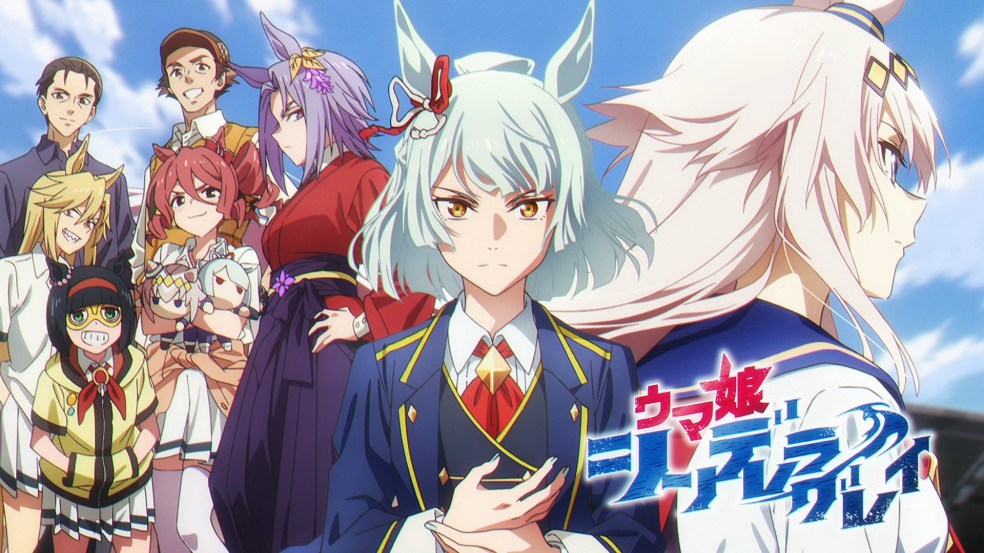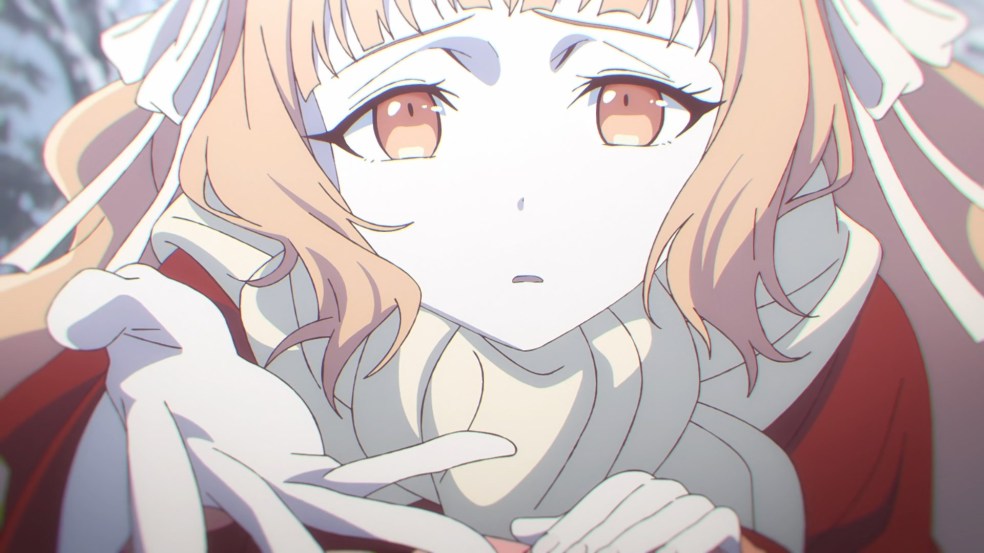
Let’s Watch UMAMUSUME: CINDERELLA GRAY – Episode 20 – “The Answer”

Let’s Watch is a weekly recap column where I follow an anime for the course of its entire runtime.

For the Cinderella Gray column, new installments will be posted either on the Sunday each episode airs, or as soon as possible over the succeeding week. Expect spoilers!

Cinderella Gray can be watched, legally and for free, on It’s Anime By REMOW on Youtube. A link is provided below for your convenience. The descriptive blurbs for these articles are taken from those of REMOW’s Youtube uploads.


A recurring tension in the Umamusume series is the fact that all racing careers eventually end. This only makes sense, most athletes retire eventually. You can’t push your body like that forever, and even the best will have to pack it in someday, as the alternative is usually much worse.

In the context of Umamusume, retirement is a peculiar thing. It’s almost never addressed directly. When it is, it’s sometimes accompanied by mention of the Dream Trophy League, a wholly fictional second racing league that we know little about, which existed as a background detail in some of the earlier, no-subtitle Umamusume anime seasons. Whether the Dream Trophy League even exists at this point in Umamusume‘s vague, shifting, and sometimes self-contradictory timeline isn’t clear—if it’s ever mentioned in Cinderella Gray at all, I must’ve missed it, and honestly even asserting that Cinderella Gray and those other seasons take place in the same continuity at all requires some squinting—but I bring this odd relic of the earlier Umamusume anime seasons up here to point out one thing in particular. It doesn’t actually come up in this episode even once, which feels notable.

Why? Because this is the episode where we finally learn what, exactly, has been hanging over Tamamo Cross’s head for the last while. You may recall that she seemed oddly hesitant to commit to racing in the Japan Cup again next year back when Obey Your Master asked. Here, we learn why. The Arima Kinen is going to be her last race.

This episode actually opens on a bit of backstory for Tamtam, showing us how she met her trainer Komiyama Masami. That “old man” whose sake she’s run some of her races was in fact her landlord, implicitly a former umamusume trainer himself, and introducing Tama to Komi was an act of kindness where it’s easy to understand why she’d hold him in such high regard. We aren’t directly told precisely why Tama is retiring, but with the juxtaposition here, we can infer any number of reasons.

Regardless of the “why,” when the two of them meet at a press conference, Tamamo breaks the news privately to Oguri Cap, who does not take it well. Whatever reason Tamamo might have, this means that she and Oguri will only have one more race together, the Arima Kinen itself. Oguri is actually in a fairly good mood up until this point in the episode, and her sharp downturn in demeanor here is quite startling. Moreso when she realizes, as she tries to argue with Tama, that she is now essentially in the same position Fujimasa March was way back in episode six. Tamamo Cross’s ultimatum to Oguri is the same as Oguri’s was to March; if she really wants to settle things, she has to beat her here. There will be no do-overs.

When the actual press conference starts and Tamamo Cross breaks the news to the press that the Arima Kinen will be her final race. We actually get a rare bit of narration from Oguri here, where she admits to not even remembering what she tells the press when they turn their mics to her. We don’t hear it, either, all of her thoughts have been blotted out by the specter of Tamamo Cross’s retirement.

Between the prospect of her greatest rival retiring and her own failure to reach the Zone, Oguri’s in a pretty tough position here, mentally. Some time after the conference, we see Oguri training at night to blow off some steam, and it feels like an open question as to whether the self-doubt, anger, and disappointment might actually snuff out her competitive fire forever. This is a real danger to someone like Oguri Cap, and she’d hardly be the first Umamusume protagonist to let her own hangups psyche her out of a victory.

Enter Dicta Striker, the Chestnut Bullet.

Dicta, based on one of the real Oguri Cap’s contemporaries, the horse Soccer Boy, has been a background presence in the anime since Oguri relocated to Tracen, but this episode is the first time we really get a good handle on her as a character. We get some of her backstory, including how her early career as a young prodigy gave way to a streak of losses that broke her confidence. She rebounded, though, at one point partly inspired by Oguri herself. By the time she calls out to Oguri for a late-night practice race, she’s long since reached the elusive Zone herself.

The training race, then, is as much a direct conversation between these two as it is actual practice. Dicta lightly needles Oguri as they run, saying that as she is now, she’ll never reach it. Privately though, Dicta thinks that Oguri is actually on the verge of breaking through this mental barrier. Dicta pushes her further; what compels her to race? Who does she want to beat? What, at the end of the day, is driving her?

This seesawing tension, between the joy and the fire Oguri Cap feels from running itself, from surpassing her rivals—once Fujimasa March, now Tamamo Cross, perhaps someone else in the not-too-distant future—from surpassing her own limits, and the persistent fear that she won’t be able to, will remain an underlying current for the remainder of the series. Cinderella Gray really leans into the Beast part of Oguri’s nickname in scenes like these, illustrating an underlying, boiling primality at the heart of her character, something fiercer and deeper than just competitiveness.

In a way, it’s unsurprising to see the anime render her in these terms—at the end of the day, this is a sports anime, after all—but the elemental distillation of it here is still a pretty rare thing, and it’s one Umamusume has made an art of over the years. Perhaps because of this, the nighttime practice race between Oguri and Dicta is the episode’s best scene, with most of its best shots being moody, windy cuts of Oguri’s running figure against the night sky.

Oguri comes close to making the breakthrough she needs to—very close, we get that visual effect of gray smoke leaking out of her eyes again, and a shot of a wall of glass cracking but not yet breaking—before Dicta abruptly calls the race off just as Oguri is about to pull ahead of her. Whether her explanation that she doesn’t want to push either herself or Oguri so much before the real race that they hurt themselves is what she really believes or a small bit of saving face is hard to say for sure. Either way, it’s clear that this run helps Oguri a lot.

Directly helping her rival out, even in such an oblique way, may seem contradictory with the goal of actually winning the Arima Kinen for Dicta. But, afterward, when her trainer, a hulking oak tree of a man, lightly chastises her for it, Dicta just wryly replies that she doesn’t want anyone to say that Oguri wasn’t at her best when she beats her.

Dicta isn’t the only one helping her, either. As all of this is going on, Belno Light, who by this point is essentially Oguri’s co-trainer, has been handling the more technical and strategic aspects of planning the race. An early scene at the press conference sees her inspired by how well Komi takes care of Tamamo Cross, and she gets a particularly great showcase here where, as an umamusume herself, she’s actually able to imitate Oguri’s running gait and analyze the specific ways in which the Arima Kinen’s track will affect her.

As with the Tenno Sho, the Arima Kinen features an inclined section, something that can’t be overcome with brute force alone and requires actual strategy to handle. Belno’s scenes in the episode, devoted to tackling this problem, are less dramatic than those with Tamamo Cross or Dicta Striker, but they’re no less important, and I think the story does a great job of making her seem just as important to Oguri’s growth as Oguri’s rivals are. By the time she’s finally come up with a good solution, she’s effectively run a version of the race herself. She may not be a preternatural talent like some of her contemporaries, but Belno’s tenacity here can stand up against that of any other umamusume in the series.

Of course, whether that growth equals success is another question. The episode ends on Christmas Day, at the Arima Kinen, a bright and sunny winter day as the runners take the field….


Like what you’re reading? Consider following Magic Planet Anime to get notified when new articles go live. If you’d like to talk to other Magic Planet Anime readers, consider joining my Discord server! Also consider following me on AnilistBlueSky, or Tumblr and supporting me on Ko-Fi. If you want to read more of my work, consider heading over to the Directory to browse by category.

All views expressed on Magic Planet Anime are solely my own opinions and conclusions and should not be taken to reflect the opinions of any other persons, groups, or organizations. All text is manually typed and edited, and no machine learning or other automatic tools are used in the creation of Magic Planet Anime articles, with the exception of a basic spellchecker. However, some articles may have additional tags placed by WordPress. All text, excepting direct quotations, is owned by Magic Planet Anime. Do not duplicate without permission. All images are owned by their original copyright holders.

Let’s Watch UMAMUSUME: CINDERELLA GRAY – Episode 14 – “Another Peak to Climb”

Let’s Watch is a weekly recap column where I follow an anime for the course of its entire runtime.

For the Cinderella Gray column, new installments will be posted either on the Sunday each episode airs, or as soon as possible over the succeeding week. Expect spoilers!

Cinderella Gray can be watched, legally and for free, on It’s Anime By REMOW on Youtube. A link is provided below for your convenience.


Oguri Cap faced her first major defeat on the race track at the hands of her rival Tamamo Cross in the finale of Cinderella Gray‘s first cour back in late June. Since then, the world has appreciably changed for Umamusume as a series. Perhaps most notably, the Global (read: English-language) version of the mobile game this is all meant to promote finally launched, and I know for a fact I was hardly the only person there on launch day to redeem my 3* voucher to get Oguri herself. This is relevant because, due to the game’s success, there is a very real possibility that this column going forward will have a much larger potential audience than it did back in Part 1. To that end, I’m gonna go ahead and say that if you’re not caught up with these columns, I, a completely unbiased source, think they’re pretty worth reading, and you can do so here. Also, welcome aboard.

I’ve also read the manga, or at least, what exists of the manga fan translated into English. I won’t spoil any twists before they come, but it has given me the confidence to say that Cinderella Gray not only remains as good a powerful sports shonen narrative as it was in the first cour, but it actually gets even better over time, right up to the present. There are stories I can’t wait to share with you all, and characters I can’t wait for you to meet. But we’ll get to those as they happen.

What’s not a spoiler, or indeed a surprise to anyone who’s been watching the trailers ReMOW has been putting up, is that this upcoming arc focuses on the Japan Cup, a prestigious international race that will see Oguri and some of her domestic rivals compete against umamusume from all over the globe. That Cinderella Gray returns today, on the day of the Prix de l’Arc de Triomphe—a different prestigious international horse race that Umamusume as a series is somewhat obsessed with (it was a plot point in Umamusume‘s third season, in fact. This despite the fact that a Japanese horse has never won it)—feels significant.

Interestingly though, that’s not where Part 2 starts. Instead, it makes the rather interesting decision to adapt the one-off spinoff The Mermaid Left Behind. What this means is that rather than diving straight into the Japan Cup stuff—what all of Part 2’s trailers were about, mind you—we instead return to the setting of the first half of Part 1, Kasamatsu, and the first story of the second cour is not about any of Oguri’s current rivals, but her first: Fujimasa March.

As Umamusume goes, what unfolds here is a pretty simple tale of rivals whose emotional bonds are unaffected by the physical distance between them. March is fresh off a haircut and a major loss at the Tokai Derby. We saw her conversation with Oguri Cap back in episode ten, where it seemed to reignite her competitive fire and give her renewed confidence to try again.

Yamano Thousand, the umamusume that March actually lost to in the Tokai Derby, does not see things that way.

Thousand is offended that March keeps trying to chase after someone who isn’t even here, and accuses her of running after ghosts. (She also insults the Norn Ace / Mini the Lady / Rudy Lemono trio by calling them Oguri’s “groupies”, which is admittedly pretty funny.) But if this seriously shakes March in any way, we don’t see it. It’s Mini, funny enough, who assesses Thousand accurately; her bark is worse than her bite, and her end closer strategy is a poor fit for a track with corners as tight as the ones here. In the end, March’s renewed passion perhaps as much as any strategic consideration lets her win handily, and she explains to Thousand—and implicitly to us as well—that she’s not chasing Oguri’s ghost. She’s chasing the real thing. This is the same March who first lit Oguri Cap’s competitive fire, and Thousand failing to understand that the glint in her eye and the blush on her cheeks are both because of Oguri Cap is part of why she loses. I don’t believe we’ll get another check-in on Fujimasa March like this, so this episode is, in a way, a nice sendoff to a Oguri’s first rival. A promise that her story is still being written, somewhere just out of view.1

The second half of the episode returns us to Tokyo. It largely focuses on Oguri’s national rivals but, once again, opts to refocus on who we already know instead of rushing headlong into introducing new characters. Most of these little vignettes focus on the umamusume preparing for their next race. For Oguri, that’s the Japan Cup that’s the center of this arc. Some of her rivals will be there too, but others, such as Dicta Striker [Hanamori Yumiri] have different aims. The latter in particular leads to a very charming scene where Striker attempts to do the old “intimidating rival challenging the protagonist on a level playing field” bit, talking about how she wants to hand Oguri her second loss in the Mile Championship, only for Oguri to promptly explain that she isn’t actually running in that. (She’s tailing Tamamo Cross, of course: the Japan Cup and the Arima Kinen, best known to players of the Umamusume game as where careers go to die, are her next two destinations.)

If there’s a unifying theme here, it’s that Oguri Cap and Tamamo Cross’ showdown has inspired everyone with an eye on the scene, from Oguri’s hometown friends to her rivals in the nationals, to greater heights. Even Sakura Chiyono O, the actual winner of the Japanese Derby that really was haunted by the ghost of the missing Oguri Cap, gets a scene here to show off that she’s not resting on her laurels. Nor is Yaeno Muteki, another of Oguri’s rivals and a perpetual underdog. Dicta Striker will get to run against her eventually, as well: she’s aiming for the Arima Kinen, too.

This even applies to Oguri herself to some extent, as Fujimasa March looks toward her, so does Oguri look toward Tamamo Cross. Each serves as the proverbial new peak to climb for the previous racer. (We must naturally assume that there is, thus, also some fresh-faced new student at Kasamatsu who thinks of Fujimasa March as an ideal to aspire to.)

All told, this is an odd and transitional episode and, generally speaking, a bit of a strange choice for Cinderella Gray‘s triumphant return. Still, it’s nice to see Fujimarch again, and the strong thematic throughline makes it make emotional sense as a returning point. Plus, the few crumbs we get here are going to feed March x Oguri fans for the next several months, so it certainly isn’t a bad episode by any means. It’s hard to deny though that the real lightning-in-a-bottle moments from this arc are very much still ahead of us. Part 2 is short—just ten episodes as opposed to the thirteen of the first cour—so I imagine we’re going to be getting into the main body of the arc relatively soon, within a couple episodes at most. We’ll see what that looks like in the weeks ahead.


1: Interestingly, March’s race against Thousand is also done in full racing silks. This goes against the series’ usual conventions as I understand them, where only national G1s are run in silks. Still, I’m not going to complain. March’s snazzy blue outfit is lovely.


Like what you’re reading? Consider following Magic Planet Anime to get notified when new articles go live. If you’d like to talk to other Magic Planet Anime readers, consider joining my Discord server! Also consider following me on AnilistBlueSky, or Tumblr and supporting me on Ko-Fi. If you want to read more of my work, consider heading over to the Directory to browse by category.

All views expressed on Magic Planet Anime are solely my own opinions and conclusions and should not be taken to reflect the opinions of any other persons, groups, or organizations. All text is manually typed and edited, and no machine learning or other automatic tools are used in the creation of Magic Planet Anime articles, with the exception of a basic spellchecker. However, some articles may have additional tags placed by WordPress. All text, excepting direct quotations, is owned by Magic Planet Anime. Do not duplicate without permission. All images are owned by their original copyright holders.

Seasonal First Impressions: Checking in to the APOCALYPSE HOTEL

Seasonal First Impressions is a column where I detail my thoughts, however brief or long, about a currently-airing anime’s first episode or so.


It has been entirely too long since I got weirdly, uncomfortably personal on this blog (a few months, at least), so let’s fix that.

I have been thinking about my own mortality a lot lately. I won’t go into why, but suffice to say this dwelling is neither wholly rational nor entirely unfounded. I mention my own recent fixation here to give some context for why I’m checking out Apocalypse Hotel, and why I was initially reluctant to check it out. Stories like this, stories of mankind’s extinction or departure and what we may leave behind in our wake, stories that inherently deal with loss and finality as themes, are incredibly aggravating when done poorly. I won’t name names, but there have been some unimpressive examples in recent years, and I have somewhat burned out on this genre of post-apocalyptic iyashikei as a result. (The less said about its mutant cousin, the isekai slow life genre, the better.) All this in mind, I planned to pass on Apocalypse Hotel. Surely it would not become one of the most instantly-beloved premieres of the season, right?

If that’s overselling it, it’s only just so. Within my circles at least, Apocalypse Hotel has become something of a surprise standout among the season’s premieres. Enough of one to cover it over GQuuuuuuX? I’m not sure about that, but the praise eventually got to me and I was inspired to give it a whirl. I’m glad I did, because this is a series that not only understands the fundamentals of its parent genre very well, it’s also a bit of casual leg-stretching for Cygames Pictures, who have established themselves as one of the more reliable studios around in recent years. (For reference, Apocalypse Hotel is a follow-on from last year’s Uma Musume film and Brave Bang Bravern. This year, they’re doing Cinderella Gray, also from this season, and an adaptation of acclaimed manga The Summer Hikaru Died in just a few months. Going back a bit farther, you might also know them from Princess Connect Re:Dive.)

As for the actual plot here, there honestly isn’t terribly much. We begin with a truly spine-chilling opening, in which an advertisement for the titular Ginza Hotel, then brand-new, is intercut with news reports of a deadly, plantborne virus that is rapidly rendering the Earth’s atmosphere hostile to human life. Just five years out from the COVID pandemic, this sort of imagery is still very pointed, and the uncomfortable contrast between the luxury of the hotel and the violence we see as the world becomes less and less habitable, culminating with a lucky few escaping to the stars in an “ark” (supposedly for just a few years while Earth’s ecosystem sorts itself out), is of course very intentional. It is equally so that most of the rest of the episode doesn’t directly deal with that discomfort. Instead, the series dances around it in a deliberate, careful way, only drawing attention to it directly at key moments.

Most of the episode is fairly comedic, in fact. We meet our cast of characters, a group of robots maintaining the Ginza Hotel. The most prominent of these, and the only one in the group that could conceivably pass as a human, is Yachiyo [Shirasu Saho], the “acting acting” head of reception and thus the one in charge of the hotel in a general sense. Yachiyo spends her days keeping her crew on-task as they make sure the hotel is kept clean and orderly, in preparation for humanity’s eventual return.

A return that, at this point, they have waited on for a hundred years and counting.

I don’t want to make Apocalypse Hotel seem darker than it actually is, because most of this episode genuinely is pretty upbeat. Gags like Yachiyo absolutely losing her cool because a single shampoo hat goes missing from one of the hotel’s bathrooms, or the bulky, extremely serious Doorman Robot [Touchi Hiroki] and his sheer dedication to his simple job of opening the front doors for any prospective guests, are a genuine delight.

Get Door Robo

Even the music is pretty upbeat while the crew go about their daily routine of keeping things clean and sparkling. But the undertone of massive loss is always there. Firstly from the simple fact that the thing they’re keeping so pristine is a giant hotel with nobody in it, and secondly from the more general post-apocalyptic trappings. A century is more than enough time for plants to have grown over much of the world outside the hotel, and these gorgeous wide shots instill a solid sense of longing and emptiness.

In other words, this show is quite clearly picking up the thread left by seminal works such as Yokohama Shopping Log. Being that good would be, frankly, too much to ask—Yokohama is arguably the definitive work of its genre—but that the two can even be in the same conversation is a good sign. There is one point in the episode in particular in which this influence is extremely evident, and that is when one “Driller Robot” does not report to the morning roll call at the hotel. Yachiyo goes out to find him, only to see that he’s been killed; massive metal spikes have been driven through him, and he’s completely motionless. Clearly saddened in a way she either can’t or won’t entirely express, Yachiyo solemnly places him on “indefinite leave,” and consigns him to a storeroom full of other similarly broken-down robots. An earlier gag draws attention to the fact that the Doorman no longer has any coolant in his systems, and one has to wonder how long it’ll be before he, too, joins that pile. We have already seen, via flashbacks, that Yachiyo’s crew used to be much larger.

Yachiyo’s behavior, as well, seems to indicate that she’s not as together as she’d like to put on. It’s mostly played as a joke here, but she has an angry outburst near the end of the episode, and she’s also been keeping detailed logs of operations every day since the hotel’s owner left. She tells herself that new guests will be coming soon, but it doesn’t really seem like she believes it.

Which makes the end of the episode all the more surprising. I can’t bring myself to spoil what, exactly, happens there, but I do think it points Apocalypse Hotel in an interesting direction going forward. Does all of this relate, that much, at the end of the day, to the fears I discussed opening this article? Eh, yes and no. Apocalypse Hotel is clearly a part of this cozy apocalypse genre—it’s right there in the name, after all—but it’s much more lighthearted, even whimsical, than I first assumed. Yet, that sense of loss and transience still very much does color everything about the series, and it’s difficult to say what it will end up leaning more into as it goes on. In other words, it’s hard make many long-term predictions. But, regardless of what happens on this particular after-the-end vacation, I’m planning on at least a short-term stay. Hopefully you are, too.


Like what you’re reading? Consider following Magic Planet Anime to get notified when new articles go live. If you’d like to talk to other Magic Planet Anime readers, consider joining my Discord server! Also consider following me on AnilistBlueSky, or Tumblr and supporting me on Ko-Fi. If you want to read more of my work, consider heading over to the Directory to browse by category.

All views expressed on Magic Planet Anime are solely my own opinions and conclusions and should not be taken to reflect the opinions of any other persons, groups, or organizations. All text is manually typed and edited, and no machine learning or other automatic tools are used in the creation of Magic Planet Anime articles, with the exception of a basic spellchecker. However, some articles may have additional tags placed by WordPress. All text, excepting direct quotations, is owned by Magic Planet Anime. Do not duplicate without permission. All images are owned by their original copyright holders.

Seasonal First Impressions: This City Knows Your Name – Remembering and Forgetting in KOWLOON GENERIC ROMANCE

Seasonal First Impressions is a column where I detail my thoughts, however brief or long, about a currently-airing anime’s first episode or so.


Look at them individually, and no part of Kowloon Generic Romance seems all that strange. Its setting, the historical Kowloon Walled City, is probably the most individually unusual factor, but still, oddball places to set a romance series are hardly a new idea. The romance itself? An ice queen and a guy who’s too pushy by half, maybe more. Nothing strange going on there, even if it really is leaning into the self-deprecating part of its title. The atmosphere? Wistful. Thoughtful. Slow. But still, nothing too out of the ordinary.

Tying these things together, and making it clear that we have something strange on our hands, is the final element. Kowloon doesn’t actually take place in the historical Walled City, you see. It takes place in an alternate past-future present of it. The year is nineteen-exty-something, and a bizarre 3D-rendered floating octahedron hovers above the city, looking for all viewers like a nepo baby whose mom played Ramiel in Neon Genesis Evangelion. A mysterious pharmaceutical company has a hand in everything. Everything too, true to life, is old, used, and hand-me-down. Reiko [Shiraishi Haruka] our protagonist, points out that new shops rarely last in Kowloon, as though the city itself rejects the march of time. That may well be true of Reiko herself, too, although if it is, she doesn’t seem to be aware of it.

Reiko has a hot-cold relationship with her coworker Kudou [Sugita Tomokazu], she knows that this is a crush, but hasn’t acted on it. I can’t personally sympathize with that because, honestly, Kudou, easily the weak link here, is an unlikable dipshit, but people who aren’t me have crushes on unlikable dipshits all the time, so, fair enough. (Sidebar: He is clearly hiding something and I’m sure the narrative will take great steps to paint him as pained and with a heart of gold. This is whatever to me, I am passingly interested at best in the Generic part of Kowloon‘s Romance.) Their rapport works as well as it needs to, which is to say, I buy that Reiko genuinely likes this guy even if I wouldn’t. More interesting is where they go, after a day of work, Kudou takes Reiko out on the town, to a variety of small bars and eateries, before eventually showing her the Goldfish Tea House, a place with an eerie, unstuck-in-time atmosphere that feels very intentional.

The bartender—an odd term for a guy in charge of a teahouse, but I can think of no other—makes a comment that Kudou, evidently an old friend of his, has brought his girlfriend along again. This flusters Reiko, who is further perplexed by Kudou’s lack of a reaction. This sticks with her even more after an incident at their workplace, where Kudou, half-asleep, pulls Reiko into an impassioned kiss. (He seems half-asleep anyway. I don’t really buy, and I don’t think we’re supposed to buy, that this was entirely accidental. While forced kisses like this are an unlikable and common element of much romance fiction, the context makes me think we’re supposed to find this strange. If not, well, there’s no accounting for taste I suppose.) All of this then comes to a head when Reiko uncovers a mysterious photo among Kudou’s belongings, which seems to depict him with….her. But the woman in the photograph is smiling and cheerful, and it’s clear that even though the two look almost identical, physically speaking, Reiko doesn’t feel a direct connection to this other woman. The episode ends there, leaving us to ponder the mystery of what, precisely, is going on here.

The mystery, and the various visual bits and pieces that float through the episode, that is. Goldfish, watermelons, cigarettes, the moon juxtaposed with Generic Terra, the aforementioned octahedron, cramped city alleys marked with numbers, including 8s, which Kudou makes a habit of brushing against, defining it as a personal quirk. Plus noisy neighbors, traditional music. The episode’s slow pace and emphasis on the visual and aural, despite not having what we might traditionally call a “strong production”, makes it clear that it intends to plant them in the minds of its viewers, this array of symbolic objects contains, somewhere within it, the key to understanding just what exactly is going on with the woman in the photograph. A drifting mix of signifiers meant to rouse our interest without answering too many questions upfront.

Kowloon Generic Romance is based on a manga, so if one wanted to, it would be trivial to spoil themselves silly. Even the anime’s Anilist recommendations tab tells a story, being populated more by the likes of Sonny Boy and Summertime Rendering than any romance anime. This all but spoils that there’s something weird going on here, something weirder than simple coincidence. The involvement of a pharmaceutical company makes my educated guess induced amnesia, but honestly, who can say?

Something I’ve learned over the past few years of doing these previews is that there are two kinds of anime whose premieres strike me less as good or bad and more as puzzling. Those where the mystery is clearly an intended hook to rope in the audience, and those where I—and sometimes others as well—are reading in a subversiveness or intrigue that’s not actually there. Shoshimin Series (despite its mundane subject matter) and Summertime Rendering are the former, Reign of the Seven Spellblades is the latter. These categories are only obvious in hindsight, so while I think Kowloon is the former, only time will tell. Still, its mystery is enough for me to stick with it for now.


Like what you’re reading? Consider following Magic Planet Anime to get notified when new articles go live. If you’d like to talk to other Magic Planet Anime readers, consider joining my Discord server! Also consider following me on AnilistBlueSky, or Tumblr and supporting me on Ko-Fi. If you want to read more of my work, consider heading over to the Directory to browse by category.

All views expressed on Magic Planet Anime are solely my own opinions and conclusions and should not be taken to reflect the opinions of any other persons, groups, or organizations. All text is manually typed and edited, and no machine learning or other automatic tools are used in the creation of Magic Planet Anime articles, with the exception of a basic spellchecker. However, some articles may have additional tags placed by WordPress. All text, excepting direct quotations, is owned by Magic Planet Anime. Do not duplicate without permission. All images are owned by their original copyright holders.

Seasonal First Impressions: Battle Girl Acid Ramen – What Even Is MOMENTARY LILY?

Seasonal First Impressions is a column where I detail my thoughts, however brief or long, about a currently-airing anime’s first episode or so.


This show should not exist.

Let me be clear about something, that’s not a qualitative judgement. I’m pretty happy that Momentary Lily does exist, but it really shouldn’t.

There are many reasons why it shouldn’t. Point 1: the relevance of the relatively short-lived battle girl genre, the post-mahou shoujo warrior anime defined by Symphogear, ended when Symphogear XV concluded, with the only real aftershock of even marginal note being Assault Lily Bouquet—no relation—and honestly that’s being generous with the word “marginal.” Point 2: there is an agreed-upon, rough template for opening an action series. That template very much is not “huge cool fight, long sequence where a new girl meets the rest of the protagonists and cooks them food, second cool fight,” which is how this first episode is structured. Both of these points can be explained, though, by Point 3: Momentary Lily comes to us from GoHands mindbender-in-chief Suzuki Shingo and his fellow GH lifers Kudou Susumu and Yokomine Katsumasa. GoHands, for better or worse, seem to exist in active defiance of God, the natural order, and everything else under heaven and earth. Love them or hate them, the studio and its house style are a true one of one, nothing else looks like this, and in its best moments, their work can be genuinely stunning.

For some of their work, that’s an active detriment. At the end of the day, The Girl I Like Forgot Her Glasses, despite its iffy characterization in its premiere episode, was a pretty normal romance series. There is no real reason the anime should’ve looked how it did, and GoHands’ attempts to restrain themselves to produce a “standard” TV anime benefits no one. Momentary Lily, though, is on the opposite end of the spectrum. Based on nothing and beholden to no one, this is an original work, precisely from whose mind is hard to say, but it’s worth noting that Yanagi Tamazou, the main scriptwriter of Hand Shakers and Scar on the Praeter—both of which are prior GoHands attempts at action anime—is credited with that role here, so perhaps it was them. Or maybe it was someone else. Or maybe Momentary Lily is adapted from a pair of stone tablets that Suzuki Shingo brought down from a mountaintop after a religious experience. Honestly, nothing would be surprising. If it’s not overwhelmingly, abundantly clear from everything I just said, this show is fucking weird. Excitingly, it’s poised to get weirder.

As with everything this studio has ever touched, the visuals are the obvious standout point of discussion, but we should make some attempt to get at least the very broad strokes of the plot nailed down. The show isn’t exactly Finnegan’s Wake or anything, but the fighting game combo juggling approach to storytelling, including the characters sometimes stepping on each others’ lines, does mean a bit untangling is required to suss out what’s actually going on here. Very basically, in a near-future Japan, a horde of extradimensional machines that our protagonists call Wild Hunts appear. They can make people vanish into thin air simply by being near them, so predictably, this promptly wipes out most human life on the island and, quite possibly, in the world in general. Our protagonists, are a group of teenage girls; leader Yui [Abe Natsuko, in what seems to be her first role of any real note], self-proclaimed big sister-type who seems to have shoved water balloons down her chest Erika [Sakuragi Tsugumi, in what seems to be her literal first role at all], honorary green Precure / gamer girl Hinageshi [Wakayama Shion, killing it as always], pink cutie and fashionista Sazanka [Kuno Misaki], and the raven-haired, chuuni-stoic Ayame [Shimabukuro Miyuri]. Through means as of yet undisclosed, they have access to powerful weapons / very shiny CGI assets that they can use to fight back against and destroy these creatures. The episode opens, after a short conversation about eczema (naturally), with one of these fights.

After that, though, it promptly introduces another teenage girl, Kasumi Renge [Murakami Manatsu], amnesiac and having been wandering on her own for some time. After managing to momentar-lily overcome her incredible shyness—also placing this show at least adjacent to the Bocchi-core “anxious girls learning to make friends” genre—she promptly cooks them a bunch of food, styled as a cooking segment in a slice of life show. Then, the Wild Hunts attack again, and we get another battle, where it’s revealed that Kasumi also has a weapon and that hers, furthermore, is self-propelling, a truly awesome-looking pink guitar rocket skateboard thing. She proceeds to wipe out the Wild Hunts that are attacking her and her new friends. Roll credits.

This loses something in the retelling, even more than is the case for most anime I cover here. It is hard to describe, let alone capture, GoHands’ pure eye-bombing when they’re at the peak of their powers as they are here. The action sequences are genuinely very good, but they require putting yourself in a different headspace than is usual for action anime (I do have a few complaints, mostly relating to a shakycam segment early on, but all told this might be the most cogent a GoHands production has looked this decade). To put it mildly, the show’s visual aspects are an acquired taste, and there is still the odd stylistic quirk I can’t quite get over (the spaghetti hair, threadlike and infinite, that covers every character’s head, must truly be seen to be believed), but I think the studio’s staff acquit themselves nicely here, and I’m hoping it can keep up the polish.

As for the writing? So far it’s honestly too inscrutable to make many strong claims in that direction yet, aside from the observation that like previous GoHands originals, the show seems to somewhat haphazardly pull from mythology for show concepts (the weapons all seem to be named after things from Norse myth). But the characters, simple though they are, are mostly pretty fun, and are thus the real script highlight so far. I’m particularly fond of leader Yui’s can-do attitude, Ayame’s broodiness, and Hinageshi’s whole epic gamer girl shtick. The dialogue also has a bent, catchphrase-laden quality that I’m betting will prove as or more polarizing as the show’s visual elements. Personally I find it charming, but I can imagine someone who’s not myself getting sick of the bam! bam! vocal ticcing very quickly. The overall plot promises to evolve in unpredictably strange directions as well, with the preview for next week’s episode indicating that Erika will face mortal peril and, presumably, be rescued by her comrades.

Is this a must watch or anything? I’m not sure I’d say that, but if you like anime that are decidedly different from the norm it’s probably at least worth checking out. My own opinions on GoHands have evolved a lot since I last wrote about them, partly due to conversations with a friend1 who is a big fan of the studio’s work and partly just because, honestly, anything that stands out against the constant deluge of isekai and 6/10 romcoms is nice. Still, go into Momentary Lily with an open mind, and you might just find something worth going to bat for.


1: Hi May.


Like what you’re reading? Consider following Magic Planet Anime to get notified when new articles go live. If you’d like to talk to other Magic Planet Anime readers, consider joining my Discord server! Also consider following me on AnilistBlueSky, or Tumblr and supporting me on Ko-Fi. If you want to read more of my work, consider heading over to the Directory to browse by category. If you’re looking for me to watch a specific show, watch this space. I am planning to reopen commissions in the near future.

All views expressed on Magic Planet Anime are solely my own opinions and conclusions and should not be taken to reflect the opinions of any other persons, groups, or organizations. All text is manually typed and edited, and no machine learning or other automatic tools are used in the creation of Magic Planet Anime articles, with the exception of a basic spellchecker. However, some articles may have additional tags placed by WordPress. All text, excepting direct quotations, is owned by Magic Planet Anime. Do not duplicate without permission. All images are owned by their original copyright holders.

Weekly Orbit Archive

THIS PAGE IS UNDER CONSTRUCTION

Here you’ll find an archive of every series I’ve written about in the Weekly Orbit. These are listed alphabetically—by the English title if available, by the most common Romanization if not—with each episode number linking to the appropriate Weekly Orbit column or other relevant article.

Anime

  • Air –
    • episodes 1-8 writeup
    • Review
  • Alya Sometimes Hides Her Feelings in Russian –
    • episode writeups: 1 First Impressions, 2
  • Asura Cryin’ –
  • Brave Bang Bravern
  • Bucchigiri?! –
  • Code Geass: Rozé of the Recapture –
    • episode writeups: 1 First Impressions, 2, 3,
  • Delicious in Dungeon –
  • Gabriel DropOut
    • episode writeups: 1-7
  • Girls Band Cry
  • Grimm Variations, The
    • episode writeups: 1, 2
  • Go! Go! Loser Ranger!
    • episode writeups: 1, 2, 4, 5
  • Himitsu no AiPri
    • episode writeups: 1, 6,
  • Jellyfish Can’t Swim in the Night
  • Makeine: Too Many Losing Heroines! –
    • First Impressions 1, 2
  • Metallic Rouge
  • My Deer Friend Nokotan
    • episode writeups: First Impressions 1, 2
  • Mysterious Disappearances
    • episode writeups: First Impressions 1, 2, 3, 5, 6, 7, 8, 10, 11, 12
  • Oshi no Ko, Season 2
    • episode writeups: 1, 2,
  • Pokémon Horizons
  • Quality Assurance in Another World
    • episode writeups: First Impressions 1, 2
  • Salad Bowl of Eccentrics, A
  • Sengoku Youko
  • Train to The End of The World
  • The Wrong Way To Use Healing Magic
    • Shambolic Anime Podcast
    • Episode 13 writeup
  • Unnamed Memories
    • episode writeup: 1 & 2,
  • Wistoria
    • episode writeup: 1, 2,
  • Wonderful Precure

Manga

  • Deep Raputa – 2, 3 & 4,
  • Dai Kyoujin – Oneshot
  • Flan Wants To Die (Touhou Doujin) – Oneshot
  • Magical Girl Tsubame: I Will (Not) Save The World! – 20-23
  • Psych House – 1
  • A Story About A Hallucinatory Girl – Oneshot
  • Witch Watch – 148-159

The Manga Shelf: Year of the Dragon – RURIDRAGON’s Triumphant Return

The Manga Shelf is a column where I go over whatever I’ve been reading recently in the world of manga. Ongoing or complete, good or bad. These articles contain spoilers.


Time flies. Try to adjust your frame of mind back to whatever it was in the summer of 2022. That’s when RuriDragon, debut work from mangaka Shindou Masaoki, first appeared in the pages of Jump. RuriDragon is a great story, but it also has a great story.

It is difficult to overstate just how big an out-of-nowhere success this manga was. It is equally difficult to overstate how sudden and shocking its lengthy, unplanned hiatus was. The details remain somewhat cloudy even two years later—“health issues” is the bulk of what we know—and for a while, many people, myself included, assumed that Jump’s official stance that the series was ‘on hiatus’ was a polite way of saying it would not be returning. Given the gap, it’s hard to call anyone who didn’t think it would come back “pessimistic.” And it really must be emphasized that entire other Jump manga have lived and died since Ruri last published a chapter, and an equal number of major world events have taken place. The world in which RuriDragon returns is distinct from the one it left, and I wouldn’t blame anyone for some amount of skepticism about the manga picking up where it left off. (After all, even Jesus only kept his followers waiting a couple days. Ruri has kept us on the edge of our seats for almost 600.) But, by whatever provenance, and however unlikely it’s seemed, today, March 3rd 2024, saw the manga return. The dragon, like the phoenix, has risen.

Perhaps the strangest thing about RuriDragon‘s seventh chapter is how un-strange it feels; the manga essentially picks up right where it left off. There are no sly attempts to wink at the gap or rush any character development to “make up for lost time” or anything of that nature. Things settle back into the groove the manga had just gotten into when it went on hiatus; Ruri continues developing strange new dragon powers, furthering the manga’s central growing up-as-growing monstrous metaphor. Here, it’s electrical buildup, revealed in the chapter’s last few panels as the ability of dragons to call lightning.

As previously alluded to, and more directly foreshadowed back in the Starbucks chapter, Ruri’s developing abilities put distance between herself and her classmates, in particular the standoffish light-haired girl, Maeda, first introduced then. The two share a decidedly awkward moment as Ruri’s schoolday comes to a close, with Maeda pretty bluntly rejecting Ruri’s (admittedly slapdash) attempts to get her to open up. This clearly weighs on Ruri’s mind as the chapter ends, which is where we get the aforementioned lightning reveal.

All this said, while it’s definitely great that RuriDragon is getting back into the swing of things, what’s in the new chapter is almost less important than the fact that there even is a new chapter. It’s true that we probably won’t know the full extent of what the “new RuriDragon” will look like until it switches to biweekly publishing on Jump Digital and Jump+ in a month or so, but for now, it is enough that the blade-horned high school girl is back. (Personally, I’m interested in the other person in Ruri’s class who’s been absent for most chapters of the manga so far. Another demihuman? Who can say!) For the first time in a long time, the future looks good for RuriDragon; brighter than a gout of fire, or a flash of lightning.


Like what you’re reading? Consider following Magic Planet Anime to get notified when new articles go live. If you’d like to talk to other Magic Planet Anime readers, consider joining my Discord server! Also consider following me on Anilist or Tumblr to get even more anime and manga thoughts, and supporting me on Ko-Fi or Patreon. If you want to read more of my work, consider heading over to the Directory to browse by category.

All views expressed on Magic Planet Anime are solely my own opinions and conclusions and should not be taken to reflect the opinions of any other persons, groups, or organizations. All text is manually typed and edited, and no machine learning or other automatic tools are used in the creation of Magic Planet Anime articles, with the exception of a basic spellchecker. However, some articles may have additional tags placed by WordPress. All text, excepting direct quotations, is owned by Magic Planet Anime. Do not duplicate without permission. All images are owned by their original copyright holders.