Seasonal First Impressions is a column where I detail my thoughts, however brief or long, about a currently-airing anime’s first episode or so three.
I talk enough about how I don’t really like contemporary isekai that I risk repeating myself. So instead of lamenting the state of the genre let’s just jump right into the important things about Demon Lord 2099 specifically.
So! This show! Our premise is that your archetypal demon lord—Veltol Velvet Velsvalt [Hino Satoshi], great name—has been defeated. Some centuries later, his world collides with and fuses with ours, plunging the globe into a magic-infested apocalypse that kills most of the planet and reduces what remains to a squabbling landscape of feuding city-states. In the ashes, magic and technology combine to forge a broadly cyberpunk-inflected setting. So far, so “reverse isekai with a twist.” There’s a bit more to things than that, though.
Veltol is of course resurrected in the present day (2099, natch), and as he gets his bearings in the first episode, with the assistance of his loyal servant Machina [Itou Miku], two things immediately stand out about both his character and the timbre of the show itself.
1: Veltol is portrayed, barring a big exception that we’ll get to, with a fair amount of genuine gravitas and dignity. That’s not to say the character is taken 100% seriously all the time, but rather that the series devotes a fair amount of space to his thoughts and feelings, and how they interact with the world he’s returned to. He feels like an actual person rather than a boxed archetype.
2: The series on the whole seems, at least going off of the three episodes that have currently aired, to be surprisingly faithful to the original ideas of the cyberpunk genre. While the tiresome stock fantasy racism metaphors that pockmark the narou-kei scene are present here, they are more of a background element than a defining feature (and at one point are blamed on a specific character, in a seemingly deliberate move on 2099‘s part). The real antagonistic force is unchecked technocapitalism and all that it enables; stressful, strained paycheck-to-paycheck living, the inequality it foments, etc. As a force, this is embodied by Marcus [Matsukaze Masaya], one of Veltol’s former lieutenants who has found a new position in the world, as the overtly ill-intentioned head of a massive tech company.
This is not to say that Veltol is a straightforward good guy. He’s still an aspiring world-conquering tyrant after all, but because the series is from his point of view, he’s humanized in a way that a lesser show just wouldn’t bother with. This is most obvious at the end of the first episode, where his most loyal devotee, the aforementioned fire immortal Machina, takes him to her new home, a tiny, ratty apartment on the outskirts of the city. Veltol initially assumes this place is some sort of storeroom, and when Machina gently corrects him and makes it clear she’s not joking, breaking down in tears at the “shameful” fact that she lives in such a small home, he pulls her close to comfort her.
A later episode shows us Machina’s backstory, which involves her being thrown into an active volcano. And remarkably, the show still portrays her current state, struggling to get by and making minimum wage, as being even less dignified than that. The message that this is an environment that makes monsters of all of us is clear. It’s also a nice bit of character building for Veltol, and a cheaty (but not invalid!) way to get us, the audience, on his side. Veltol as he’s portrayed here, even accounting for the evil required for his conceptualization as a demon lord, is a nearly admirable figure. I admit to having a personal weakness for a certain kind of principled villain in fiction, depending on what those principles are, so I may be in the minority in that I’d follow this guy into hell. Still, I imagine even if you’re less susceptible to such things, he comes off well here.
The second episode is a slightly different story. For one thing, it’s a fair bit more typical for this genre. Veltol attempts to find work, reasoning that having Machina take care of all of his expenses is unbecoming, and is rejected at every turn due to his lack of experience and inability to get a Familia implant, the magic-producing cyber-chip smartphone-things that that Marcus’ company produces. This doesn’t pan out, and per the suggestion of his and Machina’s mutual friend, the resident punk-hacker Takahashi [Hishikawa Hana, in one of her first major roles since her time as Cure Precious came to an end], he takes up a career in streaming, which surprisingly works out rather well for him.
This whole bit certainly seems like a stupid gag that’s going to derail the whole show, and it takes up most of the second episode, but things get back on track with the much more serious third. (Which has a fun double-meaning title, it’s called “Debut of a Demon Lord”, alluding to both the beginning of his streamer career sure, but more importantly his actual return as a force of real impact in the world.) There are great scenes throughout; Veltol meets his old enemy Gram [Namikawa Daisuke], now granted eternal youth by a goddess as a reward for his service and profoundly disillusioned with the 500 years of war, death, and betrayal he’s endured since the two last met. Veltol tries to make Gram see things his way, that the world needs a strong leader like him for true peace, but it doesn’t take. (Remember, Veltol is the protagonist, but he’s not actually a “good guy”. “Peace through tyranny” and all that.) And he finishes off the episode by reasserting his might against an oni who kicked his ass back in the first episode, which is a fun full-circle moment.
As with many anime like this, it’s hard to make a called shot as to whether or not 2099 will really live up to its potential, but these first few episodes are promising, and in what’s been a pretty dry season, any show that’s good or at least interesting is worth keeping tabs on.
Like what you’re reading? Consider following Magic Planet Anime to get notified when new articles go live.If you’d like to talk to other Magic Planet Anime readers, consider joining my Discord server! Also consider following me on Anilist, BlueSky, Tumblr, or Twitterand supporting me on Ko-Fi. If you want to read more of my work, consider heading over to the Directoryto browse by category.If you’re looking for me to watch a specific show, watch this space. I am planning to reopen commissions in the near future.
All views expressed on Magic Planet Anime are solely my own opinions and conclusions and should not be taken to reflect the opinions of any other persons, groups, or organizations. All text is manually typed and edited, and no machine learning or other automatic tools are used in the creation of Magic Planet Anime articles, with the exception of a basic spellchecker. However, some articles may have additional tags placed by WordPress. All text, excepting direct quotations, is owned by Magic Planet Anime. Do not duplicate without permission. All images are owned by their original copyright holders.
Seasonal First Impressions is a column where I detail my thoughts, however brief or long, about a currently-airing anime’s first episode or so.
I’ve been trying to be slightly less longwinded in my writing as of late, so let me just lay the cards on the table here. You Are Ms. Servant, an odd little sort-of romcom from Felix Film, is primarily concerned with two equally-important questions. Question 1: Isn’t the anime pop cultural archetype of the maid-as-assassin, who exists only to kill on behalf of her master, as typified by examples as diverse as Izayoi Sakuya from Touhou and Roberta Cisneros from Black Lagoon, kind of fucked up? Question 2: Do you want a soft dommy mommy gf? Because whoever wrote this certainly does.
It’s probably best to think of You Are Ms. Servant as a pretty typical anime of this present moment for the medium. Visually, it’s all over the place, some shots are absolutely gorgeous, others are just barely passable. Overall, one gets the sense that, even accounting for the fact that this first episode looks pretty good on the whole, the production could fall to pieces at any moment and one wouldn’t be that surprised. There’s also a mashup of visual signifiers here that feels less original than it would have even a few years ago. Frequent cuts in the chibi style emphasize comedic moments, as does the technique of simply rattling a character back and forth very rapidly when they express surprise. At the same time, there’s a pretty heavy use of what we might call denpa imagery throughout this debut episode; shots of railroad tracks as trains breeze by, static-tinged memories, etc. It’s a weird mix, one that leaves the show feeling fairly incoherent tonally. A fact that is, in of itself, hardly notable at this point in this genre’s history.
The setup here is, as it often is in these shows, very simple. Yokoya Hitoyoshi [Kumagai Toshiki] is an ordinary high school boy who struggles with keeping his home clean and whose parents are presently conveniently out of town. Yuki [Ueda Reina], whose name we don’t actually learn in this first episode but which I am plucking from Anilist’s character sheet for convenience, is a “maid” seeking work, who has for reasons only vaguely explained in passing, decided to come to Hitoyoshi for her prospective employment. Obviously, this makes no sense and is the realm of pure fantasy. This is fine on its own, of course, and I’d even argue that the fact that Yuki goes to Hitoyoshi shaves some of the inherent ickiness off of the basic concept here. More the problem is that Yuki is cast firmly in the Yor Forger mold, she’s preternaturally talented at murder, but absolutely hopeless at anything else, in a way that is clearly supposed to be humorous but mostly hits a somewhat sour note. It’s hard to get the thought “we’re doing this again?” out of one’s head throughout a lot of the comedic material. This is a trope that’s been quickly run into the ground over the past few years, and Ms. Servant is not going to be the one to make it funny again.
If You Are Ms. Servant can claim any great innovation, it’s in attempting to return the character archetype to its roots. Yuki is a goofball a lot of the time, baffled by the idea that anyone would enjoy food instead of just thinking of it as pure sustenance and flummoxed by even the simplest of household chores, but there are moments that reveal some real darkness within her. Memories of being raised as a child assassin, Noir-style, intrude on the otherwise simple world of the series. One gets the sense that Yuki’s past is something she’s actively running from, and that her turning up on Hitoyoshi’s doorstep is no coincidence.
Hitoyoshi has his own demons, too. His parents’ absence would be unremarkable in most anime with this setup, but we learn toward the conclusion of this episode that he’s prone to having nightmares wherein he cries out for his mother. The implication here seems to be that Hitoyoshi is a child of divorce. So, it is perhaps inevitable that the varying needs of this narrative, in this format, conspire to give the final moments of this episode a, we’ll say, very particular feeling. This is where Question 2 starts coming up.
Technically, at least in this first episode, it is never outright said that these two are attracted to each other, but come on.
So that, it seems, is You Are Ms. Servant, an age gap romance informed by its characters respective troubled upbringings, standing on an unsteady foundation of hacky comedy, reaching for denpa signifiers in search of meaning. Will the series ever actually do anything with the obvious wellspring of disquiet here? It’s hard to predict these things ahead of time, but the example of some past similar anime doesn’t incline me to get my hopes up. Still, its blend of disparate elements is at least distinct. I want the series to dig into the pasts of its main characters more, and I want that direct namedrop of the term “found family” in the closing narration to actually mean something. Time will tell if it does.
Like what you’re reading? Consider following Magic Planet Anime to get notified when new articles go live.If you’d like to talk to other Magic Planet Anime readers, consider joining my Discord server! Also consider following me on Anilist, BlueSky, Tumblr, or Twitterand supporting me on Ko-Fi. If you want to read more of my work, consider heading over to the Directoryto browse by category.
All views expressed on Magic Planet Anime are solely my own opinions and conclusions and should not be taken to reflect the opinions of any other persons, groups, or organizations. All text is manually typed and edited, and no machine learning or other automatic tools are used in the creation of Magic Planet Anime articles, with the exception of a basic spellchecker. However, some articles may have additional tags placed by WordPress. All text, excepting direct quotations, is owned by Magic Planet Anime. Do not duplicate without permission. All images are owned by their original copyright holders.
This review contains spoilers for the reviewed material. This is your only warning.
Note: this is a review of the English dub.
In the shadows, nameless assassins load their pistols. The bullets in the chamber end the lives of the rich, the powerful, the damned. It happens everywhere; abandoned construction sites in Japan, the coasts of South America, the heart of Paris, just outside the Arc de Triomphe, the glittering skyscrapers of New York City, the cold landscape of Russia, just before winter’s first snowfall. It happens by the hands of two women, hitmen without equal, twin goddesses of death. The result? Something between an action movie and a slow-burn nightmare, filled with pinging gunshots, glinting dagger blades, and poisonous incense. Enter this dreamy vein and you find Noir; a haunting, gauzy series whose emotional and literal palette is dark and thick as tar pitch. Fitting enough for something whose title is just the French word for “black.”
The reference point here is of course film noir, the genre of black and white movies. But Noir‘s inspiration is less a direct aping of tropes and more a signal that it intends to replicate that movement’s sense of mood and place. Indeed, even as Noir‘s marriage of action movie tropes and dramatic, philosophical dialogue spins out into a storyline of rival assassins and inherited codenames spanning the globe and across time, it never loses that sense of dreaminess, underscored by the lack of blood despite all the violence. This is the aspirational case for highly stylish death-dealing as compelling psychodrama. Firefights are frequent enough to be something you can set your watch to, but every one punctuates big-question themes of loss, fate, memory, revenge, and of course, death.
Our twin deathbirds are Yuumura Kirika [Monica Rial] and Mireille Bouquet [Shelley Calene-Black]. Kirika is an amnesiac Japanese high schooler whose almost supernatural abilities as a hitman seem impossible for someone her age. Mireille, the older of the two by a good five years, is the only remaining member of a powerful Corsican crime family. Together, the two work under the codename Noir, the moniker of a legendary assassin who’s stalked Europe for a thousand years, and take on various hit jobs to make ends meet while pursuing their deeper goals. All the while, their alliance is an uneasy one; sometimes friends, sometimes more than friends, and yet other times keeping each other at arm’s length, they are united by a sworn pact and, as eventually becomes clear, a shared history.
Kirika is introduced to us when she sends Mireille an e-mail, containing a cryptic comment about taking a pilgrimmage to their respective pasts and an audio file, recorded from a silver pocket watch, that plays a haunting melody from Mireille’s own. When they meet, they’re almost immediately attacked by throngs of faceless assailants. This opening action piece sets the tone in many ways, as all of the elements Noir will follow are here; Kirika being so good at killing that she can hang a man by his necktie without a second thought, Mireille holding her own but being equal parts stunned and unnerved by Kirika’s abilities. All this while the two exchange gunfire with the nameless men pursuing them in a construction site that serves as a murderous, surreal jungle gym. Even the use of light and shadow, the look of Noir itself, is laid out in these first fifteen or so minutes. Eventually, the gunsmoke clears, and Mireille offers Kirika her terms: the two will help each other discover who the amnesiac Kirika really is and why she has a pocket watch once owned by Mireille’s late parents. Then, when the truth is clearer than light, Mireille will kill Kirika. The schoolgirl accepts, and our story begins.
Thus set is the stage for a heavy, dramatic narrative. Both of our leads are seeking answers from their pasts. Kirika wants to know who she is, the ordinary self she’s convinced lies underneath all of the murderous conditioning. Mireille has a more concrete goal; she wants to know who killed her parents and brother, and why they did it. These two seemingly parallel roads meet under the sinister gaze of Les Soldats, the show’s assassin-death cult-Illuminati, a powerful force that veils the entire world in a suffocating black shroud, and the main antagonists of the series.
Early episodes, though, touch on the Soldats only briefly, or not at all. They aren’t introduced until several episodes in, and they’re more of a background presence throughout the first half of the series. These earlier, episodic adventures are more defined by the locales the main duo visit and who they take out while they’re there, emphasizing action and mood-setting as opposed to the strong central through-line that soon develops.
Even still, there’s a streak of profound melancholy that runs through Noir from its very first episode. Despite its excellent action, this is not a show that boils down to a mindless exchange of bullets. Kirika’s quest for identity in particular is central to the series from its very beginning. An early episode sees her befriend a lost cat, first comparing herself to it and then remarking that since the cat is only lost physically, they aren’t truly that similar at all.
That cat belongs to a former Soviet prison camp commander, one who used that position to further an ethnic conflict between his own people and another group, rounding up the latter and sending them to their deaths. When the duo, tasked with killing this man, actually meet him, what they find is an old man who devotes his every waking hour to feeding the poor and homeless.
Setting aside that these kind of complete moral 180s don’t really happen very often in the real world, Noir asks a very pointed question here, the first hint at a larger overall theme. Does this turnaround actually matter? It is certainly a good thing to be helping the needy, but it doesn’t revive the people he’s murdered. This one of the show’s more extreme extensions of one of its basic ideas, that of killers of all sorts are notably distinct from regular society in a way that isn’t reversible. The notion permeates Noir. So too does the dichotomy between this underworld and the “daylight” world of ordinary people, who are rarely ever particularly relevant in this series. When they are, it’s to draw attention to this painful contrast.
Take, for example, in episode 4 when Kirika and Mireille fly to South America. There, they assassinate the head of a private military company called Atride, who are aiding an ongoing coup d’etat. After killing the man, Kirika unknowingly crosses paths with his daughter, who doesn’t yet know that her father is dead. We never see her reaction at all, in fact. The emphasis is not put on the victims, or those they leave behind. The grieving families are left implied, and the pain permeates the series in only an indirect way. Instead, the focus is squarely on the staining of the killers’ hands, and, by implication, their souls.
This isn’t to say that Noir is moralizing. It really isn’t, certainly not in comparison to some other anime from this time period that I’ve reviewed on this site. It’s more of a question than a strong stance; are these methods worth it? Does it ever result in anything but violence begetting violence, down through the generations, again and again? Noir is much more an interrogative work than it is one that’s keen to offer up clear, simple solutions.
If you, personally, want to either exonerate or condemn the Noir duo, you’re certainly free to. As the series hands you more than enough evidence to do either. In the former column, the world is arguably better off without most of the people they kill; the aforementioned PMC CEO and prison camp commander, French right-wing extremists, Mafia dons, Triad elders, etc. In the latter column, there’s the obvious counter that they’re still killing people extrajudicially based on not even their own judgement but the judgement of those who hire them. But making moral calls like this, in either direction, risks getting lost in the weeds. It’s fair to raise the point that if Noir does not want to be seen as endorsing some form of real world politics, it should not have its main characters involve themselves with so many political conflicts, but the series’ focus on the question of violence as an acceptable tool (or not) of change is more general and philosophical than tied to any movement in particular. Again, it must be emphasized that this is a recurring idea throughout the series. The notion that violence begets itself. As one of the duo’s one-arc enemies—Silvana [Heather LeMaster], the scion of a Mafia family—puts it, only blood can wash out blood.
Noir thrives on contrasts such as these. Once again, this is most obvious with Kirika, whose dark talents are always juxtaposed against her desire for an ordinary life. Sometimes simply represented by her high school ID (a highly symbolic object, the lone remnant of a normal life she may have lived, however briefly), and other times personified by connections that she makes which are ripped away, such as when she learns to draw from tragic character-of-the-day Milosh [Jay Hickman], who naturally does not survive his debut episode. It’s present with Mireille too, however, as her comparative involvement with ordinary society is always cut against how profoundly the loss of her parents stung her, and how her past sometimes pops up in unexpected ways to fill her with dread. The largest of all of these contrasts however, is much bigger than any single character. Rather, it’s the twin notions of self-determination and fatalism. The opening spiel at the start of each episode tells us that Noir is “the name of an ancient fate”, and that’s a thought the anime takes very seriously.
In episode 11, around the show’s halfway point, we’re introduced to Chloe [Hilary Haag], our third main character.
Chloe, like Kirika, is a teenage girl who is also a ridiculously skilled hitman, possibly to an even greater extent than Kirika herself. Quite unlike Kirika, Chloe is a Soldat, under the thumb of one of the Soldat leaders, the mysterious priestess Altena [Tiffany Lynn Grant]. Chloe and Kirika are quite quickly established to have a mysterious connection that is only elaborated upon at length toward the very end of the series. They’re on a similar wavelength in general, a fact that clearly disturbs Mireille. All the more troubling is Chloe’s claim of being a “true Noir.” As we eventually learn, that name was originally given to the pairs of agents serving the Soldat high priestess. Our main duo are thus left to consider the idea that their meeting and adopting the Noir codename was determined from the very beginning, a suggestion that only becomes more likely as the show crams detail upon detail into the margins of the characters’ pasts, most especially Mireille’s backstory. I can imagine a certain kind of person finding this overbearing, even convoluted. I’m inclined to accept it for what it is; a further reinforcement of the dreamlike, haunted nature of this entire story.
It’s worth pointing out, too, how all of these characters—our leads of course, but also Chloe and her mysterious handler Altena—are weomen. Noir features a fairly intense homoeroticism, culminating in, when the main duo temporarily break up during the final arc, Kirika referring to Mireille as “my dear Mireille” in a tearful letter. I’ve seen it claimed that Noir has “yuri undertones,” but frankly this seems far too cautious, the show simply has romantic yearning as another thread of its emotional tapestry. This marriage of themes isn’t coincidental, either. Noir seems to suggest that its characters being queer reinforces their outcast nature within society. As queer people, we are present in society’s clockwork, but not truly a part of it, and that separation is only further reinforced by the girls’ occupations. It’d be easy to assume the contrary, that Noir was conflating homosexuality and the girls’ professions to condemn both of them, but this is at odds with the immense humanity that all of these relationships are written with. (And Noir‘s complicated views on violence.) Even the spiny, borderline-yandere obsession Silvana has with Mireille is well-considered, and it goes without saying that Mireille and Kirika’s relationship is the center of the series. Chloe, too, gets a lot of consideration, and when she dies in the final episode, seemingly as punishment for daring to kiss Kirika on the lips just fifteen or so realtime minutes before, it feels less like Noir spitting on a character’s grave and more simply a grim reflection that there are times and places where this sort of thing does, in fact, get you killed.
That last arc is where Noir tries to answer at least a few of the many questions it raised earlier in the story. To leave out a great many details (both for the sake of preserving some of the show’s tricks and to not bog this article down with any further length), Kirika is eventually revealed as being another of the Soldats’ trained-from-birth assassins. What’s more surprising is that this is also true of Mireille, and her parents’ murder stems directly from their refusal, when she was a child, to hand her over to Altena. Altena is revealed to be behind this program of “saplings” in the first place. This raises the obvious question of why she’s doing this, and what the Soldats are actually seeking to gain.
Just as our leads take jobs from whoever will pay for them, and pursue no coherent agenda but what they’re seeking from their own pasts, the Soldats, similarly, don’t seem to be shaping the world to anyone’s ends but their own. Power not only corrupts, Noir ventures, it blinds. The Soldats, despite their mystical trappings and Illuminati-coded global reach, are not really any different from any other group of soldiers or guerillas. Lethal violence to reinforce the power of the group is the order of the day, and all else is bloviating self-justification. Altena, despite the motherly countenance she puts on throughout the series, and her own claims that the Soldats were once champions of the oppressed, isn’t really doing much more than lying to herself.
Altena is only given a fairly subtle characterization, in fact. Without close viewing I imagine some might come away from Noir finding her actions nonsensical. The only direct look at Altena’s past we get is through a handful of un-narrated, brief flashbacks. Despite their brevity, they paint a bleak picture; a girl whose home was destroyed by invading soldiers, and whose innocence was stolen from her at gunpoint. How she fell in with the Soldats from there goes unsaid, but it’s easy to make the leap that learning this organization existed, and that they didn’t help her and her people despite their lofty ideals, simply broke her. In her role as a leader of the Soldats, she passes this pain onto her “saplings” in motherly guise. In the final episode, she outlines the real purpose of, at least, her version of the “true Noir.” To simply be a scapegoat for humanity’s worst impulses, to kill for no reason but to perpetuate the killing, again and again, across the globe, and through time.
That fatalistic outlook runs counter to the nihilism (in the neutral sense) of Noir itself, so it’s unsurprising that she doesn’t succeed. In the final episode, Altena’s grand plans come to little, and the final sacrificial victim of her “ritual” is the woman herself. Neither Mireille nor Kirika kill her directly, in doing so breaking Altena’s hold on their lives. Instead, cornered, Altena attempts to get Kirika to shoot her.
Kirika refuses this, choosing to shoulder her actions not under the codename Noir but as herself, attempting to sacrifice herself while saving Mireille and stopping Altena’s plans. In the end, Kirika is saved, and Altena dies without her intervention. The threat gone, our girls cast off the mantle of Noir, and declining any alliance with the remaining factions of the Soldats that remain, they strike out on their own. They may never know peace, but they have each other. In a sense, they are free.
It’s a very open ended conclusion to a show that asks many questions but offers few answers, only that we must all ultimately take responsibility for what we do (or indeed what we don’t), regardless of our choices.
Time has done curious things to the legacy of Noir, perhaps appropriately for an anime so concerned with the past. In its day, the series seems to have been both widely-liked and fairly widely-watched, but “its day” was more than 20 years ago, and unlike some other anime of roughly that vintage that prominently feature f/f pairings (say Revolutionary Girl Utena from a few years prior), Noir seems to have been largely written out of the history books, at least in the anglosphere.1 Despite this, its reputation was still such that as recently as 2012, Starz, the American network, hadn’t fully given up on trying to adapt the series to live action for American audiences, well before the “anime live action remake” became a trend and then a punchline. It was clearly a success for its studio, the late Bee Train, as well, as positive reception prompted the creation of two spiritual sequels in the form of Madlax and El Cazador de la Bruja. And from a fandom perspective, it’s historically important, as it indirectly led to the creation of Yuri Hime.2 So while it’s a shame that Noir doesn’t come up more in retrospectives of yuri as an umbrella term, or just in discussions of early aughts anime in general, it can’t really be said to have left no footprint. Stories that have aged this well will probably always be waiting to be rediscovered by each subsequent generation. I doubt Noir will truly fade from the collective awareness of the dedicated anime fan any time soon. Indeed, I only came across the show by total serendipity myself. It happened to be airing on one of PlutoTV’s anime channels, and I was instantly hooked off of the few episodes I saw there. (Maybe that’s the real magic planet of anime at work right there.)
There is, to be sure, also a lot I’ve left unsaid here. It’s nearly criminal that I haven’t mentioned Kajiura Yuki‘s soundtrack up to this point, as its ghostly choirs and mysterious melodies not only presage what she’d later do on Puella Magi Madoka Magica, they’re just as crucial to establishing the show’s atmosphere as the delicate visual work of, most especially, the painterly backgrounds. There’s also a few nitpicks I could make, but they’re minor enough that I’ve left them by the wayside here, because the series does so much right that they truly do feel like nitpicks as opposed to major complaints. That’s Noir, arresting, haunting, cool as hell, worth counting as among the standouts of its generation. It’s probably not going to truly go away anytime soon.
1: My hunch is that this is at least partly because of the noticeable age gap in the main pairing of Kirika/Mireille. It’s not the sort of thing that bothers me—and honestly I’d argue there are bigger obstacles to those two having a relationship you could truly call healthy—but I can imagine others minding it. Also maybe Chloe’s death? I am of the impression that my reading of that plot beat is not universal or necessarily even common. A cynical part of me wonders if Kirika seemingly crushing on Milosh in his one episode might be part of it, too. But I’d prefer not to think so.
Like what you’re reading? Consider following Magic Planet Anime to get notified when new articles go live.If you’d like to talk to other Magic Planet Anime readers, consider joining my Discord server! Also consider following me on Anilist, BlueSky, Tumblr, or Twitterand supporting me on Ko-Fi. If you want to read more of my work, consider heading over to the Directoryto browse by category.
All views expressed on Magic Planet Anime are solely my own opinions and conclusions and should not be taken to reflect the opinions of any other persons, groups, or organizations. All text is manually typed and edited, and no machine learning or other automatic tools are used in the creation of Magic Planet Anime articles, with the exception of a basic spellchecker. However, some articles may have additional tags placed by WordPress. All text, excepting direct quotations, is owned by Magic Planet Anime. Do not duplicate without permission. All images are owned by their original copyright holders.
This review contains spoilers for the reviewed material. This is your only warning.
It’s a cliché to begin any piece of writing on a short anime with defense of the form, but to indulge in that cliché a bit, sometimes a premise dictates that an anime’s episodes only really need to be somewhere on the order of 60-120 seconds. So it is with Honobono Log, a series with a not quite a cour’s worth of 2-minute scenes that, consequently, doesn’t even total a full half hour in length. I didn’t know going into Honobono Log that it was adapted from a picture book, but it makes complete sense looking at the show on the whole. The episodes present extremely brief vignettes; tiny windows into the lives of couples and families for us to peer at single, specific scenes from their time together. Animation is limited, backgrounds even moreso; the vast majority of the show’s lean runtime takes place against a solid yellow backdrop. But this isn’t so much a flaw as it is a strength in disguise, by cutting down on extraneous elements both spatial and temporal, Honobono Log leaves us with what really matters; these brief flashes of some emotion or another between two or more people who truly care about each other.
An exhaustive list of these situations would completely spoil the point of the show, but they include aquarium dates, father/child disputes over gumdrops, and brief goodnights over the phone. In each case, the emphasis is less on the intensity of the emotion displayed and more on its casualness. None of these scenes involve anything along the nature of a romantic confession or, really, any identifiable romcom tropes as such at all. Hands intertwine, boyfriends reluctantly run an errand, fidgety girls are hugged, a mother comforts a daughter whose crush has gotten with someone else.
What’s truly being drawn attention to here is the brevity—but also the importance—of these actions themselves, through naturalistic, understated voice acting and simple, unflashy animation that nonetheless takes joy in its movements. Any single one of these moments could crystallize into a memory for someone involved in it, and the show can in fact be taken as a memory catalogue of sorts, not for any one person but for humanity on the whole. One could find flaws in this—for something that clearly reaches for universal experience, all of the couples are straight, for one thing—but these minor criticisms are easily dismissed as flaws of absence. Points to be improved on, as opposed to things wrong per se. No, what we have here are ten tiny miracles. Little wisps of personable warmth and nostalgia, whenever you need them.
Like what you’re reading? Consider following Magic Planet Anime to get notified when new articles go live.If you’d like to talk to other Magic Planet Anime readers, consider joining my Discord server! Also consider following me on Anilist, BlueSky, Tumblr, or Twitterand supporting me on Ko-Fi or Patreon. If you want to read more of my work, consider heading over to the Directoryto browse by category.
All views expressed on Magic Planet Anime are solely my own opinions and conclusions and should not be taken to reflect the opinions of any other persons, groups, or organizations. All text is manually typed and edited, and no machine learning or other automatic tools are used in the creation of Magic Planet Anime articles, with the exception of a basic spellchecker. However, some articles may have additional tags placed by WordPress. All text, excepting direct quotations, is owned by Magic Planet Anime. Do not duplicate without permission. All images are owned by their original copyright holders.
This review contains spoilers for the reviewed material. This is your only warning.
This review was not commissioned.
It’s all there in that first episode. The flowing rivers and the rolling hills, the heroic romance in the swish of a cape and the slash of a sword bringing an end to a wicked Demon King’s reign somewhere far away. Fireworks spark over a city to signal the triumphant return of the heroes. A meteor shower streaks overhead. Suddenly, it’s decades later, and the adventurers who embarked on this grand epic have grown old. A bell tolls, a man dies. All of them have grown old but one.
Wherefore the anime elf? That’s what Frieren: Beyond Journey’s End asks, at least at first. That’s what I asked, back when it premiered, nearly a year ago. Everything I said in that article is still true, at least about those first few episodes, but time, as Frieren is keen to point out, has a way of making fools of all of us.
In the months since it premiered and its first season ended, Frieren has gone on to be widely hailed as a modern classic. It is, without exaggeration, one of the most broadly-acclaimed anime of all time. The most famous (and most infamous) sign of this is its current spot at #1 on the MyAnimeList audience rankings, overtaking the darling of the Toonami generation, Fullmetal Alchemist: Brotherhood, after many years of only occasionally-interrupted reign at the top of that list. But one can easily find dozens upon dozens of essays, videos, reviews, podcasts, random forum posts, and so on proclaiming it the greatest anime ever made, or at least the greatest made in the past decade or so.
Simply pondering the question of something’s quality, whether it’s “good or bad”, is rarely the most interesting approach when engaging with a work of fiction. But nonetheless, with Frieren, it’s at least worth considering. Because consensus like that can become overwhelming and prevent honest assessment of what a series is and isn’t. There is an aura of untouchability around the thing now; criticism of the series is met with the assumption that you’re just an aimless contrarian and not to be engaged with seriously. This has happened before, often to works that—like Frieren—don’t display many obvious hallmarks of being culturally Japanese. Cowboy Bebop was the posterchild for this attitude for years, but FMA:B has had that status as well, as have a number of other anime.
We should be careful here, though, because criticizing a series’ fanbase is a very different thing from criticizing a series. The problem with that being that the two are here, and as much as this project has been about me wanting to find out for myself what I thought of it, some of it was in fact an attempt to see what others saw. Because I do have to confess from the jump that while I’ve actually come out the other side appreciating the series for what it is, I do find the universal acclaim deeply puzzling. And as I’ve returned to the show, I’ve only found it more and more so as I’ve trekked onward.
Yes, returned. I actually dropped Frieren as it was airing! The sudden swerve into the demon plot after the initial arc left me uncomfortable and unimpressed, and my plan at the time was just to never touch it again. Nonetheless, circumstance is a funny thing, and through a chain of events I won’t recount here (because they’re boring), I was indirectly persuaded to give the series another shot. When I came back to Frieren, I was hoping to either be converted or be vindicated. Converted in the sense that I would see what everyone else seems to see in it, and would understand its near-universal high praise from viewers. Vindicated in the sense that I would at least feel justified in having dropped it the first time around, that this would be a clear cut case of me being right and everyone else being wrong, and that this is the work of some great huckster, where I am just somehow one of the few not taken in. Instead, neither has happened. What I’ve discovered is a fractured, self-contradictory anime with no clear picture of what it wants to be. Occasionally beautiful, sometimes funny, at times thrilling, more than once absolutely infuriating, quite often just flat-out puzzling. Normally, I like to start a mixed review by listing off the uncomplicated pleasures of the work. With Frieren, there are none of these. Nothing about this show is uncomplicated.
Frieren at The Funeral
Instead, let’s start at the beginning. Right at the funeral. Here, Frieren the character [Tanezaki Atsumi] grieves for Himmel [Okamoto Nobuhiko], the “hero” of the Hero’s Party who we will hear brought up again and again, openly and loudly questioning why she never tried to get to know him while he was still alive. Over the course of the ensuing months and years, she reconciles with her two other companions in the party in her own, loose way—the priest Heiter [Touchi Hiroki] and the dwarf ‘front-liner’ Eisen [Ueda Youji]—takes on an apprentice, in the form of Fern [Ichinose Kana], a human girl, initially a war orphan adopted by Heiter, with purple hair, and hatches a plan of sorts. She will retrace the route she took on her journey to slay the Demon King nearly a century earlier, hoping to spark her memories before all sign of them fades, and thus perhaps understand her companions better with hindsight. A bit later on, she’s led to the idea of following in the footsteps of her mentor, the human mage Flamme [Tanaka Atsuko], who, in her last writings, claims to have discovered the location of Heaven in the form of a realm called Aureole. The idea, then, is to either literally meet Himmel again or at least commune with his spirit, as Aureole is allegedly accessible from the northern tip of a region called Ende. Conveniently, Ende is near the Demon King’s old castle. Thus, begins a journey tied in a symmetrical loop. One preoccupied with finality, finity, transience, nostalgia, sentimentality, and loss.
Frieren and Fern meditating among nature.
Or does it? Some of those things are definitely themes of the series. It’s absolutely about nostalgia and sentimentality, in part. In nearly everything Frieren does, she’s reminded of Himmel and her time with the Hero’s Party. Sometimes these reminiscences, which often take the form of direct flashbacks, are meaningful elaborations upon some connection between what Frieren is doing and what she has done. Just as often, though, they serve to simply repeat the same events twice in two not-that-different contexts. There’s a localization-induced pretense to the subtitle Beyond Journey’s End, because Frieren’s first journey and her second are not actually terribly different. Over the course of this series, this constant flashbacking begins as simply a technique being used, hardens into an irritating tic, and then becomes an outright crutch.1 A way to fill time and space when the story is out of ideas in a given moment.
As for those other things; transience and especially loss? They are not nearly so prominent as the first episodes, especially the outright first, would have you believe. A friend pointed out to me that after that initial scene at the funeral, Frieren doesn’t ever openly grieve Himmel again. She certainly is fond of remembering him—again, the constant flashbacks—but she rarely seems terribly sad about it. Frieren is not an overtly emotional character, so it isn’t that strange that she never has another outright crying fit like that again, but it is odd that she doesn’t even seem particularly melancholic when remembering him most of the time. This itself would be easy to wave off as the effect of the passage of time were it not for Frieren’s own massive emotional continuity in almost all other areas, almost everything else about the character is consistent before and after an initial timeskip of a few years where she trains Fern before setting off again. This is not. It’s downright odd, even accounting for the whole “Heaven” thing, and is representative of many of Frieren‘s more general issues, to such an extent that when it was pointed out to me, deep into my work on this piece, I felt like I’d been handed a skeleton key to a particularly challenging lock. Upon thus picking it, I have found myself focusing more on the amount of empty space in the vault than the jewels that are actually there.
Let’s back up a bit. Since I am, as I often do, getting ahead of myself. We can roughly divide Frieren, or at least the anime, primarily what I’m looking at here, into four acts. The first is that initial scene of mourning and its aftermath. Upon meeting again with Heiter, Frieren is eventually convinced to take Fern on as an apprentice. She does something similar upon adding Stark [Kobayashi Chiaki], a young warrior originally trained by Eisen, to her group. These three form the core of what I’ll follow the direction of the fandom in loosely terming “Frieren’s Party,” and they are our three main characters. Frieren herself gets the lion’s share of the focus, with Fern at a respectable second. Poor Stark, a warrior in a world of wizards, is relegated to a distant third, and has only a handful of focus episodes to his name. These early episodes are pleasant, however, and aside from a few disconnected foes that must be subdued, including a dragon in Stark’s first focus episode, are largely peaceful. They’re also emotionally resonant enough that any qualms are easily waved off. If Frieren as a series is ever simple, it is so here, but things don’t remain that way for long.
In Tristram
This first act of the anime comes to an abrupt close when the party enter a town currently in the midst of negotiations with a host of demons. This, the series attempts to demonstrate, is foolish. Demons in the world of Frieren do not have minds in the same way that you or I do, and are more akin to natural disasters than people. Any attempt at kindness or cooperation is met with deceit and slaughter. Predictably, once Frieren introduces these ideas, through the mouth of Frieren herself, who immediately turns into a racist grandma when the subject of demons comes up, it promptly sets about proving her completely correct. The demons are eventually revealed to be under the control of a “Sage of Destruction”, Aura [Taketatsu Ayana], a remnant of the original Demon King’s forces. Throughout a painfully contrived plot that admittedly does have a lot of very effective visual work, the series shifts gears in its first major way here, and it never entirely looks back.
The unfortunate fact of the matter is that we need to digress here, to talk at some length about how Frieren treats the demons. Not just because, personally speaking, they are why I left this anime on the back burner for nearly a year, but because not addressing this issue honestly is, in fact, disrespectful to the work itself. Praise is meaningless if it’s disingenuous.
The fact of the matter is that the way Frieren writes demons, as infiltrators with no interiority who destroy communities both within and without, who always band together over any other ostensible loyalty, who cannot be reasoned or negotiated with, and so on, is uncannily reminiscent of certain kinds of anti-Semitism. Now, is this intentional on the part of Frieren? I prefer to think well of people, and I have certainly been given no reason to believe that author Yamada Kanehito is bigoted in this or any other way, so I do not think so. It’s very easy to dismiss all of this as the writer regurgitating harmful tropes and stock plot beats from other works. Since the idea of something that isn’t actually capable of thinking or feeling but outwardly acts like it can pops up more than once later on in other contexts, one can easily file this away as, perhaps, someone trying to draw a loose analogy to AI, or philosophical zombies, or various other such concepts. Perhaps it’s as simple as trying to give our hero some villains she can fight guilt-free. But those echoes of real-world prejudice are there, and they’re meaningful, because this kind of rhetoric hurts people.
Even if it didn’t, one of Frieren‘s own main defining character traits is her hatred of demonkind, so this stuff is baked right into the narrative, and is so in a way that I think actively cuts against Frieren‘s attempts to present itself as a story at least in part about the title character learning a little compassion. I do not mean to indict the character of Mr. Yamada in any serious way, but treating this as the problem it is is absolutely necessary to talk honestly about Frieren. We can discuss it and we can confront it, but if we ignore it, everything positive we say about this series is meaningless.
In a sense, it is unfortunately true that none of this is actually unique to Frieren. Fantasy, especially high fantasy, has a problem with this sort of derived racism that runs very, very deep to the genre’s roots. Ever since the first essay criticizing Tolkien’s depiction of the orcs, this has been an ongoing subject of discourse. That thread runs from Tolkien’s work, through Dungeons & Dragons, winds its way through several generations of JRPGs, anime, and manga, and continues to exist right up to the present day. It is uncontroversial to say that the narou-kei scene—which Frieren is not a part of, but they exist in the same landscape and are in conversation with each other, so this is still worth noting—has a huge problem with stock Fantasy Racism, going right up to, for example, Reign of the Seven Spellblades, which aired in the season before Frieren began, and The Wrong Way To Use Healing Magic, contemporaneous with its second cour. In those stories, as in Frieren, imagined ethnic conflict is a plot greaser; a worldbuilding detail that lets us sort the characters into groups, and gives those groups an excuse to fight. When this is handled irresponsibly—and it often is—we get situations like the one in Frieren.
To a certain sort of person, this criticism is never going to make sense. They will say that fantasy is fantasy and consider any objection of this sort to be looking for something to complain about. “They’re just bad guys, you’re overthinking it.” I am unlikely to persuade such an audience that this is a real problem, but I would at least like them to take me at my word that it is very bothersome to me, it sticks in my craw badly enough that it was on my mind throughout almost my entire time watching the series, during both my favorite and least favorite of its episodes. To such an extent, in fact, that if someone who were not me chose to be far less charitable toward the series, for any number of their own reasons, I would completely understand. Especially since the series goes out of its way to prove Frieren’s initial assumptions completely correct.2 Even extending it so far as to make them shared sentiments with her mentor Flamme, thus recontextualizing both characters.
The demon issue that dominates the second act also heralds a major change in writing style for the series. Some foreflashes of this are visible during an early episode where Frieren and Fern fight a demon wizard by the name of Qual [Yasumoto Hiroki]. Curiously, the narrative treats Qual with a lot more dignity than most of the later demons, and there’s a sour bit of foreshadowing in his corner of this narrative. It’s mentioned that Qual pioneered the use of magic for combat, something that has, by the series’ present day, become a standard part of every mage’s arsenal. There’s a grim irony here, given what the series becomes after Qual’s brethren show up. Grim enough that were the other demons similarly characterized I might assume it was intentional, but it really doesn’t seem to be.
An immediate, obvious signpost for how drastically Frieren changes in such a short amount of time, is the topic of mana. Mana, as you surely know, is in its modern usage a general catch-all term for magical energy in fantasy fiction. It means different things in different contexts. In Frieren, as soon as it’s introduced, it becomes an analogue of Dragon Ball Z‘s power levels, or just generally speaking, various forms of battle shonen “aura” that have kicked up and down the genre for years. Late in the demon arc, we learn that Frieren can manipulate her mana levels to conceal the true extent of her power from those around her, and by the time the show has put these ideas into practice, Frieren has fully changed into a straight action series with a fantasy veneer.
Frieren’s instantly-memetic showdown with Aura in episode 10 is representative here; a whole episode of doled-out backstory and rules lawyering leads up to Frieren revealing to her demonic enemy that she’s been suppressing her mana for decades, thus giving her the win over Aura in a magical weighing of souls, and leading to the episode’s infamous conclusion where she turns Aura’s spell back on itself, and orders the demon lord to kill herself. It’s anticlimactic, bizarre, and not satisfying in the least. The fact that it’s also needlessly cruel and petty is almost a minor nitpick by comparison.
It has been months and months since I first saw a screenshot of this, and I still cannot believe that it is a real, unedited line from an official sub track of a widely-watched and widely-liked anime.
It really seems like the main intent here is just to convince us that Frieren herself is super badass. This itself merits further questioning though, when we talk about “Frieren herself,” who are we even referring to?
At the risk of adding a lengthy digression to a lengthy digression, it did occur to me over the course of the series that Frieren’s characterization is, to say the least, peculiar.
There Are Three Elves
Frieren is easily the most complex of any of the show’s characters, with her companions Fern and Stark by contrast fitting into relatively straightforward anime archetypes. Over the course of the series, three distinct modes emerge. Three Frierens that alternatingly compliment and contradict each other. Since the character informs the series that bears her name, it’s important to pin these three down, and I’ve done my best to do so here.
Firstly, there is Frieren as the elf in the classic fantasy mold. She is removed from humanity, but through the initial influence of Himmel and his party, she comes to discover it in both a literal and abstract sense over the course of her time with them, and more fully after his passing, as the series goes on. We will call this facet of the character Frieren the Elf, as it is she who gets the lion’s share of the show’s explorations of empathy and understanding. She’s also the version of Frieren we meet first; this is Frieren of Frieren at the Funeral, the manga’s unofficial alternate English title. This is the one Frieren who openly grieves for Himmel, the one who seems most nostalgic for her time with him, whose constant flashbacks emphasize to her that she needs to appreciate the time she has with her apprentice now. This is the Frieren who sets out to retrace the journey of the Heroes’ Party before all sign of it fades like train tracks beneath the wildflowers. I’ll admit a bias here in that she’s my favorite facet of the character. I don’t seem to be alone here, though, in that she seems to also be the most widely-liked and, certainly, acclaimed version of her. When people talk about “Frieren the character,” they are usually talking about the Elf.
Secondly, there is Frieren as a simple magician. This is more of a comedic figure than anything, obsessed with magic to the point of being willing to do absurd tasks to gain knowledge of incredibly minor spells. Sometimes she plays the straight man, but just as often, she’s the instigator for these hijinks. This is the Frieren of the somewhat infamous nudity potion gag, the one that gets stuck in mimic maws because she’s blinded by the possibility of rare lore, and the one who expresses bemusement at the highly regimented systems for “authorizing” mages that humans tend to come up with. Generally speaking, she’s the most overtly silly of the three. But she’s as important as any other, and in her more tender moments is the Frieren who bonds most closely with Fern, and is the one who laments the decline of magic in her world. This Frieren, we will call Frieren the Mage.
Lastly, we must return to the whole demon thing, because the final facet of Frieren is the ugliest and least personable version of the character. A dark, cold avenger who places her self-appointed task of driving demons to extinction above all else, both because of a deep personal grudge and as an inheritance from her mentor Flamme.3 This Frieren is responsible for most of the overt action scenes that the character participates in, as well as her sometimes cold attitude in general. She is a constant, unpleasant reminder of the series’ worst and most ill-considered impulses, and is often lurking beneath the surface in even otherwise less action-heavy episodes. When she emerges, the series becomes violent in an often very sudden and jarring way. We don’t need to name her, the series itself calls her Frieren the Slayer.
Viewed from a certain angle, all of this is actually a good thing. The character contains depth and contradiction. All we’ve actually done here, after all, to put it in reductive D&D terms, is point out her race, class, and character alignment. Were it that the character alone were written this way, I might consider it a positive of the series. However, fittingly enough, Frieren informs Frieren, and this is where we start to run into bigger issues.
It would be convenient for us if Frieren the anime were also divisible into three different modes, but in truth it’s really just two. There’s the weighty, heavy story it aspires to be to begin with, and there is the well-executed but very much traditionalist action-fantasy battle shonen it eventually becomes. Neither, on its own, is bad in concept, but reconciling the two in the manner that the series attempts is impossible. Trying to toggle between them is the series’ core misstep. If you’re enjoying the meditations on the brevity of life, the flashy battles are a distraction. If you just want to see Frieren kick some demon ass, like a shortstop, staff-wielding Doomguy, the ruminations on change and nostalgia are dull. It’s not impossible to thread this needle, but Frieren certainly doesn’t manage it, and trying gives the series a profound lack of holism. The only real thing you can say without caveats about all of Frieren is that you can say almost nothing without caveats about all of Frieren.
So it’s no surprise that when the Demon Arc comes to its ignoble end, the show immediately tries to pivot back into its earlier, more emotional mode. What’s a bit more surprising is that it almost pulls it off.
Sein the Priest
In its quieter moments, the show demonstrates an affinity for the natural world and the passage of time, and I really do think this is Frieren at its best. Even after it swerves away from this in the second arc of the series, it sometimes comes back to it. The third major arc of Frieren deals with a priest named Sein [Nakamura Yuuichi], who temporarily joins Frieren and company’s party. The episodes leading up to, and then detailing, Sein’s journey are some of the anime’s strongest points. Sein is a simple character, but he’s a compelling one, an older man who’s forced himself into the quiet life because he doesn’t really believe he deserves anything different.
Frieren the Elf, in one of her few truly great leaps in characterization, persuades him to take up adventuring in search of his friend, a free-spirited warrior nicknamed Gorilla [Tezuka Hiromichi], because she sees herself in him. In one of the series’ better uses of flashbacks, a direct parallel is drawn between her own initial reluctance to fight the Demon King and Sein’s broad apathy. The analogy being rather loose is actually part of why it works; it doesn’t feel like the story is contorting itself into knots to get this point across. It feels natural.
Stark gets some much-needed focus here as well, although it’s minor in comparison. In one of the show’s most interesting episodes, he poses as the late son of a nobleman, in a sort of mixed up prince and the pauper sort of scenario. It’s great, and builds on Stark’s previously-established background as the displaced child of a warrior village raised by Eisen after the village was destroyed. (By demons, because of course.) It’s also just a pleasant interlude, and its big flashy centerpiece is a ballroom dancing sequence between Stark and Fern, one of the show’s best visual moments put in service of nothing more complicated than a nice character moment.
There are other such character moments as well; a particularly lovely flashback a few episodes prior for example, one of the show’s best, sees Frieren the Elf and Heiter converse over what it means to be a “real adult.” When they conclude that nobody really knows, that we’re all just kind of putting on airs for everyone else, Frieren pats Heiter on the head, in a legitimately sweet gesture. Again, there’s nothing complicated about this, just a self-contained, brief exploration of some part of the human condition.
In a more general sense, these episodes feel representative. As they are where Frieren really feels like a journey. A trek through a sprawling, wild world filled with moments of contemplation and wonder. A world that has meaningfully changed since Frieren last wandered through it. This is where the show leans hardest into its sentimentality and nostalgia, probably its most effective emotional modes. In a rare few individual scenes and episodes, the series hits its highest highs, a naturistic, sometimes pastoral sublimity that feels like home. Any time Fern’s magic sets vegetables bobbing through the air to help a kindly villager, any time our heroes’ biggest obstacle is a blizzard or other natural impediment, the show seems to really find itself. This is the Frieren where I most understand the praise, the one promised by the tone of its ED theme and the similarly-fantastic second OP theme. That’s not to say these episodes are necessarily perfect. I could deal with fewer jokes from Sein about how he wishes he were traveling with a “sexy older woman”, and there is a very nasty and sudden Frieren the Slayer appearance in an episode where the party are carried off by a giant bird. Her first thought, naturally, is to blow it to pieces. Nonetheless, this is where Frieren comes closest to really clicking, and these complaints feel much more like nitpicks than the fundamental issues that riddle much of the rest of the show.
Frieren even seems to be, on some level, aware that this is the best side of itself, but for some reason is either unwilling or unable to fully embrace it. This is most obvious once Sein leaves the party, as when he does so, that easygoing nature leaves with him.
Monsters & Mazes
The fourth and final act of Frieren, or at least of the TV series, takes place in Äußerst, a city home to the so-called Continental Magic Association. One of several organizations dedicated to vetting and authorizing Mages that have sprung up over the course of history in Frieren‘s setting. Frieren herself (the Mage specifically), seems bemused by the whole thing, but it soon becomes clear that getting a difficult First Class certification from the CMA is the only way that the party will be able to continue northward toward Ende, as passage is only given to First Class Mages and those accompanying them. To obtain such a certification, one must pass a series of three exams only offered once every three years. Naturally, both Frieren and Fern take up the challenge. (Stark, unfortunately, spends most of this portion of the show completely offscreen.)
As soon as the bridge to Äußerst is crossed, Frieren rearranges itself to become an action series again. We’re introduced to a whole host of new characters here, most of them other First Class Mage candidates. Some of these characters are quite interesting in their own right. There is for example Denken [Saitou Jirou], a self-made man who’s found wealth and status in the Imperial Army, but who needs the certification for the one thing that he can’t buy; permission to visit his wife’s grave in the northern lands. He’s a soft, grounded touch, being essentially a second Frieren without the more troubling aspects and plus a very nice monocle and mustache. Equally compelling, in a very different way, is Ubel [Hasegawa Ikumi], who seems to be maybe the only Frieren character who understands the true nature of the show—or at least the arc—that she’s in, in that she’s outwardly ill-intentioned and sadistic (and human, a welcome change of pace) who dresses like she shops at Hot Topic, uses what I can only really define as “cutting magic” exclusively, and seems to go out of her way to play the bad guy in most situations. There’s also a pair of elemental sorceresses named Kanne and Lawine [Waki Azumi & Suzushiro Sayumi], who spend some time under Frieren’s mentorship and have a cute, yuri-lite relationship with each other. Not all of these characters are quite so interesting; Ubel’s sometime-partner Land [Komatsu Shouhei] is not much more interesting than his name, and Wirbel [Taniyama Kishou] is present in every episode of this arc but, in spite of that, I made it through the whole show without forming a strong opinion on him. I could say similar about Edel [Kurosawa Tomoyo]. Nonetheless, the hit to miss ratio is pretty good here, especially given the sheer number of characters introduced.
There are really only two exams that take up any substantial amount of time. The first involves the candidates being siloed off into competing teams and tasked with capturing a magic bird called a Stille.
This ostensibly simple task spirals out of control rather quickly, and by the last episode of the first exam we have Frieren shattering the magic barrier that seals off the testing area so Kanne can use her water magic to take down Richter in a fight. The fights themselves are magnificent, too, some of the best of their kind in recent years. The second exam, though, is even more of an elaborate production, with each and every episode showcasing some pretty slick spell-slinging.
It’s also around here that we finally properly meet Serie [Ise Mariya], the last character of any real note that Frieren adds to its narrative. In much the same way that Frieren had her mentor Flamme, Flamme in turn had Serie, and in fact was one of several human apprentices that Serie would take over the centuries. This creates an interesting chain of elf-human-elf-human apprenticeships down through the generations. (She also proctors the third and final exam, a simple interview where she passes or fails the candidates essentially based on her impressions of them.)
This is also, very much related to all of this, where Fern’s character arc really begins to make some sense. One of the few ways that Frieren effectively welds its more action-oriented and contemplative sides is by making a connection between them with the general concept of mentorship. Frieren teaching Fern well is one of the scarce through-lines that persists throughout the whole series instead of just most of it, and the Exams Arc is where that really comes to a head, culminating in her metaphorically surpassing her master by killing a magical clone of her during the second exam. Finally when it is she, not Frieren, who is awarded a First-Class Mage certification, Frieren can take pride in the fact that she’s done her job as a mentor. (Now, the series undermines this somewhat by making it clear that the only reason Frieren doesn’t also pass is that Serie dislikes her, but the general point remains.) This is perhaps the series’ most coherent thought, in terms of having a strong theme. As this also ties in to ideas introduced earlier, where Fern became a mage at least in part so Heiter saving her as a child would be worthwhile. Another minor character, a monk called Kraft [Koyasu Takehito] puts forward that all people want to be praised. For Kraft, the watchful eye of his goddess is enough, but for Fern, it really does at least seem to mean something that her mentor is proud of her.
And yet, it can’t all still help but feel a bit scattershot. Deep in the Exams Arc, long after it has left most other attempts at serious storytelling behind, there are two separate conversations in distinct episodes that allude to the idea that the real heart and soul of magic is not, in fact, blasting your enemies to smithereens. Rather than martial applications, the real core of magical ability is spreading beauty and making others happy. Flamme, the very same mentor who nurtured Frieren’s loathing of demons, first became fascinated with the arcane out of a desire to make fields of flowers bloom at her feet. Fern, in some echo of her mentor’s mentor’s philosophy, and guided by Frieren herself, does not use any but the most basic offensive magic when dueling other mages. There is other subtext to that conversation, but at least a part of it is this same sentiment; that war is not what magic is actually for.
If only Frieren itself actually believed that! It clearly does not! While it is true that the series has its fair share of intimate character acting and visual panache that is otherwise directed elsewhere—I hope I’ve made that much clear—the majority of its resources as a production are spent on flashy fight scenes. This is first evident in the defeat of Qual way back in episode three—another case of the show lamenting its own obsession with battle—and remains a fixation right up until its finale. Frieren the anime clearly believes that the most worthwhile, or at least impressive and spectacular, application of magic is in combat.
Absolutely nothing has stopped the author at any point from writing scenes in which characters use their vast arcane powers for nearly anything else. But, Despite Frieren the Mage’s obsession with minor arcana, this almost never happens, examples being limited to the vegetable-floating mentioned earlier and similar unflashy, practical effects. Where is the magic that interacts with music? With art? Where are the spells that make the world shimmer and sing? Frieren has ample room to show us anything of this sort, but despite its protests that magic isn’t primarily for battle, battle seems to be most of what it wants us to see of magic. And tellingly, when we finally see that spell that blooms a field of flowers in episode 27, near the very end of the series, the cut in question is, while still nice, far below the caliber of the artistry given to what is unequivocally battle magic in just one episode prior, where Frieren and Fern face off against the magical clone of the former. A field of white and red flowers springing forth from the ground just doesn’t stack up against billowing clouds of darkness, eerie glowing miniature black holes, and room-shaking explosions that throw off shards of what seem to be the very fabric of reality itself. Not in this context, at least.
Fair enough if making cool fight scenes is your actual intent, but in that case, why write these conversations? Why the pretense? This problem could, perhaps, be pinned on the adaptation as opposed to the source material. But the end result is the same either way; as with so much else in Frieren, it simply feels confused.
Zot
That lack of any strong aim is what I keep coming back to. All of Frieren‘s other problems are symptoms of this. This wishy-washy take on what magic “means” and “is for”, Frieren‘s own fractious characterization, the whole demon thing, etc. The prevailing sense I get is that of a series that don’t know what it wants to be. This is unfortunate, considering that many of Frieren‘s closest peers are extremely strong in this regard. Dungeon Meshi for example4, also has a running theme throughout of change. In that series, though, every single part of the story works in tandem to emphasize that theme, down to the very construction of its setting itself.
Dungeon Meshi is, admittedly, the elephant in the room here. When I think about Frieren‘s shortcomings—its self-contradictory nature, its general incoherence, its thoughtless creation and subsequent treatment of whole fantasy races5—Dungeon Meshi is often what I’m checking them against. It’s not a one to one comparison, as they have different overall storytelling goals (to the extent that Frieren has overall anything) and, technically, different audiences. But as widely-acclaimed constructed-world fantasy anime, they are definitely playing the same game, and given Frieren‘s near-universal praise, it is not at all unfair to point out that it comes up short compared to its closest contemporaries. Without spoiling anything about that series, Dungeon Meshi, end to end, feels very much of a singular whole. Every part of that story serves its themes of change, growth, and the value of life experience. Frieren‘s more general aims are different, but that doesn’t change the fact that it can’t say the same. That matters, and this lack of cohesion is why Frieren falls short for some, myself included.
Frieren, of course, is hardly the first anime to feel a bit aimless on the whole, but it’s notable how flimsy the series’ world feels when you take a step back. A lot of it ends up feeling very videogamey, and thus uncannily reminiscent of the narou-kei fantasy that Frieren is so often put forward as a substitute for. Any thought about its world thus becomes a constant back-and-forth, between one’s inner critic and their inner turn-your-brain-off advocate.
“Why are the demons so vicious?” “Because they’re demons, duh.” “Why are there so many dungeons, why is ‘clearing’ them both accepted terminology and something worth doing?” “Because it’s a fantasy anime, don’t overthink it.” “Why are we given multiple contradictory explanations for how magic works?” “Just don’t worry about it.” “Why is all the food we see just real-world dishes awkwardly xeroxed into a fantasy setting?” “Well Lord of the Rings has potatoes, and I don’t see you complaining about that.”
and on, and on.
The truth is that the thing has a feeling of being written as it goes. Which might, in fact, actually be the case. In this interview, the manga’s editor notes that Frieren was originally conceived as a gag one-shot. Even when it had drastically changed tones, the editor seems to indicate that initial plans were for this to be a short series. I can easily imagine a scenario where the chapters covered by the first few episodes were the initial idea, and everything that came afterward was either hastily written on the fly or simply not made with any strong connection to the original concept in mind. That also explains why Frieren only begins making any serious attempt to tie these two halves of itself together in the fourth and last arc of the TV series.
This is all speculation, and ultimately, no matter the reason, these structural flaws are still present. But as is often the case, the mind reaches for any explanation simply because it is one. I have noted before on this blog that I tend to treat anime like riddles to be solved in some cases, and that’s definitely been the case with Frieren, one of the few I’ve ever come away from in that strange Earth Maiden Arjuna or Air space, where I couldn’t untangle a single, simple answer.
Anytime, Anywhere
So that’s where we are. Frieren is a beautiful meditation on how time changes all things. Frieren is a flashy action-fantasy series with some of the best fantasy animation of the last decade. Frieren is a troubling example of style over substance whose visual panache cannot hide its deep writing problems. Frieren is a sack of complete goofball nonsense with an overtly awful heroine. Frieren is a lot of things to a lot of people. I think it was foolish for me to assume I could sum it up in some simple, clever way, for myself or anybody else.
However, I do think, if I can take an honest stab at why this thing is so widely liked, if you can see past the contradictions—or if they just don’t matter to you in the first place—this very lack of strong identity might read as kaleidoscopic. Frieren is a lot of things because Frieren is everything.
I don’t believe that, of course. My claim remains—and I do strongly believe this much—that there is no “overall” with Frieren. It’s self-contradictory, aimless, and completely all over the place in terms of tone, mood, theme, and general quality. At the same time, those very qualities mean that short of disliking every single thing it tries to do (which I don’t), it’s hard for me at least to feel like this was all for nothing.
Maybe I’m just a huge sap, but when the show does a big, long credit roll at the end of its final episode, it did get to me. That it did so is proof that I care about these characters on some level, one of the most basic measurements of whether or not a story succeeds, to be sure, but a reliable one. I like Denken, who passed his exam, and can thus finally visit his wife’s grave now that the road to the North is open to him. I like Methode [Ueda Reina], the underrated hypnotist mage who quietly exits the series after calling Serie cute. I like Ubel, the grinning, knowing villain, who swaggers offstage with a smug grin on her face, silently promising to cause trouble again sometime soon. I like the element sorcerers Lawine and Kanne, who fail, but decide to give it another try in three years time. Obviously, I like Stark, the odd-man-out non-mage, even if the series only seems to occasionally have any idea of what to do with him, and I like Fern, who represents, both in and out of universe, a hope for a new generation that is greater than what their teachers gave them. I even, in spite of absolutely everything I’ve said about the character, still like Frieren—two out of the three Frierens, anyway—which truly makes me feel insane, given everything I’ve gone over in this piece.
In general, I can’t resist ending this piece on the best note I possibly can. To which I will point to the above paragraph as proof that I care about at least some of these characters. I will also say that the mere fact that I’ve struggled to pull what I could out of it is proof that I like at least some of what it’s doing. If the show was simply boring, I would not have bothered. Much can be said about Frieren, but it can’t be called dull.
There’s one other thing besides. If I can defer any kind of expected final judgement, it will be with the fact that Frieren, the manga, is ongoing. I’d say it’s gravely unlikely—28 episodes is more than enough time to decide that much—but not wholly impossible that somehow, the ending of the series will make everything else make sense in hindsight. Even if it does not, the thing about art is that it is hard to get its hooks out of you once they’re in. I have spent time in this world, flimsy though it may be, and want to know what will happen to it. We will meet Frieren—and Frieren—again. As the very last line of text in the series states; the journey to Ende continues.
Until the roads cross for us again, that’s all for now.
1: At one point, the character Serie has a flashback within a flashback that Frieren is already having. In a series that used them less this would merely be silly. Here, it filled me with a deep annoyance despite the scene itself being fine.
2: There’s an obvious bit of fanfiction you can write here where the demons turn out to not be hostile and Frieren learns an important lesson about letting old prejudices go. Obvious enough that I’ve seen more than one of the relatively sparse outright negative reviews of the series mention it. But fundamentally this just isn’t the kind of story that Frieren wants to tell, so we do not get that here.
3: If you wanted to, you could try to argue that this aspect of the character is a victim of conditioning, but the series does nothing to suggest this.
4: Frieren runs in Weekly Shonen Sunday. Which as you might imagine, is a shonen magazine. Dungeon Meshi was serialized in Harta, a seinen magazine. Given the ongoing collapse of traditional demographic categories in manga, I don’t think this distinction matters nearly as much as some might claim.
5: Mostly, but not entirely, the demons. So little is said about dwarves for example, despite Eisen, an important backstory character, being one, that they might as well not exist. It should be noted that Dungeon Meshi isn’t entirely innocent of this either, as while the majority of its different races are explored with some detail, there are a few that are not. For example the Kobolds. Still, that’s outside the scope of this article.
A special thank you to Josh, who talked with me throughout the process of finishing the series and writing the article, and to Anilist user Chain, who helped me locate the interview I link to at one point.
Like what you’re reading? Consider following Magic Planet Anime to get notified when new articles go live.If you’d like to talk to other Magic Planet Anime readers, consider joining my Discord server! Also consider following me on Anilist, BlueSky, Tumblr, or Twitterand supporting me on Ko-Fi or Patreon. If you want to read more of my work, consider heading over to the Directoryto browse by category.
All views expressed on Magic Planet Anime are solely my own opinions and conclusions and should not be taken to reflect the opinions of any other persons, groups, or organizations. All text is manually typed and edited, and no machine learning or other automatic tools are used in the creation of Magic Planet Anime articles, with the exception of a basic spellchecker. However, some articles may have additional tags placed by WordPress. All text, excepting direct quotations, is owned by Magic Planet Anime. Do not duplicate without permission. All images are owned by their original copyright holders.
Seasonal First Impressions is a column where I detail my thoughts, however brief or long, about a currently-airing anime’s first episode or so.
Like so many of this season’s premieres—the good, the bad, and the strange—the real meat of Makeine‘s first episode is in its closing few minutes. Unlike with some of those shows, though, we’re going to start from the beginning. Makeine: Too Many Losing Heroines, deserves to be taken on its own terms.
Nukumizu Kazuhiko [Umeda Shuichirou] is a cynical sort. Not in a bad way—this is not the sort of show that tries to pass off an asshole male protagonist as having depth by making him a snarky jerk—but he’s pretty sure he’s got some things figured out. Nukumizu is a big light novel reader, fitting considering that that’s his own home medium, and he loves romance LNs. These are stories he clearly deeply appreciates, despite or maybe even because of their generally cliché- and trope-ridden nature, and as we’re introduced to him, he’s sitting in a café finishing one up by himself. Now, Nukumizu isn’t delusional, he’s aware that romance novels aren’t reality, and in fact, he has a little opening monologue here about how most high school couples break up. “Nearly all,” in fact, if you count people who break up after graduation, according to him. ([citation needed] But it’s the kind of thing you can’t blame a single teenager for believing.) Still, he wonders, and maybe even wishes—and who hasn’t wished for things, every now and again?—that he could know what it’s like. He’s never had a girlfriend, and he doesn’t know how it feels to have your life upended by fleeting and sudden feelings. You can’t really blame him for being curious.
Some of that feeling might vanish though, by his meeting (or really, getting to know) our other main character, Yanami Anna [Toono Hikaru]. Anna and her friend Sousuke [Oosaka Ryouta] are having what at first seems to be some kind of lovers’ quarrel, but as Nukumizu eavesdrops, it becomes clear that Anna is actually encouraging Sousuke to make his feelings for someone else known. Somewhere in the conversation, it slips out that Anna, a friend of his since childhood, loves him too.
This is all quite awkward. Moreso when Sousuke has little hesitation in making his choice, despite Anna’s own hurt feelings, she encourages Sousuke to tell his crush how he feels before she transfers to England in the coming months. Thus encouraged, Sousuke runs off, his own romance story beginning off-screen and somewhere else. Meanwhile, left behind, Anna pathetically nips at the bitten-down straw of the soda he’s left behind, an act that Nukumizu happens to catch her in. Unfortunately for him, Anna notices and pulls up to his table.
Thus begins a full-on unwelcome venting session. A torrent of TMI traumadumping that makes Nukumizu feel equally awkward and unable to really wriggle out of the situation. Worse, Anna orders a bunch of food and stress-eats all of it (relatable) while getting over what she charitably describes as her “breakup.” Anna, as you may notice, is not the most considerate person in the world, but as a noted fan of anime girls with bad personalities, I enjoy her antics. Especially when she complains further about how they’re too lovey-dovey later in the episode when they invite her to karaoke and she has to hear them sing duets.
This is, in fact, the central comedic conceit of this series. Nukumizu acts relatively normal, everyone around him is a font of romcom light novel clichés and bad coping strategies post-getting rejected. This applies to Anna throughout the episode, who runs Nukumizu’s charge up at the cafe ordering first a big plate of fries and then, we later learn, several other things as well. (This sprouts a whole side-plot where the reason that Anna and Nukumizu keep interacting after this point at all is because Nukumizu wants Anna to pay him back. When she eventually reveals that she can’t, she starts making lunches for him, giving them further reason to talk to each other.) It also seems like it’s going to be true of the other main girls. Lemon [Wakayama Shion], for example, laments that her boycrush only likes smart girls. I am interested to see what bad decisions she ends up making as a result of this.
Mind you, I’d also be fine with it if Lemon just got to be uncomplicatedly happy. She’s like a sad puppy here, it really got to me.
The joke is thus Nukumizu’s constant pinballing off of everyone’s antics and drama, essentially making this a harem comedy where the girls more want the main guy as a shoulder to cry on than a love interest. However, if this were to just be a harem series where the protagonist is also secondarily the girls’ therapist, it might get a little formulaic. Thankfully, more than that, there’s a slightly deeper world being built here. Since Anna and, eventually, all of the main girls, seem to have unrequited crushes on other people, there is an entire cast of minor supporting characters who are off living happy romcom stories of their own. Our main characters are, thus, “the losers,” hence the title of the show. Admittedly, it is also true that the “winning and losing” nature of romcom media discussion can feel tedious and childish, but that is perhaps more a consequence of their being read largely by teens and teens-at-heart than anything else. Even so, this seems like something that Makeine wants to seriously engage with rather than simply inverting.
This creates an interesting effect whereby Makeine feels like the B-Side of a “normal” romcom anime that doesn’t actually exist. Our characters are the weirdos, the outcasts, or simply the awkward. People too shy or too strange to properly make their feelings known to others. Makeine‘s protagonist being somewhat genre-aware of all the clichés the other characters speak and do is not terribly original in of itself. Indeed, you could argue that “protagonist somewhat aware of the clichés of the genre he’s in” has become a cliché itself over the years. But this broader, wide-net arrangement of characters where the entire cast feel like the background characters of another anime certainly is. This is Makeine‘s subtle innovation, and it’s why, of the3 (to 4, it depends on how you count) romcom premieres I’ve covered on the site this season, this is easily the best. It extends to the character designs to a certain extent, even. While our own hero and heroines have nice designs of their own, the supporting characters meant to come off as the “real protagonists” of their own stories often have similarly striking ones. This is particularly true for Karen [Waki Azumi], Sousuke’s love interest, a pink-haired sweetheart who seems for all the world like a born romcom lead and is even the rare contemporary anime girl with hair vents1, but who is nonetheless a minor character in the actual story of Makeine.
She even talks like the lead in a “normal” romcom.
This might even explain the otherwise-puzzling decision to give the girls’ uniform a vertical array of four bowties for each character, as it draws some attention to the lightly heightened nature of the setting. That it looks funny (and provides an opportunity to color-code each character’s ties to their general appearance) is a nice bonus.
I want to pause there, because these claims of subversion are the kind of proclamations that get anime saddled with heavy, meaningless terms like “genre deconstruction” or its equally-meaningless cousin “reconstruction.”2Makeine is neither of these things. By all indications, it is not going to sit you down and lecture you about why Romcom Light Novels Are Bad, nor is it going to gently reassure you that Romcom Light Novels Are Good. Makeine is taking it as a given that you understand the value of its own genre. The B-Side feeling is a structural trick—a very impressive one, no doubt, but a structural trick nonetheless—a way of delivering this story in an intriguing and engaging way.
As Nukumizu finds out, a romantic comedy that takes place on the B-Side, underneath some other story, is still a romance story. Despite his own cynicism, his own awareness of how these things usually play out both in reality and in fiction, the final scene of the episode sees him shot through the heart. He sees Anna on the school’s rooftop—a shamelessly stereotypical occurrence, completely unrealistic, lifted from a hundred other anime, other manga, other light novels—her sky-azure hair against the backdrop of a billowing white cumulus cloud, and the wind catches it just so. Just like that, it is completely fucking over for our boy.
Anna doesn’t clock his smitten stare. The two talk for a while, and after spotting Lemon running track in the field below, she suddenly begins crying. This, she says, is her heart catching up to her head that she won’t ever be with Sousuke, which threatens to leave the episode on a bitter and sad note.
Instead, after she lets it out, she and Nukumizu talk for a bit about how “getting dumped” feels. There’s something very subtle and sweet about the complexity of feeling captured here. How the utter hole left by a love lost can hijack your thoughts in strange, unintuitive ways. Anna says it herself; thinking about Lemon running track down below her suddenly crashes into the feeling of rejection. Makeine is very observant here; rejection is not a “logical” feeling. Anna describing this whole thing as “getting dumped” in the first place is frankly a little generous, as she admits in an earlier scene she and Sousuke were never dating in the first place. But the human heart is not driven by what does and doesn’t make sense, and so here she is, crying on a rooftop, she and Nukumizu looking absolutely miniscule beneath the massive sky.
They talk, eventually Anna stops crying, and after collecting herself—admitting in the process that it doesn’t even “feel like a fresh start”—she takes a massive, hearty chomp out of a chikuwa. All the while, Nukumizu is thinking. Thinking about himself, about Anna, about boys and girls, and about the romance novels he loves.
He repeats the episode’s opening monologue to himself. Perhaps in denial, perhaps in realization that he is not immune to a good yarn, even if he’s the one living it. The episode ends here, on a soaring, hopeful note. It’s an open question as to how long it will take Nukumizu to realize what’s happened to him here, but I’m sure he eventually will. Because this, after all, is a love story.
1: A kind of hair style that was popular in anime character designs in the ’00s. Sadly, it seems to have fallen out of favor somewhere near the turn of the last decade. Perhaps it’s starting to come back? We can only hope.
2: I am here referring to both of these terms in their latter day TVTropes-y usage. I would actually argue that both are wholly artificial concepts and neither really applies to almost any piece of media, but even if we take the framework that these terms create to be a real thing, Makeine doesn’t fall into it.
Like what you’re reading? Consider following Magic Planet Anime to get notified when new articles go live.If you’d like to talk to other Magic Planet Anime readers, consider joining my Discord server! Also consider following me on Anilist, BlueSky, Tumblr, or Twitterand supporting me on Ko-Fi or Patreon. If you want to read more of my work, consider heading over to the Directoryto browse by category.
All views expressed on Magic Planet Anime are solely my own opinions and conclusions and should not be taken to reflect the opinions of any other persons, groups, or organizations. All text is manually typed and edited, and no machine learning or other automatic tools are used in the creation of Magic Planet Anime articles, with the exception of a basic spellchecker. However, some articles may have additional tags placed by WordPress. All text, excepting direct quotations, is owned by Magic Planet Anime. Do not duplicate without permission. All images are owned by their original copyright holders.
Seasonal First Impressions is a column where I detail my thoughts, however brief or long, about a currently-airing anime’s first episode or so.
The Magical Girl and the Evil Lieutenant Used to be Archenemies: Bit of an unusual story with this one, as it’s an adaptation of a manga, the author of whom, Fujiwara Cocoa, passed away a good nine years ago. My initial understanding is that they signed off on the project before then, so there’s nothing scummy going on here, but having since looked around I can’t actually find a source for that, so I have no idea! I like to think she’d be happy about this but it’s hard to know. It’s always a complex thing when a work is an adaptation by a creator who’s no longer with us.
Anyway, this is an entry in two separate but related anime genres. Firstly, it’s a romcom with a heavy speculative fiction element—this time, as you’d probably guess, derived from magical girl anime—and secondly, related to that conceit, it’s also a show purporting to show the “behind the scenes” workings of a Saturday morning kids’ action cartoon genre. If you think of it as Demon Girl Next Door meets Miss Kuroitsu From The Monster Development Department you’re not ridiculously far off.
I quite liked this! The jokes are very simple, mostly they consist of the Evil Lieutenant [Ono Yuuki] seeing the Magical Girl [Nakahara Mai] (neither character is actually named in this first episode) be cute, and then having a crisis of conscience when he finds this endearing or attractive instead of wanting to blast her off the face of the Earth. But I think this works for the show’s half-length episode format, any longer and it’d be a slog, any shorter and we’d be left wanting. 12 minutes is just about exactly enough to get the point across without it feeling like it’s overextending itself.
Visually the series is very pastel in a way I like (there’s an argument to be made that this is the better-looking between the two Bones shows I’ve seen this year. It might end up being the stronger one overall as well), and while the Magical Girl’s design is a little cheesecakey for my tastes it’s still pretty cute overall, and I love her hair. The Lieutenant has to settle for merely being passably handsome, so it goes! We also get lots of nice aesthetic touches indebted to the show’s latter parent genre; the Magical Girl has a henshin sequence (a very nice one, in fact), and the Lieutenant has faceless monster-person goons akin to the little ninja guys from Heartcatch Precure.
All around this is pretty fun and I enjoyed it a lot, it’s definitely filling that ‘Tis Time For Torture Princess niche of a character comedy with a nice warmth to it that I’ve been missing since that series ended a few months back.
Plus-Sized Elf: This is a fetish show for a fetish I don’t have, so, you know, I don’t really know what I expected here. I only watched this because a friend (who I will leave unnamed)1 roped me into it.
Some people might try to reach and say oh well it’s good to have any representation of different body types in anime, but that would require this to be representation and not a fetishizing joke, so I’m not really inclined to take that claim seriously. (Never has an anime made me so self-conscious about the thing I was going to drink while watching it.)
Also it looks bad and is paced like shit. This just makes me think of when Eiken got a TV anime back in the day. Even if you’re into this, what does it being on TV accomplish for you or anyone? I don’t get it.
SHOSHIMIN: How to Become Ordinary: This is….interesting. Specifically because it isn’t interesting.
The story, such that it is, is a pileup of artfully-arranged images. Images of normal, everyday things. Strawberry tarts, cakes, hallways, lost purses, street signs, bikes, grain, rivers.
Such that when things explode at the end, it’s by something as simple as someone stealing one of those images. (The bike.) There’s a strange elliptical quality to the whole thing, as though none of this really matters in any major sense, but of course, the case is always that if nothing in a situation matters, then everything does. This, I suspect, is some part of the point of SHOSHIMIN. Compelling stuff, in its own quiet way. I feel like I only half understand it at the moment, though.
Oshi no Ko – Season 2: I kind of wish I had never pledged to stop writing about this show on my site. It’s true that I have a lot of issues with the worst parts of the fanbase but the series itself is fucking brilliant and the anime is a compelling elevation of already-fantastic source material. Copying this entry over from my tumblr is a kind of half-compromise, since I’m still not giving it its own article. You can all feel free to tell me if you think this counts or not.
In any case, this Doga Kobo team should never be making anything but adaptations of excellent psychological dramas, I swear to god. If you had told me four years ago that Hiramaki Daisuke would be an easy A-List director, I would’ve laughed at you. (Which to be VERY clear, is an indictment of me, not him.) I have no idea how this guy went from directing the anime adaptation of fucking Koisuru Asteroid to this in just four years. (I have a friend2 who really likes that anime, maybe they saw something in his work back then that I did not. Who knows.)
The stunning trick they introduce here, okay. This arc revolves around Aqua, Kanna, and Akane participating in a 2.5D stage play for a popular manga. Whether or not a character is invested in their acting, whether or not they’ve actively got stage presence, is telegraphed by splattering paint around the environment, except instead of being a single color, the paint changes their entire character design, changing them from their mundane selves—the actors—to their transformed selves—their characters—it’s beautiful. I have no idea how hard this must’ve been to board and animate but it was completely worth it.
Sakuna: of Rice and Ruin: I was surprised that I did not like this that much? It doesn’t seem bad by any means, visually it’s very strong and there’s tons of atmosphere, but it’s also extremely exposition-heavy and the subtitles are very stilted, which hurts both my understanding of what’s going on and my ability to immerse myself in the world of the show. I’ll give it another episode or two, but unless the subtitles improve (or I can find a better translation) I’m not optimistic.
Wistoria: Wand and Sword: Another not-quite-isekai thing, yay.
This one is notable in that a lot of it is very clearly riffing on Harry Potter, down to character archetypes and even designs. Will [Amasaki Kouhei], our hero, is Harry (he even kind of looks like Harry) and other characters include a rude Draco-ish noble named Sion [Mizunaka Masaaki], a pretty clear Hermione stand-in, and an even clearer Professor Snape stand-in. Although the general premise, that our main character is the lone, magic-less swordsman in a world of sorcerors, actually borrows a fair bit more from Black Clover. No “boy who lived” stuff here, thankfully.
Most of this is fairly standard, but there’s a whole Wizard / Angel war in the backstory that comes up which is notionally interesting, as is the fact that the setting is basically a magic habitat dome. Will’s core motivation thus is to eventually become a Mage (I’m not using the show’s over-wrought titles) so he can see his childhood friend / love interest Elfaria [Sekine Akira] again. There’s some interesting visual symbolism in the flashback with Will’s arm literally dissolving to sand as he ponders that he’s “talentless” and can’t use magic.
The school he’s attending uses a numerical credits system. Which is of course solely a convenient plot device to get the ball rolling so we can get to our under-school dungeon and have a big ol’ fight break out. The fight in question is quite the spectacle. In content, it’s very basic, simply Will saving Sion, who’d stuck his nose at him earlier (and bullied him a long time before that) from a vicious, minotaur-looking thing, but the style is important here, there’s a lot of impressive action animation. It doesn’t have the most cohesiveness in the world, but conversely that means the individual cuts are compellingly expressive and if you’re a real sakuga-head type you’ll probably have a lot of fun with this one.
From that, you might think I was basically describing a shonen anime, and that’s because that’s actually exactly what this is. Unlike most examples of this genre-space which originate as amateur webfiction, Wistoria here started life as a manga, and the slightly higher barrier to entry of that format really does make all the difference here. Every single piece of this story has been done a hundred times before, from its xeroxed walled city setting, to the tsundere-ish girl who’s clearly crushing on Will, to Will himself, clearly based on the “has some innocuous skill that allows him to out-power his ostensible betters” sort of isekai protagonist, but the simple presence of flash and professionalism on the visual side, and basic storytelling competence on the other (Will has an actual motive beyond a vague desire for power, for example) make all the difference. I actually had a fair amount of fun with this overall, and I might keep up with it.
Bye Bye, Earth: This was an interesting one, it really grew on me over the course of the premiere and sitting with it after the fact, I think I kind of love it?
The decision to have the show’s very first scene of any length be our hero, Belle [Fairouz Ai], fighting and killing a majestic but destructive sea creature / plant animal called a fish flower is certainly something. If I could criticize it for anything here, the animation looks very nice and the show is solidly boarded and all, but backgrounds are a bit of an up and down thing. The first area we see is fairly nonspecific, but the forest we see later on is nice, and the interior of our protagonist’s house, where she lives with her mentor / surrogate father Sian [Suwabe Junichi] is cozy and meaningfully cluttered with esoterica.
At one point Sian and Belle talk about Belle’s “condition.” ie. she’s the only normal human in a world filled with anthros and kemonomimi. Somewhere in there, Sian drops the extremely Earth Maiden Arjuna-ass quote “Everything in this world tries to intermingle with everything else”, and this turns out to be basically the key to the whole episode. There’s a real running theme of interconnection (and our protagonist’s corresponding solitude) here. Sian describes Belle’s isolation as “homesickness”—for wherever she belongs, something she’s never really known—and advises her to go wandering in search of people like herself to cure it. She takes him up on that offer at the end of the episode.
I really like Belle, something about a powerful warrior who’s very philosophically-inclined and thoughtful is an automatic +1 from me in terms of protagonists. I had the thought in the middle of writing this that, oh my god, this is why they went with making everyone but the main girl an anthro, they all have ears, tails, something that marks them as being part of one animal tribe or another. very literally, they all have something she lacks. I’m an easy mark for obvious visual symbolism, what can I say?
She was also born from a stone, and in general her flashback to her strange childhood feels very esoteric and mythological. As a child, she attempts to steal Runding, now her sword in the present day, from the palace it’s locked up in, and this all happens under the glow of a massive, blue moon, a piece of visual iconography that feels intentional considering the series’ title. Runding talks, incidentally, and Belle seems to be able to communicate with it, which makes me wonder what it exactly is. Erewhon is written on it, which Sian claims means ‘utopia.’
At the end of the episode, Belle begins the trial she needs to undertake to become a wanderer, and in doing so, Sian erases himself from her memories as the two of them spar and he bestows her with a “curse” that she will carry with her for the rest of her life. There’s something deeply sad about the idea that Belle doesn’t even get to keep her one genuine connection with the man who’s basically her father.
And the episode just….ends, on that note! I’m actually very invested in this. I suppose you could criticize its narrative and symbolism for being obvious, but I like the journey Belle’s being set up to take, and I like how the world feels thought-out to some degree as opposed to being Generic ISO Fantasy Setting #7 (still got the ringed cities, though). All told I really liked this, I would rank it fairly highly among seasonal premieres.
ATRI -My Dear Memories- This, too, is an interesting one. I kept going back and forth on it while watching the premiere but I think I’d say my overall impressions are positive? It’s complicated.
What we have here is a future setting where massive flooding has sunk a good chunk of humanity. The state of things is telegraphed via the small-seeming islands that our protagonists live on; lots of overgrown buildings, using oil lamps for light and heat, that kind of thing. In the midst of all this we’re introduced to our lead, Natsuki [Ono Kenshou], who’s being lent a submersible by his “friend”, the generally scummy Catherine [Hikasa Youko]. While diving for salvage into what used to be the city he grew up in, he finds an android sealed in a capsule. This is the titular Atri [Akao Hikaru], and the rest of the episode is about Natsuki, Catherine, and innocent schoolgirl(?) Minamo [Takahashi Minami] interacting with her.
Their interactions are a bit fraught and this is where I started getting a bit skeptical. Catherine’s first instinct is to sell Atri despite the fact that the robo-girl is clearly human in all but biology, and the idea is taken seriously throughout the episode. Our characters go so far as to head to an appraiser. My immediate first reaction to this was very negative, and it’s definitely still possible that Atri (the show) will faceplant here, but I think what we’re actually doing is drawing a parallel between Atri herself and Natsuki with regard to the commodification of bodies. Natsuki, you see, is disabled, and only gets around with a prosthetic leg (which is noted to be old and finnicky; it locks up on him a few times throughout the episode and he has to break out an extendable cane). Natsuki needs money for a replacement prosthetic, something that will just allow him to live a comparably normal life, and Atri is considered a faulty machine—the appraiser outright calls her a collector’s item. There’s a difference in what kind of struggles they’re facing, but the connection is there, or at least the show seems to think it is. At the episode’s conclusion, Atri offers “I’ll be your leg!” to Natsuki. It’s definitely meant to read as heartwarming, but it’s a touchy subject to be sure, and I’m not sure how well the show handles it.
In general this seems like it could be a recurring problem. The series is definitely treating Atri’s status as a trade good as a bad thing, but there’s still something weirdly patronizing about the way she’s immediately super grateful to Natsuki for, say, buying her shoes. (I would argue that if you’re responsible for another human being, keeping them clothed is a pretty basic thing.) I think I’ll want to give this a few more episodes, seeing how it handles this whole setup, before I come down firmly on one side of liking its writing or not.
The visuals are a much less complicated thing to enjoy, though. They’re honestly just pretty great! I’ve seen a few people say that they’re bad which really puzzled me, the character animation is excellent throughout this first episode and the environments are fantastic. It may just be the title and the fact that I’ve watched it recently, but some of the shoreside scenes actually reminded me a little bit of AIR, another A-title anime based on a visual novel, just in how well they convey the feeling of summer, even if the overall goals of these anime are clearly quite different. The CGI isn’t the best, but it’s kept to a minimum and restricted to places where it logically makes sense, such as the submersible itself, so I wasn’t bothered. Also there’s a visual trick early on where some of Natsuki’s memories of living on the surface play out through the port windows of the sub, and that’s just really a lovely thing.
Enjoyed this overall I’d say, looking forward to seeing how Natsuki deals with the legacy of his late marine geologist mean butch grandma over the next few episodes.
1: You know who you are.
2: Hi Josh.
Like what you’re reading? Consider following Magic Planet Anime to get notified when new articles go live.If you’d like to talk to other Magic Planet Anime readers, consider joining my Discord server! Also consider following me on Anilist, BlueSky, Tumblr, or Twitterand supporting me on Ko-Fi or Patreon. If you want to read more of my work, consider heading over to the Directoryto browse by category.
All views expressed on Magic Planet Anime are solely my own opinions and conclusions and should not be taken to reflect the opinions of any other persons, groups, or organizations. All text is manually typed and edited, and no machine learning or other automatic tools are used in the creation of Magic Planet Anime articles, with the exception of a basic spellchecker. However, some articles may have additional tags placed by WordPress. All text, excepting direct quotations, is owned by Magic Planet Anime. Do not duplicate without permission. All images are owned by their original copyright holders.
Seasonal First Impressions is a column where I detail my thoughts, however brief or long, about a currently-airing anime’s first episode or so.
It will inevitably sound like hyperbole, but I’m serious. I don’t think I’ve ever seen anything quite like this before. Normally, when an anime picks up a pre-release hype train, it’s a dramatic work. Something with action, something that will make you hyped up or make you cry or maybe both. My Deer Friend Nokotan, a blisteringly absurd comedy series, is a rare exception to this rule. Its own hype seems to have come from its gleefully demented trailers. Not one, but two complete masterworks of the form whose onslaught of relentless shitposting and brutally catchy sloganeering seem to have more or less just beaten the entire English-speaking anime fandom into submission. The year of the deer is here. The rest of us are just living in it.
If I seem like I’m harping on about this, please understand that this is legitimately pretty weird. People were already doing things as zany as remixing the show’s theme song weeks before it even premiered, that kind of pre-release hype just doesn’t really happen for comedy anime. The only obvious point of comparison is Pop Team Epic, a similar example of a violently goofy show picking up a big following before it actually started airing.
So, obviously, this thing is a huge hit, right? Everyone’s watching it, everyone’s talking about it? Surely the only way it would be anything less than a consensus anime-of-the-season candidate is if a distributor did something very stupid, like, say, forcing every official English-language release to use subtitles so bad that there’s an ongoing debate about whether or not they were machine translated. In such a terrifying hypothetical, you might not even be able to watch the English dub, because the dub would be based on those unreadable subtitles.
Of course, that would never happen, right?
Right?
That you’re reading this at all is due to a person, group of people, or herd of deer in human guise going by DeerGod, who have seen fit to fansub the series. Their subs are lucid, carry the jokes well, and have a nice bit of flair to them. If there were any sense in the world, they’d be getting paid for it. Don’t blame me, OK? I, and most people who were excited for this series, tried going through official channels, and they did not have a version of this series that conveyed any amount of its original artistic intent.1 I will paraphrase DeerGod’s release post; if you want to support this project, buy the official English translation of the manga, done by Seven Seas. That translation clearly had actual work and care put into it, unlike the anime’s subtitles. Suffice to say I’m a bit annoyed about feeling the need to preface this whole thing with a rant about bad subtitles before we can even talk about the actual goddamn show.
Which is a shame, because My Deer Friend Nokotan is pretty fucking funny. As the trailers suggest, it’s a baldly silly, perfectly-engineered, 20-car pileup of a cartoon. This is a rare breed in the contemporary anime landscape, the most recent I can think of is TEPPEN!!!!!!!!!!!!!!!, and that show had the manzai routine framing device to tame its nonsense into a semi-logical shape. Nokotan is a bit like a manzai routine too, at least in that there’s a clear fool and straight-man. Respectively the titular Noko-tan [Han Megumi], and her blonde classmate, the overachieving former delinquent Torako [Fujita Saki]. But unlike Teppen, and indeed unlike most comedy anime (but like Pop Team Epic and some similar anime, such as Teekyuu! and Ai Mai Mi), there is no “behind the curtain” here where we can be relatively sure we’re seeing these characters act in a sincere way that’s “outside” of their respective bits. Nokotan is all bit, all the time, and that’s part of what makes it work.
Torako, we’re told, has spent a great deal of effort into trying to put her past behind her. It seems to have worked, because every character she encounters treats her like a perfect girl-about-town, up to and including the Narrator [Toriumi Kousuke]. This all changes when she meets Noko suspended between on a power line on her way to school. Torako freaks out, eventually helping her down when Noko guilts her into it, and this, in some cosmic sense, seems to be Torako falling into a trap. Because from that moment on, Noko is a constant presence in her life, and the show leaves any remote semblance of common sense behind.
For example; at one point, when Noko transfers into Torako’s class, she finds that her antlers don’t fit through the doorway. Undeterred, she simply marches right in anyway, destroying the wall and peppering a bunch of her fellow students in the face with random debris in glorious slow motion.
Meanwhile, the soundtrack switches over to the menacing “shika shika shika” theme music that it returns to, time and again, for whenever This Shit happens. The situation is clear; Torako lives in Noko’s world now, and there’s nothing she or her incredulous reactions (which serve as more of a break between comedic beats than comedic beats unto themselves) can do about it. This sets the tone for the rest of the episode; Noko will do something bizarre, Torako will be taken aback, and every other character present will act as though it’s the most normal thing in the world. We are basically watching Torako being gaslit, it’s great.
This continues for the rest of the episode. Noko does bizarre things like attempting to “thank” Torako for her help with a massive pile of deer crackers that the honor student obviously doesn’t want. She refuses to call her anything but “Delinquent-san” and “Virgin”, since her antlers (which appear to house some kind of sensors) and “animal instincts” tell her that Torako is both of those things. When she complains about a different nickname later on, Noko reverts to calling her those two things in order to get the new nickname to stick. In the episode’s last few minutes, Noko founds a “Deer Club”, an absurdist parody of the kind of do-nothing hobby clubs so common to the kind of school-based, lightly yuri-inflected light comedy that often gets filed under the “cute girls doing cute things” banner (see this frighteningly exhaustive reddit post, for a list). The club’s sole purpose is to “take care of deer, mostly”, and she manages to trick Torako into being its president with the enthusiastic help of her teacher. Played even a little bit differently, all of this would amount to a horror anime, and frankly with the bizarre visual touch of copy-and-pasted 3D CGI deer wandering around and spying on everyone to their apparent ignorance, it’s halfway there already.
I realize my choice of verbs is making Noko sound like a malevolent figure. To be honest, she’s actually mostly a cipher, we are given very little sense of her inner life—if she even has one—because the show is primarily, at least so far, from Torako’s perspective. Seven Seas’ manga listing asks the question, again from Torako’s point of view, “Is Noko[-]tan a deer, a girl, or something in-between?”, this seems a limited set of options only because it doesn’t include “terrifying deer-god from beyond the realms of time”, but it goes some way to conveying her utter confusion at this strange scenario she’s found herself in. Noko could be malevolent, she could simply be stupid, she could be a force of nature with no interiority at all and this entire show is basically the equivalent of being struck down by the gods for hubris. It flummoxes Torako all the same. Torako’s confusion, despite being the expected behavior for a straight-man character, is interesting, because she actually breaks the fourth wall a few times over the course of this episode. If she has the awareness of medium to know that she’s in an anime, then surely there’s nothing truly inexplicable about this situation, right? And yet, the thought never occurs to her, which just makes it all the funnier.
That Torako seems aware of the artificial nature of her world is telling, however, as it reveals Nokotan‘s structure as a deliberately depthless un-reality. These characters don’t exist beyond the jokes they were created to tell. This is true to some extent, with assorted minor variations, of any work of fiction, but it’s rare for a TV anime to draw this much attention to it. It extends even to the visual aspect of the series, which has a flatness to it that seems intentional or at least serendipitous. All of that is a fairly heady, maybe even pretentious, way of saying “the Deer Show is pretty funny.” But I can hardly help that I find the way in which it’s funny interesting. And besides, it’s not like this somehow puts the series above criticism, I could certainly make my nitpicks. In fact, I will!
Nitpick 1. Two scene slowing down = funny bits in one episode is hilarious, but definitely pushing it. Three is entirely too many and gives the episode a weird herky-jerky energy.
Nitpick 2. Compared to everything else, the jokes about Torako being a virgin just aren’t that funny, although how much it hurts her feelings kind of is.
Nitpick 3. There’s more bodily humor than I’d like: which is to say, any. I don’t really like thinking about spit or snot basically ever. I will admit this is a preference thing.
But nitpicks these remain. Nokotan is an oddity, but I hope it does well despite the obvious obstacles in its path relating to its distribution and such. It’s a legitimately brilliant little show, if this first episode is any indication, and the promise of more freaks characters being added to the mix only makes me more excited for what’s to come.
1. That this would happen the season immediately after the Girls Band Cry fiasco, wherein that series simply wasn’t licensed in English at all, is instructive. After all, simply not entering a market in the first place is to some extent a declaration that you don’t care what happens in that market. There just wasn’t an official product in the case of that series. This situation, where a disastrously low-quality one has been provided instead, is significantly more insulting, because it signals that you care enough to enter the market at all in an attempt to get peoples’ money, but not enough to actually provide a quality product.
Like what you’re reading? Consider following Magic Planet Anime to get notified when new articles go live.If you’d like to talk to other Magic Planet Anime readers, consider joining my Discord server! Also consider following me on Anilist, BlueSky, or Tumblrand supporting me on Ko-Fi or Patreon. If you want to read more of my work, consider heading over to the Directoryto browse by category.
All views expressed on Magic Planet Anime are solely my own opinions and conclusions and should not be taken to reflect the opinions of any other persons, groups, or organizations. All text is manually typed and edited, and no machine learning or other automatic tools are used in the creation of Magic Planet Anime articles, with the exception of a basic spellchecker. However, some articles may have additional tags placed by WordPress. All text, excepting direct quotations, is owned by Magic Planet Anime. Do not duplicate without permission. All images are owned by their original copyright holders.
Seasonal First Impressions is a column where I detail my thoughts, however brief or long, about a currently-airing anime’s first episode or so.
There have been anime about the Internet before, from Serial Experiments Lain all the way up to VTuber Legend also airing this very season. Mayonaka Punch is distinct from all of these in a single, very specific way; it feels terminally online. I have never seen anything so expertly convey the feeling of just being way, way, way too plugged in to social media and its various microdramas. Every Youtuber scandal, every shitposting Twitter account, every celebrity faux pas, feels equally important, even though it really isn’t. MayoPunch has the good sense to center this feeling, because it puts us in the head of our main character, Masaki [Hasegawa Ikumi].
Masaki is the rare anime girl who just completely sucks as a human being. To a degree that it’s actually a little surprising. Sure, she has a cute design, but short of actual villains it’s rare for a girl in the medium to be so toxic. It’s not that she has no redeeming qualities, but over the course of the first episode a portrait is painted where she comes off as self-absorbed and angry to a ridiculous degree. That anger might have a real motive, but if it does, we aren’t really privy to it here, and regardless of whether or not MayoPunch might decide to hedge its bets later on, it’s legitimately pretty bold to lead with such a thoroughly unlikeable main character. She’s a Youtuber, the recently-fired third member of a trio (now a duo) called the Hyped-Up Sisters, let go after complaining about the other two members endlessly on social media, bitching about the actual content of their videos, and finally, slugging one of the other girls live on-camera1. Not helping her case is that during the livestream where she’s fired, she actually goes to their house and tries to attack them again. That’s wild! That’s an insane thing to lead your show with!
And yet, her sheer toxicity makes her strangely compelling. Partly because there’s something clearly very wrong with her. This isn’t (or at least, isn’t yet) an Iseri Nina situation where her stubbornness seems to stem from some kind of earnest moral code. We don’t really have a good grip on what Masaki’s motivations actually are—she claims late in the episode that she started making Youtube videos because she just wanted to make things that are fun to watch, but this is a bit dubious given everything else here—so she comes off as more of a chronic self-sabotager than anything. She tries to kickstart a new Youtube channel but can’t pry herself away from a flood of negative comments long enough to really make anything good. Later in the episode, she ends up absolutely blitzed off her ass at some random hole-in-the-wall restaurant, drunkenly rambling about how she was the heart of Hype-Sis, damn it. When she’s kicked out (by an employee who knows who she is no less, how mortifying) she wanders into an abandoned hospital where Hype-Sis shot their first major video some years prior.
She wanders around, wallows in self-pity, and smacks her face into a rebar. It’s all compellingly pathetic, and the sight of her wandering in a daze, lazily recording everything with her cellphone in a desperate bid to recapture past glories, does an amazing job of capturing total emotional burnout. There’s a scene later on where she falls off a roof, and her initial reaction is relief. She’s tired; of this, of everything.
The event with the most immediate tangible consequence, though, turns out to be hitting her face on that support beam. This gives her a nosebleed. Why does that matter?
Because there’s a vampire in the hospital, too, of course.
Live [Fairouz Ai, absolutely fucking killing it as usual], is our other protagonist. She’s a counterpart to Masaki in some ways, and in some other ways, they’re oddly similar people. For instance, they’re both very selfish. Live, when she runs into Masaki, could not care less about her emotional state. She just wants to suck Masaki’s blood. Why? Because she saw her on the Internet for the first time earlier in the day, and Masaki happens to resemble a girl from the 20-year-long slumber that Live has just woken up from. Masaki is, literally, Live’s dream girl.
Yes, the show is gay, too. Albeit only in a way that’s equally as unhinged as everything else. Live wants Masaki’s blood. Live needs Masaki’s blood; those are her words, not mine. It’s fairly horny, and honestly the show is a fair bit more hot-blooded than some of the actual ecchi airing right now.
We don’t learn many specifics of Live’s situation before she goes girl-hunting in a local abandoned hospital. What we do learn is that her two-decade slumber was apparently unusually long even for a vampire, and in the meantime her henchwoman (who has a crush on her, no less) has been playing the stock market. Ichiko [Itou Yuina], the character in question, is a tiny little thing with huge pigtails, meaning that she’s another entry in the proud anime tradition of “childlike character does something mundane and adult, because that’s funny.” To be fair to the show; it is pretty funny. After being brought up to speed on new innovations like “the Internet” and “smartphones,” Live spots Masaki in a news story and, noting the resemblance to the girl from her dream, sets out to find her, thus uniting the two halves of this story. (They’re actually inter-cut in the show itself, you’ll have to forgive me for not reproducing that effect here.)
Live and Masaki’s relationship has a rocky start, to say the least. Masaki has no idea who Live is, so when she spots the vampire casually hanging out on the hospital’s ceiling, she’s understandably freaked out. She’s even more understandably freaked out when Live knows who she is. And even more freaked out when she expresses a desire to suck her blood.2 You can understand where Masaki’s coming from, here! (She’s a coward for that, though. I would’ve turned over my neck without a second thought.) There’s what one might describe as a chase scene, and the last major locale of the episode is the hospital rooftop, where Masaki accidentally falls, and almost bites it. Naturally, Live can sprout pink energy wings from her back, and is thus able to save Masaki without much trouble.
There’s the obvious comparison to be made to Call of the Night, and there’s some of the nocturnal romance that that series conjures here in the flight scene, even if it’s interrupted for a gag at the end when Masaki gets airsick. (MayoPunch seems to like cutting itself off to say “sike!”) The shared joy of the air seems to be what brings Masaki back to her senses, and by the time she’s on the ground she’s regained enough composure to make a proposal to Live. Help her new channel get a million subscribers3, and she’ll let Live have all the blood she wants. The vampire, of course, is all too happy to accept, and this first episode closes on the beautiful beginnings of what I imagine is going to be a weird relationship. It’s a lot! The show is a whirlwind of emotions and gags, and to capture some of that feeling I challenged myself to finish a first impressions article about it as quickly as possible.4 I don’t know if I succeeded, but I do know that I’m all too happy to like and subscribe for more of whatever’s going to happen here. I heartily recommend giving the show a try for yourself, to see if you’d like to do the same.
1: Making this the second season in a row to feature an anime where a main character was let go from a group after punching one of its other members on camera. Is this a reference to something that actually happened? If not, what a weird coincidence.
2: At one point she yells at Live for “phrasing it like she’s bumming a cig.” Not for nothing is Mayonaka Punch a good argument for having real translators in the season of My Deer Friend Nokotan‘s utter scuttling via machine translation. Misaki comes off as having an incredibly foul mouth despite not actually swearing that much, and it adds a lot to her characterization.
3: Normally I roll my eyes at things like this in anime, but the number-based goal actually makes sense here, given that we’re literally talking about a group of Youtubers who make variety content. The king of this approach is Mr. Beast, but there are tons of these guys all over the Internet, making content in dozens of languages that defies any simpler categorization.
4: It took about 40 minutes from having seen the show to final tagging and posting, if you’re wondering. This footnote was one of the last things I did.
Like what you’re reading? Consider following Magic Planet Anime to get notified when new articles go live.If you’d like to talk to other Magic Planet Anime readers, consider joining my Discord server! Also consider following me on Anilist, BlueSky, or Tumblrand supporting me on Ko-Fi or Patreon. If you want to read more of my work, consider heading over to the Directoryto browse by category.
All views expressed on Magic Planet Anime are solely my own opinions and conclusions and should not be taken to reflect the opinions of any other persons, groups, or organizations. All text is manually typed and edited, and no machine learning or other automatic tools are used in the creation of Magic Planet Anime articles, with the exception of a basic spellchecker. However, some articles may have additional tags placed by WordPress. All text, excepting direct quotations, is owned by Magic Planet Anime. Do not duplicate without permission. All images are owned by their original copyright holders.
Seasonal First Impressions is a column where I detail my thoughts, however brief or long, about a currently-airing anime’s first episode or so.
I’ve done one of these once before, so you know the drill, let’s get into things.
Tasuketsu -Fate of the Majority-: We start out with something that was just really quite bad! The manga is ongoing and began a solid 11 years ago, so I can only imagine the incredibly fast pacing (and thus lack of any impact) for everything here is the result of running through a ridiculous number of chapters to set up a contrived death game scenario in 1 episode. This was an obvious, huge mistake on the part of whoever was in charge of adapting this and I can’t recommend it at all except maybe to gawk at how poorly it works.
The Ossan Newbie Adventurer, Trained To Death By the Most Powerful Party, Became Invincible: We’ve got a nominal comedy here, and there’s some tiny charge in the premise of our protagonist, Rick, only beginning his fantasy adventuring story at the age of 32. Unfortunately, the humor reveals itself pretty quickly to boil down to a couple stock gags. Rick being ridiculously strong because of his secluded mountain training with the party mentioned in the show’s title, Rick staring at some girl or another’s boobs, or various isekai clichés “hilariously” turned on their head to illustrate that some character or another is a loser. (Sometimes that’s also Rick, sometimes it’s someone else.)
The one joke here that isn’t plagiarized from countless other works of this nature is that of Rick’s age. This too mostly boils down to comments about how He Shouldn’t Adventure Because He’s Like 30 Or Something, or people calling him 40ish and it making him mad. It’s basically the “I’m 30 or 40 years old and I don’t need this right now” meme stretched to a whole 23 minutes. Despite being less openly rancid than the worst of its genre, there’s really not a lot to like here. Although there’s a certain rubberneck value to the almost GoHandsian way the character designs have been translated to screen. Sadly, that’s not matched by the animation, which is unremarkable aside from a nice cut when a lady-knight goes tumbling head over heels over and over near the end of the episode.
There’s a certain tedious, self-impressed nature to the humor, too. Analogous to the tedious, self-impressed melodrama of more serious narou-kei fare. Both are pretty unlikable, and Ossan Hero here is not any more likeable than its genre-fellows for its lighthearted tone. Even its misogyny feels rote and obligatory; female characters are introduced chest- or skirt-first, but the designs are too unappealing to even have any charge from that, and in any case the show’s lunkheaded nature just makes it feel lame. “Lame” is a good descriptor for this, overall.
Senpai is an Otokonoko: Do you know that meme that’s like, “am I a boy? Am I a girl? Nobody knows, and that makes everyone gay!” That’s basically the general thrust of My Senpai is an Otokonoko.
Frequent wild swings in art style are accompanied by similar swings in tone and mood. I would say that this seems like a remnant of however the manga’s written, serious moments intercut with comedic interludes. Neither really wins out as the “dominant” tone of the show, though, which, combined with its cobbled-together visuals, can make it feel somewhat incoherent. I wanted to like this, and it’s definitely not bad, but I’m not sure if I’m going to keep up with it or not. Watch this space, I guess?
Giji Harem: This is unfortunately just a flatly bad adaptation of a pretty good manga. Giji Harem was never a series with a particularly strong sense of place, so grounding the interactions in a more fully-drawn classroom (or wherever) doesn’t usually improve things and actively detracts from the original manga’s sketchy appeal. I could imagine someone liking the backgrounds, regardless, though, because they kind of have an accidental vaporwave quality to them. The bigger issue is that the half hour format completely sabotages the pacing. This just gives everything a kind of breathless clip as we move from one situation to another with no sense of rhythm and no time to really sit with any of these little bits that the main girl likes to do. I wouldn’t even say the voice acting is particularly great, which is a real issue because the female lead should ideally have a ton of range for something like this.
All told this just kind of sucks. I’m not a fan and would advise anyone who thinks the general premise is interesting to check out the manga instead.
Failure Frame: So first of all, to get what is obviously the most important thing out of the way, this show opens on a scene taking place in a bus. And I swear this is the same fucking bus as the one from Instant Death Skill back in Winter. If it’s not, I must truly be losing my mind.
Anyway, my overall impression of this is extremely negative; artless, self-pitying, relentlessly unpleasant drivel. The entire episode’s convoluted, contrived, cookie-cutter setup is an excuse to pen what is essentially shameless trauma venting. Rendered in thin metaphor via the stock isekai plot, sure, but trauma venting nonetheless. The one bright spot is Koshimizu Ami, voice actress for the disdainful goddess who summons our hero (and his entire class) to this other world. She absolutely kills the performance and one gets the sense that she just enjoyed having an excuse to turn in something this hammy.
That’s obviously not enough to sabotage something with writing this rancid, though. My main takeaway was just a strong feeling that I shouldn’t be watching this. Since first viewing the episode I’ve talked to some people who did like it and understand that there’s a sort of camp-edge value that some find in this sort of thing, but I couldn’t see it, personally. Very strongly not for me, thank you.
Dungeon People: This was okay! I do not think I will watch more of it, but it was okay.
Most of this first episode is just setup for the show’s general premise: a typical fantasy rogue is exploring a Wizardry-style dungeon, and accidentally breaks into the “back side” of the dungeon, and meets its manager, a little girl with vast magic powers. All of this amounts to, basically, a workplace comedy taking place in a JRPG dungeon, because our main character gets drafted into helping to keep the place running. It’s a decently fun premise, and the comedy is solid. I particularly like the bits that call back to this genre’s origins as a series of riffs on Wizardry, such as the wireframe-like effect when the MC senses some monsters through a wall. Also, it’s nice to see something that’s minimalist on purpose in an era where many shows can kind of feel accidentally so because they just aren’t done at air time. (See Giji Harem above, for example.)
My main issue is just that the show is so languid that it feels a bit boring. I compare this to other fantasy anime from this year with comedy leanings, like Dungeon Meshi or ‘Tis Time For Torture, Princess, both shows with a much livelier cast and just more going on in general, and it just doesn’t really measure up. That’s reductive and unfair, but it’s a competitive season in a competitive year, and I only have so much time on my hands. So I think this goes, somewhat reluctantly, into the drop pile. It’s just not quite good enough.
Narenare -Cheer For You!-: We end on a high note, because wow is this thing weird. There is a strange, perpendicular disconnect between what Nanare Hananare seems to want to be and what it actually is.
What it wants to be: an inspirational / lightly funny girls-get-it-done story about the joy and female camaraderie found in cheerleading. The obvious point of comparison here is Anima Yell!, a fun but mostly-forgotten anime with exactly that premise from about five years back.
What it actually is: A series of Sonic the Hedgehog speedrunning videos. A completely ridiculous tossed salad of diced gay vibes, a unique, soft visual look which makes the series seem to take place in a perpetual sunset, bizarre comedy, incredible feats of parkour and general People Flipping Over sorts of stuff, and a main story buried in there somewhere about a girl who’s undergoing physical therapy because of an illness and feels inspired when the main character, her best friend, cheerleads. Jokes include the fact that every character is dumb as a brick, a nonspecifically blonde foreigner named Anna [Tago Takeda Larissa] who they attempt to pass off as Brazilian and who smooches everyone she meets, the antics of a powerfully stoic freerunner / parkour ninja girl Suzuha [Nakashima Yuki], a Catholic school called “Ojou Girls High”, and on, and on. It feels near-Birdiewingian, but quite unlike Birdie Wing, this somehow feels entirely unintentional.
What a bizarre thing! What an absolute delight! I’m glad I took the time to check this out and I heartily recommend it.
Premiere season is, impressively, not over. So I will quite possibly see you again very soon, anime fans.
Like what you’re reading? Consider following Magic Planet Anime to get notified when new articles go live.If you’d like to talk to other Magic Planet Anime readers, consider joining my Discord server! Also consider following me on Anilist, BlueSky, or Tumblrand supporting me on Ko-Fi or Patreon. If you want to read more of my work, consider heading over to the Directoryto browse by category.
All views expressed on Magic Planet Anime are solely my own opinions and conclusions and should not be taken to reflect the opinions of any other persons, groups, or organizations. All text is manually typed and edited, and no machine learning or other automatic tools are used in the creation of Magic Planet Anime articles, with the exception of a basic spellchecker. However, some articles may have additional tags placed by WordPress. All text, excepting direct quotations, is owned by Magic Planet Anime. Do not duplicate without permission. All images are owned by their original copyright holders.

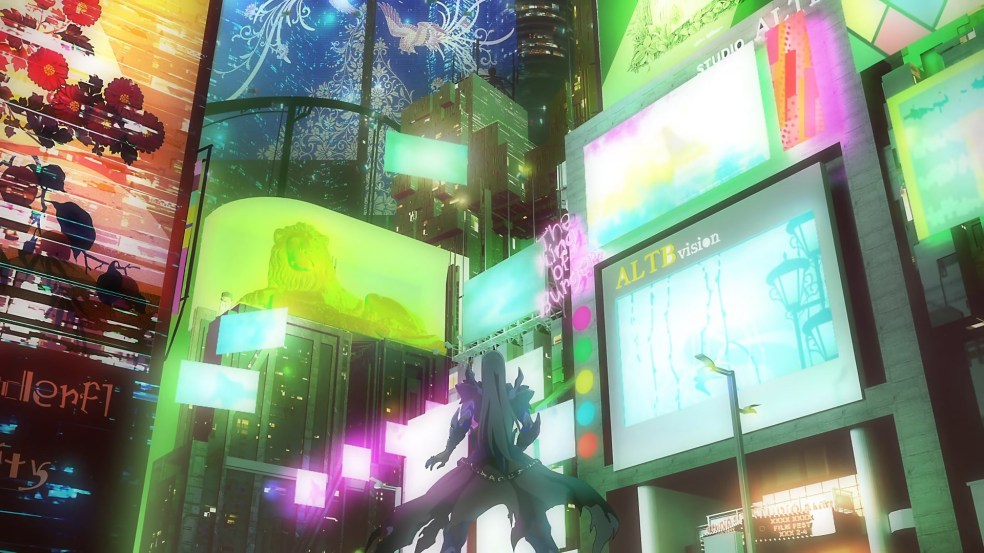


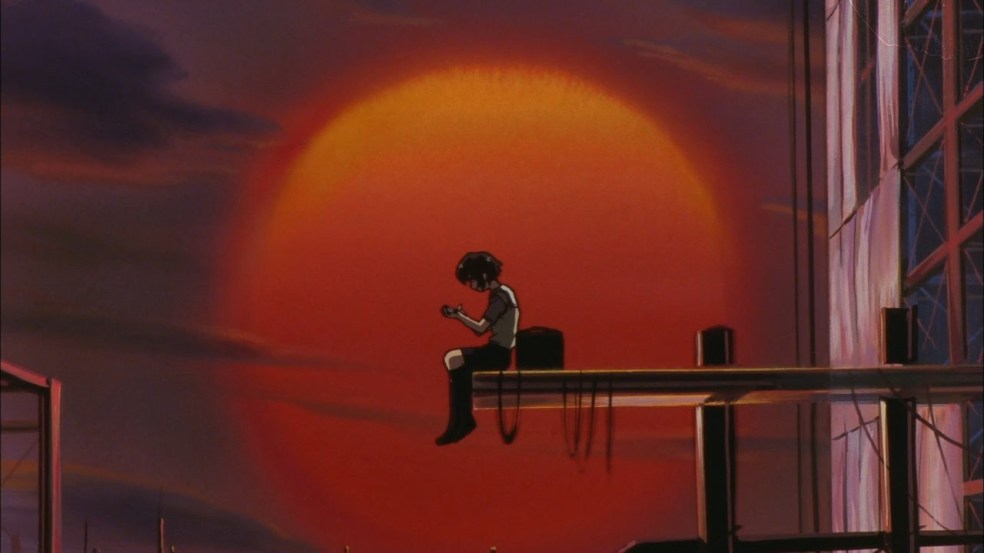






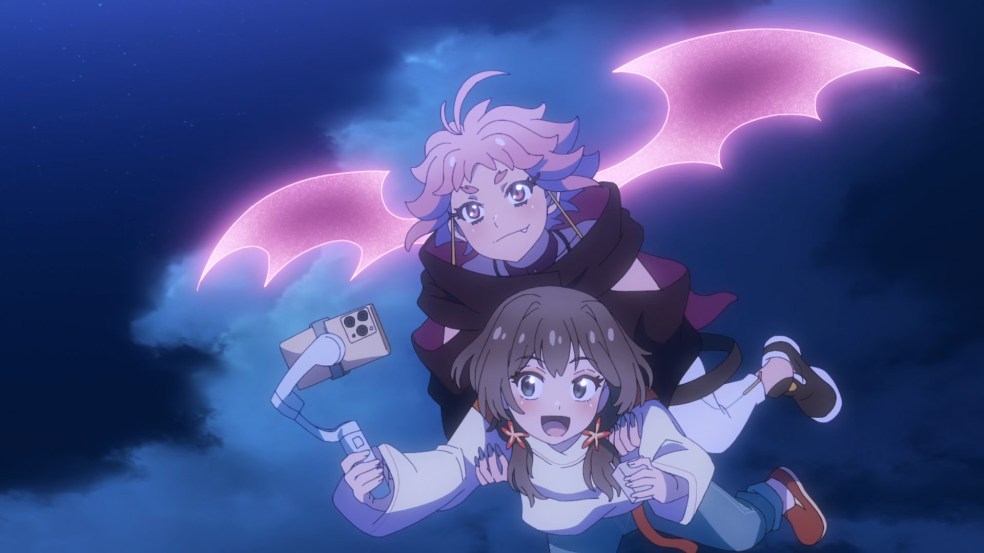




 The Magic Planet