Seasonal First Impressions is a column where I detail my thoughts, however brief or long, about a currently-airing anime’s first episode or so.
You don’t get a nice piece of serendipity like this too often. The first anime to premiere in this anime season is also about the changing of the literal seasons. That’s pure poetry, right there, and it helps that Agents of The Four Seasons: Dance of Spring leads with an absolutely excellent premiere. It’s big, bold, and deals in broad emotions. None of these are bad things, and they mark the series as supremely self-confident.
It is worth noting, though, that the first thing we see and hear isn’t anything like that at all. Instead, it’s a barrage of smoke and gunfire, screamed names and something, somewhere, going wrong. This first impression colors the rest of the story. It does not paint a happy picture, but the first episode doesn’t return to it directly.
We open on the sight of two girls on a train. Going somewhere that, we eventually learn, will be the site of a ritual to break an unnaturally long Winter season. One of these girls is a warrior, the other is a season. There is an immediate, obvious, and directly-highlighted conflict between the apparent divine inner nature of the “agents” of the title and their obvious, human exteriors. When our heroines arrive at their destination, they are greeted by a crowd of curious faces. “They say she’s the Goddess of Spring” says one. “But she’s just a person”, replies another.
The official-sounding Agency of The Seasons, the group that meets our protagonists at their destination and clears the tourists from a nearby mountain for them, makes this all seem like an organized and formal affair. The lack of a Spring in a solid decade, mentioned here offhandedly, makes it seem very much otherwise. There is clearly something wrong with Hinagiku [Nukui Yuka], Spring’s agent, and her retainer Sakura [Aoyama Yoshino] seems to be doing a lot to keep her mind off of it. The Spring Goddess, if indeed that’s what she is, speaks in clipped, halting sentences, and is unsure of herself. As the show begins in earnest she and Sakura make their way to the mountaintop to perform the sacred rite to usher in Spring.
On the otherwise-abandoned mountain, they find Nazuna [Touyama Nao], a little girl shoveling snow, who has heard of only three seasons and has to be prompted at great length to remember that this “Spring” thing exists at all. This raises questions: with only three seasons remaining, do Winter and Summer simply crash into each other unceremoniously? Does the fact that describing it that way makes it sound like I’m describing global warming give this show an environmentalist undertone? We don’t know the answers to these questions just yet, but Hinagiku does answer a different one.
Referred to as Spring’s goddess, Hinagiku is keen to offer a correction. Demonstrating the divine power she’s been given by pulling a seed from her robe and growing it into a rose in an instant, Hinagiku explains that this power is not hers, only borrowed. Can we trust the self-deprecating Spring shaman’s own words on the matter? I’m unsure, although details at the end of the episode suggest so. In practical terms though, it means that like so many superhumans in fiction, the agents of the seasons are neither wholly divine nor wholly human. They are, at least narratively, both. The demigods of our modern age.
There is here a stunning display of mutual childish insensitivity, as Nazuna lashes out about the effects the long winter has had on her father’s tourism job and presses Hinagiku for an explanation of where precisely she—and Spring—have been. Sakura shoots back, and Nazuna crumples, crying that all adults are bullies who do nothing but yell. Hinagiku asks if she is yelled at by adults often. She does not answer. But, when the trio reach the mountaintop, she begins shoveling her snow again.
No mere character tic, Nazuna’s goal is to clear the snow from her mother’s grave. As a child who’s lived for ten long years never knowing the melting warmth of Spring, she is one of the people that Hinagiku and Sakura need to help most. This understood, the rite begins, and the episode reaches its climax.
People, we are told, are not really supposed to see this. Or at least not people who aren’t agents of the seasons themselves. Nazuna gets to, though, and so do we, as Hinagiku takes pity on her and on the snow that’s piled upon her mother’s grave, she calls the Spring right then and there. It is a sight.
She begins to sing, and as she sings, she dances. Her foot taps the ground and an explosion of clovers erupts from the Earth. As she spins, singing a song of forlorn love, grass races to the surface from under the soil, bubbles of water fill the air, Spring showers suspended in the dance. Flowers bloom as the sky drizzles, and then, the centerpiece: the world bursts into a carpet of Cherry blossoms and running water. Tearfully, Sakura exsplains to Nazuna that it is for the sake of people like her that Hinagiku has been pushing herself so hard. What goes unspoken directly is that here, in this moment, it is worth it. Here is what is spoken: Spring is here, and you are happy.
The episode ends with narration. A creation myth: how Winter came first, alone in the world, and then created Spring. The two were happy together, and Winter then created Summer and Autumn. No longer able to spend so much time with beloved Spring, Winter bestows the power of itself and its fellow seasons on humans of the land. Our story, on the whole, is about them. We do not know yet the full breadth of this story, but the narration gives us some hints: love, murder, the lives people carve for themselves. All of that is in the future, and as this is another recent anime to have a rather unusual episode count (fourteen as opposed to the usual twelve), we have even longer with Agents of The Four Seasons than usual. We will have plenty of time to learn all the ins and outs of the story being told here. For now, all we know is one very important thing: Spring has arrived, safe and sound.
Due to the ongoing urgent health matters I posted about earlier today. I am not sure if I will be able to cover any more premieres this season. But, if this is the only one I get to write about, I’m glad it was such a lovely thing.
This is replacing my usual footer on the site until my GoFundMe is paid for. If you liked what you just read, please consider reading my story and offering a donation, if you can’t, sharing the page around helps a lot as well.
After I refund everyone I can, I am going to actually take the rare step of deleting this post entirely, since I don’t want my real face available on my website.
Thank you to everyone who helped. If you’re one of the people I need to refund please feel free to contact me on bluesky or leave a comment with the best way to contact you.
I have lost any semblance of consistency when it comes to labelling these columns. I promise I’ll go back and fix them all eventually. Eventually.
This past Tuesday, Chainsaw Man ended. The wildly popular shonen manga had been going on in its second part for quite a long time, and I think to some extent no ending could’ve really satisfied the fanbase at large. Nonetheless, the ending we actually got seems to have really pissed a lot of people off. You can find reams of posts complaining about it of all shapes and sizes, and your standard suite of video essays and the like as well.
Someone who did not hate the Chainsaw Man ending was yours truly. I want to re-read the whole series before making any big proclamations, but I think it wrapped up the emotional arc of the story in a way that felt both hard-fought and worthwhile. It stung, but it meant something.
Now, will I still think that after having re-read the series? I don’t know. But! It did get me thinking about the array of popular anime and manga widely considered to have “a bad ending” and the various things they may have in common.
Oshi no Ko, anyone who is even tangentially aware of manga discourse at large already knows, is widely put in that category. (I myself have been exposed, just yesterday, to a Youtube thumbnail that loudly proclaims CSM’s finale “worse than Oshi no Ko, THE END!” Such dramatic proclamations not even a week out from the last chapter, my goodness!) And the reception to CSM honestly made me want to reevaluate my own opinion on this series, despite their otherwise lacking really anything in common, because I never want to be the sort of person who just declares that something is ruined forever because it didn’t head in the exact direction I wanted it to.
This in mind, and being honest with myself, I actually think the final episode of Oshi no Ko‘s third season is mostly pretty good.
A lot of the episode’s forehalf is devoted to Ruby trying to come to terms with the absence of both her former mother from her previous life, Tendouji Marina [the legendary Inoue Kikuko], who made a somewhat unexpected return to the narrative last week, as well as that of her current later mother, Ai. And honestly? It mostly works. We get to see Ruby repeatedly stumble over a bit in the 15 Year Lie script where it dictates that her character let her mother, who, in the fiction of the film never loved her, go. Predictably this absolutely tears Ruby apart, and she can’t get through the read, despite Kana’s attempts to coach her.
Name a time a friend gave you advice that made you look at them like this.
In a general sense, we probably should’ve gotten to this earlier—maybe toward the start of this season, rather than the cosplay episodes? Just a thought—but it does matter that it’s here at all. I was beginning to worry we’d never get to see Ruby’s side of things at all. By consequence, if there’s a standout star of the third season it is unquestionably Igoma Yurie, Ruby’s voice actress, who delivers some of the best work of her entire career here. Most of her dialogue, especially the strained rants about how her former mother must have loved her (until of course she finds out that that wasn’t really the case), is delivered in a pained, strangled yelp that really sells the character’s sheer despair at her situation. And once the episode hits its first big bombshell, where Aqua reveals himself as the former Dr. Amemiya Gorou, she starts full-on blubbering/ugly-crying in the best way possible. (You can literally hear her sniffling through the line-reads. That’s called commitment where I’m from.) Igoma doesn’t have a ton of other credits to her name, so if nothing else, I hope her performance here opens some doors for her even more than being Ruby in the first place likely already has. I would love to hear her in things more often.
As for Aqua finally revealing himself as the former Dr. What’s-his-name? I think around now makes sense, if he was going to hold onto it this long in the first place. (Narratively, that is. From a What Would You Do? sort of viewpoint he should’ve done this ages ago, but that’s not a terribly insightful statement.) So does the way their relationship entirely turns on a dime when he drops that piece of info, as she immediately lets go of her hatred of the brother that she thought had selfishly sold their mother out. Arguably, this stuff is way more manipulative of him than any of the more overt cases with Kana or Akane. (And the series knows this, too, because it makes sure to have the death goddess crow girl character who’s been present up and down this season wink and nudge at us about it. Keep her in mind, in fact, we’ll be coming back to her.) Still, it’s a solid beat, and while the flashback montage about time that Aqua and Ruby spent together as Gorou and Sarina is definitely pretty cloying, it’s still sweet enough to mostly work.
(There’s also this brilliant piece of comedy buried in the montage. I’m not a medical professional, so maybe I’m missing something here but you’re not supposed to do that, right? You’re definitely not.)
Now does all of this make this whole bit, this whole sequence, automatically a good piece of storytelling? No, an emotional beat working on a craftsmanship level is different from it being the right choice for the story. And honestly, I think the episode’s structure works against it here. A cut after the scene where Aqua reveals his past identity, and us being left to sit with Ruby’s bounceback for a week, would’ve done wonders. Especially when she drops this little line after reminiscing about Gorou’s “promise” to marry her when she came of age:
A black screen blinking the words “THEY FUCKED” in all capital letters would be more subtle.
It is absolutely hysterical, and probably inevitable, that we’ve ended up at incest. If the show simply ended here, the movie in production and Aqua and Ruby abandoning their revenge quest to be left to their presumably torrid reincarnation incestuous love affair, I would have nothing but respect for it. Sadly, we don’t live in a world where anime are allowed to end—or even end episodes—on heavy implications of incest. It does also very much feel rather rushed, like we’re getting this all out of the way so we can say that Ruby had a full character arc—something perhaps true but only on a technicality—so we can rush headlong to the show’s conclusion. Oshi no Ko has of course been announced for a fourth season, probably its last, so I will need to wait until then to evaluate how right I am about this. (I could of course also read the manga, but if I’ve held off for this long, what’s the sense in doing that now?) But I suspect I am. Akasaka has just never seemed terribly interested in Ruby as compared to Aqua, and while this episode has some of the best material the character’s ever been given, it really does seem like it’s supposed to put the bow on her development. Granted! There is still the unresolved business with her former mother, so maybe that will complicate things in some worthwhile way. I’d love to see more unhinged Ruby, it feels like we barely got to know her. I nonetheless remain skeptical.
That said, I can complain all day, but for what it sets out to do, I think the first half of the episode more works than doesn’t. The only real contention is how worthwhile what it’s trying to do actually is, and I remain undecided on that front. (As I’ve said, I really do just keep going back and forth on this show.) The second half of the episode is also good, and unlike the first, is so in pretty straightforward ways. In large part, it’s a character study of Miyako, the boss of Strawberry Productions, a constant background presence throughout most of the series but who never really got an episode of her own up to this point.
It is probably the only focus she’ll ever get, but the series makes the most of it, walking us through Miyako’s arrival in Tokyo, and her early career as a model. It’s very broad-stroke, but it’s solid stuff. Made all the stranger by how she chooses to express some of this.
Miyako latches onto an extended video game metaphor while explaining her life. Bluntly, in-context, this is one of the weirdest rambles of its kind I’ve ever heard a character go on. Aside from the central simile of “fame is like a video game” seeming like something a Republican-era Nicki Minaj would come up with, it’s kind of a stretch in the first place? For whatever reason, this whole rant gets the full visual metaphor treatment and we get to see Miyako fight the men she seduced in her youth as an RPG encounters and the like. This makes it no less bizarre, but it’s an admirable amount of committing to the bit.
This all concludes with her reuniting with Saitou Ichigo, Strawberry Productions’ former owner and her own ex, when “randomly” running into him at a bar. (This was, of course, orchestrated by Aqua, actually.) And leads to Miyako herself recommitting to her obligations to Aqua and Ruby. There’s a broad motherhood theme that runs through all this, an idea that Miyako is more of a mother to the twins, perhaps especially to Ruby, than either of her own mothers ever were. (And she outright calls herself their mom more than once.) There’s something there, but for a show whose premise is so entwined with family, Oshi no Ko‘s ideas about it have always been its weakest thematic expressions. Still, it’s a worthwhile thought and I hope the show does something with it in the long term. That Kana line from the rehearsal scene does feel an awful lot like foreshadowing.
Beyond these two main plots, this episode just also has a genuine sense of fun that’s been missing (or at least not as present as I’d like) in the show for a good while, now. The show’s main issues have always been its hypocrisy and the inescapable sense that it’s kind of didactic, the comedic leanings help take the edge off of both of those things. Aside from the usual bevy of Good Kana Faces, we also have, for example, Pirate Yuri??? Why not, right? That’s a good thing, even if it does still make me wish the show just leaned into its strengths more.
In-universe, this is a commercial for body wipes. Yes, really.
Aside from a brief post-credits scene, the very last thing to happen in this episode is actually, deliberately, quite funny! Gotanda, the film’s director, laments that the casting has been squared away with the exception of the child actors, to play a young Ruby and Aqua. This is where the character officially known as just Crow Girl [Kino Hina], who I’ve been calling the death goddess in my columns—since, you know, that’s what I thought she was—re-enters the picture. Crow Girl shows up in the closing minutes of this episode to do what she does best, be vague and portentous and deliberately needle Aqua. Aqua, in the rare bit of scheming from him this season to actually have an impact beyond being eyeroll-inducing, gets an idea. He asks her if she’s, you know, physically at least, a normal human with parents and a government ID and all that good stuff. She smugly responds yes, that her “vessel,” just like his, is on the surface a normal human. Aqua then drops his funniest line of the entire season by asking her a simple question.
The anime adaptation of hit narou-kei series Reborn As a Portentous Death God in Another World That’s Actually Just Modern Japan Again, I’m Forced to Become A Child Actress by The Teenage Boy I’ve Been Tormenting?! is coming to a TV station near you sooner than you think!
And from there we cut to credits! That’s literally how the season end! This is a good thing, of course. It’s entirely the kind of bold audacity that made me interested in this series in the first place. Does this episode alone being pretty good mean that all is forgiven and we are guaranteed a satisfying conclusion? Of course not, but it’s a good sign from a show that’s been short on those for a while.
In any case, any final judgment of Oshi no Ko as an anime will have to wait until after it’s complete. So I leave you with this: I’ll see you when I see you, B*Komachi fans. Because I’m me, it’ll probably be back under the Let’s Watch banner, too.
Like what you’re reading? Consider following Magic Planet Anime to get notified when new articles go live.If you’d like to talk to other Magic Planet Anime readers, consider joining my Discord server! Also consider following me on Anilist, BlueSky, or Tumblrand supporting me on Ko-Fi. If you want to read more of my work, consider heading over to the Directoryto browse by category.
All views expressed on Magic Planet Anime are solely my own opinions and conclusions and should not be taken to reflect the opinions of any other persons, groups, or organizations. All text is manually typed and edited, and no machine learning or other automatic tools are used in the creation of Magic Planet Anime articles, with the exception of a basic spellchecker. However, some articles may have additional tags placed by WordPress. All text, excepting direct quotations, is owned by Magic Planet Anime. Do not duplicate without permission. All images are owned by their original copyright holders.
This review contains spoilers for the reviewed material. This is your only warning.
“We could even catch the moon in our tiny hands.”
I’ve missed this.
I refer here to two things. One is the very act of writing about an anime itself. It has been, at this point, more than a year since my last actual anime review—of Noir back in late 2024, you may remember—everything since then has been much more thrown together. If you’re not a regular reader of this site, that probably means exceptionally little to you, but I promise that to me it is important (and wonderful), to be properly writing a review again. If you don’t care about that, though, you might have some affection for the other thing that I’ve missed. I refer, of course, to the sprawling woodland of Hakumei and Mikochi, today’s object of appreciation.
I grew up in the Lehigh Valley region of Pennsylvania. I don’t miss much about PA, but one thing I do is its beautiful green mountains, wooded and teeming with life. The Poconos may seem like small potatoes to some, but they are where I lived and walked in my youth, and they remain in my heart. A distinction little else in the state can really claim.
When I made that nebulous transition from “person who sometimes watches anime” to “anime enthusiast”, one of the first genres I gravitated toward was iyashikei. Sometimes nicknamed “healing TV”, iyashikei is a kind of wading, immersive visual experience focused less on plot and strong conflict than characterization and immaculate worldbuilding, with a strong emphasis on lived-in environmental design. It’s all in the service of that vibe: immaculately pastoral in its best examples. Done right, you can practically feel the wind blowing through your hair and see the shimmer of the sparkling sunlight on the lake. One such iyashikei, Kamichu!, was among my first favorite anime, and when they pop up today (increasingly a rare occurrence, although last year’s mono is an example, if you want one that’s recent) I tend to at least check them out. The mountain greenery of such shows reminds me of that of my first home, and I love them for that.
Hakumei & Mikochi is maybe not quite recent enough to be called a product of “today.” It dates back from the tail end of the last decade, 2018. I was broadly aware of its pastoral reputation at the time, but my head was in a different place back then, and I was occupied with other things. I was perhaps too busy writing some of my first anime articles, singing the praises of the likes of SSSS.GRIDMAN, for example, to notice something this slow and cozy. I had perhaps fallen out of touch with this sort of thing.
And it wasn’t and isn’t just me! “Cozy”, “slow”, and “pastoral” are words that have fallen out of fashion as positive descriptors of art in recent years, at least in my circles. This is for good reason, as a lot of this aesthetic has been laid claim to by unpleasant sorts who seek to parley these ideas of pastoral peace into significantly less savory ones. But in our rush to push these people out—necessary work, make no mistake—we have perhaps been too quick to hand them this space wholesale. This I take issue with. An injection of the rustic life can, in fact, be a good remedy for the stresses of the soul. And I refuse to concede this genre to the bigoted. They do not deserve it.
In any case, Hakumei & Mikochi, while perhaps not entirely immune to such appropriation, is at least less likely to be a victim of it owing to part of its premise. Our leads here are a pair of tiny forestfolk who live and work among the trees, one of which is their home, forming a small part of a woodland society that absolutely oozes folksy charm. This place is called Makinata, and is the primary setting for our tale. These women, the titular Hakumei [Matsuda Risae] and Mikochi [Shimoji Shino], have a decidedly wife-and-wife dynamic. It’s beyond adorable, and makes Hakumei & Mikochi nicely amenable to a queer audience.
(Note however, before we get ahead of ourselves, that this does not extend quite so far as being an explicitly queer work. Somewhat frustratingly, our leads are only ever defined as “roommates” despite the obvious married-life framing. When Hakumei’s boss refers to Mikochi as her wife, the former is actually quite puzzled! Even odder is that a later episode sees someone make a similar joke to Mikochi, who accepts the framing without any protest. This kind of playing coy is not uncommon in this genre, but this is a fairly surprising place to find it. At least the “—and they were roommates!” jokes write themselves. And none of this will, in any case, stop me or anyone else from referring to Hakumei & Mikochi in shorthand as “that show about the tiny lesbians.”)
This is, perhaps, what’s found on the other end of the spectrum from that toxic yuri I’m always crowing about liking. I’ve always maintained you really want a little of both, anyway. Bitter flavors enhance sweet ones, after all. This desire, for something sweet, is what led to me deciding to watching Hakumei & Mikochi in the long term after stumbling on it during an anime roulette with some friends. (A fun activity, I recommend it.) Often, once I was committed to watching it on my own, I’d put an episode on before bed each night. On some occasions, pleasantly nuzzled between waking consciousness and the intoxicating pull of the dreamworld, I had to lazily slap the pause button on my computer, halting an episode in its tracks. Too soothed, in these moments, by the lullaby of the series to continue, and needing respite in the form of proper sleep. Asked what I think of Hakumei & Mikochi on the whole, “it put me to sleep, in a good way! :)” wouldn’t be a bad answer.
It would be an overly simple one, however.
From the beginning, Hakumei & Mikochi makes no secret of the fact that life in the woodland is not strictly snacks of giant peanuts* and drinks of beer. The series is in fact best understood as not being solely about the title characters, but rather the entire society of Makinata. We explore this in a few ways, but primarily through the show’s decently large cast. In addition to the liliputian forestfolk like Hakumei and Mikochi themselves, there are a number of talking animal characters as well. Everything from the weasel Iwashi [Matsukaze Masaya], who serves as Hakumei’s mentor and immediate superior at her job, to various one-off characters like a tiny beetle aesthete who longs for the glamorous life, a rabbit cameraman, a helpful baboon who operates a gondola, and so on, the forest of Makinata and its surrounding environs are stuffed to the gills with animal characters. This is a contributing factor to one of the show’s greatest strengths: its sheer sense of whimsy. Even outside its animal cast, this folksy anything-goes energy is quite prevalent. In episode six we meet a hairdresser, Jada [Shintani Mayumi!], one of H&M’s fellow forest-people. She lives, and runs her business out of, a giant egg. It’s absolutely delightful! And why not, right? If you’re going to establish something as inherently fairy tale-esque as tiny people who live in the woods, there’s no reason to not go all the way with it.
You will get your hair cut at Big Egg and you will get a mohawk and you will say “thank you Jada for my mohawk” when she’s done giving it to you.
This is just one part of what serves to make the show extremely watchable. Its visual styling is a big factor as well. While discussions of anime visuals these days often boil down to talk of sakuga, Hakumei & Mikochi has a fairly restrained animation style. It more than makes up for that (if indeed we can call it a shortcoming at all) with its other visual elements, such as its color choices—uniformly vibrant—and overall mood-setting. One trick it leans on fairly heavily in the directorial department is the use of cordoned-off panels of animation to emphasize particular moments. In a lesser anime this would come off as tacky, and I’m sure it’s drawing from Kashiki Takuto‘s original manga quite heavily, but given Hakumei & Mikochi‘s general energy, it works quite nicely, contributing something of a pop-up storybook feel. Beyond the visual realm, the voice acting and music are uniformly excellent. The former collecting a strong pool of talent, largely veterans, and the latter consistently setting a rustic and homemade feel. This applies as well to the vocal music. Such as that contributed by the character Konju [Yuuki Aoi], an initially rather arrogant singer who Hakumei and Mikochi befriend over the course of a few episodes, and also to the ending theme, an absolutely excellent piece of music that I looked forward to every time, even when I was sad to see a great episode end.
(A same-day edit from me here. A commenter rightly pointed out that I probably should have made mention that the music is the work of Evan Call, who has a number of credits to his name in anime, virtually all of which that I’ve personally seen have a very strong sonic identity. That’s a good point! So consider that omission fixed. While we’re at belated accreditation, I’ll point out that the director is Andou Masaomi, who I really should have thought to shout out directly, since I’ve been very positive on his work previously on this very site.)
These of course are evaluations of the show’s (excellent across the board) craft. We should also pay attention however to what Hakumei & Mikochi is trying to say, or at least what aspects of it are part of the slow-life fantasy it offers and why they might be so. A consistent theme, perhaps surprisingly so, is the nature of labor! Something the series is actually supremely concerned with. No simple utopia, the world of Hakumei & Mikochi is one where work is exchanged for money just as in our own. And in fact, it demonstrates that this is no mere show economy, either. It’s shown to us via a few flashbacks that, at one point, Hakumei was even a homeless wanderer. This is a depiction of genuine poverty that’s quite rare in this sort of thing. One such flashback even sees her preyed upon by thieves and nearly left for dead! Of course, in the show’s present, she is very much fine, but it’s still quite a departure, even as the sad story that must have led to that condition in the first place is left merely implied instead of told to us in full. That she lives with Mikochi now and is gainfully employed as a carpenter, mason, and general handyman is treated as unequivocally a good thing, and from Hakumei’s own perspective it’s easy to see how that’d be so. (Mikochi, for her part, is a prepared foods wholesaler, which does strike me as a very specific profession for an anime character to have.)
About Hakumei’s many job titles, a uniting thread here is that Hakumei & Mikochi treats all types of labor similarly. This firstly means that, thankfully, there’s none of the odd job chauvinism you sometimes see in this sort of thing. But more interestingly it also means that, whether that work is what we’d consider mundane; catching fish, grinding coffee, bartending, construction, singing, etc., or what we’d consider fantastical, the series treats it with equal respect. Take for example Sen [Anzai Chika], the necromancer-of-sorts the lead pair meet in episode two. Her day to day life is defined by her research into her art. This involves tying magic lamps to cleaned skeletons, which reanimates them with a semblance of life by replicating the heartbeat of a living thing.
Science.
This is all treated as unusual, for certain, but not remotely sinister, being just another occupation that powers the woodland that Hakumei and Mikochi call home. When Sen reappears later in the series, she is again treated the same way as any other character. For another example, there is Ayune [Nabatame Hitomi], the last character of note introduced in the series proper. Mikochi’s elder sister, she’s a playwright in town due to a slump, and melancholic that she hasn’t seen Mikochi in so long. (Although she denies this at first.) A lesser series would come off as moralizing in writing a character like this, a writer with a fairly inconsiderate personality and no real life skills to speak of beyond her pen—a combination of traits that thankfully describes no one your reviewer here has ever met—but Hakumei & Mikochi is pretty amenable to her, warts and all. She’s a layabout, and when she does try to help Mikochi (with chopping an enormous daikon that she herself bought), she messes it up, but ultimately this is all played as eccentric as opposed to downright harmful. Maybe that’s cheating in its own way, but it makes the character endearing, and when we get to see a snippet of her work in the ending credits of that episode, it’s lovely. Hakumei & Mikochi respects the arts—mundane and fantastical—and physical labor equally.
In fact, I would say the main “fantasy” element of Hakumei & Mikochi in this regard is not an absence of work itself, as it is in some similar media, but the lack of alienation from that work. Hakumei, Mikochi, and their friends are able to make a living doing what they love, and there is a more or less direct correlation between the effort they put in and the rewards they reap. The fantasy here is not one of not having to work at all, it is one of working well out of passion rather than strict necessity, and of that passion being rewarded. This is not to say that Hakumei & Mikochi is remotely some sort of socialist parable, merely that it is able to imagine a world in which one’s aptitudes and passions are rewarded, rather than downplayed or deliberately worked out of them. It’s a nice idea, and it’s to the show’s immense credit that when we get a few episodes focusing on Hakumei’s work as a member of the Borestone Guild, a group of masons. In what is probably its most important articulation of this theme, it makes the whole process look about as rewarding as it must feel to Hakumei herself when all is said and done. A lovely thing to do for a character who is often defined by her desire to feel useful. Her formerly-dismissive boss, another forest-person named Narai [Tsuda Kenjirou], is even proud of her. Imagine that!
This fascination with labor extends into what work can be done for each other, as well, extending this idea into that of intra-community support. Sen, for instance, helps Hakumei and Mikochi when a lens fire destroys part of their house in episode three. Hakumei’s work with the Guild falls under this umbrella too, as the main project we see Hakumei help them with is restoring a causeway. While most such examples that dot the show are well-done, this community theme is also, unfortunately, where the show makes some of its relatively few missteps.
Despite this genre’s reputation for being laid-back, many iyashikei have a handful of zanier, more frantic episodes. Hakumei & Mikochi is no exception here, with episode eight in particular of interest to us here. In it, our girls have to help the denizens of a part of the nearby city called Honey House—a block inhabited by outcasts where “anything goes”—deal with a group of troublemakers. This is a more serious conflict than most Hakumei & Mikochi takes a look at, and in attempting to edge into this territory it does end up hitting a weird note. I think the disputes that arise between the old and new populations of a city and the like are a bit beyond H&M’s pay grade. Although the rather goofy tone keep it from feeling like too serious of a mistake. (Most notably, Konju is part of this storyline and serves as a damsel in distress when the troublemakers make off with her. Her extremely blasé attitude about being kidnapped does a lot to save the episode. She treats it more like a guided tour of the city, than anything.) The central idea of disputes rising in this sort of loose, almost anarchist space is neat, but the resolution feels off and just a bit too simplistic. Higaki [Takeuchi Ryouta]—Honey House’s nominal leader—makes up with the head of the troublemakers over a drink, and they bond over the memory of a departed friend. It’s a nice idea, but it also feels a bit like a hasty way to put the cork back on the bottle, so to speak.
In the series proper’s final episode, we touch on these ideas again. There we learn more about Hakumei’s backstory, how she once traveled with a caravan led by a great wolf named Emerald Tail [Sakakibara Yoshiko]. Hakumei herself describes Emerald’s caravan as both a trading group and a mutual protection force (the sub track in fact actually calls them “police”). Hakumei is quite open about thinking of them in positive terms. But interestingly, Emerald Tail herself doesn’t seem to entirely agree. It’s her who urges Hakumei to stay in Makinata, when the caravan arrives there. Stopped at the gate by—introduced to us suddenly here for the first time—the fact that Makinata actually excludes those over a certain size. When the caravan and Hakumei reunite, it’s extremely brief, limited to an exchange of greetings across a ravine. Hakumei, whomever she may have spent time with in the past, has found her home, and it’s with Mikochi. As with the Honey House story, this feels like a warm but perhaps rushed conclusion to a story that opens a lot of questions about the world of the series that it isn’t really equipped to answer.
For better or worse, Hakumei and Mikochi isn’t actually interested in these questions at all. These toe-dips into the wider geographical situation around Makinata are not a primary concern of the series, which is a bit bothersome to me! Since this definitely brushes closest to all of that hay I alluded to toward the beginning of this article. I would like to dismiss it out of hand, but cannot really do that. So while it doesn’t ruin the series for me, or even anything really at all close, it does remain as a qualm. I hate qualms, but to not acknowledge them is to render any praise of a series meaningless (and I hope I’ve made clear that I have quite a lot of praise to give), so acknowledged they must be. I have no simple explanation for these aspects of the show, but if I can offer one theory, it is perhaps an acknowledgement that, like our own, the world of Hakumei & Mikochi is vast and complex. That Hakumei has found her place within it does not necessarily make it less so.
It is, in any case, better at exploring the feeling of belonging so central to its characterization of Hakumei. This is typified by the show’s third and final major thematic concern, a uniting artistic impulse behind iyashikei in general; the wonder of the natural world. This is where Hakumei and Mikochi not only shines but sparkles. Every single episode breathes a wonderful, picture-book landscape naturality, and it is absolutely lovely stuff. Everything from the lake that Sen sets out to venture into in her submarine to the mountains outside Makinata itself, to the bamboo forests near Hakumei and Mikochi’s own home. Even when, in a late episode, Hakumei and Mikochi are caught in a rainstorm on a fishing trip, even something as mundane as a downpour is treated as a little miracle.
These too will be important memories, whether you like it or not!
This translates to to how the show treats even the most distant and fantastical aspect of the natural world, the night sky itself. When, in episode four, Hakumei and Mikochi’s house is damaged by a freak lens fire, the time they spend camping while it’s repaired is largely comedic, with Mikochi suffering a bit due to her indoorsy nature meshing poorly with the open wild. Crucially though, the segment is capped with Hakumei showing her the beauty of the stars at night. “This—” Hakumei says, “—is our roof. All of it.” Hakumei & Mikochi understands an old maxim very well: home is where the heart is, and if the heart is under the sky, well, so be it.
Not that nature is inherently kind, of course! In that same episode, our heroines are respectively rattled and injured by a great horned owl by the name of Oroshi. Hakumei is only able to get it to leave by offering it a bounty of dried meats. There’s an implicit respect for the natural here, one that contrasts with the claiming it as domain elsewhere. There are still wild things in the world, and not all of them play nicely with the tiny folk of the wood. Of course, at the end of the episode Oroshi reveals that it, too, is more or less benevolent. Still, the uncertainty is striking, and it remains as strong an image as the reached-for Moon.
That duality, I think, is a good synecdoche for the heart of this series. Outdoors or indoors, working hard or the lazy life, it’s the little things that Hakumei & Mikochi truly excels at, the subtle warmth of home. That has been enough for the anime to amass something of a cult following in the years since its release—as I mention near the top of this piece, it’s still well-liked in yuri fan circles—and it’s clearly appealed to enough people such that the manga has continued on to this very day. I haven’t actually read the manga, myself! But having enjoyed my time with the anime so thoroughly, I may very well do so. Not right away though, I don’t think. Hakumei & Mikochi is best saved for when you’re missing the slow life. There is truly no rush, it’ll wait for you, as familiar as your own front door.
*: Strictly speaking, they are regular-sized peanuts, and it is our protagonists who are small. Still, the effect is the same.
Like what you’re reading? Consider following Magic Planet Anime to get notified when new articles go live.If you’d like to talk to other Magic Planet Anime readers, consider joining my Discord server! Also consider following me on Anilist, BlueSky, or Tumblrand supporting me on Ko-Fi. If you want to read more of my work, consider heading over to the Directoryto browse by category.
All views expressed on Magic Planet Anime are solely my own opinions and conclusions and should not be taken to reflect the opinions of any other persons, groups, or organizations. All text is manually typed and edited, and no machine learning or other automatic tools are used in the creation of Magic Planet Anime articles, with the exception of a basic spellchecker. However, some articles may have additional tags placed by WordPress. All text, excepting direct quotations, is owned by Magic Planet Anime. Do not duplicate without permission. All images are owned by their original copyright holders.
The problem with finally formally introducing our main villain last week is that it makes all the showbiz stuff feel deeply trivial. If that was on purpose, I’d respect it. Unfortunately, it is still portrayed with the same monumental importance it’s always had in this show. Now more than ever, even, now that the movie about Ai is getting off the ground.
Speaking of which, hoo boy.
At what point does something cross the line from tragedy into comedy? How ridiculous does it have to get? How contrived must the situation be? Aqua has some kind of Epic Revenge Plan we are not presently privy to the details of that relies on this movie being a big success. Hence his acting in it as one of the leads—this is probably also a weird pyschosexual thing but the show is weirdly shy about actually saying that—and hence caring so much about how well it does. This much makes sense, but the arc it is trying to set up is short on anything actually worth watching so far.
What this setup means instead is that we get to do the stage play arc from season two warmed over, but with a movie this time and with less visual panache despite the higher stakes. (This might be the first episode of Oshi no Ko that I would say kind of looks so-so overall, in fact. It’s not horrible or anything, but there’s a noticeable lack of dazzle compared to most of its episodes.) You’d be forgiven for forgetting this, but there was a time not that long ago when Hoshino Aqua did in fact care about acting as something other than a means to an end. The fact that he doesn’t anymore isn’t inherently a problem, but as with everything else in this season the real issue is in the execution. There’s something to be said for the pure, granite cynicism of essentially having your lead seem like he’s going to walk into an open grave, but it’s absolutely no fun to watch at all, and it isn’t really that compelling as drama, either. The Aqua I cared about is already dead, so I don’t much care if this guy lives or dies. He says it himself in this episode, he’s given up on living a happy life. Why should I care if he lives one or not?
God bless MEM-cho. She is one of Oshi no Ko‘s vanishingly few characters who might be called “a normal person,” and as such she is totally unequipped to handle Aqua’s whole mess, but at least she’s trying.
Then there’s the whole blind acting contest thing that closes out the episode. Essentially, Frill—yes, more on that in a second—challenging Ruby and Akane to a pseudo-audition where they will vote among themselves for the best actress between them. In principle this is actually interesting, but in practice, it’s the same thing I’ve been saying about every problem I have with this season. It’s not that it’s bad on paper, it just isn’t handled well. Also, I don’t care how true to life it is, contriving the situation such that neither Akane nor Ruby have any idea what they’re actually auditioning for just makes the entire thing less interesting. I want to see Ruby torn the fuck apart by grappling with what she’s going to have to portray if she lands this role, and I want her to do it anyway. I’m sure we’ll get to that eventually but what point does holding off on it serve? Other than being yet another example of the show handling Ruby with kid gloves? (Because god forbid a girl be a tragic heroine while her brother is doing exactly the same thing.)
Right, it serves to reintroduce everyone’s favorite character, Shiranui Frill.
Yeah, you know, Frill. The living piece of trivia who was initially created solely to bridge this series and Love is War!, since she’s related to a character from that manga. That Frill. Are there a lot of Frill stans in the audience? Are the Frillnatics (presently my headcanon for what Frill’s stan army is called in-universe) popping for this? If you are out there and you are reading this, please reply to this post telling me why you like Frill. I’m genuinely curious. Before this episode she was barely a character at all, and hey, to her credit, she makes a solid showing here (it is never a bad idea to add more weirdos to the cast). But it all just seems like such cruft. The anime is apparently cutting quite a lot, and it still feels like it’s paced glacially and is just generally way too decompressed. I want some fucking urgency, man! There’s a killer on the loose! And frankly the contrivance just makes her look like a terrible person! Frill knows that Ruby is Ai’s daughter, surely? The idea that she’d not tip her off just for the sake of being professional strains credulity. Actors break the industry’s unspoken rules for much less in both real life and fiction all the fucking time. (It would be an entirely other matter if she was doing this on purpose in order to give herself an edge in the contest or to mess with Ruby for some other reason, but there’s no real indication that that’s the case.) All told it’s a surprisingly sloggish episode, despite there being, theoretically, quite a few things that happen here.
Also, the heavy-handed Ruby/Ai parallels are a bit much. But honestly if that was my only problem with this season we’d be doing alright. One thing they do genuinely have in common—a much bigger similarity than the contrived “they’re both liars” thing that the show keeps trying to set up—is that they’re dumbass goofballs. For example, we learn about a pair of video letters Ai had Gotanda hold on to (another contrived element), and when he asks her why have him do this, her response is this.
And back in the present, Ruby’s best guess as to what the audition will entail is…this whiteboard doodle.
(This is also something both of them have in common with Frill, who goes on a bizarre rant about her taxes and submits a comedy skit about the actual like from-the-fairytale Boy Who Cried Wolf as her audition, which includes her howling like a wolf. It’s one of the episode’s highlights.)
I’ve said this many times, but it’s so ridiculous to me that Akasaka Aka clearly wants to write Dark And Serious material, because he is so much better at simple comedy and relationship stuff. Kana is a bright spot in this episode when she shows up in its first third. She has a nice little exchange with Aqua and another with Ruby, and exits the episode early on with this line. I would not be surprised if she is the only major character who makes it out of Oshi no Ko with something resembling a happy ending. (Not inherently a better thing, but something Akasaka is far better at writing than whatever the fuck else he’s trying to do here.)
And honestly, that’s the main thing right? I didn’t hate this episode. It has its bright spots! But overall? In aggregate? It’s just a mess and a bore. I don’t respect what Oshi no Ko is doing anymore. Not because it shouldn’t try to have tragic elements or be serious, but because it is simply bad at both of those things.
Like what you’re reading? Consider following Magic Planet Anime to get notified when new articles go live.If you’d like to talk to other Magic Planet Anime readers, consider joining my Discord server! Also consider following me on Anilist, BlueSky, or Tumblrand supporting me on Ko-Fi. If you want to read more of my work, consider heading over to the Directoryto browse by category.
All views expressed on Magic Planet Anime are solely my own opinions and conclusions and should not be taken to reflect the opinions of any other persons, groups, or organizations. All text is manually typed and edited, and no machine learning or other automatic tools are used in the creation of Magic Planet Anime articles, with the exception of a basic spellchecker. However, some articles may have additional tags placed by WordPress. All text, excepting direct quotations, is owned by Magic Planet Anime. Do not duplicate without permission. All images are owned by their original copyright holders.
Something I greatly appreciate about Ikoku Nikki is its intentionally screwy chronology. Asa walks home disappointed when one of her friends suggests they all try out for a lead vocalist position. We then get to see why she’s upset. All of those friends pledged at some point to write a song together, a promise treated as sacred in some genres here dissolves into nothing in the span of just a few months. As she walks, melancholy, a piano melody drifts her way, and it’s suddenly years and years ago, when she was much younger and singing in a choir competition, something her biological parents seem to have encouraged. Later, when she loses, her father stutteringly tells her that her singing “stood out.” In this way, there is a through-line. The immense weight of that reaction, likely not even intentional, is something that can utterly sledgehammer a child’s sense of self. This isn’t the thing that sets Asa a-wandering, but it is one such thing.
This methodology pairs well with the collage-like approach that Asa takes to her notebook itself, the central object of Ikoku Nikki on the whole. Her writing in it is, like her memories, patchwork, a scrawled quilt of quotations from the adults in her life, doodles of UFOs, short exclamations of feeling and so on. In this way, Ikoku Nikki is very good at marrying form to function; we are living inside of a notebook not unlike Asa’s as we watch it, because everyone’s life is like this.
And indeed, Asa’s not actually the only character to have this privilege. We follow Emiri for some time here, time spent waiting for her friends, fixed on a length of telescoping pencil lead, washes away into a daydream of the seaside.
When one of those friends arrives, she vents about feeling like she could never stop being friends with Asa even if she wanted to ever since the accident. That feeling, tense and heavy, melts away. The person Emiri is venting to is a gentle newcomer to the narrative, one Shouko [Hanazawa Kana], who wraps her pinky finger around hers, the implicitly romantic nature of the gesture made explicit when Emiri blushingly says that she likes this girl. Without this insight into Emiri’s own point of view, it would be easy for the viewer to condemn her at arm’s length. Walking alongside her, we can see that her feeling of burden isn’t borne of cruelty. It’s the shifting unease of someone who feels she is rapidly growing apart from her childhood friend, in ways she’s not sure how to confront. This sort of tempering is what drives Ikoku Nikki’s emotional logic, it’s what makes it feel “real.” The emotional verisimilitude holds up a mirror to every similar selfish decision we’ve ever made for ourselves. It doesn’t judge, but it does reflect.
These aren’t the only lives this show has explored, but all those it has are considered similarly. (Makio, most notably. Both here and elsewhere.) Notebooks, connected by only the whims of their writers, emotions and events blending together with no regard for time or space, are the perfect metaphor. We are, perpetually, searching for the unifying thread at the center of it all, the reason we write in the first place, no matter what form our stories take.
Like what you’re reading? Consider following Magic Planet Anime to get notified when new articles go live.If you’d like to talk to other Magic Planet Anime readers, consider joining my Discord server! Also consider following me on Anilist, BlueSky, or Tumblrand supporting me on Ko-Fi. If you want to read more of my work, consider heading over to the Directoryto browse by category.
All views expressed on Magic Planet Anime are solely my own opinions and conclusions and should not be taken to reflect the opinions of any other persons, groups, or organizations. All text is manually typed and edited, and no machine learning or other automatic tools are used in the creation of Magic Planet Anime articles, with the exception of a basic spellchecker. However, some articles may have additional tags placed by WordPress. All text, excepting direct quotations, is owned by Magic Planet Anime. Do not duplicate without permission. All images are owned by their original copyright holders.
In this week’s Oshi no Ko, it feels like the house of cards is fully falling apart. Aqua revealed his and Ruby’s parentage at the end of the last episode. In doing so, he’s completed the alienation of everyone he cares for at all; Akane rightly told him off for putting trackers on her last week, here, Ruby chews him out for posthumously ruining their mother’s reputation, and even his surrogate second mom, the agency head Miyako, is clearly quite upset about the entire thing. Kana is really the only person here who still gives him the time of day, and it’s partly out of feeling she owes him for burying the scandal about her and that director, whether he meant to or not. Aqua spends this episode looking for all the world like a man already dead, and to the show’s credit, that much is definitely intentional, and it’s largely well-executed. There is also this line from Kana, who reveals that she plans on quitting the idol business in the near future. That much is not a surprise—we’ve always known that acting is her real passion—but combined with the rest of the episode it ends up feeling prescient, and not in a good way.
More than ever, Oshi no Ko is two different anime fighting each other for dominance. On the one hand, the showbiz stuff that took up most of the story when I last wrote about the series a couple weeks back. On the other, the psychological thriller aspects that have defined Aqua as a protagonist this entire time. I’ve thought about what the anime be like if it just picked one or the other, but ultimately it’s impossible to know. (And there’s no guarantee that such changes would make Oshi no Ko a better story. Or even a more coherent one.)
I’m sure to longtime readers it must seem like I keep going back and forth on this show. That is because I do keep going back and forth on this show. It’s trying to walk a very delicate tightrope, and because of that, how much this show succeeds at what it’s trying to do is going to come down to its final moments, be those moments counted in episodes or mere minutes I am not yet sure. For most of this season, and even most of this episode, I was willing to entertain the idea that it could still pull it off. Now, I’m not really so sure. I would like to be wrong, but we’ll get to why my opinion’s changed yet again.
First, let’s talk about a favorite storytelling technique of the series. One of Oshi no Ko‘s recurring tricks has been to have a character explain how to extract a certain feeling from the audience in some in-universe context while, at the same time, the series is doing that metatextually to its audience. Often with that same character. It’s been consistently fantastic at this, most notably so during the second season but as recently as just a few weeks back. Here, it makes its biggest play yet. This part of the story will be divisive, and perhaps sensing that, Oshi no Ko seeks to quell some of that division by returning to the one character that every fan of the series almost universally still has positive feelings for.
Yes. Via flashback, this is the first episode since the premiere of the series where Hoshino Ai [Takahashi Rie, if you’ve forgotten] herself is a major character.
At this point, I was already getting a bit worried. That is a big play, and it’s not one you want to make carelessly.
On the set of a film, she bothers Gotanda Taishi (the director who served as Aqua’s mentor) into filming a documentary about B*Komachi—the originals, recall—that her agency has wanted to do for some time. This is to be a grandiose thing, with shooting wrapping up on the day of the Tokyo Dome concert for B*Komachi that never actually came to be. Gotanda is serious about making this a truthful, genuine documentary of the B*Komachi girls, including Ai herself, and he doesn’t want her putting up her usual front. Despite warning Gotanda that the footage might be unusable if she isn’t “lying all the time”, Ai acquiesces to his request.
And then, somewhere between that conversation and the day when the concert was supposed to happen, Ai died. Gotanda has been sitting on this script, which he’s rewritten into a lightly fictionalized account of Ai’s story, for some time. Actual parallels in the real world to this are in very short supply. In theory, it’s an interesting idea. And depending on how much you pop for minor characters returning, you’ll be interested to know that in addition to the usual suspects, New B*Komachi, Aqua himself, and Akane, the film’s producer, Kaburagi, also wants to cast Melt and Shiranui Frill, as well as a completely new character in the role of Ai herself. For a minute, it might seem like the final arc of Oshi no Ko will be about immortalizing Ai’s story on the big screen, essentially an in-universe version of Oshi no Ko itself.
And, unfortunately, for the first time, I think Oshi no Ko‘s usual bag of tricks fails it here. Pretty much completely, in fact. It is wonderful to see Ai again, no matter what side of her we’re seeing, don’t get me wrong, but pushing Ai back to the center of the story as an actual character as opposed to just an idealized ghost haunting the narrative and everyone’s minds shines a very harsh light on OnK’s own complicity in the exact pop media machine it’s trying to critique. This has ramifications mere minutes later in the episode, but let’s talk about that in of itself first.
Do you know how many commercials Ai, the character, is in? Not fictional commercials within the world of Oshi no Ko, real ones.
Hint: More than you’d assume.
There’s a couple of these, although sadly not that many seem to have made it on to Youtube. Even if it were just this one, the point would remain; it’s weird that you’d use a dead person for this, right?
She’s not really dead of course. Fictional characters exist outside linear time, they are alive when they’re alive in the story and dead when they’re dead in the story. Vague, wobbly, out-of-universe stuff like a commercial is even less committal. Someone decided it would be funny to have a dead girl hawk this stuff, or even maybe just that she was so charming that it didn’t matter that she was dead, so there she is. I’m not stupid, and I’m well aware that this is far less of a problem than it would be if Ai had been a flesh and blood human being. But it’s still a little weird, right? There’s something a bit off about that?
The same is true of Oshi no Ko‘s endless barrage of merch. Look in any of these merch sets and there she is, frozen in eternal youth right alongside her children, who are of course represented as also being their teenage selves and thus roughly Ai’s own age. There is no explanation for this, because why would there be? It’s character merch, essentially just an art board put on some kind of collectible good. And in any other series I’d completely agree with that assessment, but the problem is that Oshi no Ko is in part a critique of fame. Ai isn’t real, but the systems she was written in part to criticize certainly are, even if they’re intangible, and this cuts against those ideas in an offputting way. I don’t know how much control original author Akasaka Aka has over the series’ merchandizing, but I’m criticizing a work of art, here, not one guy in particular. (And even if I was, I think the bit about figure rights in the cosplay episode several weeks back would put me entirely within my rights to do so.)
This has always been a problem with the series, a kind of deep-baked hypocrisy that’s never truly been absent. Until now, it’s been easy to ignore it if you were so inclined, the storytelling was good enough to warrant that. The Drama was worth it, if you ignored that it would have to build up to something at some point. Unfortunately, we’re now at “some point”, and it’s consequently become much harder to avoid the elephant in the room. The hypocrisy really hits a fever pitch toward the end of this episode, where we’re finally properly introduced to our main villain.
I strongly suspect that in the future, if I am asked to point to a single moment where Oshi no Ko just falls off for good and never recovers, it will be this sequence.
In the closing minutes of the episode, we are introduced to two characters. One is Katayose Yura [Hasegawa Ikumi], a red-hot superstar actress. She’s Kaburagi’s choice to play Ai.
Introduced alongside her is some mysterious and obviously-sinister blonde guy. They talk a bit as she drinks her stress away and she mentions her love of hiking. The blonde guy makes the deeply weird comment that she should be careful on her hiking trips, since if anything happens to her it’ll look like an accident. Hilariously, she doesn’t think twice about this, and either he or some accomplice of his promptly murders her the next time she’s on a hike, shoving her off a cliff, into a ditch where she dies painfully.
It’s probably obvious, but this blonde guy is in fact Kamiki Hikaru [Miyano Mamoru]. The twins’ father, the man who orchestrated Ai’s murder, and so on and so forth. This is our main bad guy, and while we’ve seen him from the shadows and briefly in passing a few times, this is our first opportunity to spend any real time with him. While he’s definitely intended to be unpleasant, the unfortunate reality is that this guy sucks in precisely the wrong way. In his brief few lines here, he comes off as the kind of supernaturally-competent murderous dickhead who riddles essentially the entire output of seinen manga magazines. Accordingly, his first impression is that of a character who is not only unpleasant, but corny andreally boring. God bless the team at Doga Kobo, because they really try their hardest to make this guy look properly sinister, and Miyano Mamoru delivers his lines with as much malice as he can muster, but there’s a deeper problem here, and it’s on the writing level.
Look, I’m not saying every character necessarily needs the most realistic motivation in the world. Hell, even if they did, serial thrill-killers are a real thing. My problem is not that this is unrealistic, or “too dark”, or anything like that. My problem, to put it in the only way I can really think of, is that it’s stupid. And it is stupid! It’s corny! It’s cheesy, and not even in a fun way! Worse is that her death is framed in basically the same way that Ai’s was. What’s the term? Once as tragedy, twice as farce?
Honestly this might’ve worked more if it was darker. Part of the reason this is so out-of-nowhere and scans as so ridiculous is that we have no idea who this girl is! She’s alive for all of five minutes of screentime, and it’s clear that the reason she exists is that the show wanted to kill a character similar enough to Kana to make the similarities obvious but was either too chickenshit to actually kill Kana herself or was prevented from doing so—editorial intervening in the manga writing process? Who knows. Either way: eat me, this blows.
If you want to defend the show, it’s easy to try to offload responsibility onto the viewer: “Well, you’re still watching, aren’t you? Clearly the fact that you are means this kind of lurid shlock works on you!” The problem of course is that I didn’t write this. In defaulting to not just this kind of plot but this execution of this kind of plot, the show’s undercurrent of hypocrisy boils over into something rank, ugly, and nasty. Earlier in the episode, on the set of the movie he’s filming with Ai, Goshanta says you can’t half-ass emotion, not even for the sake of plot. This is one of many bits of pithy wisdom about the arts that Oshi no Ko has put into the air over the years, some of them more meaningful than others. Yet, here we have the show doing exactly that, killing a random one-off character for no reason other than to establish a villain’s bad guy cred. We are given nothing to latch onto, and the entire sequence inspires no emotion but annoyance. Commit to the dark shit or don’t do it in the first place, you cowards. There is nothing worse than a half-assed tragedy.
Is it possible for the show to recover from this? Possible, yes. If you want to, you can read all of those comments people make to Aqua in this episode, that he’s ruining his mother’s reputation and basically digging up her grave, as comments the series is making about itself. I acknowledge that, and if it somehow pulls this off in a way that feels worthwhile then I’ll look like a naysayer. But that’s a risk I’m willing to take, because if I’m being asked if a righting of the ship is likely? Not at all. A fuckup this dramatic is usually the sign of an incoming plane crash of an ending. I am of course aware that Oshi no Ko‘s manga already has a reputation as a story that fucks it up in the final stretch, so I am not optimistic. We’ll see what the remaining three weeks bring.
Like what you’re reading? Consider following Magic Planet Anime to get notified when new articles go live.If you’d like to talk to other Magic Planet Anime readers, consider joining my Discord server! Also consider following me on Anilist, BlueSky, or Tumblrand supporting me on Ko-Fi. If you want to read more of my work, consider heading over to the Directoryto browse by category.
All views expressed on Magic Planet Anime are solely my own opinions and conclusions and should not be taken to reflect the opinions of any other persons, groups, or organizations. All text is manually typed and edited, and no machine learning or other automatic tools are used in the creation of Magic Planet Anime articles, with the exception of a basic spellchecker. However, some articles may have additional tags placed by WordPress. All text, excepting direct quotations, is owned by Magic Planet Anime. Do not duplicate without permission. All images are owned by their original copyright holders.
Magic Planet Arcade is a once-in-a-great-while column where I take a break from writing about cartoons to write about video games instead.
The flashing text of a bootup sequence gives way to a run-and-jump through an ominous, empty structure. Thoughts flash on-screen, whether they’re ours or someone else’s is not immediately clear.
As the portentous omens come to a climax, we are reunited with our right hand, the [?handheld_assistant/;bestfriend/;gun] JOYEUSE, the first of many allcaps nouns we’re going to meet here. An AI named AEGIS, in a friendly, feminine voice, informs us that due to circumstances in our previous life, we have been drafted as a “Cicada”, broadly outlined as a sort of immortal robotic (or perhaps cyborg?) supersoldier. Our name is FAWN-A2, callsign The White Rabbit. Without more than a moment to get our bearings, AEGIS informs us that we are to be dropped into environs called SPHERES, somewhere in the CASCADE—the very nature of what the CASCADE even is is not explained to us—where we will retrieve sets of objects labeled CORES. Standing in our way is a variety of THREATS, named in broad terms that gesture at their form or function; SHOOTER, BOUNCER, CRAB, ESPER, etc., and rendered in a Superhot-esque red. Our instructions are very simple; get the CORES, get out, and if anything gets in our way, rip and tear.
If you’d think this sounds like the noun-heavy setup for a pretty simple FPS game, you’re half-right. Mechanically speaking, Cicadamata is part of the “go fast and beat ass” lineage of ‘movement shooters’ typified by something like Ultrakill. It’s an imperfect comparison, as Cicadamata‘s level layouts are generally a bit less enemy-focused and the visual aesthetic is very different (a future-retro “vectorheart” art style vs. Ultrakill‘s neo-Playstationy look), but they’re in the same ballpark. Cicadamata‘s weapon selection is very stripped-down compared to most FPSes. There is no “selection” at all, in fact. You have just one gun, Joyeuse itself, who functions as a cross between a shotgun, and, when the aim button is held, a sniper rifle. Joyeuse at your side, you can jump up to three consecutive times and dash once (thus really earning the “rabbit” part of your name) to hop about the levels, obliterate THREATS, and get to the exit. You also have a “stomp”, a diving downward drop that lets you step on enemies Mushroom Kingdom-style, should that be your preference.
Describing it in text does not really do justice to the kinetic feeling of actually playing Cicadamata. I’ve played a number of other games in this genre, and, to reveal my hand a bit, I tend to only get so much out of them. I’m simply not a competitive, top-of-the-leaderboards kind of player, it’s not in my nature. But Cicadamata‘s relatively stripped-down visual style—not a lot of complex textures here, for instance—lets it throw a lot of individual elements at you at once, which, combined with the twitchy movement and disassembled, surreal level geometry, makes the whole thing feel overstimulating in a good way. It’s properly buzzy, in fact, and AEGIS’ robotically gentle voice telling you that she’s proud of you when clear a level gives the entire thing a decidedly praise kink-y undertone. (Not the lone example of horniness. More overt, for instance, is the fact that one sees White Rabbit’s ass on the level results screen. But if you are expecting me to list that as a negative, I have bad news for you.) I am not normally the sort of person who’s inclined to try for S-rank clear times or the like, but Cicadamata tracks that, and I found myself aiming for Diamond (its highest rank) more than once, playing levels over and over despite the Demo Disc only having five of them. “Addicting” as an adjective in a video game context is beaten to death, and has a bit of a sinister cast to it. So I’ll just say I really, really enjoyed the 3 1/2 hours I managed to squeeze out of the demo, and plan to pick the game up when it releases.
Even more compelling to me than the gameplay however is the impressive amount of intrigue Cicadamata manages to build about its world in the demo’s short runtime (my first complete playthrough took perhaps 30 minutes) and lack of anything akin to cutscenes, normal dialogue, etc. If you linger around the dropship that starts each level, you’ll sometimes hear AEGIS deliver a bit of exposition about the SPHERE you’re in. (She’ll also encourage you to use the affirmation phrase “I am okay, the air is just heavy today” if you get scared or nervous. There is absolutely no sinister undertone to this whatsoever, I am assured.) There are also text terminals one can find in a few levels, something that greatly excited me in general.
Earlier, I compared this game to Ultrakill, perhaps the most successful of the movement-shooters that Cicadamata positions itself alongside. I love Ultrakill, don’t get me wrong—I’m transgender, it’s in the signup forms—but Ultrakill‘s religious saga about blood-fueled robots in an eschatological post-armageddon is a fairly different vibe than what’s going on here. To me, the text terminals seal the less immediately obvious, but perhaps more instructive, comparison. Despite having less in common with Cicadamata on a gamefeel level, the spectre of the original Marathon trilogy looms large over this game. (And the art direction brings to mind some trace of the Marathon reboot, as well.) Not just the first game, Marathon itself, but also Durandal, and Infinity. Cicadamta‘s story, if the Demo Disc is any indication, will be told in sputtering, half-remembered fragments, sometimes from the text terminals, and sometimes from stranger sources, be they hidden or randomly triggered. This very appropriate for themes of trauma, transformation, and the inherent fallibility of perception, all of which are present in the five terminals scattered across the demo. Each of these is brief, but they’re incredibly evocative, making use of cryptic phrasing, unknowable imaginary technical jargon crammed into crucial reports we have only some of the context for, diary-esque framing, and a [?bracketed word/synonym/evocative_third_word] writing trick that I’ve seen in a few places before but which never fails to delight me.
That you have to actually keep an eye out for the terminals might seem to scuttle the Marathon comparison a bit. After all, those games had plenty of hidden terminals, but most were right out in the open. But it brings most to mind a specific stretch of the series in particular, the so-called “Dream” levels in Marathon Infinity; the transitional “Electric Sheep” levels, “Where Are Monsters in Dreams“, “Eat The Path“, some of the most striking and surreal spaces in the entire trilogy, where the games’ otherwise linear storytelling begins to break down and it is made obvious to us, via heaps of surreal textual scenes, that our own player character is not necessarily an objective witness to events. Cicadamata even seems to be cognizant of this similarity, the first hidden terminal you can find makes mention of “Onaeire”, a name used vaguely but seemingly in reference to the location of the SPHERES or perhaps the entire setting in general. “Onaeire” is a fictional place-name, whatever its significance, but it seems to deliberately call to mind the adjective oneiric. Dream-like.
The Marathon comparison exists on an even more obvious level as well. Our [?shotgun/;handheld_assistant/;bestfriend] Joyeuse is named after one of Charlamagne’s swords. This is a naming convention directly borrowed from Bungie, who named the main AI companion in their first sci fi FPS trilogy Durandal and the same in the second Cortana. (Now, the one actually talking to us in our mission briefings and such is AEGIS, but given the tutorial, and some other factors, such as the talk that Joyeuse gives you little one-liner pep talks any time you zoom in with it, I do think the homage is intentional.) So this is clearly a reference Cicadamata is deliberately invoking, something being reached for.
Note Joyeuse talking to us in the bottom right. They have dozens of these quotes, some of which are just cute references and some of which seem to actively develop the relationship between Joyeuse and FAWN-A2. It’s very easy to completely gloss over this if you’re not looking for it, but I hope it remains and is expanded upon in the full game.
This would be meaningless if it weren’t a great game in its own right, of course. I do hope I made the fact that I think it very much is clear farther up this page. In addition to all that can be said about how the game looks and feels, what themes its story might eventually unpack, the main thing that impresses me is just how fresh it feels. The familiar toolbox of the movement shooter is there, to be certain, but gameplay, art, story, even audio intersecting in such a specifically compelling package makes for a game that is just absolute catnip to me and people like me. Not for nothing has the demo alone attracted a fair bit of attention (I’m not the first person to write about it, and I certainly won’t be the last). If I can peg all of its success on one thing, it is that sense of newness. Aspects of Cicadamata may be familiar, but it’s hard to name anything that’s put them together in this way before. There’s something new brewing here, and that’s genuinely exciting.
The only bad thing about all this is that, as of the time of this writing, you can’t actually play the demo anymore! I’m not really a games journalist, as the existence of just two other articles on this site about video games attests to. And by the time I’d heard about Cicadamata, played the demo, and had the thought to write about it, the timelocked demo was already just a half-day out from expiring, and by the time you read this, it will have run out entirely. (If I can levy any real criticism here it’s that I find that entire practice frustrating, though even there, I’m not sure if it’s a choice of the developers’ or some kind of requirement for being involved in Steam NextFest.) So if any of this sounds interesting to you, you will have to wait until the release of the game proper. Waiting can be frustrating, for sure, especially for something that doesn’t have a concrete release date yet. But you won’t wait alone; something else also waits in the heavens, and that, precisely, is why Cicadamata is so interesting.
Like what you’re reading? Consider following Magic Planet Anime to get notified when new articles go live.If you’d like to talk to other Magic Planet Anime readers, consider joining my Discord server! Also consider following me on Anilist, BlueSky, or Tumblrand supporting me on Ko-Fi. If you want to read more of my work, consider heading over to the Directoryto browse by category.
All views expressed on Magic Planet Anime are solely my own opinions and conclusions and should not be taken to reflect the opinions of any other persons, groups, or organizations. All text is manually typed and edited, and no machine learning or other automatic tools are used in the creation of Magic Planet Anime articles, with the exception of a basic spellchecker. However, some articles may have additional tags placed by WordPress. All text, excepting direct quotations, is owned by Magic Planet Anime. Do not duplicate without permission. All images are owned by their original copyright holders.

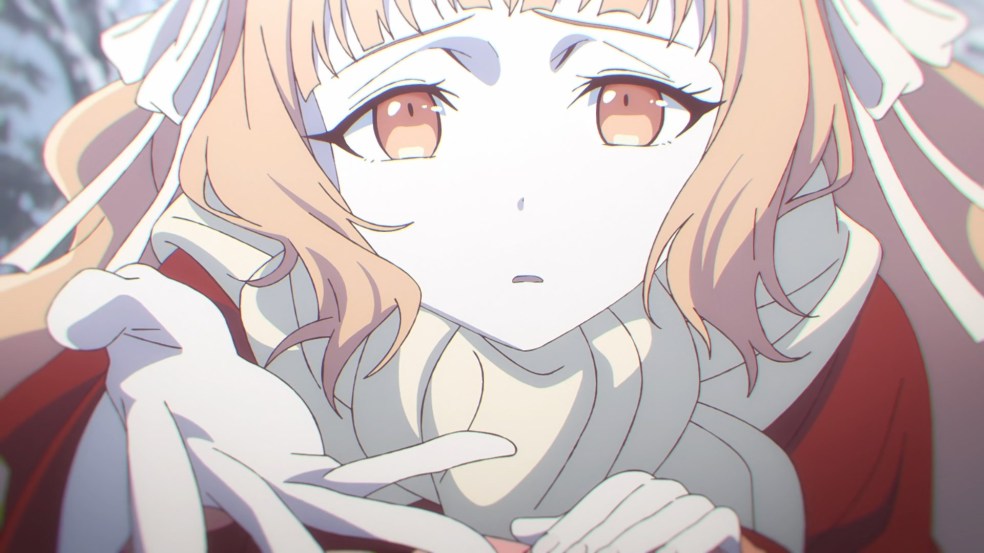


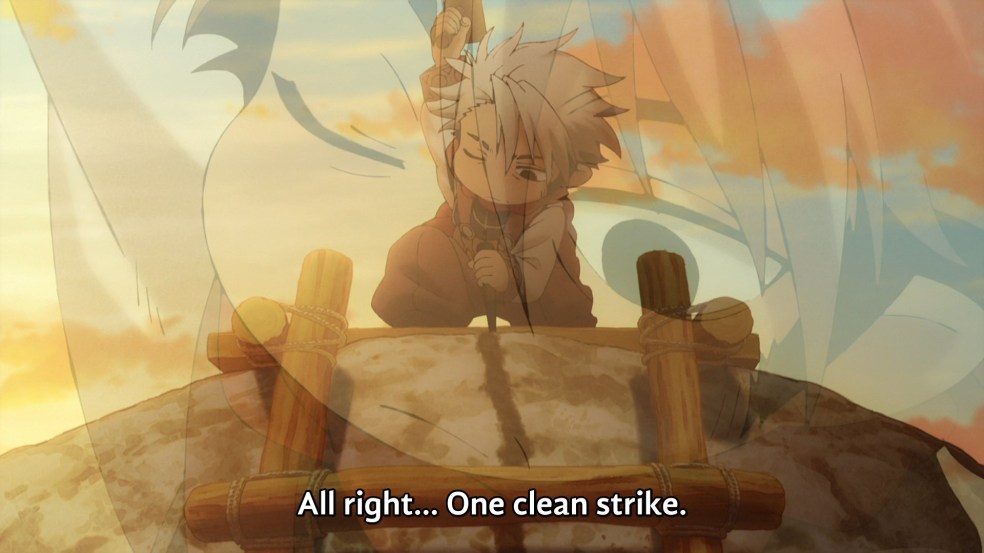
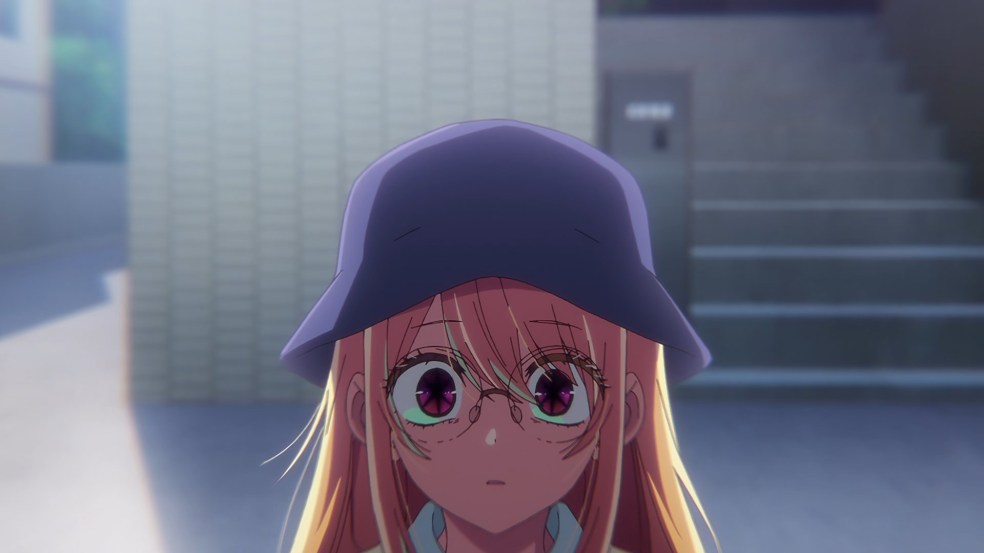


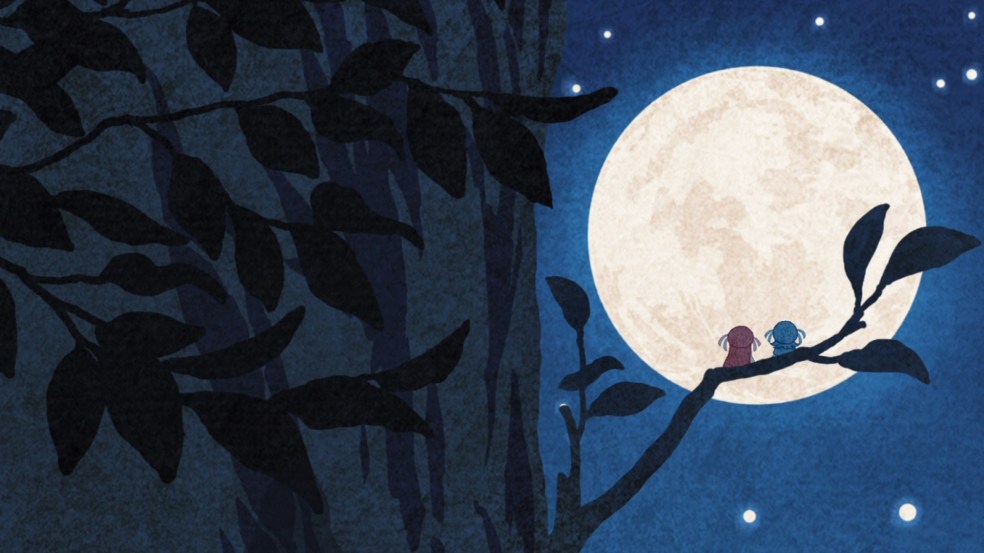


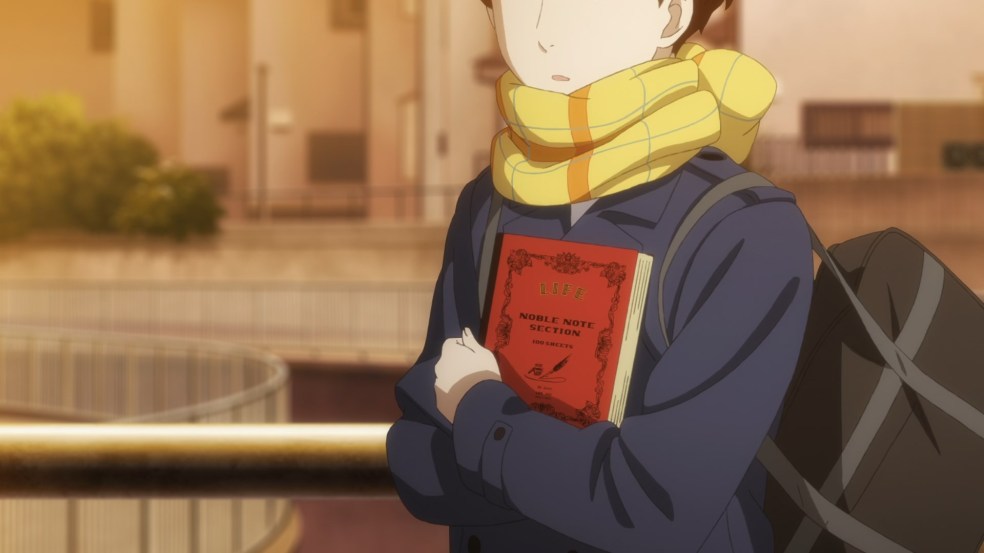


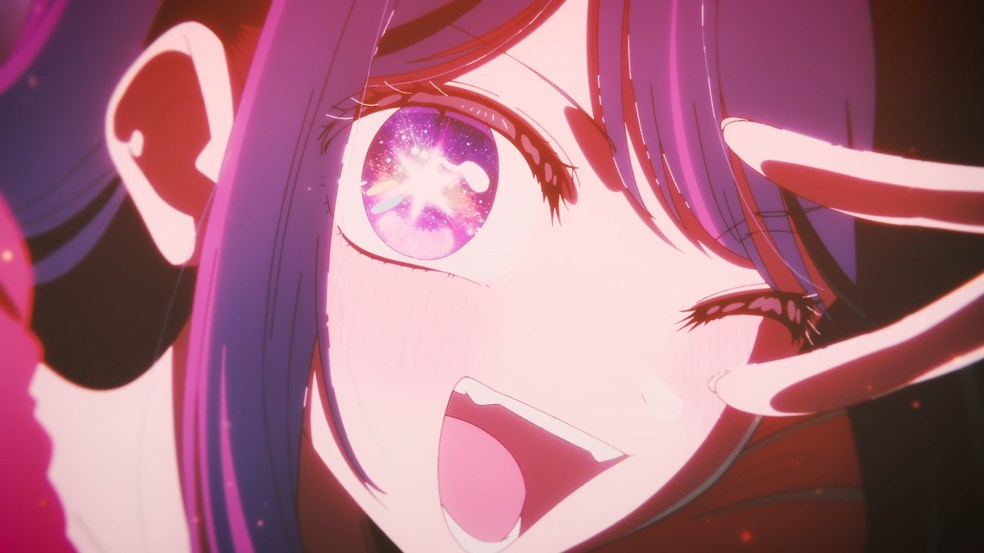


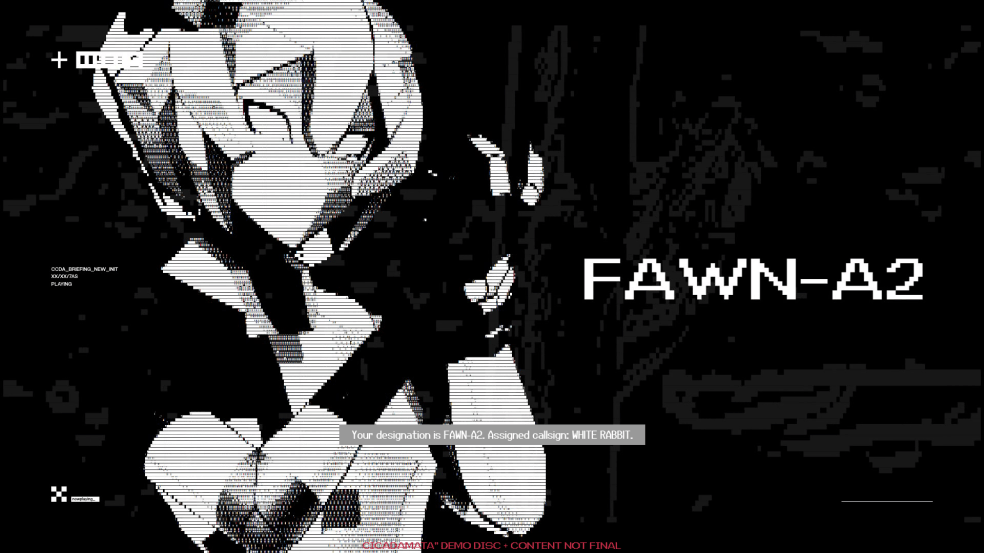


 The Magic Planet