“Ranking Every Anime” is a yearly column where I rank every single anime I finished from a given year, from the very worst to the absolute best. Expect spoilers for all anime covered.
It’s that time of year again, folks. Namely, it’s the end of the year. Or rather, by the time you’re reading this, the start of a new one. Now, the past couple of times I’ve done these, I’ve given the article a big long prelude where I talk about my year and the state of mind I went into the article with and so on and so forth. I haven’t really done that this year. My year sucked! Everyone’s year sucked! My year sucking is not remarkable! Right up to the end, it kind of sucked! Because unlike most years where I give myself a lot of breathing room to do these lists, this time I crammed all of my work into the last three days of the year, a brilliant decision that I am absolutely fucking never going to make again. Seriously, I’m writing this at 9PM on New Year’s Eve! This and the bit at the end are the last thing I’m writing, but still!
Anyway, let’s just move on, and talk about the anime. Despite my struggles with writing this list, they were consistently a high point of my experiences this year, and I do value that.
I completed a good bit fewer than my average in 2025—only an even 20 this time—and spent a lot of time I would’ve spent on watching seasonals I wasn’t really feeling watching older anime instead. I don’t particularly like the idea that I might be slowly turning into one of those “no one makes good anime anymore” people, but I do have to admit that this seems to largely be a better use of my time. As such, a lot of the anime on this list are sequels this time around. I admit that’s a little boring! But it’s not like I actively planned to only follow stuff like that, it’s just how things shook out. The counterweight to that though, is that I didn’t really finish any anime this year I’d call outright terrible. That’s right, for the first time ever, a full list has absolutely zero shows on it I’d say are just straightforwardly don’t-watch-this bad.
There is one I’d call disappointing, though.
And, as you know, this list goes from worst to best. So let’s start there.
#20: MOBILE SUIT GUNDAM GQUUUUUUX
God help me, even with barely any of the series under my belt, I’ve become one of those people who complains about modern Gundam. Thankfully, the problems with GQuuuuuuX (which I’ll be typing with just one U from here on out) don’t require any deep knowledge of the Gundam back catalog to explain and are instead very modern issues with what is at its core a very modern anime. GQuX, very simply, is one of those anime that was clearly initially conceived of with the expectation that it would have many more episodes than it actually got, and when the word came down that they would only be getting a standard single cour, whatever attempts were made to edit this thing down to that format failed. The alternative explanation is just that no episode count would’ve made this story work, which is not exactly a great consolation prize.
The bizarre thing is that, taken moment by moment, GQuX is actually a lot of fun. The main characters have an interesting dynamic, between the relatively privileged dreamer Machu, the displaced and struggling Nyaan, and Shuji who…is a graffiti artist. The initial battle royale-type setup with the Clan Battles is a good time, as is Machu’s initially coming into possession of the titular Gundam in the first place. The series’ interplay with the older Gundam material is also interesting. As would be expected of something that’s working in the so-called Daicon lineage, (specifically helmed here by director Tsurumaki Kazuya), There are a lot of great action setpieces and interesting bits of character work (Nyaan joining up with Zeon makes everything very weird in a compelling way, for example) even when the story is hard to follow. This is good, because “when the story is hard to follow” is most of the time.
I’m not a big believer in a story having to be 100% legible to everyone at all times, but with GQuX there is a real sense of trying to keep way more plotlines than it can reasonably juggle in the air at once. Concepts, plot beats, and people are introduced in one episode and dropped the next. This can be a strength in this kind of series, but GQuX doesn’t really pull it off. The real issue, as it often is, is that none of this stuff comes together in a way that makes any sense, either thematically or just on a more basic level as a story. And while I do maintain that the textual interplay between this and the older Gundam stuff is interesting, it doesn’t exactly help make GQuX more coherent.
If you’re charitable, this makes GQuX a fun but messy watch, like so many anime in this particular tradition—say, Gurren Lagann or something—if you are much less charitable, and given a particularly indefensible decision in the final episode especially I’d blame no one if they were, it comes off as afraid of committing to anything in particular, or, even worse, being willfully regressive. All of this, even the worst of it, might be forgivable in a show that didn’t come with a name that carries a lot of weight and legacy. We all have our problematic faves after all, but GQuX was not lucky enough to be born so unburdened. If it reminds people of the more amateurish end of fanfiction—and I’ve seen that description thrown around a lot for this show—I can’t really blame them. A benefit of actual fanfiction is that if it’s bad, no one really cares, because it’s a medium with a very low bar to entry, and the standards are not particularly high. And at its best, fanfiction is adventurous and freewheeling. Actual anime can be the latter, but despite some honest efforts, GQuX mostly doesn’t manage it, which is a shame, because it clearly really wants to.
In another lifetime, I might’ve been nicer toward GQuX. I still don’t think it’s terrible or anything. It’s nowhere near as bad as the dreck that’s bottomed out the list in previous years, and if we compare it to, say, Love Flops, it’s a masterpiece. Still, I do feel let down by it.
The Daicon Lineage that stretches back to the original Daicon Film shorts, through GAINAX’s most influential work, and continued to permeate throughout the 2010s via that of Studio TRIGGER, was for a very long time one of my favorite schools of anime period. But increasingly, either as a function of the anime in that lineage genuinely getting less focused over time or, hell, maybe just me getting older, I increasingly feel like I’m being scammed out of an actual, meaningful story by pretty cuts of animation and cool directorial tricks. I enjoyed GQuX week to week while it was airing, but if it has a real legacy for me personally, it’s making me wonder just how much I’m willing to put up with for this kind of thing at all. Maybe blaming the anime itself for my own disillusionment is immature or lame, but I feel how I feel, and this is my list at the end of the day. That, more than anything, is why it’s bringing up the rear here.
#19: NECRONOMICO & THE COSMIC HORROR SHOW
When Necronomico premiered, I mentioned that if you can’t swing “good,” “weird” is a good second option to aim for. What I left unsaid there is that this does imply that the thing in question isn’t actually good. Or at least doesn’t start that way. And indeed, I’d say Necronomico was, by its end, more or less fine—and definitely still weird—but it’s no one’s idea of a masterpiece.
Still, that novelty is worth something. There are lots of death game anime, but the specificity of the “streamers as contestants subjected to the will of the Old Gods” setup is pretty unique. The show’s main strengths lie in its willingness to put its cast into wacky, bizarre life-or-death situations and tie those situations to the characters’ lives. This doesn’t make the writing particularly deep, but it does make it hit when we learn about, say, popular girl Kagurazaka Kanna’s abusive childhood, or the entire thing with the teacher character toward the end of the show. It also keeps main character Kurono “Necronomico” Miko consistent and engaging to follow. The best element of the anime, though, is Cthulu, depicted here not as a tentacle-faced octopus behemoth but as a haughty ojou with green skin and big hair. She’s inhabiting the body of Miko’s main squeeze, which gives the two a pretty incredible toxic yuri dynamic in a show that one would not really expect that from. (It isn’t even the only one of those, but I don’t want to spoil the whole series, you know?) Necronomico ends on a bit of a whimper—and hilariously teases a sequel that will almost certainly never happen—but it was a decent time while it lasted, and if someone liked the show a lot more than I do, I would understand.
Is it really better than GQuX? Honestly I’m not sure. I mostly put it above Machu & Friends on this list because while GQuX actively let me down, I never expected much from Necronomico in the first place, and it actually managed to surprise me a few times. Is that fair? Not really, but I’m the one making the list. Next!
#18: YANO-KUN’S ORDINARY DAYS
There are two no-frills het romcoms on the list this year. This is the worse of the two, but it’s still a solid showing for the genre. The premise here is pretty simple, our boy Yano Tsuyoshi frequently gets in cartoonish accidents and injures himself due to what is vaguely referred to by those around him as “a predisposition”. Yoshida Kiyoko, our female lead, sees this and is promptly injured herself. Though in her case, it’s by Cupid’s arrow.
So begins a show laser-targeted at the sort of person who gets the most joy out of a series when they can screencap its main characters and ask “are they stupid?” about them. I sometimes fit this description too, and accordingly I liked my time with Yano-kun. It has a charming and straightforward appeal that is welcome in pretty much any anime season, and I was happy to have it as a weekly series to close out the year. (I watched it with a friend, in fact. It’s good for that.) There really is not a ton to this show, if you vibe with the relatively direct character dynamics, you’ll like it, and if not, you probably won’t. I did, so I think it was pretty good. Simple stuff.
I do, however, deduct a few points for teasing the audience about Yano’s heterochromia and then never showing it to us. Boo!
#17: THIS MONSTER WANTS TO EAT ME
Despite taking place in the dead of summer, there is a bone-deep cold to Watatabe, chilly as a coastal winter on the other end of the year. I think of Watatabe as a sort of warped fairytale, our despondent princess, Hinako, is not saved from her survivor’s guilt and depression by a knight in shining armor. She isn’t saved at all, really. Instead, the wicked (well, “wicked”) mermaid Shiori seizes upon her sadness, and they proceed to make each other worse in some very interesting ways, as revelations about the incident that led to Hinako’s suicidal nature come to light and continually rearrange what we think we know about these characters. Add to the mix Miko, Hinako’s childhood friend who turns out to be holding more than a few secrets herself, and you’ve got a tightly-wound dramatic character dynamic that not much else this year matched. Impressive, especially when you consider how few moving parts there truly are to this story.
The main reason this isn’t higher on the list? Honestly, just that this was one of a number of anime this year that were visibly fighting against a threadbare production. More than anything else, it’s made me want to read the manga. But when the story at the core of this series is such a coldly compelling chunk of frozen unease, that’s hardly a bad thing.
16: A NINJA & AN ASSASSIN UNDER ONE ROOF
A throwback to the earlier days of the studio’s history in some ways, NinKoro is a modern example of one of SHAFT‘s older specialties, unhinged, no-rules comedies, typified by the likes of Pani Poni Dash or And Yet The Town Moves. It wouldn’t be entirely correct to call NinKoro straightforwardly retro, as many of its sensibilities are very modern (it’s very gay, for one thing), but the spirit of a bygone era of comedy anime is in there. Cold-blooded killer Konoha Koga and airhead ninja Satoko Kusagakure make for a classic odd couple. But I think the show’s actual style is best explained by its favorite running gag; whenever a situation needs an extra dash of chaos, a highly overdesigned ninja from Shirobako’s village will show up and attack our main characters, before promptly being subjected to Konoha’s ruthless efficency, landing somewhere between slapstick and black comedy. There’s a beating heart in this thing too, in that Konoha and Satoko’s relationship is genuinely sweet, which puts NinKoro above being a mere novelty.
In fact, it’s enough to make me wonder, at this point, is that spirit I mentioned really so bygone anymore? Recent examples, albeit mostly from other studios, seem to drop about once or twice a year. In fact, it isn’t even the last one on this list.
15: BAD GIRL
Less outright zany than NinKoro, and perhaps more properly a yuri series with a comedy bent, Bad Girl seemed to go rather overlooked when it premiered in July of this year. That’s a bit of a shame, because while it doesn’t have the production polish of some of the other comedies on this list, it’s another simple charmer driven by a straightforward but strong set of character dynamics.
The setup here is even simpler than some of the other comedies here, shy goody two-shoes Yuutani Yuu is tired of being nice, and wants to go apeshit. She tries to accomplish this by becoming “a delinquent”, which in her mind seems to consist mostly of wearing clip-on earrings and a jacket. At the same time, she’s crushing on Mizutori Atori, the class rep, which throws this whole delinquent thing into question. Add in a childhood friend, a streamer girl who craves attention more than anything, and a blue-haired menace who really seems like she’d rather be in Zenkowa or something, and you’ve got a pretty great set of characters that the show puts through their comedic paces. Often, this entails making Yuu the butt of some joke or another, and more than one character compares her to a small animal. The show is also surprisingly horny, and a recurring gag sees Yuu imagined in a sexy dog-girl outfit, but, given the general light goofing-around vibe and the series’ yuri bent, that’s not really a bad thing. It fits the tone.
Honestly, I like Bad Girl and NinKoro about equally. Why did I give this one a higher spot? Because I watched it with my girlfriend, and I think in a way that’s worth more than any tangible merit of the series itself.
14: TURKEY! TIME TO STRIKE
Every once in a while, an anime drops that just defies any easy categorization. If it seems pat to point out that this is true of Turkey! you’ll have to forgive me for stating the obvious. It is worth stating though, Turkey! spends most of its first episode setting the pins for a sort of MyGO!-for-bowling sports drama thing before making a hard swerve into a time travel historical fiction adventure, and I think it speaks to how well the show pulled it off that anyone stuck around after that. Bait-and-switch twists, even those that early, are devilishly hard to get right.
In its contrasts between past and present, Turkey! asks some interesting questions. As is common for time travel narratives, it draws distinction between the value systems of history and those we live with today, culminating in a really impressive turn around the show’s middle. In episode six for example, sweetheart Ichinose Sayuri helps her warrior friend Suguri defend her village from bandits. This, naturally, entails killing them, and there’s a rich vein of drama in how this kind of breaks Sayuri’s brain, as someone from a relatively privileged modern position, who simply isn’t equipped to reconcile that the kind person she’s grown to know over the show’s first third could do that to someone. The way the series attempts to reconcile this is extremely potent within the episode itself, involving the literal and symbolic image of a white flower stained red with blood.
That stretch of the series is probably the show’s peak, and if it never quite hits that high again—although it comes close—it makes up for any deficiencies with sheer over-the-top style. It also never actually stops being about bowling, incorporating the sport as both a peaceful recreation the girls bring with them to the past and as a serious, sometimes deadly serious synecdoche for its characters’ lives and priorities. Despite how different the events of the series are to most other emotionally-tense girls’ drama anime of this type, Turkey! is one of those, despite the time travel conceit and adventure elements. This leads to some great serious moments, but also a lot of delicious camp. Where else this year were you going to get a line like, from the finale, “I don’t care about your damn gods. I care about bowling.”? That’s all-timer material right there. That, as much as the more serious stuff, is the key to the show’s success.
For these reasons and more, Turkey! is a true army of one, and I would be unsurprised to see it become something of a cult classic in the years ahead.
13: RURI ROCKS
The first, but not the last, gorgeous slice of life series on the list, Ruri Rocks is a slow, contemplative anime about finding value in the natural world. The titular Tanigawa Ruri is interested in gemstones, first just because she thinks they’re pretty. Over the course of the series, however, she comes to appreciate minerals and the grasp processes of geologic deep time, guided by her older friend and mentor figure, Arato Nagi. Each episode focuses, by and large, on a mineral or similar material, moving from placer gold to pyrite, sapphires to sea glass, and so on, as both Ruri and by extension ourselves learn about them. After its first few episodes, the show’s world expands, slowly but surely, adding a few additional characters and broadening Ruri’s perspective.
Tellingly, the single best episode of the show is actually about actual mineralogy only in the loosest of terms, where Ruri finds an old crystal radio that once belonged to her late grandfather. This is another of the show’s main ideas; that what we do today can connect us, however fleetingly, to the endless yesterdays before us, whether that time scale is across human lifetimes or across eons. The result is a warm, gorgeous ballad about the forces that shape our world, and the beauty to be found in appreciating them.
I think some people will be surprised that Ruri Rocks isn’t even higher on the list. But honestly? This entry and onward, the list really becomes a total free-for-all. If someone said Ruri Rocks was their favorite anime of the whole year, I’d completely understand. That’s also true for everything above it on the list. (And honestly, if someone said their favorite anime of the year was Turkey! I’d respect the hell out of that, too.)
12: MONO
And hey, why not put both of the gorgeous iyashikei on the list right next to each other? Is it some contrarian impulse that causes me to rank mono as the slightly higher of the two? Maybe. But to be honest, this is another case where I like the shows about equally.
As Ruri Rocks is about time, we can, if we want to draw a contrast, say mono is about space. Nominally it’s actually about photography and video, but quite unlike the focused nature of its immediate listmate, mono is charmingly rambling in nature, and is content to devote entire episodes to things wholly unrelated to the hobby club that are technically its protagonists. Over the course of the series, we get individual episodes about ghosts (whose existence is just taken as a given in mono), the tribulations of both the mangaka that the main girls know and a few other ones that she knows, road trips gone awry, and much more. The real focus for much of this is on the beauty of the various landscapes mono gets to show off. I’ve described both Ruri Rocks and this series as iyashikei, but the love of rolling green hills and the like here feels of a piece with the spirit of the genre in an ephemeral, hard-to-place way. It’s pretty enough to double as a tourism ad, which makes some sense given that the original manga comes from the pen of Yuru Camp creator AFRO.
11: SHOSHIMIN: HOW TO BECOME ORDINARY, SEASON 2
Straight couples will literally do this rather than go to therapy.
There are a few returnees on the list this year, but this actually isn’t one of them. Shoshimin Series only made the honorable mentions last year, because I hadn’t actually finished the first season of the anime at the time, so this is its first appearance in a year-end list proper. This is maybe a good thing, if we’re going to pretend that these shows somehow care about their standings at all, because I actually thought the first season was kind of a mixed bag!
The anime’s initial setups of low-stakes mysteries, “solved” by our main duo of Kobato Jougorou and Osanai Yuki, didn’t entirely grab me. But, toward the end of that season, Osanai was fucking kidnapped, and the stakes started being appropriately raised. That largely continues into the second season, as Kobato and Osanai’s unusual relationship continues to evolve. Both of them have compulsive playing-detective-brain and struggle to get on with normal people, meaning that the only person who really understands either of them is the other, but they “break up” early into the season, and the bulk of it is done with them apart. This lets some other characters get a bit of focus, including Urino Takahiko, a member of the school newspaper club who makes a fool of himself trying to solve a local arson case, but largely the series’ main interest remains the psychodrama between and around Kobato and Osanai. Osanai, in fact, is a large part of the reason this series is so high in the first place. She is a treat of a character, a total weirdo with a sweet tooth who constantly feels the need to intellectually challenge other people. She’s a fascinating secondary protagonist, but honestly Kobato is a solid lead as well, and it’s probably to both’s benefit that they stick together at the end of the season. I’m not sure anyone else should be involved in the whole thing they have going on by series’ end.
The series’ direction plays a big part in selling all the mind games here, as well. Often, it takes a hallucinatory, bilocational approach, directly inserting the characters into scenes while they speak that aren’t literal representations of where they are but rather of what they’re discussing. This highly stylized approach to visual conversation is something that I feel anime has been missing a bit, lately, as the whole “Monogatari-esque” / Faust magazine-core genre has declined somewhat in the last decade. In that sense as much as anything else, Shoshimin Series was a breath of fresh air.
My understanding is that the two seasons of the anime form a nearly-complete adaptation of the original light novels. So if we ever get more Shoshimin, it probably won’t be for a while. Still, I am glad to have finished it, and glad to get to put it on the list.
10: TATSUKI FUJIMOTO 17-26
The Chainsaw Man movie is not on this list. I know, I specifically didn’t give Chainsaw Man the gold medal back in 2022 because I expected its eventual followup would be even better. And it was! So me not covering films in these lists is really biting me in the ass here. Nonetheless, Chainsaw Man mangaka Tatsuki Fujimoto has found a way to sneak onto the list regardless, thanks to this anthology adapting some of his earlier oneshots.
I did think about excluding Tatsuki Fujimoto 17-26 from the list too. It’s not really a TV series as such, given that it’s an anthology of shorts, and the episodes are of varying lengths. But, it was close enough that I chose to include it. If it wasn’t one of the most original anime productions of the year, I might not have bothered, but by simple fact of being an anthology, with 8 different shorts by 8 different teams, it’s worth serious consideration. That structure did make ranking 17-26 on the whole kind of hard, since some episodes—the explosive romcom-action burst of “Shikaku”, the hormonal psychedelia of “Woke-Up-As-A-Girl Syndrome”, the grounded character drama of “Sisters”, probably the best of the lot—are fantastic, whereas others are just so-so, but even the least of these stories is interesting, and really reinforces Fujimoto’s status as a true original. I would love to see more mangaka anthologies like this get anime, or even just for more anime anthologies to exist in general. The format is severely underutilized in the medium, maybe the success of this one will spur some imitators? We can only hope.
9: DAN DA DAN, SEASON 2
Maybe it’s just me, but whenever I have to rate an actual battle shonen series on these lists, I always feel a little silly. Perhaps because the institution stands slightly apart from the rest of the seasonal churn. Nonetheless, there was more Dandadan this year, and like last year’s Dandadan? It was very good. Dandadan‘s strengths have not really changed, fun and novel character dynamics on top of a bed of intense, often outright surreal action pieces. Highlights from this season include a musical exorcism, the introduction of Evil Eye to the cast, and a huge, multi-part kaiju battle to round out the season. All of this is, genuinely, great stuff, but I think on some level, deeper analysis of the how’s and why’s of Dandadan might be best left to people with a lot more shonen head cred than I have. (The sort of people who have a better idea of what “newgen” means in this context than I do, maybe.) I find myself with a dearth of anything new to say about it compared to last year.
But honestly? Maybe that’s not a problem. There’s no issue with consistently hitting your strengths year after year, and if Dandadan wants to keep doing that, and going on and on, I’d welcome it with open arms.
8: TAKOPI’S ORIGINAL SIN
Most of the time, when I write these lists, I’m reaffirming the thoughts I already had on a work. Here, I’m actually going to do a slight bit of course-correction. When Takopi premiered, I, in hindsight foolishly, hemmed and hawed over actually covering it in any depth because it was so grim. This, with even just a few months of hindsight, is obviously stupid. So let me double down on what became my opinion of Takopi around when it ended. The situations portrayed in Takopi are extreme, and the titular space octopus / Doraemon-core kids’ anime escapee is simply not equipped to handle the tangle of abuse, social ostracization, depression, poverty, and tragedy he wanders into. His attempts to help largely make things worse, and the time loop that takes up the bulk of the show’s plot really takes great pains to express this. “The road to Hell is paved with good intentions” is a stone cliché, but it is so for a reason. You can’t just good vibes your way out of situations this dire.
As much for its affecting story, though, I rank Takopi highly on the basis of its direction. Iino Shinya was largely previously known for his work on the Dr. Stone anime which, no disrespect to that series, is just not playing the same game that this is at all. When Takopi needs to convey dissociation, the entire world of the show will wobble and waver. Overall, it’s just gorgeous, and that it is so in service to this kind of tragedy makes it hit all the harder.
The fact that Takopi isn’t even higher on this list is slightly an olive branch to those who instead find all this drama ridiculous instead of affecting. (I don’t agree, but I do get it. I think stuff like this requires a certain emotional temperament. ie. me being a huge sap, something that is not true of everyone.) But mostly, it’s just a testament to the fact that this year was absurdly stacked with good anime. I was genuinely moved by it, up to actually crying at the finale, and I think it’s going to stick with me for a long while. It makes perfect sense, but it is pretty stark that, faced with the overwhelmingly tragic situations of its protagonists, the only solution that finally works for Takopi is no solution at all. He simply removes himself from the equation, and only then do things begin to work out.
7: MILKY☆SUBWAY: THE GALACTIC LIMITED EXPRESS
Perhaps Takopi‘s polar opposite in terms of tone, Milky Subway is almost certainly the most obscure thing here. Milky Subway is a 3DCG youtube series about a group of convicts who have to figure out what’s going on when the space train that they’re on starts operating by itself. That premise, and the fact that the show takes place in a far off, gee-whiz kind of sci fi future you just don’t see very often anymore, would be enough on its own to set Milky Subway apart. Its real strength is in our main duo, though, the slightly airheaded and a bit whiny (in a cute way) Kujo Chiharu, and her we’ll just say girlfriend Kurusu Makina, a robot girl with a dry sense of humor and a lack of patience for anyone’s nonsense. They’re a blast to follow, and the bizarre situation they find themselves in aboard the train lends itself well to them playing off the rest of the cast as well.
If Milky Subway has a “flaw” (and I don’t really think it is one), it’s that it’s quite short. Each episode is only about three minutes long, and that’s with credits. Still, the result is one of the most unique experiences of the year, one that has as much in common with the broad world of web animation as it does with what I normally cover on this site. It’s also just straight up on Youtube, so if you haven’t seen it, fix that!
6: MY DRESS-UP DARLING, SEASON 2
We’re in the midst of a run of sequels here. You’ll have to pardon that, they’re not gonna let up as we keep climbing the list. Dress-Up Darling returns to us from 2022 and, perhaps surprisingly, is not the last Class of ’22 alum we’ll see here.
More important than its credentials though are that its fundamental strengths are all still intact. It’s still the radiantly warm, charming, easygoing love story of a pair of complete nerds, Gojo and Marin, who bond over cosplay, Marin’s favorite thing in the whole world, essentially. Far from having suffered from the time away, MDUD actually returned to us this year with even more visually sumptuous treats than it had when we last saw it. While there aren’t any more clips from Flower Princess Blaze in this season—the only fictional anime I’ve ever written a review of—there are plenty more where that came from, including a faux-OVA that kicks off the season. In fact, my favorite arc of this season revolves around one of these impressive bits of pastiche. Marin’s enthusiasm for a horror game called Coffin is central to the season’s final stretch. Coffin has a sort of willfuly faux-retro look I associate with the like of itch.io visual novels and such. To see an aesthetic like that in a series like this is really quite something, even moreso when it’s tied to a truly awesome-looking horror cosplay shoot the characters are involved in.
More than just being visually snappy though, Dress-Up Darling also continues to gently prod at the seams of gender expression. Another arc in this season sees Marin engage in some cross-play as part of a contest. New character Amane Himeno, is also a crossplayer (though if one wants to interpret Amane a bit more LGBT-y, I certainly won’t stop you), his whole backstory about dumping his girlfriend when she learned about his hobby and was disgusted by it is one of several ways that MDUD suggests that this kind of gender essentialism is on its way out. Honestly, more than maybe anything else on this list, I really hope it’s right about the world’s vibes. We needed that sunshine in 2025.
5: CALL OF THE NIGHT, SEASON 2
Of the two unexpected returns from 2022 anime on this list, I was actually more surprised by this one, in a way. Dress-Up Darling was popular, so a sequel at some point felt like a sure thing. Call of The Night, though, always felt like it was just outside the popular kids club.
Which only makes sense, Call of The Night sees the vampire as a stand-in for just about any kind of outcast. That’s why Ko, our male lead, fit in so well with Nazuna and the other vampires back in season one. But its second season took a turn for the queer (explicitly so) and, related to that, the dark. A majority of this season focuses on Nazuna’s past, giving us backstory for herself, but also characters like Hondo Kabura, who we met in season one but didn’t really get to know. (Kabura’s episodes, particularly the first, are some of the best of the year full stop.) In these stories, Call of The Night draws direct parallels between vampirism and queerness, adding it to the list of the many, many things that can get a person cut off from normal society. Anko returns here too, also getting a fully fleshed-out series of flashback episodes that frame her former relationship with Nazuna herself, directly in queer terms. All of that explodes in a final act that is as spine-chilling as anything else to air this year, nearly ending in truly dire terms when it seems like Anko is really willing to throw away everything to exterminate the vampires she’s come to hold in such contempt.
The queerness makes the fact that none of these relationships last, and their arguable replacement with Ko’s and Nazuna’s, sit just slightly uneasily. I don’t think it’s a real flaw, but if someone held it against the series I’m not sure I could blame them. Honestly, that unease is maybe the main reason it’s not in the top three. Still, you can’t argue with the effectiveness of something like this. It’s powerful. And, well, in addition to everything else I’ve said. In the last episode of the season, Anko makes a comment that she feels she’s gotten older but hasn’t really grown up. I relate. So hey, points for that, too.
4: THERE’S NO FREAKING WAY I’LL BE YOUR LOVER! UNLESS….
Here we have a show that’s going out of its way to complicate being on the list at all! Literally today, the day I’m writing this, December 31st, the show better known as Watanare, dropped a five-episode coda to its excellent first season. This was originally a theatrical release, so I’m not really counting it for the purposes of this entry. Just know that here—there’s always somewhere where this is true on the list, it seems, even if I wait until the final day of the year—I’m working off incomplete information.
Even so, Watanare was already fantastic just with the 12 episodes it initially aired with. I’d hesitate to describe Watanare as a romcom, although that’s probably the closest fit in terms of strict genre. If it’s anything, it’s a situationship dramedy, a harem series where girl after girl can simply not help falling under the spell of local dangerous pink thing Amaori Renako. Initially confessed to by overbearing rich girl Ouzuka Mai, Renako’s high school life quickly becomes a ball of un-resolvable romantic entanglement. It’s an absolute charm to watch from start to finish, as one never really knows which of Renako’s seemingly endless parade of girlfriends is going to throw things into a tizzy next.
As much as its writing (which is very good, don’t get me wrong), another important aspect of Watanare is its atmosphere. The series has a slightly unreal visual quality, I’ve previously compared it to city pop album covers and, honestly, I can’t really think of any better way to pin it down. It’s achingly romantic but not cloying, embracing all the messiness that comes with relationships and amplifying it until the knob breaks. It’s one of a couple anime where I’m kicking myself for not putting it at the top of the list! But it is what it is, 2025 was a very good year for the medium. Also, the finale’s conclusion remains an all-time way to end your high school romance show. No notes. Muri muri!
3: CITY: THE ANIMATION
Occasionally, an anime comes along that is both extremely good but also simply so good that it becomes a bit difficult to write about. What is there to say about CITY THE ANIMATION? Do you point out that it’s a massive artistic flex from, take your pick, director Ishidate Taichi who pulls off some truly unhinged stuff here, original mangaka Arawi Keiichi who has now had his work adapted into an era-defining comedy anime twice, just Kyoto Animation in general, putting the lie to any idea that they’re out of new ways to make a show just fucking slap from start to finish?
It’s true that this anime’s vast cast, a widescreen portrait of the titular city on the whole as opposed to just one or two residents, makes known a real joie de vivre that is tough to match in any year’s comedy offerings. It’s true that the directorial stuff really is that crazy, the way the show breaks into sectioned-off visual pieces in episode five only to knit itself back together into a quilt at the end of that episode must be seen to be believed. The same is true of the musical in the final episode, the show’s surprising number of silent segments that rely on expressive animation alone, etc. But at some point we’re just listing things about the show that are impressive, not necessarily the things that are good, and there is a distinction there.
So if I had to pin why I rate it so highly on any one thing in particular, it’s simply this: CITY was one of only a handful of things this year that made me optimistic about the future of anime. It was very easy to be cynical this year, for reasons I’m not really going to get deeply into but which I’m sure you can guess at if you follow the medium at all. In its specific mastery of the fundamentals, it’s a masterpiece in a very old-school, craftsmanship-first way, and I would not be surprised if it eventually emerges as the consensus best anime of 2025. It wasn’t my personal favorite, but it came very, very close.
2: UMAMUSUME: CINDERELLA GRAY
Every year, I do a little thing on social media where I have people try to guess what they think my number one pick is going to be. There were two anime that were highly mentioned this time around, and one of those was Cinderella Gray. In literally any other year, you all would’ve been right.
We’ll get to why you weren’t in a minute, but 2025 was the year I got really into Umamusume. And if I wanted to put this entry at the very top of the list because of that alone, I think I would’ve been justified in doing so. But even if we ignore the entire rest of the series, I think the story of Oguri Cap’s rise to fame is one of the year’s best. Oguri herself is maybe the year’s single best protagonist, a lovable country bumpkin who also happens to be one of the absolute strongest people in her sport.
While the series more than makes sense in aggregate, I think Cinderella Gray is best thought of as a series of moments. (Any of you who just asked “hype moments?”, you’re the people I’m really writing this entry for.) Picture Oguri and a favorite race will spring to mind, one of her beastly final spurts, or a moment of tension. Or maybe you favor one of the other characters instead, and what comes to the forefront is a flash of white lightning, a victory clinched or lost in an instant, the scowling face of a prior era’s ruler. Cinderella Gray is a series of become verbs. Want. Strive. Struggle. Achieve. If I say that Umamusume as a whole enterprise has achieved an almost talismanic importance to me, I sound like a lunatic, so let me just say instead that it lights something in me that I can’t entirely name. Maybe that’s silly, but it’s the truth. For as goofy as Umamusume’s very premise seems and, honestly, is, it is genuinely inspirational in a way that very few things are. (In fact, I’ve said this before, but it is truly incredible that Oguri Cap is still inspiring people some some 30 years after the end of his career. Sure, it’s in a different form, but how many athletes, human or otherwise, can claim that? It’s a pretty exclusive club, and it’s not one he’ll be leaving any time soon.)
The explosive, world-conquering vibe check aside, it really is a great story, too. One that deals with the temporary nature of all of these things just as it effortlessly embodies the thrill of chasing after them. Future seasons of Cinderella Gray—and there will be future seasons, I’m almost certain—will shift the thematic balance in regards to which it emphasizes, but its first season (in two parts. Confusing!) is a triumphant, star-reaching pulse of a thing. It doesn’t hurt that every one of Oguri’s competitors, from her career-defining rivalry with Tamamo Cross to even cool-as-hell one-offs like Obey Your Master, are great characters in their own right. Added together ,what you have here are the first two chapters of an epic. And in fact, that’s the main reason this isn’t at the top of the list. They are going to make more Cinderella Gray, and—spoiler here—as someone who’s read the manga, I have every reason to believe it’s going to be even better than what we have already. Keep running, Oguri Cap, you’re not at the finish line yet.
So, that’s 19 of 20 anime down. As I said, in any ordinary year, everyone who guessed my #1 pick would be Cinderella Gray would be absolutely right, and I hope I’ve conveyed at least some sense of why that’s so. Unfortunately, 2025 was not an ordinary year. So if you want to feel bad for Cinderella Gray, lament only that it was not born in a different era.
Congratulations to everyone who guessed my #1 pick. By my reckoning, that’s my good friends June, Astro, Persica, and Wolfie.
.
.
.
.
.
.
.
.
.
.
.
1: AVE MUJICA -THE DIE IS CAST-
Look. I know, okay?
I am keenly aware of how it looks to have a girl band anime as my show of the year, two years in a row. Back to back girl band dramas! She’s lost it! She should have her anime critic card revoked!
Unfortunately for all of you, there is no license to be an anime blogger. I only write these things because I’m weird enough to want to. So here, at the end of one year and the start of the next, let’s do this whole song and dance one more time.
I think there’s a good chance that, at this point, people who read my blog regularly have seen this image of Sakiko more than the people who animated it.
I tried a few different placements of the top three before settling on this one. I would be lying if I said I was perfectly happy with it, but I made up the format of these posts in the first place, so I feel an obligation to stick to them. There are no ties. If I have to single out what I think is the best anime of the year, of those I watched, there really isn’t any doubt. It’s Ave Mujica, whether you want to call it by its marketing-mandated full English title or not, there just really isn’t any other option. Other anime this year were many things. In many years, being merely a work of deep, healing beauty, or being something inspiring enough to remind me to push forward day by day, would be enough to place at the top. That was the case in 2022 with Healer Girl or, yes, in 2024 with Girls Band Cry, and it was the case this year with Cinderella Gray. Nothing I’m about to say is meant to disparage any of those anime, which are all fantastic in their own right. But, this year was different. This year, the demiurge walked among us. She had blue hair and trauma, and she made it everybody’s problem.
Ave Mujica is, technically, yet another anime on the list that’s a sequel, being the followup to 2023’s BanG Dream! It’s MyGO!!!!!MyGO is an excellent series in its own right, and had the subseries stopped there, we would still absolutely be talking about it was one of the best anime of the 2020s. But, MyGO, at the end of the day, was still a band girl anime, the genre label that has emerged for this cluster of anime that deal with young girls processing their pain and sorrow through the power of music. I already went over the basics of MyGO‘s story leading into Ave Mujica during my review-not-a-review of the series, so I won’t repeat myself, but it is worth emphasizing that everything that happened in the first season, as great as it was, was still pretty normal territory for this genre. And then, at the eleventh hour, its final episode turned it into something else.
It does put me in a funny spot, though. More than anything else I’ve ever put this high on the list that I didn’t do literal week-by-week coverage of, I have already written about Ave Mujicaextensively. I have arguablywrittentoo muchaboutthe damnthing. Seriously, it’s a little excessive. But I couldn’t help it! Something about Ave Mujica drove me a little crazy, and maybe that’s a function as much of my own declining mental health as it is anything about the show, but I really do think Ave Mujica is a born classic. The best anime either define their times or embody them, and if there has ever been a better representation of the emotional cement mixer that is the mid-2020s, I’m not aware of it. Under everything, under the arguments about whether this is even really a music anime, under the tedious discourse about its ostensibly “problematic” elements, you have an anime about five people whose teenage emotional fallout, ongoing trauma, and unique neuroses are blown up to first theatrical, and then mythological proportions. It only makes sense that by the end of the season, Sakiko has declared herself a god lording over a walled garden. What else was she going to do?
There’s a further reason, in fact, that I put this at #1, the very real possibility that this all comes crashing down around us, some day very soon. I mentioned in the Cinderella Gray section that I sometimes rate things slightly lower on these lists because I believe they will become even better with subsequent entries. Crucially, I don’t really know if that’s true with Ave Mujica. Everything it’s built up is such a high-wire razor’s-edge balancing act that it feels completely impossible that season three, whatever it will entail, could ever top this. (Spare a thought, also, for Mugendai Mewtype, the other BanG Dream band slated to get an anime in the coming year, who have the unenviable task of following this.) I’ve been wrong before, and I would love to be wrong here, too, but the yawning uncertainty of the future does make me feel like I have to recognize Ave Mujica for what it is now. The dream, remember, is only illusorily eternal. The walled garden only exists until we wake up. Memento mori and all that. Is this the crescendo of this black opera? Do we wait on just the grim conclusion, or somehow, some way, will it find even higher to climb? I don’t know! That uncertainty is a little scary, but it’s also exciting.
So that’s how we close the year, with a screaming, gothic thrash of pain as we rocket toward a cryptic and hazy future. I’ve made a bad habit in the past of trying to directly tie my anime criticism in a given year to my emotional state, but, well, I don’t think a look at this list necessarily needs a genius to interpret. The future will come whether we’re ready for it or not, but, if we’re going down, at least we’re burning in the same fire. That, I think, is perhaps the spirit I’ve taken Ave Mujica (and Ave Mujica) in, and I hope the spirit you’ll take this entry in, as well. And if this all seems rather dramatic to you, well….yeah! It is! I’ve been a lot of things over the course of my ‘career’ as an anime blogger, but I’ve never been a liar. May 2026 be a year where a sunnier best-of pick makes more sense.
And that’s the list. One of the least-stratified I’ve ever done, I think (I truly do think basically anything from Ruri Rocks on up could conceivably be somebody’s anime of the year). As I do every year, I want to thank all of my lovely internet friends, those from the Ave Mujica Scream Zone who were with me every step of the way through experiencing the show itself, my friends from the Witch’s Manor and the other Discord servers related to those two. A big shout out, as well, to my bluesky and tumblr followers, as well as everyone on the Magic Planet Anime Discord. You guys rock, and I wouldn’t be here without you.
As always, consider tossing me a donation if you liked the list. These year-end lists take a lot of effort.
I’ll see you when I see you, anime fans.
Like what you’re reading? Consider following Magic Planet Anime to get notified when new articles go live.If you’d like to talk to other Magic Planet Anime readers, consider joining my Discord server! Also consider following me on Anilist, BlueSky, or Tumblrand supporting me on Ko-Fi. If you want to read more of my work, consider heading over to the Directoryto browse by category.
All views expressed on Magic Planet Anime are solely my own opinions and conclusions and should not be taken to reflect the opinions of any other persons, groups, or organizations. All text is manually typed and edited, and no machine learning or other automatic tools are used in the creation of Magic Planet Anime articles, with the exception of a basic spellchecker. However, some articles may have additional tags placed by WordPress. All text, excepting direct quotations, is owned by Magic Planet Anime. Do not duplicate without permission. All images are owned by their original copyright holders.
The Weekly Orbit is a (sometimes) weekly column collecting and refining my more casual anime- and manga-related thoughts from the previous week. Mostly, these are taken from my tumblr blog, and assume at least some familiarity with the works covered. Be wary of spoilers!
Hi folks, I missed last week, and as I alluded to the week before that, I’m experiencing a bit of end-of-season burnout. Still, I wanted to try to get an at least mostly complete Weekly Orbit to you today. We have some season finales and a few less permanent things. I hope you enjoy.
Anime – Seasonal
Call of The Night – Season 2, Episode 12 (Finale)
A really sweet sendoff for Call of The Night, here.
I really like that we’re not just abandoning Anko as a character now that her arc is “over,” and I will be honest, while it’s not for nearly as grandiose reasons, her comments about feeling like you’ve gotten older but not really grown up, and about wasting the last decade of her life, really hit home very hard for me. Not to be dramatic, but as I’ve sometimes discussed elsewhere on this site I sometimes feel the same way due to my disabilities. Accordingly, I think this is maybe the most I’ve ever liked the character.
As for Nazuna and Ko, I am happy to see their relationship developing as it has. Ending the season by cutting to black on the chomp (because bites are their private thing, now, you see) followed by the “Call of The Night” needle drop was just brilliantly classy. Good episode, good season, good show.
Dandadan – Season 2, Episode 12 (Season Finale)
Another example of that with Dandadan here. A great finale from what’s just been a pretty consistently great season of a great show. A robot vs. kaiju showdown just makes sense as a way to end an arc for something as rambunctious as Dandadan. I particularly like how the robot goes from very toku-esque (and a bit goofy looking) to a very Daicon-y thing with a flaming head by the end of the battle. And of course we end on the introduction of another new character to the anime, who I am excited to get more spotlight next time around.
Admittedly! The upcoming arc is maybe my least favorite of the manga? It’s….an odd one, to say the least. But it has its high points, too, so I’m sure Dandadan will be reliable with delivering bangers for many seasons to come.
My Dress-Up Darling – Season 2, Episode 12 (Season Finale)
And bringing up the third spot on the tic tac toe board, Dress-Up Darling also delivers a lovely end to a lovely season. I don’t have a ton to say about the finale, I’m happy that the two character arcs here resolved the way they did though. I think Akira actually just being a huge lesbian is a pretty unsurprising plot twist, but I was still really delighted with how they handled it. The Coffin cosplay scenes were also really great, I think this is easily the most blood I’ve ever seen in a gentle romcom!
Overall just a fantastic season of television. I’m hoping the third season, should they make more, isn’t too far off. We’ll see!
Necronomico & The Cosmic Horror Show – Episode 12 (Series Finale)
This was the first full-length TV anime of the season to end, at least as far as stuff I was watching. My verdict? This was fine! Not great, not awful. It was fine.
When the show started I said something to the effect of, if you can’t pull off “good,” “weird” is a solid second thing to aim for. I think maybe more than I expected, Necronomico is a great example of that. This is a show that has much less to say than it thinks it does, has generally messy and unfocused characterization, and its core conceits are all just generally kind of stupid. But it was largely entertaining week to week just off of novelty and audacity, and I think that’s worth something. This is a truly textbook Seasonal Anime, capital S, capital A. I cannot imagine anyone remembering this aired by this time next year, except maybe because of the ChatGPT subs controversy when the first episode dropped.
About the final episode, I can’t say I have a ton to comment on. I will say that I think any finale in which the main character gets to pilot her girlfriend, grown to kaiju size for the sake of a fighting game match, is an at least solid finale. I also like that, perhaps intentionally but perhaps not, the game Nyarlathotep—sorry, Tick Tock Man—comes up with seems kind of shitty. Everyone loves fighting games where you have to button mash so hard your fingers bleed, right? I also really appreciated the gag where Miko somehow magics up a proper fight stick after being frustrated with the gamepad. Also the symbol sealing thing felt like a missed opportunity to incorporate the Yellow Sign into the show. That would’ve been a fun gag.
The epilogue was honestly a little much. I appreciated seeing Miko reunited with her girlfriend, and the hints that Cthulu might still be in there (and a similar hint with Gua’s host streamer) are fun and tantalizing if they ever decide they want to follow this show up. (Frankly, it seems very unlikely that this show did well enough to warrant that, but I wouldn’t mind being proven wrong. I think the actual IP is owned by Cygames, so maybe they don’t care about that.) But I really had no desire to see most of the other characters again; the mangaka, the actress, etc. are just not memorable and I think if we really felt the need to establish that they were still alive, a simple montage of a couple seconds, tops, would’ve sufficed just fine. I’m also a little mad they never killed Eita, he really seemed like he was asking for it and if they do make more of this, I simply refuse to buy into any attempted redemption arc. Try harder, man.
In any case, yeah, that’s Necronomico. A solidly decent show that I will probably think about only very occasionally for the remainder of my life. Hardly the worst thing I’ve ever seen, but definitely in the bottom third or so of anime I’ve seen this year. I really liked Cthulu, and that’s probably the most credit I can give it.
Ruri Rocks / Introduction to Mineralogy – Episode 12
I know I’m overusing the word here, but this is another lovely episode from Ruri. Here, Ruri comes across an old crystal radio owned by her grandfather while snooping around her attic. This is a bit of a shift for the show in that this episode is as much about radio as it is about mineralogy, but I think it ties the two fields together very nicely. In addition to exploring the overlap between these fields, this is also the first time Aoi (Ruri’s gyaru-looking friend from school) gets to be much of a character, which is also nice.
I also think that the scene at the end, where Ruri finally gets the radio working again out near a shrine, is a very nice summation of the “point” of Ruri Rocks as an overall work.
What we do today can connect us, however fleetingly, to the endless yesterdays before us, whether that time scale is across human lifetimes or across aeons.
On a more grounded level, it is also nice to see Ruri working through her insecurities: after saying in last week’s episode that what she doesn’t isn’t research because that’s something only “smart people” do, she here opts to take geology as an elective at school. I should also commend the use of the ending theme as diagetic music. That was brilliant.
Turkey! Time to Strike – Episode 11
Have you ever played bowling with your life on the line?
This is truly just a delightful show. I think something that’s largely gone unsaid about it is that despite the very different literal events than most other anime in this broad girls’ drama genre, it is fundamentally wired the same way. The characters have similar arcs and the bonds between them are not unlike what we would have in a much more traditional show in this genre. The main difference is in the stakes, which are outright fatal here as opposed to the much lower ones present in what would otherwise be Turkey‘s peers.
A decade ago—to the month, in fact—SCHOOL-LIVE!, Gakkou Gurashi as it’s also known, pulled off a similar trick. That anime similarly borrows language from outright horror material to obfuscate the fact that it is, fundamentally, still a story about friendship and caring for the people close to you. The difference, of course, is that in most anime where girls compete in sports tournaments, their lives are not literally at stake if they lose.
The latter is what leads to Turkey’s second biggest tonal pivot, coming in behind only the initial switchup in the first episode. Just when things seem like they might be resolved a bit too conveniently by all of our heroes getting strikes in this tournament that the enemy feudal lord has agreed to, he changes the rules and puts them at a marked disadvantage, betraying their trust and any notion that he’s someone that could be seen as respectable.
I am pretty damn sure this is all a fakeout, of course. The finale will end with our heroines battered but not beaten, and they will tearfully depart to their own time. (There is always a second throw, recall.) But if I’m wrong, that’s actually even more interesting, so barring some generational last-episode fumble, I am still deeply interested in what Turkey will do in its last moments.
I mentioned Gakkou Gurashi. That anime is a classic, and I don’t think Turkey! is quite that good, but it’s definitely one of the more interesting things to air this year. I don’t think it’s out of the question to say it’s one of the better ones, too.
Like what you’re reading? Consider following Magic Planet Anime to get notified when new articles go live.If you’d like to talk to other Magic Planet Anime readers, consider joining my Discord server! Also consider following me on Anilist, BlueSky, or Tumblrand supporting me on Ko-Fi. If you want to read more of my work, consider heading over to the Directoryto browse by category.
All views expressed on Magic Planet Anime are solely my own opinions and conclusions and should not be taken to reflect the opinions of any other persons, groups, or organizations. All text is manually typed and edited, and no machine learning or other automatic tools are used in the creation of Magic Planet Anime articles, with the exception of a basic spellchecker. However, some articles may have additional tags placed by WordPress. All text, excepting direct quotations, is owned by Magic Planet Anime. Do not duplicate without permission. All images are owned by their original copyright holders.
The Weekly Orbit is a (sometimes) weekly column collecting and refining my more casual anime- and manga-related thoughts from the previous week. Mostly, these are taken from my tumblr blog, and assume at least some familiarity with the works covered. Be wary of spoilers!
Hey there, friends! Another pretty light week this week, but one in which I’ve got some interesting stuff outside of the usual Seasonal Anime bracket to share as well. Enjoy.
Anime – Seasonal
Call of the Night – Episode 9
Bear with me here. I’ve always found the co-opting of the “arcs” system that shonen anime fans tend to use a little frustrating. Admittedly, I don’t know if this is actually true, but my impression at least has always been that things are sliced up into arcs as a fan-led convention. So when an anime’s English marketing actually refers to something as an “arc,” I roll my eyes a little. All storylines are arcs when you get down to it, so what are we saying here, right?
Well, Call of the Night makes the argument that this part of its story should be called The Halloween Arc because it takes place entirely on Halloween. You know what? Fair enough. I’ll let them have this one.
This is all tangential of course to the fact that this is probably the best Call of the Night has been since its return. (If it’s not, its main competition is episode four. Throughout its second season, Call of The Night has proven to be surprisingly adept at tragic yuri. I would love Kotoyama to attempt a full series in the genre at some point.) Anko springs her plan into motion on the night of a Halloween festival, but we’re still in the dark about what that plan actually is. Thus, most of Anko’s actions throughout this episode—and we see enough of them that she’s basically the second protagonist here—seem engineered to make you, the viewer, wonder what in the utter fuck she’s trying to accomplish. This is more entertaining than it may sound on paper.
It’s been established that a vampire’s main weakness is memorabilia from their human days. With most of the vampiric side of the cast having gone out of their way to dispose of those, Anko begins enacting a strange plan where she actually shoots two of the vampires—Niko and Seri—in full public view. (The public in question, being about as smart as any fictional audience, assume a movie is being filmed Or Something.) They recover, of course. You can’t kill a vampire with something as simple as a revolver. But the provocation has had its intended effect, and by episode’s end Anko is running from Seri’s boyfriend (Takkun, also a vampire) and the rest of the vampires. We end on a confrontation in her and Nazuna’s old classroom, where the two reunite and stare each other down.
It’s a hell of a cliffhanger, and it promises even better things ahead, but what I really need to emphasize here is just how wildly entertaining Anko is during all this? I was a bit slower to warm to the character than a lot of people in my age bracket, but she’s an utter riot here. Sure, she’s the antagonist, but that doesn’t mean she can’t be silly with it. Particular highlights include threatening to shoot some random guy after he hits on a girl half is age only to reveal that that gun is actually just a gun-shaped cigarette lighter, and a sequence near the end of the episode where she just runs like hell after tossing Takkun into a trashcan.
CITY THE ANIMATION – Episode 8
I think I should mention that I’ve been watching the dub of CITY. That’s very relevant in this episode because it ends with a musical number! And to my (pleasant) surprise they actually dubbed it! That’s not always a given in anime dubs.
Now, the number itself was some kind of bizarre Hamilton-meets-Japanese folk tales-meets The Barenaked Ladies’ “One Week” kind of thing, but it’s the thought that counts.
Oh yeah and the rest of the episode was pretty funny, too. The “Bon Jovi” joke in the band names segment got me so hard that I had to pause the video to collect myself. Episode nine is pretty great, too, for the record! I’m hitting my limit for how much writing I can do about anime in a given week here, I think (this is the last bit of writing I’m doing other than the closer before this article goes up), but episode nine is a giant, wacky race. In the vein of something like….well, Wacky Races. The episode sprinkles in some backstory for the characters we’ve gotten to know over CITY’s run and is pretty sweet in addition to the usual humor as a result. This is especially true of our goofball schoolgirl lesbians Matsuri and Eri, who, soon to be parted, enter the race to make some final memories together and end up winning the whole thing. It’s cute!
Dandadan – Episode 9
Despite an absolutely fireworks fight scene at the start of it, episode nine is mostly a slower and more comedic break between the previous and upcoming arcs of Dandadan. This makes sense, and a decision to slow down a little and focus on the series’ character strengths is a good one on the heels of so much fighting.
That’s not to say this episode is devoid of important developments, though. Having finally become strong enough to take him on, Okarun manages to convince Evil Eye to not constantly attempt to slaughter all humans in his vicinity. Instead, the two of them will fight once a week. Like gentlemen. (More or less.) This paves the way for Jiji to return to school, which sets up the often hilarious second half of the episode, wherein Evil Eye emerges at school and Jiji’s classmates have to wonder why he’s suddenly talking about butchering all who stand before him, and why he suddenly looks so goth. It’s basically just one joke iterated upon for several minutes, but it’s a pretty good joke.
in between these things, Mantisian and some of his friends—including the Minecraft Steve-esque Mr. Ludris—rebuild the Ayase household’s home, with the help of an alien wonder-material called nanoskin. While this seems like just a cute way to wave away the whole “no longer having a house” situation that Momo and her grandmother would otherwise be in, it’s actually about to be rather important as a plot device. In the interest of not spoiling the rest of this season, I’ll say no more on that, but overall, yeah, this was a very fun episode. I’m excited to see where we head next.
Necronomico and The Cosmic Horror Show – Episode 9
As I assumed would be the case last week, Episode eight of Necronomico sets us up with what seems to be the structure we’ll be working with for the remainder of the series.
Our four remaining heroes have to tackle the four Old Ones, and they end up splitting up and doing each trial alone. This means that the first half of this episode is actually a focus story about Hastur on the villains’ side, and, on the heroes’ side, Sano Seishirou. Given that the latter’s characterization so far has amounted to a pedophile joke about 5 episodes ago, which even the show itself seems to have forgotten about, this is a good chance to give him some actual characterization.
And you know what? He acquits himself pretty nicely here. Hastur’s game is in of itself not terribly interesting, being essentially the card game War with a smaller deck and some extra steps, but it’s nice to see Seishirou actually fit into the “heroic teacher that goes down fighting” archetype, even as Hastur taunts him all the while. (The drawling, low growl that Okitsu Kazuyuki delivers for how Hastur mockingly calls Seishirou “senseeiii” is one of the best pieces of voice acting in this whole show so far.)
The card game does manage to have some legitimate emotional stakes, especially when Hastur conjures up mental recreations of Seishirou’s family for the final hand. Pretty impressive considering that it just boils down to a coin flip, essentially, but Seishirou ekes out a win by psychoanalyzing his opponent and is free to be reunited with his family.
Except he isn’t, because SURPRISE! HE DOESN’T ACTUALLY HAVE A FAMILY!
In the sort of beautifully brick-stupid twist you only get in this kind of show, it is revealed that Seishirou’s family, who we only met a few minutes prior, are in fact completely imaginary! Surprise! It’s the most hilariously awful system rep of all time!
Suffice to say, I think this is so dumb that it kind of comes back out the other side and becomes funny. How can you hate dialogue like this?
Others will feel differently I’m sure, and Seishirou’s victory over Hastur is pyrrhic anyway: he collapses and dies shortly after Hastur’s disposed of, leaving the remining three Old Ones (and possibly also Tick Tock Man? I wouldn’t put that past this show) for the anime’s final few episodes.
Ruri Rocks / Introduction to Mineralogy – Episode 9
Another complete delight from the slice-of-substrate anime this week. This marks a return to what we might call Ruri Rocks’ usual formula, but the expressiveness of the animation is at an all-time high here, and there are a lot of gorgeous moments throughout the episode. I’m particularly fond of Ruri’s dream of infinite fields of opal and how it eventually reflects itself in reality toward the end of the episode. This is also another episode that deals with a manmade object—this time a massive dam—and its impact on mineralogy, which is a theme the show seems to want to return to again and again. I admit I find it pretty compelling stuff, so I can’t complain. Also, Nagi tries on a bunch of different outfits in this episode and looks gorgeous in all of them, god bless.
There’s No Freaking Way I’ll Be Your Lover! Unless…. – Episode 8
I really enjoy that Satsuki’s evil plan to break Mai’s spirit consists of….telling an embarrassingly sweet story, so she’ll be distracted, so she can headshot her in a video game. Truly, a woman after my own heart (and of course the evil chiptune music makes a return to compliment it).
I find myself short on actual commentary for Watanare, which is a little frustrating because it’s honestly an absolutely fascinating show. In this episode we have a series of amusingly janky Red vs. Blue-ass 3DCGI segments, of our characters playing this video game they’ve agreed to compete at, juxtaposed against sincere emotional stakes, which are themselves complicated by the series’ overall messiness. (A term I normally hate and try to avoid, but I really can’t think of a better adjective to describe the relationships on display here.) If someone handed you just the script for this episode, you might think it was some kind of very bizarre sports anime, given how well the game and the emotional development are woven together.
Turkey! – Episode 8
Turkey has juggled an impressive amount of moods and tones over the course of its run thus far. Episode eight largely sits on the “quiet melancholy” end of the spectrum, before a sudden swerve—a fakeout, I am guessing—into horror at the episode’s end.
This isn’t my favorite episode of the series, and what we learn here is not anything we couldn’t have guessed from context. Still, the reveal of Mai’s backstory is well done, and I like the way everyone is connecting with their feudal counterparts. Also, I’m not sure what it was, but Nanase’s line about liking (or at least acclimating to) living in the past because she “feels useful” there really hit me. There is something immensely sad about that.
Anime – Non-Seasonal
Key The Metal Idol – Episodes 3 & 4
The main thing that has interested me about this show so far is its sheer, overwhelming atmosphere. That’s still true; there’s a real hypnagogic feeling to much of the plot. Key—who may not really be a robot after all? It’s still unclear—suddenly develops psychic powers, which she seems to unintentionally use to kill an idol singer (herself a remote-controlled PPOR android) mid-concert. The sleazy gravure idol manager from episode one hangs on to the lip of a rooftop for dear life. A tech CEO protests that robots don’t need self-awareness, damn it! All the while picking apart the gears of his own robotic “son.” These strange and haunting images, combined with the forceful sheets of pulsing, heavy synthesizer, give the entire thing the energy of a jumbled-up nightmare. I know people compare these two all the time, but it really does feel quite similar to Serial Experiments Lain. The emotional beats are arranged very differently, though, and in general Key the Metal Idol, at least so far, feels in some sense more raw and primitive. Time will tell if that impression holds.
22/7 – Ano Hi no Kanojotachi: day09: Miu Takigawa – Short
It has been five years since early lockdown-era idol anime 22/7 tried, and failed, to reinvent its genre.
22/7 the idol group, though, have ticked on. They still exist, and have persisted through a variety of lineup changes, a notably rocky history that has resulted in a lot of changes in direction for their sound and, admittedly, given them more of a fanbase than you might assume if you don’t follow idol stuff very closely. Takigawa Miu, the group’s center, was one of two remaining original members. She has now left. “Graduated,” as it is somewhat-euphemistically referred to among idol fans.
This short is ostensibly a sendoff. It’s not even narratively related to the 22/7 TV series (it has more in common with, and is presented as, an episode of the 2018 slice of life shorts that were created in the early lifespan of the projects), but it marks the end of something, so it’s still significant, as both a point to reflect on what 22/7 was and is and what its existence can tell us in general about the circles of art and media it is a part of.
Miu’s vocal performances—both voice acting and singing—were provided by Saijou Nagomi. (She technically reprises the role here, but doesn’t speak, contributing only a few soft sobs at one point. These could easily have been provided by a fill-in or pulled from archive audio, but I’m choosing to assume some amount of professionalism here.) Five years is a long time in the entertainment industry, and watching this short, and its quiet melancholy, I cannot help but wonder how she must’ve felt to have it playing behind her during her farewell concert, as that is the context for which it was originally produced.
It is worth noting that Miu is Ms. Saijou’s only voice acting credit of any note, and if she’s ever released any other music, I was not able to find it by doing a cursory search. Still, a glance at her Twitter page indicates she was keeping it professional up until her very last day in the group. There is lots of talk over there of cherishing every moment she spent with her fans and so on. As of the time of this writing, the most recent post is a handful of images from the farewell concert.
The short itself, portrays Miu in transit; first coming home on a bus, and then, after quietly crying to herself in bed, going somewhere that looks an awful lot like a college or new school of some other sort, in what is either a dream sequence or a flash-forward. It’s definitely playing into these sorts of thoughts; where is she going from here? Is she happy? Does she have regrets? On some level, all of that is as much an emotional manipulation as any of the more obvious work done by any number of more traditional idol anime—before or since—that 22/7 sought to surpass. (And we have to give credit to Wonder Egg Priority director Wakabayashi Shin that this is imbued with such emotion in the first place. The short has no dialogue, as mentioned.) Still, it’s overall a surprisingly moving piece of work, and one that feels ever so slightly out of step with where the medium’s sensibilities currently are, with its vibrant and shiny lighting that feels so tied to the visual aesthetics of the last decade as opposed to this one. I said it’s a long time in the entertainment industry, but honestly, five years is a long time for anyone. The short is a potent, if brief, reminder of this.
The last scene of the short shows us Miu, on a bus, looking back at the camera. We don’t know where she’s going, but she is going. It’s hard not to feel happy for her. And as strange as it may be to say, that shot, as it fades out for the final time, is probably the most 22/7 has ever affected me. Perhaps tellingly, it did it without subverting, reinventing, or deconstructing anything.
Manga
Dear Flowers That Bloom in Days of Yore – Chapters 1-10
I think, in a world where there are already a lot of yuri manga doing this, there is a danger that the whole “subversively playing with Class S tropes” setup would start to feel hoary and cliched in its own right. This has not happened broadly, and it certainly hasn’t happened with Dear Flowers That Bloom in Days of Yore. Protagonist Kasumi begins a letter writing relationship with an anonymous “onee-sama” after discovering a note from her in a copy of foundational Class S text Hana Monogatari. In doing so Kasumi and her “onee-sama”, who she eventually meets in person, discovering her to actually be an older middle-schooler named Haruyo. The two wrap themselves in these roles, roles that are heavier, bigger, and older than either of them. Heavier, bigger, and older, but not necessarily more real. And that tension is threatening to tear Kasumi apart.
Were the manga merely playing with Class S tropes, I would think it was clever but not terribly ambitious. Where it clearly excels is in its ability to use this framework to subtly but definitively expose Kasumi’s own internalized homophobia. Something happened to her. We don’t yet know what, but we know it involved a now deceased friend. In the most recent chapters, Kasumi has met another girl who also met her own “special one” through a letter slipped into the copy of Hana Monogatari. I won’t spoil the specifics, but the most recent chapter seems to certainly imply that the girls who meet via this method are doomed to tragedy. The book, in other words, is cursed. Literally or metaphorically? Who knows? The distinction isn’t relevant except for fiddly questions of what genres this manga technically belongs to.
I have gone this whole writeup without mentioning that mangaka Igarashi Jun is….honestly a very rare talent in terms of presentation. Aside from being an absolute master of chiaroscuro—simple but striking contrasts of solid lights and darks recur throughout the manga. You would think this would be very common in a medium that’s solidly black and white, but it really isn’t.—they also employ, admittedly sparsely, a number of paneling techniques I just really don’t see in manga very often. They’re also an expert at conveying mood through visual metaphor; before meeting Haruyo, Kasumi imagines her as a thorned rose bush in the shape of a woman. When the two sink their most firmly into their roles, the scene is wintry and amberlike; beautiful but remote. I think one could recommend this manga alone on the strength of the fact that it’s clearly written by a master of their form, but the subtle and resonant details of the storytelling shouldn’t go unappreciated either.
That’ll be all for today’s column. Have a pleasant week, friends.
Like what you’re reading? Consider following Magic Planet Anime to get notified when new articles go live.If you’d like to talk to other Magic Planet Anime readers, consider joining my Discord server! Also consider following me on Anilist, BlueSky, or Tumblrand supporting me on Ko-Fi. If you want to read more of my work, consider heading over to the Directoryto browse by category.
All views expressed on Magic Planet Anime are solely my own opinions and conclusions and should not be taken to reflect the opinions of any other persons, groups, or organizations. All text is manually typed and edited, and no machine learning or other automatic tools are used in the creation of Magic Planet Anime articles, with the exception of a basic spellchecker. However, some articles may have additional tags placed by WordPress. All text, excepting direct quotations, is owned by Magic Planet Anime. Do not duplicate without permission. All images are owned by their original copyright holders.
The Weekly Orbit is a (sometimes) weekly column collecting and refining my more casual anime- and manga-related thoughts from the previous week. Mostly, these are taken from my tumblr blog, and assume at least some familiarity with the works covered. Be wary of spoilers!
Hi folks, bit of a light week here, and also one with not very many pictures. Hopefully that’s fine, I’ve been going through it a little bit.
Anime – Seasonal
Call of The Night – Season 2, Episode 8
Call of The Night does not go full horror anime very often, but when it does….brr.
So, yeah, Kyouko Mejiro is Anko. We could probably have seen this coming, but this episode confirms it in a tragic, delirious fever dream of blood and violence. I honestly have very little to say here, other than to remark that this episode absolutely excelled at imparting just how tragic Kyouko and Nazuna’s falling out was. I also suspect that there’s more to Kyouko’s father suddenly becoming a blood-starved vampire than we were shown here. After all, how exactly he was turned is a bit up in the air.
Dandadan – Season 2, Episode 8
I don’t think I remember the fight featured throughout the bulk of episode eight here being as memorable as this in the manga.
Which is strange, because when considered on its own terms, it’s pretty unique even for Dandadan. What we have here is a strength-building throwdown against a cadre of ghosts, taking the form of classical musicians. Primarily, this fight serves to do two things; give Aira something to do in this storyline, since she’s been absent for much of season two so far, and, more importantly, build and her and Okarun’s sense of “rhythm” to make them better fighters.
The show accomplishes this in a delightfully literal way with the ghost musicians, and I have to say that the chalk-white look really works well for the surreality of this episode. At about the halfway mark, the ghost of Beethoven summons a quartet of singing giants, who break into “Ode to Joy”, one of the ancestral bangers of western music, and it was around then that I realized I was watching another casual triumph in an anime absolutely stuffed with them.
If you want pure hype, though, next week is looking to top even this, as Okarun finishes this episode by promising to use his newfound strength to throw down with Evil Eye. Predictably—though not in an unwelcome way—we end things on a cliffhanger.
Necronomico & The Cosmic Horror Show – Episode 8
If we want to say that Necronomico & The Cosmic Horror Show has a main flaw, and I think we probably do, I would say it’s that it has a poor command of its own strengths.
What the show is good at: putting its characters into wacky (and life-threatening) situations, basic and broad character writing, effectively tying the death games’ stakes to the lives of its characters.
What Necronomico is not good at: social commentary, more complex character writing, anything with immediate (that is to say, visible to us) stakes outside the lives of its own characters.
This is a problem, because episode eight is mostly about the latter group of things. We zoom out here, taking a broad view of the world as seen in Necronomico. Our main heroines go on a TV show and the series attempts to recontextualize its own past writing, shaming its audience by having a sleazeball TV exec character refer to Kanna as a marketable tragic heroine. The problem there is that “marketable tragic heroine” is pretty much exactly what Kanna is. Her more complex traits—relatively speaking—mostly consist of being a bit rude sometimes. She’s not a perfect angel, but that’s hardly an actual character flaw. Puzzlingly, Necronomico seems to think it is.
Similarly, the attempt to drag and drop Eita into the role of a cult leader is just baffling. I’m not going to say it’s unrealistic—the rise of Elon Musk has proven that people will bleed and die even for the dorkiest and least charismatic leaders possible as long as they give them suitable permission to enact violence—but it’s not necessarily super compelling. He remains a dead spot in the series’ cast.
And there’s not really a lot that happens in this episode other than these two things? Sure, getting a proper introduction to our Vatican witch hunter type character, Joe, is nice, but beyond that it’s all setup. Thankfully, the final game seems suitably deranged, as our cast have been dropped in a freezing wasteland—Kadath, in fact—and have to somehow take down the four main Old God antagonists on their own. So I am hoping this episode is more of a speedbump than a sign that the show’s final third is going to suck. At bare minimum, I hope we at least get to see Cthulu show off at some point during this game, as she was mostly absent from this episode.
Ruri Rocks / Introduction to Mineralogy – Episode 8
We continue the theme of artificial minerals in this week’s Ruri Rocks. To be honest, most of this episode didn’t capture my imagination terribly much despite being perfectly fine, but I liked the scenes in the factory at the end. Ruri’s concern over whether she’s “allowed” to like Zincite reminds me, funnily enough, of some similar thoughts I’ve had about, say, Detroit agate.
There’s No Freaking Way I’ll Be Your Lover! Unless…. – Episode 7
I’m not entirely sure what to think of this plot development, but the scene with Mai and Satsuki fighting over Renako is pretty great. I have to give a special nod to the, I’m not even sure what to call it, evil Super Nintendo music? It plays when Satsuki shows Mai the photo of her and Renako kissing. A great scene in an episode I thought was merely pretty good, which when the last several have been great is a slight step down.
Anime – Non-Seasonal
Dominion Tank Police (OVA)
Well, this was just a bit puzzling. An interesting thing about these old OVAs is that they’re often baffling in ways that, on the surface, seem completely different from how a contemporary anime would be baffling, but taken in a broader view you end up with a lot of the same root causes.
For Dominion Tank Police, that’s basic incoherence. I can only guess here, but I think the two story arcs adapted for this four part OVA must be from quite far apart in the original manga, since that’s the only way I can think to account for this thing’s bizarre tone. We start with an extremely politically-charged argument between a mayor and a police chief about the role of police in society, wherein the chief advocates using nukes on criminals(!!), and from there it seems like the series is attempting to sort of hamfistedly parody buddy cop narratives. But this reading doesn’t really survive contact with episode two, which seems to take the cops’ side.
We ditch all this entirely for the second part of the series, consisting of episodes three and four, which exchange the over-the-top comedy action of the first half for something slower and more philosophical. I wouldn’t say the change in tone works to the show’s favor exactly, but it makes a kind of half-sense in the moment, even if it does leave almost the entire cast feeling like they’ve been replaced with different characters halfway through. I particularly like the weird explorations into conceptual sci fi toward the end; artificial humans, a winged environmental fairy named Greenpeace, blunt and unsubtle musings on the nature of man. Will any of this be elaborated upon to feel “satisfying” in the conventional sense? No, and given the, to put it lightly, troubling political sympathies of the series, I can’t cleanly recommend Dominion Tank Police. But I admit it’s entertaining on a moment to moment basis in a stoner-flick kind of way, and I appreciate that about it. Again, not something I’d show to just anyone, but it has its charms. Charms helped along, admittedly, by the across-the-board strong visual presentation. A sakuga-head watching this would find enough to enthuse over to keep their attention, and even if that’s not your specific focus, the show is sharply directed throughout and has a great use of strong color; lots of dark navy blues and purples, burnt oranges, and fluorescent blues and reds. (Like a police siren, you see.)
Even aside from everything else I’ve outlined here, the catgirl criminals are an excellent pair of characters (and so fashionable!) and the show’s music is unimpeachable.
Manga
Big Love From Ultra Deep Space – Chapters 1-5
This….is okay!
Only five chapters in, it’s hard to make many claims about Big Love From Ultra Deep Space. The manga is about an alien princesses being betrothed to an ordinary (if gloomy) high school girl. So far, my main takeaways are that the character designs are all lovely, and tonally it’s pretty cute, with a lot of nice domestic scenes between our leads as the princess settles into her life on Earth.
It does however try to tackle some more serious subject matter, too, with the pair’s classmates initially harboring some suspicion of the princess, the lead girl having a troubled past, and so on. Unfortunately the handling of these aspects has so far been a bit contrived. There’s definitely still time for the manga to improve in this regard, and the fifth and most recent chapter is definitely a bit better than the previous four, so it may be a case of the mangaka—Ashidaka Woz, no relation to Scott The, presumably—finding their narrative legs.
If the manga has a central theme, it’s this:
There’s something really beautiful in the sentiment expressed here, the idea that just inherently, we often need others to see the best parts of ourselves. That people mean different things to different other people. I think if it pursues this core theme, Deep Space could really put together something special.
As is, it’s mostly cute and not a lot else, but we’ll see how it develops as time goes on. If nothing else, the art is beautiful, so it’s not hard to recommend off the back of that alone.
Like what you’re reading? Consider following Magic Planet Anime to get notified when new articles go live.If you’d like to talk to other Magic Planet Anime readers, consider joining my Discord server! Also consider following me on Anilist, BlueSky, or Tumblrand supporting me on Ko-Fi. If you want to read more of my work, consider heading over to the Directoryto browse by category.
All views expressed on Magic Planet Anime are solely my own opinions and conclusions and should not be taken to reflect the opinions of any other persons, groups, or organizations. All text is manually typed and edited, and no machine learning or other automatic tools are used in the creation of Magic Planet Anime articles, with the exception of a basic spellchecker. However, some articles may have additional tags placed by WordPress. All text, excepting direct quotations, is owned by Magic Planet Anime. Do not duplicate without permission. All images are owned by their original copyright holders.
The Weekly Orbit is a (sometimes) weekly column collecting and refining my more casual anime- and manga-related thoughts from the previous week. Mostly, these are taken from my tumblr blog, and assume at least some familiarity with the works covered. Be wary of spoilers!
Hello, folks! I don’t have much of a message here, this week, other than to note that I’m happy to be caught up on my seasonals. (With the exception of a few things I’m watching with other people, more on one of those below.) If I’m to direct you to any of the subheadings below in particular, I really do recommend reading about Turkey! which went supernova this week in what I’m hoping is a permanent level up from “good” to “great.”
Other than that, I’m relishing in the feeling of caught-up-ness for the couple hours until another episode of Watanare airs and plunges me right back into the mines. But hey, that’s just how it goes.
Anime – Seasonal
Bad Girl – Episodes 1-5
I’ve been watching this show over the past week or so with my girlfriend. I like it! The central premise of a goody two-shoes trying to pretend to be a delinquent to get her class rep’s attention is a little staid, but the execution is solid. It’s very cute, just funny enough to keep things moving, and it’s snappily paced. The production could use a shot in the arm, but that’s a reality of almost any seasonal anime in this day and age outside the absolute A-Tier, so it is what it is.
Episode five is probably my favorite yet, as new character Sumiki Kiyoraka [Lynn] feels slightly out-of-step with the world of the show in a delightful way. With her loose snake motif and ara-ara-ing, she really seems like she’d rather be in a toxic yuri series of some kind, the sort that’s boiling over with sex and intrigue, as opposed to a sometimes somewhat horny schoolgirl comedy where most of the other characters are dumb as a box of rocks. Still, she gets farther along in her little plot to seduce protagonist Yutani Yuu [Tachibana Azusa] than I’d have expected, and I’m excited to see how she integrates into the rest of the cast going forward.
Call of the Night – Season 2, Episode 7
I don’t know what direction I expected Call of the Night to take after its last arc, but it certainly wasn’t this.
The bulk of this episode concerns Nazuna’s relative youth at a night school, and is a flashback to that time, where she met and interacted with—and maybe fell for, the idea is at least floated—an upperclassman named Mejiro Kyoko. Kyoko is a reserved and bookish sort, but she comes from a home presently undergoing some difficulties. Since those difficulties include her father possibly having an affair, she doesn’t really like guys very much. She does like Nazuna, though, whose puzzling combination of cynicism and wide-eyed naivete at the world she finds charming.
The episode essentially ends just as it’s raising its most heightened questions. We learn that a vampire killed Kyoko’s parents, with the very real possibility being that “the vampire” was Nazuna, somehow and for some reason. Likewise, Kyoko’s hair color, love of detective novels, and clear motive practically scream that there is some connection between her and Uguisu Anko, the murderous vampire hunter / “detective” who’s been a looming presence throughout this entire season. Either or both of these connections could be red herrings, but the episode’s end point—with Kyoko and Nazuna caught by an unexpected guest as they’re snooping around, trying to find evidence of Kyoko’s father’s affair. The series is clearly setting up something of a miniature mystery here, and I’m definitely going to be turning it over in my head over the next few days while we wait for resolution.
Dandadan – Season 2, Episodes 4-6
With this, I am officially caught up with the Dandadan anime!
This in mind, despite liking basically all of these episodes, I have remarkably little to say. This week’s episode, the seventh of season two, is a much quieter and moodier episode than usual from the series, and I did appreciate that; lots of piano pieces in the soundtrack and nightscapes on the drawing board here. I also like that for the fight against the musician ghosts next episode we’re teaming up Okarun and Aira, a somewhat unorthodox pairing for the show. It looks to be fun!
On another visual note, I must also say that I really enjoy the return of the show’s trademark electric greens and purples, they really tie the anime together and I was kind of missing them during the Serpent Lord Arc (or whatever we’re calling it). Even so, the frozen-out grayscale-with-some-color episode seven cut to as it closed here was also great, so I’m excited for next week, regardless of what direction we’re getting.
Gachiakuta – Episode 6
A theme Gachiakuta frequently returns to is worth. The worth of objects, of people. Self-worth, the value we place in each others’ lives, the value of the roles we give to ourselves, and so on. The show has, thus far, batted this around but not really engaged with it directly all that much. Here, it does so via a major plot development for the first time.
Zanka’s assailant from last week is formally introduced to us here as Jabber Wong [Shin Yuuki]—what a name—and we learn that his vital instrument is a set of Edwardy scissor hands. Cool stuff, moreso when they’re revealed to be laced with a neurotoxin that incapacitates his victims. I’m not huge on his design beyond the knife hands themselves—anime, and honestly media in general, could probably stand to do the “big dreadlocks = scary crazy guy” thing less often—but the core concept more or less works. He makes a villainous little speech about how much he values (there’s our watch word) strength, and how much he doesn’t value people like Gris, the non-powered support Cleaner we’ve been following for a couple episodes now. This serves to establish Jabber as the kind of sadomasochistic combat freak so common in these sorts of stories. Then, to establish him as a genuine threat, he makes a lunge for Gris, who he seemingly kills.
Gris’ death initially lacks much impact. (And he might not actually be dead at all, when we last see him in this episode he’s still bleeding out. You know how shonen anime can be with that kind of thing.) Sure, we got to know him a little bit recently, but he’s ultimately a minor character of a sort that is essentially written to be disposable. But, after the OP ends we cut to a slow-motion look at the scene that blends it with the traumatic memory of the death of Rudo’s mentor. The series briefly adopts a wonderfully stark, pure ink sketch-on-paper black and white look for this, and it’s probably the best creative decision Gachiakuta has yet made.
This is then followed by a flashback where we learn that Rudo’s affinity for discarded objects comes from identifying himself with them; his violent instincts restrained, he feels worthless, and there’s a pretty gnarly scene of self-harm here as the flashback opens, with Rudo bashing his head into a cobblework wall.
The fight scene that follows all of this is not quite as good a payoff as you might hope, but it’s still solid. Gachiakuta is mangaka Urana Kei‘s first serial. So to me, this sequence, where Rudo transforms Gris’ protective talisman into a floating, golem-like ward that protects him from hostile intent, reads as someone figuring out the general paces and expected beats of their genre in real time. As, too, does Jabber’s eventual solution to this; to poison himself with his own neurotoxin, not enough to die, but enough to put him at the threshold of consciousness so he can thrash around mindlessly. These kind of battles, that are much wars of magic-like semantics as they are actual fights, can be very entertaining when done well. Gachiakuta‘s display of the form here won’t rank as an all-time great, but for a relative beginner, it’s good.
We end on Jabber making that play, so any resolution of this fight is going to have to wait until next week. Still, despite my qualms, if Gachiakuta can keep up this level of entertaining visual storytelling, it’ll be a worthwhile watch overall.
My Dress-Up Darling – Episode 7
Lots of thoughts with Dress-Up Darling this week. Not all of them positive, but I like this show, and I think people (including me, in the past) are often unfair to it, so I’m going to start with what I like here.
The last third or so of episode seven sees Marin and Gojo on a very cute park date where Marin surprises her still-not-technically-bf by revealing that she’s bought a fancy camera. For several minutes, the show is done entirely from Gojo’s perspective as he clicks the shutter. He’s in love with the new camera, sure, but he’s mostly in love with Marin, and it’s a sweet reminder of the genuine, gentle love the two clearly have for each other. It’s a culmination of what we’ve seen so far, and an indication of where we’re heading next. All told, it is absolutely lovely.
That being said, I really did not like the rest of this episode, so it’s good that the part I just discussed was at the end.
This is a weight loss episode. I know. Sigh with me. I don’t like them either.
I am marginally less down on this particular instance than I would be in many similar shows for two reasons. One; Marin is a model, so very specific weight goals do actually, genuinely matter for her, as opposed to just being an insecurity. Even if that doesn’t neatly box away the “are we really doing this?” vibe across this plot, it at least provides a coherent reason for it being here in the first place as opposed to coming out of nowhere. (And we’ve seen her eating with Gojo and his grandfather a lot recently, so again, there’s an actual logical through-line here at least.) Two; this is a series with a lot of empathy for its characters. Usually that means Gojo, but it does mean Marin, too, and the show has been pretty careful with, for everything that could potentially be criticized about it—the horny framing, etc.—making sure that you the viewer understand that cosplay really does mean a lot to her. (In fact, as much as her modeling job giving her grief is a cause for concern, it’s Gojo’s cosplay outfits getting tight on her that really gets to her.) Where I’m going with that is that I think the show is trying to do a bit of an inspirational message, or perhaps mining this material for relatability, as opposed to just ridiculing Marin.
That said, it’s still pretty unpleasant. I’ll admit some amount of my yuck reaction to this particular stock plot is insecurity about my own weight (I am a fairly hefty trans woman. It comes with the territory), so maybe I’m not being totally fair. Still, this did feel like one of the show’s relatively meaner episodes. Compared to a lot of stuff in this vein, the jokes at Marin’s expense are relatively light. (This is not Sailor Moon’s weight loss episode, for example.) But still, things like illustrating her recent eating patterns with “chomp chomp” sound effects just come off bad no matter how lightly you intend them. I’m sure at least some part of this is lived experience, but if I, twice Marin’s age, felt a little hit, can you imagine someone watching this and getting hit with these vibes if they’re actually sixteen?
I feel the need to temper my criticism, because this plot doesn’t actually get resolved by episode’s end. So it’s possible I’ll feel differently about it next week depending on where this goes, even setting aside the fact that I’m aware I’m sensitive to this kind of stuff. Still, for a show that’s normally so sweet, even slight sourness can seem very bitter. I’m hoping that either the series is going somewhere meaningful with this or, failing that, that we just tie this up quickly and get back to the actually fun parts of this anime.
Necronomico & The Cosmic Horror Show – Episode 7
I think I’m finally deep enough into my anime fandom that I have started getting just a little annoyed at Akira bike slide homages.
After 4 1/2 episodes of Eita doing his I Am An Alpha Gamer shtick, it was immensely gratifying in this week’s episode of Necronomico to see him a) be run over with a motorcycle and b) have his eye(s?) gouged out. That’s the kind of karma you love to see. (I’m sure they’re going to try to make us feel bad for him later. I will not be falling for it.)
That particular development aside, episode seven was a good but also relatively standard one for Necronomico. The tower defense game setup was pretty fun, I enjoyed the various little twists and turns like Gua getting shot with a high-powered sniper rifle and Kanna being secretly from Kyoto. The latter dovetails nicely into the episode’s last and meanest twist, that the damage done to VR Kyoto also carries over to real Kyoto. I admit it’s not hard to see coming, but it’s cruelly effective nonetheless.
Ruri Rocks / Introduction to Mineralogy – Episode 7
Like Gachiakuta, Ruri Rocks is another anime that centers value as a theme. (This is about the only thing they have in common, but it is a similarity nonetheless.) In previous episodes, this has consisted of Ruri learning to find value in minerals beyond the strictly monetary or aesthetic, and she’s come to appreciate everything from pyrite to fluorite in the process. This week, the show introduces a new character and, in doing so, also shifts to focusing on a different sort of rock. As opposed to being about earth minerals, this week’s episode is about a man-made phenomenon; sea glass.
The new character in question, Seto Shouko [Hayashi Saki, in what seems to be her debut role], is introduced with a broadly Tomori-esque flashback sequence where, as a child, she wants to play with some pretty rocks she’s collected at preschool, but she’s pulled away from them by her teacher. Her parents don’t approve either, and she overhears them talking about how they hope she doesn’t become a mineralogist something like that for a career, given that there’s “no money” in it.
Only the most normal of parental conversations here.
This is all a tad silly—it certainly doesn’t reach the world-through-her-eyes pathos of the aforementioned Bang Dream episode—but as a tone setter and a quick backstory, it works just fine. Shouko is introduced, in the story’s present, as a classmate of Ruri’s but not anyone she’s ever really engaged with. When Shouko happens to spot her holding a piece of sea glass at the beach, she remarks on it. Ruri rather stubbornly insists it’s agate. And later, she takes it to Nagi and learns, nope, it really just is sea glass. Nonetheless, this prompts Imari to propose looking for further specimens of sea glass, and this becomes the trio’s latest adventure. As you might expect, Ruri Rocks applies the same level of care and detail to sea glass as it does to natural minerals, and the episode has all of the usual charm one would expect from the series, especially when Shouko eventually joins our usual crew.
Throughout, an implicit comparison is made between sea glass and Shouko. Shouko doesn’t seem to think of her rock-collecting hobby (which she’s kept up in the present day) as meaning very much, but when she meets Imari, she learns that it can be both a passion and a career, thus highlighting that in both of these cases, the personal worth of the subject is what gives it meaning. In more literal terms, Shouko’s delight that she is not just allowed, but encouraged to value minerals and her collection of them, to the point of considering it as a career, is also a classic “passion ignited” sequence—wherein a character, often but not always the protagonist, is awakened to the joy and wonder inherent in whatever field a given hobby anime happens to be about—and it can stand with the best of them.
The ending of the episode, coming after some truly gorgeous character animation during a scene where our heroines rake the beach looking for more glass, makes this comparison more explicit. Both Shouko and Ruri, Nagi points out, have names explicitly connected to glass; Shouko’s contains the kanji for the word, whereas “ruri” is an old term for blue glass. It’s another small, jewel-like detail in a series full of them.
There’s No Freaking Way I’ll Be Your Lover! Unless…. – Episodes 5 & 6
If I could compare the experience of watching Watanare to anything, it would be a tennis match.
Renako, our main character, keeps getting batted back and forth between the mind games of the various scheming girls in her friend group. She is a ball flying through the air between them. All of these girls also seem to have their own emotional baggage between each other that Renako is not necessarily privy to, which is an important complicating factor.
Thus, this storyline, which follows up Renako having dated Mai in a strange, convoluted way, with her doing the same to Satsuki, the conniving, underhanded one of the group, who wants Renako on her arm to hurt Mai’s feelings. Satsuki acquits herself amazingly across these two episodes and she genuinely comes off like a real bitch at certain points. (I mean that in a loving way, something like this isn’t entertaining unless the characters can be believably nasty at least some of the time.)
As you might suspect, Satsuki begins dating Renako by strong-arming her and playing on her guilt. But what beigns as an obligation (one Mai claims to be fine with, in fact, even as she’s obviously not) turns particularly spicy in episode six where Renako happens to catch Satsuki working at a donut shop late at night. This ends with Satsuki taking Renako home (where the pair briefly meet Satsuki’s notably young single mother) and, of course, shenanigans ensue.
Aside from Satsuki herself being great, Renako and her gallery of Bocchian wild takes are absolutely essential here. In providing a sugary comedic overtone, they serve to make the actual emotional development more subtle. Satsuki consequently gets much closer to Renako than she even intended to. The house visit becomes a sleepover, and by the time of the cold, dreamy sensuality of a shared bath and Renako unintentionally stealing Satsuki’s first kiss, the goalposts have already moved pretty damn far. The show’s real strength is in the moments where the comedic mask drops away; Satsuki unintentionally hurting Renako’s feelings by telling her that her attempts to come off as an extrovert are only half working, Renako’s simple and clear explanation of why she wanted to be an “extrovert” in the first place, the aforementioned bath scene and swiped first kiss, Satsuki’s clear and genuine affection for her airheaded but kindly and diligent mother, and so on. That it’s maybe the first anime in a decade to actually get a laugh out of me with a “protagonist falls on a girl and accidentally feels up her boobs” joke is more a nice bonus than the main reason this thing is so good.
Turkey! Time to Strike – Episodes 5 & 6
At the start of the season, Turkey surprised me—and many—with its genre switch. Here, at its halfway point, it surprises again, this time with one of the year’s single best episodes.
A common concern of the time travel narrative is that of the dissonant value systems of those in the past compared to those who live today. This episode deals with this dichotomy, in its many forms, from its beginning to its end, starting with relatively simple examples—Sumomo being betrothed to someone she’s never met, for instance—and slowly snowballing up until the episode’s final, harsh climax. The relevant early example is that Sayuri has her period here, and initially panics because she’s not really sure what to do about that in a time before pads were invented. Suguri is there to help, thankfully, and is revealed to be a woman—ordered by her father to play a man’s role as a protector and warrior of the estate—in the process.
Were that all this episode did, we’d already be approaching rare territory for an anime (think of how many anime bring that particular subject up at all. It’s not zero, but it’s not exactly a thriving club). But episode six’s masterstroke is instead in drawing a connection between that blood and blood of a very different kind. After Suguri and Sayuri’s initial connection and bonding over their shared womanhood, a group of bandits threatens the estate, forcing Suguri and her men to take defensive action. This, of course, entails killing them.
Perhaps understandably for someone growing up in the relatively privileged position of being a high school girl in modern Japan, this sort of breaks Sayuri’s brain. She lashes out at Suguri, simply not understanding how such a kind and caring person can be so willing to take a human life. (And, for perhaps the first time, she processes the death of the bandits in the second episode as something other than horror-movie shock.)
She initially finds Sugiri’s counterargument, that protecting someone necessarily entails that you may have to harm or even kill someone else, unconvincing, and runs away in tears. It is thus left to not a single character but the show itself to explain how these traits coexist in a person.
Turkey‘s answer to this dichotomy is that because the bloody period the girls are trapped in will one day become the gentle times they grew up in, any one person—Suguri, Sayuri, anybody—is exempt from blame. It articulates this, quite deftly I would argue, with its final scene. One of the bandits who survived Sugiri’s forces’ initial attack threatens her again, and in order to save Sugiri, Sayuri heaves a massive rock at the bandit, allowing Sugiri to finish him off. (The sound work deserves a check in particular, here, the bandit’s death gurgle is absolutely grisly.) The fight scene is equal parts stylish and over the top and positively ghoulish, a reminder that the relatively pampered lives we now live are the exception, rather than the norm, of human history. (And, it must of course be said, it’s not like those are a universal human experience in of themselves.) By putting blood on Sayuri’s hands, symbolized by it dripping down and staining the petals of a pure white flower, Turkey has involved her directly in the period’s violence. In doing so, it asks, even if our girls ever do return home, will they ever be the same? But the stained flower is the show’s answer; unchanged, no, but the same at their core, yes.
It is a thesis Turkey will need to spend the remainder of its runtime proving or, perhaps, disproving, but this episode proves it can pull off this kind of subject matter. So I await what is to come with anticipation and bated breath. Godspeed, girls.
And that’s it for this week! As always, I ask that if you enjoyed the column, please consider a donation, as this site is my only consistent source of income. Beyond that, I hope your week is lovely. Hang in there, friends! 🙂
This week’s Bonus Screencap comes from Dandadan. I mentioned really loving the show’s use of greens and purples in the writeup, but didn’t get to fit any screenshots showcasing that into the writeup itself. So here’s one now!
Like what you’re reading? Consider following Magic Planet Anime to get notified when new articles go live.If you’d like to talk to other Magic Planet Anime readers, consider joining my Discord server! Also consider following me on Anilist, BlueSky, or Tumblrand supporting me on Ko-Fi. If you want to read more of my work, consider heading over to the Directoryto browse by category.
All views expressed on Magic Planet Anime are solely my own opinions and conclusions and should not be taken to reflect the opinions of any other persons, groups, or organizations. All text is manually typed and edited, and no machine learning or other automatic tools are used in the creation of Magic Planet Anime articles, with the exception of a basic spellchecker. However, some articles may have additional tags placed by WordPress. All text, excepting direct quotations, is owned by Magic Planet Anime. Do not duplicate without permission. All images are owned by their original copyright holders.
The Weekly Orbit is a (sometimes) weekly column collecting and refining my more casual anime- and manga-related thoughts from the previous week. Mostly, these are taken from my tumblr blog, and assume familiarity with the works covered. Be wary of spoilers!
Happy Monday! These are probably going to be going up on Mondays for the rest of the season, provided my energy levels and outside obligations don’t interfere. We’ve got a long one today, with a couple doubles, so I hope you’re ready to read all about the anime I’ve been loving (or even just kinda liking) this week.
Anime – Seasonal
My Dress-Up Darling, Season 2 – Episodes 3-5
This show is so warm. I love the unifying theme between these episodes; cosplay on the boundary of gender expression. Amane’s cosplaying is something he stuck to even as his ex-girlfriend found it creepy and offputting (his cheerful “so I dumped her!” line when explaining this is absolutely hysterical. Queen shit). A contrast is drawn between that attitude, which in the world of the show—I’d like to think in the real world as well, but who can quite say—is quickly fading, and the present reality of Gojo and Marin’s classmates, who both support and are enthusiastic about Marin’s crossplaying for their school festival event. Episode five continues along this path as Gojo has to learn to ask for help while preparing the perfect crossplay for Marin, a storyline that promises to come to a head next episode. I’ve honestly been loving every second of Dress-Up Darling since it came back, I don’t know if I realized I missed it that much.
Ruri Rocks – Episode 4
A more character-driven and comedic episode from the mineralogical slice of life series this week. Still a great one, though, and I particularly appreciate how much of this episode is devoted to teaching Ruri (and by extension the audience) to understand the interconnectedness of place. Grains of sand in a river were once on a mountain. Over the course of millions of years, time and tide have eroded them, and just as natural forces moved them downstream to where Ruri and Nagi collected them, so too is Ruri herself slowly changing from an impatient gemstone-hunter to someone who truly understands the scope and scale of the natural world. Of course, this episode subtly suggests that in doing so she might be moving away from her previous group of friends in the process. But I can’t imagine they’ll stay removed from Ruri’s geological adventures for very long.
Gachiakuta – Episode 3 & 4
Full credit, I liked this a lot more than episode two, and honestly a fair bit more than episode one as well. My feelings are still pretty mixed overall, but I might actually stick with this for a while longer? Depends on how circumstance shakes out. More on that below.
So, straightforward positives. There’s some pretty neat (if not necessarily super original, but that doesn’t really matter for something like this) worldbuilding stuff in this episode. The dynamic between Enjin and Rudo is a very classic somewhat strained mentor and student sort of thing, and I think it works pretty well. We’re introduced to our main monsters-of-the-week here, and Rudo meets a new character, Nijiku Zanka [Matsuoka Yoshitsugu].
My main problem here is still just with the adaptation itself. Politely, it’s a bit lacking in visual urgency, and the muddy color palette—while appropriate, given the subject matter—doesn’t exactly make most of this stuff pop. There’s a nice ambiance to the city itself, but outside of the backgrounds I just don’t love how the show looks overall. Impolitely, it’s giving a bit of Sabikui Bisco. I do somewhat question this production’s ability to stay afloat over the course of two consecutive cours. That said, the Rudo / Zanka fight scene was nice. So maybe this is being planned out better than I’m giving it credit for. Definitionally, there’s no real way to know until we get there.
About that fight scene. I liked the quick subversion of the usual cliche where new characters meet and fight before getting to know each other. Rudo actually tries talking to Zanka first, remembering some advice from his father figure Regto as he attempts to talk Zanka down. This works until Rudo tries smiling at him (long story) and is so bad at it that Zanka assumes he’s being mocked, and we thus get back to the usual fight setup. It’s a fun and funny way to work with the expected beats of something like this. And, in Zanka’s defense, Rudo’s “smile” looks like this:
The whole….bit with the plunger, which I am just not going to describe in detail because I dislike toilet humor, is, well, I’d call it the episode’s low point, certainly. The episode ends with Zanka and Rudo kinda-sorta reconciling in Enjin’s jeep as Rudo officially joins the cleaners. Also introduced here briefly is a character whose name I don’t think we get from the episode itself but who Anilist tells me is named Riyou [Hanamori Yumiri]. She is, I believe, the final member of the core cast, and our token Girl. I didn’t get much of an impression of her off of her brief scene here, but she seems neat. (I am perhaps unsurprisingly always a little biased toward the women in battle shonen. We’ll see how Gachiakuta scores in that regard.)
Also, she spends a bunch of time touching Rudo’s hair, which, huge tangent here, is very true to life. Having been on both ends of this—I’m transfem, if you’re a new reader—girls just do love hair. We’re fascinated by it, I’m not sure what it is, it’s just a very interesting thing in a lot of people.
In any case, yeah, Gachiakuta has probably avoided my chopping block for the time being. This is actually slightly annoying, because I was planning to pick up another show—Bad Girl—in the free slot I’d have. But, I may just end up dropping Kamitsubaki City instead. That show, unlike this one which I’m just a bit mixed on, is just genuinely very bad, an incoherent mess at best. And I’m not sure how worth it it is to keep watching just to hear V.W.P.’s songs. (Also, Takopi’s Original Sin ended this week—keep scrolling for more on that—so I’ll have some extra time there, too.)
I’m rambling. If I can make two more quick minor gripes before I end the section on episode three (which has gotten oddly long by the standards of the posts I usually transfer over here), the bit at the start with the old woman who looks like an old man is super cringy, and the episode really had to work to win me back after that. Similarly, the bit about Rudo being able to turn any object he touches into a vital instrument just feels sort of….I don’t know, a little much? Give the guy some limits!
These minor complaints aside, episode three was solid! I’m happy to report much the same is true of episode four, and I think at this point Gachiakuta has fully won me over.
Conceptually, four is a very simple episode. We’re getting Rudo acclimated to the Cleaners as an organization and as allies, so he’s introduced to a few of them and accompanies one of them—Riyou, in fact—on a job to fight some “small” trash beasts.
Of course, said beasts turn out to be anything but small. Even the relatively little ones are iron, skull-faced antelopes that can easily bowl a man over, and the largest in the group is a massive wedge-headed thing that takes all of Riyou’s power and attention. (When she destroys it, she finds that it’s mysteriously powered by a Vital Instrument not unlike the Cleaners’ own, thus nicely setting up a future plot thread.) Riyou is the real star of the show in this episode, and there are some real shades of Kill la Kill with her, given her bombastic design compared to everyone else and the fact that she fights with a giant scissor blade. (Which she mostly wields with her feet? Interesting decisions are being made here.)
Her death blow against the giant trash beast at the end of the episode is probably the best the series has looked so far. Hopefully it continues to stay the course in that regard. All around, the past two episodes have done a lot to persuade me to stick with the series.
CITY The Animation – Episode 4 & 5
Episode four is our first that ends with an actual cliffhanger, thus bringing something of a semblance of an actual, overarching plot to CITY. Regardless of whatever’s in that locket, I think the show will probably continue to be just as wildly zany as it has been, so I’m not too concerned about the (very slight) change in direction.
What of episode five you ask? Total! Sensory! Overload! In the absolute best way possible.
It’s difficult to nail down using written language what CITY mostly says purely visually, but that’s especially so here. This episode’s bursting-at-the-seams color, bonkers animation, and general technical wizardry really have to be seen to be believed. In terms of story we mostly follow Nagumo and the still-unnamed “Nice Man” from a few episodes back. The how is secondary to the what; through a series of zany misadventures, Nagumo and the Nice Guy find themselves having to descend through a tower of increasingly silly obstacles in order to escape. What are they trying to escape? Too much hospitality of course, although Nagumo regrets her decision to try leaving almost as soon as she attempts it, and thus tries to lose on each floor. This makes it all the funnier when the floors mostly solve themselves, starting with a magician whose tricks turn on him and just getting weirder and more surreal from there.
The what, it must be stressed, is also secondary to something else; the presentation. About halfway through the episode, CITY zones itself off into multiple screens, like the picture-in-picture mode on a digital TV, and it just keeps doing this until the episode is following essentially the entire cast of the show up to this point, showcasing events from every possible angle at once before finally breaking down even further into a morass of blobs containing one or two characters each.
In its final scene these blobs finally knit themselves back together as Nagumo, The Nice Man, and Wako (also along for the ride) finally leave the tower only to discover that a huge party has sprung up on the tower’s front lawn.
It’s joyous, full of life, and just an absolutely mindbendingly gorgeous work of art. With this episode, CITY passes through any mere “anime of the season” conversations, demonstrating that it is not content to just hold the torch of its stylistic predecessor Nichijou; it wants to build on and surpass it.
Call of The Night, Season 2 – Episode 5
If there’s one thing Call of The Night seems really keen on, it’s complicating its central metaphor.
Here, continuing the flashback from last week’s episode, Kabura learns from Haru about how she has to hunt on her own. Becoming a vampire, Call of the Night suggests, comes with its own set of rules and obligations, but we don’t actually get to see much of Kabura learning from Haru here.
Instead, Haru leaves Kabura behind. Requesting in the process that she care for her born-vampire child, revealed to be Nazuna. It’s both fascinating and absolutely heartbreaking. This poor woman, someone who spent much of her life cloistered off from other people, has now been abandoned again, explaining both her generally cold demeanor and her self-professed habit of trying to steal potential offspring from other vampires.
Or does it explain all that? Again, it’s just complications on complications here. There’s no easy map for Kabura and Nazuna’s unusual relationship, and at some point it almost feels like the story is trying to actively frustrate any applicability. If you wanted to be uncharitable, you could write all of this off as an around-the-bend way for Ko to still be Nazuna’s perfectly heteronormative first love.
But this, of course, brushes off the complicated and compassionate writing of Kabura herself. Late in the episode, after Kabura has told Nazuna that she hates looking at her because her face brings back painful memories, Ko calls her bluff, describing Kabura’s demeanor as concerned and almost motherly. Kabura admits he’s not entirely wrong, but she, and Call of the Night itself, swat Ko’s “mom” label away as restrictive and insulting. He doesn’t know her, and really, neither do we. At the same time, she ends her conversation with Ko by warmly telling him to build a good relationship with Nazuna. Later on, Nazuna herself seems to know, both from how Kabura always did her hair and how—in a flashback not explicitly from anyone’s point of view in particular—Kabura would hug her tight. Crying for her lost love, sure, but an embrace is an embrace.
All but said outright is that these two facts about Kabura; both her endless brokenhearted frustration with Haru, and the resentment she feels toward Nazuna as a result, and the fact that she nonetheless does genuinely care about Nazuna, are two facets of a very complex person who has lived an equally complex life. (And there is some implication that the story Kabura tells Ko and Nazuna isn’t the whole truth anyway.)
The episode—and thus this short arc about Kabura—ends with an application of that not just to Kabura but to everyone. A short comedic sequence aside, the episode’s remaining runtime is eaten up by Ko wondering what in the vampire-hating detective Anko’s past could have led her to such extremes. There’s a cut to Anko herself, stalking the hospital where Kabura works and barging into the derelict room where Kabura had kept all of her memorabilia from when she was human. Anko sighs with frustration; the room has been emptied. Kabura has already thrown her past away, Anko can’t catch her out either.
Dan Da Dan, Season 2 – Episodes 2 & 3
A huge step up from the second season’s premiere. Evil Eye’s backstory in episode two is particularly well done, and I also love the fight scenes in episode three. Dandadan truly feels like it’s back now and I can’t wait to be fully caught up.
Necronomico & The Cosmic Horror Show – Episode 5
Still mixed on this one, but I think if the show continues on this track I’ll be fully won over before too long. A bit against my own wishes, even.
The obvious “problem” with this show is Eita, right? Eita is just not that interesting of a villain. He definitely sucks, don’t get me wrong, and it’s funny and a bit cathartic when he malds about the game (a twisted quiz show in this episode) being rigged or whatever. But he sucks in such a vapid, air-sucking way that watching him ham it up for the camera during the rest of the episode is exhausting instead of fun. Even the reveal that he went to the guy he magic’d up a car crash on in the hospital and literally yanked his life support, normally the kind of thing that’s so over the top it’d loop back around to being interesting, just comes off as an attempt to gas a fundamentally lame villain. At one point, Gua (the redheaded old god) says that in another life he “might’ve shaped history”, which is a hilariously stupid thing to say about a guy who’s basically an evil version of Ninja.
I do sort of think the show might be gearing up to get rid of him, though, because all he really accomplished this episode was making everyone else angrier at him than they were already. Then again, this genre loves its utterly vile villains, so maybe I’m being overly optimistic.
In the positives column, you’ve got basically everything else. The actual premise of this episode is pretty neat. The idea of a quiz show where all the answers are about the contestants and so what you’re really sacrificing is either goodwill (if the question is about someone else) or your own dignity (if it’s about you) to score points is interesting, much moreso than the tedious lateral thinking puzzle that kicks the episode off, thank god we got past that quickly. Eita shafts another player again, in this case Kanna, but she manages to bounce back by answering a question about herself. In the process, she reveals to the other contestants that she was horribly abused as a child and ran away from home when she was younger, which is also why she lives by herself (how she does that, on a streamer’s earnings, is a question left unanswered). Then at the end of the episode, Miko gives them a pretty good put-down:
At which point they reveal they’ve been livestreaming this entire event, so Kanna did in fact just reveal her domestic abuse to the world. Pretty harsh!
She gets something of a silver lining in that the “Lord of All Things” (I don’t know my Cthulu Mythos very well. I think that’s Azatoth?) intervenes to help her during the quiz itself, and seems to be favoring her in general. I really hope this plot—including some of Cthulu’s more ambiguous comments about it—goes somewhere, because it’s easily the most interesting thing introduced this episode. If I’m writing a wishlist, Kanna turning heel and murdering Eita would be amazing.
Speaking of amazing things, the episode ends on the reveal that a witch hunter from the Vatican is now aware of the Cosmic Horror Show. I think this has the distinction of being the first absolutely fucking hilarious appearance of the Catholic Church in an unexpected place in anime since Pope Leo XIV took office. I’m sure he’s thrilled.
Takopi’s Original Sin – Episode 6 (Finale)
They really got me with this last episode man, I’m not even going to try to pretend otherwise.
Takopi ends on a bittersweet note and, honestly, essentially where it started. In removing himself not just from Shizuka’s life but from everyone on Earth’s life, Takopi leaves her with nothing. Nothing except the time they spent together—now buried in some deep, deep well of the unconscious that just a bit more timeline-shifting-proof than the rest of her mind—some hugs, and the idea that talking to people is a good way to get to know them. Kids shit, basically, but it’s enough for Takopi to finally improve Shizuka and Marina’s lives, even if just a little bit.
Their mutual quasi-memory of Takopi, who lives on as a doodle in one of Shizuka’s notebooks, is enough to finally get the two of them to stop fighting in the new and final timeline. Chappy thus doesn’t die, preventing Shizuka from going past the point of no return, and while all of the other hardships in her and Marina’s lives are still present, The epilogue implies that they’re actually quite close now. Takopi, gone from the world, has finally given them something. Not by trying to directly fix their problems—remember, Takopi’s a kid too, he never really had the ability to do that—but just by being their friend. It’s a beautiful ending to one of 2025’s most complete thoughts.
I will say, as an olive branch to the other half of the audience, I have seen backlash to this show and while I don’t agree with it, I do at least understand how it could at least fail to affect someone as profoundly as it’s affected me. Because, ultimately, the emotional impact of the narrative is contingent on you sympathizing with these kids (and Takopi, again, also a kid) in the first place and I know some have had some difficulty in getting there. I do think it depends on one’s own experiences somewhat.
Personally….I mean, I won’t pretend I had it nearly as bad as Shizuka or Marina, but I had a pretty rough childhood in some aspects and, even more honestly, it’s led to a pretty rough adulthood. So I do see something of myself in all of these kids. It’s not that surprising, this in mind, that Takopi got genuine tears out of me. A fantastic show, overall. Maybe even—although this is a judgement for the long view of history alone—a generational one.
Until we meet again. See you, space octopus.
Anime – Non Seasonal
Key The Metal Idol – Episodes 1 & 2
Key the Metal Idol is a fascinating little OVA I started the other day. Its first episode sets up the premise—our titular robot girl, Key herself [Iwao Junko], must make 30,000 “friends” before her final battery runs out, the last wish of her creator now that he’s no longer around to repair her—but more than its actual story, what has gripped me about the show so far are its palette of moods and a few standout individual moments.
That’s not to say it’s devoid of overarching plot or themes, there are actually about a half-dozen plot threads running even just already by my count, and thematically we’re clearly doing something with dehumanization and the commercialization of bodies—one of the first things that happens to Key in the story is that she’s scouted by a sleazy gravure model manager—but however that might look when it eventually comes to a head, that’s all a way’s off.
So, yeah, moments and moods. In this second episode, Key’s friend(?) and impromptu roommate Kuriyagawa Sakura [Nagasawa Miki] ends up confronting that gravure manager and his hulking bodyguard. Except, she doesn’t actually have to fight him, because quite literally just Some Random Guy [Tataki Shuuichi, Anilist tells me, VA: Morikawa Toshiyuki] who happens to be at the video store she works at goes Bruce Lee on their asses. Because he’s a “martial arts otaku.”
There are moments of deadpan comedy like this throughout Key The Metal Idol thus far; bizarre things presented in a very deadpan way so as to not jostle the otherwise moody and downbeat nature of the episodes. For example, tracking Key for his own reasons is a shadowy figure named Sergei [Kosugi Juurouta] with shady connections to android experiments. This wouldn’t be out of place in any cyberpunk or contemporary sci fi series, but what’s notably weird (and thus funny) about the guy is that he….spits gumballs at things to break them a few times? This isn’t commented on, it just happens and we’re left to either laugh at it or accept it at our leisure. Sometimes the jokes roll over into more serious story beats, thus bending the arc of our attention back to the more thoughtful and emotional aspects of this setting. At one point, Sakura leaves a note for Key that she should take a shower. She does so, but Key being a robot girl who doesn’t really understand much about the world, she stays in the shower all day. On its own? Pretty funny. What’s less so is Key actually passing out for some reason, and Sakura’s duress when she comes home and finds her unconscious in the shower.
The second episode ends with a truly great scene where Key watches a tape of an idol. This idol is introduced earlier in the episode (she seems like she’s going to be important), as is the tape itself. When first introduced, the tape is accompanied by its actual music, a nice little bop that sells the character’s status as this important and unflappably cool musical figure pretty well. But when Key watches it later, we don’t hear the music anymore, just the mechanical whirring of the tape as she studies the idol’s movements in silence. Hologram hands reach out to her as the episode comes to a close, and we get a sense of why the show might be called specifically Key the Metal Idol.
That’s about all for this week, as usual, if you liked what you read here, a donation to my Ko-Fi page is always a huge help. Every penny counts.
One final side note; if you follow me on tumblr and wonder why my Bullet/Bullet writeup didn’t make it into this column, it’s mainly because I’ve been trying to cut down on the amount of things on this blog that are that negative. Although honestly knowing me I’ll probably reverse this particular policy decision in a month or two, I can never quite seem to settle on how to organize this place, and what “counts” for this column or not.
In any case, for the Bonus Screencap this week, I wanted to go with this simple but pleasantly My Neighbor Totoro-esque shot of Takopi and Shizuka. They won’t be appearing in this column again, so it felt only right to give them a nice send off.
When it rains, it pours.
Like what you’re reading? Consider following Magic Planet Anime to get notified when new articles go live.If you’d like to talk to other Magic Planet Anime readers, consider joining my Discord server! Also consider following me on Anilist, BlueSky, or Tumblrand supporting me on Ko-Fi. If you want to read more of my work, consider heading over to the Directoryto browse by category.
All views expressed on Magic Planet Anime are solely my own opinions and conclusions and should not be taken to reflect the opinions of any other persons, groups, or organizations. All text is manually typed and edited, and no machine learning or other automatic tools are used in the creation of Magic Planet Anime articles, with the exception of a basic spellchecker. However, some articles may have additional tags placed by WordPress. All text, excepting direct quotations, is owned by Magic Planet Anime. Do not duplicate without permission. All images are owned by their original copyright holders.
“Ranking Every Anime” is a yearly column where I rank every single anime I finished from a given year, from the very worst to the absolute best. Expect spoilers for all anime covered.
Way back in the middle of June, I wrote a different and much shorter introduction for this list. However, in early December, I realized it wasn’t going to cut it, and I wanted to properly establish just why it is that I write these things in the first place. (I would apologize to anyone who finds such endless digressing distracting, but I imagine they checked out years ago.) I don’t want to spout a cliché about how every month feels like an eternity these days, but there is some truth to that. And on a more personal level it’s been yet another rough year. I’m a little sick of rough years, so I’ve been trying to make some positive changes for myself. Hopefully, this article will be the first thing of mine that you read where those changes are visible, if only in subtle ways. Here’s the first of those changes, I think I’ve finally come to terms with why I write articles like this at all: I like writing them. More than that, other people seem to like that I’m writing them. Pardon me if this all seems rather obvious, but yes, after a solid 4 years of running this site, I have finally come to terms with the fact that at least some people enjoy what I’m doing here, including myself.
For years, I convinced myself that this was somehow not a good enough reason. That I needed some grandiose motive to rant about anime on the Internet. But honestly, why? There are mountains and mountains of anime criticism out there, some better than what I do, admittedly, but a lot that is much worse. None of those people spend time wracking their brain with an entirely artificial existential crisis over “why” they do what they do. And if I’m being really honest, I have also come to think that I’ve gotten pretty good at this whole writing-about-cartoons thing over the past several years. I have wanted to be a writer for a lot of my adult life, but for whatever reason, criticism—interpretation, really. I am still reluctant to call myself a critic per se—comes easier to me than fiction. So be it, if I am destined to wax poetic about girl bands, demon lords, and the Daicon Spirit forever, there are worse boulders to push up the mountain. Imagine Sisyphus-san happy, and you will see me in your mind’s eye.
I also just think there is still inherently some amount of value in me, a single independent writer beheld to no one, making one of these lists without any kind of interference. In a world where even a lot of the people bringing anime over here in the first place describe what they do as building “a pipeline of content,” it feels meaningful to just be one woman penning one opinion without any corpo shit involved. Maybe that’s silly, I leave it for you to decide.
Lastly, I also wanted to make sure to get out a list this year because I was so frustrated that I didn’t do a proper one last year. Last year was really rough for me, and this year has arguably been even worse, but I didn’t want to just sit here and not do even things I enjoy anymore because my life has been going through a rough patch for several years straight. Technically, I did a messy, deliberately disorganized list of stuff I liked last year, but it was both not up to my usual standards in large chunks and also not really formatted the same way. I do think there’s some merit to the idea of a list (maybe a second list?), unranked, of other media that’s positively impacted my year in some way, even if mashing the two together isn’t the solution. (It feels criminal that I have nowhere to mention Heaven Burns Red in this article, for example.) But this year, I really just wanted to focus on getting back to brass tacks. A list of 20-some anime. Harsh, cold numbers to cruelly sort them. Me, the writer. You, the reader. Let’s get this thing started.
We start, as always, from the bottom.
#27. ISHURA
True story! Months and months ago, I got into a huge argument with a guy on the internet because I said ISHURA was bad. That guy’s argument was essentially, well, ISHURA couldn’t possibly be a bad anime, because it wasn’t really an anime at all. It was based on a series of fantasy novels. His point of view was that ISHURA isn’t an anime series. It was an animated realization of a series of books. (I’m editing out a lot of slurs and name-calling on his end, here. Forgive me for not wanting to reproduce that on my own site.) I don’t agree with this point of view at all, but it is illuminating for me, as someone who has struggled to understand the isekai boom that has dominated mainstream TV anime for the past decade. I think some part of it is truly just that to a certain kind of person, these things really don’t scan as anime per se, in that anime are cartoons and are thus considered to be inherently visual pieces of work, and what this sort of person really wants is more just a direct translation of what’s on the page. (As direct as possible, anyway.)
Does that hold up to scrutiny? I’m not sure. If it does, I still don’t really think it’s an excuse. If we’re taking it as a given that ISHURA is an anime, or an animated version of a novel, or whatever, it is quite clearly the worst of its kind that, at the very least, I’ve seen this year end to end. I’ve rarely felt safer making the call, actually. Compared to everything else I finished this year, ISHURA, which I trudged through out of a sense of—I’m not sure, obligation? Inertia?—is just plain crap. Crap in an uninspiring, uninteresting way.
Because of that, and in spite of how confident I am that it is in fact bad, its placement this far down the list does feel a little wrong. ISHURA didn’t disappoint me in some grand way. It didn’t have some great promise that went unfulfilled. It didn’t make me want to slap its writer, director, etc. upside the head and ask “why would you do this?!” ISHURA just sucks. It is bad, but crucially, it’s a common kind of bad. ISHURA is a scapegoat, the lame isekai that I watched at the top of the year to justify not giving most of the others much of a chance to myself. ISHURA dies in their place despite the fact that ISHURA itself is fairly unremarkable within its genre, and, hell, despite trying a few things to attempt to innovate. So it goes.
Don’t feel bad; ISHURA doesn’t deserve your pity. What we have here is a grab-bag of the least impressive parts of the narou-kei scene; a bloated and mostly flat cast of characters with miscellaneous Cool Powers in place of actual personalities, a molasses-slow narrative that drags like a motherfucker from end to end—the result, I must imagine, of adapting the original novels at an extremely unimaginative 1 to 1 pace—and a fairly boring fantasy setting that only barely rises above being purely stock. But as is often the case, the little things ISHURA does right actually cast the show in an even worse light for their contrast with how dull and dry everything else is. Voice actors die in the booth to try to breathe some semblance of life into ISHURA’s ramshackle attempt at a high fantasy narrative, animators do their damnedest to make their cuts stand out against a background of visual cardboard and janky CGI. None of it is enough, not even Yuuki Aoi, who turns in what might be one of the flattest performances of her otherwise illustrious career. ISHURA is, for sure, not the technically worst thing that aired this year. It’s not the most offensive, and it’s not the biggest letdown. But, in being yet another brick in the wall for its genre, a field that is way, way, way past its expiration date, it might be the least interesting.
I don’t want to seem unfair to the series, though. So just as a final point of record-keeping, here is a short list of the isekai anime that I started this year and didn’t even finish, often kicking them after only an episode or two, dishonorable mentions that were somehow more disappointing, less engaging, or just overall even worse than ISHURA. These include Doctor Elise: The Royal Lady with the Lamp, Failure Frame: I Became the Strongest and Annihilated Everything with Low-Level Spells, Fluffy Paradise, My Instant Death Ability Is So Overpowered, No One in This Other World Stands a Chance Against Me!, Quality Assurance in Another World (annoyingly enough I actually liked that one at first), The Ossan Newbie Adventurer, Trained to Death by the Most Powerful Party, Became Invincible, The Strongest Magician in the Demon Lord’s Army was a Human, The Strongest Tank’s Labyrinth Raids -A Tank with a Rare 9999 Resistance Skill Got Kicked from the Hero’s Party-, The Unwanted Undead Adventurer, The Weakest Tamer Began a Journey to Pick Up Trash, Unnamed Memory, which is technically not an isekai but absolutely falls under the narou-kei umbrella, and finally Villainess Level 99: I May Be the Hidden Boss but I’m Not the Demon Lord, which commits the additional sin of casting Fairouz Ai in a role where she can’t emote at all. So take some solace, rare ISHURA fans, in that your show was hardly the worst thing to air this year. As if to provide some perspective by illustrating the gap in importance between my opinion and that of the wider anime-watching community, ISHURA was apparently successful enough either on its own terms or in moving volumes of the light novel that it was renewed for a second season, which is just days away by the time you’re reading this. I will not be watching it, god bless.
#26. METALLIC ROUGE
Sigh.
Metallic Rouge should’ve been a slam dunk. It had everything; a futuristic, lightly cyberpunky setting on Mars, a great main couple made up of a kickass female protagonist, Rouge Redstar, who could transform into a killer toku robot and her snarky, sometimes overbearing handler, Naomi Ortmann. It had a bunch of other killer toku robots who acted as obstacles to our main girl. It had a New Jack Swing OP for some fucking reason. (Not the last show on this list whose opening theme is as much a standout to me as the series itself.) It should’ve been great. Metallic Rouge being mediocre is proof that we live in a fundamentally uncaring universe.
Wild exaggerations aside, it really does seem with hindsight that Metallic Rouge just never had any idea what it was doing. Its basic robots = oppressed minority symbology doubles down on all of the obvious problems with that setup and leaves us with a narrative that both stridently manages to avoid saying anything of substance while also arguing that maybe we can boil the origins of bigotry down to the actions of one or two bad people. This pits our ostensible hero against an android liberation army who would be the good guys in a show that wasn’t pathologically obsessed with both-sides’ing what’s essentially slavery. Worse, they’re led by a beautiful silver-haired butch. Again; obviously the good guys in basically any other show that actually had decent writing.
Still, it wasn’t all bad. The fights were pretty good, and that’s worth something. A handful of individual episodes are interesting, especially the space cruise ship murder mystery that launched this scene into minor virality for good reason. It has a great soundtrack, even if it doesn’t really use it properly. And, well, by the end of the series Rouge and Naomi are still in a gay situationship of some description, which does count for something, too. Even so, all these attempts to dig for gems in the refuse must acknowledge what we’re digging through. The show is just badly considered, at the end of the day, and a persistent rumor that it had its episode count cut in half can only explain so much.
#25. PON NO MICHI
The weirdest thing about Pon no Michi is how un-weird it is. It really seems like a hobby comedy focused around mahjong with some light magical realist elements should add up to more than this, but it’s probably not a great sign that the most interesting thing I can think of about Pon no Michi itself, with hindsight, is that its character designs were done by the Quintessential Quintuplets guy. It really feels like even a very dry anime should have more going on than that, doesn’t it?
Pon no Michi is hardly the first mahjong anime to fail to find much of an audience outside of its home country, and I doubt it’ll be the last. It is worth noting though that for most of its run you couldn’t watch it in the US even if you wanted to without resorting to piracy. In what would signal the start of an unfortunate trend throughout the year, Pon no Michi simply wasn’t licensed in North America at all, the situation only changing fairly late in its run. It was also blessed with one of the most astoundingly hooky opening themes of the entire year, a heavily-autotuned, maddeningly catchy little ditty that will get stuck in your head relentlessly. Even now, echoes of “pon pon pon pon pon pon pon” reverberate in my noggin.
If it seems like I’m dancing around the subject of the show itself, well, there just honestly isn’t that much to say. Pon no Michi’s general premise of five girls who hang out in an abandoned mahjong parlor and learn the basics of the game from a talking bird that only one of them can see is, somehow, just not that interesting. The final episode, where the girls’ parlor (and therefore friendship) is threatened via the amusingly mundane event of their shuffle table breaking, managed to get some emotion out of me just because any characters you stick with for twelve weeks are going to be characters you have some attachment to, no matter how minor, but when so much else of note aired this year, it feels difficult to drum up a strong opinion on Pon no Michi. For that reason, more than any other, it’s down here, near the bottom of the list.
#24. MYSTERIOUS DISAPPEARANCES
Mysterious Disappearances is a case of disparity. An adaptation not gone wrong per se, but certainly held back by the transition in medium. Unlike some other manga adaptations this year, Mysterious Disappearances was, to begin with, a series of modest strengths and a whole lot of caveats. A decently fun mystery-adventure-horror thing with a sexy lead and a snarky deuteragonist that she swaps quips with at the best of times, Mysterious Disappearances is also chockablock with cheesecake, and tiresome questions of “censorship” aside, there does seem to have been a concerted effort to tone that down for the anime. Some of this is understandable—protagonist Sumireko’s whole age-shifting bit is weird even in-context and it’s to the manga’s benefit that it stops using it as an excuse to ogle her after a certain point—but some of it is sort of puzzling, and this general inclination to mess with a story that could actually have been adapted chapter by chapter basically fine is the source of a lot of these issues. In this sense, it’s the opposite of ISHURA; too much of the production seems to have focused on haphazardly rearranging events and scenes for little discernible reason, and far too little of it was trained on adapting those scenes to their new medium effectively. What could’ve been a pretty fun mystery-adventure series is thus scuttled by bad pacing and just generally poor visuals.
It’s not all bad. There’s a pretty good run of episodes near the show’s middle where it really hits a stride and manages to summon up some of the same dusky esoterica as its source material as our protagonists deal with poltergeists, vague childhood memories of mysterious bookshops, and VTuber rigs come to haunted un-life. But compared to the original manga it feels sanded-off and less weird, and therefore just plainly less interesting. It’s hardly the worst thing in the world, certainly. But when judged on its own merits, it’s hard to score it higher than “fine”, and if we’re talking about it as an adaptation, you’re better off reading the manga. Or just skipping it entirely if any of the aforementioned seems like it would bother you. This is a case of what you see is what you get.
Like Pon no Michi, Mysterious Disappearances is also notable for its odd theme music—in this case it’s the ending theme— its “Viva La Vida Loca” trumpets absolutely do not match the tone of the show or even really of the rest of the elements of the song. But hey, it’s a pretty good tune! That’s something!
#23. THE WRONG WAY TO USE HEALING MAGIC
Another notch on the list, another isekai anime, one of just a few others that I watched this year. Putting Wrong Way To Use Healing Magic this far down the list feels very unfair in some ways and the only possible route to take in some others. Still, I have to own up to my biases here. At the risk of harping on an already-obvious point, I just don’t like this genre very much. Even a “good” one is only ever going to rank so high. And even within that framework we’re not talking about Princess Connect or something, Healing Magic is not some kind of undeniable visual spectacle. Instead, it is a decidedly fine bog standard isekai series, distinguished from the genre’s dreck mostly by how its author seems to have a basic grasp of storytelling fundamentals that many of his peers in the field don’t. If that sounds like damning with feint praise, that’s because it is. Our heroes have actual personalities, and while the whole shy guy-to-magically-empowered-jock power fantasy that our lead Usato Ken embodies very much still is a power fantasy, it’s at least one with some depth that requires effort on his part.
Still, all of this feels like giving the show credit for having a handle on the absolute basics of storytelling, and it landing a few spots from the bottom rungs of the list can be chalked up to the fact that I was just never invested enough in it to have any kind of strong negative reactions to anything it was doing. A few memorable characters aside, such as Ken’s drill sergeant / magic trainer Rose and the captured demoness the Black Knight, there’s just not a lot to say here.
Speaking of demons, while they’re given a fair shake as-written, the fact that “demon” in the world of Healing Magic seems to just mean “dark-skinned person with horns” is fairly damning. (Not to mention just sort of stupid.) Although, it was still not the worst treatment demons in fantasy anime got this year. We’ll get back to that.
#22. ALYA SOMETIMES HIDES HER FEELINGS IN RUSSIAN
The lower-middle part of the list is always the hardest. What is a trans woman expected to say about Roshidere that’s not incredibly obvious? It’s a romcom aimed at teen boys, this one with “dating the foreign girl in your class” as the requisite gimmick. There’s a tendency among writers like myself to treat this genre as a plague unto the medium, but I have always thought that was kind of silly. In hindsight even my relatively mild criticisms of, say,My Dress-Up Darling seem like a bridge too far, these stories tap into a real emotional framework, even if the specifics are, obviously, blown up for the TV screen.
Roshidere is hardly a highlight of its genre, but it doesn’t especially need to be. The two leads have a distinct enough brand of banter—a kind of distant descendant of that old Haruhi/Kyon dynamic, that’s probably at least one reason that a cover of “Hare Hare Yukai” was used as an ED theme for one episode—that I was engaged through most of the show’s episodes, and I honestly don’t think a series like this needs much more than that. That said; Roshidere also has a pretty poor command of its own strengths, in that it seems to feel like it can pull of domestic drama in the vein of something like Kaguya-sama: Love is War! It can’t, and in trying it loses its way a little bit. Hence its placement relatively low on the list.
There is also a temptation, of course, is to compare this to the other Doga Kobo romcom from recent years that’s roughly along these same lines. Between them, I’d say Roshidere is slightly better overall, but Shikimori’s Not Just A Cutie is the better-looking show and has more standout episodes. Neither is exactly going to set the world on fire, though, so it ends up feeling like a moot point.
I didn’t hate Roshidere, and my previous caveats about whether my opinion on it even matters aside, I personally know a few people who liked it much more than I did. I’m happy for those people, but I just can’t get there, personally. It is what it is, I wish the lead couple the best.
#21. BUCCHIGIRI?!
Hey, remember that action anime with the loose “Middle Eastern” theme? No, not that one, that’s Magi which aired years ago. I’m talking about the one from this year that was also a delinquent show. Yeah that one, there you go.
If time has already left Bucchigiri?! behind, that’s a bit of a shame. Never the most high-profile series, it was at least something notably unique in its season and, quite honestly, against the often-repetitive backdrop of contemporary TV anime in general. Its generally out-there nature—the Jojo stands, the colorful character and set design, the intense fujobait—can probably be attributed to the presence of Utsumi Hiroko, also a guiding force in that same role on the more visible and better-liked SK8 The Infinity, not to mention much of Free! So Bucchigiri?! is a minor work for her, but I don’t think that’s necessarily a bad thing.
The show explores some classic, well-worn themes of coming of age via the framework of an old-school delinquent rumble series. Our main protagonist Arajin (like Aladdin, get it?) is a bit unlikable, admittedly by design, so it’s mostly left to the redheaded and good-natured Matakara to win the audience’s favor. It worked on me at least, enough so that I was genuinely worried for him as the show moved into its surprisingly dark final few episodes. I think in another lifetime, where this show were of a slightly older vintage and at least a bit longer, it might’ve gotten a solid dub and found a home for itself on Toonami. Still, Bucchigiri?!did amass a contemporary Anglophone fanbase, and if you didn’t know that, it’s probably because you don’t lurk around fujo tumblr very much. (I usually don’t either, and I only knew that they were obsessed with it because of my habit of picking through the tumblr tags for most anime I watch.) There are worse things for an anime to be remembered for. By the same token, while there were definitely better anime that aired this year—even better anime in the specific category of “beloved by tumblr fujos”—I remember Bucchigiri?! fondly, and probably always will. Godspeed, boys.
#20. A SALAD BOWL OF ECCENTRICS
There were a few solid ensemble comedies this year. A Salad Bowl of Eccentrics was the least of these, but do not in any sense take that to mean the show is bad or even mediocre. Its silly reverse-isekai-but-not-exactly premise is basically a bit of misdirection, Salad Bowl’s real specialty is an incredibly droll sense of humor. Its protagonist is a detective, but far from being your Sherlock Holmes, Hercule Poirot, Benoit Blanc, etc., he mostly does what actual detectives do, try to catch people cheating and other mundane and vaguely depressing shit like that. The show’s other protagonist is a little girl, princess of another world, who mostly uses her powers to blow up his spot in humorous ways before the two eventually form a surprisingly sweet surrogate (and then actual!) father/daughter relationship. Elsewhere, an archetypal lady knight is used to lampoon Japan’s homelessness problem, a few episodes tackle the country’s disproportionately large amount of cults, and others take on the kinds of shady gig-work that permeate the capitalist parts of the globe. Somewhere in there, Salad Bowl even finds the time to parody the ongoing girl band anime trend. All of this adds up to a light, but fun show overall. No complaints.
#19. FRIEREN: BEYOND JOURNEY’S END
So, hey, about those demons.
No, before I harp on my pet issue with this show let’s zoom out a little. I genuinely considered just not putting this on the list at all. Shows that start in one year and end in the next are tricky territory to begin with, and I only caught up on Frieren after it was several months in the rearview when I sought to review it. That review is on its own lengthy enough and thorough enough that I could probably have gotten away with resigning the series to a passing mention on this list. Nonetheless, the show ended in 2024, and my opinions have evolved yet further in the few months since I wrote that article, so not marking Frieren down somewhere here felt like neglect of duty.
Even so, what do you want me to say on Frieren that I haven’t already said? I find the show’s incoherence utterly maddening, and, at the risk of coming off like I’m whining, I do sometimes feel like the only person who thinks of the show in those terms. I’m provably not, but when the consensus was and remains so overwhelmingly positive, any other opinion can feel like it lives on an island of one.
The crazy thing is, of course, I don’t hate this series or anything. Not even close. The fact that it’s near the middle of the list is in of itself proof of that, and I stand by every positive thing I’ve ever said about the show; its gorgeous naturalistic art, its impressive and expressive magic animation, and the fleeting glimpses of the show it could be if it just had a better head on its shoulders. But that really is the rub, isn’t it? For every compliment I can fish up, there are two more complaints. I have beaten the point that Frieren writes its demons terribly into the ground by now, but it’s still true. It’s the rotten apple that diseases the tree: the telltale sign that this story is not nearly as well put-together as it might appear at first glance. The fact of the matter is that the very art direction I just praised is often turned to ugly ends in the face of the show’s empty heart. Frieren is, for better and worse, a decent battle shonen anime at its core, and trying to engage with it on any other level just makes the thing fall apart. But honestly? Even that much is insulting to battle shonen, a genre that is often capable of immense empathy even in the midst of its violence. Frieren just isn’t interested in that, even though it pretends to be.
So, why is it up even this far on the list? Well, to consider an anime is to consider all parts of it, and that art direction—and the visual work in general—does still exist. Saitou Keiichirou, director of this anime and of Bocchi the Rock! from back in 2022, is a rising star in his field, and he and his team deserve to be recognized for the work they put in to this adaptation in making it look as beautiful as they possibly could. It’s unfortunate that this dazzling fantasy animation is spent on something like Frieren, but the work has been done nonetheless, and I think they do all they can here to make magic out of nothing much. That’s a reality of the anime industry, and just the televisual arts in general: not everything blessed with a sumptuous production necessarily deserves it.
As such, I honestly think with hindsight that I was too nice to this show when I reviewed it. Maybe expecting it to be anything other than an action series is on me, and maybe someday the overwhelming critical consensus will make more sense. They’re making more, and I’m probably going to watch it, if only to appreciate what Saitou and his team bring to the table once again, so who knows. Plus, hey, that Yorushika OP is really nice.
#18. DEMON LORD 2099
I never deliberately court controversy with these rankings, because that’s cheap and I’m a small enough name that no one would care anyway. However, it does occur to me that if any placement on this list makes people mad, Demon Lord 2099 directly in front of Frieren might just be it. Honestly, if someone were to get mad about this placement, I can’t even blame them. I’m cheating a little to get this on the list in time at all (its finale doesn’t air for a few days yet, so if the last episode somehow torches my opinion of the show, Frieren and everything else behind it on the list have my apologies).
But what can I say? I’s true that in terms of production polish, Demon Lord 2099 doesn’t touch Frieren. (Few shows this year do, although there were a couple.) But, if you squint—quite hard, admittedly—the two make interesting foils for each other. Frieren is quite a self-serious show, Demon Lord 2099 is so goofy that its main character is both a traditional demon king figure and a livestreamer. Frieren ties itself in knots trying to figure out a reason, any reason, that it shouldn’t feel bad about having its main character be pathologically obsessed with killing demons. Demon Lord 2099 is not just written with surprising empathy for and consideration of the usually-trampled fantasy races subjected to this kind of thing, it takes place from the point of view of their once-and-future king. Put another way; there are three elves, but only one true demon lord. Veltol, the infernal monarch in question, would be able to carry the entire show on his back even if it had no other strengths at all, the guy is just that damn likable. A confidently narcissistic evil overlord in the vein of archetype’s true greats. The crux of the anime revolves around his attempts to conquer a world that is very different from the one he left. Hence the name, 2099 as in “shorthand for ‘cyberpunk’.” Along the way, he adapts to this new landscape in ways great and small as he deals with a treacherous underling and searches for lost treasures. The series drops off a bit in the back half, and the nature of these things is such that it’s hard to know if we’ll ever get a season two. Even so, Veltol’s adventures across the futurescape are more than compelling enough to put this toward the middle of the list at the very least.
More important than any high-minded analysis (is Veltol really trying to save his people from the gamer light-ridden gauntleted grip of technocapitalism? the jury’s still out) is the simple fact that Demon Lord 2099 feels like it’s carrying the torch for an older school of light novel anime; the genre puree that then became a genre unto itself that freely mixes and matches aesthetics and archetypes from high fantasy, cyberpunk, magic school fantasy, mafia movies, and so on. Even when the tropes of latter-day light novel adaptations show up, they’re usually there to be played with as opposed to just repeated verbatim (note how the deeply tedious cliché of the magic-measuring stone is literally shattered when Veltol breaks his, in the warped school arc that takes up the anime’s back half). In other words, the show is fun, instead of tedious and self-serious, and it’s refreshingly free of the constant snide winking at the fourth wall that defines so much modern narou-kei. It also has one of the best-looking mecha fights of the entire year, which is a very strange thing to say about a show that isn’t even part of that genre at all and is actually fairly visually inconsistent otherwise. (Although its actual action setpieces are consistently great.) Anyhow, if more light novel anime could start being like this I would love that. You can’t keep a good demon lord down.
#17.CODE GEASS: ROZé OF THE RECAPTURE
There is something deeply funny and twice as weird about Code Geass, of all fucking things, getting the millennial nostalgia sequel treatment. Is it that the original series is so 2000s it hurts? That it was the product of a very different anime landscape than the one we have today? Is it that the very notion of making something as, arguably, politically irresponsible as Code Geass feels really weird given Everything Going On Right Now in the world? (Not that 2006 was really any better, perhaps we were just more ignorant then.) Is it just the fact that our protagonist, Sakura, looks like Lelouch, 2 Years HRT? It’s all of the above.
The series picks up like no time has passed at all, despite the literal timeskip, and the difference in landscape between Rozé and the show it’s ostensibly a sequel to. (Or rather, it’s a sequel to the movies, which are a slightly different alternate continuity. God bless anime bullshit.) That’s not to say it’s interchangeable with its predecessor, though. Rozé takes a different, I might argue dimmer view toward its own protagonist than the original Code Geass ever did toward Lelouch. The result is a more compressed and in some ways more neurotic series, one that’s always looking over its shoulder, knowing it’s being judged both against its illustrious progenitor and against the rest of the year’s anime on the whole. It makes a good show of things, but Sakura’s own deep doubts about what she’s doing cast the show itself in a very different light than the original. I have said this before, but it’s almost as though she doesn’t quite have the right temperament to be a Code Geass protagonist. Maybe that’s a consequence of a real world environment where everyone is a bit less sure of themselves than they were even a few years ago.
Still, Rozé of The Recapture makes a good swing of it. As a mecha series, it’s solid and enjoyable, full of the kind of campy bullshit you’d expect (and which I love) from the genre, and managing to make it all more or less work within a tight twelve episodes. Still, as far as 2024 mecha anime go, there is a big red shadow looming over the whole genre, and as good an effort as Rozé puts in, it wasn’t that.
#16. JELLYFISH CAN’T SWIM IN THE NIGHT
Why are we always pitting the girls against each other? In hindsight, the unspoken competition between Jellyfish Can’t Swim in the Night and that other girl band show that aired in the same season was always going to be lopsided. Fundamentally, they’re just very different anime. But competition is competition: I and everyone else saw these two shows, striving for a very broadly similar thing, and turned them on each other. One of those shows is easily the better one, and it’s not the one you’re reading about right now.
But still, that’s kind of a stupid way to put it at the end of the day, isn’t it? Most “competitions” in the arts are not the Kendrick Lamar / Drake feud. It’s really just not that serious. Sure, maybe in some grand ranking of all the anime ever made Jellyfish Can’t Swim in the Night is well below that other show—as it is on this list—but on its own terms, it’s a solid piece about a specific bubble of contemporary culture, that of the very online pop musician. Jellyfish’s cast of characters meet more or less by chance, and the show’s central narrative, one of overcoming self-doubt to pursue your passions in a world that is either indifferent or actively hostile, is in line with what might be called more or less the standard for this genre.
Main character Yoru is similarly in the traditional protagonist mold for this sort of thing: beset by impostor syndrome and constantly doubting her own abilities, learning to believe in herself and finding that the attention that JELEE—the girls’ collective unit—gets on its own can’t make her happy. JELEE’s singer and Yoru’s kinda-situationship Kano gets an interesting arc too, exploring the underbelly of the entertainment industry and her attempts to escape the shadow of her controlling record executive mother. This makes it all the more notable that the show’s best moment doesn’t directly involve showbiz at all. Instead it comes when Kiui, a supporting character who struggles with denying her own identity in more ways than one, finishes their own arc, loudly, proudly, and bravely asserting their gender identity against a sea of their jeering fellow teenagers. It’s a powerful moment, one of the best of its kind of the year, and a better legacy for Jellyfish than its actual ending, which is somewhat muddled and unsatisfying. Definitely, there is a reason that Jellyfish is the less-fondly-remembered of the two big band anime originals of the year, but I would be unsurprised to see it pick up a surprising long tail in the years to come, and if that happens, I think Jellyfish will have deserved it.
#15. TRAIN TO THE END OF THE WORLD
I know I called it by what’s technically its official English title up there in the heading, but come on, you and I and everyone know this anime as Shuumatsu Train. An anime that, months after it ended, is still, on a broad level, just pretty inexplicable. Take for example its base ingredients: the traveler story genre, something in the very broad vein of Kino’s Journey or Girl’s Last Tour or, to name an example that’s even remotely close to Shuumatsu Train in tone, The Rolling Girls, a core cast of characters ripped right out of your standard schoolgirl slice of life show, and a hellishly surreal post-apocalypse for them to navigate, activated by a mysterious reality-warping electrical signal called 7G. All of this makes for a show that unites the literal and figurative definitions of denpa, and as someone who places a premium on anime that just make me go “what the hell”, Shuumatsu Train was always going to end up decently high on my list, with its mind control mushrooms, hyperspeed anime-within-anime, minature towns, and so on.
So what holds it back from being even higher? Well, for all the bizarreness thrown about, the show’s underlying thematics are pretty typical. That’s not a huge problem, but more of one is the show’s incredibly crass sense of humor, which is more annoying than anything else. Episodes that culminate with our heroines destroying a zombie army by declaiming old-fashioned erotic poetry get points for audacity and for their light metacommentary on the nature of fanservice, but that doesn’t mean they’re all that interesting to actually watch, and, accordingly, I think these are the weakest parts of the series. What pulls Shuumatsu Train into the station is the central relationship between protagonist Shizuru and her lost friend Youka. In hindsight, I’d call the show an exploration of anxiety; Shizuru hurts Youka before the series even begins. She fucks up, and she obsesses over the fuckup until it’s so big in her mind that it seems insurmountable. It’s not insurmountable though. The finale proves that the two have a bond strong enough that it will eventually restore the broken world of the series itself, and thus, the train keeps on rolling.
#14. ATRI: My Dear Moments
Here’s a random fact about me for you. Every year—or at least, most years—I make an end-of-the-year mix of songs I liked from the preceding twelve months and slap it up on my Mixcloud. I’m not much of a DJ, and my taste in music is, to put it politely, insular and very uncool, so these are mostly for myself rather than anyone else. On this year’s mix, sitting between a sun-blurry ambient piece by punnily-named slushwave artist Imagine Drowning, and the scintillating, raindrop prisms of underrated v-idol group The Virtual Witch Phenomenon’s “Bouquet“, is “Anohikari,” the opening to ATRI: My Dear Moments. That’s not some kind of gimmick or in-joke—these mixes are mostly for myself, there’d be no point—it’s just genuinely one of my favorite songs to come out this year, a rapturously joyful slice of pure sunshine that comes to us from the well-oiled pop machinery of Nogizaka46, the “official rivals”—sister group, basically—of world-conquering institution AKB48. The visual is great too, featuring Atri, the title character engaging in some rhythmic gymnastics, tossing a moon-like ball around beneath an open, shimmering sky.
You might not-unreasonably ask what this has to do with the show itself. After all, if I were ranking these things based solely on their openings, the similarly warm Yorushika song that powers the second half of Frieren and the inexplicable New Jack Swing revivalism present in Metallic Rouge would place them much higher up the list. But here’s the connection: ATRI is a genre study, specifically one for a now largely-bygone era of VN adaptations from the visual novel company KEY. And when you’re trying to invoke memories of those adaptations—especially AIR, which I had the good fortune of watching not long before ATRI premiered—nailing the vibe is crucial. ATRI, for its various ups and downs, nails the vibe.
As for the actual plot, well, if you’re cynical, you could view it as little more than a contrived piece of cry-bait. ATRI‘s bigheartedness could never be mistaken for subtlety; it’s mostly about tugging at your heartstrings and establishing a cozy post-apocalyptic coastal atmosphere. As was the case with many actual KEY VNs, it’s a romance at its heart, and the relationship between the leads works well enough (although how young Atri herself looks might skeeve some viewers out), and the environmental messaging is honestly so hopeful that I’m tempted to call it irresponsible. Its after-the-endmosphere is thus not unimpeachable, and falls short compared to genre greats: vibes can only take you so far. Still, that atmosphere is what ties the whole show together, and that alone is enough to make it one of the year’s more rewarding slow-burns if taken on its own terms.
#13. ‘TIS TIME FOR TORTURE, PRINCESS
One of the year’s more successful Jump adaptations wasn’t an action series or anything really even close. Instead, it was this, an easygoing and charming comedy series that takes place in the kind of endlessly-copied ISO standard fantasy settings that really only work anymore if some kind of joke is being made of them. Thus is of course the case here, but the show is not at this spot on the list for its satirical wit (most of Torture Princess‘ jokes about the fantasy genre are pretty tame).
Instead, its cast, including but not limited to the Princess herself, her talking sword Ex, the “grand inquisitor” Tortura, etc. form a goofy, funny, and surprisingly warm at times relationship. Torture Princess is light on plot, so it’s hard to say it suggests anything in particular by having the Princess’ current life as a “prisoner” of the incredibly nice Demon King be evidently better than her previous existence as a warrior, but it certainly suggests a way forward for this genre that doesn’t rely quite so heavily on the swordfights. In a year that had more than its fair share of that, it’s a nice thought. Also, they’re making more. Will I tune in? You better believe it.
More than anything, I think My Deer Friend Nokotan is an interesting example of a show that’s been tripped up by its own marketing. Months before anyone knew what this show really even was, a looped edit of its maddeningly-catchy opening theme went viral, thus giving a whole lot of people who would otherwise not have given it a second glance a whole lot of opinions on the once-and-forever Shikanoko Nokonoko Koshitantan. That pre-release hype train promptly collided with the reality of nearly-unreadable official subs for the show’s English release on day one, and a lot of puffed-up expectations. I’m not here to say that a show should never be called out on any shortcomings, but in the wake of Nokotan I saw a whole lot of posts all across the internet describing the series as a lot of wasted potential and an unworthy pretender to the throne of Nichijou (admittedly a high water mark of its genre, but often treated by admirers like the only good comedy anime).
Put as simply as possible, I don’t really think any of this is true. What Nokotan is, at its cervine heart, is a solid slice of throwback comedy, essentially more in line with something like SHAFT’s early forays into comedy anime, what with its easygoing pace and the often rather meta bent to its humor. The rest is good old-fashioned absurdism, often staking whole scenes on obtuse wordplay or just randomness-for-randomness’ sake. The hitching post of all this is Nokotan herself, some sort of Bugs Bunnian force of nature / minor eldritch deity that arrives one day and throws the life of ostensible main character Koshi “Koshitan” Torako into chaos, often in ways that would slide up to the eerie or unnerving if played even slightly differently. The result is probably the year’s best pure comedy, and given that 2024 was fairly light on those, that stands as a notable accomplishment.
#11. MAYONAKA PUNCH
I did not watch a single idol anime in 2024, for maybe the first time since I’ve started this blog. The genre seems to be on its way out, and the few offerings we did get this year simply didn’t interest me. They’ve been replaced, in some sense. By girls’ band anime like Jellyfish Can’t Swim in the Night, sure, but also a second genre, one with no name as of yet, and one that’s overall weirder, goofier, and maybe a little harder to nail down.
Mayonaka Punch is about a group of vampires who run a Youtube channel. Scratch that, it’s about a girl, who used to run a Youtube channel, got very cancelled for punching one of her cohosts, and is now running a different Youtube channel, with the help of a group of vampires, most notably Live, a lemonade pink live wire voiced by Fairouz Ai, who is devastatingly down bad for her. Mayopan is more than just a vehicle for vampire thirst, though, as the series repeatedly touches on the idea that we should do the things we love to do because we love them, rather than it being down to “deserving” to. When the show explores this theme via Masaki attempting to motivate herself back into Youtubing work after being cancelled, it’s well-intentioned but a little clunky. Where the show really sings is its fourth episode, largely atypical for the series. There, Mayonaka Punch briefly transforms into a tragedy of doomed yuri as we learn about the history of Fu, another vampire from the group, and a lost love who taught her to sing. Mayopan never reaches quite that high ever again, but the animus is there, and the rest of the cast is so likable that you’re unlikely to particularly mind that the rest of the show is more lighthearted.
What might catch you off is how seriously this show takes capital-C Content, and I think if it’s a little tough for people to get onboard with Mayopan for that reason, that’s fair. Consider, though, that later in the show’s run they do a song and dance number just like any other idol group, highlighting the similarity between this setup and that one. Of course, the show ends with something entirely different, a high-stakes chase scene finale framed as a prank gone wrong, so perhaps it’s all a bit up in the air. I don’t know if “Youtuber girl” anime will ever be a particularly large genre, but if it’s giving us shows like Mayonaka Punch, I think it has, at minimum, proven its worth.
#10. MECHA-UDE: MECHANICAL ARMS
It might have been the single most straightforward action anime in a year that also contained Bucchigiri?!. Take that earnestness, and a desire to work within its genre’s existing archetypes, as laziness at your peril, though. Mecha-Ude, the debut TV series from studio TriF (that’s “Try F”, folks, not “triff”), is a surprisingly solid thing, even as it retains a lot of that rough web OVA charm from the original short that birthed this project some five years ago. It feels fairly uncontroversial, unless I’m blatantly missing something, to say that this show’s large cast of colorful, eccentric characters, and specific take on battle scenes point to it being a pretty direct pastiche of Studio TRIGGER’s work (particularly that of Hiroyuki Imaishi, their most prominent and most action-focused director). Still, just by being that, it’s a pretty unique thing, and it makes for one of the year’s true hidden gems.
Our main characters are everyman Amatsuga Hikaru and Alma, a hand-shaped mechanoid alien, one of the mecha-ude / mechanical arms of the title, that he symbiotically bonds with. Hikaru’s story is nothing new, a straightforward heroic narrative where most of the focus is placed on the fights as well as his relationship with Aki, the secondary—and honestly much cooler—protagonist. Along the way he makes a rival in the green-haired asthmatic Jun. But, true to its inspirations, a larger threat looms, and by the finale we’re at full-on “battle for the fate of the world” territory. All told, it’s nothing super innovative, but as a solidly-done execution of a well-worn idea, it’s a good time. It does feel particularly bittersweet, though, as some last-minute scenes that play over the credits hint that there were more ideas for Mecha-Ude than could reasonably fit into its single cour. If there’s justice in the world, the show’s creators will get to tell those stories some day in some fashion or another.
#9. THE ELUSIVE SAMURAI
If you boil it down to the numbers, most shonen manga heroes are renowned for winning fights. The Elusive Samurai, a slice of sometimes-zany sometimes-incredibly dark nominal historical fiction originally from the pen of Assassination Classroom mangaka Matsui Yuusei, attempts to flip that on its head. Dirty tricks, leaning on your friends for help, and even outright cowardice are all fine as long as you live to see another sunrise. Life itself, Elusive Samurai argues, is the best vengeance of all, explicitly defining its protagonist as a “hero of life” in contrast to the “heroes of death” that permeate history, and, implicitly, the rest of this genre.
And Hojo Tokiyuki, the titular Elusive Samurai, would know a thing or two about death. At the start of this story his idyllic life as minor nobility is shattered, his family is killed and Kamakura, his home, is burned to cinders by the army of Ashikaga Takauji, founder of the historical Ashikaga shogunate and portrayed here as a barely-human demon that’s some deranged cross between a time-displaced fascist dictator and Satan. Tokiyuki is thus recruited by Suwa Yorishige, a “sham priest but real mystic” who can see the future, to potentially retake his rightful position from Takauji’s grasp. So far, so revenge narrative.
But most stories that start this way do not have nearly as many jokes as Elusive Samurai does. Indeed, this sense of humor is both a defining characteristic and probably the show’s biggest flaw. It’s not that it can’t help itself—it knows when to dial the comedy back to let things get truly dire—but it’s more that it doesn’t want to. The humor is an extension of Elusive Samurai‘s command, almost relentless, to live and live happily even in the presence of oppressive darkness. It’s a tall ask, and Elusive Samurai does not quite live up to its own standards, with the humor being a decidedly mixed bag of caricature jokes and shock value (the mostly very grim episode six ends with the thief Genba literally taking a piss on the camera, for just one example). But there is a purpose to it, and for every gag that doesn’t land there’s a genuinely sweet moment where Tokiyuki bonds with one of his “retainers” (really just other displaced warrior-children like himself), or where the series expresses a genuine and surprising sense of spirituality. Late in the season, Yorishige laments the decline of the age of the gods in the centuries to come—centuries that for us are already the distant past—as science overtakes faith, and as the natural world loses its mystique. All of this doesn’t quite add up to the most coherent show, as Elusive Samurai‘s attempts to tie all this to its ideas of twin heroes of life and death doesn’t entirely gel, but it makes for one that is compelling in its struggles to find its footing. Maybe all of these disparate elements are the real Kamakura Style, or maybe this will all seem more cohesive in hindsight when season two drops. Either way, Elusive Samurai as it stands is certainly a worthy, interesting show, even now.
#8. POKéMON HORIZONS
Shows that run for multiple years are new territory for these year-end lists, because I don’t watch a lot of those, and the few that I do are generally divided into discrete seasons. Such isn’t the case with Pokémon Horizons, which finds its placement on this list on the back of the episodes that aired from, roughly speaking, about the middle of December last year to the middle of December this year. This ’23-’24 run encompasses several distinct arcs, all of which lead up to the still-recent revelations as to what our main villain’s deal is. That in of itself is kind of the interesting thing about Horizons, though. The OG Pokemon anime, in its thousand-odd episodes, was never quite this kind of adventure. Horizons has been, and continues to be, an exploration of something very different both in terms of vibe and in its actual storytelling goals, being more of a proper coming-of-age story as opposed to the sometimes vague direction of the original series.
Still, that only explains why it’s good by comparison. Even if this was your introduction to Pokémon, you’d be able to immediately clock the show’s immense sense of fun and surprisingly ambitious scale. Over the course of this past year of adventures, our heroes Liko, Roy, and Dot have attended a Pokémon academy, they’ve fought gym leaders and—in a series highlight—even Paldea Elite Four member Rika, they’ve fought their recurring foes the Explorers several times over, and they’ve even met one of Liko’s own ancestors from the distant past. Running through the background of all of these arcs is a persistent affirmation that Liko, Dot, and Roy, and thus the children this show is made for, are never really alone. Liko and Dot have learned how to get out of their shells, Roy has learned how to listen to his partner Pokemon, and all three have learned the real value of friendship. In a world that’s still firmly post-pandemic, something like this being so much about the bonding experience that makes Pokemon great in the first place feels reaffirming.
What you get overall is the show this year that feels the most like watching Sunday morning cartoons as a kid, the kind of anime you could enjoy equally well at ages 5, 25, and 50. Don’t be surprised if it’s even higher on the list next year. We’ll see what 2025 brings.
#7. WONDERFUL PRECURE!
Hey kids, who loves learning about animals?
Good, okay, I’m seeing a lot of hands.
Now then, who loves learning about how humans drive animals to extinction, and how the disappearance of the Japanese Wolf is an interesting case study on this subject?
Hmm, fewer hands. Surprising!
Wonderful Precure has been a weird one for the long-running magical girl franchise. It might be the best Precure season since I started mentioning them in my year-end writeups, and if it doesn’t surpass Tropical Rouge, it’s at least on roughly the same level. I’ll confess that I often feel like I end up saying roughly the same thing about Precure every year, and, I mean, you know the drill, right? Solid action fundamentals plus warm and personable character relationships plus a classic tough-cute aesthetic equals excellent magical girl anime. Since I started keeping up with the show yearly back when 2019’s Star Twinkle was the season of the hour, I’ve walked away from basically every Precure series thinking more or less the same thing. I love the series to pieces but it’s definitely mostly variations on a theme. That’s not a problem, and if I don’t say some variation of all this for You & I-dol next year when it’s wrapping up its run, it shouldn’t be taken as a slight against that show, but Wonderful does feel a little different in this regard.
It might just be a logical consequence of trying to do a season about animals. Our lead character, Cure Wonderful, is a dog in human form. It would be a little wild to have that be the case, have her best friend Iroha / Cure Friendy be on the same team, and not at least touch on the idea of that relationship eventually ending, thus making Wonderful the only Precure season that, to my knowledge, has an episode about an old woman’s dog dying. Wonderful Precure really only Goes There for a handful of episodes, and most of the time, it’s more traditionally Precure-related stuff, but when it does go there, it does a damn good job of it. The obvious point of comparison here aside from other Precure seasons is Tokyo Mew Mew New, but while TMMN was a nostalgia exercise, a deliberate throwback created for Tokyo Mew Mew’s original fanbase, Wonderful Precure exists in the here and now, speaking to the young children of today. I think that matters, and if I’ve placed the series higher than you might expect, that’s a good chunk of why.
The rest of why is that Cure Nyammy is in it, and she’s quickly become one of my favorite Cures ever, having both a killer design, an amusingly bitchy attitude, and a very compelling character arc that just wrapped up a few days ago as of the time of this publication. Faves matter, too.
#6. BRAVE BANG BRAVERN
Brave Bang Bravern, perhaps the single piece of giant robot animation most willing to embrace the notion of “dare to be stupid” since the original Transformers cartoon, embarked on a quest back in January to be the greatest Dudes Rock anime of all time. I’m not sure if it succeeded, but it made a strong showing, and I respect the hell out of that. On its face, the series is a baldly silly pastiche of super robot anime. Slightly below the surface is the fact that it also just is a super robot anime—like any good pastiche, it stays on the loving side of “loving parody”—as the biggest super robot otaku related to the show is Bravern himself, a hammy intergalactic powerhouse here to save the Earth from an alien invasion that is much more serious than seems apropos for his goofy demeanor. Indeed, in the first episode when he appears out of the sky like a bolt of lightning, that seems like it should be the “trick.” Instead, it’s the first of many, and Bravern is one of the year’s best anime for this very reason.
Bravern’s entrance in that first episode alone is fantastic, probably the best single capital A capital M Anime Moment of the whole year. He appears in a flash of green from the heavens, he annhiliates the invaders coldly exterminating humanity, he demands that Isami, our protagonist and his initially unwilling pilot, yell out attack names alongside him, he has his own theme song. His own diegetic theme song. During all this, in the first crack in a suit of emotional armor that takes the entire show to fully break, Isami admits that he never wanted to be in particular a soldier or a fighter pilot, he wanted to be a hero. Lucky for him, this is a show about heroism.
It’s an odd show about heroism, though. Bravern the show goes through pains to stress that heroism is a group thing. Bravern the robot seems to at least nominally think that too, going through the effort that he does to win over the displaced military folks who make up the bulk of the show’s cast, including both Isami and his buddy / rival Lewis, as important a character in this story as Isami himself. This is perhaps the one aspect of the show I have some trouble with, given the military setting, but more than that’s the only area of the series that betrays any insecurity at all about the premise. This is the one bit of bet-hedging, and the main reason it’s not in the top five. Everything else belongs to the titular giant space robot from the future, to the power of love, and to us the audience.
Yes, from the future. There are twists, because why wouldn’t there be? Lewis eventually finds one of the aliens, a suspiciously human-looking girl named Lulu, who becomes another part of the regular cast. With Lulu’s help, Superbia, one of the giant death machines spearheading the alien invasion turns face and becomes a valued ally. The biggest twist—and I’m about to spoil the end of the show here, just a heads’ up for you—is saved for Bravern himself. It turns out that Bravern is Lewis, transformed by cosmic forces and from another timeline, but Lewis nonetheless. I don’t make a secret of being a pretty big yuri fan on this blog, and it takes a lot to get me on a yaoi train. Nonetheless, I have to acknowledge this one, Bravern made me care about these two macho military guys and how they save the world with the power of love and also very homoerotic ending themes. That’s some real dedication. You won’t see that in a half-assed romcom.
And the final thing is this, for as great as Bravern is, hindsight has already made it feel like a herald of things to come. Not long ago, a new, suspiciously Daicon-y Gundam series was announced. Pedantic questions of where that falls on the largely imaginary super robot / real robot scale aside, it really does seem like the future continues to belong to the mecha ‘heads. So move forward, and make sure you bang brave bang bravern all over the place the entire way.
#5. DELICIOUS IN DUNGEON
This one’s a little tricky. Not because I feel any need to hedge my bets about how good Dungeon Meshi is. The top five is when we tend to get in to “unrestrained gushing” territory for me, and even if it weren’t, we’re talking about TRIGGER‘s first TV anime in a good while, and the debut turn for director Miyajima Yoshihiro who handily proves himself here. But! This is the rare case where I’ve read the manga. Dungeon Meshi, being what it is, is the sort of story where spoiling it doesn’t ruin it, but I’d still hate to do such a thing, even by implication. What I can say is that even here, in the two-cour adaptation of the first chunk of the manga, Dungeon Meshi weaves a complex, rich world. A magical ecosystem that puts many dedicated worldbuilding projects to shame. The story it threads through this world is one of conflicting principles and loyalties, and how those principles and loyalties fall away to the most basic underlying motivator of all; hunger. Hunger both literal and metaphorical, mind you—there is so much material on the theme of consumption in this story that you could cut it like a layer cake all on its own—but hunger nonetheless.
In this early section of the story, that hunger is mostly on the literal end, and you could indeed enjoy most of what’s here as a relatively lighthearted romp through a traditional fantasy dungeon where our heroes are forced to munch on monsters to survive. The characterization here, of Laios, our kindhearted and eccentric lead, the somewhat aloof and self-interested Chilchuck, the powerfully neurotic Marcille, and the survivalist, wisdom-dispensing Senshi, is fantastic across the board, and you could do a lot with a cast this strong. But if all Dungeon Meshi were was a decent comedy, it wouldn’t be this high on the list, and I don’t think it’d be anywhere near as well regarded in general. The adaptation really excels at playing up these darker, more serious elements, cracking them wide open, animating them less like an artist and more like a necromancer.
Indeed, fundamentally what TRIGGER is bringing to the table are all the usual benefits of an adaptation, the addition of sound and color and the transformation of texture that this brings with it. They’re just executed here with uncommon deftness. This may be a somewhat contentious statement, given all the discourse about what the anime cuts (I am sad about the lack of the Marcille-running-her-hands-through-her-hair panel in that one scene too, believe me), but overall, the anime presents a worthy alternate take on the same foundational story, remixing and reemphasizing different elements to highlight or dim different elements. Senshi’s backstory, late in the season, is an excellent example of this. In the manga, it’s tightly-wound and claustrophobic. A lengthy aside, but an aside nonetheless. Here, it’s much more akin to how it probably feels for Senshi; a traumatic memory that resurfaces again and again, rendered in full, earthy color, with all the violence and fear a party of dwarves losing their composure as a monster picks them off one by one requires. Similar examples rebound throughout the season, especially on the topic of Falin, Laios’ lost sister whose rescue the entire story revolves around, and whose eventual resurrection sets up the second half of the manga, yet to be animated. I’ll say no more on that front, other than that Falin, in all her forms, is perhaps my single favorite character to feature in any anime this year period. If it’s not her, the list of competition is very, very short.
Like the next anime on the list, and like Chainsaw Man in 2022 (I stand by what I said there), Dungeon Meshi is primarily not higher up because I have full faith that what’s to come will be even better, and I want to save giving it the gold or silver for a year when it’s at its absolute best. Staying hungry makes the meal all the tastier, I’m told.
#4. DAN DA DAN
Do you believe in Pikmins?Dandadan does. That and a whole menagerie of ghosts, goblins, ghouls, monsters, giants, and little green men from Mars. Lurid, even questionable at first blush, Dandadan deploys these gonzo Weekly World News escapees to weave a portrait of a world that is vastly, overwhelmingly, totally unknowable and hostile. I am tempted to here again compare two very different anime. Both Dandadan and Elusive Samurai, several spots back on the list, are intensely—surprisingly, even—spiritual works. But if that similarity is real, it’s to opposite ends in each given show. Elusive Samurai sees the wonders of the world as something fading, something beautiful to treasure while they still exist. Dandadan sees them as something unknown and frightening, every bit as potent today as they were centuries ago. If all this seems heady for a show that has an astoundingly straightforward (and frightening) “probed by aliens” scene in its first episode, well, that’s just the sort of leap of faith you have to make with Dandadan, a show that rewards a cursory watch just fine but a thoughtful one even more so. This is an anime for the kids who held Charles Fort as a personal hero, or at least, whoever his Japanese equivalent is. I like to try to nail down a show’s central theme in these high-spot writeups, but with Dandadan that’s difficult because it’s about so many different things.
But, if I have to boil it down to just one idea, it’s perseverance. Momo and Okarun, our heroes, are thrust into a world they don’t understand by hostile forces beyond their control. For Momo, this takes the sadly very realistic form of having her bodily autonomy constantly assaulted, in some of the show’s darkest and most upsetting moments—this is a big enough fixation for the series that this first season actually ends in the middle of such a scene—for Okarun, the violation is less intense but no less real. The fact that he spends most of the first season looking for his missing family jewels is more than just a dirty joke, it’s an indication that this disruption has left him incomplete and shaken up as a person. And yet, Dandadan never argues that the world should be shut out or burned down because of its dangers, our heroes push on as they do regardless because they have each other.
Throughout, Okarun and Momo fall for each other, giving the series a playful streak of young love that helps take the edge off and also giving them a ton of reason to banter, some of the best of the year, in fact. They also help a variety of both human and non-human allies come to terms with their own problems; a ghost hounding their classmate Aira is eventually laid to rest in the show’s untouchable seventh episode with the help of Aira herself, the unimaginable pain of the phantom’s waking life is given meaning and pathos, and she is able to move on feeling that it wasn’t all for nothing. But Dandadan is unwilling to focus solely on the obvious plays to pull at your heartstrings, just a few episodes later, our heroes are helping a displaced alien gig worker, and that somehow hits almost as hard. The romance angle doesn’t slack either, as both Momo and Okarun make the very teenagery mistake of thinking of a budding relationship as a zero-sum game in different ways over the course of the season: they clearly like each other a lot, but they’re both still learning.
This is what really separates Dandadan from the pack, not just a belief but an unshakable conviction in the human spirit, no matter what may go bump in the night and how many flailing miscommunications may happen. That would be all well and good in of itself, but combine that with the fact that this is easily one of the best looking shows of the year, maybe the best full stop, depending on your aesthetic preferences (I might give it that crown myself), make for an absolute fucking treat. That it’s taken me this long to even mention its action in passing feels like a crime, given how well the show delivers on that front, being not only visually pleasing but also inventive (episode nine, where they’re underwater in the school while fighting a bunch of aliens? That shit goes hard). It’s also, when it wants to be, the rare horror anime that’s actually scary, and its most disquieting episodes had me as rattled as anything I read on UnexplainedMysteries.org as a kid.
All told, this is a very welcome example of the zeitgeist turning its attention to something that clearly deserves it. A second season announced for summer of 2025 feels not only just right but also inevitable. The main reason Dandadan isn’t even further up on the list? I have no doubt that it has even higher peaks to climb. We’re just getting started with this one.
#3. MAKEINE: TOO MANY LOSING HEROINES!
Alongside the more obvious narou-kei boom of the past decade and a half, there has also been a surge in romance light novels. Alya Sometimes Hides Her Feelings in Russian, from farther up the page, is one of these. Makeine is too. It’s just that unlike most anime based on romance light novels, it just happened to be one of the absolute best things to air this year. Funny how that goes.
What sets Makeine apart from its peers is not something as simple or ineffable as quality, but rather both its metatextual nature and its commentary on—and celebration of—romance LNs as a medium. I am a sucker for this kind of thing, but it would be meaningless if Makeine wasn’t any good. Not only is it in fact very good, a best-in-genre for its year and an elevation of that genre overall, but it’s also full of a genuine love for romance LNs as a scene. For every sly observation about their clichés, there is a stock situation lovingly played to an exaggerated tee or turned on its head. For every brilliant little gemstone of genuine sentimentality, there is an equal and opposite locked shed with two characters stuck inside. Some would consider this embrace of the shamelessly goofy a flaw, but I can’t put myself in those shoes. There’s a huge difference between doing something because it’s the default and doing it with intent, and Makeine has intent in spades. Intent allows it to get away with the audacious trick of pretending to not be a “real” romcom while at the same time doing shit like having a character freestyle a children’s story off the top of her head out of pure heartbreak.
That love of the romantic in the broad, older sense of that term informs Makeine‘s whole style. The series has a real knack for rearranging the traditional tropes and setpieces of a romcom to be about just about anything but romantic love. Despite some early signs, and some teasing in its final episode, the main arc of Makeine is not about our lead boy, Nukumizu, getting together with anyone in particular. He and ostensible lead girl Anna even make a whole thing out of how they’re not going out. Will that change? Who knows! Makeine is such an obvious virtuoso with this material that bending it into almost any shape imaginable doesn’t seem out of the question. (Of course, we’re really talking about some combination of the talents of Amamori Takibi, the original novelist, director Kitamura Shoutarou, and overall scriptwriter / series comp guy Yokotani Masahiro, but the reality of any given anime as a group effort has never stopped me from anthropomorphizing them before.) All told, I’ve rarely been so happy to have so little idea of how a story is going to end.
What is apparent this early on is that Makeine’s focus on human connection doesn’t privilege romance over anything else, which is a very rare thing not just for this genre or even this medium but for fiction in general, and without getting too into it, as someone who engages with romance in a bit of a different way than a lot of people, that really spoke to me. Throughout the series, characters get their hearts broken, or romance never blooms at all, but they’re there for each other. This is the common element throughout the three main arcs here, each focusing on one of the show’s main girls; Anna, Lemon, and Komari. You can’t control what happens in life, but you can control how you respond to it. Cherish your friends, take your losses on the chin with dignity, stay determined to forge your own path. No regrets.
#2. OSHI NO KO – SEASON 2
Look, what do you want from me? Last year I raked myself over the coals for the crime of talking about Oshi no Ko at all in a period where its fanbase was being very awful to a real person involved with a real tragedy. I think, in hindsight, assuming I have the platform where choosing to write about this show or not would make any kind of tangible difference was an act of arrogance. If you disagree, I can only ask for your forgiveness here. This is one of the year’s best anime, I want to talk about it, and I am going to do so.
That bitter aftertaste isn’t irrelevant to discussing Oshi no Ko itself, though, we should admit. The second season of the series breaks protagonist Aquamarine’s search for vengeance against the man who killed his mother and the rise of his profile as an actor down to its base elements and interlaces them. The result is bitter, prickly, and insular, despite its lavish, often extremely colorful production. Indeed, some parts of this season can feel like petty score settling, take the character of Tokyo Blade mangaka Abiko, whose manga is the source material for the 2.5D stage play that much of the season revolves around. Abiko is depicted as a complete weirdo, someone with poor personal hygiene and even poorer social skills. She clashes with the play’s staff, admittedly also depicted with a fair amount of sympathy, at one point threatening to pull her endorsement of the play itself, not because she’s power tripping or anything like that, but because this coiled hedgehog of a woman is, Oshi no Ko argues, a would-be auteur, someone who cares deeply about her work even as everyone else around her tries to snip pieces off of it to make it fit into a more acceptable, commercial box. Oshi no Ko isn’t so simple as to suggest she’s entirely in the right, but Abiko is a telling cipher for the anime itself, and not just because she might be loosely based on OnK’s own mangaka Akasaka Aka. It is tough to escape an uncomfortable knot in my gut about this show, and this plotline in particular, like I’m listening to 2015 Drake and can see the eventual crashing-down-and-out coming a decade in advance.
Elsewhere, there’s much more light. Akane and Kana return in full fucking force in this second season, bristling with ambition and talent and locked in a rivalry throughout to upstage the other and win the affections of Aqua. In practice, this is basically a battle shonen rivalry, with all the “unintentional” homoerotic subtext that entails, and I will admit that no small amount of Oshi no Ko‘s placement this high up on the list is due to the absolute blast I had shipping these two. It will never happen, and it’d be pure hell for the both of them if it did, but seriously, I’ve read actual yuri manga where I was less invested in making two girls kiss about their weird, complicated feelings for each other. That’s not to say either of them aren’t a good pair with Aqua, though. (For my money, Akane wins that competition when she casually reveals she’d be down to help him murder a dude.) This is ultimately all part of the same spiderweb of entangled neuroses as Aqua’s whole deal, but it feels less serious since it’s not literal life-or-death.
In fact, the focus on acting as an art is pretty astounding through. It’s such that even very minor characters get a star turn. Melt, the prettyboy actor who unintentionally sabotaged the Sweet Today production in season one, returns here, committed to working on his acting after a few cutting remarks from one of the other Tokyo Blade actors, and his spotlight episode is one of the best single anime episodes of the whole year. He works hard at it, at some points with Aqua’s help, and the time he gets to truly be a star—mere minutes, both in-universe and out—is enrapturing. There’s a very telling bit of this episode in particular, actually, where Aqua explains to Melt that if he puts his all into one singular moment, people will remember his performance. This, of course, is reflective of the show’s own construction; Melt really does have only those few minutes, and outside of them, he barely exists. Oshi no Ko‘s greatest feat is its ability to explain these tricks to you as it’s pulling them off, a truly breathtaking piece of showmanship that had no real peers this year and is short on them even outside of it.
All of this praise heaped on it, you might wonder why I didn’t put ONK at the number one spot as opposed to down here in second place. Honestly? It all comes back to that unease I mentioned earlier. Oshi no Ko has genuine, well-articulated themes about how fame works and how it can ultimately destroy people, but I think that in the end, what Oshi no Ko is actually about is the spectacle of it all, prisms that trap stage-burning spotlight beams and refract them into cartoon paint. Sometimes that spectacle is hellish. People bleed and die on stage, sometimes almost literally. The crux of this story, remember, is the psychosis of someone who’s died and lived again times two, with the promise that the one whose head we haven’t spent time in yet is somehow the more poisonous flower. The message is not the point of Oshi no Ko. I don’t know if Aka knows that, but the people at Doga Kobo making the anime definitely do (a quick shout out to director Hiramaki Daisuke, who has been absolutely killing it with this adaptation for two years in a row now). Like I said, this is a spectacle. An incredibly good spectacle, but a spectacle nonetheless.
If we’re being honest with ourselves, it’s entirely possible that with its final arc this season, it’s writing checks it can’t cash. The radiating, vantablack stars that the series knocks into Ruby’s eyes in the last few episodes threaten to spill out and swallow the rest of the story whole. Plot, characters, themes, ideas, subsumed under a tide of black and red bile as the trauma and obsession overtake Ruby and stain her with a palpable dark charisma. But that’s the thing about metaphors; there isn’t really a jewel, there’s no marble to play this game with. At the end of the day, no matter the shape of the pupils, eyes are just eyes. I find it hard to believe that Oshi no Ko really has the guts to go out in a blaze of glory as the last few episodes of this season seem to set up, but I’d be happy to be wrong. Given how polarized the reception to the manga’s ending has been, I just might be, I don’t know the details. Either way, just enough put me off-kilter about this show to put it here, the second to last spot from the top. Very much unlike some other shows on this list, I don’t think Oshi no Ko has any higher to climb, and I think this cursed, jewel-encrusted artifact of a season might be the best we ever get out of it, not that I could complain if that were the case. Who knows, though? Showbiz is full of surprises.
Now, before we get to the very top of the list, there are two other pieces of business to take care of. Let’s get the brand new one out of the way.
#?. HONORABLE MENTIONS
Also known as: Things I watched at least some of from this year but didn’t finish, or didn’t fit the format, but which I still had some stray comment or another on that I wanted to note down here before the year ended. This was a super last minute addition—I’m literally writing this the night before this article goes live, having already filled out the other entries—but it felt like a fun little bonus to add, and I have a handful of thoughts on these shows, so why not?
NINJA KAMUI: One day, Toonami will bankroll a good anime again. Basically every thing they’ve done since the first pair of FLCL “sequels” has been a complete miss and unfortunately this is no different. Yes, the JJK director is involved. No, that doesn’t automatically make it good. Seriously one of the most boring things to air this year. This might’ve gone below ISHURA.
NEGATIVE POSITIVE ANGLER: I really, really wanted to like this, but I could just not get invested enough in the main character’s struggles. There’s a problem when your main guy is such a jerk in such an uninteresting way that I don’t care that he’s literally terminally ill.
QUALITY ASSURANCE IN ANOTHER WORLD: Another isekai that broke my heart this year. Oh QA-sekai, I thought you were different! But no, it eventually devolved into being just as boring as most of them.
NARENARE -CHEER FOR YOU!-: Serious question, what the hell was this show? Ostensibly a simple anime about cheerleading, in the four episodes I saw it managed to meander through some five or six different main ideas, switching up its tone each time. Weird show. I’m told it gets even weirder later on.
THE GRIMM VARIATIONS: Netflix horror / fairy tale anthology anime with CLAMP character designs. I only watched two episodes of the six, or else I might have put it on the list proper, where it probably would’ve sat comfortably near the upper middle. The two shorts I saw were interesting breaths of fresh air against the contemporary landscape. Cool shit, and I do plan to eventually finish this. (Although being an anthology means it doesn’t have that same “just one more episode” hook, doesn’t it? Oh well.)
GO! GO! LOSER RANGER: Another one that would probably have scored pretty well if I’d actually finished it. Life got in the way and I happened to fall off of this right as it was getting to what is, to my recollection, the weakest arc from the manga. Nonetheless, I want to catch up when season 2 drops, since the material after that arc is a lot better. Don’t be too shocked if Footsoldier D shows up on the list proper next year, should I do one.
BYE, BYE, EARTH: Bit of a heartbreaker, this one. It started out very promisingly, being a very peculiar original-setting fantasy thing with a really fun protagonist (voiced by Fairouz Ai, who feels like she’s truly achieved Star Voice Actress status at this point) but eventually the pacing got so fast that watching episodes started feeling like a chore. I may read the source material at some point if I can get my hands on it, since the fantasy worldbuilding here is incredibly interesting, probably the only real competitor Dungeon Meshi had in that department this year.
SENGOKU YOUKO: This was the big cut from the list proper. I’ve actually finished the first season of this, and I quite enjoyed it. (I’m honestly mostly just over the fucking moon that we have another Mizukami Satoshi adaptation that’s actually good.) However, I fell off of the second, ongoing season for boring life reasons—noticing a pattern?—and it felt weird to put only half the show on the list. Maybe that’s silly considering I’ve got Precure on here, but oh well.
SHOSHIMIN: HOW TO BECOME ORDINARY: This one I am really kicking myself for not finishing. Yet another where life just kind of got in the way and I had to put something on hold and it ended up being this. I really like what I’ve seen of this show! It’s an intriguing ‘mystery’ series where the mysteries themselves are quite mundane, but serve as a vehicle for the show’s interesting examination of how the world treats people who are different (and thus implicitly, how it treats the neurodivergent). Also has a really interesting, photography-aided art style. I really want to get back to this one. My one close friend, who is almost certainly reading this, you know who you are, I promise we’ll watch this together soon!
THE TRANSFORMERS 40TH ANNIVERSARY SPECIAL MOVIE: Essentially a music video for a Bump of Chicken song, this TRIGGER-animated short, directed by major Transfan and SSSS.GRIDMAN brain Amemiya Akira, was one of my favorite anime things period to air this year. If this had a spot on the proper list it would be very high, because this is just pure fanservice in the old sense of the word, endless cuts of giant robots from every corner of the Transformers franchise duking it out, no rhyme or reason, just pure metal-on-metal action. Fantastic stuff.
CHOCOLAT CADABRA: The other fantastic shortform thing directed by a TRIGGER director—Yoshinari You in this case—this year. This music video for an absolute slap of an Ado song / very involved chocolate commercial is maybe the best thing Yoshinari has ever been responsible for, and I say that as a huge Little Witch Academia fan. Maybe the chocolate company involved here will like….sponsor a TV-length version of this? Please?
Alright, that was probably way too many, but hey! I still have to pen my customary shout out here before we move on to the top spot (you are reading this in order, right?). Each year, I ask people to guess what my favorite anime of a given year was, and I mention them in this little lead-in paragraph if they get it right. Normally, only a couple people get it right, since I tend to pick things that speak to me and not really give a damn as to whether many other people have seen them at all, much less whether anyone likes them, hence previous list-toppers Wonder Egg Priority and Healer Girl.
That was not the case this year! This year, lots of people had my number. And how could they not? This show really was that good, and I’m not even remotely alone in thinking that. So a big shout out to Josh, Sredni, Wolfie, Ox, and Shrike (I’ve got a veritable menagerie going on here).
.
.
.
.
.
.
.
.
.
.
.
#1. Girls Band Cry
Nina, cue me up.
If I can be very honest, I’m pretty sick of talking about how my life sucks on this blog. It was the main thrust of my write up for Healer Girl when I put it at number 1 on 2022’s year-end list, and things have, as I noted at the start of this article, not really improved since then. (They’ve arguably gotten worse!) It was the reason I didn’t make a proper list at all last year. It’s the reason I only barely made one this year and why the Weekly Orbit has stalled out, and so on, and so forth. You get it. I’m tired. You’re tired. We’re all tired. The world is such a nightmarish mess that even mentioning it in passing on something as ephemeral and trivial as an anime blog feels disrespectful.
Girls Band Cry is not an antidote to that. The best anime, cartoon, film, work of art ever conceived and created is not an antidote to that. Girls Band Cry is also not a call to action, it’s not a profound statement about the state of the world, it’s not something that cuts to the heart of why life is how it is, or anything of that sort. Here’s what Girls Band Cryis, though: a testament to the salve that is kickass music, and kickass art more generally. Its ability to help us hold on, for one more day. Through anything. Through everything. This is not subtext, it’s what the show is about, and pardon yours truly for being corny, but I think that really does fucking matter. Things are bad, but we can make the best of it by belting from the top of our lungs. Art isn’t a solution, but it can help, sometimes a lot.
Case in point: Our lead Nina’s suicidal urges, revealed in or strongly implied by a single line of dialogue depending on whose sub track you were watching. The music of her favorite band, Diamond Dust, served as an escape, more than that, as a balm, something to ease the pain, something to staunch the bleeding for just another minute longer. When Diamond Dust’s vocalist, Momoka, left and was replaced, it felt like an acute betrayal. Naturally, she meets Momoka in the first episode, and before too long we see that initial attachment to Diamond Dust grow into a need to be her own cure, to make music of the kind that saved her. It takes a while for even Nina herself to realize that that’s what she’s doing (and she technically never expresses such outright at all), but that journey of growth is the year’s single most rewarding character arc.
For Nina, we get to watch her overcome that pain and see her find her voice both figuratively and, as she becomes the vocalist for the band eventually known as Togenashi Togeari, literally. Art is not an indulgence for Nina, it is a necessity. The same is true, of course, for us, and thus, as is the case for most truly great anime, the work reflects itself, a mirrored ball of hollered songs of rage.
That, of course, is only part of the story. The nuts and bolts of how a show like this becomes good is beyond the scope of this list, even if this is the top spot. (And god knows I’ve already written a fair amount about Girls Band Cry this year, so forgive me for not wanting to repeat myself.) But a number of things, both about the actual content of the show and the context around it, are worth at least touching on. Nina and Momoka’s relationship is the biggest of these, evolving from a one-side admiration to a mutual one, then to friendship, loyalty, and young love. It’s fascinating, and all too rare, how Nina and Momoka actually inspire each other, the kind of genuine partnership that makes real bands work. Of course, they don’t get to that point without a lot of bickering, and overlapping emotional outbursts and misunderstanding power a lot of Girls Band Cry. (Those with good memories may recall that it actually took the show a while to click with me, mostly for precisely this reason.) Moreso when the series comes to involve the group’s drummer Subaru, an actress-in-training who secretly resents the grandmother making her study that trade, and keyboardist Tomo and bassist Rupa, who form a sort of two-part unit unto themselves. A common point among all of them is the breaking down of facade, as they all use the music they make together as a tool for processing their trauma. As the show goes on, these girls come to trust each other, because they feel they can truly be themselves around each other, blemishes and all. Thus, TogeToge is not just a band but also a place to belong, a place to pursue their dreams, not anyone else’s.
Visually, Girls Band Cry is the rare TV anime that really looks like nothing else. All-CGI anime are still a little polarizing, but this show looking this good proves it’s completely possible for 3D anime to look every bit as fluid and expressive as the flat stuff. Girls Band Cry more or less tosses out all conventional wisdom as to how to make a 3D anime look good, too, eschewing old tricks like halving model framerates or emulating traditional anime cuts. Instead, it basically builds a new visual language as it goes, innovations that are sure to have trickledown effects in the years to come. The show is mostly pretty grounded, but when it wants to, it can absolutely soar with the stylization, whether this is as simple as giving Nina red and black “rage needles” to show her brimming with anger or as complex as the full-on music video the show explodes into at the climax of the eleventh episode, its best. There, every part of Girls Band Cry—writing, music, visuals—work in perfect concert to stage a perfect concert. Togenashi Togeari premiere their song “Void & Catharsis”, and it is, quite simply, the best moment in this medium this year. Little else even came close.
All this about an anime you had to pirate when it was new! I wonder if people will forget that over time, that GBC’s anglophone fanbase was a completely organic phenomenon. I wonder if the competing translations for that one line in that one episode will go down in history or be forgotten to the mists of time. I wonder if people will remember the jokes, the stupid memes, the conversations, the collection of translated tweets from Japanese fans calling Momoka a lesbian. I hope they do, Girls Band Cry was, in addition to everything else I’ve said here and in my original review, probably just the most fun I’ve had watching an anime in ages, and the community was no small part of that. Perhaps a reflection of the fact that this is the show in the top five that feels most like a single, complete thought? Maybe! Who knows. I could talk for forever about things big and small I loved to pieces about GBC, but I think you get the point by now.
There is some expectation to begrudgingly acknowledge flaws with things you think are basically perfect when you’re writing as a critic, so sure, I’ll do that. It’s not literally flawless. (Of course it’s not, nothing is.) Its structure is a bit lopsided, such that Rupa and Tomo don’t get much focus. Everything after episode eleven is basically postscript, not bad in any sense of the word, but not strictly “necessary” either. And, of course, the big one, after its immense success, the series is being subsumed into the sort of forever-franchise moneyball dreams that compose most of the current multimedia landscape. A mobile, likely gacha, game is on the way, which will probably unnecessarily complicate the shit out of Girls Band Cry‘s universe. This is the way of things, unfortunately. While it’s ridiculous to think of a band that was at best half-real (and certainly purely corporate) in the first place as “selling out,” that is nonetheless kind of what this feels like. It’s unfortunate, but not unexpected.
And yet, none of that will ever ding the show itself, a screaming knot of anger, drama, teenage angst, tears, fights. Joy and rage, drunk off youthful indiscretion and pure fucking spite. Flipped fingers, middle and pinky. Guitar solos, drum checks, broken facades, t-shirts with “LIAR”, “COWARD”, and “DROPOUT” hastily scrawled on them. Suicidal ideation and the incomparable peace when it leaves you for however long it does. Ceiling lamps spun around like ceiling fans, pet snakes, Undertale shirts, Rupa’s groupies and “nice beer!” Screaming into the void to feel the catharsis. No matter what else might bear the logo, all of that shit is the real Girls Band Cry. Everything else is commentary.
That’s not to say the actual series will have no impact beyond its own episodes, though. Over the past few years, the girl bands have steadily replaced the once-prolific idol-anime-with-a-gimmick genre, and while it’s impossible to say if that’ll continue, or if they’ll keep delivering the same level of quality seen in Bocchi the Rock, BanG Dream: It’s MyGO!!!, and of course Girls Band Cry itself, the future—or at least this incredibly narrow slice of the future—is bright. 2025 promises the goth-metal melodrama of Ave Mujica, at this point just days away, and Rock Is A Lady’s Modesty, an outside contender based on a manga, looks insane enough that it shouldn’t be written off either.
All this to say, what I’d really like to sign this entry, and thus the whole list, off with, is some pithy one-liner about how the girl bands will save us. That of course isn’t really true, and sometimes you have to sacrifice wit for honesty. But what is true is that they provide just a few more little bright spots for us going forward. I honestly, truly think that the show’s real legacy will be exactly that. Be it out of spite, out of pride, out of hope, or whatever else, hang in there, we’re in this together. If you’re angry, sing it to the heavens.
Play me out, girls.
And that’s the list, or it will be, at least. Since I’m writing this before I have the full thing actually finished. (Tempting fate? Maybe!) I had to make sure I took the time to properly thank each and every person who read this article, though. I know it’s a fair bit to get through and I’m not sure how leaving it as a single article as opposed to breaking it up into several as I’ve done in years past will affect things. Hopefully though, whether you largely agreed with my rankings or not, you found some pearl of insight in here somewhere, or at least an entertaining read. If you did, I’d be really thankful if you could drop me a donation on my Ko-Fi page. I don’t have a traditional job, and Ko-Fi donations are my only source of income, so it really helps.
With that out of the way, I’d like to end the year here on Magic Planet Anime by thanking all of you, since y’all, my readers, give me motivation to keep doing this and y’all mean the world to me. I say that a lot, but I do really mean it. I also want to specifically thank my friend and sometimes podcast cohost Julian M. of THEM Anime Reviews, without whom this list would not exist at all, since several months ago I mentioned to them that I was on the fence about making one, and they strongly encouraged me to try my damnedest.
In addition to Julian, I want to take the time to individually thank some friend groups of mine, mostly in the form of Discord servers with funny names. Shout out to: Magic Planet Anime’s very own server, which you can still join in the link below, the similarly named but unrelated Magic Planet server, Mugcord, the Secret Scrunkly Server, The Donut Zone, and the LOVE BULLET fan server. I’ll just also go ahead and shout out every single person who follows me on Bluesky, Tumblr, and Anilist. You guys rock, and you make my life better. I mean that.
As for what 2025 will hold for Magic Planet Anime? I don’t know! I’ve learned to not try to make any big predictions, but I want to keep writing. Because I love doing it, because you guys like reading it. I hit the big 3-0 this year, no more need for rounding up, but I don’t think MPA is going anywhere. I’m going to do this until they put me in the ground.
Now then, I’m going to be taking the rest of the year off. See you in January for seasonal premieres!
Like what you’re reading? Consider following Magic Planet Anime to get notified when new articles go live.If you’d like to talk to other Magic Planet Anime readers, consider joining my Discord server! Also consider following me on Anilist, BlueSky, or Tumblr, and supporting me on Ko-Fi. If you want to read more of my work, consider heading over to the Directoryto browse by category.If you’re looking for me to watch a specific show, watch this space. I am planning to reopen commissions in the near future.
All views expressed on Magic Planet Anime are solely my own opinions and conclusions and should not be taken to reflect the opinions of any other persons, groups, or organizations. All text is manually typed and edited, and no machine learning or other automatic tools are used in the creation of Magic Planet Anime articles, with the exception of a basic spellchecker. However, some articles may have additional tags placed by WordPress. All text, excepting direct quotations, is owned by Magic Planet Anime. Do not duplicate without permission. All images are owned by their original copyright holders.


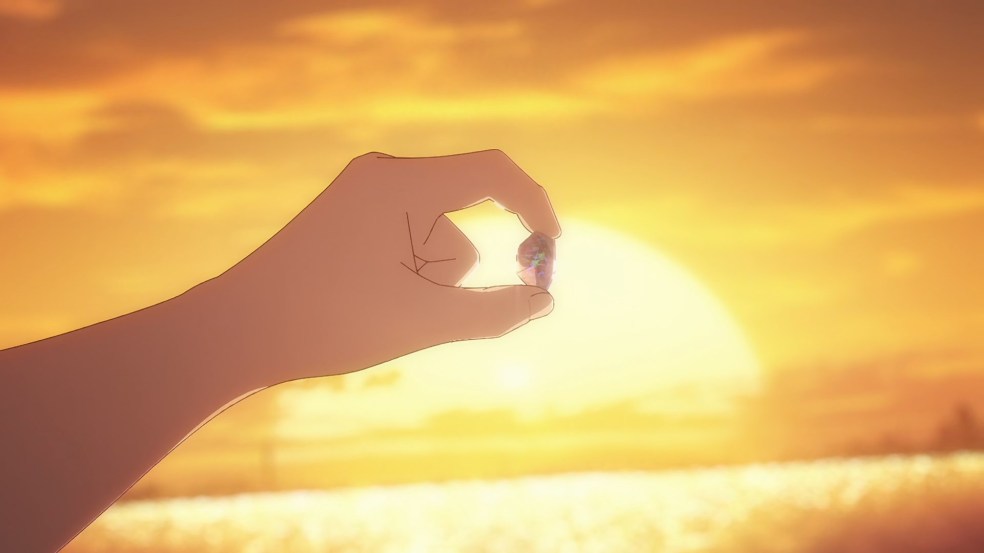


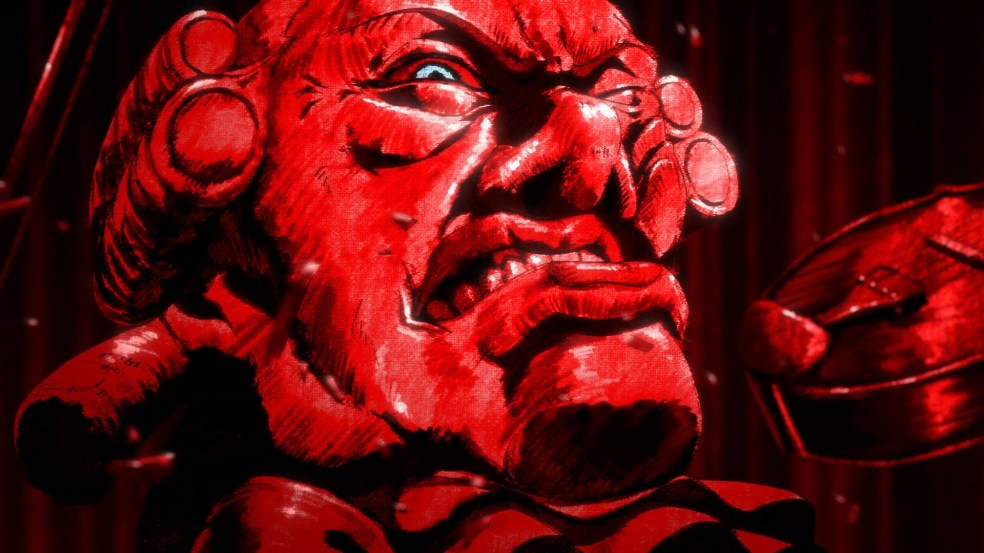







 The Magic Planet