The Weekly Orbit [8/11/24]

The Weekly Orbit is a weekly column collecting and refining my more casual anime- and manga-related thoughts from the previous week. Mostly, these are taken from my tumblr blog, and assume familiarity with the works covered. Be wary of spoilers!


Hello, folks! The season continues to roll on, and we’ve got a nice batch of writeups today that reflect that.


Anime

Code Geass: Rozé of The Recapture – Episodes 6-8

I think on some level, Code Geass has remained Code Geass. I’m struck by how despite sharing very few characters in common with the original series, this feels so much of a piece with it in all possible ways, good and bad. We’ve got our female lead tied up in bondage throughout most of this episode with the camera dead-eyed on her ass, we’ve got kamikaze attacks in huge urban battles, we’ve decided to randomly throw a cybernetically-enhanced supersoldier into the mix. Honestly, none of this is a complaint, per se. This is just what the series does; goofball shit at its finest.

On another note, I’m honestly kind of not sure that Sakuya has the temperament to be a Code Geass protagonist. Lelouch was a fairly shameless manipulator and was willing to screw over basically anyone even if he might angst about it later in some cases. Sakuya having these deep regrets about manipulating Ash feels like an overt attempt to make her more sympathetic which, ironically, makes me like her a little less. She’s still good, but, you can let the protagonist girls be bad too, you know? We’ll see how things go, there’s definitely still time for a pivot, here.

Alya Sometimes Hides Her Feelings in Russian – Episode 6

I have to be honest in that student politics plotlines almost never do anything for me, but the interpersonal dynamics were on point again this episode. I like that we’re seeing a slightly darker or at least more serious side of Yuki now that she’s trying to actively push Alya into either being honest with her feelings for Kuze or backing off. The entire restaurant scene in the episode’s back half is also pretty cute, and is a nice proof-of-concept that you can still play very old romcom tropes like indirect kisses really straight and have is still be decently good TV. The reaction shot where everyone else at the restaurant had their eyes bugging out of their head was quite funny.

Also, the new girl! What’s up with her? This show isn’t as good as Makeine but it’s giving that series a run for its money in sheer number of eccentric girls in the main cast.

Oshi no Ko – Season 2, Episode 6

Rarely am I left at an active loss for words by an anime. Yet, I think this is the third or fourth time Oshi no Ko has done that to me. I will, of course, try explaining anyway.

The opening part of this episode takes the form of an unbroken excerpt of the Tokyo Blade stage play. Those first couple of minutes are pretty incredible on their own, leaving the entire actual plot of Oshi no Ko itself in the margins to express a clear love for this completely fictional shonen manga and this equally fictional adaptation of it. In doing so, Oshi no Ko, and everyone working on it, express love for the shonen anime as an art form and a worthwhile format. (And, indeed, for 2.5D plays as well.) Their pastiche is pretty damn fantastic. I won’t go so far as to say that I’d rather be watching Tokyo Blade than a lot of actual shonen anime airing right now (Elusive Samurai has been great, after all, read on for more on that), but the series makes a very good case for it as a compelling piece of art. Also, in having Oshi no Ko‘s characters portray Tokyo Blade‘s characters so well, it makes a compelling case for them, too. Kana is utterly enchanting as the hot-blooded Tsurugi, even when she’s quelled by being bested in combat, and everyone else here puts in a great performance, as well. One of Oshi no Ko‘s great magic tricks is making you think about how well the characters are acting, as though these were actual people.

Which leads us nicely into Oshi no Ko‘s actual greatest accomplishment this week. Getting You, The Viewer to shed tears over Melt.

Yeah, Melt. Remember Melt? He was introduced in the first season as an actor in the Sweet Today TV drama, there instantly pegged as a good-looking but talentless piece of cast filler. He kind of ruined the whole show, it was a big thing. Melt has had a pretty compelling, semi-redemptive supporting arc in the second season, and it comes to a head here during a scene in the play where his character fights the character played by Sakuya [Kobayashi Yuusuke]. Sakuya, for his part, is a relatively recent addition to our cast, and has been previously introduced as a frivolous womanizer who likes to pick on Melt because Melt is a bad actor. In a sense, he’s Melt’s foil, being someone just as handsome but who’s had to work harder to get where he is. The two’s clash is thus both very literal but also very much a struggle for the audience’s approval, and I don’t just mean the audience watching the stage play.

During his part of the episode, Melt’s on-stage performance is cut with backstory. In a sense, this is cheating. Obviously, we the audience would have sympathized with Melt much more from the beginning if it were made obvious to us from the start that Melt’s general lack of drive is the result of a lifetime of people fucking him over because he’s pretty and assuming that he must also be vapid. At one point, brought up in passing as though Melt himself doesn’t want to dwell on it, he even mentions that he was taken advantage of when he was younger. A heartbreaking and sadly true-to-life detail that really recontextualizes a few things about the character.

Nonetheless, this is not an episode meant to make us feel bad for Melt. Honestly, there was already room to do that if you were so inclined. Instead, it’s meant to explain where the inner reservoir of conviction he draws on here comes from. Melt’s key scene in the play is a minute or two long at most, but over the course of the last several months, and at Aqua’s advice, he’s been pouring his entire heart and soul into preparing for it. Blood, sweat, tears, and sleepless nights, into this one moment.

Aqua’s advice also raises an interesting point. If everyone in the audience already thinks of Melt as a poor actor—and certainly, that seems to be the case—he can use that to his advantage. If they’re underestimating him, they’re set up to be surprised, and that is precisely what happens during the episode’s climactic scene. Struck down, Melt’s character scrambles to his feet and makes a heroic last stand against his enemy, summoning a magnetism that no one knew he had. This blindsides everybody; Sakuya, Tokyo Blade mangaka Abiko, the Sweet Today author who’s also watching in the stands, the rest of the cast, the rest of the audience, and also, you know, the rest of the audience. Us.

Again, part of the magic here is that Aqua’s advice doesn’t just explain Melt’s methods in-universe, it explains how he’s been written up to this point, as well, as everything Aqua says here applies on a meta level to Melt’s own character arc just as well as it does more literally in-universe. This is the kind of thing you can only pull off if you’re both very confident and incredibly skilled at understanding how stories work; a magic trick that seems to explain itself as it’s being performed, only for that damn rabbit to pop out the hat anyway, to your and everyone’s complete surprise. Akasaka Aka’s done it again, god damn it.

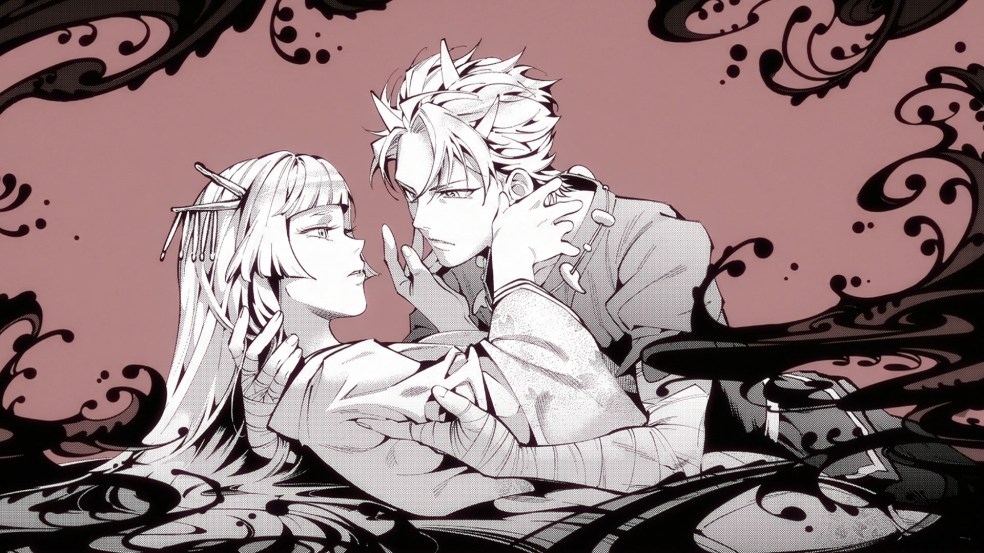
It should go without saying that this applies to the entire Doga Kobo team working on this series as well. There is absolutely nothing in their back catalogue that could’ve prepared anyone for how well they’d handle Oshi no Ko, and this is visually one of their best episode’s yet, as Melt’s sudden surge in charisma is presented as a swirled, painted acid trip. In the audience, Abiko bounces with enthusiasm that someone truly understands her work. In another audience, another mangaka cries. He is chasing after the one thing he’s been missing up to this point, depicted literally as it happens figuratively; star power. When he seizes it, he shines like a supernova.

Wistoria: Wand and Sword – Episode 5

Every episode of Wistoria has the exact same setup.

  1. Some magical feat or trial is introduced, which is difficult for even normal wizards to overcome.
  2. Will, either through his own volition or circumstance, confronts the trial
  3. One or more characters loudly expresses disbelief in Will’s ability to complete the trial. Because Will Has No Magical Talent, you see.
  4. Will overcomes the trial, either via Sword Stuff or with the help of his friends (that’s his True Source of Strength, you see).
  5. Everyone is astounded that Will has done this.
  6. End plot.

In this episode our grand twist is that the trial leads immediately into another trial afterward since this is our first proper two-parter. I don’t know, man. I just have a really hard time getting invested in a show that’s fundamentally so disinterested in, like, not even challenging its audience because that would be asking for coffee at a Home Depot, but just being any kind of interesting whatsoever.

Danmachi, by the same author, has a bunch of silly shit with magical back tattoos that double as stat screens and is incorrigibly horny. That’s not much, but it’s distinct. What does this show have going for it on even that level, so far? The magic chants which are admittedly sort of cool? At least a little? The annoying announcer guy in this episode who uses a wand as a microphone? The Statler & Waldorf-ass hecklers in the audience?

If I rub my temples to stimulate my neurons I can just barely imagine how other people might enjoy this but I very much do not, and I have no idea what I was on about last week, as this might be the most draining and dull episode of this show so far. I’m not even sure why I’m still watching it at this point. Inertia?

The Elusive Samurai – Episode 6

A dynamic, at times harrowing episode that ends with a comedic relief bit where one of the characters pisses on the camera. Truly this is Kamakura Style.

The show’s sense of humor (which I usually think works to its benefit, but I found a bit intolerable in this episode) aside, I want to talk about a specific scene here in the episode’s second half. Here, minor character Prince Moriyushi, the son of Emperor Go-Daigo, confronts Takauji in an attempt to end his reign of terror early. Moriyushi has determination, strength, and good instincts for when someone isn’t what they seem. Especially if they’re, say, possessed of literal unearthly charisma and may well be a walking force of pure elemental evil. In a different, earlier era of shonen anime, this show would be about him, but it isn’t, and when he tries to confront Takauji head on it ends absolutely terribly for him.

I think one of the absolute best things about Elusive Samurai is the way it portrays Takauji, in fact. He moves with a decidedly inhuman grace when fighting (which doesn’t even really seem to be fighting, to him), the cuts of his blade rendered as cuts in the film.

Despite the hellish surreality of what Moriyushi witnesses, he and a tiny handful of his most loyal retainers seem to be the only ones who clock anything wrong with Takauji. Even with blood-sprouting spider lilies covering the ground, everyone else practically throws themselves at him, even as Moriyushi tries to warn them that something inhuman writhes within the man. It’s disturbing stuff, and I imagine the visual similarities to propaganda film are intentional. Takauji is something bigger and more sinister than the history he sprung from or the animation he’s portrayed with, he’s something supernatural and vast and dark. One can’t help but feel bad for Moriyushi at the conclusion of this scene, he’s trapped in a situation he must truly have no context at all for.

But ah, of course the episode ends with the aforementioned comedy bit. So far I’ve mostly taken Elusive Samurai‘s humor as an attempt to heighten its more serious elements while simultaneously providing some relief from them; the jokes are an attempt to push the smothering reality of what’s going on away. That doesn’t entirely feel like it works here, especially when one of the gags is a tossed-off mention of molestation. In some sense I think you could still argue that this is how Tokiyuki sees things—everything is just one big game of hide and seek to him, after all—but I’d want the show to be making that argument more convincingly before I entirely bought it. As-is, I’ve been told that the source material eventually gives up on this particular method of humor, which feels to me like an admission that the contrast wasn’t intentional. I suppose we’ll see, going forward.


Anime – Non-Seasonal

BanG Dream! It’s MyGO!!!!! – Episodes 9-12

It is so insane that this young genre has already produced so many absolute fucking slaps. I want to talk about the whole thing, because MyGO’s whole story is legitimately great and I love it in its own right, but I’m sorry, my entire brain has been rearranged by the last episode of the show and I need to talk about that for a minute. What was that? Who the fuck ends a show like that?

Pictured: That.

I’m not upset! Quite the contrary, that’s got to be one of the craziest finales I’ve ever seen. Sakiko [Takao Kanon] and her new band Ave Mujica essentially crash the anime, as the last episode of MyGO is much more about their first concert than it is anything to do with the title band themselves, but who could possibly complain? Sakiko, my beloved, there is so much wrong with you. You need to be studied, but also given a very large hug, but also, a hug might risk making you less unhinged, which would be a net loss for art in the world. Such dilemmas, such paradoxes! Sakiko joins a long lineage here, of masked musicians with something clearly at least a little wrong with them. Step up here little anime girl, take your place next to the Phantom of the Opera and MF DOOM, you clearly deserve it.

I so deeply want to know how the people writing this got the go-ahead to end it this way. It kind of undercuts the rest of the show? Like, not directly, but we had all those big emotional moments a few episodes back and those moments were great and real and very cathartic but surprise! the entire time the girl you probably just assumed was bitchy has had this awful home life that has inspired her to do….this. What do you even call this? Goth rock theater shit wedged into an anime that gave zero indications it would ever go there. I kind of knew about the Ave Mujica thing ahead of time but no amount of hearing about it prepares you for seeing it. What the fuck dude, I’m speechless.

When I originally posted this a few people took umbrage with my use of the term “undercut,” so I want to clarify that I think this is a positive. It’s a kind of jerking you out of being focused on just MyGO specifically into caring about this other story being threaded through the entire show and thus implicitly the entire setting. I am definitely not criticizing the show here, just kind of in awe that they were allowed to do it in the first place. I’d also be remiss to not mention the actual music of Ave Mujica itself, as their theatrical goth metal is some of the best to come out of this entire wave of girl band anime so far. They’ve put out a decent bit of music since MyGO!!!!! ended, a lot of which is even better than what they play in this episode, and it’s all well worth checking out. The girls’ band century continues.


Like what you’re reading? Consider following Magic Planet Anime to get notified when new articles go live. If you’d like to talk to other Magic Planet Anime readers, consider joining my Discord server! Also consider following me on AnilistBlueSkyTumblr, or Twitter and supporting me on Ko-Fi or Patreon. If you want to read more of my work, consider heading over to the Directory to browse by category.

All views expressed on Magic Planet Anime are solely my own opinions and conclusions and should not be taken to reflect the opinions of any other persons, groups, or organizations. All text is manually typed and edited, and no machine learning or other automatic tools are used in the creation of Magic Planet Anime articles, with the exception of a basic spellchecker. However, some articles may have additional tags placed by WordPress. All text, excepting direct quotations, is owned by Magic Planet Anime. Do not duplicate without permission. All images are owned by their original copyright holders.
The Weekly Orbit [7/15/24]

Hello, anime fans! Premiere season is finally over here at Magic Planet Anime, which means I can finally get back into the regular groove of things after mostly covering premieres for the last two weeks. There’s still one more article in the pipe—you guys should be seeing it tomorrow, unless something’s gone wrong—but for the most part we’re back in our regular schedule.


Code Geass: Rozé of the Recapture – Episode 3

This was a pretty good episode, although Rozé is visibly straining against the limits of the 12-episode format at this point, cramming in tons of major twists and more lighthearted subplots into the 24 minute space of a single episode that can make the series feel a little claustrophobic.

The end result is that this episode feels very diced-up and fragmented, like a dozen little shards of stories are being laid all in a row.

That said, the effect works surprisingly well! Not having the original Code Geass‘ space to laze about and really revel in its contradictions is definitely hurting the show a bit, but I don’t think it’s to the point where it’s a major problem, at least not yet. Also, there were rare amounts of Gender in this episode; Sakuya lounging about in bed, dressing up as a maid, using her real voice while boymoding, etc. All very good. I’m also interested about the new knights we’re very briefly introduced to in the episode’s start.

As for the main thing; the child-emperor of Britannia is dead, and it seems like Sakura is going to be placed on the throne as a puppet for our local Char knockoff, Lord Noland [Yasumoto Hiroki]. This implies to me that he probably knows she’s not the real Sakuya, which makes things interesting. It’s fun to see how Rozé tries to skirt around the limitations of its runtime with regard to this kind of thing specifically. Norland’s plan to kill Callis and replace him with Sakuya would’ve been given several episodes of buildup in the original Code Geass. Here it’s all left to implication, making the entire thing feel all the more sudden.

All of this pales to the real revelation in this episode: LELOUCH IS HERE AND THEY GAVE HIM LINES AND EVERYTHING AND IT WAS JUST A FLASHBACK BUT I DON’T CARE AAAAAAAAAAAAAAAAAAAAAAAAA MY FUCKIN BOY!

That is the least formal writing you will ever read on this blog. Please revel in it.

Alya Sometimes Hides Her Feelings in Russian – Episode 2

This episode clarifies for us that Suou, who we met last week, is actually Kuze’s sister, and is also significantly less prim and proper than we might’ve been initially led to believe.

She’s an incorrigible faux-(or is it even faux?)-brocon and arguably even more of an otaku than her brother. I am Not Really Into This, suffice to say, but on the flip side, any texture is good for a romcom that’s working this tightly within a formula. Suou does not seem to be a particularly complex character (maybe that will change as the show goes on) but her sheer meanness is funny enough. She really delights in teasing Alya over her closeness to Kuze. Alya has no idea of course, that the source of this closeness is that they’re siblings, and she in fact assumes that they’re dating. (This is less unbelievable than it might seem given that the two use different surnames and don’t seem to be living together. My guess is that their parents are separated.)

This flows nicely into the main setting of the episode, a mall, where Alya runs into the siblings while they’re out shopping and gets roped into visiting a novelty spicy ramen restaurant. An admirable amount of visual polish goes into conveying how unpalatably hot the ramen is, but I will admit that this whole scene was a bit of a shrug for me.

I can’t help but notice that Alya’s Russian has already been relegated to a plot device. Alya mutters in Russian about wanting him to be her running mate in the student council election, and it really seems like he eventually will. Other than this it’s mostly relegated to a couple basic jokes during the ramen scene.

Alya herself remains a delight, though. At one point she and Kuze spend time clothes shopping and she gets hooked on him praising her outfits, only to collapse into an anxious ball when Suou shows up again.

Her walleyed expressions throughout this episode are also pretty endearing, and she’s the main character whose interiority here doesn’t come off as slightly forced. Contrast the siblings, who are here given an out of place melancholic flashback that I don’t think this show really has the weight to handle.

Roshidere still isn’t amazing or anything (and I could really do without the Single Egregious Ecchi Scene in each episode, they throw the whole vibe off) but I’m having fun with it, mostly off the strength of its cast, and I’m interested to see where this all goes.

This week’s ED theme is a sugary sweet cover of “Kawaii-te Gomen” (something like “Sorry I’m So Cute~”, apparently) by The HoneyWorks. I actually quite like this song, and Uesaka Sumire‘s cover of it here is a nice if straightforward take on the original.

Quality Assurance in Another World – Episode 2

This was not nearly as interesting as the first episode, but it was alright! Once it became clear that this is just a variant on Sword Art Online‘s setup I will admit that I lost some interest, but I’m going to stick with it a bit longer to see if it can gain that interest back. I liked this episode’s villain being a guy dressed up like Black-Iron Tarkus from Dark Souls, and he and his skinny friend do a bit to establish that most of Haga’s fellow QA people are pretty twisted this far into their being abandoned / purposely left in the game / whatever is going on.

I will say I think Haga’s insistence that if he just keeps doing his job he’ll eventually get home is the one thing that I’m hanging onto, here, because it’s a good metaphor for how being stuck in a dead-end job can feel and I think that’s on purpose. So hopefully the series has more tricks up its sleeve to come.

Oshi No Ko Season 2 – Episode 2

One of the central ideas of Oshi no Ko is that being in a creative field can absolutely suck. Perhaps that it even does usually suck, as a rule. So it is with “Game of Telephone”, the second episode of the show’s second season. As revealed at the end of the last episode, Abiko [Sakura Ayane], the mangaka for Demon’s Blade, hates the play’s script.

There’s a fun duality to the comedic and tragic sides of this episode. On the one hand, the fact that Abiko, a very weird little woman who brushes her teeth with double toothbrushes when she needs to do it quickly and dresses in decidedly dated attire, has everyone running scared is pretty funny. On the other hand, Abiko, as the original creator of a very successful work, wields a lot of power over the play, which she uses to eventually dislodge the pseudonymous scriptwriter GOA [Ono Daisuke] from his position, threatening to pull the right to make the play in the first place if she’s not allowed to simply do the script all over again herself.

GOA is, of course, devastated, and he can’t even get his name taken off the play so he’s not being falsely credited. One of Oshi no Ko‘s simplest shots to date is just him, sitting in his dimly lit apartment by himself, clearly doing fine financially but creatively deeply unfulfilled. It’s sad stuff.

And yet, Abiko isn’t entirely unsympathetic here either despite how she absolutely lays into GOA. Her passion that her work be translated accurately to other media is clearly genuine, and there is, of course, the little fact that Oshi no Ko itself was originally a manga. So there is some amount of sympathy for her point of view built into the series just inherently. (I’ve seen it suggested that Abiko is supposed to be a skewering of a certain kind of entitled mangaka or even some mangaka in particular, but I just don’t see it, especially considering that Akasaka Aka is pretty opinionated about his work in his own right.)

All told, this is a compelling episode in its own right and a solid twist to what was set up last episode. We end on Akane taking Aquamarine—who has professed to be disinterested in theater—out to see a 2.5D play of the type they’ll be putting on. I cannot wait to see what that looks like.

Anime – Non-Seasonal

This was fun! Despite the way Magic Knight Rayearth is often described as a mix of magical girl, mecha, and isekai genres, it most strongly comes off as a fairly straightforward heroic fantasy thing, at least so far. It’s such an old-school fantasy thing that Acquiring Legendary Weapons and Getting Out of The Monster Forest are whole-episode quests in of themselves.

The pacing of these early episodes is surprisingly hyperactive for the vintage of the show, which I find interesting. Also, the character animation is really bouncy and I like the amount of chibi cuts.

I also must confess to loving the evil sorceress Alcyone [Amano Yuri]. Her design is like 50% purple spheres by volume, it’s fantastic.

All three main girls are a lot of fun. So far Fuu [Kasahara Hiroko] has gotten the most focus and I like her fairly analytical personality, although it’s funny that even 30 years ago isekai protagonists were comparing the world they end up in against video games they’ve played. (There are a lot of differences obviously, but this similarity struck me and a friend1 who I was watching with as funny.) Episode 3 is a focus episode for her, wherein our main group meets the chronic liar / wandering swordsman Ferio [Yamazaki Takumi]. Despite initial skepticism she ends up falling for him, it’s cute, and believable! It also involves Fuu shooting one of her magic arrows into a big rock that turns things into monsters, so that’s pretty great too.

Going back a bit, episode 2 features a pretty involved scene where our girls take down a mud golem. I really liked it, as the way they lead it into a small pond where it dissolves. I think a lesser show would just take it for granted that our girls could defeat these things and not really bother showing us any details.

I was decidedly not a fan of the racial humor in the second episode, though, which caught me very off-guard. (It consists of the smith character fantasizing about capturing her enemies and doing so with some stereotypical Native American / boiling pot imagery, admittedly iconography nicked from old, racist American cartoons most likely, but still. Eugh.) and I’m hoping that’s the end of that.

Anyway, it’s a solid show overall! Excited to watch more whenever the aforementioned friend and I end up having the time.


That’s all for this week. I leave you with the following Bonus Thought. I’ve been forgetting to do these lately, shame on me!


1: Hi Josh


Like what you’re reading? Consider following Magic Planet Anime to get notified when new articles go live. If you’d like to talk to other Magic Planet Anime readers, consider joining my Discord server! Also consider following me on AnilistBlueSkyTumblr, or Twitter and supporting me on Ko-Fi or Patreon. If you want to read more of my work, consider heading over to the Directory to browse by category.

All views expressed on Magic Planet Anime are solely my own opinions and conclusions and should not be taken to reflect the opinions of any other persons, groups, or organizations. All text is manually typed and edited, and no machine learning or other automatic tools are used in the creation of Magic Planet Anime articles, with the exception of a basic spellchecker. However, some articles may have additional tags placed by WordPress. All text, excepting direct quotations, is owned by Magic Planet Anime. Do not duplicate without permission. All images are owned by their original copyright holders.

The Weekly Orbit [7/1/24]

The Weekly Orbit is a weekly column collecting and refining my more casual anime- and manga-related thoughts from the previous week. Mostly, these are taken from my tumblr blog, and assume familiarity with the works covered. Be wary of spoilers!


Hello, anime fans! We have a quiet lineup this week, but that’s only because we’re in the between-season doldrums where last season’s shows have all ended and this season’s have mostly not yet premiered. We’re here to cover one of the few that already did and an ongoing annual that I’m fond of. (Also one last finale, but to be honest I had little to say about it.) There’s also a new section of the column, here. Keep scrolling and you’ll see what I mean.

Before that, I do just want to once again plug my reviews for Jellyfish Can’t Swim in the Night and Girls Band Cry, the twin music originals that aired this past season. Honestly, they started out fairly different and ended up miles away from each other in every important respect, but the sisters-by-circumstance will probably always be compared just because they happened to air at the same time. I feel a little bad for the former in that I can’t help but think it might have been a bit better received if it had aired back in Winter. Still, for my money, both have their strengths, and Girls Band Cry is basically an instant classic.

Anime

Code Geass: Rozé of the Recapture – Episode 2

I have a lot of positive things to say about this episode, but before we get to any of them we have to address my one big criticism of it. The main sour note here is just, man, do we really have to call the prison that the Japanese resistance are being held in a “concentration camp?” I’m not sure if the use of that term is to be blamed on the subtitlers or the writers (a bit of on-screen text actually says *relocation* camp instead, although I think that’s just a euphemism for the other thing anyway). Usually, I make some effort to excuse Code Geass‘ generally reckless use of politically-charged imagery, but it very much is possible to push these things too far, and that is definitely the case here. (The original series sometimes did so as well, so it’s not like this is a sin unique to Rozé, but still.) It’s very much a down note in an otherwise pretty good episode, and it put a damper on my mood. Not mentioning it would also just feel irresponsible. So! There it is. I don’t know why they did that and I’m not going to attempt to excuse it.

Anyway, the actual prison liberation itself is pretty good and very action-packed. The show’s establishing a pattern here with Ash taking down arrogant Britannian knights that is admittedly a cheap thrill but one that I’m pretty into. I like his little speeches when he inevitably bests them.

There are two main things we learn in this episode. One; Sakuya and Sakura don’t seem to actually be related and instead have a royal body double situation going on. What does this open us up for? Why, Code Geass Yuri, of course. I’m not going to blow anyone’s mind by praising wlw romantic tension in a show when the blog that I pull these weekly posts from has the URL “yurisorcerer.tumblr.com”, but nonetheless, I am going to say; good job with that, Rozé of the Recapture. May your bounty of lilies be endless.

The other thing is that hey, it turns out that Sakuya-as-Rozé doesn’t have as straightforward a relationship with Ash as we were initially led to believe (who could’ve seen that coming?). Given the flashback we’re shown, the case seems to be that Ash is under a very complicated iteration of Sakuya’s geass, and in fact plans to kill him after she’s completed her tasks of rescuing Sakura and freeing Area 11 from the Neo-Britannian yoke, to “avenge her father.”

We’ll learn more about that in the weeks to come, I’d guess. It really feels like Sakuya is a very complex character that we’re only getting to look at one layer at a time. I like that, it makes her notably distinct from Lelouch whose whole deal we basically understood right away even if it later became more complicated.

So, yeah, in spite of my major complaint, this was a solid episode. (I could complain about the fanservice too if I wanted to, but honestly I’m disinclined to do so. That’s always been a thing Code Geass has gone over the top with, and I feel like anyone still onboard with the series has to know that by now. Code Geass Ass Shots make a proud return here after being absent in the first week, in fact.) I’d put it about on par with the first episode overall.

Mysterious Disappearances – Episode 12 (Finale)

This sure was a final episode of a TV anime! I really don’t have a lot to say about this. The voice acting was good, Fairouz Ai and the cat boss youkai’s VA (who I can’t find for some reason) give their all here. This is a perfectly fine end to an extremely middling adaptation of a manga that is good but not like, that good, to begin with. Also it’s completely unrelated to any material in the actual manga! They just made a whole new ending up! This used to be a very common practice but it’s not anymore, and I’m surprised to see it brought back for an adaptation as underwhelming as this one.

Suffice to say, I’m glad to put this one in the books (har har har). Not the worst thing I’ve ever seen, and even this year I’ve seen much worse, but I’ve seen much better, too.

Pokémon Horizons – Episode 56

Normally when I write these, even the less serious ones for the weekly column, I try to keep in mind that my audience is not me and I am not my audience. Obviously, what you’re ultimately always getting is my opinion, but I normally attempt to give some consideration to how others might feel, too.

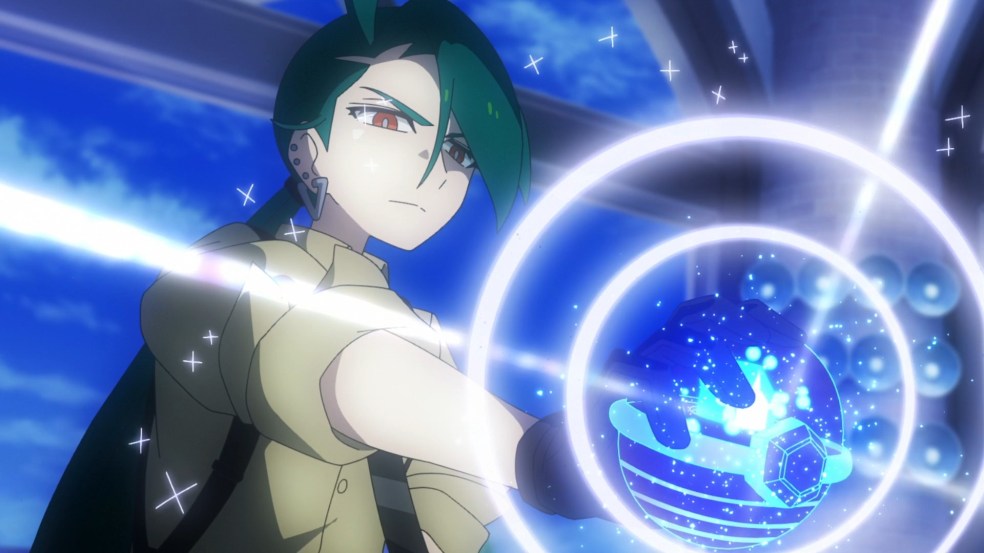
All this to say, I can’t do that here. This is an episode with a lot of Rika in it. I cannot be normal about Rika. I have tried in the past and failed.

It should’ve been me.

She’s beautiful, fantastic, gorgeous, amazing, dazzling, attractive, and her voice [provided by Saiga Mitsuki] makes my head spin. She speaks to a nervous Liko with empathy and humor, she lightly talks herself up during the (amazing) fight, but honestly she could be a lot more boastful and it still wouldn’t feel unjustified. I spent enough of the episode having a gay meltdown that I probably missed some of the finer details, but can you really blame me? She’s just electric to watch.

You guys have no idea how hard it is to not just post thirty examples of her winning smile in a row.

Right, the battle itself. Liko’s battle partner is Katy, the usual first gym leader in the Scarlet / Violet games. She puts in a good showing for the first half of the episode, with her Lokix really standing out in giving a Pokémon that isn’t particularly prominent in its home game some shine. The little guy comes off as every bit as cool as his Kamen Rider inspiration.

When the battle comes down to just Liko and Floragato against Rika and her Clodsire, things really fly off the rails, and we get the delightful experience of watching Liko undergo some character growth in real time when she (perhaps inevitably) loses. The Liko we see here, properly invested in the outcome of her battles because Floragato is, and she wants what’s best for her partner Pokémon, is a far cry from the shy little bean we met over a year ago in episode 1.

Over in the B-Part of the episode, Penny [Hirohashi Ryou] makes her on-screen debut, and she’s pretty great, too, terse and a little mysterious. What little drips we get of her backstory seem to vaguely imply that this anime actually takes place after some version of the game’s events? Which feels like it can’t possibly actually be what they’re going for, but it’s an interesting thought, regardless. (It would definitely explain the rather strange name of ‘The Explorers’ for our villain group. Thinking on this the day after I initially wrote it, maybe what’s being alluded to here is actually the earlier explorations of Area Zero.) Either way, we’re definitely getting into some interesting stuff here, Penny and Dot come across a mysterious “Scarlet Book” with what’s clearly Koraidon on its front cover. Mysteries upon mysteries! And really a good reminder that for all that’s happened over the past year or so, we’re still really just getting started with Pokémon Horizons. Not that I’m complaining! It’s quietly become one of my favorite ongoing anime.

Around The Internet

So! Here’s a new section of the columns that I haven’t figured out exactly how I’m going to handle in the archives. Essentially, I wanted to give a shout out to both to fellow anime bloggers and also just to various other critics I’ve been reading recently. Some of these people also write about anime, some of them write about other things entirely, but my hope is you’ll check some of them out if you like my own work.

Short Reflection: Spring 2024 Anime, by Anime Binge-Watcher – A tumblr post of decent length by fellow anime blogger (and Magic Planet Anime Discord Server member!), Anime Binge-Watcher. I don’t agree with all (or even most) of ABW’s ratings for the anime we both watched this past season, but I appreciate their perspective on things regardless, and it’s always interesting to read a well-thought-out opinion from someone who you don’t entirely align with. Even more interesting to me is their opening recommendation of the Dead Dead Demons’ Dededede Destruction anime (retrofitted from a film, not entirely unlike what’s happening with Rozé of the Recapture), that was just not on my radar at all but sounds (and looks, given their screencaps) pretty arresting. I’m also super happy to see another person really give it up for Girls Band Cry. And they even draw a connection between the traditional “rival group” in idol anime and that series that I hadn’t really considered before, but makes sense now that it’s been pointed out to me, especially when taken in context with eg. the rock-inflected stylings of a group like Saint Snow. In any case! It’s a good article, and I recommend it.

Aard Labor, by someone seemingly going by just “Tom”, at FreakyTrigger – Here’s something that’s both way out of my wheelhouse and could also easily eat up a whole afternoon. I’m not super familiar with UK-based pop culture criticism site FreakyTrigger, but it seems that earlier this year, a person there tasked themselves with the monumental and unenviable task of reading, and then reviewing, volume by volume, the entirety of Cerebus the Aardvark, the legendarily unhinged Canadian comic book epic that plots the evolution of its title character from a simple “funny animal” placed in a Conan the Barbarian parody up to frothing-at-the-mouth, ranting antifeminism and existential terror of its final volumes. Cerebus itself was (and I assume still is?) pretty infamous for many years as an early example of the kind of pure-id getting lost in the weeds that we now mostly associate with webcomics. I will cop to having never read the series myself, its massive length and reputation as moral bugspray have kept me away, but I’m more than happy to see someone else dive into it, especially if they’re as observant and thoughtful as article author Tom seems to be.


That’s all for this week, anime fans! The coming week proper is probably going to be pretty busy over here, although it’s hard to say for sure, so keep an eye on your inbox so you can know when any first impressions articles or such go up. Also! I will once again ask that if you like anything I’ve written in this column, or on the site in general recently, please consider dropping me a tip on Ko-Fi. Due to various life issues, I don’t have a regular job, so these donations help me afford basic necessities like food, medicine, clothes, yadda yadda. (And occasionally less essential things! I would really love to buy one of Togenashi Togeari’s albums, but I’m getting into Christmas Wishlist territory there.)

See you soon, anime fans!


Like what you’re reading? Consider following Magic Planet Anime to get notified when new articles go live. If you’d like to talk to other Magic Planet Anime readers, consider joining my Discord server! Also consider following me on AnilistBlueSky, or Tumblr and supporting me on Ko-Fi or Patreon. If you want to read more of my work, consider heading over to the Directory to browse by category.

All views expressed on Magic Planet Anime are solely my own opinions and conclusions and should not be taken to reflect the opinions of any other persons, groups, or organizations. All text is manually typed and edited, and no machine learning or other automatic tools are used in the creation of Magic Planet Anime articles, with the exception of a basic spellchecker. However, some articles may have additional tags placed by WordPress. All text, excepting direct quotations, is owned by Magic Planet Anime. Do not duplicate without permission. All images are owned by their original copyright holders.

Seasonal First Impressions: The Revolution Never Ended for CODE GEASS: ROZÉ OF THE RECAPTURE

Seasonal First Impressions is a column where I detail my thoughts, however brief or long, about a currently-airing anime’s first episode or so.


They fucking got me again.

Let me explain. Nearly 20 years ago, a little anime called Code Geass (subtitled Lelouch of The Rebellion) premiered, and it barged into the hearts and minds of myself and so many other impressionable young teens with reckless abandon. Short of perhaps Death Note, no anime was more synonymous with a certain kind of mid-aughts I’m 14 And This Is Deep chuuni shit. Quite unlike its former chief contender, Code Geass has remained an active franchise in the years since.1 I haven’t seen them myself, but the Akito the Exiled spinoff films have their following, and the series has kept chugging along with various ancillary media too, some available in English and some not. In 2019, the Lelouch of the Re;surrection film staked out an alternate continuity where Lelouch comes back to life. That movie was a bit of an up-and-down experience, and mostly succeeded off the strength of being a movie full of Lelouch doing Lelouch Shit, but its best moments were classic Code Geass camp and proved that the franchise still had some life left in it. Code Geass has been around, so the existence of Rozé of the Recapture, a new series of theatrical OVAs that are also being streamed week to week as a regular TV series (don’t ask me how this works, I don’t know), is not too surprising.

It’s also probably not too surprising to any longtime readers of this blog that I, the Magia Record defender, think that the first episode of what some would deride as a pointless spinoff project is actually really fucking good. In hindsight, I don’t know why I ever doubted the project. I am still the same person I was in 8th grade in one very important way; I love campy goofball shit, and Code Geass is and always has been some Grade-A campy goofball shit.

Rozé of The Recapture takes place many years after some version of the original series’ events—I’m not totally clear on how many, but it’s been long enough to let some additional light sci-fi elements seep into the setting—but rehashes the same fundamental premise. A resurgent “Neo-Britannian”2 empire has once again conquered and subjugated Japan (or at least Hokkaido), once again rebranding the region itself as Area 11 and its citizens as second-class Elevens. Once again, an underground cadre of resistance fighters struggle against their imperial overlords. There are some extra elements this time around (such as a gigantic energy barrier called the Situmpe Wall that surrounds Area 11), but the fundamental premise is the same. And once again, it’s up to a Britannian outsider to help the resistance win the day. More or less. We’ll come back to that part.

The main difference is the most obvious one. There’s no Lelouch, here. He’s gone. The emperor is dead.

In his place we have a mysterious pair of Britannian siblings named Rozé [Amasaki Kouhei] and Ash [Furukawa Makoto]. Ash has yet to make much of an impression on me, but his brother is a different story. Rozé is not Lelouch—nobody could be Lelouch, that’s an impossible pair of shoes to fill—but he’s a pretty fun protagonist so far, with a whimsical and playful personality that belies the brain of a serious tactician. Rozé, however, commands a battlefield that is significantly weathered from his predecessor’s day. In general, Rozé of the Recapture has a marginally more grim aesthetic sensibility than the original series. It’s as though the order was to make it just as camp but twice as dark. Everyone still dresses like a lunatic, and the show has that same love of cutting from battlefield to command room shenanigans to domestic scene and back at a wild pace that the original did, and it even also has its love of bold—perhaps reckless—incorporation of very bleak imagery into something that’s otherwise so fun, but it does feel a bit less bright, even literally, than the original Code Geass did. It’s as though Code Geass knows it is returning to a world that is, if you can believe it, even bleaker than the one it left in 2008. Having not seen them, I can’t comment on how directly this follows from the sensibilities of the Akito the Exiled side series, but I wouldn’t be shocked if those have been quietly building a bridge from the original series’ point of view to that of this anime.

As for the actual events of this episode, despite the slightly updated setting they’ll be very familiar to any returning Code Geass heads. We open with some exposition, and after the OP, a pretty grim scene of Britannian noble siblings—both of a class of knight called Einbergs, something that seems like it will be a recurring thing over the course of this show—Greede and Gran Kirkwayne [Nojima Hirofumi and Ono Yuuki, respectively] being absolutely horrible to a group of random Japanese citizens. This culminates with Gran, the more hotheaded of the two, shooting a man he’s holding hostage in the head. When his wife cries out in grief, Greede makes a token effort to perfunctorily apologize, only to then shoot her when she understandably spits on him. The scene ends with Greede ordering his men to unceremoniously massacre the rest of the gathered group. The message is pretty clear; the Kirkwaynes are bad people, power-drunk authoritarians and bigots with no redeeming qualities whatsoever. Fair enough.

So of course, our protagonists are tasked by the fabulously-named Seven Shining Stars resistance group with taking them out. Their infiltration into the Britannian base, to the extent that it even counts as infiltration, is classic Code Geass. Ash’s knightmare frame emerges from a wrapped-up present box and Rozé spends much of the scene dressed like a clown; you can’t ask for much better than that. Rozé does eventually actually properly infiltrate the base, confronting Greede, the brains of the operation, directly.

The two have a very classically Geassian back and forth. The series’ famous chess motifs return here, as absolutely ridiculously goofball as they were in 2006. Rozé and Greede strategize while poking at some kind of holographic tabletop chess display. When the moment is right, Rozé orders his brother to go all out, and back in the actual battlefield we get some genuinely riveting mecha action, complete with Ash skewering Gran and his knightmare frame with a pair of its own swords after laying down some pretty fantastic shit-talk about how Gran’s a worthless coward.

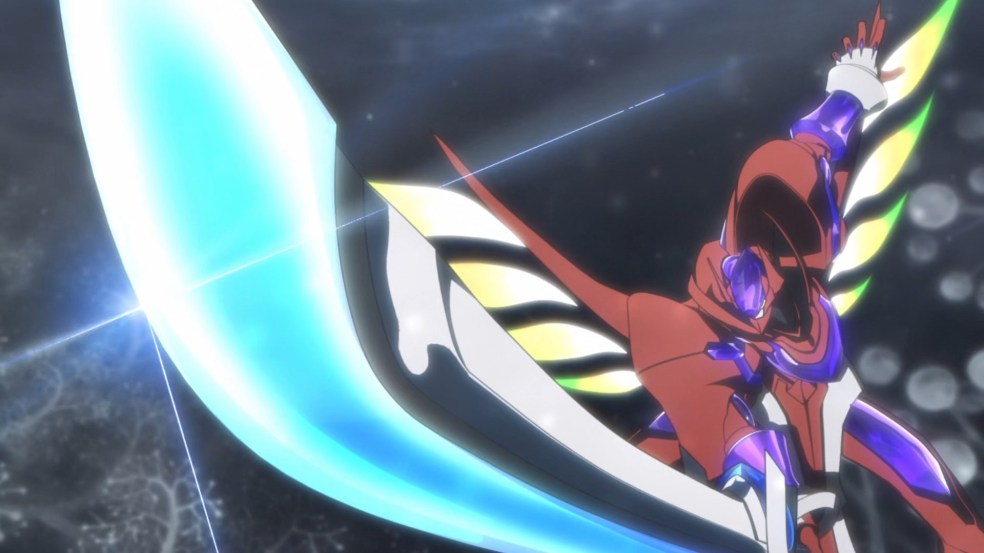
The robot is pretty cool too. We don’t get a name for it here, but look at it!

Back in the base, we get a fantastic twist here as Rozé, with Greede at gunpoint, offers the Britannian noble a choice. Or, perhaps it’s better to say that he doesn’t give him a choice per se. Because Rozé doesn’t do anything per se. There is no Rozé.

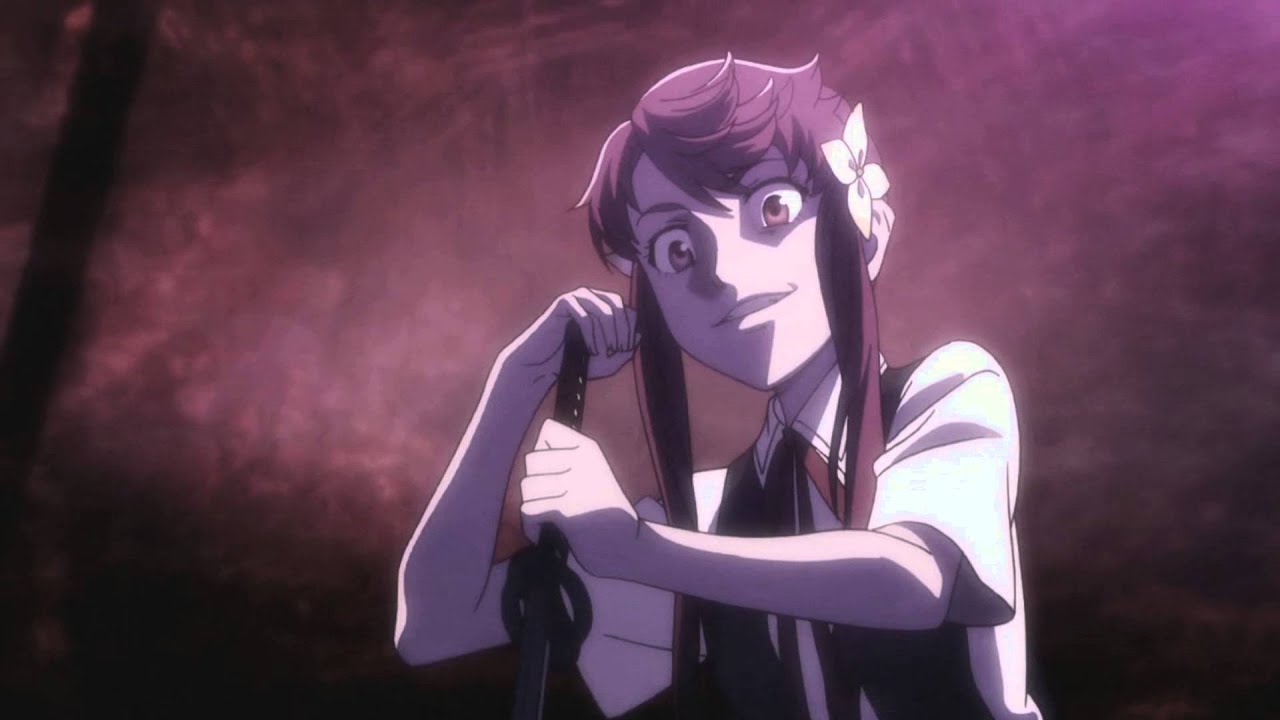
Meet Sumeragi Sakuya [Ueda Reina], the actual protagonist of Rozé of the Recapture.

I am almost never at a loss for words when writing these columns. There’s a lot to say about even fairly uninteresting anime, and Rozé of the Recapture is anything but that so far. But seriously, what the hell does anyone want me to say? They made a character who looks like Lelouch a woman and had her crossdress for most of the first episode. I’m in love, sue me. I’ve seen the phrase “Lelouch of the Transition” drift around the Internet in regards to this twist and, I mean, what can I possibly say that’s better than that? (It does say a lot that this random tweet showcasing the scene immediately following this has done more marketing for Rozé of The Recapture than Disney+, who are distributing it in North America, have, but that is perhaps unsurprising, given their track record.) This scene is what made it truly obvious to me that the show is dedicated to recapturing that spirit of the original as much as possible, hopefully without too-directly rehashing many of its plot points. Rozé of The Recapture does basically nothing at all here to endear itself to any new audiences, and it definitely isn’t going to change the opinion of anyone in the “Code Geass sucks, actually” crowd, but I honestly think that is fine. Code Geass is so entirely itself that trying to “adapt to the times” would’ve been doomed to fail. Call this the rare Millennial nostalgia play that I’m fully onboard for.

In any case, Sakuya shows off her Geass. We don’t know how she got it or precisely how it works—my reverse-engineering attempt here is that it somehow forces the target to choose between two options if they hear her give a command—but she offers Greede the choice of saving a hundred times more Japanese people than he’s ordered dead or killing himself. Suffice to say, Mr. Kirkwayne does not survive to the end of the episode.

We close on Sakuya—back in-character as Rozé—talking to the Stars. She says that she and Ash knew from the jump that this entire mission was more of a test than anything else, and asks what the real objective they’re being hired for is. The answer? To liberate an Alcatraz-like offshore prison to free some of the Stars’ comrades. It just so happens that someone that Sakuya euphemistically calls a ‘friend’—someone named Sakura, who looks so similar to Sakuya that they could be mistaken for each other—is also being held there, under the pretense that she’s Sakuya. The amount of hilarious shenanigans this is setting up is truly dizzying to consider, but the main takeaway is one very important thing; if Code Geass isn’t back per se, that’s only because it never really left.


1: Technically, there actually have been a few short story collections and one-shots and things. But I think there’s a reason that there’s no Death Note spinoff airing right now. Lelouch would whip Light’s ass in any serious battle of wits, by the way. Just saying.

2: I will be using the series’ ridiculous alternate history terminology religiously while discussing it as it airs, thank you.


Like what you’re reading? Consider following Magic Planet Anime to get notified when new articles go live. If you’d like to talk to other Magic Planet Anime readers, consider joining my Discord server! Also consider following me on AnilistBlueSky, or Tumblr and supporting me on Ko-Fi or Patreon. If you want to read more of my work, consider heading over to the Directory to browse by category.

All views expressed on Magic Planet Anime are solely my own opinions and conclusions and should not be taken to reflect the opinions of any other persons, groups, or organizations. All text is manually typed and edited, and no machine learning or other automatic tools are used in the creation of Magic Planet Anime articles, with the exception of a basic spellchecker. However, some articles may have additional tags placed by WordPress. All text, excepting direct quotations, is owned by Magic Planet Anime. Do not duplicate without permission. All images are owned by their original copyright holders.

(REVIEW) Now That it’s Over, What Even was BACK ARROW?

This review contains spoilers for the reviewed material. This is your only warning.


“An arrow to end God’s tyranny.”

BACK ARROW, its name proudly and pointedly stylized in all capital letters, is a gem. Not a gem in the “hidden gem” sense where it’s a fantastic show that’s underappreciated by the masses, (although certainly some might say it is that also) but a gem in the way that you might call your quirky friend who’s a little too into conspiracy theories a gem. It’s not the best show of the Spring 2021 season, and not a personal favorite (I more respect it than anything else), but it’s among the most unique. It’s also by far the one I most expect to pick up a cult following.

On one level, BACK ARROW is a perfectly logical synthesis of the previous work of its two main creative minds; Gorou Taniguchi, creator and director of Code Geass on the one hand, and Kazuki Nakashima, scriptwriter of a number of Studio TRIGGER’s most famous work, notably Kill la Kill, on the other. The result, as anyone familiar with both of these things might guess, is a decidedly strange fusion. BACK ARROW is political, silly, grandiose, philosophical, and ridiculous. This puts it in the same broad thematic space as most of its “parent” anime, like the aforementioned Code Geass and Kill la Kill as well as some work in a similar vein (say, Symphogear). It’s not quite as good as any of those, but it manages to make a strong showing of things regardless.

BACK ARROW concerns the geopolitics–and eventually, the cosmology–of a world known as Lingalind. It is surrounded in its entirety by a massive wall. Were it not for the presence of mecha conjured up via magic circlets called Bind Warpers, Lingalind would be a fairly typical fantasy setting for an anime. I suspect this is deliberate, as one of BACK ARROW‘s aims is to explore the logical conclusions of such a setup. There are two main nations; Rekka and Lutoh, (respectively loosely based on China and a general mish-mash of Western Europe) as well as a number of smaller powers. The mecha are powered by a force known as Conviction, and each owner of a Bind Warper has a statement that they hold as a sort of personal code which changes their mecha’s form and what it can do. (As an example, Atlee, a green-haired sheriff girl, has a conviction of “I’ll manage somehow!”)

Do you like GIANT ROBOTS throwing DARK ORBS? BACK ARROW might be for you.

None of this is all that complex on its own. However, when BACK ARROW‘s title character, Back Arrow (a homophonic pun name on baka ero, “perverted idiot”) arrives, Superman-style, in a capsule from the sky, things quickly change. Across twenty-four episodes, Back Arrow goes on a capital-J Journey across and eventually beyond Lingalind. Along the way, he helps dramatically reshape the world’s political landscape, and eventually comes face to face with a man named Rudolph, who claims to be “God’s arbitrator”. What this means in practice is that Rudolph–a villain so deeply goofy that at one point he drinks wine with his shoulders–plans to destroy the world.

If you thought any part of that was a joke, nope! Completely, literally true.

Things go well and truly off the rails as the series enters its latter half, and if you’re the sort of person who values sheer scale above all else, BACK ARROW will be a likely anime of the year contender for you.

BACK ARROW‘s only main flaw is a sort of inarticulateness. It is fairly hard to say what the point of the series is, exactly, until its very end. Ultimately, it is the same message that almost all of Nakashima’s work imparts; no matter how great the force that holds us down, by coming together, we can overcome it. A simple message of unity in the face of any odds met that settles well with BACK ARROW‘s inherent silliness.

An acquaintance put it best, Nakashima’s main strength as a writer is “to script things that make enough sense internally even if they sound completely wild and dumb when taken out of context.” I could sit here all day and relay miniature stories of conviction particles and nested giant mecha and baby gods, but there’d be no point. These things tie together surprisingly well in the moment, but make little sense outside of them. This is the man who penned what was translated as “kick reason to the curb”, after all.

You understand by now whether or not you’d get anything out of BACK ARROW. If it is a minor work in its creators’ body thereof, that really only speaks to the strength of the competition.

I suspect in the months and years to come, those who would appreciate it will, indeed, find it. It has a magnetism to it, and like attracts like. Don’t be surprised if, five or ten years down the line, you see BACK ARROW topping a lot of “underrated anime” lists. Until then, it flies on, like an arrow in the face of an angry god.


If you like my work, consider following me on Twitter, supporting me on Ko-Fi, or checking out my other anime-related work on Anilist or for The Geek Girl Authority.

All views expressed on Magic Planet Anime are solely my own opinions and conclusions and should not be taken to reflect the opinions of any other persons, groups, or organizations. All text is owned by Magic Planet Anime. Do not duplicate without permission. All images are owned by their original copyright holders.

(REVIEW) Sakae Esuno Has a BIG ORDER

This review contains spoilers for the reviewed material. This is your only warning.


What is a “bad anime”, exactly? If it’s an anime that fails at being something it’s trying to be, I find it difficult to stick the label on Big Order. Because on the one hand, the 2016 manga adaption seems to know exactly what it wants to be. On the other hand, maybe a “bad anime” is an anime whose very aims are somehow defective. Being a case where “what it wants to be” is arguably somewhere between “bad for the medium” and “reprehensible”, Big Order‘s a bit of a hard one to evaluate. Too beholden to a wide slate of action-anime cliches to be truly unique. Too weird to be rightly called generic. Big Order largely succeeds in its aims, but that very same success makes the series impossible to defend. Speaking less roundaboutly; this show sucks and you probably shouldn’t watch it unless you have a fascination with shows that suck.

Very broadly, Big Order is about people who have superpowers based on “wishes” they had at the time a disaster called The Great Destruction (yes, really) hit, circa ten in-show years ago. This ostensibly-kinda-interesting premise means very little, because in practice these powers–called Orders–can just kind of Do Whatever in all but a few cases. Our protagonist is Eiji Hoshimiya, a chuuni’s dream. In a more self-aware show, the similarity of his first name to the word “edgy” might be deliberate. Eiji accidentally killed billions-with-a-B people when he got his Order, causing the Great Destruction in the first place.

If that seems like an odd fit for a protagonist, it’s here where we have to break out our critical lens. Because very little about Big Order makes much literal sense, and internal logic phases in and out at the story’s whim. However, considered through the prism of a wish-fulfillment fantasy for the stereotyped ideal anime-watcher (that is to say, a young straight man), everything clicks into place perfectly. In this way, Big Order is a bad anime, but an excellent peek into the mind of the kind of person who thinks good anime begins with Code Geass and ends with Darling in The FranXX. Which is to say it is also a ten-car-pileup of barely-disguised fetish plots, some more objectionable than others. A large chunk of Big Order revolves around Eiji’s desire to save his sister from her Incurable Anime Disease. If you guessed that they’re also hot for each other, put your chip on your bad anime bingo card.

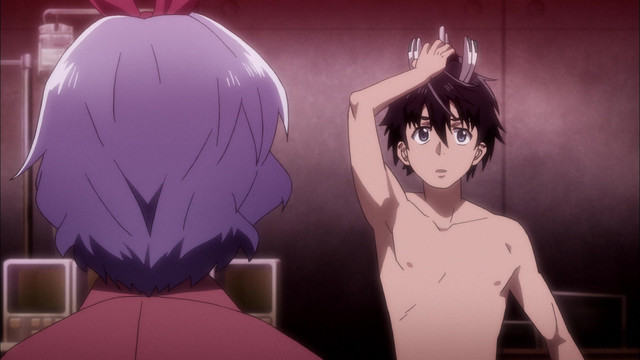
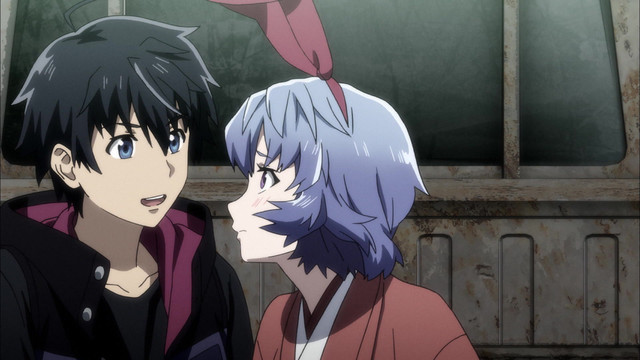
Along its ten episodes, Big Order manages to hit stops that include Eiji accidentally (but only temporarily!) impregnating a girl by touching her fake bunny ears.

This is a real screencap.

There’s also a man with a sword that can cut through time and space. A final episode plastered with an awful-looking monochrome filter in what I dearly hope is not a misguided attempt to homage Gunbuster. And the entire character arc of Rin; who enters the series in episode one trying to murder Eiji for killing her parents, and by the tenth minute of episode two has been mind controlled by Eiji’s ill-defined powers and wants to hatefuck him. I’m not normally this crass when writing on this blog, but no other language exists for Big Order. It is a crass anime.

This is to say nothing of the anime’s ugly thematic heart. Much ink has been spilled over the otaku persecution complex, a phenomenon that has given us many of the worst light novels, manga, and anime of recent years. It feels fair to say that it’d be hard to top Big Order, though. Eiji’s responsibility for the Great Destruction becomes public knowledge early on, and by consequence, the entire world hates him. Combined with his near-omnipotent powers and you have a character who has both the ability and moral license to do whatever he wants. He uses it, too. The above example with Rin is just one of several. The show’s entire premise reeks of repressed straightboy nerd “I’ll show them for making fun of me!” rage. This kind of dynamic has sexist echoes throughout the entirety of art, and it’s certainly no knock on anyone if they’re plainly sick of it.

You are at this point probably not surprised by there being a harem in this show.

Yet, I remained strangely fascinated with the show as I watched. All of this would ruin Big Order if there were anything to ruin. What prevents Big Order from falling into the lowest rung of mainstream TV anime is that it is a bizarre combination of astoundingly incompetent, yet tightly-edited. Things just kind of happen, but often in very entertaining ways. Episode four remains the show’s most infamous, featuring the aforementioned plot point of ear-pregnancy combined with Eiji and co. running to and ‘fro throughout a war-torn city and trying to come up with a way to stop it from being nuked. The entire series is this level of unintentionally hilarious. In a more self-aware show, it would seem deliberate, but Big Order‘s full-tilt commitment to its own inane thematic core makes it impossible to believe it’s anything but accidental. In this way, the show is enjoyable if you like seeing an anime fall apart at the seams when its premise and plot are put under the slightest bit of scrutiny. For whatever reason, I kind of do.

On the whole, Big Order is the rare series I’d say has fully earned the term “guilty pleasure”. It’s a kind of bitterly ironic that despite Big Order being a financial flop, the only project animating studio Asread has worked on recently is the similarly-reviled Arifutera. I’d say “you reap what you sow”, but the complex dynamics of how a studio picks up a show to work on render that moot. Besides, no one deserves to work on Big Order-quality projects forever, it’s simply too cruel.


If you like my work, consider following me here on WordPress or on Twitter, supporting me on Ko-Fi, or checking out my other anime-related work on Anilist or for The Geek Girl Authority.

All views expressed on Magic Planet Anime are solely my own opinions and conclusions and should not be taken to reflect the opinions of any other persons, groups, or organizations. All text is owned by Magic Planet Anime. Do not duplicate without permission. All images are owned by their original copyright holders.

(REVIEW) Love in Wartime: The Politics and Emotion of EUREKA SEVEN

This review was commissioned. That means I was paid to watch and review the series in question. You can learn about my commission policies and how to buy commissions of your own here.

This review contains spoilers for the reviewed material. This is your only warning.


Amazing grace
how sweet the sound

Sekai-kei, or “world story”, is a term of disputed origin. Held by many to be a westernism, invented by bloggers searching for a term to describe Neon Genesis Evangelion and stories of its ilk. Stories where the fate of the universe is tied inextricably to that of a central relationship and the mental state of its lead characters. NGE may hold the title as the series that inspired the term, but no anime has ever worn it as well as Eureka Seven. And no matter its origin, more than many anime the phrase is used to describe, “world story” feels like it fits Eureka Seven like a glove. Fifteen years after it began airing, E7 is capable of an astounding thematic and emotional resonance that hits as hard in 2020 as it did when the series ended in 2006. It’s matched by little else.

Try to grab hold of it, and it breaks down into images. Blood on wedding rings, underground rainbows, Superflat monsters and sky-fish, mecha on surfboards, political intrigue, social upheaval. Love, war, death and more, all soundtracked to trance, house, pop, and soul. This is Eureka Seven. Wildly ambitious, flawed but magnificent. Riddled with paradoxes, it is gangly and perfect.

It’s not hard to understand E7’s methodology. It combines an older, political strain of mecha anime with the metaphysical, psychological approach of the NGE* era. In this way, its closest contemporary cousin, funnily enough, might be another ambitious mecha series of the same era that attempted a similar approach; Code Geass. But while that anime traffics chiefly in camp, the minutiae of revolution, and shock value, Eureka Seven deals in much simpler, more universal substance. As promised in the title; emotion, politics, and the messy grey area that is their intersection.

It is again helpful to consider Eureka Seven as a series of meaningful contradictions. It bursts with music, but is punctuated by the shellshocked silence of war trauma. Dozens of opposites run through the show; love, and death, built things and natural things, Wide-eyed romantic idealism and stoic pragmatism, new life and disease, and so on. In this way, despite the fantastical nature of its soft sci-fi setting, Eureka Seven’s world is a lot like our own. This is important, because Eureka Seven is an anime with things to say, even if it takes a little while to get there.

Eureka Seven opens presenting itself as a classic adventure story. That of Renton Thurston, son of the late war hero Adroc Thurston, and his encounter with–and eventual admittance to–‘terrorist’ group The Gekkostate. It never sheds the structure of a latter-day bildungsroman, especially since Renton’s romance with the titular Eureka is a key part of the series, but it does go significantly beyond it in several other ways.

Other coming-of-age stories have dealt with the realities of growing up in a politically tense period. Few have depicted the rise of fascism with such polished, unsettling ease as Eureka Seven. The ascent of the dictatorial Dewey Novac ties to broader political sensibilities throughout the show. It is not a coincidence that Novac’s forces are generally clad in Nazi-evoking black uniforms, while the Gekkostate and affiliated resistance have a wide variety of looks, often inspired by musical subcultures. (The series overflows with musical reference, down to the name of Renton’s father. A namecheck of Beastie Boys member Ad-Rock.) Later, as Novac’s regime seizes power (complete with a by-the-fascist-book “big speech” to accompany his coup in episode 37) he launches a genocidal campaign against the scub coral. And plans involving surgically-altered super soldier children stretch back in-series years.

Elsewhere, the plight of the Coralians and their complex relationship to the humans in the world of Eureka Seven speak to an environmental bent. The series’ use of what is essentially technobabble may seem campy or silly, but it belies an internal logic that maps cleanly onto many different real-world problems. The “Question Limitation” is not something we will ever have to deal with, but similarly ominous two-word phrases (such as say, “Global Warming”) seem quite certain to define our immediate future.

The show’s long, rough middle third, meanwhile, where Renton is first hazed and then downright abused by many different members of The Gekkostate (but especially Holland) is a bleak, raw look at how such cycles of abuse perpetuate. Renton’s own journey to maturity is hamstrung by the existence of three malformed father figures; Adroc, the war hero who was never there for his own son, Holland, who grapples with his own complex feelings of responsibility regarding Eureka and often takes this frustration out on Renton in this portion of the series, and Charles, a loving father like Renton’s never had, but also a bloodlust-driven bounty hunter, whose conflicts with The Gekkostate eventually see him shot dead by Holland. It is only Renton’s ability to rise above all this–and to forgive–that allows these cycles to cease, and for him and Holland (the only one of the three still alive) to move forward.

All of this only scratches the surface, but you get the point. You may ask what ties all of these disparate themes together, and the answer is shockingly simple. One of anime’s great achievements as a medium is the ease and sheer emotional intensity with which it is often capable of portraying the simple, necessary, terrifying joy of human connection. In Eureka Seven, all of these problems, to a one, can be overcome by communication. By mutual understanding. By love. The show’s final opening theme–“Sakura”–interpolating, in a genuinely brilliant compositional move, the hymn “Amazing Grace”, gives the game away. It seems to say; If God lives not above, then we must love each other in his place. We have a duty to see the worth inherent in each other.

Indeed, Eureka Seven‘s greatest achievement is not any great subversion of expectations, any particular cut or shot (though many excellent examples of both exist throughout), its unique soundtrack, or anything else of the sort. It is this emotional core of empathy triumphing above all else that stands out. It is a spirit that persists in the medium to this very day, shining through from time to time in even the least of Eureka Seven‘s successors.

By Eureka Seven‘s end, and the incomparably romantic imagery of Renton and Eureka cradling each other in their arms as they hurdle through the sky, the series has made its point. Fifteen years later, in a world that every day feels closer to falling apart, Eureka Seven‘s message that even in our darkest hours we must hold each other close feels more resonant, immediate, and heartfelt than ever. That it’s so beautifully put together feels like proof that it’s the truth. How sweet, indeed, the sound.


*NGE of course did not invent this particular sort of mecha series, it merely popularized it. I’m inclined to suspect a shared lineage dating back to perhaps Macross. But without having seen that series myself it’s hard to say more, definitively. Eureka Seven is flooded with shared DNA both between and directly from other mecha anime and other sci-fi in general. I spotted more than one point of homage to another Gainax series; Gunbuster, and have been informed of several that draw from sci-fi novels. Director Tomoki Kyoda has called the series an “homage to his rebellious phase”, a sentiment that tracks with its empathetic state of mind and general feel quite wonderfully.

If you like my work, consider following me on Twitter, supporting me on Ko-Fi, or checking out my other anime-related work on Anilist or for The Geek Girl Authority.

All views expressed on Magic Planet Anime are solely my own opinions and conclusions and should not be taken to reflect the opinions of any other persons, groups, or organizations. All text is owned by Magic Planet Anime. Do not duplicate without permission. All images are owned by their original copyright holders.