I have lost any semblance of consistency when it comes to labelling these columns. I promise I’ll go back and fix them all eventually. Eventually.
This past Tuesday, Chainsaw Man ended. The wildly popular shonen manga had been going on in its second part for quite a long time, and I think to some extent no ending could’ve really satisfied the fanbase at large. Nonetheless, the ending we actually got seems to have really pissed a lot of people off. You can find reams of posts complaining about it of all shapes and sizes, and your standard suite of video essays and the like as well.
Someone who did not hate the Chainsaw Man ending was yours truly. I want to re-read the whole series before making any big proclamations, but I think it wrapped up the emotional arc of the story in a way that felt both hard-fought and worthwhile. It stung, but it meant something.
Now, will I still think that after having re-read the series? I don’t know. But! It did get me thinking about the array of popular anime and manga widely considered to have “a bad ending” and the various things they may have in common.
Oshi no Ko, anyone who is even tangentially aware of manga discourse at large already knows, is widely put in that category. (I myself have been exposed, just yesterday, to a Youtube thumbnail that loudly proclaims CSM’s finale “worse than Oshi no Ko, THE END!” Such dramatic proclamations not even a week out from the last chapter, my goodness!) And the reception to CSM honestly made me want to reevaluate my own opinion on this series, despite their otherwise lacking really anything in common, because I never want to be the sort of person who just declares that something is ruined forever because it didn’t head in the exact direction I wanted it to.
This in mind, and being honest with myself, I actually think the final episode of Oshi no Ko‘s third season is mostly pretty good.
A lot of the episode’s forehalf is devoted to Ruby trying to come to terms with the absence of both her former mother from her previous life, Tendouji Marina [the legendary Inoue Kikuko], who made a somewhat unexpected return to the narrative last week, as well as that of her current later mother, Ai. And honestly? It mostly works. We get to see Ruby repeatedly stumble over a bit in the 15 Year Lie script where it dictates that her character let her mother, who, in the fiction of the film never loved her, go. Predictably this absolutely tears Ruby apart, and she can’t get through the read, despite Kana’s attempts to coach her.
Name a time a friend gave you advice that made you look at them like this.
In a general sense, we probably should’ve gotten to this earlier—maybe toward the start of this season, rather than the cosplay episodes? Just a thought—but it does matter that it’s here at all. I was beginning to worry we’d never get to see Ruby’s side of things at all. By consequence, if there’s a standout star of the third season it is unquestionably Igoma Yurie, Ruby’s voice actress, who delivers some of the best work of her entire career here. Most of her dialogue, especially the strained rants about how her former mother must have loved her (until of course she finds out that that wasn’t really the case), is delivered in a pained, strangled yelp that really sells the character’s sheer despair at her situation. And once the episode hits its first big bombshell, where Aqua reveals himself as the former Dr. Amemiya Gorou, she starts full-on blubbering/ugly-crying in the best way possible. (You can literally hear her sniffling through the line-reads. That’s called commitment where I’m from.) Igoma doesn’t have a ton of other credits to her name, so if nothing else, I hope her performance here opens some doors for her even more than being Ruby in the first place likely already has. I would love to hear her in things more often.
As for Aqua finally revealing himself as the former Dr. What’s-his-name? I think around now makes sense, if he was going to hold onto it this long in the first place. (Narratively, that is. From a What Would You Do? sort of viewpoint he should’ve done this ages ago, but that’s not a terribly insightful statement.) So does the way their relationship entirely turns on a dime when he drops that piece of info, as she immediately lets go of her hatred of the brother that she thought had selfishly sold their mother out. Arguably, this stuff is way more manipulative of him than any of the more overt cases with Kana or Akane. (And the series knows this, too, because it makes sure to have the death goddess crow girl character who’s been present up and down this season wink and nudge at us about it. Keep her in mind, in fact, we’ll be coming back to her.) Still, it’s a solid beat, and while the flashback montage about time that Aqua and Ruby spent together as Gorou and Sarina is definitely pretty cloying, it’s still sweet enough to mostly work.
(There’s also this brilliant piece of comedy buried in the montage. I’m not a medical professional, so maybe I’m missing something here but you’re not supposed to do that, right? You’re definitely not.)
Now does all of this make this whole bit, this whole sequence, automatically a good piece of storytelling? No, an emotional beat working on a craftsmanship level is different from it being the right choice for the story. And honestly, I think the episode’s structure works against it here. A cut after the scene where Aqua reveals his past identity, and us being left to sit with Ruby’s bounceback for a week, would’ve done wonders. Especially when she drops this little line after reminiscing about Gorou’s “promise” to marry her when she came of age:
A black screen blinking the words “THEY FUCKED” in all capital letters would be more subtle.
It is absolutely hysterical, and probably inevitable, that we’ve ended up at incest. If the show simply ended here, the movie in production and Aqua and Ruby abandoning their revenge quest to be left to their presumably torrid reincarnation incestuous love affair, I would have nothing but respect for it. Sadly, we don’t live in a world where anime are allowed to end—or even end episodes—on heavy implications of incest. It does also very much feel rather rushed, like we’re getting this all out of the way so we can say that Ruby had a full character arc—something perhaps true but only on a technicality—so we can rush headlong to the show’s conclusion. Oshi no Ko has of course been announced for a fourth season, probably its last, so I will need to wait until then to evaluate how right I am about this. (I could of course also read the manga, but if I’ve held off for this long, what’s the sense in doing that now?) But I suspect I am. Akasaka has just never seemed terribly interested in Ruby as compared to Aqua, and while this episode has some of the best material the character’s ever been given, it really does seem like it’s supposed to put the bow on her development. Granted! There is still the unresolved business with her former mother, so maybe that will complicate things in some worthwhile way. I’d love to see more unhinged Ruby, it feels like we barely got to know her. I nonetheless remain skeptical.
That said, I can complain all day, but for what it sets out to do, I think the first half of the episode more works than doesn’t. The only real contention is how worthwhile what it’s trying to do actually is, and I remain undecided on that front. (As I’ve said, I really do just keep going back and forth on this show.) The second half of the episode is also good, and unlike the first, is so in pretty straightforward ways. In large part, it’s a character study of Miyako, the boss of Strawberry Productions, a constant background presence throughout most of the series but who never really got an episode of her own up to this point.
It is probably the only focus she’ll ever get, but the series makes the most of it, walking us through Miyako’s arrival in Tokyo, and her early career as a model. It’s very broad-stroke, but it’s solid stuff. Made all the stranger by how she chooses to express some of this.
Miyako latches onto an extended video game metaphor while explaining her life. Bluntly, in-context, this is one of the weirdest rambles of its kind I’ve ever heard a character go on. Aside from the central simile of “fame is like a video game” seeming like something a Republican-era Nicki Minaj would come up with, it’s kind of a stretch in the first place? For whatever reason, this whole rant gets the full visual metaphor treatment and we get to see Miyako fight the men she seduced in her youth as an RPG encounters and the like. This makes it no less bizarre, but it’s an admirable amount of committing to the bit.
This all concludes with her reuniting with Saitou Ichigo, Strawberry Productions’ former owner and her own ex, when “randomly” running into him at a bar. (This was, of course, orchestrated by Aqua, actually.) And leads to Miyako herself recommitting to her obligations to Aqua and Ruby. There’s a broad motherhood theme that runs through all this, an idea that Miyako is more of a mother to the twins, perhaps especially to Ruby, than either of her own mothers ever were. (And she outright calls herself their mom more than once.) There’s something there, but for a show whose premise is so entwined with family, Oshi no Ko‘s ideas about it have always been its weakest thematic expressions. Still, it’s a worthwhile thought and I hope the show does something with it in the long term. That Kana line from the rehearsal scene does feel an awful lot like foreshadowing.
Beyond these two main plots, this episode just also has a genuine sense of fun that’s been missing (or at least not as present as I’d like) in the show for a good while, now. The show’s main issues have always been its hypocrisy and the inescapable sense that it’s kind of didactic, the comedic leanings help take the edge off of both of those things. Aside from the usual bevy of Good Kana Faces, we also have, for example, Pirate Yuri??? Why not, right? That’s a good thing, even if it does still make me wish the show just leaned into its strengths more.
In-universe, this is a commercial for body wipes. Yes, really.
Aside from a brief post-credits scene, the very last thing to happen in this episode is actually, deliberately, quite funny! Gotanda, the film’s director, laments that the casting has been squared away with the exception of the child actors, to play a young Ruby and Aqua. This is where the character officially known as just Crow Girl [Kino Hina], who I’ve been calling the death goddess in my columns—since, you know, that’s what I thought she was—re-enters the picture. Crow Girl shows up in the closing minutes of this episode to do what she does best, be vague and portentous and deliberately needle Aqua. Aqua, in the rare bit of scheming from him this season to actually have an impact beyond being eyeroll-inducing, gets an idea. He asks her if she’s, you know, physically at least, a normal human with parents and a government ID and all that good stuff. She smugly responds yes, that her “vessel,” just like his, is on the surface a normal human. Aqua then drops his funniest line of the entire season by asking her a simple question.
The anime adaptation of hit narou-kei series Reborn As a Portentous Death God in Another World That’s Actually Just Modern Japan Again, I’m Forced to Become A Child Actress by The Teenage Boy I’ve Been Tormenting?! is coming to a TV station near you sooner than you think!
And from there we cut to credits! That’s literally how the season end! This is a good thing, of course. It’s entirely the kind of bold audacity that made me interested in this series in the first place. Does this episode alone being pretty good mean that all is forgiven and we are guaranteed a satisfying conclusion? Of course not, but it’s a good sign from a show that’s been short on those for a while.
In any case, any final judgment of Oshi no Ko as an anime will have to wait until after it’s complete. So I leave you with this: I’ll see you when I see you, B*Komachi fans. Because I’m me, it’ll probably be back under the Let’s Watch banner, too.
Like what you’re reading? Consider following Magic Planet Anime to get notified when new articles go live.If you’d like to talk to other Magic Planet Anime readers, consider joining my Discord server! Also consider following me on Anilist, BlueSky, or Tumblrand supporting me on Ko-Fi. If you want to read more of my work, consider heading over to the Directoryto browse by category.
All views expressed on Magic Planet Anime are solely my own opinions and conclusions and should not be taken to reflect the opinions of any other persons, groups, or organizations. All text is manually typed and edited, and no machine learning or other automatic tools are used in the creation of Magic Planet Anime articles, with the exception of a basic spellchecker. However, some articles may have additional tags placed by WordPress. All text, excepting direct quotations, is owned by Magic Planet Anime. Do not duplicate without permission. All images are owned by their original copyright holders.
“Ranking Every Anime” is a yearly column where I rank every single anime I finished from a given year, from the very worst to the absolute best. Expect spoilers for all anime covered.
It’s that time of year again, folks. Namely, it’s the end of the year. Or rather, by the time you’re reading this, the start of a new one. Now, the past couple of times I’ve done these, I’ve given the article a big long prelude where I talk about my year and the state of mind I went into the article with and so on and so forth. I haven’t really done that this year. My year sucked! Everyone’s year sucked! My year sucking is not remarkable! Right up to the end, it kind of sucked! Because unlike most years where I give myself a lot of breathing room to do these lists, this time I crammed all of my work into the last three days of the year, a brilliant decision that I am absolutely fucking never going to make again. Seriously, I’m writing this at 9PM on New Year’s Eve! This and the bit at the end are the last thing I’m writing, but still!
Anyway, let’s just move on, and talk about the anime. Despite my struggles with writing this list, they were consistently a high point of my experiences this year, and I do value that.
I completed a good bit fewer than my average in 2025—only an even 20 this time—and spent a lot of time I would’ve spent on watching seasonals I wasn’t really feeling watching older anime instead. I don’t particularly like the idea that I might be slowly turning into one of those “no one makes good anime anymore” people, but I do have to admit that this seems to largely be a better use of my time. As such, a lot of the anime on this list are sequels this time around. I admit that’s a little boring! But it’s not like I actively planned to only follow stuff like that, it’s just how things shook out. The counterweight to that though, is that I didn’t really finish any anime this year I’d call outright terrible. That’s right, for the first time ever, a full list has absolutely zero shows on it I’d say are just straightforwardly don’t-watch-this bad.
There is one I’d call disappointing, though.
And, as you know, this list goes from worst to best. So let’s start there.
#20: MOBILE SUIT GUNDAM GQUUUUUUX
God help me, even with barely any of the series under my belt, I’ve become one of those people who complains about modern Gundam. Thankfully, the problems with GQuuuuuuX (which I’ll be typing with just one U from here on out) don’t require any deep knowledge of the Gundam back catalog to explain and are instead very modern issues with what is at its core a very modern anime. GQuX, very simply, is one of those anime that was clearly initially conceived of with the expectation that it would have many more episodes than it actually got, and when the word came down that they would only be getting a standard single cour, whatever attempts were made to edit this thing down to that format failed. The alternative explanation is just that no episode count would’ve made this story work, which is not exactly a great consolation prize.
The bizarre thing is that, taken moment by moment, GQuX is actually a lot of fun. The main characters have an interesting dynamic, between the relatively privileged dreamer Machu, the displaced and struggling Nyaan, and Shuji who…is a graffiti artist. The initial battle royale-type setup with the Clan Battles is a good time, as is Machu’s initially coming into possession of the titular Gundam in the first place. The series’ interplay with the older Gundam material is also interesting. As would be expected of something that’s working in the so-called Daicon lineage, (specifically helmed here by director Tsurumaki Kazuya), There are a lot of great action setpieces and interesting bits of character work (Nyaan joining up with Zeon makes everything very weird in a compelling way, for example) even when the story is hard to follow. This is good, because “when the story is hard to follow” is most of the time.
I’m not a big believer in a story having to be 100% legible to everyone at all times, but with GQuX there is a real sense of trying to keep way more plotlines than it can reasonably juggle in the air at once. Concepts, plot beats, and people are introduced in one episode and dropped the next. This can be a strength in this kind of series, but GQuX doesn’t really pull it off. The real issue, as it often is, is that none of this stuff comes together in a way that makes any sense, either thematically or just on a more basic level as a story. And while I do maintain that the textual interplay between this and the older Gundam stuff is interesting, it doesn’t exactly help make GQuX more coherent.
If you’re charitable, this makes GQuX a fun but messy watch, like so many anime in this particular tradition—say, Gurren Lagann or something—if you are much less charitable, and given a particularly indefensible decision in the final episode especially I’d blame no one if they were, it comes off as afraid of committing to anything in particular, or, even worse, being willfully regressive. All of this, even the worst of it, might be forgivable in a show that didn’t come with a name that carries a lot of weight and legacy. We all have our problematic faves after all, but GQuX was not lucky enough to be born so unburdened. If it reminds people of the more amateurish end of fanfiction—and I’ve seen that description thrown around a lot for this show—I can’t really blame them. A benefit of actual fanfiction is that if it’s bad, no one really cares, because it’s a medium with a very low bar to entry, and the standards are not particularly high. And at its best, fanfiction is adventurous and freewheeling. Actual anime can be the latter, but despite some honest efforts, GQuX mostly doesn’t manage it, which is a shame, because it clearly really wants to.
In another lifetime, I might’ve been nicer toward GQuX. I still don’t think it’s terrible or anything. It’s nowhere near as bad as the dreck that’s bottomed out the list in previous years, and if we compare it to, say, Love Flops, it’s a masterpiece. Still, I do feel let down by it.
The Daicon Lineage that stretches back to the original Daicon Film shorts, through GAINAX’s most influential work, and continued to permeate throughout the 2010s via that of Studio TRIGGER, was for a very long time one of my favorite schools of anime period. But increasingly, either as a function of the anime in that lineage genuinely getting less focused over time or, hell, maybe just me getting older, I increasingly feel like I’m being scammed out of an actual, meaningful story by pretty cuts of animation and cool directorial tricks. I enjoyed GQuX week to week while it was airing, but if it has a real legacy for me personally, it’s making me wonder just how much I’m willing to put up with for this kind of thing at all. Maybe blaming the anime itself for my own disillusionment is immature or lame, but I feel how I feel, and this is my list at the end of the day. That, more than anything, is why it’s bringing up the rear here.
#19: NECRONOMICO & THE COSMIC HORROR SHOW
When Necronomico premiered, I mentioned that if you can’t swing “good,” “weird” is a good second option to aim for. What I left unsaid there is that this does imply that the thing in question isn’t actually good. Or at least doesn’t start that way. And indeed, I’d say Necronomico was, by its end, more or less fine—and definitely still weird—but it’s no one’s idea of a masterpiece.
Still, that novelty is worth something. There are lots of death game anime, but the specificity of the “streamers as contestants subjected to the will of the Old Gods” setup is pretty unique. The show’s main strengths lie in its willingness to put its cast into wacky, bizarre life-or-death situations and tie those situations to the characters’ lives. This doesn’t make the writing particularly deep, but it does make it hit when we learn about, say, popular girl Kagurazaka Kanna’s abusive childhood, or the entire thing with the teacher character toward the end of the show. It also keeps main character Kurono “Necronomico” Miko consistent and engaging to follow. The best element of the anime, though, is Cthulu, depicted here not as a tentacle-faced octopus behemoth but as a haughty ojou with green skin and big hair. She’s inhabiting the body of Miko’s main squeeze, which gives the two a pretty incredible toxic yuri dynamic in a show that one would not really expect that from. (It isn’t even the only one of those, but I don’t want to spoil the whole series, you know?) Necronomico ends on a bit of a whimper—and hilariously teases a sequel that will almost certainly never happen—but it was a decent time while it lasted, and if someone liked the show a lot more than I do, I would understand.
Is it really better than GQuX? Honestly I’m not sure. I mostly put it above Machu & Friends on this list because while GQuX actively let me down, I never expected much from Necronomico in the first place, and it actually managed to surprise me a few times. Is that fair? Not really, but I’m the one making the list. Next!
#18: YANO-KUN’S ORDINARY DAYS
There are two no-frills het romcoms on the list this year. This is the worse of the two, but it’s still a solid showing for the genre. The premise here is pretty simple, our boy Yano Tsuyoshi frequently gets in cartoonish accidents and injures himself due to what is vaguely referred to by those around him as “a predisposition”. Yoshida Kiyoko, our female lead, sees this and is promptly injured herself. Though in her case, it’s by Cupid’s arrow.
So begins a show laser-targeted at the sort of person who gets the most joy out of a series when they can screencap its main characters and ask “are they stupid?” about them. I sometimes fit this description too, and accordingly I liked my time with Yano-kun. It has a charming and straightforward appeal that is welcome in pretty much any anime season, and I was happy to have it as a weekly series to close out the year. (I watched it with a friend, in fact. It’s good for that.) There really is not a ton to this show, if you vibe with the relatively direct character dynamics, you’ll like it, and if not, you probably won’t. I did, so I think it was pretty good. Simple stuff.
I do, however, deduct a few points for teasing the audience about Yano’s heterochromia and then never showing it to us. Boo!
#17: THIS MONSTER WANTS TO EAT ME
Despite taking place in the dead of summer, there is a bone-deep cold to Watatabe, chilly as a coastal winter on the other end of the year. I think of Watatabe as a sort of warped fairytale, our despondent princess, Hinako, is not saved from her survivor’s guilt and depression by a knight in shining armor. She isn’t saved at all, really. Instead, the wicked (well, “wicked”) mermaid Shiori seizes upon her sadness, and they proceed to make each other worse in some very interesting ways, as revelations about the incident that led to Hinako’s suicidal nature come to light and continually rearrange what we think we know about these characters. Add to the mix Miko, Hinako’s childhood friend who turns out to be holding more than a few secrets herself, and you’ve got a tightly-wound dramatic character dynamic that not much else this year matched. Impressive, especially when you consider how few moving parts there truly are to this story.
The main reason this isn’t higher on the list? Honestly, just that this was one of a number of anime this year that were visibly fighting against a threadbare production. More than anything else, it’s made me want to read the manga. But when the story at the core of this series is such a coldly compelling chunk of frozen unease, that’s hardly a bad thing.
16: A NINJA & AN ASSASSIN UNDER ONE ROOF
A throwback to the earlier days of the studio’s history in some ways, NinKoro is a modern example of one of SHAFT‘s older specialties, unhinged, no-rules comedies, typified by the likes of Pani Poni Dash or And Yet The Town Moves. It wouldn’t be entirely correct to call NinKoro straightforwardly retro, as many of its sensibilities are very modern (it’s very gay, for one thing), but the spirit of a bygone era of comedy anime is in there. Cold-blooded killer Konoha Koga and airhead ninja Satoko Kusagakure make for a classic odd couple. But I think the show’s actual style is best explained by its favorite running gag; whenever a situation needs an extra dash of chaos, a highly overdesigned ninja from Shirobako’s village will show up and attack our main characters, before promptly being subjected to Konoha’s ruthless efficency, landing somewhere between slapstick and black comedy. There’s a beating heart in this thing too, in that Konoha and Satoko’s relationship is genuinely sweet, which puts NinKoro above being a mere novelty.
In fact, it’s enough to make me wonder, at this point, is that spirit I mentioned really so bygone anymore? Recent examples, albeit mostly from other studios, seem to drop about once or twice a year. In fact, it isn’t even the last one on this list.
15: BAD GIRL
Less outright zany than NinKoro, and perhaps more properly a yuri series with a comedy bent, Bad Girl seemed to go rather overlooked when it premiered in July of this year. That’s a bit of a shame, because while it doesn’t have the production polish of some of the other comedies on this list, it’s another simple charmer driven by a straightforward but strong set of character dynamics.
The setup here is even simpler than some of the other comedies here, shy goody two-shoes Yuutani Yuu is tired of being nice, and wants to go apeshit. She tries to accomplish this by becoming “a delinquent”, which in her mind seems to consist mostly of wearing clip-on earrings and a jacket. At the same time, she’s crushing on Mizutori Atori, the class rep, which throws this whole delinquent thing into question. Add in a childhood friend, a streamer girl who craves attention more than anything, and a blue-haired menace who really seems like she’d rather be in Zenkowa or something, and you’ve got a pretty great set of characters that the show puts through their comedic paces. Often, this entails making Yuu the butt of some joke or another, and more than one character compares her to a small animal. The show is also surprisingly horny, and a recurring gag sees Yuu imagined in a sexy dog-girl outfit, but, given the general light goofing-around vibe and the series’ yuri bent, that’s not really a bad thing. It fits the tone.
Honestly, I like Bad Girl and NinKoro about equally. Why did I give this one a higher spot? Because I watched it with my girlfriend, and I think in a way that’s worth more than any tangible merit of the series itself.
14: TURKEY! TIME TO STRIKE
Every once in a while, an anime drops that just defies any easy categorization. If it seems pat to point out that this is true of Turkey! you’ll have to forgive me for stating the obvious. It is worth stating though, Turkey! spends most of its first episode setting the pins for a sort of MyGO!-for-bowling sports drama thing before making a hard swerve into a time travel historical fiction adventure, and I think it speaks to how well the show pulled it off that anyone stuck around after that. Bait-and-switch twists, even those that early, are devilishly hard to get right.
In its contrasts between past and present, Turkey! asks some interesting questions. As is common for time travel narratives, it draws distinction between the value systems of history and those we live with today, culminating in a really impressive turn around the show’s middle. In episode six for example, sweetheart Ichinose Sayuri helps her warrior friend Suguri defend her village from bandits. This, naturally, entails killing them, and there’s a rich vein of drama in how this kind of breaks Sayuri’s brain, as someone from a relatively privileged modern position, who simply isn’t equipped to reconcile that the kind person she’s grown to know over the show’s first third could do that to someone. The way the series attempts to reconcile this is extremely potent within the episode itself, involving the literal and symbolic image of a white flower stained red with blood.
That stretch of the series is probably the show’s peak, and if it never quite hits that high again—although it comes close—it makes up for any deficiencies with sheer over-the-top style. It also never actually stops being about bowling, incorporating the sport as both a peaceful recreation the girls bring with them to the past and as a serious, sometimes deadly serious synecdoche for its characters’ lives and priorities. Despite how different the events of the series are to most other emotionally-tense girls’ drama anime of this type, Turkey! is one of those, despite the time travel conceit and adventure elements. This leads to some great serious moments, but also a lot of delicious camp. Where else this year were you going to get a line like, from the finale, “I don’t care about your damn gods. I care about bowling.”? That’s all-timer material right there. That, as much as the more serious stuff, is the key to the show’s success.
For these reasons and more, Turkey! is a true army of one, and I would be unsurprised to see it become something of a cult classic in the years ahead.
13: RURI ROCKS
The first, but not the last, gorgeous slice of life series on the list, Ruri Rocks is a slow, contemplative anime about finding value in the natural world. The titular Tanigawa Ruri is interested in gemstones, first just because she thinks they’re pretty. Over the course of the series, however, she comes to appreciate minerals and the grasp processes of geologic deep time, guided by her older friend and mentor figure, Arato Nagi. Each episode focuses, by and large, on a mineral or similar material, moving from placer gold to pyrite, sapphires to sea glass, and so on, as both Ruri and by extension ourselves learn about them. After its first few episodes, the show’s world expands, slowly but surely, adding a few additional characters and broadening Ruri’s perspective.
Tellingly, the single best episode of the show is actually about actual mineralogy only in the loosest of terms, where Ruri finds an old crystal radio that once belonged to her late grandfather. This is another of the show’s main ideas; that what we do today can connect us, however fleetingly, to the endless yesterdays before us, whether that time scale is across human lifetimes or across eons. The result is a warm, gorgeous ballad about the forces that shape our world, and the beauty to be found in appreciating them.
I think some people will be surprised that Ruri Rocks isn’t even higher on the list. But honestly? This entry and onward, the list really becomes a total free-for-all. If someone said Ruri Rocks was their favorite anime of the whole year, I’d completely understand. That’s also true for everything above it on the list. (And honestly, if someone said their favorite anime of the year was Turkey! I’d respect the hell out of that, too.)
12: MONO
And hey, why not put both of the gorgeous iyashikei on the list right next to each other? Is it some contrarian impulse that causes me to rank mono as the slightly higher of the two? Maybe. But to be honest, this is another case where I like the shows about equally.
As Ruri Rocks is about time, we can, if we want to draw a contrast, say mono is about space. Nominally it’s actually about photography and video, but quite unlike the focused nature of its immediate listmate, mono is charmingly rambling in nature, and is content to devote entire episodes to things wholly unrelated to the hobby club that are technically its protagonists. Over the course of the series, we get individual episodes about ghosts (whose existence is just taken as a given in mono), the tribulations of both the mangaka that the main girls know and a few other ones that she knows, road trips gone awry, and much more. The real focus for much of this is on the beauty of the various landscapes mono gets to show off. I’ve described both Ruri Rocks and this series as iyashikei, but the love of rolling green hills and the like here feels of a piece with the spirit of the genre in an ephemeral, hard-to-place way. It’s pretty enough to double as a tourism ad, which makes some sense given that the original manga comes from the pen of Yuru Camp creator AFRO.
11: SHOSHIMIN: HOW TO BECOME ORDINARY, SEASON 2
Straight couples will literally do this rather than go to therapy.
There are a few returnees on the list this year, but this actually isn’t one of them. Shoshimin Series only made the honorable mentions last year, because I hadn’t actually finished the first season of the anime at the time, so this is its first appearance in a year-end list proper. This is maybe a good thing, if we’re going to pretend that these shows somehow care about their standings at all, because I actually thought the first season was kind of a mixed bag!
The anime’s initial setups of low-stakes mysteries, “solved” by our main duo of Kobato Jougorou and Osanai Yuki, didn’t entirely grab me. But, toward the end of that season, Osanai was fucking kidnapped, and the stakes started being appropriately raised. That largely continues into the second season, as Kobato and Osanai’s unusual relationship continues to evolve. Both of them have compulsive playing-detective-brain and struggle to get on with normal people, meaning that the only person who really understands either of them is the other, but they “break up” early into the season, and the bulk of it is done with them apart. This lets some other characters get a bit of focus, including Urino Takahiko, a member of the school newspaper club who makes a fool of himself trying to solve a local arson case, but largely the series’ main interest remains the psychodrama between and around Kobato and Osanai. Osanai, in fact, is a large part of the reason this series is so high in the first place. She is a treat of a character, a total weirdo with a sweet tooth who constantly feels the need to intellectually challenge other people. She’s a fascinating secondary protagonist, but honestly Kobato is a solid lead as well, and it’s probably to both’s benefit that they stick together at the end of the season. I’m not sure anyone else should be involved in the whole thing they have going on by series’ end.
The series’ direction plays a big part in selling all the mind games here, as well. Often, it takes a hallucinatory, bilocational approach, directly inserting the characters into scenes while they speak that aren’t literal representations of where they are but rather of what they’re discussing. This highly stylized approach to visual conversation is something that I feel anime has been missing a bit, lately, as the whole “Monogatari-esque” / Faust magazine-core genre has declined somewhat in the last decade. In that sense as much as anything else, Shoshimin Series was a breath of fresh air.
My understanding is that the two seasons of the anime form a nearly-complete adaptation of the original light novels. So if we ever get more Shoshimin, it probably won’t be for a while. Still, I am glad to have finished it, and glad to get to put it on the list.
10: TATSUKI FUJIMOTO 17-26
The Chainsaw Man movie is not on this list. I know, I specifically didn’t give Chainsaw Man the gold medal back in 2022 because I expected its eventual followup would be even better. And it was! So me not covering films in these lists is really biting me in the ass here. Nonetheless, Chainsaw Man mangaka Tatsuki Fujimoto has found a way to sneak onto the list regardless, thanks to this anthology adapting some of his earlier oneshots.
I did think about excluding Tatsuki Fujimoto 17-26 from the list too. It’s not really a TV series as such, given that it’s an anthology of shorts, and the episodes are of varying lengths. But, it was close enough that I chose to include it. If it wasn’t one of the most original anime productions of the year, I might not have bothered, but by simple fact of being an anthology, with 8 different shorts by 8 different teams, it’s worth serious consideration. That structure did make ranking 17-26 on the whole kind of hard, since some episodes—the explosive romcom-action burst of “Shikaku”, the hormonal psychedelia of “Woke-Up-As-A-Girl Syndrome”, the grounded character drama of “Sisters”, probably the best of the lot—are fantastic, whereas others are just so-so, but even the least of these stories is interesting, and really reinforces Fujimoto’s status as a true original. I would love to see more mangaka anthologies like this get anime, or even just for more anime anthologies to exist in general. The format is severely underutilized in the medium, maybe the success of this one will spur some imitators? We can only hope.
9: DAN DA DAN, SEASON 2
Maybe it’s just me, but whenever I have to rate an actual battle shonen series on these lists, I always feel a little silly. Perhaps because the institution stands slightly apart from the rest of the seasonal churn. Nonetheless, there was more Dandadan this year, and like last year’s Dandadan? It was very good. Dandadan‘s strengths have not really changed, fun and novel character dynamics on top of a bed of intense, often outright surreal action pieces. Highlights from this season include a musical exorcism, the introduction of Evil Eye to the cast, and a huge, multi-part kaiju battle to round out the season. All of this is, genuinely, great stuff, but I think on some level, deeper analysis of the how’s and why’s of Dandadan might be best left to people with a lot more shonen head cred than I have. (The sort of people who have a better idea of what “newgen” means in this context than I do, maybe.) I find myself with a dearth of anything new to say about it compared to last year.
But honestly? Maybe that’s not a problem. There’s no issue with consistently hitting your strengths year after year, and if Dandadan wants to keep doing that, and going on and on, I’d welcome it with open arms.
8: TAKOPI’S ORIGINAL SIN
Most of the time, when I write these lists, I’m reaffirming the thoughts I already had on a work. Here, I’m actually going to do a slight bit of course-correction. When Takopi premiered, I, in hindsight foolishly, hemmed and hawed over actually covering it in any depth because it was so grim. This, with even just a few months of hindsight, is obviously stupid. So let me double down on what became my opinion of Takopi around when it ended. The situations portrayed in Takopi are extreme, and the titular space octopus / Doraemon-core kids’ anime escapee is simply not equipped to handle the tangle of abuse, social ostracization, depression, poverty, and tragedy he wanders into. His attempts to help largely make things worse, and the time loop that takes up the bulk of the show’s plot really takes great pains to express this. “The road to Hell is paved with good intentions” is a stone cliché, but it is so for a reason. You can’t just good vibes your way out of situations this dire.
As much for its affecting story, though, I rank Takopi highly on the basis of its direction. Iino Shinya was largely previously known for his work on the Dr. Stone anime which, no disrespect to that series, is just not playing the same game that this is at all. When Takopi needs to convey dissociation, the entire world of the show will wobble and waver. Overall, it’s just gorgeous, and that it is so in service to this kind of tragedy makes it hit all the harder.
The fact that Takopi isn’t even higher on this list is slightly an olive branch to those who instead find all this drama ridiculous instead of affecting. (I don’t agree, but I do get it. I think stuff like this requires a certain emotional temperament. ie. me being a huge sap, something that is not true of everyone.) But mostly, it’s just a testament to the fact that this year was absurdly stacked with good anime. I was genuinely moved by it, up to actually crying at the finale, and I think it’s going to stick with me for a long while. It makes perfect sense, but it is pretty stark that, faced with the overwhelmingly tragic situations of its protagonists, the only solution that finally works for Takopi is no solution at all. He simply removes himself from the equation, and only then do things begin to work out.
7: MILKY☆SUBWAY: THE GALACTIC LIMITED EXPRESS
Perhaps Takopi‘s polar opposite in terms of tone, Milky Subway is almost certainly the most obscure thing here. Milky Subway is a 3DCG youtube series about a group of convicts who have to figure out what’s going on when the space train that they’re on starts operating by itself. That premise, and the fact that the show takes place in a far off, gee-whiz kind of sci fi future you just don’t see very often anymore, would be enough on its own to set Milky Subway apart. Its real strength is in our main duo, though, the slightly airheaded and a bit whiny (in a cute way) Kujo Chiharu, and her we’ll just say girlfriend Kurusu Makina, a robot girl with a dry sense of humor and a lack of patience for anyone’s nonsense. They’re a blast to follow, and the bizarre situation they find themselves in aboard the train lends itself well to them playing off the rest of the cast as well.
If Milky Subway has a “flaw” (and I don’t really think it is one), it’s that it’s quite short. Each episode is only about three minutes long, and that’s with credits. Still, the result is one of the most unique experiences of the year, one that has as much in common with the broad world of web animation as it does with what I normally cover on this site. It’s also just straight up on Youtube, so if you haven’t seen it, fix that!
6: MY DRESS-UP DARLING, SEASON 2
We’re in the midst of a run of sequels here. You’ll have to pardon that, they’re not gonna let up as we keep climbing the list. Dress-Up Darling returns to us from 2022 and, perhaps surprisingly, is not the last Class of ’22 alum we’ll see here.
More important than its credentials though are that its fundamental strengths are all still intact. It’s still the radiantly warm, charming, easygoing love story of a pair of complete nerds, Gojo and Marin, who bond over cosplay, Marin’s favorite thing in the whole world, essentially. Far from having suffered from the time away, MDUD actually returned to us this year with even more visually sumptuous treats than it had when we last saw it. While there aren’t any more clips from Flower Princess Blaze in this season—the only fictional anime I’ve ever written a review of—there are plenty more where that came from, including a faux-OVA that kicks off the season. In fact, my favorite arc of this season revolves around one of these impressive bits of pastiche. Marin’s enthusiasm for a horror game called Coffin is central to the season’s final stretch. Coffin has a sort of willfuly faux-retro look I associate with the like of itch.io visual novels and such. To see an aesthetic like that in a series like this is really quite something, even moreso when it’s tied to a truly awesome-looking horror cosplay shoot the characters are involved in.
More than just being visually snappy though, Dress-Up Darling also continues to gently prod at the seams of gender expression. Another arc in this season sees Marin engage in some cross-play as part of a contest. New character Amane Himeno, is also a crossplayer (though if one wants to interpret Amane a bit more LGBT-y, I certainly won’t stop you), his whole backstory about dumping his girlfriend when she learned about his hobby and was disgusted by it is one of several ways that MDUD suggests that this kind of gender essentialism is on its way out. Honestly, more than maybe anything else on this list, I really hope it’s right about the world’s vibes. We needed that sunshine in 2025.
5: CALL OF THE NIGHT, SEASON 2
Of the two unexpected returns from 2022 anime on this list, I was actually more surprised by this one, in a way. Dress-Up Darling was popular, so a sequel at some point felt like a sure thing. Call of The Night, though, always felt like it was just outside the popular kids club.
Which only makes sense, Call of The Night sees the vampire as a stand-in for just about any kind of outcast. That’s why Ko, our male lead, fit in so well with Nazuna and the other vampires back in season one. But its second season took a turn for the queer (explicitly so) and, related to that, the dark. A majority of this season focuses on Nazuna’s past, giving us backstory for herself, but also characters like Hondo Kabura, who we met in season one but didn’t really get to know. (Kabura’s episodes, particularly the first, are some of the best of the year full stop.) In these stories, Call of The Night draws direct parallels between vampirism and queerness, adding it to the list of the many, many things that can get a person cut off from normal society. Anko returns here too, also getting a fully fleshed-out series of flashback episodes that frame her former relationship with Nazuna herself, directly in queer terms. All of that explodes in a final act that is as spine-chilling as anything else to air this year, nearly ending in truly dire terms when it seems like Anko is really willing to throw away everything to exterminate the vampires she’s come to hold in such contempt.
The queerness makes the fact that none of these relationships last, and their arguable replacement with Ko’s and Nazuna’s, sit just slightly uneasily. I don’t think it’s a real flaw, but if someone held it against the series I’m not sure I could blame them. Honestly, that unease is maybe the main reason it’s not in the top three. Still, you can’t argue with the effectiveness of something like this. It’s powerful. And, well, in addition to everything else I’ve said. In the last episode of the season, Anko makes a comment that she feels she’s gotten older but hasn’t really grown up. I relate. So hey, points for that, too.
4: THERE’S NO FREAKING WAY I’LL BE YOUR LOVER! UNLESS….
Here we have a show that’s going out of its way to complicate being on the list at all! Literally today, the day I’m writing this, December 31st, the show better known as Watanare, dropped a five-episode coda to its excellent first season. This was originally a theatrical release, so I’m not really counting it for the purposes of this entry. Just know that here—there’s always somewhere where this is true on the list, it seems, even if I wait until the final day of the year—I’m working off incomplete information.
Even so, Watanare was already fantastic just with the 12 episodes it initially aired with. I’d hesitate to describe Watanare as a romcom, although that’s probably the closest fit in terms of strict genre. If it’s anything, it’s a situationship dramedy, a harem series where girl after girl can simply not help falling under the spell of local dangerous pink thing Amaori Renako. Initially confessed to by overbearing rich girl Ouzuka Mai, Renako’s high school life quickly becomes a ball of un-resolvable romantic entanglement. It’s an absolute charm to watch from start to finish, as one never really knows which of Renako’s seemingly endless parade of girlfriends is going to throw things into a tizzy next.
As much as its writing (which is very good, don’t get me wrong), another important aspect of Watanare is its atmosphere. The series has a slightly unreal visual quality, I’ve previously compared it to city pop album covers and, honestly, I can’t really think of any better way to pin it down. It’s achingly romantic but not cloying, embracing all the messiness that comes with relationships and amplifying it until the knob breaks. It’s one of a couple anime where I’m kicking myself for not putting it at the top of the list! But it is what it is, 2025 was a very good year for the medium. Also, the finale’s conclusion remains an all-time way to end your high school romance show. No notes. Muri muri!
3: CITY: THE ANIMATION
Occasionally, an anime comes along that is both extremely good but also simply so good that it becomes a bit difficult to write about. What is there to say about CITY THE ANIMATION? Do you point out that it’s a massive artistic flex from, take your pick, director Ishidate Taichi who pulls off some truly unhinged stuff here, original mangaka Arawi Keiichi who has now had his work adapted into an era-defining comedy anime twice, just Kyoto Animation in general, putting the lie to any idea that they’re out of new ways to make a show just fucking slap from start to finish?
It’s true that this anime’s vast cast, a widescreen portrait of the titular city on the whole as opposed to just one or two residents, makes known a real joie de vivre that is tough to match in any year’s comedy offerings. It’s true that the directorial stuff really is that crazy, the way the show breaks into sectioned-off visual pieces in episode five only to knit itself back together into a quilt at the end of that episode must be seen to be believed. The same is true of the musical in the final episode, the show’s surprising number of silent segments that rely on expressive animation alone, etc. But at some point we’re just listing things about the show that are impressive, not necessarily the things that are good, and there is a distinction there.
So if I had to pin why I rate it so highly on any one thing in particular, it’s simply this: CITY was one of only a handful of things this year that made me optimistic about the future of anime. It was very easy to be cynical this year, for reasons I’m not really going to get deeply into but which I’m sure you can guess at if you follow the medium at all. In its specific mastery of the fundamentals, it’s a masterpiece in a very old-school, craftsmanship-first way, and I would not be surprised if it eventually emerges as the consensus best anime of 2025. It wasn’t my personal favorite, but it came very, very close.
2: UMAMUSUME: CINDERELLA GRAY
Every year, I do a little thing on social media where I have people try to guess what they think my number one pick is going to be. There were two anime that were highly mentioned this time around, and one of those was Cinderella Gray. In literally any other year, you all would’ve been right.
We’ll get to why you weren’t in a minute, but 2025 was the year I got really into Umamusume. And if I wanted to put this entry at the very top of the list because of that alone, I think I would’ve been justified in doing so. But even if we ignore the entire rest of the series, I think the story of Oguri Cap’s rise to fame is one of the year’s best. Oguri herself is maybe the year’s single best protagonist, a lovable country bumpkin who also happens to be one of the absolute strongest people in her sport.
While the series more than makes sense in aggregate, I think Cinderella Gray is best thought of as a series of moments. (Any of you who just asked “hype moments?”, you’re the people I’m really writing this entry for.) Picture Oguri and a favorite race will spring to mind, one of her beastly final spurts, or a moment of tension. Or maybe you favor one of the other characters instead, and what comes to the forefront is a flash of white lightning, a victory clinched or lost in an instant, the scowling face of a prior era’s ruler. Cinderella Gray is a series of become verbs. Want. Strive. Struggle. Achieve. If I say that Umamusume as a whole enterprise has achieved an almost talismanic importance to me, I sound like a lunatic, so let me just say instead that it lights something in me that I can’t entirely name. Maybe that’s silly, but it’s the truth. For as goofy as Umamusume’s very premise seems and, honestly, is, it is genuinely inspirational in a way that very few things are. (In fact, I’ve said this before, but it is truly incredible that Oguri Cap is still inspiring people some some 30 years after the end of his career. Sure, it’s in a different form, but how many athletes, human or otherwise, can claim that? It’s a pretty exclusive club, and it’s not one he’ll be leaving any time soon.)
The explosive, world-conquering vibe check aside, it really is a great story, too. One that deals with the temporary nature of all of these things just as it effortlessly embodies the thrill of chasing after them. Future seasons of Cinderella Gray—and there will be future seasons, I’m almost certain—will shift the thematic balance in regards to which it emphasizes, but its first season (in two parts. Confusing!) is a triumphant, star-reaching pulse of a thing. It doesn’t hurt that every one of Oguri’s competitors, from her career-defining rivalry with Tamamo Cross to even cool-as-hell one-offs like Obey Your Master, are great characters in their own right. Added together ,what you have here are the first two chapters of an epic. And in fact, that’s the main reason this isn’t at the top of the list. They are going to make more Cinderella Gray, and—spoiler here—as someone who’s read the manga, I have every reason to believe it’s going to be even better than what we have already. Keep running, Oguri Cap, you’re not at the finish line yet.
So, that’s 19 of 20 anime down. As I said, in any ordinary year, everyone who guessed my #1 pick would be Cinderella Gray would be absolutely right, and I hope I’ve conveyed at least some sense of why that’s so. Unfortunately, 2025 was not an ordinary year. So if you want to feel bad for Cinderella Gray, lament only that it was not born in a different era.
Congratulations to everyone who guessed my #1 pick. By my reckoning, that’s my good friends June, Astro, Persica, and Wolfie.
.
.
.
.
.
.
.
.
.
.
.
1: AVE MUJICA -THE DIE IS CAST-
Look. I know, okay?
I am keenly aware of how it looks to have a girl band anime as my show of the year, two years in a row. Back to back girl band dramas! She’s lost it! She should have her anime critic card revoked!
Unfortunately for all of you, there is no license to be an anime blogger. I only write these things because I’m weird enough to want to. So here, at the end of one year and the start of the next, let’s do this whole song and dance one more time.
I think there’s a good chance that, at this point, people who read my blog regularly have seen this image of Sakiko more than the people who animated it.
I tried a few different placements of the top three before settling on this one. I would be lying if I said I was perfectly happy with it, but I made up the format of these posts in the first place, so I feel an obligation to stick to them. There are no ties. If I have to single out what I think is the best anime of the year, of those I watched, there really isn’t any doubt. It’s Ave Mujica, whether you want to call it by its marketing-mandated full English title or not, there just really isn’t any other option. Other anime this year were many things. In many years, being merely a work of deep, healing beauty, or being something inspiring enough to remind me to push forward day by day, would be enough to place at the top. That was the case in 2022 with Healer Girl or, yes, in 2024 with Girls Band Cry, and it was the case this year with Cinderella Gray. Nothing I’m about to say is meant to disparage any of those anime, which are all fantastic in their own right. But, this year was different. This year, the demiurge walked among us. She had blue hair and trauma, and she made it everybody’s problem.
Ave Mujica is, technically, yet another anime on the list that’s a sequel, being the followup to 2023’s BanG Dream! It’s MyGO!!!!!MyGO is an excellent series in its own right, and had the subseries stopped there, we would still absolutely be talking about it was one of the best anime of the 2020s. But, MyGO, at the end of the day, was still a band girl anime, the genre label that has emerged for this cluster of anime that deal with young girls processing their pain and sorrow through the power of music. I already went over the basics of MyGO‘s story leading into Ave Mujica during my review-not-a-review of the series, so I won’t repeat myself, but it is worth emphasizing that everything that happened in the first season, as great as it was, was still pretty normal territory for this genre. And then, at the eleventh hour, its final episode turned it into something else.
It does put me in a funny spot, though. More than anything else I’ve ever put this high on the list that I didn’t do literal week-by-week coverage of, I have already written about Ave Mujicaextensively. I have arguablywrittentoo muchaboutthe damnthing. Seriously, it’s a little excessive. But I couldn’t help it! Something about Ave Mujica drove me a little crazy, and maybe that’s a function as much of my own declining mental health as it is anything about the show, but I really do think Ave Mujica is a born classic. The best anime either define their times or embody them, and if there has ever been a better representation of the emotional cement mixer that is the mid-2020s, I’m not aware of it. Under everything, under the arguments about whether this is even really a music anime, under the tedious discourse about its ostensibly “problematic” elements, you have an anime about five people whose teenage emotional fallout, ongoing trauma, and unique neuroses are blown up to first theatrical, and then mythological proportions. It only makes sense that by the end of the season, Sakiko has declared herself a god lording over a walled garden. What else was she going to do?
There’s a further reason, in fact, that I put this at #1, the very real possibility that this all comes crashing down around us, some day very soon. I mentioned in the Cinderella Gray section that I sometimes rate things slightly lower on these lists because I believe they will become even better with subsequent entries. Crucially, I don’t really know if that’s true with Ave Mujica. Everything it’s built up is such a high-wire razor’s-edge balancing act that it feels completely impossible that season three, whatever it will entail, could ever top this. (Spare a thought, also, for Mugendai Mewtype, the other BanG Dream band slated to get an anime in the coming year, who have the unenviable task of following this.) I’ve been wrong before, and I would love to be wrong here, too, but the yawning uncertainty of the future does make me feel like I have to recognize Ave Mujica for what it is now. The dream, remember, is only illusorily eternal. The walled garden only exists until we wake up. Memento mori and all that. Is this the crescendo of this black opera? Do we wait on just the grim conclusion, or somehow, some way, will it find even higher to climb? I don’t know! That uncertainty is a little scary, but it’s also exciting.
So that’s how we close the year, with a screaming, gothic thrash of pain as we rocket toward a cryptic and hazy future. I’ve made a bad habit in the past of trying to directly tie my anime criticism in a given year to my emotional state, but, well, I don’t think a look at this list necessarily needs a genius to interpret. The future will come whether we’re ready for it or not, but, if we’re going down, at least we’re burning in the same fire. That, I think, is perhaps the spirit I’ve taken Ave Mujica (and Ave Mujica) in, and I hope the spirit you’ll take this entry in, as well. And if this all seems rather dramatic to you, well….yeah! It is! I’ve been a lot of things over the course of my ‘career’ as an anime blogger, but I’ve never been a liar. May 2026 be a year where a sunnier best-of pick makes more sense.
And that’s the list. One of the least-stratified I’ve ever done, I think (I truly do think basically anything from Ruri Rocks on up could conceivably be somebody’s anime of the year). As I do every year, I want to thank all of my lovely internet friends, those from the Ave Mujica Scream Zone who were with me every step of the way through experiencing the show itself, my friends from the Witch’s Manor and the other Discord servers related to those two. A big shout out, as well, to my bluesky and tumblr followers, as well as everyone on the Magic Planet Anime Discord. You guys rock, and I wouldn’t be here without you.
As always, consider tossing me a donation if you liked the list. These year-end lists take a lot of effort.
I’ll see you when I see you, anime fans.
Like what you’re reading? Consider following Magic Planet Anime to get notified when new articles go live.If you’d like to talk to other Magic Planet Anime readers, consider joining my Discord server! Also consider following me on Anilist, BlueSky, or Tumblrand supporting me on Ko-Fi. If you want to read more of my work, consider heading over to the Directoryto browse by category.
All views expressed on Magic Planet Anime are solely my own opinions and conclusions and should not be taken to reflect the opinions of any other persons, groups, or organizations. All text is manually typed and edited, and no machine learning or other automatic tools are used in the creation of Magic Planet Anime articles, with the exception of a basic spellchecker. However, some articles may have additional tags placed by WordPress. All text, excepting direct quotations, is owned by Magic Planet Anime. Do not duplicate without permission. All images are owned by their original copyright holders.
Let’s Watch is a weekly recap column where I follow an anime for the course of its entire runtime.
For the Cinderella Gray column, new installments will be posted either on the Sunday each episode airs, or as soon as possible over the succeeding week. Expect spoilers!
Cinderella Gray can be watched, legally and for free, on It’s Anime By REMOW on Youtube. A link is provided below for your convenience.
Native Dancer was an American thoroughbred racehorse. Without getting so into the nitty-gritty that this turns into a column on actual horseracing, the very short version is that he was one of the best. It’s hard to beat 21 victories in a 22-race career (although some have done so). To list just one accolade, the AP’s list of the best racehorses of the 20th century places him at third, behind only Man O’ War and Secretariat. For our purposes, though, his actual career is less important than two other things you need to keep in mind about Dancer. The first is that he had a nickname, the Gray Ghost. The second is that one of his children was Dancing Cap, a horse who, himself, we are primarily interested in here because of one of his children. You’re reading a column about him right now: Oguri Cap.
There is little reason to suspect that any version of Native Dancer ever existed in Umamusume. In general, lineage plays far less of a role in Umamusume than it does in actual horse racing, and the closest Umamusume has ever come to acknowledging any of the legendary racers who fill in the strange, fuzzy area outside of its immediate characters of focus is the vague insinuation that Manhattan Cafe’s mysterious “friend” might be the metaphorical or literal ghost of Sunday Silence. (As always, I recommend IronicLark’s blog if you want Umamusume analysis from someone who really knows their horseracing as opposed to someone with a mere passing interest in it like myself.) Nonetheless, watching this episode today, I thought about Native Dancer and his nickname. I have absolutely no way of proving this, but I think one of the most important aspects of this episode, and indeed the episode itself, takes its name from that epithet. In doing so, Cinderella Gray asks broader questions about what Umamusume actually is. Not as a franchise but as a story.
First, though, let’s pick up where we left off last week. The back half of the Arima Kinen is, to put it as simply as possible, nuts. After entering her Zone and blitzing past most of the playing field, Tamamo Cross duels it out with Oguri Cap for first place in the final leg. I repeat myself, but it’s worth repeating, it’s not merely that there are impressive action scenes here—though there definitely are—it’s that the raw emotion on display here is a very rare thing.
In literal terms, what happens here is the race’s four strongest competitors angling for the lead. Super Creek puts up a surprisingly strong performance, banking on pure stamina as opposed to anything flashier. Dicta Striker’s shotgun final spurt is a spectacle to behold as well, earning her probably the single most impressive cut of animation in the entire episode and deservedly putting her name in the conversation with the other greats here. Between the fierce showdown between rivals and the fireworks animation, I fall back on my old standby comparison: this is essentially a battle shonen anime, and the earlier half of this episode comes complete with plenty of “oh my god, the ultimate technique!”-style commentary from characters like Symboli Rudolf and Sensuke Fujii. This stuff is fantastic on even its worst day, and if that were all the episode was, it would still be great.
But, let’s be serious here. One of two umamusume are going to win this race. It’s either going to be Tamamo Cross or Oguri Cap. One of Cinderella Gray‘s favorite storytelling techniques is to dot an important race episode with little dollops of backstory or reflection from the runners. Previously, this has been used to characterize Oguri’s rivals. In the penultimate episode of the first cour, Tamamo Cross got that treatment, where the show strongly suggested that despite a thwarted crossing of the paths when they were both children, Tama and Oguri were, in some sense, always meant to run together. This episode reinforces that connection, but also reminds us of something else.
We see flashbacks to Oguri Cap’s childhood, a tiny gray puffball of a kidlin enraptured with the lightning-fast running she sees on TV. Her own legs, though, are weak, and her mother1 bandages them as she tries to stand and move around. The young Oguri asks her mother if she’ll ever run like the girls on TV, and her mother hugs her tight.
Of course she will.
And as Oguri’s mind turns to her gratitude toward her mother, it flows to everyone who’s helped get her where she is. The Kasamatsu gang, Fujimasa March, Belno, Jo, Musaka, every one of her rivals, all of whom have asked her, why do you run? Who are you aiming for?
And the answer, of course, is that Oguri isn’t trying to surpass anyone but herself. To whom running at all is a miracle, something fought for rather than given. She’s doing it because she loves it.
As soon as she realizes this, it all clicks into place, and we get to the episode’s namesake. The payoff, the gleefully cool-as-hell ultimate technique, Oguri Cap’s very own Zone.
A ghost, one might say.
Oguri and Tama continue running the final stretch neck to neck. But we actually see only relatively little of the literal events of the race from here on out. Instead, we’re transported to an emotion-driven image space, where the two talk. They reminisce, Tamamo Cross speaks of races come and gone and races that will never come, wistfully talking about how she owes Obey Your Master a beating at the next Japan Cup. But, she knows this won’t ever happen. Together, still in the shared mind space, Oguri and Tama begin running again. Tamamo Cross complains about how short the race is, even here, the finish line is in sight.
Nothing, not in sports, not in life, lasts forever. Every story has an end. There are no perpetual dawns, and any time the Sun rotates around our humble planet, it’s one day closer to going out forever. Here, in what they both know is their last dance together, Tamamo Cross and Oguri Cap bond for one final time over what keeps them going in spite of that, their love of life. Running more specifically, sure, but it is worth seriously understanding that finity and transience are two of Cinderella Gray‘s main thematic ideas.2 This, which is also what I was alluding to at the top of this column, is the first time we see those themes really underscored in a major way. It will not be the last.
Tamamo Cross’s story ends in defeat. Oguri Cap, reborn within the Gray Phantom, manages to edge over the finish line by just the slightest bit. This is not a sad ending, the victory and defeat are less important, perhaps, than who they are experienced alongside.
After the race, they have a talk that is heart-achingly sweet, and they embrace each other. To paraphrase the great Miko Iino, I am someone who enjoys hugs probably 50-70% more than the average person, this one here is one of the best anime hugs ever. I’m honestly jealous. Put it on the accolade board.
The end of the Arima Kinen is not a happy story for everybody. Dicta Striker gets properly fired up when she notices Oguri entering her Zone, but, the combined blood loss from her injury last episode and perhaps just general fatigue mean her body betrays her, and her legs give out as she attempts another shotgun surge. She still takes third, with Super Creek behind her taking fourth. Or at least, she would have taken fourth were she not ruled to be obstructing another racer’s movements after the fact, disqualifying her. It’s sneaky as hell to slip in the start of Creek’s upcoming arc here. But the nature of how Umamusume is written means it’s also a necessity, and it’s handled pretty well, juxtaposing as it does Creek’s embarrassment and loss with the overwhelming warmth of the rest of the episode’s final third.
(There are some other, smaller good bits as well, such as Symboli Rudolf heaping praise on Oguri, a really nice followup from that conversation she and Maruzensky had back in the first cour.)
That warmth truly is the dominant feeling. In what is by now a relative rarity for the series, we get an actual winning concert performance in place of the episode’s usual credits. Oguri Cap, Tamamo Cross, and Dicta Striker—patched up after her injuries, including breaking a tooth! which is perhaps why the concert seems to take place that night instead of immediately after the race—perform “Next Frontier”, one of Umamusume‘s standards, and a swelling, triumphant note to close out the episode.
Except there’s actually one more thing. After the concert, Oguri Cap takes the time to thank everyone who’s inspired her, who made her the racer she is today. She thanks her trainers, her rivals, and the crowd. That includes us.
Overall, “Gray Phantom” probably surpasses “Wild Joker” as Cinderella Gray’s best episode, and it’s one of the best in Umamusume on the whole. It also got me thinking, though, about the series’ overall nature. For a while now, I’ve been workshopping an as-yet unpublished article about a different piece of the Umamusume franchise. In that article, as I am about to here, I propose that despite its ostensibly “silly” or “very anime” premise, Umamusume is actually part of a very long lineage of work that seeks to anthropomorphize the minds and lives of non-human animals. I don’t have an answer as to whether that instinct is selfish, a bad habit of seeing all things as reflections of ourselves, or selfless, a genuine desire to connect with minds very different from our own.
Regardless of which side you fall on, it is fascinating to me that Oguri Cap, in some form or another, continues to inspire people 33 years after the end of his career and 15 after his death. (To float another conspiracy theory, I have wondered if the real Oguri’s epithet of “The Idol Horse” is how the premise of Umamusume was come up with in the first place.) If I can show my hand a little, I do think there’s something beautiful about the ideas that Cinderella Gray puts forward here, even the sad ones. Ultimately, though, these questions are a bit beyond the scope of this column, and I’ll save any harder arguments for another day. Tamamo Cross’s story is over, and while Oguri Cap’s will not last forever either, we still have a good, long time with her, assuming the anime gets renewed for another proper season (here’s hoping).
This isn’t the end of this season just yet, however. See you next week, umadacchi.
Now where have I heard that before?
1: It’s interesting that what little we know about Oguri Cap’s mother in Cinderella Gray doesn’t really fit the profile of either of the real Oguri Cap’s parents. Nonetheless, I usually refer to her as Narubi in my notes on the rare occasion she shows up, since it’s shorter than writing “Oguri Cap’s mom” every time.
2: There is a reason that, despite being “just” the last time we will see these two specific characters compete, this whole scene feels an awful lot like a depiction of some kind of afterlife. Tamamo Cross thus joins the storied ranks of sports anime characters who are being treated vaguely as though they’ve died when they’ve actually just retired or graduated or what have you. Sempai will be furthering her education, no doubt.
Like what you’re reading? Consider following Magic Planet Anime to get notified when new articles go live.If you’d like to talk to other Magic Planet Anime readers, consider joining my Discord server! Also consider following me on Anilist, BlueSky, or Tumblrand supporting me on Ko-Fi. If you want to read more of my work, consider heading over to the Directoryto browse by category.
All views expressed on Magic Planet Anime are solely my own opinions and conclusions and should not be taken to reflect the opinions of any other persons, groups, or organizations. All text is manually typed and edited, and no machine learning or other automatic tools are used in the creation of Magic Planet Anime articles, with the exception of a basic spellchecker. However, some articles may have additional tags placed by WordPress. All text, excepting direct quotations, is owned by Magic Planet Anime. Do not duplicate without permission. All images are owned by their original copyright holders.
Let’s Watch is a weekly recap column where I follow an anime for the course of its entire runtime.
For the Cinderella Gray column, new installments will be posted either on the Sunday each episode airs, or as soon as possible over the succeeding week. Expect spoilers!
Cinderella Gray can be watched, legally and for free, on It’s Anime By REMOW on Youtube. A link is provided below for your convenience. The descriptive blurbs for these articles are taken from those of REMOW’s Youtube uploads.
Hello, umadacchi. Your beloved blogger is a bit under the weather this week, but luckily, this particular episode of Cinderella Gray is mostly one of laying groundwork and doing some character introductions. As such, it’s pretty simple to cover.
Plainly, this episode serves to introduce (or reintroduce, in a few cases) Oguri Cap’s competition at the upcoming Japan Cup. The episode is actually structured as such that it largely introduces Oguri’s foreign rivals first—which makes sense, there’s more to cover there—but we’re going to flip that around and talk about her domestic competition to start with. There are just fewer umamusume in this category, and one of them, Tamamo Cross, is essentially the show’s defending champion. Tamtam gets a nice little practice vignette with her trainer, who warns her against pushing herself. A gentle reassurance from someone who cares, or foreshadowing of something greater? We can’t yet say, but it’s good to see Tamamo around, and it also gives us the delightful treat of seeing her with her head ornamentation removed. Cute!
Oguri’s other main competitor from Japan is Gold City, who actually practices with her at Musaka’s behest as they try to build Oguri’s stamina, given that the Japan Cup, at 2400 meters, is longer than any race Oguri’s yet run.
Oguri and Gold City, in a nice change of pace from some of Oguri’s more serious rivalries, hit it off pretty much immediately, and the episode’s penultimate scene is a funny exchange between the two of them wherein Oguri asks Gold how she keeps her hair so nice, leading to a whole bit about shampoo.
Perhaps unsurprisingly, the international competition is given a bit more focus. Umamusume doesn’t get the chance to feature horsegirls from anywhere but Japan terribly often, so when they do, they tend to go all out. It is also worth noting that this is another case where the umamusume aren’t named directly after the real racehorses—rights issues, one imagines—and it’s fun to compare whose legally-distinct name is an upgrade and try to imagine how they might have gotten from one name to another.
Easily the most prominent of the umamusume featured here is Toni Bianca [Kaida Yuuko, based on the real horse Tony Bin], presented as a genuine menace. Enough so to merit an at least passing comparison to Symboli Rudolf (herself the last Japanese horsegirl to win the Japan Cup). She has an impressive record, too, most notably, she’s the most recent Prix de l’Arc de Triomphe champion.
Of the girls introduced here, Bianca is perhaps the most classically in the ‘arrogant rival’ mold. When our good friend the reporter Fuuji, a recurring presence throughout this episode, asks her what she intends to accomplish by running in the Japan Cup, Toni replies nothing. She intends to win, and she will win, and that’s that. Fuuji is impressed by this of course, but there’s the subtle implication of something more complex going on when later, on her own, she contemplates that the upcoming race will be her magnum opus. What that could mean, we don’t yet know, but it’s enough to raise some intrigue about a character who is otherwise a bit broad.
Even more so is the UK’s representative, Moonlight Lunacy [Sekine Akira, based on Moon Madness. I’m honestly not sure how they got away with that one].
She has a refined and elegant design, and some banter with Fuuji reveals that the two have at least some prior history together—she apparently competed in the last Japan Cup, only to come in fifth—and she kicks him for being tactless when he brings up her previous defeat in the race. Still, I’d say she’s firmly the least interesting of the umamusume introduced here.
Contrast, for example, Ellerslie Pride [Tomita Miyu, based on Bonecrusher, easily the biggest name downgrade here], the sole Japan Cup runner from the southern hemisphere and representing the hope of not just her home country New Zealand, but that entire half of the globe in general.
Her somewhat tough appearance (and the straight-up intimidating name of her inspiration) belie a horsegirl who is clearly a little desperate to put her country on the map. She actually visits a shrine as her first order of business in Japan, apparently praying for her own success. (Fuuji bothers her, too, and gets a giant shrine bell dropped on his head for the trouble.)
And of course, there are the Americans. Michelle My Baby [Takagaki Ayahi, based on My Big Boy] is incredibly tall compared to almost every other character we’ve seen in the series so far. We don’t learn terribly much about her—although on a fact-finding mission for Musaka, Belno Light describes her as having the strength of a bulldozer—but when you’re introduced by slam dunking a basketball from across the court, maybe you don’t need much in the way of complicated character motivation.
Which leaves us with one last character to meet. The other American umamusume is an apparently utterly unremarkable racer, no G1 wins, no record of really any note at all, and she’s also rather hard to get ahold of. Fuuji tries to find her but doesn’t succeed. Belno does, though, although one gets the sense it might be because she wanted to be found.
This is how we meet Obey Your Master
[Ishigami Shizuka, based on Pay The Butler].
When Belno finds her, Obey is literally face down, ass in the air, sniffing the grass. Why is she doing this? Who knows! Belno asks her, and her response is that it “smells amazing.” So at first, one might reasonably conclude that Obey is just weird. Weird girls are not new territory for Umamusume—see Gold Ship, a generational cryptid sort of girl, as just one example—but Belno, and indeed Oguri Cap, are not so lucky. Obey seems to immediately cotton on to what Belno is doing (and jokingly calls her “James Bond”). In fact, Obey knows all about Oguri Cap, starting from her career as a regional star in Kasamatsu up to the Fall Tenno Sho where she lost to Tamamo Cross. But actually, Obey even knows who Belno is, and it is with some sense of alarm that Belno Light processes that the last girl she’s been sent to find is not normal.
We can just say it. Obey is a freak. I fucking love her, she is one of my favorite charcters from Cinderella Gray in general, but she is an odd, odd character. The combination of everything we see here; her wild eccentricity, the star-shaped pupils, her encyclopedic knowledge of the competition, and of course the episode’s instantly-infamous final scene where she dances alone in the dark, Oguri Cap and Tamamo Cross’ race playing on her television and her rivals’ photos plastered all over her walls, brings to mind nothing less specific than Kurokawa Akane from Oshi no Ko. In fact, despite some obvious differences, she comes off as an outright interpolation of the character into a radically different context. I can’t prove that the inspiration actually worked that way—if it did, mangaka Kuzumi Taiyou would have to have been pretty quick on the draw, as Cinderella Gray and OnK started serializing around the same time—so if that reference point seems improbable to you, we can also just say that Obey comes off as a bit serial killer-y in, especially, that final sequence. This is, of course, fantastic, and it implicitly suggests that the true showdown in the Japan Cup will not be between Oguri Cap, Tamamo Cross, and—as one could be fooled into thinking from the start of this episode—Toni Bianca, but between those two and Obey.
Obey explicitly identifies Tamamo Cross and Oguri Cap as her “enemies” for the Japan Cup. And they both, it seems, will have to be careful to not be her next victim.
Like what you’re reading? Consider following Magic Planet Anime to get notified when new articles go live.If you’d like to talk to other Magic Planet Anime readers, consider joining my Discord server! Also consider following me on Anilist, BlueSky, or Tumblrand supporting me on Ko-Fi. If you want to read more of my work, consider heading over to the Directoryto browse by category.
All views expressed on Magic Planet Anime are solely my own opinions and conclusions and should not be taken to reflect the opinions of any other persons, groups, or organizations. All text is manually typed and edited, and no machine learning or other automatic tools are used in the creation of Magic Planet Anime articles, with the exception of a basic spellchecker. However, some articles may have additional tags placed by WordPress. All text, excepting direct quotations, is owned by Magic Planet Anime. Do not duplicate without permission. All images are owned by their original copyright holders.
Seasonal First Impressions is a column where I detail my thoughts, however brief or long, about a currently-airing anime’s first episode or so.
Everyone who knows anything about GNOSIA has made essentially the same joke about it. Finally, an Among Us anime! It’s the kind of essentially-obligatory reference that can quickly get old, but, honestly, in the case of GNOSIA it’s not really a bad place to start in terms of describing the thing. And the series itself directly invokes Among Us‘ public-domain, lycanthropic predecessor werewolf.
GNOSIA is set aboard a space ship en route from one planet to another. On the planet they departed from, they were attacked by something called a gnosia, and now the gnosia is one of the people on board. What’s a gnosia? How does it spread from one person to another? We don’t really know that, yet! Things are kept in deliberately broad terms in this first episode. From what little we do know, it seems like some kind of virus that….turns people into? Replaces them with? Alien shapeshifters. Again! It’s all a bit vague.
But that’s part of the point, as it turns out. Because our viewpoint character is Yuri [Anzai Chika], an amnesiac freshly woken from suspended animation by Setsu [Hasegawa Ikumi], a non-binary soldier who seems to be the unofficial semi-leader of the proceedings. Setsu explains the entire wolf-among-us situation to Yuri, and Yuri’s drafted into the process of voting on which of the crew will be placed back into suspended animation. There are a few key points to absorb here, and the bulk of the episode is devoted to fleshing these out.
Here’s what we—along with Yuri—learn over the course of the first episode. One, this voting-out-the-impostor situation is mandatory, because the ship’s controlling AI, LeVi, will enable the self-destruct sequence if the passengers don’t attempt to get rid of the gnosia themselves. Two, the ship periodically jumps into hyperspace. Humans can’t stay awake during these jumps, but the gnosia can, giving them an opportunity to attack. Three, the fact that one person is placed back into cold sleep “per round” means that if the gnosia isn’t caught by a certain point, it will be down to just one human and the gnosia, at which point the human “loses.”
If all of this sounds very video game-y, that’s because GNOSIA is a relatively rare anime that’s actually adapted from a video game, in this case originally a Vita title that’s been ported several times over the years. (Hilariously, dating from 2019, it actually predates Among Us‘ explosion in popularity.) Usually, when an anime is said to feel “gamey” that’s a bad thing. But, for the second time this season, I’m going to suggest that something that’s usually a negative is not necessarily one. The gaminess lets us, the viewers, feel involved as Yuri learns about the setting and the cast of characters.
Speaking of, in addition to Yuri and Setsu themselves, the first episode also introduces a quiet, reserved woman named Jina [Seto Asami], a blunt enby who’s so straightforward that it’s to their own detriment who goes by Racio [Nanami Hiroki], and a flirtatious, charming, deeply suspicious, and radioactively hot woman with the somewhat cryptic moniker of SQ [Kitou Akari].
I have my favorites already, but in general this is a really strong group of characters, enough so that I didn’t want any of them to be the gnosia. (Another way my own point of view sympathized with Yuri. As they, naïve to the world, want to trust everyone here equally.) Of course, after two rounds of voting, we learn that, nonetheless, one of them is.
The second round ends with Yuri and SQ, who’s managed to sway Yuri to her side of things, locking Setsu in cold storage, after having lost Racio to the previous round and Jina to a gnosia attack during a hyperjump. This turns out to be the wrong decision, as SQ—the one who’s been acting very suspicious the entire episode—is, in fact, the gnosia. The good news for Yuri is that now that they’re equipped with knowledge of how the gnosia operates, they can do a better job next time around. But, ah, SQ attacks and kills them, right, since she’s the gnosia? So how could there be a “next time” for Yuri?
Well, before entering cryosleep, Setsu hands Yuri a mysterious cube which promptly breaks when Yuri tries handling it. This, they explain, will let them go beyond death.
Yes, on top of its main premise, GNOSIA is also a time loop anime. This takes things from merely interesting to absolutely fascinating. Introducing as it does two interlocking rings of mystery that must somehow be related, each of which raises more questions about the other than it answers. There’s a lot to like here, and with the anime slated for a full two cours there’s a lot of time for it to bend and twist our expectations in myriad ways. All this in mind, it might be the season’s easiest recommend, I could see almost any anime fan getting something out of this.
I should mention at least in passing that the show looks and sounds good, too. In particular, there are some really great cuts of SQ emoting in the premiere here that make me very optimistic about how much fun this show is going to be long-term, and the cold, sealed-off atmosphere of the ship itself is hard to beat.
Like what you’re reading? Consider following Magic Planet Anime to get notified when new articles go live.If you’d like to talk to other Magic Planet Anime readers, consider joining my Discord server! Also consider following me on Anilist, BlueSky, or Tumblrand supporting me on Ko-Fi. If you want to read more of my work, consider heading over to the Directoryto browse by category.
All views expressed on Magic Planet Anime are solely my own opinions and conclusions and should not be taken to reflect the opinions of any other persons, groups, or organizations. All text is manually typed and edited, and no machine learning or other automatic tools are used in the creation of Magic Planet Anime articles, with the exception of a basic spellchecker. However, some articles may have additional tags placed by WordPress. All text, excepting direct quotations, is owned by Magic Planet Anime. Do not duplicate without permission. All images are owned by their original copyright holders.
Let’s Watch is a weekly recap column where I follow an anime for the course of its entire runtime.
For the Cinderella Gray column, new installments will be posted either on the Sunday each episode airs, or as soon as possible over the succeeding week. Expect spoilers!
Cinderella Gray can be watched, legally and for free, on It’s Anime By REMOW on Youtube. A link is provided below for your convenience.
Oguri Cap faced her first major defeat on the race track at the hands of her rival Tamamo Cross in the finale of Cinderella Gray‘s first cour back in late June. Since then, the world has appreciably changed for Umamusume as a series. Perhaps most notably, the Global (read: English-language) version of the mobile game this is all meant to promote finally launched, and I know for a fact I was hardly the only person there on launch day to redeem my 3* voucher to get Oguri herself. This is relevant because, due to the game’s success, there is a very real possibility that this column going forward will have a much larger potential audience than it did back in Part 1. To that end, I’m gonna go ahead and say that if you’re not caught up with these columns, I, a completely unbiased source, think they’re pretty worth reading, and you can do so here. Also, welcome aboard.
I’ve also read the manga, or at least, what exists of the manga fan translated into English. I won’t spoil any twists before they come, but it has given me the confidence to say that Cinderella Gray not only remains as good a powerful sports shonen narrative as it was in the first cour, but it actually gets even better over time, right up to the present. There are stories I can’t wait to share with you all, and characters I can’t wait for you to meet. But we’ll get to those as they happen.
What’s not a spoiler, or indeed a surprise to anyone who’s been watching the trailers ReMOW has been putting up, is that this upcoming arc focuses on the Japan Cup, a prestigious international race that will see Oguri and some of her domestic rivals compete against umamusume from all over the globe. That Cinderella Gray returns today, on the day of the Prix de l’Arc de Triomphe—a different prestigious international horse race that Umamusume as a series is somewhat obsessed with (it was a plot point in Umamusume‘s third season, in fact. This despite the fact that a Japanese horse has never won it)—feels significant.
Interestingly though, that’s not where Part 2 starts. Instead, it makes the rather interesting decision to adapt the one-off spinoff The Mermaid Left Behind. What this means is that rather than diving straight into the Japan Cup stuff—what all of Part 2’s trailers were about, mind you—we instead return to the setting of the first half of Part 1, Kasamatsu, and the first story of the second cour is not about any of Oguri’s current rivals, but her first: Fujimasa March.
As Umamusume goes, what unfolds here is a pretty simple tale of rivals whose emotional bonds are unaffected by the physical distance between them. March is fresh off a haircut and a major loss at the Tokai Derby. We saw her conversation with Oguri Cap back in episode ten, where it seemed to reignite her competitive fire and give her renewed confidence to try again.
Yamano Thousand, the umamusume that March actually lost to in the Tokai Derby, does not see things that way.
Thousand is offended that March keeps trying to chase after someone who isn’t even here, and accuses her of running after ghosts. (She also insults the Norn Ace / Mini the Lady / Rudy Lemono trio by calling them Oguri’s “groupies”, which is admittedly pretty funny.) But if this seriously shakes March in any way, we don’t see it. It’s Mini, funny enough, who assesses Thousand accurately; her bark is worse than her bite, and her end closer strategy is a poor fit for a track with corners as tight as the ones here. In the end, March’s renewed passion perhaps as much as any strategic consideration lets her win handily, and she explains to Thousand—and implicitly to us as well—that she’s not chasing Oguri’s ghost. She’s chasing the real thing. This is the same March who first lit Oguri Cap’s competitive fire, and Thousand failing to understand that the glint in her eye and the blush on her cheeks are both because of Oguri Cap is part of why she loses. I don’t believe we’ll get another check-in on Fujimasa March like this, so this episode is, in a way, a nice sendoff to a Oguri’s first rival. A promise that her story is still being written, somewhere just out of view.1
The second half of the episode returns us to Tokyo. It largely focuses on Oguri’s national rivals but, once again, opts to refocus on who we already know instead of rushing headlong into introducing new characters. Most of these little vignettes focus on the umamusume preparing for their next race. For Oguri, that’s the Japan Cup that’s the center of this arc. Some of her rivals will be there too, but others, such as Dicta Striker [Hanamori Yumiri] have different aims. The latter in particular leads to a very charming scene where Striker attempts to do the old “intimidating rival challenging the protagonist on a level playing field” bit, talking about how she wants to hand Oguri her second loss in the Mile Championship, only for Oguri to promptly explain that she isn’t actually running in that. (She’s tailing Tamamo Cross, of course: the Japan Cup and the Arima Kinen, best known to players of the Umamusume game as where careers go to die, are her next two destinations.)
If there’s a unifying theme here, it’s that Oguri Cap and Tamamo Cross’ showdown has inspired everyone with an eye on the scene, from Oguri’s hometown friends to her rivals in the nationals, to greater heights. Even Sakura Chiyono O, the actual winner of the Japanese Derby that really was haunted by the ghost of the missing Oguri Cap, gets a scene here to show off that she’s not resting on her laurels. Nor is Yaeno Muteki, another of Oguri’s rivals and a perpetual underdog. Dicta Striker will get to run against her eventually, as well: she’s aiming for the Arima Kinen, too.
This even applies to Oguri herself to some extent, as Fujimasa March looks toward her, so does Oguri look toward Tamamo Cross. Each serves as the proverbial new peak to climb for the previous racer. (We must naturally assume that there is, thus, also some fresh-faced new student at Kasamatsu who thinks of Fujimasa March as an ideal to aspire to.)
All told, this is an odd and transitional episode and, generally speaking, a bit of a strange choice for Cinderella Gray‘s triumphant return. Still, it’s nice to see Fujimarch again, and the strong thematic throughline makes it make emotional sense as a returning point. Plus, the few crumbs we get here are going to feed March x Oguri fans for the next several months, so it certainly isn’t a bad episode by any means. It’s hard to deny though that the real lightning-in-a-bottle moments from this arc are very much still ahead of us. Part 2 is short—just ten episodes as opposed to the thirteen of the first cour—so I imagine we’re going to be getting into the main body of the arc relatively soon, within a couple episodes at most. We’ll see what that looks like in the weeks ahead.
1: Interestingly, March’s race against Thousand is also done in full racing silks. This goes against the series’ usual conventions as I understand them, where only national G1s are run in silks. Still, I’m not going to complain. March’s snazzy blue outfit is lovely.
Like what you’re reading? Consider following Magic Planet Anime to get notified when new articles go live.If you’d like to talk to other Magic Planet Anime readers, consider joining my Discord server! Also consider following me on Anilist, BlueSky, or Tumblrand supporting me on Ko-Fi. If you want to read more of my work, consider heading over to the Directoryto browse by category.
All views expressed on Magic Planet Anime are solely my own opinions and conclusions and should not be taken to reflect the opinions of any other persons, groups, or organizations. All text is manually typed and edited, and no machine learning or other automatic tools are used in the creation of Magic Planet Anime articles, with the exception of a basic spellchecker. However, some articles may have additional tags placed by WordPress. All text, excepting direct quotations, is owned by Magic Planet Anime. Do not duplicate without permission. All images are owned by their original copyright holders.
The Weekly Orbit is a (sometimes) weekly column collecting and refining my more casual anime- and manga-related thoughts from the previous week. Mostly, these are taken from my tumblr blog, and assume at least some familiarity with the works covered. Be wary of spoilers!
Hi folks, bit of a light week here, and also one with not very many pictures. Hopefully that’s fine, I’ve been going through it a little bit.
Anime – Seasonal
Call of The Night – Season 2, Episode 8
Call of The Night does not go full horror anime very often, but when it does….brr.
So, yeah, Kyouko Mejiro is Anko. We could probably have seen this coming, but this episode confirms it in a tragic, delirious fever dream of blood and violence. I honestly have very little to say here, other than to remark that this episode absolutely excelled at imparting just how tragic Kyouko and Nazuna’s falling out was. I also suspect that there’s more to Kyouko’s father suddenly becoming a blood-starved vampire than we were shown here. After all, how exactly he was turned is a bit up in the air.
Dandadan – Season 2, Episode 8
I don’t think I remember the fight featured throughout the bulk of episode eight here being as memorable as this in the manga.
Which is strange, because when considered on its own terms, it’s pretty unique even for Dandadan. What we have here is a strength-building throwdown against a cadre of ghosts, taking the form of classical musicians. Primarily, this fight serves to do two things; give Aira something to do in this storyline, since she’s been absent for much of season two so far, and, more importantly, build and her and Okarun’s sense of “rhythm” to make them better fighters.
The show accomplishes this in a delightfully literal way with the ghost musicians, and I have to say that the chalk-white look really works well for the surreality of this episode. At about the halfway mark, the ghost of Beethoven summons a quartet of singing giants, who break into “Ode to Joy”, one of the ancestral bangers of western music, and it was around then that I realized I was watching another casual triumph in an anime absolutely stuffed with them.
If you want pure hype, though, next week is looking to top even this, as Okarun finishes this episode by promising to use his newfound strength to throw down with Evil Eye. Predictably—though not in an unwelcome way—we end things on a cliffhanger.
Necronomico & The Cosmic Horror Show – Episode 8
If we want to say that Necronomico & The Cosmic Horror Show has a main flaw, and I think we probably do, I would say it’s that it has a poor command of its own strengths.
What the show is good at: putting its characters into wacky (and life-threatening) situations, basic and broad character writing, effectively tying the death games’ stakes to the lives of its characters.
What Necronomico is not good at: social commentary, more complex character writing, anything with immediate (that is to say, visible to us) stakes outside the lives of its own characters.
This is a problem, because episode eight is mostly about the latter group of things. We zoom out here, taking a broad view of the world as seen in Necronomico. Our main heroines go on a TV show and the series attempts to recontextualize its own past writing, shaming its audience by having a sleazeball TV exec character refer to Kanna as a marketable tragic heroine. The problem there is that “marketable tragic heroine” is pretty much exactly what Kanna is. Her more complex traits—relatively speaking—mostly consist of being a bit rude sometimes. She’s not a perfect angel, but that’s hardly an actual character flaw. Puzzlingly, Necronomico seems to think it is.
Similarly, the attempt to drag and drop Eita into the role of a cult leader is just baffling. I’m not going to say it’s unrealistic—the rise of Elon Musk has proven that people will bleed and die even for the dorkiest and least charismatic leaders possible as long as they give them suitable permission to enact violence—but it’s not necessarily super compelling. He remains a dead spot in the series’ cast.
And there’s not really a lot that happens in this episode other than these two things? Sure, getting a proper introduction to our Vatican witch hunter type character, Joe, is nice, but beyond that it’s all setup. Thankfully, the final game seems suitably deranged, as our cast have been dropped in a freezing wasteland—Kadath, in fact—and have to somehow take down the four main Old God antagonists on their own. So I am hoping this episode is more of a speedbump than a sign that the show’s final third is going to suck. At bare minimum, I hope we at least get to see Cthulu show off at some point during this game, as she was mostly absent from this episode.
Ruri Rocks / Introduction to Mineralogy – Episode 8
We continue the theme of artificial minerals in this week’s Ruri Rocks. To be honest, most of this episode didn’t capture my imagination terribly much despite being perfectly fine, but I liked the scenes in the factory at the end. Ruri’s concern over whether she’s “allowed” to like Zincite reminds me, funnily enough, of some similar thoughts I’ve had about, say, Detroit agate.
There’s No Freaking Way I’ll Be Your Lover! Unless…. – Episode 7
I’m not entirely sure what to think of this plot development, but the scene with Mai and Satsuki fighting over Renako is pretty great. I have to give a special nod to the, I’m not even sure what to call it, evil Super Nintendo music? It plays when Satsuki shows Mai the photo of her and Renako kissing. A great scene in an episode I thought was merely pretty good, which when the last several have been great is a slight step down.
Anime – Non-Seasonal
Dominion Tank Police (OVA)
Well, this was just a bit puzzling. An interesting thing about these old OVAs is that they’re often baffling in ways that, on the surface, seem completely different from how a contemporary anime would be baffling, but taken in a broader view you end up with a lot of the same root causes.
For Dominion Tank Police, that’s basic incoherence. I can only guess here, but I think the two story arcs adapted for this four part OVA must be from quite far apart in the original manga, since that’s the only way I can think to account for this thing’s bizarre tone. We start with an extremely politically-charged argument between a mayor and a police chief about the role of police in society, wherein the chief advocates using nukes on criminals(!!), and from there it seems like the series is attempting to sort of hamfistedly parody buddy cop narratives. But this reading doesn’t really survive contact with episode two, which seems to take the cops’ side.
We ditch all this entirely for the second part of the series, consisting of episodes three and four, which exchange the over-the-top comedy action of the first half for something slower and more philosophical. I wouldn’t say the change in tone works to the show’s favor exactly, but it makes a kind of half-sense in the moment, even if it does leave almost the entire cast feeling like they’ve been replaced with different characters halfway through. I particularly like the weird explorations into conceptual sci fi toward the end; artificial humans, a winged environmental fairy named Greenpeace, blunt and unsubtle musings on the nature of man. Will any of this be elaborated upon to feel “satisfying” in the conventional sense? No, and given the, to put it lightly, troubling political sympathies of the series, I can’t cleanly recommend Dominion Tank Police. But I admit it’s entertaining on a moment to moment basis in a stoner-flick kind of way, and I appreciate that about it. Again, not something I’d show to just anyone, but it has its charms. Charms helped along, admittedly, by the across-the-board strong visual presentation. A sakuga-head watching this would find enough to enthuse over to keep their attention, and even if that’s not your specific focus, the show is sharply directed throughout and has a great use of strong color; lots of dark navy blues and purples, burnt oranges, and fluorescent blues and reds. (Like a police siren, you see.)
Even aside from everything else I’ve outlined here, the catgirl criminals are an excellent pair of characters (and so fashionable!) and the show’s music is unimpeachable.
Manga
Big Love From Ultra Deep Space – Chapters 1-5
This….is okay!
Only five chapters in, it’s hard to make many claims about Big Love From Ultra Deep Space. The manga is about an alien princesses being betrothed to an ordinary (if gloomy) high school girl. So far, my main takeaways are that the character designs are all lovely, and tonally it’s pretty cute, with a lot of nice domestic scenes between our leads as the princess settles into her life on Earth.
It does however try to tackle some more serious subject matter, too, with the pair’s classmates initially harboring some suspicion of the princess, the lead girl having a troubled past, and so on. Unfortunately the handling of these aspects has so far been a bit contrived. There’s definitely still time for the manga to improve in this regard, and the fifth and most recent chapter is definitely a bit better than the previous four, so it may be a case of the mangaka—Ashidaka Woz, no relation to Scott The, presumably—finding their narrative legs.
If the manga has a central theme, it’s this:
There’s something really beautiful in the sentiment expressed here, the idea that just inherently, we often need others to see the best parts of ourselves. That people mean different things to different other people. I think if it pursues this core theme, Deep Space could really put together something special.
As is, it’s mostly cute and not a lot else, but we’ll see how it develops as time goes on. If nothing else, the art is beautiful, so it’s not hard to recommend off the back of that alone.
Like what you’re reading? Consider following Magic Planet Anime to get notified when new articles go live.If you’d like to talk to other Magic Planet Anime readers, consider joining my Discord server! Also consider following me on Anilist, BlueSky, or Tumblrand supporting me on Ko-Fi. If you want to read more of my work, consider heading over to the Directoryto browse by category.
All views expressed on Magic Planet Anime are solely my own opinions and conclusions and should not be taken to reflect the opinions of any other persons, groups, or organizations. All text is manually typed and edited, and no machine learning or other automatic tools are used in the creation of Magic Planet Anime articles, with the exception of a basic spellchecker. However, some articles may have additional tags placed by WordPress. All text, excepting direct quotations, is owned by Magic Planet Anime. Do not duplicate without permission. All images are owned by their original copyright holders.
The Weekly Orbit is a (sometimes) weekly column collecting and refining my more casual anime- and manga-related thoughts from the previous week. Mostly, these are taken from my tumblr blog, and assume at least some familiarity with the works covered. Be wary of spoilers!
Hello, folks! I don’t have much of a message here, this week, other than to note that I’m happy to be caught up on my seasonals. (With the exception of a few things I’m watching with other people, more on one of those below.) If I’m to direct you to any of the subheadings below in particular, I really do recommend reading about Turkey! which went supernova this week in what I’m hoping is a permanent level up from “good” to “great.”
Other than that, I’m relishing in the feeling of caught-up-ness for the couple hours until another episode of Watanare airs and plunges me right back into the mines. But hey, that’s just how it goes.
Anime – Seasonal
Bad Girl – Episodes 1-5
I’ve been watching this show over the past week or so with my girlfriend. I like it! The central premise of a goody two-shoes trying to pretend to be a delinquent to get her class rep’s attention is a little staid, but the execution is solid. It’s very cute, just funny enough to keep things moving, and it’s snappily paced. The production could use a shot in the arm, but that’s a reality of almost any seasonal anime in this day and age outside the absolute A-Tier, so it is what it is.
Episode five is probably my favorite yet, as new character Sumiki Kiyoraka [Lynn] feels slightly out-of-step with the world of the show in a delightful way. With her loose snake motif and ara-ara-ing, she really seems like she’d rather be in a toxic yuri series of some kind, the sort that’s boiling over with sex and intrigue, as opposed to a sometimes somewhat horny schoolgirl comedy where most of the other characters are dumb as a box of rocks. Still, she gets farther along in her little plot to seduce protagonist Yutani Yuu [Tachibana Azusa] than I’d have expected, and I’m excited to see how she integrates into the rest of the cast going forward.
Call of the Night – Season 2, Episode 7
I don’t know what direction I expected Call of the Night to take after its last arc, but it certainly wasn’t this.
The bulk of this episode concerns Nazuna’s relative youth at a night school, and is a flashback to that time, where she met and interacted with—and maybe fell for, the idea is at least floated—an upperclassman named Mejiro Kyoko. Kyoko is a reserved and bookish sort, but she comes from a home presently undergoing some difficulties. Since those difficulties include her father possibly having an affair, she doesn’t really like guys very much. She does like Nazuna, though, whose puzzling combination of cynicism and wide-eyed naivete at the world she finds charming.
The episode essentially ends just as it’s raising its most heightened questions. We learn that a vampire killed Kyoko’s parents, with the very real possibility being that “the vampire” was Nazuna, somehow and for some reason. Likewise, Kyoko’s hair color, love of detective novels, and clear motive practically scream that there is some connection between her and Uguisu Anko, the murderous vampire hunter / “detective” who’s been a looming presence throughout this entire season. Either or both of these connections could be red herrings, but the episode’s end point—with Kyoko and Nazuna caught by an unexpected guest as they’re snooping around, trying to find evidence of Kyoko’s father’s affair. The series is clearly setting up something of a miniature mystery here, and I’m definitely going to be turning it over in my head over the next few days while we wait for resolution.
Dandadan – Season 2, Episodes 4-6
With this, I am officially caught up with the Dandadan anime!
This in mind, despite liking basically all of these episodes, I have remarkably little to say. This week’s episode, the seventh of season two, is a much quieter and moodier episode than usual from the series, and I did appreciate that; lots of piano pieces in the soundtrack and nightscapes on the drawing board here. I also like that for the fight against the musician ghosts next episode we’re teaming up Okarun and Aira, a somewhat unorthodox pairing for the show. It looks to be fun!
On another visual note, I must also say that I really enjoy the return of the show’s trademark electric greens and purples, they really tie the anime together and I was kind of missing them during the Serpent Lord Arc (or whatever we’re calling it). Even so, the frozen-out grayscale-with-some-color episode seven cut to as it closed here was also great, so I’m excited for next week, regardless of what direction we’re getting.
Gachiakuta – Episode 6
A theme Gachiakuta frequently returns to is worth. The worth of objects, of people. Self-worth, the value we place in each others’ lives, the value of the roles we give to ourselves, and so on. The show has, thus far, batted this around but not really engaged with it directly all that much. Here, it does so via a major plot development for the first time.
Zanka’s assailant from last week is formally introduced to us here as Jabber Wong [Shin Yuuki]—what a name—and we learn that his vital instrument is a set of Edwardy scissor hands. Cool stuff, moreso when they’re revealed to be laced with a neurotoxin that incapacitates his victims. I’m not huge on his design beyond the knife hands themselves—anime, and honestly media in general, could probably stand to do the “big dreadlocks = scary crazy guy” thing less often—but the core concept more or less works. He makes a villainous little speech about how much he values (there’s our watch word) strength, and how much he doesn’t value people like Gris, the non-powered support Cleaner we’ve been following for a couple episodes now. This serves to establish Jabber as the kind of sadomasochistic combat freak so common in these sorts of stories. Then, to establish him as a genuine threat, he makes a lunge for Gris, who he seemingly kills.
Gris’ death initially lacks much impact. (And he might not actually be dead at all, when we last see him in this episode he’s still bleeding out. You know how shonen anime can be with that kind of thing.) Sure, we got to know him a little bit recently, but he’s ultimately a minor character of a sort that is essentially written to be disposable. But, after the OP ends we cut to a slow-motion look at the scene that blends it with the traumatic memory of the death of Rudo’s mentor. The series briefly adopts a wonderfully stark, pure ink sketch-on-paper black and white look for this, and it’s probably the best creative decision Gachiakuta has yet made.
This is then followed by a flashback where we learn that Rudo’s affinity for discarded objects comes from identifying himself with them; his violent instincts restrained, he feels worthless, and there’s a pretty gnarly scene of self-harm here as the flashback opens, with Rudo bashing his head into a cobblework wall.
The fight scene that follows all of this is not quite as good a payoff as you might hope, but it’s still solid. Gachiakuta is mangaka Urana Kei‘s first serial. So to me, this sequence, where Rudo transforms Gris’ protective talisman into a floating, golem-like ward that protects him from hostile intent, reads as someone figuring out the general paces and expected beats of their genre in real time. As, too, does Jabber’s eventual solution to this; to poison himself with his own neurotoxin, not enough to die, but enough to put him at the threshold of consciousness so he can thrash around mindlessly. These kind of battles, that are much wars of magic-like semantics as they are actual fights, can be very entertaining when done well. Gachiakuta‘s display of the form here won’t rank as an all-time great, but for a relative beginner, it’s good.
We end on Jabber making that play, so any resolution of this fight is going to have to wait until next week. Still, despite my qualms, if Gachiakuta can keep up this level of entertaining visual storytelling, it’ll be a worthwhile watch overall.
My Dress-Up Darling – Episode 7
Lots of thoughts with Dress-Up Darling this week. Not all of them positive, but I like this show, and I think people (including me, in the past) are often unfair to it, so I’m going to start with what I like here.
The last third or so of episode seven sees Marin and Gojo on a very cute park date where Marin surprises her still-not-technically-bf by revealing that she’s bought a fancy camera. For several minutes, the show is done entirely from Gojo’s perspective as he clicks the shutter. He’s in love with the new camera, sure, but he’s mostly in love with Marin, and it’s a sweet reminder of the genuine, gentle love the two clearly have for each other. It’s a culmination of what we’ve seen so far, and an indication of where we’re heading next. All told, it is absolutely lovely.
That being said, I really did not like the rest of this episode, so it’s good that the part I just discussed was at the end.
This is a weight loss episode. I know. Sigh with me. I don’t like them either.
I am marginally less down on this particular instance than I would be in many similar shows for two reasons. One; Marin is a model, so very specific weight goals do actually, genuinely matter for her, as opposed to just being an insecurity. Even if that doesn’t neatly box away the “are we really doing this?” vibe across this plot, it at least provides a coherent reason for it being here in the first place as opposed to coming out of nowhere. (And we’ve seen her eating with Gojo and his grandfather a lot recently, so again, there’s an actual logical through-line here at least.) Two; this is a series with a lot of empathy for its characters. Usually that means Gojo, but it does mean Marin, too, and the show has been pretty careful with, for everything that could potentially be criticized about it—the horny framing, etc.—making sure that you the viewer understand that cosplay really does mean a lot to her. (In fact, as much as her modeling job giving her grief is a cause for concern, it’s Gojo’s cosplay outfits getting tight on her that really gets to her.) Where I’m going with that is that I think the show is trying to do a bit of an inspirational message, or perhaps mining this material for relatability, as opposed to just ridiculing Marin.
That said, it’s still pretty unpleasant. I’ll admit some amount of my yuck reaction to this particular stock plot is insecurity about my own weight (I am a fairly hefty trans woman. It comes with the territory), so maybe I’m not being totally fair. Still, this did feel like one of the show’s relatively meaner episodes. Compared to a lot of stuff in this vein, the jokes at Marin’s expense are relatively light. (This is not Sailor Moon’s weight loss episode, for example.) But still, things like illustrating her recent eating patterns with “chomp chomp” sound effects just come off bad no matter how lightly you intend them. I’m sure at least some part of this is lived experience, but if I, twice Marin’s age, felt a little hit, can you imagine someone watching this and getting hit with these vibes if they’re actually sixteen?
I feel the need to temper my criticism, because this plot doesn’t actually get resolved by episode’s end. So it’s possible I’ll feel differently about it next week depending on where this goes, even setting aside the fact that I’m aware I’m sensitive to this kind of stuff. Still, for a show that’s normally so sweet, even slight sourness can seem very bitter. I’m hoping that either the series is going somewhere meaningful with this or, failing that, that we just tie this up quickly and get back to the actually fun parts of this anime.
Necronomico & The Cosmic Horror Show – Episode 7
I think I’m finally deep enough into my anime fandom that I have started getting just a little annoyed at Akira bike slide homages.
After 4 1/2 episodes of Eita doing his I Am An Alpha Gamer shtick, it was immensely gratifying in this week’s episode of Necronomico to see him a) be run over with a motorcycle and b) have his eye(s?) gouged out. That’s the kind of karma you love to see. (I’m sure they’re going to try to make us feel bad for him later. I will not be falling for it.)
That particular development aside, episode seven was a good but also relatively standard one for Necronomico. The tower defense game setup was pretty fun, I enjoyed the various little twists and turns like Gua getting shot with a high-powered sniper rifle and Kanna being secretly from Kyoto. The latter dovetails nicely into the episode’s last and meanest twist, that the damage done to VR Kyoto also carries over to real Kyoto. I admit it’s not hard to see coming, but it’s cruelly effective nonetheless.
Ruri Rocks / Introduction to Mineralogy – Episode 7
Like Gachiakuta, Ruri Rocks is another anime that centers value as a theme. (This is about the only thing they have in common, but it is a similarity nonetheless.) In previous episodes, this has consisted of Ruri learning to find value in minerals beyond the strictly monetary or aesthetic, and she’s come to appreciate everything from pyrite to fluorite in the process. This week, the show introduces a new character and, in doing so, also shifts to focusing on a different sort of rock. As opposed to being about earth minerals, this week’s episode is about a man-made phenomenon; sea glass.
The new character in question, Seto Shouko [Hayashi Saki, in what seems to be her debut role], is introduced with a broadly Tomori-esque flashback sequence where, as a child, she wants to play with some pretty rocks she’s collected at preschool, but she’s pulled away from them by her teacher. Her parents don’t approve either, and she overhears them talking about how they hope she doesn’t become a mineralogist something like that for a career, given that there’s “no money” in it.
Only the most normal of parental conversations here.
This is all a tad silly—it certainly doesn’t reach the world-through-her-eyes pathos of the aforementioned Bang Dream episode—but as a tone setter and a quick backstory, it works just fine. Shouko is introduced, in the story’s present, as a classmate of Ruri’s but not anyone she’s ever really engaged with. When Shouko happens to spot her holding a piece of sea glass at the beach, she remarks on it. Ruri rather stubbornly insists it’s agate. And later, she takes it to Nagi and learns, nope, it really just is sea glass. Nonetheless, this prompts Imari to propose looking for further specimens of sea glass, and this becomes the trio’s latest adventure. As you might expect, Ruri Rocks applies the same level of care and detail to sea glass as it does to natural minerals, and the episode has all of the usual charm one would expect from the series, especially when Shouko eventually joins our usual crew.
Throughout, an implicit comparison is made between sea glass and Shouko. Shouko doesn’t seem to think of her rock-collecting hobby (which she’s kept up in the present day) as meaning very much, but when she meets Imari, she learns that it can be both a passion and a career, thus highlighting that in both of these cases, the personal worth of the subject is what gives it meaning. In more literal terms, Shouko’s delight that she is not just allowed, but encouraged to value minerals and her collection of them, to the point of considering it as a career, is also a classic “passion ignited” sequence—wherein a character, often but not always the protagonist, is awakened to the joy and wonder inherent in whatever field a given hobby anime happens to be about—and it can stand with the best of them.
The ending of the episode, coming after some truly gorgeous character animation during a scene where our heroines rake the beach looking for more glass, makes this comparison more explicit. Both Shouko and Ruri, Nagi points out, have names explicitly connected to glass; Shouko’s contains the kanji for the word, whereas “ruri” is an old term for blue glass. It’s another small, jewel-like detail in a series full of them.
There’s No Freaking Way I’ll Be Your Lover! Unless…. – Episodes 5 & 6
If I could compare the experience of watching Watanare to anything, it would be a tennis match.
Renako, our main character, keeps getting batted back and forth between the mind games of the various scheming girls in her friend group. She is a ball flying through the air between them. All of these girls also seem to have their own emotional baggage between each other that Renako is not necessarily privy to, which is an important complicating factor.
Thus, this storyline, which follows up Renako having dated Mai in a strange, convoluted way, with her doing the same to Satsuki, the conniving, underhanded one of the group, who wants Renako on her arm to hurt Mai’s feelings. Satsuki acquits herself amazingly across these two episodes and she genuinely comes off like a real bitch at certain points. (I mean that in a loving way, something like this isn’t entertaining unless the characters can be believably nasty at least some of the time.)
As you might suspect, Satsuki begins dating Renako by strong-arming her and playing on her guilt. But what beigns as an obligation (one Mai claims to be fine with, in fact, even as she’s obviously not) turns particularly spicy in episode six where Renako happens to catch Satsuki working at a donut shop late at night. This ends with Satsuki taking Renako home (where the pair briefly meet Satsuki’s notably young single mother) and, of course, shenanigans ensue.
Aside from Satsuki herself being great, Renako and her gallery of Bocchian wild takes are absolutely essential here. In providing a sugary comedic overtone, they serve to make the actual emotional development more subtle. Satsuki consequently gets much closer to Renako than she even intended to. The house visit becomes a sleepover, and by the time of the cold, dreamy sensuality of a shared bath and Renako unintentionally stealing Satsuki’s first kiss, the goalposts have already moved pretty damn far. The show’s real strength is in the moments where the comedic mask drops away; Satsuki unintentionally hurting Renako’s feelings by telling her that her attempts to come off as an extrovert are only half working, Renako’s simple and clear explanation of why she wanted to be an “extrovert” in the first place, the aforementioned bath scene and swiped first kiss, Satsuki’s clear and genuine affection for her airheaded but kindly and diligent mother, and so on. That it’s maybe the first anime in a decade to actually get a laugh out of me with a “protagonist falls on a girl and accidentally feels up her boobs” joke is more a nice bonus than the main reason this thing is so good.
Turkey! Time to Strike – Episodes 5 & 6
At the start of the season, Turkey surprised me—and many—with its genre switch. Here, at its halfway point, it surprises again, this time with one of the year’s single best episodes.
A common concern of the time travel narrative is that of the dissonant value systems of those in the past compared to those who live today. This episode deals with this dichotomy, in its many forms, from its beginning to its end, starting with relatively simple examples—Sumomo being betrothed to someone she’s never met, for instance—and slowly snowballing up until the episode’s final, harsh climax. The relevant early example is that Sayuri has her period here, and initially panics because she’s not really sure what to do about that in a time before pads were invented. Suguri is there to help, thankfully, and is revealed to be a woman—ordered by her father to play a man’s role as a protector and warrior of the estate—in the process.
Were that all this episode did, we’d already be approaching rare territory for an anime (think of how many anime bring that particular subject up at all. It’s not zero, but it’s not exactly a thriving club). But episode six’s masterstroke is instead in drawing a connection between that blood and blood of a very different kind. After Suguri and Sayuri’s initial connection and bonding over their shared womanhood, a group of bandits threatens the estate, forcing Suguri and her men to take defensive action. This, of course, entails killing them.
Perhaps understandably for someone growing up in the relatively privileged position of being a high school girl in modern Japan, this sort of breaks Sayuri’s brain. She lashes out at Suguri, simply not understanding how such a kind and caring person can be so willing to take a human life. (And, for perhaps the first time, she processes the death of the bandits in the second episode as something other than horror-movie shock.)
She initially finds Sugiri’s counterargument, that protecting someone necessarily entails that you may have to harm or even kill someone else, unconvincing, and runs away in tears. It is thus left to not a single character but the show itself to explain how these traits coexist in a person.
Turkey‘s answer to this dichotomy is that because the bloody period the girls are trapped in will one day become the gentle times they grew up in, any one person—Suguri, Sayuri, anybody—is exempt from blame. It articulates this, quite deftly I would argue, with its final scene. One of the bandits who survived Sugiri’s forces’ initial attack threatens her again, and in order to save Sugiri, Sayuri heaves a massive rock at the bandit, allowing Sugiri to finish him off. (The sound work deserves a check in particular, here, the bandit’s death gurgle is absolutely grisly.) The fight scene is equal parts stylish and over the top and positively ghoulish, a reminder that the relatively pampered lives we now live are the exception, rather than the norm, of human history. (And, it must of course be said, it’s not like those are a universal human experience in of themselves.) By putting blood on Sayuri’s hands, symbolized by it dripping down and staining the petals of a pure white flower, Turkey has involved her directly in the period’s violence. In doing so, it asks, even if our girls ever do return home, will they ever be the same? But the stained flower is the show’s answer; unchanged, no, but the same at their core, yes.
It is a thesis Turkey will need to spend the remainder of its runtime proving or, perhaps, disproving, but this episode proves it can pull off this kind of subject matter. So I await what is to come with anticipation and bated breath. Godspeed, girls.
And that’s it for this week! As always, I ask that if you enjoyed the column, please consider a donation, as this site is my only consistent source of income. Beyond that, I hope your week is lovely. Hang in there, friends! 🙂
This week’s Bonus Screencap comes from Dandadan. I mentioned really loving the show’s use of greens and purples in the writeup, but didn’t get to fit any screenshots showcasing that into the writeup itself. So here’s one now!
Like what you’re reading? Consider following Magic Planet Anime to get notified when new articles go live.If you’d like to talk to other Magic Planet Anime readers, consider joining my Discord server! Also consider following me on Anilist, BlueSky, or Tumblrand supporting me on Ko-Fi. If you want to read more of my work, consider heading over to the Directoryto browse by category.
All views expressed on Magic Planet Anime are solely my own opinions and conclusions and should not be taken to reflect the opinions of any other persons, groups, or organizations. All text is manually typed and edited, and no machine learning or other automatic tools are used in the creation of Magic Planet Anime articles, with the exception of a basic spellchecker. However, some articles may have additional tags placed by WordPress. All text, excepting direct quotations, is owned by Magic Planet Anime. Do not duplicate without permission. All images are owned by their original copyright holders.
The Weekly Orbit is a (sometimes) weekly column collecting and refining my more casual anime- and manga-related thoughts from the previous week. Mostly, these are taken from my tumblr blog, and assume familiarity with the works covered. Be wary of spoilers!
A much lighter lineup this week, but there’s a real doozy down in that “Non-Seasonal” section to make up for the comparatively slower seasonal episodes here. I hope you enjoy reading, and have a lovely week.
Anime – Seasonal
Call of the Night – Season 2, Episode 6
Call of the Night presents a much goofier episode this week than most of what it’s been laying down recently. That’s just fine, a breather after the fairly intense arc that just ended is welcome. Love Green [Sugita Tomokazu], the otaku vampire introduced here, is a fun if slightly one-note character, and he and Midori, who returns here for the first time in a while, do indeed make a cute pair. On top of this, there are some fun visual gags. I particularly like Nazuna’s desire to impersonate an extremely dated otaku stereotype (that L.G. happens to fit, in part).
It’s interesting to note that even here, in a much less serious episode than the show’s recent norm, we do get a few bits that seem designed to spur on some real thinking. Kabura tells Nazuna that her parents are no longer alive at the start of the episode. Later, in a much sillier scene, we are reminded through L.G.’s antics that a vampire’s memory is highly fallible. This seems important, I’d say.
CITY THE ANIMATION – Episode 6
Episode six marks a return to the standard for CITY. For the most part, this sees the show operating in its usual mode of discrete, gag-focused “chapters” as composing the bulk of the episode. There are some real highlights here, especially in the soccer team sketch, but also a few less-great gags that are more light chuckles than hearty guffaws. Not a serious problem, but something to keep tabs on.
The end of the episode is the real standout, though. In it, the series gains a true plot development, in that the schoolgirl Eri is moving away to England, taking her from her synchronized dumbass lesbian bestie Matsuri. Most of that sketch is silly too, but the simple reveal that Matsuri’s shenanigans during it are just her masking that she’s sad about her friend leaving is good stuff. An endpoint high note to an otherwise fairly median episode.
My Dress-Up Darling – Season 2, Episode 6
Gojo locking in to do Marin’s makeup—with an audience!—is a really nice scene to end this arc on. Marin’s great as “Rei-sama” too, she absolutely serves in the outfit Gojo made for her, winning the pageant and bringing this particular part of the story to a close.
I also really enjoy the end scene where Marin really wants to take some pictures in a photobooth with Gojo but gets sabotaged by the many, many friends she and Gojo have made since the start of the series crowding along too. It’s extremely cute! I love these two.
Gachiakuta – Episode 5
I have very little to say here, this week. There’s a cool fight scene between Zanka and a pair of bandits here that takes up the back third or so of this episode, so that’s quite nice. The bandits have solid designs, and I like the senior bandit’s ability to create and control mud automata. Other than that, this was an oddly slow episode by Gachiakuta‘s standards and I don’t think I really like that about it. This series is simply not good enough at emotional moments to get me super onboard for them.
I’m also not sure I like what we seem to be doing with the other villain here, but I’m going to keep mum about that until they actually properly reveal him next week.
Kamitsubaki City Under Construction – Episodes 4 & 5
The past two weeks have seen future hard Anime Music Quiz round Kamitsubaki City Under Construction continue to be wildly disappointing, albeit in distinct ways.
In the middle of episode four (actually the fifth episode, because this show’s episode count began at episode zero), one scene stands out in the midst of everything else going on. Koko gets a nice, quiet scene with her familiar—“familier” per the show’s spelling—Kugel as the two of them get some udon while talking about the events that have transpired over the course of the series so far. (Or what passes for “events” in a show this scrambled, anyway.) It’s downbeat, moody, and effective. The second it ends, the show goes back to being a chaotic nightmare whorl of proper nouns, leaden exposition, and aura farming (dig the familiers just hanging out on a crane). Kugel’s betrayal and subsequent death in episode five undercuts most of this, despite being largely more coherent overall. For once, the show slows down enough to actually make narrative sense for a majority of the episode. Which is impressive, given that we’ve gotten time travel (or parallel worlds? One or the other) involved. When the plot doesn’t make literal sense, it can cobble together a kind of sleepwalking nightmare logic, made of images of hapless citizens exploding into blood and literal witch hunts. This episode is impressively gory all around, actually, which hey, that’s something.
Let’s keep the praise tempered, though, because having traded away “incoherent” for “maudlin”, the ending of episode five sees Kugel kill himself in one of the most shamelessly cliché scenes I’ve seen in recent memory. We end on a song again, as Koko cries over his dead body. The show having lost what little emotional charge it had, this feels more hollow than ever. I’m not sure what’s keeping me motivated to watch this show at this point, and I would be unsurprised if it doesn’t return here next week.
Necronomico & The Cosmic Horror Show – Episode 6
If I can reveal something that was probably already obvious to most of the people who read these, I mainly watch this show for Cthulu. Cthulu is a great villain, but this is actually the first episode where we’ve gotten to see her do much, and I appreciate that about episode six a lot.
The conceit of this episode is that the Great Old Ones take a day off in temporary semi-human bodies to kick around Japan and see what Earth is like. Most of these diversions aren’t too interesting. Gua’s in fact actively annoyed me. Several times while she’s taking Kei on a foodie tour she whips out the old “we are to humans as humans are to ants” chestnut, which is a lot less convincing coming from the eldritch terror in the first place. Even more so when the Old God in question is chowing down on udon or whatever. Cthulu’s though is great, because she chooses to spend her day off hanging out with and also tormenting Miko. Why?
Because she has a crush on her.
Yeah, really!
Now Cthulu’s not stupid, so she openly wonders whether these are her own yearnings or those of the body she’s possessing—Miko’s relationship with Mayu is referred to in textually romantic terms here, stripping any remaining ambiguity that may have remained about that—but she doesn’t really seem to care! In fact, because Cthulu is, you know, evil, she seems to take a lot of delight in the fact that Miko is attracted to her despite hating her guts. This reaches its apex when she forces a kiss on Miko. Miko is obviously very distraught by this, which just winds Cthulu up more! She’s the fucking worst! I love her!
This season was hardly lacking in yuri, but more of it from a place as relatively unexpected as a death game anime is always nice. Doubly so when it’s this toxic.
Some other stuff happens in this episode too—Eita defects to the Old Gods’ side for whatever good that’ll do him, as if anyone could care—but none of it matters nearly as much to me as Cthulu’s gleeful tormenting of her new pet.
Ruri Rocks / Introduction to Mineralogy – Episode 6
A lovely episode from Ruri Rocks this week concludes what I’m going to loosely term the sapphire arc. (Is two episodes an arc? I’ll say so.) In addition to all of the show’s usual strengths in showcasing the effectiveness of hard work and the scientific method, this episode also incorporates some really interesting stuff about the mythology of sapphires. Particularly, how—per the episode anyway, I haven’t double checked this but I have no reason to assume it’s not true—in some parts of Japan, sapphires were once taken to be the bones of dragons.
It’s interesting stuff. It’s also nicely tied in with the actual location of the episode, which is near a dragon shrine. I’d be remiss to mention that on top of all of that, it’s also nicely serendipitous with some of the other things I’ve been watching and reading this week. Scroll down to the “Non-Seasonal” section for more on that.
There’s No Freaking Way I’ll Be Your Lover! Unless…. – Episode 4
I’m a bit behind on Watanare here (I’m waiting on fansubs. With bated breath, because I am to understand episode five is a doozy), but I like where its head is at right now. Renako and Mai make up in characteristically messy fashion, and the pool scene toward the end of this episode is one of the best bits of vibrant emotional work to come from any anime this year.
Anime – Non-Seasonal
Land of the Lustrous
It feels strange to call anime that’s not even yet a decade old a classic, but Houseki no Kuni has very much stood an already-impressive test of time1, and as I found out after finally crossing it off my plan-to-watch list this week, that’s for very good reason.
A lot could be said about Houseki no Kuni‘s story—I’m particularly fond of the way main protagonist Phos, by the end of the anime, has started to become an amalgam of everyone they looked up to—but I’m actually more interested in the look of the series here. The anime opts to translate the shadow-heavy and stark visual style of the manga into something hypnagogic and hazy, defined by the bone-white architecture of the compound the Lustrous call their home, the pearlescent mirror-shards that they shatter into when harmed, and the frightful fractals their Lunarian adversaries spring from. Zoom in anywhere across this anime’s twelve episodes and you’ll see something like this; the warm but curiously lifeless sea of its first half, the Caspar Friedrich ice floes of the winter arc, the yawning night that hangs above the beaches Cinnabar patrols alone. These are the qualities that have seen it persist over the past eight years, the same that will ensure it persists for many more.
Yet, that very same misty atmosphere also means that Houseki no Kuni is unique among its ostensible peers and descendants. There are other aspects to its presentation as well, of course; the series has a curiously loose, sometimes loping directorial style. It locks in for the dizzying, David vs. Goliath action sequences and knows when to freeze a good shot in place for an emotional conversation, make no mistake, but many of its more incidental shots have a candidness to them that, at least to my knowledge, has yet to really be replicated. A candidness that carries all the way to the anime’s end. The final episode, after a climactic emotional confrontation between Phos and Cinnabar, ends the morning after, mid-sentence and mid-thought, leaving a million disquieting images and unanswered questions in the air. It disappears like a dream under the morning Sun. An elegant and triumphant form all its own, its incompleteness nonetheless casts a shadow. Like it was bigger than our own imaginations could sustain. Like it was never there at all.
It was, of course. The manga ran for another seven years after the anime concluded, and the TV series adapts only 30-some of its 108 chapters. Houseki no Kuni must truly win some kind of award for “anime that the most people want a longshot second season of,” but there’s no indication Studio Orange, or really anyone else, are in any particular hurry to make one. Having since read the rest of the manga, I can say only that capturing its atmosphere, its emotional highs and lows, and especially the most abstract parts of its final chapters, would be an incredible challenge. Still, these are hypotheticals, and it’s all too easy to let what-ifs distract from the artistry that’s actually there. Any comment about the anime’s incompleteness ignores one key fact, one that any collector natural gemstones would know: sometimes the flawed specimen is the most beautiful one.
That’s all for this week. As I always say, if you can afford it, a donation to my Ko-Fi page is always immensely welcome.
As for the all-important Bonus Image, I don’t usually do this, but we’re going to make this week’s picture something from the Non-Seasonal section. Please look at Phos, dignified and proud under the acidic moon. And do look closely, because barring a miracle, we won’t see them in this column again.
If you know….you know.
1: That’s not to say it was the only heavy hitter to air in Fall of 2017, of course.Girls’ Last Tour, another anime people have been begging for a second season of since it finished, aired that same season. Also of note to me, personally, from that same season, is the ever-underrated Anime-Gataris.
Like what you’re reading? Consider following Magic Planet Anime to get notified when new articles go live.If you’d like to talk to other Magic Planet Anime readers, consider joining my Discord server! Also consider following me on Anilist, BlueSky, or Tumblrand supporting me on Ko-Fi. If you want to read more of my work, consider heading over to the Directoryto browse by category.
All views expressed on Magic Planet Anime are solely my own opinions and conclusions and should not be taken to reflect the opinions of any other persons, groups, or organizations. All text is manually typed and edited, and no machine learning or other automatic tools are used in the creation of Magic Planet Anime articles, with the exception of a basic spellchecker. However, some articles may have additional tags placed by WordPress. All text, excepting direct quotations, is owned by Magic Planet Anime. Do not duplicate without permission. All images are owned by their original copyright holders.
The Weekly Orbit is a (sometimes) weekly column collecting and refining my more casual anime- and manga-related thoughts from the previous week. Mostly, these are taken from my tumblr blog, and assume familiarity with the works covered. Be wary of spoilers!
Hi folks! It’s probably late at night for most of you as I post this, but I wanted to get one out this week, so I was willing to put it up outside my usual posting hours. Weirdly, the late hour sorta works, here. We’ve got a buffet of somewhat darker episodes this week, with only a few exceptions. Do enjoy.
Takopi’s Original Sin – Episodes 4 & 5
I haven’t written about Takopi’s Original Sin basically at all since it started airing, and I think part of that is a desire to not pass any judgment on something like this until I fully understand where it’s going. But it’s worth breaking that silence to say; this might be the best-animated episode of any show this year. There is some steep competition in that regard, but the way the visuals wobble out to convey Naoki’s dissociative state throughout much of episode four is really something else.
Narratively, I’m slightly less sure of what we’re doing, but the series has been good enough so far that everything I’m about to say should be taken as, at absolute most, a minor qualm. I think you can put the three kids that star in this story on a scale as to how obvious it is that the show wants you to sympathize with them: Marina was the least sympathetic, an incredibly vicious bully whose outbursts were explained by the revelation that she was physically abused at home. Her being perhaps the “worst” (I use the term very loosely) of these kids made her death all the more shocking. It’s not punishment vested on a bad person, it’s an absolutely tragic end to a very unhappy child whose life was defined by abuse, which she was the victim of but also the further perpetrator of. Naoki is the most overtly sympathetic, being subject to harsh psychological abuse by his own mother for much of his life and having few of the more “unpleasant” qualities of the other two. Shizuka, our protagonist, is somewhere between these two poles, and that’s where I’m scratching my head slightly because the specific way she’s between those extremes feels like something I’m not entirely clicking with. (Saying all this, I must again clarify that I am referring to ‘sympathetic’ as in the way that the narrative presents these characters to us. Personally speaking, I sympathize with all of them, because they’re young kids trapped in absolutely awful situations. But I digress….)
Naoki is talked into being an accomplice to covering up Marina’s murder because Shizuka basically charms him. Now, in of itself I think the beat of Naoki falling for Shizuka and this informing his actions is fine. But the degree to which Shizuka leans into it and actively leads him on just strikes me as kind of odd. To be clear, I don’t think this is “problematic” or whatever, I think what the series is trying to do is make a point about how people tend to take after their parents (in particular, bad mothers, respectively neglectful, psychologically abusive, and physically abusive, are a shared commonality between Shizuka, Naoki, and Marina respectively. Naoki’s brother even compares him to his mom explicitly). The framing is what feels a little odd to me, which I imagine is a problem unique to the anime, with the cartoon gunshot sounds accompanying Naoki’s gaga heart eyes probably being the most over the top example. (Although to be honest, now that I’ve laid it out here, I think I’ve actually talked myself out of having a problem with it. But it does still feel like the anime is trying a little too hard to shock us with how “bad” Shizuka is, maybe that’s just in my own imagination.)
On another note, Naoki’s brother is handled in a really interesting way throughout this episode. The bit where he comfortingly pats Naoki’s head and it’s portrayed as this bright, cheerful bit of magic is another example of the show’s visuals being over the top, but in a way I really appreciate.
Episode five, meanwhile, is another swerve and once again takes things in a somewhat different direction. I’m using this space to both jot down some thoughts on episode five itself—which, this is the rare thing that’s exclusive to this column, I’m not pulling from my tumblr here—but also to bounce off of this reblog addition to what I wrote above on the previous episode by tumblr user angyo. Angyo puts forward that the reason behind the way the show treats Shizuka is that we are to understand Shizuka and Marina as being two sides of the same coin. People in what are, at the end of the day, actually quite similar situations, being driven to life-or-death extremes by respectively Shizuka’s need to see Chappy again (even though he is probably dead) and Marina’s need for approval from her mother. (“Cornered raccoon rules”, as angyo put it, a turn of phrase good enough that I’m stealing it.) And I do think this is directly relevant to episode five, because what the gradual darkening of Shizuka’s character—what I took for an attempt to shock the audience just two paragraphs back—is actually an attempt to underscore how easily these characters could switch places. It is very easy to imagine, for example, a situation where Takopi encountered Naoki or Marina first upon arriving to Earth and this entire narrative is framed differently, with Marina as the most overtly sympathetic of the cast and Shizuka as the “bad guy.”
In fact, you don’t have to imagine this at all, because that’s exactly what episode five is. Shizuka and Takopi make it to Tokyo only to find that Shizuka’s father has since started a new life with some other woman and now has two other kids. Any hope that her father might entertain the idea of helping Shizuka is dashed when one of his other children asks him who this strange girl is, and he shuts the door on her. Backed into a corner yet again, she takes it out on Takopi, bashing him with a rock hard enough to induce forgotten memories to rise to the surface. He remembers something—wait a second, he actually has been to Earth before.
In a previous timeline, Takopi met Marina first. Thus, the anime’s fifth episode is a rough perspective flip of its first. Takopi—not yet known by that name—befriends Marina, more or less, and helps her navigate life from ages ten to sixteen or so. Shizuka is actually barely present in this version of events. Instead, we focus on how here as in the timelines we’ve already seen, Marina’s youth is defined by the abuse of her mother, and there’s a heartbreaking bit where Takopi, again totally innocent, observes that Marina must smack him around so often because her mother does the same to her. It’s these moments where Takopi’s Original Sin is most devestated, not where things reach an elevated fever pitch, but when Takopi makes a simple observation that any child could.
As things seem like they might finally be getting a bit better for Marina, Shizuka reenters the picture at a crucial moment. She (inadvertently? I’d like to think so) steals Naoki, here Marina’s boyfriend, from her. This leads to a terribly sad series of events that culminates in Marina finally snapping under her mother’s abuse, killing her and, it seems clear, eventually herself. Takopi knows what he must do to prevent this; he has to kill Shizuka, and he’ll use the time machine on his home planet to do it.
Forcing his way to the machine, he is reverted to mental childhood himself by the mysterious mother figure of his home planet, and by the time he returns to Earth we’re back at the start of episode one, and he’s forgotten about Shizuka and Marina entirely.
The strongest parallel here is thus that despite Takopi’s best intentions, he has demonstrably led both of this show’s protagonists to bad places, and eventually their deaths. The show’s present timeline, which we return to at the end of the episode, gives him a chance to potentially fix all of that, but it’s difficult to imagine him succeeding for the same reason that Takopi is, despite everything, still ultimately sympathetic. He’s basically a child himself in his current state, he has a simplistic understanding of the world, which is why his most sophisticated attempts at problem solving in the entire show so far boiled down to “kill Shizuka” and “try to help Shizuka cover up that she killed Marina.” Episode five ends with the unexpected return of Naoki to the main timeline, and between him coming back and Takopi’s memories resurfacing it’s hard to say where all of this will eventually end, but any show that makes its viewership turn over character dynamics this thoroughly is doing something right. Just one week out from its finale, it remains one of the season’s most compelling.
There’s No Freaking Way I’ll Be Your Lover! Unless…. – Episode 3
I like to give a show credit when it manages to completely throw me off. I do see how we got here Watanare‘s first episode, but it’s definitely still not a direction I expected the show to take when I watched its premiere.
There’s a lot of things I could talk about here but I’m a little uninterested in attempting to make some grand proclamation about what this narrative development “means.” Because I’m sure tons of people are already doing that and, to be honest, I do not really need my fiction to be a morality fable, so I don’t have strong opinions on where they’re going to take this. I’m fine with anything as long as it’s interesting.
I actually wanna talk about the backgrounds, mostly.
I’m hitting the limits of my artistic vocabulary here, because I don’t know what about them makes them look this way, but a good amount of the backgrounds in this series have a very flat and fake look to them. These are spaces meant to emphasize their own artificiality, and it hits a height in this episode that I was worried we wouldn’t see again after the premiere.
This isn’t a bad thing, It’s clearly deliberate and is meant to convey a sense of alienation. It’s also a very subtle inflection, and it’s one of my favorite things about the show. It’s most obvious with Mai’s room in Paris-
-and the suburb Renako lives in.
But notably, Renako’s room itself takes on this quality during the night after the incident at the end of this episode, which I think is a great way of quickly and subtly conveying her anxiety and confusion.
I’m unwilling to contribute to the discourse (in both the literal and euphemistic sense of that term) around the show beyond this, at least so far, but it’s definitely established itself as quietly being one of the season’s more interesting anime. I salute that.
Necronomico & The Cosmic Horror Show – Episode 4
I need an anti-favorite characters list on Anilist so I can put Eita on it. I get characters like this are supposed to be annoying and hateable so they can die late in the show for catharsis, but the dude is seriously just aggravating as shit. Also, I feel like there’s a version of this same character in every show like this so he’s not even particularly interesting or novel. Maybe my perception is skewed since I haven’t actually seen that many of these, but yeah.
Anyway, other than his being generally grating as fuck and the weird “on-screen chat commentary” gimmick, this is actually probably the best episode of the show so far. It’s also the best-looking since the premiere, a good sign for a show that would be lost without some visual oomph. I was a little worried we were already running out of ideas for death game setups with the second one, but the escape-room-with-the-directions premise the Old Gods field here is pretty solid. More importantly, the actual environment of Hotel Reversal, as it’s called, is really good, I love all the oranges and greens and the generally very zany vibe of the hotel itself. It makes it feel like a real escape room game despite the high stakes. We lose a few people this episode too, and it’s no big loss because they’re among the less interesting characters. My bet is that the teacher is the next person to die, but we’ll see.
Ruri Rocks / Introduction to Mineralogy – Episode 3
I’m really delighted by the decision to expand the show’s world a bit here. The anime’s first two episodes were nearly devoid of anything but Ruri and Nagi’s mineral expeditions. Here we meet one of Ruri’s colleagues, Imari Youko [Miyamoto Yume], and since we’ve roped a third person into this setup, the scope of the show expands too.
The entire iron mine trip is lovely, but obviously the bit at the end with the Flourite vein is the episode’s apex. We have an actual cliffhanger of sorts at the end and I really cannot wait to see what else this show has in store. The next episode of this show will likely have aired already by the time you read this, I’m sure that one will be lovely too.
It is also worth restating that Nagi remains just devastatingly hot. Anime woman of the year, I won’t apologize.
Call of the Night – Season 2, Episode 4
Well, this episode hit me like a ton of bricks.
Overall, Call of the Night has been improving steadily since it came back. (In fact, I’m starting to think the premiere was the weak link.) As such, there’s a lot to like in this episode; visually it’s an array of achingly lonesome liminal spaces, hospital rooms so dreary you can practically smell them, and dramatic, frightful closeups. The same borrowed horror language that the show used in its first episodes.
There’s all the show’s usual strengths writing-wise, including some great banter between Ko and Nazuna. But what really takes this episode to another level is its second half, where we learn the backstory of the character Honda Kabura [Itou Shizuka], a long-time supporting member of the cast and one of Nazuna’s fellow vampires. I don’t want to relitigate all the specifics, but the gist is that Kabura was, as a human, sickly, frequently in and out of hospitals. What we see of her friend group paints them as pretty unsupportive and shitty people, and in fact, her nurse tells her this outright.
Her nurse is, or at least appears to have been, Nazuna. But she’s not called Nazuna, as this person refers to herself as Haru. So either Nazuna went by a different name back then—it would track, given her almost total amnesia as to her earlier life established in last week’s episode—or there’s something else going on here and this is a relative or somesuch. Either way, Haru seems to be just about the only person Kabura really had in her life, so when things reach a breaking point, Haru is the person there for her. This all has an extremely strong gay overtone—more than that, really, since when Haru is running down a list of things that she hates and which have been imposed upon her, she includes men—and when it inevitably comes time for Haru to turn Kabura into a vampire, Call of the Night actually brings back its season one opening theme, drawing a direct line from what happened to Kabura in her own past and what happened to Ko at the beginning of this story.
Their specific situations are different. Ko’s problems seem to be mostly mental and social. Kabura’s to at least some extent are physical. But the effect is the same; these two are societal outcasts. When one of Kabura’s shitty friends visits her in the hospital, she ends up snapping at her. She hits the nail on the head though—these people really do look down on the sick and the unwell, those of us who walk slow or don’t socialize. When Haru offers to turn Kabura, she phrases it not as inviting her to vampirism but as inviting her to the opportunity to live a full life with actual meaning. “Do you want to be able to run?” asks the vampire. The girl who can only walk slow does not need to even speak her answer, for the vampire already knows it.
Anime – Non-Seasonal
The Epic of Zektbach
Well, this was quite a goofy thing.
Essentially, what we have here is a highly compressed attempt at a heroic epic about a character named Shamshir. Shamshir saves her country from an invasion, but her fellow soldiers are entranced by her “dance”—her fighting style—and eventually start committing murders, which Shamshir herself is blamed for.
This doesn’t really go anywhere despite a small handful of interesting ideas—we see things from Shamshir’s and also the murderers’ perspective a few times and they seem to see their targets as masses of binary code and chemical formulas—and the OVA unceremoniously peters out after Shamshir gives in to her bloodlust and murders her entire city, seemingly including her childhood friends.
Apparently, this is one facet of a larger franchise connected to a bunch of concept music, some small booklets, and a now-defunct website, so maybe this makes more sense in context (the series’ somehow still online Fandom wiki boldly claims the series has “gnostic themes”) but as an OVA it’s pretty bad. Not helping is the fact that it looks like absolute mud; almost everything is a shade of brown or red with occasional grays. The resulting visual effect is a bit like if a show had a sub-Attack on Titan color palette on Arifureta‘s visual budget. Still, there’s a charm to the specific kind of bad on display here, not so much so that this is worth seeking out, but I at least had a good time poking fun at it with my friend Josh, who I have now promoted to main-body-of-the-article status, I suppose. (Hi Josh.)
Josh and I started watching old OVAs together recently after having the brilliant decision to knock out famously bad anticlassic Garzey’s Wing together—if you see more OVAs here in the future you can thank them—and they in fact found one of the music videos that comprises the bulk of the remainder of the Zektbach franchise. It is way, way better than the OVA, and also has a much nicer art style. It lacks much of a narrative given that it’s, you know, a 2-minute music video, but it’s much more worth watching than the OVA, I think. I’ve embedded it below.
Puppet Princess
This, on the other hand, was just an absolute slap from start to finish.
These OVA centered around some kind of odd conceit from back in the day aren’t always as great as the general concept makes them sound. But this one and its puppet fighting gimmick really are just as much fun as the idea promises. Obviously, there are a lot of really excellent action sequences here, mostly revolving around our protagonist Rangiku’s [Uechi Aki] array of fighting puppets and the large box she keeps them in. But it really can’t be overstated how absolutely great this thing looks in general, the direction is razor-sharp and in particular the more horror-leaning scenes really pop. (As a side note, basically everyone suddenly gains individually-drawn teeth and bulging eyeballs when they’re going through terrible things. The former in particular means this probably has the most teeth-per-minute of any anime I’ve ever seen. Just something to think about!)
Also present is a master ninja / illusionist named Manajiri [Wakamoto Norio. Yes, really!] who serves as a sort of secondary dynamic. They have a solid dynamic. Although sullying it somewhat is that there’s a decidedly uncomfortable and unfortunately very of its time bit where he tries to grope Rangiku while she’s cleaning herself in a waterfall, although he does at least back off, which is more than can be said about many characters who’ve been placed in similar situations. It’s a little unfortunate since Manajiri is otherwise a pretty great character in his own right.
Rangiku’s puppets are easily my favorite thing about the OVA overall, though, she cycles through a couple of them over its 40-odd minute runtime and while the best is probably the large red samurai she uses for the first and last battle, they’re all great. Naturally, they become the tools of vengeance used to kill the man who murdered her father. Between the beats of the vengeance plot, there’s also some interesting (and harrowing!) stuff in here about how badly her father treated her in favor of the puppets. You can thus extract an interesting thematic line about a man in power favoring literal dolls over the human women in his life, but the OVA only has so much time to explore this. My only real complaint, in fact, other than the waterfall scene, is that I actually wouldn’t have minded watching a lot more of this. I think you could pretty easily extend this to a full series.
And interestingly, it almost sort of did? Puppet Princess itself never got a TV anime, but one of the mangaka’s other projects, Karakuri Circus, did, nearly twenty years later. It features a similar overall premise, which may be enough to finally get me to check Karakuri Circus out after having had it on my plan to watch….since it was new, I believe. There’s a lot of interesting anime out there! For better or worse.
That’s all for this week!
It’s been a long time since I did one of these, but on your way out the door why don’t you take a Bonus Screencap along with you? This time of Nazuna in her nurse getup from the Call of the Night midcard for this week.
Like what you’re reading? Consider following Magic Planet Anime to get notified when new articles go live.If you’d like to talk to other Magic Planet Anime readers, consider joining my Discord server! Also consider following me on Anilist, BlueSky, or Tumblrand supporting me on Ko-Fi. If you want to read more of my work, consider heading over to the Directoryto browse by category.
All views expressed on Magic Planet Anime are solely my own opinions and conclusions and should not be taken to reflect the opinions of any other persons, groups, or organizations. All text is manually typed and edited, and no machine learning or other automatic tools are used in the creation of Magic Planet Anime articles, with the exception of a basic spellchecker. However, some articles may have additional tags placed by WordPress. All text, excepting direct quotations, is owned by Magic Planet Anime. Do not duplicate without permission. All images are owned by their original copyright holders.

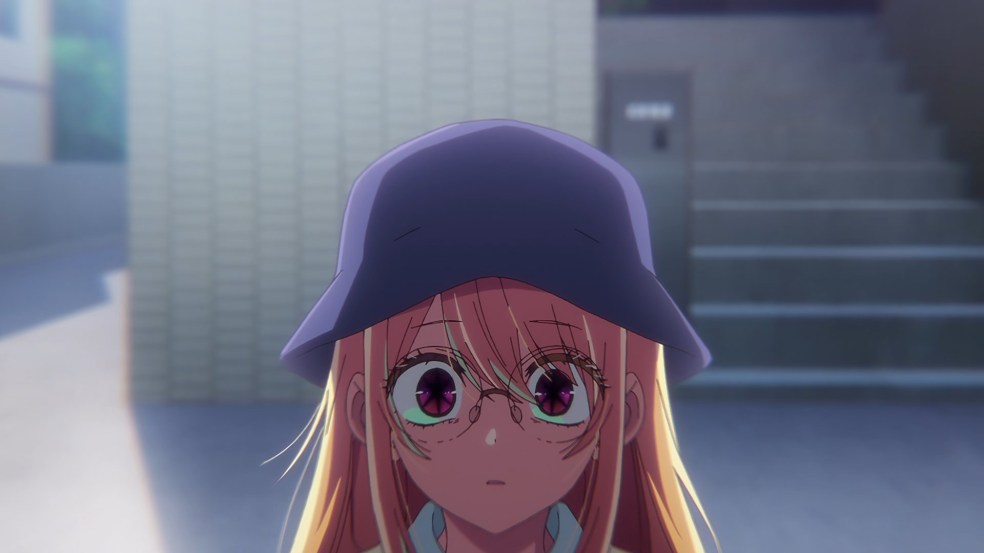


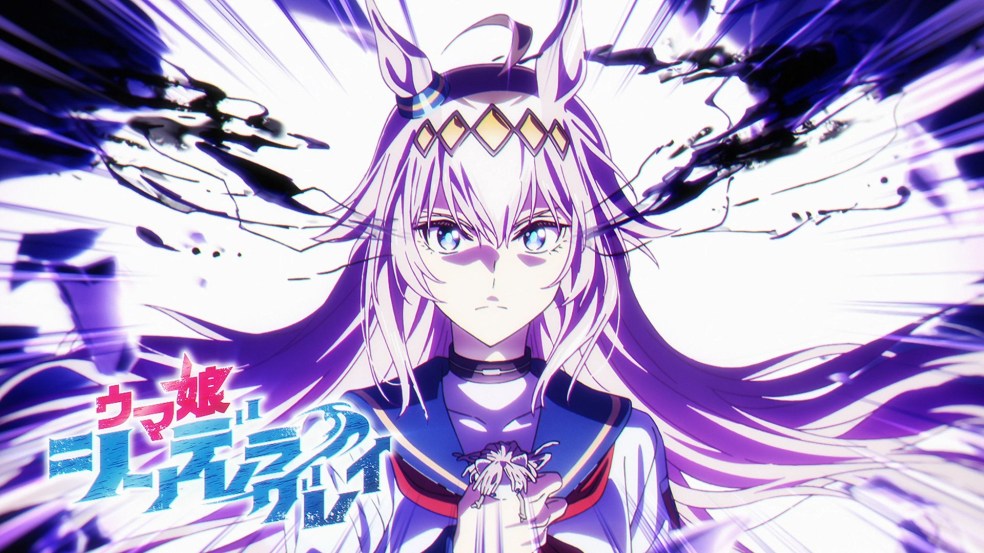


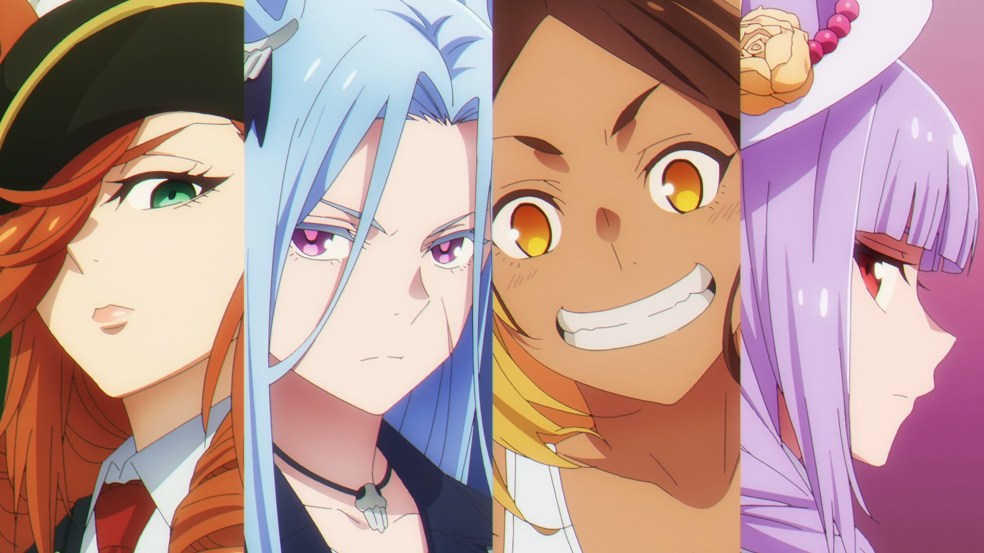


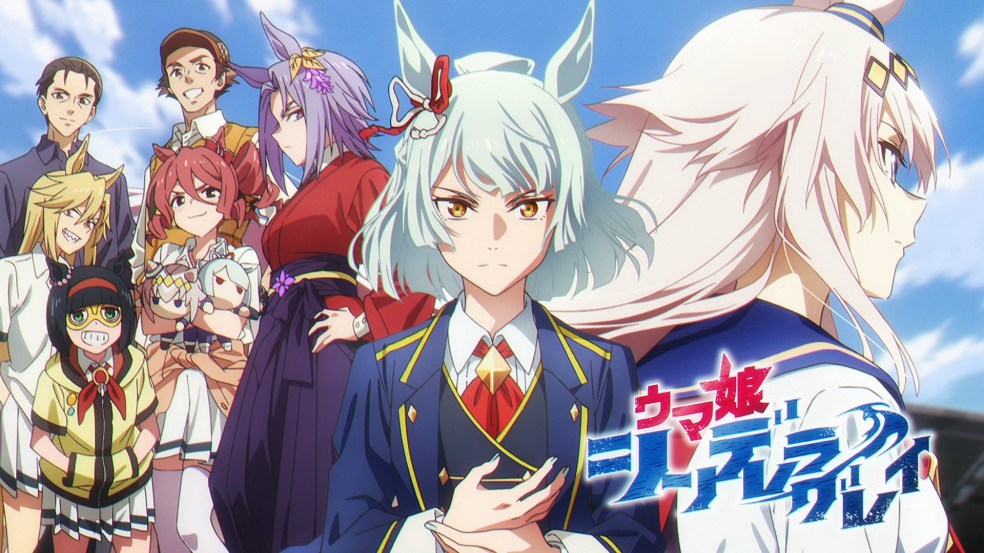


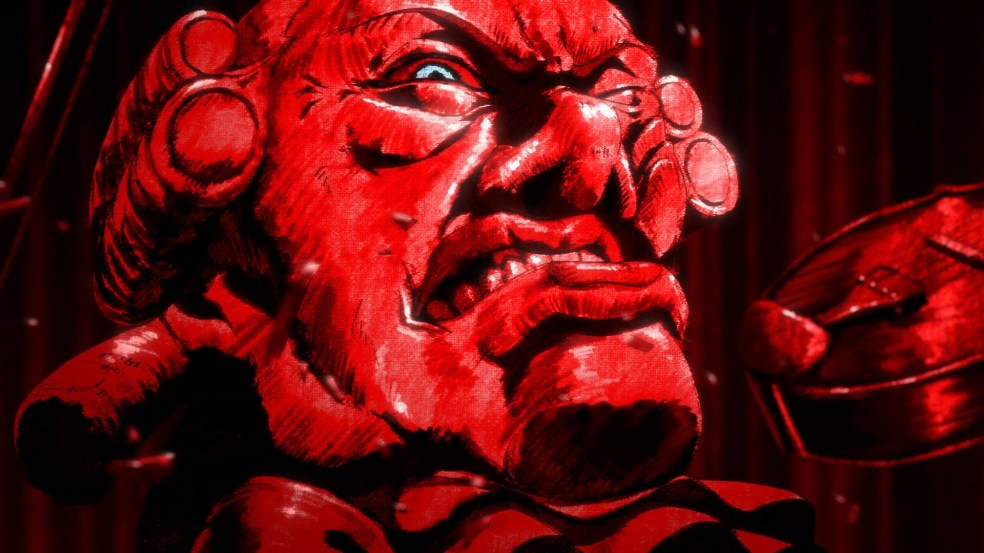




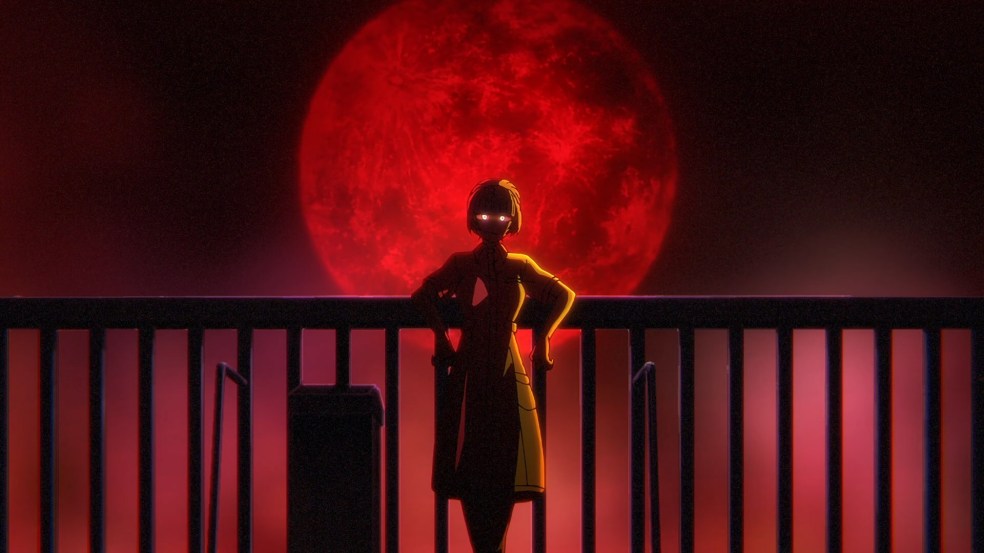


 The Magic Planet