Seasonal First Impressions is a column where I detail my thoughts, however brief or long, about a currently-airing anime’s first episode or so.
Do you believe in the power of astrology? Most people these days do not, but some still find meaning in the old magic. There’s no scientific proof that it can actually tell you anything about anything, of course, but that’s just it, isn’t it? Of course there wouldn’t be scientific proof of a mystical art. But find yourself cursed with miserable luck some sunny Sunday morning and you may just wonder, well, my sign is Capricorn, and the newspaper said Capricorns have it rough today. Could that be why? If so, is there anything I can do to turn it around? Don a miniskirt, perhaps? Thus experiencing a mix of dizzy skirt-go-spinny sugar rush endorphins and sheer embarrassment because skirts aren’t normally your thing and your whole family knows it? That’s just one example, of course, but it’s the example most pertinent to CITY THE ANIMATION, Kyoto Animation‘s latest project and their second team-up overall with Nichijou mangaka Arawi Keiichi. (Director Ishidate Taichi was the assistant director on Nichijou, which feels equally pertinent.) It’s the premise, more or less, of the first segment, and a good primer for what CITY is all about.
Here’s what it’s not; Nichijou Season 2. Possibly one of the most longed-for hypothetical second seasons of all time, Nichijou‘s TV anime was never renewed after its original 26-episode run. For whatever combination of reasons, they just never went back to that same well, and anyone coming in with the expectation that CITY is going to somehow be “the same as” Nichijou, one of the greatest comedy anime of all time, is going to be a bit thrown. CITY is definitely playing in the same playground, but it’s using different toys, and the games it’s playing are slightly simpler. Rather than following a fairly small core cast, the focus of an episode of CITY seems that it will change from segment to segment, rotating between a vast array of characters that live in the titular metropolis, showcasing both how their lives intersect and also their individual peculiarities.
Two high school girls with no afterschool club to call home talk hypothetical superpowers, a woman in a bucket hat shows us her collection of stim objects and invents a god of her own making, only to start giving it offerings. A part-timer works at a noodle shop where she has to cover up an embarrassing incident. Wouldn’t you know it? The Capricorn in the miniskirt is the owner’s son. Pinning gags to the corkboard like this kills them, so I’m loathe to go into the peculiarities of how each and every one of CITY‘s little jokes pays off, but almost all of them hit, which is an impressive bullseye ratio for any comedy anime, much less one that fires this many arrows in a given episode. Much of the comedy is antics-driven and thus rather physical (and it will sometimes drop out dialogue entirely to emphasize the visual element), but there’s some verbal comedy in there as well. It’s a nice mix overall. I’d say my single favorite joke from this first episode comes from the noodle shop segment, where the owner, one chef Makabe Tsurubishi [Kawahara Yoshihisa], frets about how to cover up his ridiculous mistake of dropping a plate of crispy noodles into a customer’s handbag. His employee, part-timer Nagumo Midori [Komatsu Mikako]—possibly the closest thing CITY has to a main character so far, and indeed she’s on the key visual—wonders why he can’t just apologize and explain the situation. Chef Makabe is emphatic in his refusal: the customer might get mad and yell at him.
It really is that serious.
We should talk about the show’s actual look, too. CITY closely resembles no other anime of 2025, with popping, bright, bold colors, thick character outlines, and an overall feel as reminiscent of a pop-up book as any other anime. You can definitely draw a visual line from Nichijou to this series, but CITY‘s a rare one in the contemporary landscape.
And really, that rarity is part of what makes this one of the easiest slam dunks of the year in terms of premieres. I can’t really find a single fault with this show. Sure, it’s again worth reiterating it’s not literally Nichijou Season 2, but you’re not going to find any better embodiment of that show’s spirit in 2025 than this. Our ordinary lives remain a series of miracles, it’s true. Really, really goofy ones.
Like what you’re reading? Consider following Magic Planet Anime to get notified when new articles go live.If you’d like to talk to other Magic Planet Anime readers, consider joining my Discord server! Also consider following me on Anilist, BlueSky, or Tumblrand supporting me on Ko-Fi. If you want to read more of my work, consider heading over to the Directoryto browse by category.
All views expressed on Magic Planet Anime are solely my own opinions and conclusions and should not be taken to reflect the opinions of any other persons, groups, or organizations. All text is manually typed and edited, and no machine learning or other automatic tools are used in the creation of Magic Planet Anime articles, with the exception of a basic spellchecker. However, some articles may have additional tags placed by WordPress. All text, excepting direct quotations, is owned by Magic Planet Anime. Do not duplicate without permission. All images are owned by their original copyright holders.
Seasonal First Impressions is a column where I detail my thoughts, however brief or long, about a currently-airing anime’s first episode or so.
“Humans are often fooled by hope, but can also be fooled by the idea that there is none.”
-Osamu Dazai, Pandora’s Box, as quoted at the beginning of this episode.
Because you clicked on this article, I imagine you want to read about Necronomico and The Cosmic Horror Show. Unfortunately, this is one of those cases where we have to bitch about the subtitle situation first. Yeah, again.
When Necronomico first went live on Crunchyroll servers, people discovered pretty quickly that the subtitles were absolutely awful. This was not a case like the above-belinked Nokotan where MTL involvement was merely suspected. (And in fact, Nokotan‘s case turned out to be a much more human example of bad subs.) No, this was so blatant that the German sub track still had “ChatGPT said:” accidentally left in one line.
To hear Crunchyroll tell it, this was a misunderstanding. They released a vague statement about the MTL subs violating their agreement with the vendor, and the subtitles have since been replaced by properly-done ones from CR’s usual in-house team, who really ought to be paid better for the sort of bullshit they have to put up with. Nonetheless, public outrage actually accomplished something here, and as such, it is now possible to take the show on its own merits.
This is a good thing, because while I wouldn’t call Necronomico’s first episode premiere of the year or anything, it’s at least entertainingly weird. And as I’ve said many times, if you can’t swing “good,” “weird” is at least a good second option. “Weird” will get people looking your way. “Weird” gets your foot in the door.
What we have here is a janky possible trainwreck-in-the-making, an exposition-frontloaded whatchamacallit that scans as a cross between a death game anime and ReBOOT. It is a loud, gaudy, and sometimes outright obnoxious show, but being brash to the point of being overbearing can be its own kind of virtue. Take a listen, for example, to Sugiyama Riho hollering into the mic—finally in a protagonist role where she can do what she does best for the first time since Wave, Listen To Me!—as she voices hotheaded livestreamer Kurono “Necronomico” Miko. Take a look at the hyper-saturated neon color palette. Fret over the size of the bloated cast. Bask in the shameless “ME!ME!ME!”-core character design of main antagonist Cthulu [Iwami Manaka]. It’s all quite a lot!
We open on Miko, our heroine, getting fired from her day job. Her boss tries to comfort her that now she can focus on her other job, streaming, full-time, but there’s no denying that this is bad news. Not just for the usual reasons—she has an apartment she has to make rent on, and a pet lizard she has to feed, not to mention herself—but also because a friend of hers is laid up in the hospital, and she’s worried that said friend will get hung out to dry. That friend, Mayu [also Iwami Manaka, but don’t worry, I’m sure that’s a coincidence], is in a coma. That’s been going around among streamers lately as it turns out, a well-placed bit of background exposition informs us that livestreamers have been randomly falling into comas and no one is quite sure why. Still, that’s hardly the thing on Miko’s mind as she tries to brainstorm how to get some cash together.
Desperate and out of options, Miko has little choice but to answer when she gets a very spammy-looking email, promising her a decent chunk of change if she attends an event for influencers that seems to involve some kind of video game. We’re introduced to a few other characters, such as Kagurazaka Kanna [Hazumi Nana, making her debut], who has something of a one-sided rivalry with Miko following an incident at another event some time prior, a truly annoying eSports guy named Eita [Kawashima Reiji], a fellow named Sano Seishirou [Tamaru Atsushi] who runs an educational channel about math, and so on, and so forth. Because of the ReBOOT comparison at the top of this piece, you can probably guess where this is going. Yes, our cast is coerced into playing the “beta” of a VR game, except, of course, the VR is some Sword Art Online deep dive bullshit where it directly interferes with your brain, which is, naturally, kept from our characters until they’re already actually in the game.
The game, in a bit of a twist from what you might expect from this sort of thing, is not some RPG or indeed really anything of the sort. Instead, “Super Rumbleland” is basically Fall Guys with some pretty basic linear platforming challenges mixed in. What really sells this though is that the show actually completely changes art style when inside the game. Meaning that for a good half of its first episode, Necronomico actually looks like this!
In fact, in one of the show’s funniest and best visual touches, the in-game avatars are sometimes even given Gundam-style cockpit cut-ins to show who’s talking.
Perhaps inevitably, this change for the even-goofier visually is where the story starts to acquire overt stakes. After having the gist of the game (“just get to the end”, essentially) explained to them by living tutorial NPC / displaced toku villain Tick Tock Man [Yasumoto Hiroki], our heroes make their way through the course. Tick Tock, or rather his “bosses,” get bored of the methodical approach deployed by some of the players, namely Eita, and introduce an ad hoc time limit mid-game. Our big action setpiece here in the first episode is thus the characters trying to scramble to the finish line while the world around them is enveloped in black fog and falling apart. All the while, a big ol’ sinister eyeball spies on them from below the course.
Miko, Kanna, and a few of the others make it out of the course, albeit only barely, where they are promptly ejected into a crowd of jeering and cheering space monsters. These are the titular cosmic horrors, and everything our heroes have done up to this point in the episode has been for their entertainment. Honestly, it’s a lot to take in, but I like these guys, especially the one who’s a giant chicken.
The episode ends with a crucial piece of context clicking into place; Miko actually recognizes Cthulu (not named here, but identified as such on character sheets), because she happens to look a lot like Mayu. Cthulu explains that, yeah, that’s on purpose, because the entire point of this whole arrangement is for the elder gods to leave the streamers that enter their game comatose, so they can “borrow” their forms to communicate with the rest of humanity. What exactly that entails long-term is a revelation the show is saving for later, as is why they want to talk to humans in the first place. Still, it’s a good hook, as is Miko’s raging defiance when presented with all this. She’s seething mad at Cthulu particularly, and it’s pretty clear from the brief flashback shots we get that Miko and Mayu were very close. I am choosing to believe romantically so, as it adds an overtone to Miko’s burning anger at Cthulu that I think is just delightful.
The ED ends with Miko flipping the bird to her newfound “audience”, as good a signoff as any anime’s premiere has ever had.
Taken on the whole, I’d say this is one of the season’s better premieres thus far. If there are complaints to be had, they’re about pacing, more than anything. And to be honest, complaining about the pacing in an anime often feels like complaining about the mixing on an album. It’s a real thing, it can definitely be bad, and it’s a valid point to criticize. But unless it completely ruins the experience I find it hard to devote too much space to. Yeah, there’s a ton of crammed-in exposition here and it’s a little awkward. It is what it is. Visually, the show looks pretty good. It’s a bit up and down in terms of consistency, but good sequences well outnumber the less impressive ones, and because the show seems like it’s going to be switching art styles once an episode, any shortcomings with its 2D animation are less of a big deal than they might otherwise be.
As for what, if anything, Necronomico is trying to say. Well, it doesn’t exactly seem to take a sterling view of the streamers making up its cast. So perhaps there’s something to be said in there about the over-commercialization of our lives, this black work of selling parts of our lived experience as packaged product for an audience—a mass of beings just as scary as the Elder Gods, perhaps—to gorge themselves on. Then again, maybe not. It’s early days, and there are many directions Necronomico could choose to take its freewheeling death game setup in. Mainly, I just hope the entire controversy with the subtitles doesn’t just sink this show’s chances of finding an overseas audience entirely, because this series is odd enough to warrant interest. Remember; the horror show is cosmic, but the #content is iconic. Or something like that.
Like what you’re reading? Consider following Magic Planet Anime to get notified when new articles go live.If you’d like to talk to other Magic Planet Anime readers, consider joining my Discord server! Also consider following me on Anilist, BlueSky, or Tumblrand supporting me on Ko-Fi. If you want to read more of my work, consider heading over to the Directoryto browse by category.
All views expressed on Magic Planet Anime are solely my own opinions and conclusions and should not be taken to reflect the opinions of any other persons, groups, or organizations. All text is manually typed and edited, and no machine learning or other automatic tools are used in the creation of Magic Planet Anime articles, with the exception of a basic spellchecker. However, some articles may have additional tags placed by WordPress. All text, excepting direct quotations, is owned by Magic Planet Anime. Do not duplicate without permission. All images are owned by their original copyright holders.
Seasonal First Impressions is a column where I detail my thoughts, however brief or long, about a currently-airing anime’s first episode or so.
Content Warning: This article contains discussion of suicide, child abuse, bullying, and other heavy topics. Please use your discretion before reading.
I’m open to the idea that this is a real “these three points make a line” sort of statement, but in my experience, it seems to me that when a show premieres before the bulk of its season, it’s usually lightweight and lighthearted. Something like Fluffy Paradise, or what have you. Why that is, I couldn’t tell you, but maybe there’s a sentiment that if you’re going to put yourself out there ahead of the pack, it doesn’t make sense to demand too much from viewers. That’s a guess, but it’s the best one I’ve got.
In any case, Takopi’s Original Sin—an ONA adaptation, slated for six episodes, of Taizen 5‘s Jump+ manga—does not follow this pattern. At all. In fact, before I say anything else, let me hit you with the same exact warnings that the show itself does.
Those two content warnings, one from the anime’s production committee and the other, as far as I can tell, inserted by distributors, are not a joke. Takopi is in the running for the heaviest anime I’ve ever covered on this site, and I’m saying that as a statement of fact, not some kind of tasteless “you won’t believe how dark this show is!” clickbait sort of thing. So please, if reading about anything described abvove is distressing to you, or if watching it is distressing, please exercise your judgment. Take care of yourself, alright?
Beyond that, it’s actually the visual element of this show I’d like to discuss first. (Coming to us from director Iino Shinya, previously best known for the Dr. Stone adaptation, and his team at Studio ENISHIYA. As far as I can tell, this is their first work that’s not a music video or something of that nature.) Despite this being an anime blog, I usually save notes on production polish and such for the last few paragraphs, mostly because the ins and outs of how an anime actually gets made are not my specialty, and there are only so many ways for a comparative layman to say something looks good. Takopi is different: its human character designs have a distinctive feel, I’d almost say a weathered appearance, that sets them apart from the norm. They’re not “realistic” per se, but they’re expressive and feel like stories unto themselves, most notably with Kuze Shizuka [Ueda Reina], a fourth-grader and one of our leads; rail-thin, with a stringy mop of black hair, dressed in a battered white t-shirt, and a face that conveys an exhaustion beyond her years. Deliberately cutting against all of that is our non-human lead, Takopi himself [Mamiya Kurumi]. Takopi is a round alien, essentially a pink sphere with some stumpy legs, a mouth, eyes, and two tentacles. He looks like something out of a children’s storybook, and he thinks like one too, most scenes that depict something he imagines do so in this painted, storybook style, and it adds an incredible amount of depth to the show.
As for the alien himself, Takopi comes from The Happy Planet. His mission? To spread joy far and wide across the galaxy.
To that end, he has a bag full of gadgets—Happy Gadgets—that can do just about anything; a wrist band that lets you fly, an instant camera / time machine, a talking moai-like head that gives advice, an infinitely-long ribbon that can make any two people who are fighting resolve their differences. You know, the basic stuff. Takopi is, textually speaking, a literal extraterrestrial. But from the moment he’s introduced to Shizuka’s life, it’s clear that he’s also meant to come off as rather childlike. He’s immensely naïve about how the world works, and his gizmos do little to solve Shizuka’s problems. Still, Shizuka, at least initially, seems to be grateful to have someone to talk to at the very least. Over the course of a few days, she feeds Takopi bread and the little alien offers her various widgets to improve her life. It should be pointed out that she declines to use any of them, other than allowing Takopi to take a picture with the aforementioned camera, for the stated reason that even something like being able to fly through the sky “wouldn’t change anything.”
One gets a sense of what she means when we’re first introduced to Kirarazaka Marina [Kohara Konomi]. Marina, a classmate of Shizuka’s and, it quickly becomes clear to us if not Takopi, her bully. From the very moment she’s introduced, Marina is so awful to Shizuka that it’s almost impressive. One of her first lines is her and an underling talking about how they’ve broken Shizuka’s writing board, about which Marina sneers that she can use her “welfare money” to buy another. Further details like insults scribbled on Shizuka’s bookbag and simply how insistent she is about hiding from Marina paint Shizuka’s school life as a living hell even before we get to actually see it in the episode’s second half.
There’s a sense of suffocation here, and the environment reflects it; a relatively small town where everyone knows everyone else but doesn’t necessarily like them. Shizuka’s home life paints an equally-bleak picture; her only real companion is her dog Chappy, a giant ball of fur and affection that truly seems to be the one light in her life. Her mother, an “escort”, doesn’t really seem to ever be home, and an innocent question about Takopi regarding where her father is is met with “I don’t have a dad.”
Even so. All of this is contrasted with Shizuka’s moments with Takopi, which she does seem to genuinely appreciate. After seeing Shizuka’s home for the first time, Takopi tries to cheer her up by offering to take her to his home planet. He’s rebuffed, but Shizuka, Takopi, and Chappy end that night by walking together under the star-woven night sky. Shizuka smiles, Takopi is overjoyed.
If Takopi’s Original Sin is ever “misleading” in any way—and I really don’t think it is, this is not a show that’s coy about what kind of story it’s trying to tell, but for the sake of argument—it’s probably here. For a few seconds, it seems like things are looking up.
And then tomorrow comes.
Shizuka, badly beaten and clutching an empty dog leash—did Chappy run away? What happened? We aren’t told—meets up with Takopi again. For neither the first nor the last time, Takopi tragically doesn’t really understand what he’s looking at, interpreting her bloody mouth and black eye as “decoration.” Shizuka can only mumble out that she had a “fight” with her “friend,” at which point Takopi likens the way Shizuka’s face has changed to how he blushes when he gets embarrassed. (Moments of this nature, where Takopi just fundamentally misunderstands something about how humanity works, are excellent in how thoroughly they can sink your heart in just a few lines of his cheery delivery, and they’re scattered all up and down the episode.)
He latches on to the “fight with a friend” description, though. Offering Shizuka a “Reconciliation Ribbon” that can make any two people reconcile so long as they each tie it around their fingers. For me at least, this is around where the feelings of unease cultivated by the opening minutes of the episode blossomed into full-blown dread.
Takopi somewhat reluctantly lets Shizuka borrow the ribbon, despite the rules of his mission (as dictated in a flashback by a large, white specimen of his species) saying that the gadgets should never be used without direct supervision. Time passes, and Takopi gets worried.
He eventually makes his way back to Shizuka’s home, only to find it empty. Empty except for the Ribbon, fashioned into a makeshift noose, and except for Shizuka, having hung herself. The scene is harrowing, an explosion of pure, black dread. (I think one can make the case that Takopi’s lending the Ribbon to Shizuka is the titular “original sin,” though given that we’re only one-sixth of the way through this story, I’m sure other interpretations will make themselves known.)
Understandably, the little pink alien panics. He wonders how this happened, blaming himself and lamenting that death is the one constant across the vast universe. He can’t bring back the dead, but there is one thing he can do with his extraordinary gadgetry. The camera’s hidden function as a time machine is revealed here, allowing Takopi to travel back to the moment the photo was taken. (This seems to require him to have the photo on-hand, and it’s said outright that the camera can only store one picture at a time. Both of these facts seem like they’ll eventually be relevant.)
Thus, the second part of this episode revolves around Takopi trying his damnedest to avert Shizuka’s tragic fate, to find a world where she lives. To do this, he feels the need to learn more about her. Traveling back to the past, he accompanies her to school, trying to solve various minor problems he incorrectly pegs as the source of her pain (forgetting her homework, being unable to finish her school lunch, etc.), and one of the episode’s most visually interesting moments consists of a montage juxtaposing these problems and Takopi’s stopgap solutions to them, splitting the video down the middle and showing both at the same time.
But what Takopi still doesn’t entirely get until the episode’s final act is that all of these things are symptoms of a bigger problem that Shizuka is dealing with. Namely, Marina. Everything else that happens to her in school is a direct result of Marina’s bullying; she didn’t forget her homework, Marina stole it. She might be able to actually finish her lunch were it not for Marina and her fellow bullies mocking Shizuka to her face while she’s trying to eat. And so on and so forth.
Takopi, heartbreakingly, doesn’t really understand this either. He assumes that Marina and Shizuka are former friends who’ve had some kind of falling out, and that if he can just get them to talk, things will be fine. The problems with this approach are left unsaid, but are obvious. What if someone just fucking hates you for no obvious reason? What if someone is abusing you because they themselves are abused and you’re just an outlet for their anger? What if someone is mad at some other specific person and you’re just a proxy for their rage? Takopi can’t consider these angles, and when he naively tries to use another of his gizmos (a palette that lets him take the appearance of anyone he wants) to take Shizuka’s place when Marina wants to “talk to her,” it predictably goes very poorly.
I have to confess, as awful and stomach-churning as Shizuka’s suicide was, this was actually the scene that made me pause the episode and necessitated me taking some time to collect myself before resuming. Marina just absolutely beats Takopi-as-Shizuka black and blue, ranting at him about how “she” is the daughter of a “parasite” who’s preying on her father, and concludes her assault by jamming a mechanical pencil in Takopi-Shizuka’s eye. The narrative revelation—that Shizuka’s mother is sleeping with Marina’s father, and this is one of the sources of Marina’s anger—is crammed into the margins by the visceral pummeling she’s giving Takopi-Shizuka, a clouding of cause-and-effect that is all too reflective of how these things can play out in real life. Marina, a child herself, is of course wholly unable to strike back against a grown woman who she thinks is ruining her family. Shizuka, comparatively defenseless, is an easy target.
Takopi simply has no frame of reference for any of this; nothing of this nature happens on his planet, and this single beating is enough to traumatize him. The next time loop around, he can’t make himself move to go help Shizuka, even as he knows exactly what’s happening to her. The best he can eventually think to do is to run and grab a teacher while still disguised as Shizuka. Even this doesn’t really work long term, it just gets Marina off of her for the time being.
The episode’s closing minutes see Takopi pledge to stay with Shizuka, even though he feels like a failure for not being able to truly protect her. They also follow Marina, further contextualizing her anger as the result of her mother, who is sitting at their dining room table and seething over her husband spending so much time with another woman. The episode ends on two distinct epilogues. Shizuka goes home and falls asleep in her living room with Takopi and Chappy, the closest to being happy we’ve yet seen her. Marina, on the other hand, exits the episode as her mother creepily puts her hand on her face, all about the scene implying that Marina is about to be the target of abuse herself, for nowhere near the first time. She begins crying, headlight-yellow eyes darting away from her mother and, full of fear and resentment, burning holes in the camera.
This show is….a difficult one to discuss productively, for lack of a better term. To be honest, I have felt a touch out of my depth writing this, most anime—including most anime I deeply love—has some escapist element that can make even quite dark storylines go down more easily. There’s a little of that here, and Takopi’s presence provides a dose of pitch-black humor when he’s not just making things worse with his childlike naiveite, but, like I said at the top, this is one of the bleakest things I’ve ever written about on this site. Still, I do hope I’ve made it clear that none of this is a problem. The series is outstanding at what it’s setting out to do, and I think if you can weather the storm Takopi’s Original Sin is putting down, you’ll find easily one of the year’s best premieres. I would not at all be surprised, if it keeps up the quality—and I imagine it will—to find Takopi making a lot of year-end best-of lists come December or so. This story may be dark, but it’s one worth telling.
Like what you’re reading? Consider following Magic Planet Anime to get notified when new articles go live.If you’d like to talk to other Magic Planet Anime readers, consider joining my Discord server! Also consider following me on Anilist, BlueSky, or Tumblrand supporting me on Ko-Fi. If you want to read more of my work, consider heading over to the Directoryto browse by category.
All views expressed on Magic Planet Anime are solely my own opinions and conclusions and should not be taken to reflect the opinions of any other persons, groups, or organizations. All text is manually typed and edited, and no machine learning or other automatic tools are used in the creation of Magic Planet Anime articles, with the exception of a basic spellchecker. However, some articles may have additional tags placed by WordPress. All text, excepting direct quotations, is owned by Magic Planet Anime. Do not duplicate without permission. All images are owned by their original copyright holders.
Seasonal First Impressions is a column where I detail my thoughts, however brief or long, about a currently-airing anime’s first episode or so.
In 2017’s extremely metafictional club comedy anime Anime-Gataris, there is a scene where the main characters, all members of their school’s anime club, debate what makes a “classic anime.” The gag here being that they all just list off certain tropes or canned setups and scenarios rather than anything particularly deep (at one point someone ventures that if a main character vomits on screen? Well, that’s a classic anime). If I could put forward a candidate for that list, it would be this: any slice of life / comedy anime in which an older character is shown to be an absolutely terrible driver is an instant classic. Call it the Azumanga Daioh Principle.
mono, stylized in no-caps, is the latest member of that particular club, and it’s fairly meta in of itself. Consider that this is a slice of life comedy about two girls who take pictures, but one of the other characters is a mangaka who, by the end of this first episode, is writing a yonkoma about two girls who take pictures.
Her first idea for a manga, from earlier in the episode, isn’t bad either. She’s right that everyone likes comics about cats.
Unlike Anime-Gataris, that metafictionality (much lighter here than in that series) is not the point in of itself, but rather an underline that this is a show that understands its genre, and why people like and connect to that genre, very well. mono isn’t the first series like this we’ve had in a while, but it’s definitely the best in a while. To find something with a comparably great first episode you have to reach at least as far back as 2022’s Do It Yourself!!, maybe farther.
The actual plot, such as it is, is nothing terribly complicated. (Such stories rarely are.) Amamiya Satsuki [Mikawa Haruna] joins a photography club at her high school in her first year, implicitly because of a crush on her upperclassman who’s the head of the club. (That’s Satsuki at the top of this article in the banner image, looking like she’s offering you something.) Fast forward a year later, and said upperclassman has graduated, leaving Satsuki and her friend Kiriyama An [Koga Aoi] as its sole members, and Satsuki herself listless and lacking in motivation. An, who herself feels such a way about Satsuki that she describes “sitting together with her in the garden in [their] elder years” as a “dream,” is worried that the club might dissolve with just the two of them, and that Satsuki might remain a proverbial lump on a log forever.
After a motivating speech, Satsuki regains some amount of motivation, deciding to finally get a proper camera after a full year of exclusively taking photographs on her phone (most of which were of her sempai, and most of which were taken pictures of, in turn, by An). She buys a wide-angle camera off of an online auction, but oops! It doesn’t actually arrive. Thankfully, the seller actually lives in their city, making it relatively easy for Satsuki and An to track them down.
Which, if I’m the one being asked, is where the episode really takes off. I have a passing interest in photography (and a mostly-defunct phone photography blog over on tumblr), but it’s not a deep-seated passion, so it alone is not enough to sell me on a series. What puts me onto mono is its sheer joie de vivre. Every inch of it is stuffed with expressive animation and vibrant color, and it’s also just really damn funny. This is all crucial, since even if you, like me, are not super “into photography,” mono needs to convey its love of the world as a subject of art.
The camera seller turns out to be aforementioned mangaka Akiyama Haruno [Toono Hikaru]. She, and a gaggle of young kids who stop by her grandmother’s shop, where she also lives, completes the character dynamic of the series, being an older character who is decidedly not really a mentor in any way. Her spacey demeanor provides a nice contrast to the more high-energy dynamics between An and Satsuki. More importantly, she’s also a good (and literal) driver of plot, in as much as a series like this has plots. It’s she who provides Satsuki and An with that wide-angle camera, and, later, she drives them to a nearby landmark to take nightscape photos. For my money, she’s the best character, and her lackadaiscal and laid-back attitude instantly endeared her to me. That she coincidentally looks kind of like my VTuber rig certainly doesn’t hurt either. I am not biased in any way, I promise.
In any case, those nightscape photos cap off the first episode, otherwise quite zany and comedic, with a more contemplative tone. I don’t know if the “mono” in mono is “mono” as in the term mono no aware, as this would on the surface contradict the show’s comedic incliniations. But if it is, that’s a pretty solid allusion. The idea of photographs as permanent, fixed records of memories that are themselves inherently transient isn’t a new one, but I would love to see the show explore it regardless, and it provides a nice counterweight to the fast pace and upbeat tone of the rest of the series.
Brilliantly, one of the last scenes in the episode is a timelapse the girls took. The sequence lasts only a few seconds, but as the sun sets and the city lights glitter to life, the impression it leaves is forever.
Like what you’re reading? Consider following Magic Planet Anime to get notified when new articles go live.If you’d like to talk to other Magic Planet Anime readers, consider joining my Discord server! Also consider following me on Anilist, BlueSky, or Tumblrand supporting me on Ko-Fi. If you want to read more of my work, consider heading over to the Directoryto browse by category.
All views expressed on Magic Planet Anime are solely my own opinions and conclusions and should not be taken to reflect the opinions of any other persons, groups, or organizations. All text is manually typed and edited, and no machine learning or other automatic tools are used in the creation of Magic Planet Anime articles, with the exception of a basic spellchecker. However, some articles may have additional tags placed by WordPress. All text, excepting direct quotations, is owned by Magic Planet Anime. Do not duplicate without permission. All images are owned by their original copyright holders.
Seasonal First Impressions is a column where I detail my thoughts, however brief or long, about a currently-airing anime’s first episode or so.
It has been entirely too long since I got weirdly, uncomfortably personal on this blog (a few months, at least), so let’s fix that.
I have been thinking about my own mortality a lot lately. I won’t go into why, but suffice to say this dwelling is neither wholly rational nor entirely unfounded. I mention my own recent fixation here to give some context for why I’m checking out Apocalypse Hotel, and why I was initially reluctant to check it out. Stories like this, stories of mankind’s extinction or departure and what we may leave behind in our wake, stories that inherently deal with loss and finality as themes, are incredibly aggravating when done poorly. I won’t name names, but there have been some unimpressive examples in recent years, and I have somewhat burned out on this genre of post-apocalyptic iyashikei as a result. (The less said about its mutant cousin, the isekai slow life genre, the better.) All this in mind, I planned to pass on Apocalypse Hotel. Surely it would not become one of the most instantly-beloved premieres of the season, right?
If that’s overselling it, it’s only just so. Within my circles at least, Apocalypse Hotel has become something of a surprise standout among the season’s premieres. Enough of one to cover it over GQuuuuuuX? I’m not sure about that, but the praise eventually got to me and I was inspired to give it a whirl. I’m glad I did, because this is a series that not only understands the fundamentals of its parent genre very well, it’s also a bit of casual leg-stretching for Cygames Pictures, who have established themselves as one of the more reliable studios around in recent years. (For reference, Apocalypse Hotel is a follow-on from last year’s Uma Musume film and Brave Bang Bravern. This year, they’re doing Cinderella Gray, also from this season, and an adaptation of acclaimed manga The Summer Hikaru Died in just a few months. Going back a bit farther, you might also know them from Princess Connect Re:Dive.)
As for the actual plot here, there honestly isn’t terribly much. We begin with a truly spine-chilling opening, in which an advertisement for the titular Ginza Hotel, then brand-new, is intercut with news reports of a deadly, plantborne virus that is rapidly rendering the Earth’s atmosphere hostile to human life. Just five years out from the COVID pandemic, this sort of imagery is still very pointed, and the uncomfortable contrast between the luxury of the hotel and the violence we see as the world becomes less and less habitable, culminating with a lucky few escaping to the stars in an “ark” (supposedly for just a few years while Earth’s ecosystem sorts itself out), is of course very intentional. It is equally so that most of the rest of the episode doesn’t directly deal with that discomfort. Instead, the series dances around it in a deliberate, careful way, only drawing attention to it directly at key moments.
Most of the episode is fairly comedic, in fact. We meet our cast of characters, a group of robots maintaining the Ginza Hotel. The most prominent of these, and the only one in the group that could conceivably pass as a human, is Yachiyo [Shirasu Saho], the “acting acting” head of reception and thus the one in charge of the hotel in a general sense. Yachiyo spends her days keeping her crew on-task as they make sure the hotel is kept clean and orderly, in preparation for humanity’s eventual return.
A return that, at this point, they have waited on for a hundred years and counting.
I don’t want to make Apocalypse Hotel seem darker than it actually is, because most of this episode genuinely is pretty upbeat. Gags like Yachiyo absolutely losing her cool because a single shampoo hat goes missing from one of the hotel’s bathrooms, or the bulky, extremely serious Doorman Robot [Touchi Hiroki] and his sheer dedication to his simple job of opening the front doors for any prospective guests, are a genuine delight.
Get Door Robo
Even the music is pretty upbeat while the crew go about their daily routine of keeping things clean and sparkling. But the undertone of massive loss is always there. Firstly from the simple fact that the thing they’re keeping so pristine is a giant hotel with nobody in it, and secondly from the more general post-apocalyptic trappings. A century is more than enough time for plants to have grown over much of the world outside the hotel, and these gorgeous wide shots instill a solid sense of longing and emptiness.
In other words, this show is quite clearly picking up the thread left by seminal works such as Yokohama Shopping Log. Being that good would be, frankly, too much to ask—Yokohama is arguably the definitive work of its genre—but that the two can even be in the same conversation is a good sign. There is one point in the episode in particular in which this influence is extremely evident, and that is when one “Driller Robot” does not report to the morning roll call at the hotel. Yachiyo goes out to find him, only to see that he’s been killed; massive metal spikes have been driven through him, and he’s completely motionless. Clearly saddened in a way she either can’t or won’t entirely express, Yachiyo solemnly places him on “indefinite leave,” and consigns him to a storeroom full of other similarly broken-down robots. An earlier gag draws attention to the fact that the Doorman no longer has any coolant in his systems, and one has to wonder how long it’ll be before he, too, joins that pile. We have already seen, via flashbacks, that Yachiyo’s crew used to be much larger.
Yachiyo’s behavior, as well, seems to indicate that she’s not as together as she’d like to put on. It’s mostly played as a joke here, but she has an angry outburst near the end of the episode, and she’s also been keeping detailed logs of operations every day since the hotel’s owner left. She tells herself that new guests will be coming soon, but it doesn’t really seem like she believes it.
Which makes the end of the episode all the more surprising. I can’t bring myself to spoil what, exactly, happens there, but I do think it points Apocalypse Hotel in an interesting direction going forward. Does all of this relate, that much, at the end of the day, to the fears I discussed opening this article? Eh, yes and no. Apocalypse Hotel is clearly a part of this cozy apocalypse genre—it’s right there in the name, after all—but it’s much more lighthearted, even whimsical, than I first assumed. Yet, that sense of loss and transience still very much does color everything about the series, and it’s difficult to say what it will end up leaning more into as it goes on. In other words, it’s hard make many long-term predictions. But, regardless of what happens on this particular after-the-end vacation, I’m planning on at least a short-term stay. Hopefully you are, too.
Like what you’re reading? Consider following Magic Planet Anime to get notified when new articles go live.If you’d like to talk to other Magic Planet Anime readers, consider joining my Discord server! Also consider following me on Anilist, BlueSky, or Tumblrand supporting me on Ko-Fi. If you want to read more of my work, consider heading over to the Directoryto browse by category.
All views expressed on Magic Planet Anime are solely my own opinions and conclusions and should not be taken to reflect the opinions of any other persons, groups, or organizations. All text is manually typed and edited, and no machine learning or other automatic tools are used in the creation of Magic Planet Anime articles, with the exception of a basic spellchecker. However, some articles may have additional tags placed by WordPress. All text, excepting direct quotations, is owned by Magic Planet Anime. Do not duplicate without permission. All images are owned by their original copyright holders.
Seasonal First Impressions is a column where I detail my thoughts, however brief or long, about a currently-airing anime’s first episode or so.
Look at them individually, and no part of Kowloon Generic Romance seems all that strange. Its setting, the historical Kowloon Walled City, is probably the most individually unusual factor, but still, oddball places to set a romance series are hardly a new idea. The romance itself? An ice queen and a guy who’s too pushy by half, maybe more. Nothing strange going on there, even if it really is leaning into the self-deprecating part of its title. The atmosphere? Wistful. Thoughtful. Slow. But still, nothing too out of the ordinary.
Tying these things together, and making it clear that we have something strange on our hands, is the final element. Kowloon doesn’t actually take place in the historical Walled City, you see. It takes place in an alternate past-future present of it. The year is nineteen-exty-something, and a bizarre 3D-rendered floating octahedron hovers above the city, looking for all viewers like a nepo baby whose mom played Ramiel in Neon Genesis Evangelion. A mysterious pharmaceutical company has a hand in everything. Everything too, true to life, is old, used, and hand-me-down. Reiko [Shiraishi Haruka] our protagonist, points out that new shops rarely last in Kowloon, as though the city itself rejects the march of time. That may well be true of Reiko herself, too, although if it is, she doesn’t seem to be aware of it.
Reiko has a hot-cold relationship with her coworker Kudou [Sugita Tomokazu], she knows that this is a crush, but hasn’t acted on it. I can’t personally sympathize with that because, honestly, Kudou, easily the weak link here, is an unlikable dipshit, but people who aren’t me have crushes on unlikable dipshits all the time, so, fair enough. (Sidebar: He is clearly hiding something and I’m sure the narrative will take great steps to paint him as pained and with a heart of gold. This is whatever to me, I am passingly interested at best in the Generic part of Kowloon‘s Romance.) Their rapport works as well as it needs to, which is to say, I buy that Reiko genuinely likes this guy even if I wouldn’t. More interesting is where they go, after a day of work, Kudou takes Reiko out on the town, to a variety of small bars and eateries, before eventually showing her the Goldfish Tea House, a place with an eerie, unstuck-in-time atmosphere that feels very intentional.
The bartender—an odd term for a guy in charge of a teahouse, but I can think of no other—makes a comment that Kudou, evidently an old friend of his, has brought his girlfriend along again. This flusters Reiko, who is further perplexed by Kudou’s lack of a reaction. This sticks with her even more after an incident at their workplace, where Kudou, half-asleep, pulls Reiko into an impassioned kiss. (He seems half-asleep anyway. I don’t really buy, and I don’t think we’re supposed to buy, that this was entirely accidental. While forced kisses like this are an unlikable and common element of much romance fiction, the context makes me think we’re supposed to find this strange. If not, well, there’s no accounting for taste I suppose.) All of this then comes to a head when Reiko uncovers a mysterious photo among Kudou’s belongings, which seems to depict him with….her. But the woman in the photograph is smiling and cheerful, and it’s clear that even though the two look almost identical, physically speaking, Reiko doesn’t feel a direct connection to this other woman. The episode ends there, leaving us to ponder the mystery of what, precisely, is going on here.
The mystery, and the various visual bits and pieces that float through the episode, that is. Goldfish, watermelons, cigarettes, the moon juxtaposed with Generic Terra, the aforementioned octahedron, cramped city alleys marked with numbers, including 8s, which Kudou makes a habit of brushing against, defining it as a personal quirk. Plus noisy neighbors, traditional music. The episode’s slow pace and emphasis on the visual and aural, despite not having what we might traditionally call a “strong production”, makes it clear that it intends to plant them in the minds of its viewers, this array of symbolic objects contains, somewhere within it, the key to understanding just what exactly is going on with the woman in the photograph. A drifting mix of signifiers meant to rouse our interest without answering too many questions upfront.
Kowloon Generic Romance is based on a manga, so if one wanted to, it would be trivial to spoil themselves silly. Even the anime’s Anilist recommendations tab tells a story, being populated more by the likes of Sonny Boy and Summertime Rendering than any romance anime. This all but spoils that there’s something weird going on here, something weirder than simple coincidence. The involvement of a pharmaceutical company makes my educated guess induced amnesia, but honestly, who can say?
Something I’ve learned over the past few years of doing these previews is that there are two kinds of anime whose premieres strike me less as good or bad and more as puzzling. Those where the mystery is clearly an intended hook to rope in the audience, and those where I—and sometimes others as well—are reading in a subversiveness or intrigue that’s not actually there. Shoshimin Series (despite its mundane subject matter) and Summertime Rendering are the former, Reign of the Seven Spellblades is the latter. These categories are only obvious in hindsight, so while I think Kowloon is the former, only time will tell. Still, its mystery is enough for me to stick with it for now.
Like what you’re reading? Consider following Magic Planet Anime to get notified when new articles go live.If you’d like to talk to other Magic Planet Anime readers, consider joining my Discord server! Also consider following me on Anilist, BlueSky, or Tumblrand supporting me on Ko-Fi. If you want to read more of my work, consider heading over to the Directoryto browse by category.
All views expressed on Magic Planet Anime are solely my own opinions and conclusions and should not be taken to reflect the opinions of any other persons, groups, or organizations. All text is manually typed and edited, and no machine learning or other automatic tools are used in the creation of Magic Planet Anime articles, with the exception of a basic spellchecker. However, some articles may have additional tags placed by WordPress. All text, excepting direct quotations, is owned by Magic Planet Anime. Do not duplicate without permission. All images are owned by their original copyright holders.
Seasonal First Impressions is a column where I detail my thoughts, however brief or long, about a currently-airing anime’s first episode or so.
More than its genre, who was involved with the actual creative process of making it, etc., the involvement of one person in particular stands head and shoulders above everything else when talking about Lazarus, the latest from Cowboy Bebop brain Watanabe Shinichirou, and it’s not Watanabe himself. No, upon starting the first episode of the show you’re greeted with the [adult swim] logo, and then, a few minutes later, an executive producer credit for [adult swim]/Toonami….main guy, Jason DeMarco.
I have dreaded the day I would have to talk about DeMarco at length on this blog, but the time has finally come, so here are the very basics. Back in the day, DeMarco was in charge of the original Toonami block. In that role, he was responsible for bringing a number of generational anime over to Cartoon Network, most notably Dragonball Z and Sailor Moon, and exposing them to a broad, English-speaking audience for the first time. He’s certainly not solely responsible for that, although he sometimes certainly likes to make it sound that way, but credit where it’s due, the guy had taste and not just for obvious hits, not just anyone would think to pick up, say, The Big O. In the years since then, though, with the rebooted Toonami block that proved a surprise success for [adult swim] back in 2012, DeMarco has taken a more active role in getting anime actually made, usually by putting up funding and often snagging one of those executive producer credits for himself in the process. The first results of this particular effort were the original pair of FLCL “sequels,” the extremely controversial FLCL Progressive and FLCL Alternative. To defend DeMarco (and just the entire staffs of those shows) here for a minute, I actually like both of those seasons, essentially because they’re so different from the original and indeed from each other. (Alternative honestly has more in common with one of Gainax’s other out-there 00s anime, Diebuster.)
Somewhere along the way, though, DeMarco’s involvement began to be associated with a certain kind of staid, neo-traditional action anime. Examples include the Shenmu anime, Fena: The Pirate Princess, and last year’s Ninja Kamui, which, again, to be entirely fair, I actually liked at first, but it quickly dropped off in quality. Whether DeMarco’s presence somehow causes these anime to be like this or if it’s more the other way around—that he’s attracted to projects that will end up like this because of his own tastes—I can’t say. But the point is, there’s a pattern. If DeMarco’s name is attached to it, and it has a somewhat subdued color palette, you pretty much know what you’re getting. (The less said about the other half of DeMarco’s credits in this position, which include the Rick & Morty anime and last year’s instantly-infamous Uzumaki adaptation, the better.)
I bring this up despite the fact that DeMarco’s actual creative involvement on the project was, we must assume, fairly minimal, because again, it feels like a tell. Consider the actual creative force behind this project, Watanabe, nearly thirty years removed from his masterpiece.
In fact, here’s a brief review of that masterpiece, and also the other two Watanabe anime I’ve seen. Cowboy Bebop? Genuinely really good, although admittedly outside forces (mostly a certain kind of tedious forum nerd insisting it’s The Only Good Anime) have dimmed my opinion of it over the years, and it’s been a long time since I last watched it. (Speaking of Toonami, I always preferred Outlaw Star. How much can I trust this opinion I formed as a teenager now that I’m 31? Who knows.) Space Dandy? Solid but very much not my thing, one of the first shows the revived Toonami block had a hand in bringing into existence, and I dimly remember that back in 2014 this seemed like a good thing, although I can’t remember precisely why we all thought that. Carole & Tuesday? Eugh. It really feels like an anime that is in part about how computers can replace human creativity should have a lot of relevance and vitality in 2025, but anecdotally, I don’t know anyone who rates this series particularly highly and I never even finished it myself, mostly because what I did see was maudlin to a ridiculous, Hallmarkian degree.
All of this is a lot of context, most of which is about me and my own relationship to these peoples’ works, and a lot of bolded, italicized titles that are not Lazarus. But I can only blame Lazarus itself, because the show itself doesn’t give me a lot to work with in this first episode. There’s not really much of a hook, I don’t care about any of these characters, and what we get of a plot is boring and simply not engaging. As is usual in Watanabe’s anime, there are some good moments of moody contemplation, (though they’re obviously not nearly as memorable as Bebop‘s) some solid action pieces (although I found these lacking compared to past works), and some well-chosen bits of background music. Not to mention Watanabe entirely does deserve credit for being one of the few anime directors that seems to give a shit about having a realistically racially diverse cast. But I have to be careful here, because if I’m talking about a sci-fi anime with good music and action, but with bad writing, you might assume I was talking about Metallic Rouge. This is a rude comparison, partly because Lazarus‘ writing is not wildly irresponsible (at least so far) in the way that Metallic Rouge‘s was, but honestly? Also because Metallic Rouge was actually intermittently fun, and did manage to put together a solid first episode, despite its many flaws in other areas, something Lazarus doesn’t have much of a handle on.
Incidentally, aside from the waxy look of the 2D art, this girl’s underdye is about the only indication that this anime was made in the 2020s.
Just to not make this piece entirely me being a hater, here are the simple facts of Lazarus‘ plot. A scientist named Dr. Skinner, some years prior to the events of the series, developed a miracle drug called Hapna. Skinner disappears for three years as the world happily embraces freedom from pain and sickness. When he returns, it’s to sound the trumpet of Judgment Day. Hapna, he reveals, is actually designed to remain in the body permanently, and will kill anyone who takes it about three years after the first, and the first deaths will start just 30 days after his announcement. So betrayed, the world quickly descends into chaos.
In the midst of all this, Brazilian escape artist Axel Gilberto [Miyano Mamoru/Jack Stansbury] is serving an 888-year prison sentence. In the midst of a visit from the mysterious Hersch [Hayashibara Megumi/Jade Kelly], he makes another break for it and spends the remainder of the episode on the run. Thus, we follow Axel as he dodges the law before finally being cornered by Douglas Hadine [Furukawa Makoto/Jovan Jackson], who he seems to think is a police officer. One more escape attempt and a final subduing later (by having local blonde girl Christine [Uchida Maaya/Luci Christian] lure him into taking a picture with him and then zapping him with the shock bracelets on her wrist, naturally), it is revealed to Axel, and to us, that all of the people who’ve been chasing him are actually part of a secret organization called (dun dun dun) Lazarus! The first episode ends there, roll credits.
If that seems a little thin on the ground in recap form, I promise you it’s moreso to actually watch. Yeah, chase scenes are cool and all, but it’s hard to get a bead on who any of these people are or why I should care about any of them. My gut reaction is that introducing so much of the cast at once was a mistake and it would’ve made more sense to have us spend time with Axel. Maybe this will all make sense by episode six or seven, but I’d have to actually want to watch that far to see if it does. At present, I don’t. I really, truly tried to go into this series with as open a mind as possible, but there’s just nothing here to reward that.
Upsides are minor and fleeting. There’s a funny moment where Axel runs into a police officer while still in his jumpsuit from prison and the officer convinces himself that it’s “some fashion trend.” The action setpieces are cool enough, although some of them, especially later in the episode, feel bizarrely floaty. Axel himself is….likable enough, I guess?
Can you tell I’m grasping for straws here? Last season I wrote a scathing writeup of Sorairo Utility‘s first episode and I kind of regret it because A) that was not the most objectionable thing to air that season by an order of magnitude, Zenshu, which I did not and will not cover on this site, was, and B) because a slice of life series, no matter how bad—and don’t get me wrong, I do think that first episode of that show was very bad—just doesn’t deserve that vitriol. So, I am trying to frame my dislike of things in a more productive way when I dislike them, but I truly cannot think of anything nice to say about this show beyond what I’ve already said. It really is just a very dull first episode.
That, and it also seems very convinced of its own importance. The whole engineered drug-based death epidemic plot is extremely “hard sci fi with something to say.” In this way, Lazarus almost feels more like a very dim reflection of something like Ghost in the Shell: Standalone Complex more than anything else. It’s not cyberpunk enough for that comparison to be airtight, but what I mean here is that that was a series that also had a lot on its mind. The difference of course is that GiTS:SC, or any other such show you care to name, did not need to try to convince you that it had some relevance to modern life, it just was relevant to modern life. I am not saying that GiTS:SC is itself flawless or that its politics are beyond reproach (they certainly aren’t), but it is at least worth having a conversation about. That’s an ineffable, hard-to-pin-down difference, but it is unfortunately what ultimately puts the final nail in the coffin for this premiere. I simply don’t think, unless its subsequent episodes are a massive improvement, that anyone is going to care about what Lazarus is saying enough to talk about it. This feels absurd, given that the show is so obviously Trying To Say Stuff that it even features an economic crash just days after this fucking mess. Normally, coincidental timing like that locks a series in as a must-discuss talk of the season, but I just can’t see it happening with Lazarus.
I have never liked the “it insists upon itself” chestnut. Especially because, in the Family Guy scene that it’s from, the joke is that Peter is voicing a pompous opinion on something inane in the middle of a life-threatening situation. But hey, given the state of the world right now that’s basically what I’m doing, too. So sure, we’ll say Lazarus insists upon itself. Tedious, dry, lacking charm or compelling drama, the latest product of the Neo-Toonami Industrial Complex simply feels replaceable.
Like what you’re reading? Consider following Magic Planet Anime to get notified when new articles go live.If you’d like to talk to other Magic Planet Anime readers, consider joining my Discord server! Also consider following me on Anilist, BlueSky, or Tumblrand supporting me on Ko-Fi. If you want to read more of my work, consider heading over to the Directoryto browse by category.
All views expressed on Magic Planet Anime are solely my own opinions and conclusions and should not be taken to reflect the opinions of any other persons, groups, or organizations. All text is manually typed and edited, and no machine learning or other automatic tools are used in the creation of Magic Planet Anime articles, with the exception of a basic spellchecker. However, some articles may have additional tags placed by WordPress. All text, excepting direct quotations, is owned by Magic Planet Anime. Do not duplicate without permission. All images are owned by their original copyright holders.
Seasonal First Impressions is a column where I detail my thoughts, however brief or long, about a currently-airing anime’s first episode or so.
Somehow, this is the first full article I’ve devoted on this site to Uma Musume. I have to admit that that’s mostly my own fault, I was very late to this particular party, and only got onboard the proverbial horse-drawn carriage earlier this year. (I still haven’t seen the series’ proper third season.) Uma Musume, occasionally also called Pretty Derby, is a series whose reputation precedes it, given its odd premise and ties to a large, very successful franchise that most English-speaking anime fans are unfamiliar with beyond said premise.
The long and short of it is this; Uma Musume takes place in a world where horse-eared animal girls compete in vigorous races. The horse girls are named after actual, real horses—and in Uma Musume’s fiction they actually are those horses, reborn into the show’s setting—and the races themselves are largely patterned after real races. Using the real-world horse races as a scaffolding, Uma Musume then constructs a triumphant, pulse-pounding sports anime. Visually, the later Uma Musume entries, especially the OVA series Road To The Top and the movie Beginning of a New Era (which I have been trying to write an article about for months, incidentally) are some of the best and most intense anime of the 2020s, and one ignores them because they’re “silly” at their own peril. The rough-around-the-edges first season followed ambitious sweetheart Special Week. Season 2 traced the path of rocketship superstar Tokai Teio and her shonen rivalry girlfriend Mejiro McQueen. The Road To The Top OVAs studied a trio of often-intense rising stars, and the New Era film explored a rivalry between its leads that bordered on a deranged, psychosexual obsession. Each entry in the series has been increasingly spectacular, especially visually, which only makes sense. Remember: this is a sports anime.
All this in mind, Cinderella Gray has big horseshoes to fill, following as it does the story of Oguri Cap [Takayanagi Tomoyo] and her rise to fame. Perhaps wisely, right out the gate, Cinderella Gray actually engages in some scaling-back from the New Era film, the otherwise most-recent Uma Musume anime. We don’t begin our story at Tracen, the prestigious racing academy from the previous three seasons of the anime. Instead, our setting is a smaller academy that trains racers for regional competitions.
Our point of view character for most of this opening bit of scene-setting isn’t actually Oguri Cap herself, but rather Berno Light [Seto Momoko, in what looks to be one of her first roles], a much more ordinary horse girl (although one whose cute hair decorations shaped like capital Bs should not be ignored), and it’s through her that we get some sense of the reduced grandeur here. When she asks her homeroom teacher about the national races, she’s just straight up told that it’s not something she needs to worry about. A little rough! Inauspicious beginnings for what’s sure to be a tale of a meteoric rise to the top!
In fact, the very first character we follow isn’t even Berno, but rather Kitahara Jou [Konishi Katsuyuki], a trainer—and a human, as is traditional in Uma Musume’s trainer / horse girl setup—who laments the sorry state of the local scene. He’s looking for a star, and he’s pretty sure he’s not going to find one in the Gifu regionals.
Enter, of course, Oguri Cap. Cap, whose real-life counterpart was nicknamed “The Gray Monster,” is presented here as, essentially, an old-school shonen protagonist. She’s kind of dim, eats her own weight in food on the regular, and trains way, way harder than anyone else. She’s an archetype to be sure, but an instantly likeable and endearing one. “Someone you can root for from the bottom of your heart,” per Jou’s own words.
Not everyone necessarily feels that way, though. For much of her first day (and thus much of this episode), Oguri Cap is actually bullied by a trio of delinquent horses; the gyaru Norn Ace, the mean-looking Rudy Lemono, and the decidedly short Mini the Lady.
Lest anyone get the impression that Uma Musume is taking a sharp turn into being a school drama however, Oguri Cap is actually so oblivious to anything that’s not food or running that these attempts to get under her skin completely slide off of her. Up to and including Norn Ace, her dormmate, making her sleep in a supply closet. (Oguri, the very definition of a cartoon country girl, is just stoked to have her own room.)
She has the last laugh anyway. The episode’s final stretch consists of a practice race where Cap is set to run against Rudy, Mini, and Berno, and the former two prank her by undoing her shoelaces before the start of the race. In spite of having to stop to re-tie them, Oguri absolutely annihilates her competition, leaving them in the dust as she blasts past them, completely outpacing them.
Uma Musume has developed its own visual language with which to depict racing as its gone on; broad sweeping ‘karate chop’ hand motions, coiled cock-and-fire pistol shots of forward, springing motion, glowing Black Rock Shooter eyes and electrical auras, and so on. Oguri is drawn in a subtly different way, telegraphing her unusual gait, the secret weapon that makes her interesting to Jou beyond her raw talent, it’s explicated in just a line or two of dialogue, but as is often the case with Uma Musume, seeing is believing.
Can we root for Oguri Cap from the bottom of our hearts? It doesn’t take much to convince me when the show looks this good, but I do really think that this is not only a treat for longtime fans of the series but also an ideal jumping-on point for anyone who’s been waiting for one. Being set chronologically earlier in the franchise than seasons 1-3 means that the attention-grabbing cameos of previous seasons’ characters are kept to a minimum. There’s no real risk of feeling lost here, so I would say that just about anyone should check this thing out. You really have nothing to lose. (If anything, I think longtime fans are the ones more likely to have nitpicks. One could argue this is a slower start than, say, the first episode of season two. But this feels like such a minor point that, to me at least, it isn’t really worth making.)
Personally, what interests me most is not just Oguri Cap and the way she runs. We’re introduced to another horse girl here as well, alongside Cap, Berno, and the delinquent trio. That girl, Fujimasa March [Ise Mariya], who shares Cap’s white-gray hair and her immense talent as a runner, but is distinguished by an intense, sharp gaze, and a serious demeanor, seems like she’s being set up as Cap’s long-term rival. As Oguri Cap wins her practice race, blowing her competition out of the water, March is watching from the sidelines, ignoring the trainers trying to get her attention. Fujimasa March clearly knows that something big has just happened. In a subtle way, here in this particular place, the world has changed, and she can feel it. Can you?
Like what you’re reading? Consider following Magic Planet Anime to get notified when new articles go live.If you’d like to talk to other Magic Planet Anime readers, consider joining my Discord server! Also consider following me on Anilist, BlueSky, or Tumblrand supporting me on Ko-Fi. If you want to read more of my work, consider heading over to the Directoryto browse by category.
All views expressed on Magic Planet Anime are solely my own opinions and conclusions and should not be taken to reflect the opinions of any other persons, groups, or organizations. All text is manually typed and edited, and no machine learning or other automatic tools are used in the creation of Magic Planet Anime articles, with the exception of a basic spellchecker. However, some articles may have additional tags placed by WordPress. All text, excepting direct quotations, is owned by Magic Planet Anime. Do not duplicate without permission. All images are owned by their original copyright holders.
Seasonal First Impressions is a column where I detail my thoughts, however brief or long, about a currently-airing anime’s first episode or so.
Suzunomiya Lilisa [Sekine Akira] is repressed. The daughter of a rich family by marriage, she doesn’t really feel like herself at her prestigious finishing school, the kind of all-girls mannering academy that’s all but extinct in real life but lives on through cultural touchstones such as anime. It’s not that her classmates dislike her, quite the opposite actually, she’s very popular. It’s that the academy’s curriculum of education, culture, and politeness does not come naturally to her, and she works very hard to keep up appearances. This is in spite of what’s implied to be a pretty strong culture shock from her current living situation. Throughout this first episode we see glimpses of a very different home life than the one Lilisa currently lives: not one of wealth and class with a real estate mogul father who’s yet to be seen on camera, but one with her loving, guitar-playing biological father. Unless I missed something, we don’t directly hear that said father is no longer alive, but that’s certainly the implication.
What does all of that add up to for Lilisa? Well, she’s left most of her passions behind her, and is focusing on getting a prestigious award from her school. (She has a reason for wanting it, we don’t yet know what that is.)
The internal turmoil of a repressed rich girl is not that interesting on its own, and I will be honest in that Rock is a Lady’s Modesty took a while to hook me here. It does help that there’s an eclectic set of influences being worn on the show’s sleeve right out the gate: the shoujo and Class S yuri manga responsible for keeping these sorts of girls’ schools in the public memory, Love is War!‘s later arcs, with their fixations on the often-empty inner lives of the wealthy, and of course the broader girl band current of which Lady’s Modesty is undeniably a part. (Although, as a matter of record-keeping, this is an adaptation, not an original series. The manga dates from late 2022, and having to adapt an existing story explains some of the more unusual structural choices, as we’ll get to.) These disparate sources add up to a very straightforward core conflict: the person who Lilisa is trying to be and the person who Lilisa is do not match up, and this is getting to her.
Which again, would not be that interesting, were it not for Kurogane Otoha [Shimabukuro Miyuri]. Otoha is a similarly well-mannered girl from a rich family. She and Lilisa meet by chance when they literally bump into each other, causing Otoha to drop a guitar pick. Lilisa tries to find a good time to return it to her—a classy lady having a guitar pick is uncouth, of course, especially one with a Hot Topicky skull-and-blood design like this one has—and in doing so learns that Otoha has been using an abandoned building on campus as a makeshift practice room. Now, small twist here, Otoha is actually a drummer. We don’t know who that guitar pick originally belonged to or what its significance is, but Otoha doesn’t use it herself.
Instead, she talks Lilisa into a jam session, first just by asking, and then, when Lilisa pushes back, by insinuating that Lilisa might not be very good at guitar.
Our heroine takes this very personally, and what ensues is a 1v1 music battle, the two trying to outdo each other, Lilisa on guitar, Otoha on the drums, over a backing track called “GHOST DANCE.” Lilisa, tellingly, imagines Otoha’s overpowering, thunderous drumwork as akin to being made to submit by a dominatrix. Those are her words, not mine.
And it only makes sense that she sees it this way, because Otoha really does overpower her completely. Which is to say, Lilisa’s guitar playing really isn’t that good. It’s fine. But not only are her actual skills not all that impressive for this genre but the show doesn’t really pick up any slack for her visually. (Most of the visual panache goes into her fantasies of being tied up in thorned rose vines instead.) We get shots of her playing, clearly very intensely focused and pouring a huge amount of sweat and effort into what she’s doing, but it lacks that ephemeral quality to make it truly memorable.
That’s how I’d put it, anyway.
Otoha is significantly less nice.
So that’s our big first episode twist. Surprise, you were supposed to think her guitar playing is kind of lame! It’s an interesting idea, certainly, but it’s not actually that unusual given that at this point a show actually having a barn-burner first episode performance would be the more surprising thing. (My baseless guess is that we’re saving that for, I don’t know, episode three?) Still, it’s a nice setup; Otoha flips her off before instantly flipping her ojou-sama switch back on, and just fuckin’ leaves, leaving Lilisa to stew in her own failure. The implication being of course that she’s realized that she cares about being good at this much more than she cares about being a good student. It’s a good hook, and I’m interested to see where the show takes it.
Of course, all of this is dodging a simpler question: is this show, at least this first episode, like, you know, good? I’d say so, but that comes with some caveats. The great Girl Band Renaissance in anime is, in the grand scheme of things, a recent and ongoing development. Bocchi the Rock, for reference, only aired in 2022, and the source manga for this series is from around the same time. Still, I have a hunch some might find the relatively slow start here a turnoff, and it is admittedly hard to imagine it stacking up, in the long run, to elephants in the room like Girls Band Cry or the It’s MyGO!!!!! / Ave Mujica subseries of BanG Dream! But Bocchi itself isn’t a bad reference point here, that show also took a bit to really get going, but once it did, it was one of the best anime of its year and is easily as iconic—moreso, honestly, if we’re talking simple name recognition, at least in the Anglosphere—than the other two shows I just mentioned. Still, by directly making competition part of its narrative, Rock is a Lady’s Modesty invites these comparisons, which I would probably otherwise avoid.
Can it live up to those expectations? I’m not sure, but I want to at least see it try, and that counts for a lot all on its own. Besides, I really do just need to see what is going on in Lilisa’s head that makes her imagine a guitar/drum duet as some kind of BDSM thing, although admittedly, the fact that she refers to Otoha in her narration as her “lifelong partner” might be a clue. I think you might be repressed in more ways than one, girl.
Like what you’re reading? Consider following Magic Planet Anime to get notified when new articles go live.If you’d like to talk to other Magic Planet Anime readers, consider joining my Discord server! Also consider following me on Anilist, BlueSky, or Tumblrand supporting me on Ko-Fi. If you want to read more of my work, consider heading over to the Directoryto browse by category.
All views expressed on Magic Planet Anime are solely my own opinions and conclusions and should not be taken to reflect the opinions of any other persons, groups, or organizations. All text is manually typed and edited, and no machine learning or other automatic tools are used in the creation of Magic Planet Anime articles, with the exception of a basic spellchecker. However, some articles may have additional tags placed by WordPress. All text, excepting direct quotations, is owned by Magic Planet Anime. Do not duplicate without permission. All images are owned by their original copyright holders.
Seasonal First Impressions is a column where I detail my thoughts, however brief or long, about a currently-airing anime’s first episode or so.
Picture a killer of legend. The kind of man whose very presence makes the blood of his foes freeze in their veins. Picture an unstoppable, elemental force of violence. Add gray hair and a pair of round spectacles, and you’ve got Taro Sakomoto [Sugita Tomokazu]. Now, picture what it would take to tame that man. Picture what could remove him from this life of ceaseless bloodshed. What could that be? What could possibly get him to hang up his gun?
Well, a pretty store clerk with a winning smile is probably a good start.
This, the tale of an ostensibly-retired uber-hitman, is Sakamoto Days. It’s a member of a particular genre that’s found increased purchase in recent years, a kind of post-Spy x Family melding of action anime with the domestic comedy. Usually involving a fundamentally good natured protagonist who can, nonetheless, throw down with the best of them. Spy x Family has the likable but duplicitous Loid Forger. Kindergarten Wars has its single woman—seeking good man—in Rita. And of course, Sakamoto Days has Sakamoto himself. Sakamoto Days has been a favorite among Jump readers in the know for a good while now, and thus this adaptation comes with a pretty weighty set of expectations placed upon it. For my purposes, I’m not super interested in engaging with that, although I will say this is the rare case of a shonen manga I actually follow somewhat regularly getting adapted into animation, so I’m happy for the series if nothing else. (It’ll be joined in this category by Witch Watch, also from Shonen Jump, later this year.)
Our story really begins when Shin [Shimazaki Nobunaga], formerly one of Sakamoto’s partners-in-crime, is tasked with killing the man. He left “the organization” which he and Shin both belonged to without permission and thus, he’s gotta die. Shin is initially perfectly willing to go along with this, and when he first sees the retired Sakamoto, he’s upset by what comes off to him as weakness. Most obviously, Sakamoto has put on quite a lot of weight in the five years since he retired, and we should take a quick detour to talk about this.
So! Fat jokes! There’s quite a few of them in Sakamoto Days. In the anglosphere, these have generally been considered in poor taste for a good 20 years now, but obviously, this isn’t the case everywhere. I reiterate all this basic-ass explanation of cultural differences just to say, as someone who’s also fairly big, I am not super upset by how Sakamoto Days handles its main character in this regard, even later on when we get into less-jokey but arguably dicier territory. I also think it helps that the character himself seems to have a good sense of humor about it (check the “Slim” shirt in the picture above). But if you are upset by it, I get that, and I’m also not going to tell you you Need To Get Over It or whatever other piece of canned finger-wagging rhetoric a certain kind of anime fan is sure to lean on when people want to discuss this subject. This is an area on which people will understandably be pretty polarized. So at the risk of making it seem more serious than it necessarily is, I think it’s important to just acknowledge that this specific subject gets under some peoples’ skin, and that’s fine. I have a very live and let live approach to arguably-problematic material in the arts, and this is no different a case than anything else, it’s just somewhat new territory for anime I’ve covered on this site specifically.
It is worth noting though, that Shin’s initial judgement of Sakamoto is wholly incorrect. He sees Sakamoto, now grown happy and fat and the proud proprietor of a small konbini with his wife [Aoi, played by Touyama Nao] and their adorable daughter [Hina, played by Kino Hina, no relation], and assumes he’s grown soft in a metaphorical sense, too. This is not so.
Despite some reluctance once he senses that Sakamoto’s killer instincts haven’t actually dulled terribly much—he’s an esper, and can read minds, and is thus treated to Sakamoto’s amusingly gory idle fantasies of stabbing him to death—Shin is eventually convinced to try taking him out. This goes poorly for him, and this is where we get to the anime’s biggest strength.
All told, it is simply just a solid, good translation of the manga’s inventive action scenes to animation. Sakamoto immediately gets to flex both his wits and his still-sharp combat skills here, deflecting a pistol bullet with a gumball and using various other random objects around his store to render Shin harmless. There’s too much slow-mo, and the presence of merely some traditional sakuga instead of wall to wall sakuga will leave some unhappy, but so far, there’s really not a lot to complain about. (I’ve seen some scuttlebutt about the color palette, too. But honestly I think the gritty, somewhat dingy look works well for this series.) The vibe is captured pretty much perfectly.
These setpieces are what Sakamoto Days is about. There is a story, to be sure, a decently interesting one at that, where various characters are torn between the sprawling assassin underworld and the call of a normal, quiet life. There’s comedy, which is amusing if rarely laugh-out-loud funny. And there are also some quite sweet domestic scenes, as well. But the real main concern of Sakamoto Days are these setpieces, wild everything-but-the-kitchen-sink affairs that grew only moreso as the manga went on, and which make a good first showing here. There’s an escalation in the first episode already, even, as Sakamoto opts to rescue Shin once his employers try to take him out for not fulfilling his contract. This second scene is even flashier, all glinting gunmetal, roundhouse kicks, and taser lightning as Sakamoto cuts through a warehouse of goons with ease.
The sell is simply this, if you liked those scenes, you’ll get a kick out of Sakamoto Days. If you like the scene afterward, where Sakamoto hires Shin as an employee at his store, since the esper has nowhere else to go, you’ll like Sakamoto Days a lot. What you see is what you get. I think what we see is pretty cool.
Like what you’re reading? Consider following Magic Planet Anime to get notified when new articles go live.If you’d like to talk to other Magic Planet Anime readers, consider joining my Discord server! Also consider following me on Anilist, BlueSky, or Tumblrand supporting me on Ko-Fi. If you want to read more of my work, consider heading over to the Directoryto browse by category.If you’re looking for me to watch a specific show, watch this space. I am planning to reopen commissions in the near future.
All views expressed on Magic Planet Anime are solely my own opinions and conclusions and should not be taken to reflect the opinions of any other persons, groups, or organizations. All text is manually typed and edited, and no machine learning or other automatic tools are used in the creation of Magic Planet Anime articles, with the exception of a basic spellchecker. However, some articles may have additional tags placed by WordPress. All text, excepting direct quotations, is owned by Magic Planet Anime. Do not duplicate without permission. All images are owned by their original copyright holders.

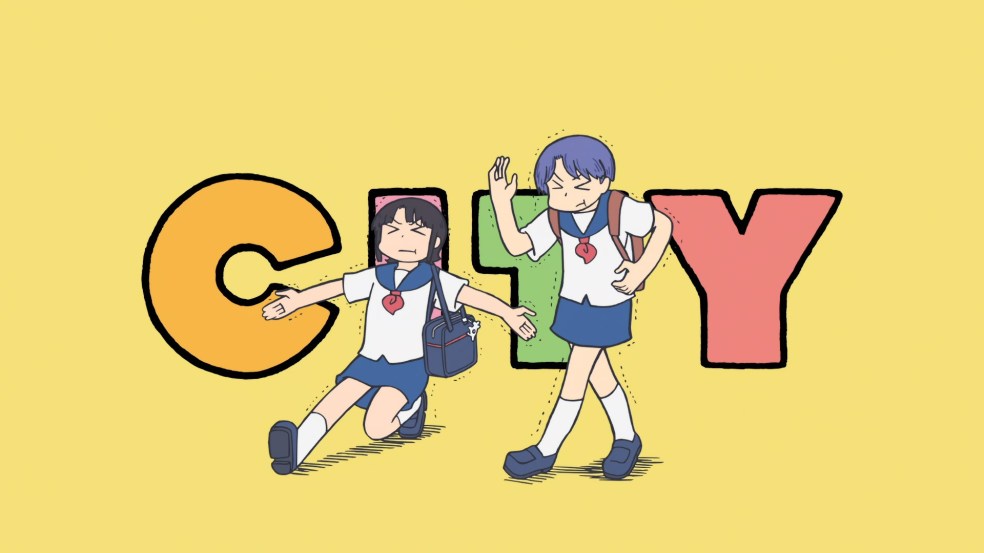


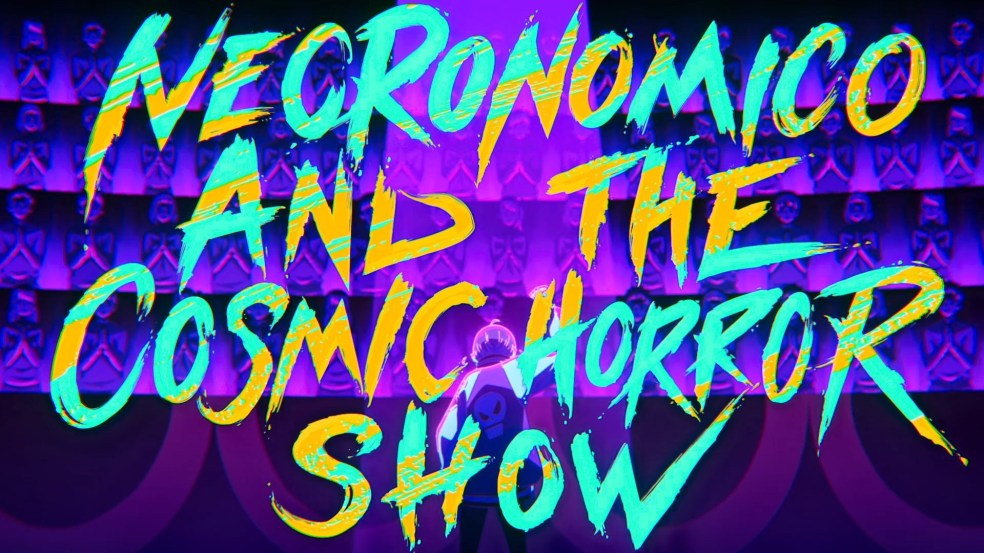




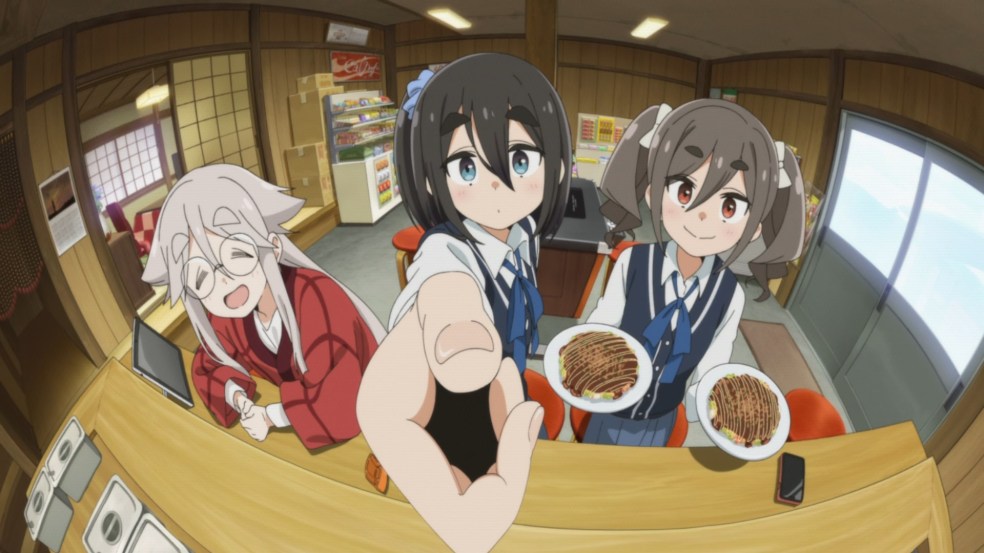


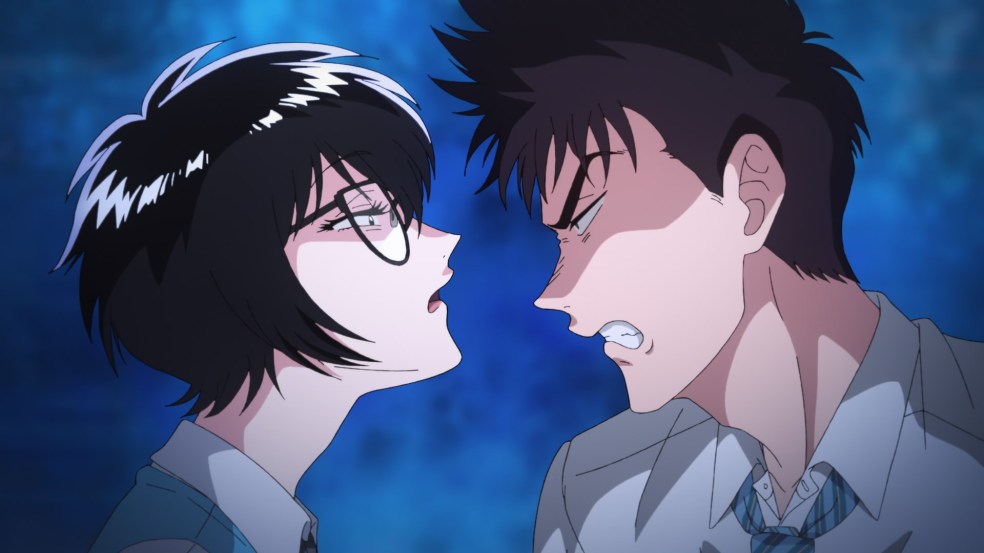




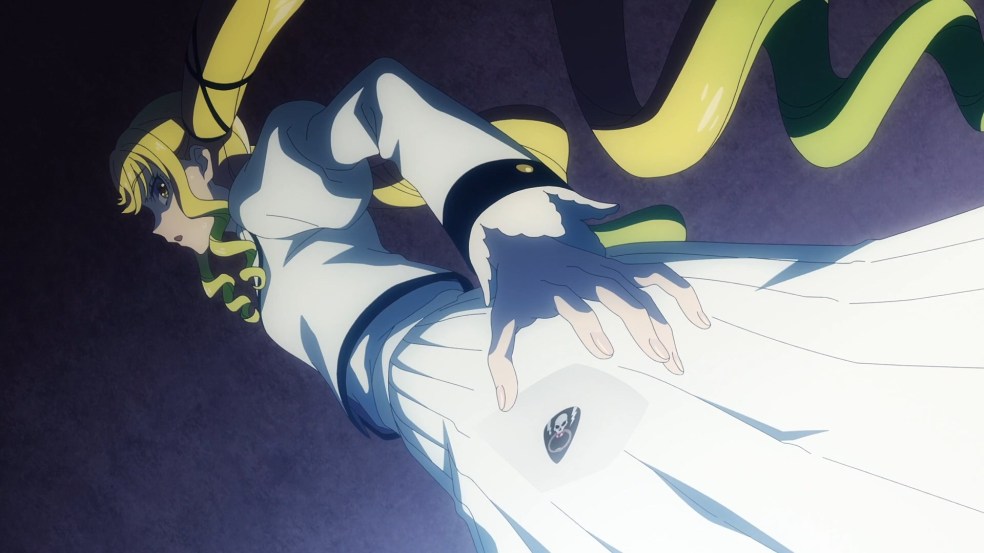




 The Magic Planet