Seasonal First Impressions is a column where I detail my thoughts, however brief or long, about a currently-airing anime’s first episode or so.
“Until the day that beautiful monster grants my wish with her own two hands….”
The first thing is the pacing, and the second is the sound design. I’m late to this one, I know, but upon watching the first two episodes of This Monster Wants To Eat Me, the latest in a growing number of decent-to-great yuri adaptations from up and down this year, those were the two elements that stuck out to me the most. Normally, when one brings up an anime’s pacing, it’s to complain. It is all too easy to fuck up the sequencing of events when adapting a manga to animation; by rearranging them illogically, by sticking so close to the source material that you sap the life out of the thing (the more common of those two scenarios these days), or simply by pacing them wrong. Events that are snappy on paper aren’t necessarily so in motion, timing is a key consideration when it comes to picking an approach for adapting this material.
Keep all this in mind as I say, usually, when an anime feels slow, that’s said as a bad thing. Especially if it was based on a manga. Watatabe—as This Monster is more commonly known—proves that it’s not necessarily so. This is an anime that creeps, lurches, and crawls. What it lacks in traditional production polish it more than compensates with in deploying its sense of timing and its audio to create atmosphere. Despite being set in the dead of summer, this is an anime that most makes sense as a Fall series. Mermaids should get to trick or treat, too.
As for what this is all actually about? Well, our main character, Hinako [Ueda Reina], is depressed. We don’t have the details yet, but it seems that she lost her family to some tragic accident some time ago. She wants to die, but she either doesn’t want to or can’t bring herself to end her own life, so she spends a lot of time gazing into the sea and waiting for her time to come. Early in the first episode she runs into a mysterious girl, Shiori [Ishikawa Yui], who warns her that leaning over the railing by the coast isn’t safe. She could fall in, after all! Nonetheless, when she returns to the same spot to do more or less exactly that later that day, strands of thick, dark hair creep out of the water like animate seaweed. Our heroine is thus attacked by an iso-onna, who drags her into the water to consume her.
In its way, this isn’t so bad, Hinako thinks. Sure, it was out of the blue, but this is what she’s been looking for, isn’t it? And nothing, not even the attempts of her best friend (the rowdy Yashiro Miko, played by Fairouz Ai), has really helped. But, in an even more surprising turn of events, the girl from earlier intervenes, sprouting fishscales and a long, sickle-wicked claw to drive the water ghost away.
This isn’t anything as simple as a rescue, though. Shiori wants to eat Hinako, too. She’s just not quite tender enough, yet. So begins a particular flavor of twisted love story.
These first two episodes, especially the second, largely take us through the paces of Hinako’s daily life, and how it changes in the presence of Shiori. Hinako technically never straight up says she’s infatuated with Shiori, but lines like the one quoted at the top of this article make it pretty clear how she feels. The dynamic Watatabe is building here is an interesting one. Hinako wants Shiori to kill and eat her. Shiori is explicitly interested in keeping Hinako alive until her flavor reaches its peak. She explicitly compares Hinako to livestock, in fact.
The important bit here is that Shiori is going to eat her eventually, but not right now. This actually bothers Hinako, not because she’s afraid or repulsed, but because if she’s going to be eaten she’d really rather it be soon. Despite the grim tone and the slow, creaking nature of the storytelling, there’s also an almost bratty overtone to the whole thing, as though Hinako is a needy submissive and Shiori, her domme, is teasingly avoiding giving her what she wants most.
This is, of course, the point. Watatabe’s premise is a take on the whole “domestic girlfriend” fantasy—found more often in heteroromantic romance manga, but it can be seen in yuri as well—wherein a depressed character is lifted to life and warmth by someone who insists on taking care of them. (There is in fact an entire style of romance manga and light novels built on this premise. If you’ve ever seen anything tagged “Rehabilitation” on Anilist or MyAnimeList, that’s what that means.) The roles of the nurturer and romantic partner are rolled into one in these scenarios, and Watatabe‘s playful skewering of them involves giving the caretaker/partner character an explicitly malicious overtone. Remember, within the world of the story itself this isn’t actually a metaphor: Shiori literally wants to kill Hinako and eat her, head to toe. But Hinako, depressed and longing to be reunited with her family, either figuratively in death or literally in the hereafter, is fine with that, and in fact wants that. In its way, Watatabe‘s story is quite a wicked little thing.
I don’t think it would work nearly so well without the audio component. The music here is straightforward but devastatingly effective, an arsenal of simple piano and string pieces that hammer home the oppressive summer that Hinako has been living for so long, and remind us that there is a final, sharp end to her relationship with Shiori. The voice acting here is excellent, too. Ishikawa Yui lends a breathy, ethereal tone to Shiori that really sells the idea of her as some otherworldly creature. She can also make Shiori sound forceful, which is helpful when the character needs to project ferocity (as at the end of the first episode), or make clear to Hinako that she doesn’t get to make all of her own decisions anymore (as at the end of the second). Ueda Reina makes Hinako sound exactly the right amount of withdrawn and closed-off. For an example, visually speaking, her daydreams about ocean life intruding into her everyday existence are reasonably effective but hardly flashy. It’s really the flat, deep-sighing tone of voice Ueda brings to the role that ties it all together.
Having the aural advantage is good. The elephant in the room here is that the show doesn’t look fantastic. It doesn’t look bad, I wouldn’t say—although its frequent use of frame-blending pushes things—but it’s definitely a shoestring production and looks the part, and doesn’t hit the visual heights of, say, the best episodes of the similarly-abbreviated Watanare. (Although that had its lesser moments, too.) Similarly, the actual shot composition is effective but largely unspectacular except for a few particularly striking moments. None of this is all that surprising for a low-resource anime at this stage in the medium’s history, but it is at least worth knowing going into it, and if it pushes people toward the manga instead, I don’t think that’s necessarily such a bad thing, even if they are missing out on the lovely sound design here. It is, in any case, a minor weakness. Or at least it is if I’m the one being asked.
The second episode ends set against the interesting love triangle building between Hinako, Shiori, and Miko, who spends much of the episode being jealous of the mysterious relationship that Hinako and Shiori seem to have suddenly developed.
She, in fact, asks Hinako to a festival. Hinako turns her down—it would seem that the accident that caused the deaths of her family is somehow related to this very same festival—but Shiori, not content to let her prized pig simply sit and girlrot, forces her to go. We don’t know how that’s going to work out for either of them, yet. (Or for Miko, for that matter.) But I certainly plan on tuning in to find out.
Like what you’re reading? Consider following Magic Planet Anime to get notified when new articles go live.If you’d like to talk to other Magic Planet Anime readers, consider joining my Discord server! Also consider following me on Anilist, BlueSky, or Tumblrand supporting me on Ko-Fi. If you want to read more of my work, consider heading over to the Directoryto browse by category.
All views expressed on Magic Planet Anime are solely my own opinions and conclusions and should not be taken to reflect the opinions of any other persons, groups, or organizations. All text is manually typed and edited, and no machine learning or other automatic tools are used in the creation of Magic Planet Anime articles, with the exception of a basic spellchecker. However, some articles may have additional tags placed by WordPress. All text, excepting direct quotations, is owned by Magic Planet Anime. Do not duplicate without permission. All images are owned by their original copyright holders.
Let’s Watch is a weekly recap column where I follow an anime for the course of its entire runtime.
For the Cinderella Gray column, new installments will be posted either on the Sunday each episode airs, or as soon as possible over the succeeding week. Expect spoilers!
Cinderella Gray can be watched, legally and for free, on It’s Anime By REMOW on Youtube. A link is provided below for your convenience.
Oguri Cap faced her first major defeat on the race track at the hands of her rival Tamamo Cross in the finale of Cinderella Gray‘s first cour back in late June. Since then, the world has appreciably changed for Umamusume as a series. Perhaps most notably, the Global (read: English-language) version of the mobile game this is all meant to promote finally launched, and I know for a fact I was hardly the only person there on launch day to redeem my 3* voucher to get Oguri herself. This is relevant because, due to the game’s success, there is a very real possibility that this column going forward will have a much larger potential audience than it did back in Part 1. To that end, I’m gonna go ahead and say that if you’re not caught up with these columns, I, a completely unbiased source, think they’re pretty worth reading, and you can do so here. Also, welcome aboard.
I’ve also read the manga, or at least, what exists of the manga fan translated into English. I won’t spoil any twists before they come, but it has given me the confidence to say that Cinderella Gray not only remains as good a powerful sports shonen narrative as it was in the first cour, but it actually gets even better over time, right up to the present. There are stories I can’t wait to share with you all, and characters I can’t wait for you to meet. But we’ll get to those as they happen.
What’s not a spoiler, or indeed a surprise to anyone who’s been watching the trailers ReMOW has been putting up, is that this upcoming arc focuses on the Japan Cup, a prestigious international race that will see Oguri and some of her domestic rivals compete against umamusume from all over the globe. That Cinderella Gray returns today, on the day of the Prix de l’Arc de Triomphe—a different prestigious international horse race that Umamusume as a series is somewhat obsessed with (it was a plot point in Umamusume‘s third season, in fact. This despite the fact that a Japanese horse has never won it)—feels significant.
Interestingly though, that’s not where Part 2 starts. Instead, it makes the rather interesting decision to adapt the one-off spinoff The Mermaid Left Behind. What this means is that rather than diving straight into the Japan Cup stuff—what all of Part 2’s trailers were about, mind you—we instead return to the setting of the first half of Part 1, Kasamatsu, and the first story of the second cour is not about any of Oguri’s current rivals, but her first: Fujimasa March.
As Umamusume goes, what unfolds here is a pretty simple tale of rivals whose emotional bonds are unaffected by the physical distance between them. March is fresh off a haircut and a major loss at the Tokai Derby. We saw her conversation with Oguri Cap back in episode ten, where it seemed to reignite her competitive fire and give her renewed confidence to try again.
Yamano Thousand, the umamusume that March actually lost to in the Tokai Derby, does not see things that way.
Thousand is offended that March keeps trying to chase after someone who isn’t even here, and accuses her of running after ghosts. (She also insults the Norn Ace / Mini the Lady / Rudy Lemono trio by calling them Oguri’s “groupies”, which is admittedly pretty funny.) But if this seriously shakes March in any way, we don’t see it. It’s Mini, funny enough, who assesses Thousand accurately; her bark is worse than her bite, and her end closer strategy is a poor fit for a track with corners as tight as the ones here. In the end, March’s renewed passion perhaps as much as any strategic consideration lets her win handily, and she explains to Thousand—and implicitly to us as well—that she’s not chasing Oguri’s ghost. She’s chasing the real thing. This is the same March who first lit Oguri Cap’s competitive fire, and Thousand failing to understand that the glint in her eye and the blush on her cheeks are both because of Oguri Cap is part of why she loses. I don’t believe we’ll get another check-in on Fujimasa March like this, so this episode is, in a way, a nice sendoff to a Oguri’s first rival. A promise that her story is still being written, somewhere just out of view.1
The second half of the episode returns us to Tokyo. It largely focuses on Oguri’s national rivals but, once again, opts to refocus on who we already know instead of rushing headlong into introducing new characters. Most of these little vignettes focus on the umamusume preparing for their next race. For Oguri, that’s the Japan Cup that’s the center of this arc. Some of her rivals will be there too, but others, such as Dicta Striker [Hanamori Yumiri] have different aims. The latter in particular leads to a very charming scene where Striker attempts to do the old “intimidating rival challenging the protagonist on a level playing field” bit, talking about how she wants to hand Oguri her second loss in the Mile Championship, only for Oguri to promptly explain that she isn’t actually running in that. (She’s tailing Tamamo Cross, of course: the Japan Cup and the Arima Kinen, best known to players of the Umamusume game as where careers go to die, are her next two destinations.)
If there’s a unifying theme here, it’s that Oguri Cap and Tamamo Cross’ showdown has inspired everyone with an eye on the scene, from Oguri’s hometown friends to her rivals in the nationals, to greater heights. Even Sakura Chiyono O, the actual winner of the Japanese Derby that really was haunted by the ghost of the missing Oguri Cap, gets a scene here to show off that she’s not resting on her laurels. Nor is Yaeno Muteki, another of Oguri’s rivals and a perpetual underdog. Dicta Striker will get to run against her eventually, as well: she’s aiming for the Arima Kinen, too.
This even applies to Oguri herself to some extent, as Fujimasa March looks toward her, so does Oguri look toward Tamamo Cross. Each serves as the proverbial new peak to climb for the previous racer. (We must naturally assume that there is, thus, also some fresh-faced new student at Kasamatsu who thinks of Fujimasa March as an ideal to aspire to.)
All told, this is an odd and transitional episode and, generally speaking, a bit of a strange choice for Cinderella Gray‘s triumphant return. Still, it’s nice to see Fujimarch again, and the strong thematic throughline makes it make emotional sense as a returning point. Plus, the few crumbs we get here are going to feed March x Oguri fans for the next several months, so it certainly isn’t a bad episode by any means. It’s hard to deny though that the real lightning-in-a-bottle moments from this arc are very much still ahead of us. Part 2 is short—just ten episodes as opposed to the thirteen of the first cour—so I imagine we’re going to be getting into the main body of the arc relatively soon, within a couple episodes at most. We’ll see what that looks like in the weeks ahead.
1: Interestingly, March’s race against Thousand is also done in full racing silks. This goes against the series’ usual conventions as I understand them, where only national G1s are run in silks. Still, I’m not going to complain. March’s snazzy blue outfit is lovely.
Like what you’re reading? Consider following Magic Planet Anime to get notified when new articles go live.If you’d like to talk to other Magic Planet Anime readers, consider joining my Discord server! Also consider following me on Anilist, BlueSky, or Tumblrand supporting me on Ko-Fi. If you want to read more of my work, consider heading over to the Directoryto browse by category.
All views expressed on Magic Planet Anime are solely my own opinions and conclusions and should not be taken to reflect the opinions of any other persons, groups, or organizations. All text is manually typed and edited, and no machine learning or other automatic tools are used in the creation of Magic Planet Anime articles, with the exception of a basic spellchecker. However, some articles may have additional tags placed by WordPress. All text, excepting direct quotations, is owned by Magic Planet Anime. Do not duplicate without permission. All images are owned by their original copyright holders.
Seasonal First Impressions is a column where I detail my thoughts, however brief or long, about a currently-airing anime’s first episode or so.
Yoshida Kiyoko has a crush. Kiyoko [Nukui Yuka], a friendly, kind, and if we’re being honest, slightly dim high school girl finds herself seated next to Yano Tsuyoshi [Amasaki Kouhei] at the start of the school year. Yano, himself friendly, kind and a bit dim, is also horrifically accident-prone, getting knocked with all sorts of bumps, bruises, breaks, and other injuries. This is, naturally, played totally for laughs.
Yes, in a world full of girl-with-a-gimmick romcoms—a subgenre I’ve covered extensively in these seasonal premiere columns, ranging as they do from the good, to the merely okay to the confounding—Yano-kun is a boy-with-a-gimmick romcom. I’m not going to go so far as to say that merely switching the usual genders makes some huge difference—if this show didn’t have the fundamentals nailed down it’d be as tedious as any lesser example of this style—but it’s refreshing in its own right. That the show is actually pretty good makes this a quietly charming early seasonal highlight.
I’d pitch the series this way: if you’re the sort of person who enjoys screencapping characters making gag faces or doing silly things, likes lines written with the kind of amusingly clever dumb-ness that you can only get from someone with a keen eye for character, and generally pointing at your favorite and sarcastically asking “are they stupid?” (the answer is always yes), you’ll probably get a kick out of Yano-kun. If you don’t, you probably won’t. It really is that simple, and so in a sense, there’s not much more to say. Especially in terms of what passes for a plot here. Yano is seated next to Kiyoko and it really only takes a few days of worrying about him and his endless parade of injuries for Kiyoko to realize she’s got it bad for the boy. So invigorated, she and her friend Mei [Tanezaki Atsumi, doing what’s essentially a slightly higher-pitched take on her Frieren voice] brainstorm ideas as to how to get the two closer together.
This leads to a few amusing hijinks on its own, but it turns out that they needn’t have bothered. The final stretch of the episode sees a horribly worried Kiyoko run to the hospital after finding out that Yano’s been hit by a truck. It turns out this isn’t actually what happened, and he’s fine (or at least as fine as Yano ever is). But it leads to a sweet, short scene where Kiyoko asks if there’s anything she can do for Yano, offering to treat his injuries when they happen while she’s around (a small medical bag she carries as the result of being an older sister comes into play here), and Yano, touched, responds that he just wants to live an ordinary high school life. Roll credits, simple and sweet.
A premise this bone-simple is always going to come off a slightly corny to a certain kind of person. Honestly it is slightly corny, but it’s also very sweet, and the overall light and fluffy tone presents it from feeling cloying or overbearing. Many of the show’s best moments are in little details that are tough to nail down outside of their home medium. In addition to just generally having a very pleasant art style, Yano-kun frequently deploys a further simplified one for straightforward reaction shots.
There’s nothing technically crazy going on here, but they’re incredibly endearing, and, as the friend I was watching the premiere with (hi Josh) pointed out, they give Kiyoko a tiny dash of Bocchi-ness that makes her even more likable. Tied together with the gentle, flat coloring of the art style, and rookie director Matsuo Shinpei‘s team at Ajiado capably translating mangaka Tamura Yui‘s realistic character designs into something slightly more stylized, Yano-kun is, overall, filled with the exact kind of easygoing warmth you’d want out of something like this. If you’re looking for a simple romcom anime to round out your Fall season, consider this one an easy recommendation.
Like what you’re reading? Consider following Magic Planet Anime to get notified when new articles go live.If you’d like to talk to other Magic Planet Anime readers, consider joining my Discord server! Also consider following me on Anilist, BlueSky, or Tumblrand supporting me on Ko-Fi. If you want to read more of my work, consider heading over to the Directoryto browse by category.
All views expressed on Magic Planet Anime are solely my own opinions and conclusions and should not be taken to reflect the opinions of any other persons, groups, or organizations. All text is manually typed and edited, and no machine learning or other automatic tools are used in the creation of Magic Planet Anime articles, with the exception of a basic spellchecker. However, some articles may have additional tags placed by WordPress. All text, excepting direct quotations, is owned by Magic Planet Anime. Do not duplicate without permission. All images are owned by their original copyright holders.
Seasonal First Impressions is a column where I detail my thoughts, however brief or long, about a currently-airing anime’s first episode or so.
Another season, another isekai thing that starts like a week before every other premiere. I’m not hating, TV anime being what it is, you have to pull out every trick you can think of to get your foot in the door, and sometimes that just means having it there before anybody else. (We’re conveniently ignoring several other anime that have already premiered, which I either did not watch or did watch but had nothing to say about. Still, the general point stands.)
You can glean a lot of what you need to know about A Wild Last Boss Appeared! from its title alone. If it’s bringing to mind images of overpowered protagonists staring at stat screens then, yeah, congratulations, you’ve figured the show’s general deal out pretty well. What is less apparent from a cursory look is that the series does boast a few distinguishing characteristics. First of all, our protagonist was a man in the real world but, upon being isekai’d into his favorite fantasy MMO, Exgate Online, inhabits the body of his female player character Lufas [Koshimizu Ami], a ludicrously-powerful winged person who, among other things, united the entire game world under her banner as a domineering queen before being killed by a party of heroes in a thrilling, violent opening fight scene. The heroes were, of course, other players. (The kind of stuff you can do in an imaginary MMO vs. a real one is truly mindboggling.)
The gender stuff is noteworthy but not entirely out of place, as there have been several “I was a boring, ugly guy on Earth but in the isekai world I’ve been turned into a totally hot babe with a great rack and magical powers” isekai over the past several years. Nonetheless, it’s still a lot rarer than the usual main character these sorts of things have, which remains “just some guy.” Lufas has a solid character design, too, with gigantic black angel wings and a cool red-and-gold outfit that makes her look appropriately regal. Characters like this tend to inspire a lot of hay-making in certain social media circles about whether they “count” as transgender. I have never managed to muster up a strong opinion on this subject in the broad sense despite being a trans woman myself, but, in this case it’s worth noting that Lufas gets over the shock of her transformation extremely quickly. So, if you’re trans and want to project onto her, I’m sure as hell not going to try to stop you.
It’s a magic HRT glowup anyone would envy, honestly. Where are my black angel wings, medical science?
Second and perhaps more important to the success of a show in this genre, Last Boss has a fair amount of production polish. It comes to us from a new-ish but definitely not rookie director, Horiuchi Yuuya, whose prior two directorial credits were on the two seasons of NIJIYON ANIMATION, a chibi spinoff of Love Live Nijigasaki High School Idol Club, which he also served as the assistant director on the second season of. (His team are under WAO World, a studio who have a few sparse credits under their belt since the start of the decade but were responsible for Anime-Gataris back in 2017. That’s barely relevant to this piece, but you better damn well believe that if I can connect Anime-Gataris to a column I’m writing I’m going to do it. Watch Anime-Gataris.) This is all, in any case, basically the long way around of saying that the fight scenes that bookend the episode look good, although in the latter case it might be more appropriate to call it a full-on slaughter scene. (That’s not a compliment. We’ll get to it.) There are also some striking shots in the middle, particularly when Lufas, newly summoned 200 years after her defeat, returns to her old base, a massive tower decked with stained glass windows.
All told, the show looks good enough that, if you were just looking at stills, you might be able to convince yourself it was compellingly-written, too. Anime is after all a visual medium, so if something is strikingly directed and animated, it’s halfway there, right? Arguably more than halfway.
Sadly, this isn’t entirely the case. For one thing, Last Boss falls into the same trap as essentially every other “totally OP protagonist” isekai, which is that if the character is monstrously strong, we already know who’s going to win every conflict, and thus, there aren’t really any stakes to, at least, any physical confrontation. What saves the script from being a total wash is that Lufas does actually have some genuine charisma and dignity. Koshimizu Ami’s performance does a lot to uplift the broad writing of the character in this first episode. She’s commanding and has gravitas, and sitting alone in her all-but-abandoned fortress, you can, briefly, see her how the people of this world might see her. Regal, with a quietly crackling power just waiting to be unleashed.
This itself is, unfortunately, undercut by her interior monologue, which seems to switch between Koshimizu’s narration for Lufas herself and Horie Shun‘s interior speech for Minamijuuji Sei, the #epic #gamer who was Lufas’ real-world player, and whose narration’s generally goofy tone and loose fourth-wall jabbing jibes very badly with the rest of the narrative. The very first scene after Lufas is resurrected actually seems to imply that these are two separate characters somehow, and they seem to briefly be in conflict as Sei struggles to communicate to his summoners in a non-domineering fashion, but after turning off some passive skill or another on Lufas, this problem is immediately overcome and the now seemingly just-one-person Lufas flies off, free.
On its own, this would be easy enough to overlook, but this paper tiger problem of setting up some kind of conflict, only for the main character to interface with a poorly-defined Skill (in the video game / D&D sense) of some kind and then resolve it immediately is illustrative not just of the flaws in Last Boss‘s first episode, but of those in this genre in general. No matter how many times I see a show do this, I am always going to have this base-level negative reaction to it. It’s just no fun to watch.
Handled a little better is Lufas’ relationship with Dina [Usui Yuri, in what seems to be her debut role as a major character]. In the actual MMO, Dina was quite literally just a prop, an NPC that Sei plunked down for decoration in his base and never gave much thought beyond this. But, seemingly because he gave her a loose backstory, Dina is recontextualized in the world of Exgate as Lufas’ advisor, a trusted confidant who is overjoyed to see her ruler once again. It’s nothing terribly complex, but that she has an attachment to Lufas beyond fearing her is a massive step up from essentially every other character in this episode. This is vaguely reminiscent of the whole Machina / Veltol dynamic in Demon Lord 2099, although I’m sure there are other examples across the genre as well.
Other than this, Dina’s ultimately also a fairly basic character, at least in this first episode. The second half of it consists of Lufas taking up adventuring odd jobs. (Because she needs money, because it’s been 200 years since she ruled anything and the coffers Dina was watching over are empty.) Upon entering a tavern, Lufas and Dina take a gander at a quest board, and, ultimately, Lufas decides to do what she does best. Thus, the last few minutes of Last Boss‘s first episode are dedicated to adding to the growing number of anime scenes that just consist of a character brutally slaughtering orcs, goblins, demons, or whatever particular humanoid bugbear the writer has decided are not worth consideration except as cannon fodder.
Sigh.
Look, the fraught-ness of orcs is a well-trod topic and I’ve gone into it and similar things myself on this blog before, so we’ll skip past that for the time being. The problem here is that orcs just aren’t interesting opponents. I have no problem fighting them in a video game, but in an anime, which I am watching and not playing, I want some visual panache to the bad guys at the very least. Not helping matters is that Lufas, upon goring a bunch of them by summoning a huge cluster of glowing swords, feels the need to remark that doing so does not disturb her. Mere seconds after wondering in her mind whether she actually has the stomach to do this. Once again, problem raised and immediately surmounted: can Lufas bring herself to kill living, thinking creatures? Sure seems like it! What a boring thing to write.
Generously, you could say that Lufas’ lack of a reaction is the result of Sei more fully merging with his character, that her mentality has begun to override his. Mostly though, it just feels handwavey. I don’t expect a show like this to get into the ramifications of how it feels to take another life, or what it means for a species to essentially be born evil, a point of view Dina outright reinforces—this, after all, is quite literally the old Tolkien-derived Problem With Orcs, it’s not like this convention is Last Boss‘s fault—but I don’t think it’s too much to ask that, either, the series just not bring this kind of stuff up in the first place, or, if it’s going to do so, actually explore it in some depth rather than just dismiss it out of hand. It is of course possible it will return to these ideas later and actually grapple with them in some way, but if I’m honest, I kind of doubt it.
The word I’ve been dancing around this entire column is “edgy.” It’s very passé, and ironically, kind of childish, to dismiss something out of hand for being edgy. If Last Boss wants to have its protagonist aura farm by slaughtering a bunch of monsters, I’m not going to tell it that it can’t do that. (Aura farming is great, and gets a bad rep.) But there needs to be some craft to this stuff, and while Lufas ruthlessly slaughtering the orcs is definitely striking and well-animated, it’s not actually interesting. They’re not dragons, they’re not sinister-looking demonic beasts. They’re just orcs like you’d find in any other fantasy series. She says herself that she’s not even expending a modicum of effort. Everything interesting about the scene is in spite of the fact that they’re orcs. Why are we going through such lengths to portray the equivalent of killing Level 1 Rats like this? There’s just a mismatch in what’s actually happening and how impressed the show wants you to be. This does not warrant this treatment! Yeah, this is a brilliant and creative way to show the disparity in power that the orc feels as Lufas kills them, but why, if orcs are just brutish pests worth no further consideration, should I care how an orc feels in the first place?
Combined with the fact that a different significant chunk of the episode is taken up by just straight-up exposition about the game systems of Exgate, this all adds up to a first episode that is fun in spots but, overall, is mostly dry and, for something that looks this good, surprisingly boring.
In the end then, I think whether Last Boss can manage to wring a compelling narrative out of its setup is going to boil down to whether or not it’s willing to let Lufas actually struggle a bit. This doesn’t have to be in terms of combat, it could be anything. Just, some way in which she’s not solving every problem the minute it happens. There are some seeds of a longer-term plot in here! Mentions of some of Lufas’ old comrades defecting to the army of the mysterious Devil King, a figure she seems to regard with complete contempt, are something to grasp onto. So I’m not going to dismiss this series out of hand and say that this can’t work as an idea. It clearly can! It does in the show’s opening minutes! It just needs to commit to some actual narrative buildup. The question of course is if it can actually do that. And I do want it to! Fall is looking like a pretty barren season as far as new anime go, I only have three other anime on my personal shortlist, and one of them is a sequel. So I have every reason to want Last Boss to succeed here, but admittedly, I’m keeping my expectations tempered.
Like what you’re reading? Consider following Magic Planet Anime to get notified when new articles go live.If you’d like to talk to other Magic Planet Anime readers, consider joining my Discord server! Also consider following me on Anilist, BlueSky, or Tumblrand supporting me on Ko-Fi. If you want to read more of my work, consider heading over to the Directoryto browse by category.
All views expressed on Magic Planet Anime are solely my own opinions and conclusions and should not be taken to reflect the opinions of any other persons, groups, or organizations. All text is manually typed and edited, and no machine learning or other automatic tools are used in the creation of Magic Planet Anime articles, with the exception of a basic spellchecker. However, some articles may have additional tags placed by WordPress. All text, excepting direct quotations, is owned by Magic Planet Anime. Do not duplicate without permission. All images are owned by their original copyright holders.
Seasonal First Impressions is a column where I detail my thoughts, however brief or long, about a currently-airing anime’s first episode or so.
You know how this goes. This time I’m also doing some writeups on sequels for shows I’ve previously covered here on MPA. Other than that, business as usual for one of these roundup posts.
Gachiakuta: A new shonen series, and an alright one overall so far, I think. It’s very edgy, and the social commentary is so heavy handed you can physically feel it while watching. But, I think this is if some teenager’s first exposure to a story that explores class dynamics that’s cool. Personally I think I am maybe a bit too old for this (a feeling I do not have with better shonen anime despite that still being kinda objectively true with those as well) but I’ll give it another episode, it may win me over.
Hell Teacher: Jigoku Sensei Nube: The problem I always have with anime remakes, and I have them even—maybe especially—when I haven’t seen the original, is that I’d usually rather watch the original, because you can often tell that they’re trying very hard to translate the OG’s style into the current anime landscape. The end result here is an anime that has a bunch of faux-90s affectations despite everything about the show screaming 2025 in terms of direction and animation.
I didn’t think this was bad by any means, and I actually liked the action sequence toward the end of the first episode quite a bit, but I feel like it’s more likely that the rest of the show will look more like the first half of the episode; a parade of pretty lifeless classrooms and just general visual flatness. I’m not sure what to think of it overall beyond wondering if this really does much of anything for anyone. I enjoy shows with this sort of premise, but wouldn’t it have been better to come up with something new instead of just rehashing an IP from 30 years ago? Granted, I get the business reasons for doing this—teenagers who grew up watching the original are in their 40s now and are prime nostalgia market targets—but that doesn’t dampen that the entire endeavor feels rather cynical.
Hotel Inhumans: In a world with seemingly about a thousand replacement-level narou-kei per season (look a few spots below for one of them), it’s really reassuring that something can occasionally step up and show them that it’s possible to suck in interesting, standout ways. Marvel at the unambitious direction and storyboarding, stand in awe at the all-suggestions, incredibly broad writing. Wince at the frightfully generic character designs. Listen to the soothing sound of the hilariously bad music placement. They just do not make many anime that are this hilariously incompetent anymore. If Hotel Inhumans has a selling point, it’s as a throwback to the way bad anime used to be bad 20 years ago, which is only a shame because the core conceit is interesting enough that I imagine the manga this is based on might actually be good. Still, if that appeals to you, then by all means, load it up.
Milky☆Subway: The Galactic Limited Express: A friend1 put me onto this one, and I’m quite glad they did. In overall vibe Milky Subway has a lot more common with other web cartoons I’ve seen than most anime per se, but that’s fine. You’ve got a thing here that takes place in some kind of wacky far-future sci fi setting where there are physical highways and train lines linking different planets. Our two leads are a pair of I’m just gonna say girlfriends, respectively a robot and a demon, who in the short that serves as a setup for this series (“Milky Highway”) get arrested for speeding after they get too into a retro pop song that comes over their car radio.
The action is very fun and snappy and I enjoy the first short a good bit for that reason. The second sees them being press-ganged into community service, to clean a bunch of subway cars. Somehow, this ends up with the robot getting decapitated, although I can’t imagine she’s actually dead-dead given the largely upbeat and comedic nature of these shorts. The proper series (which is what Milky Subway is) will, I suspect, be a how-we-got-here leaning up to that sequence of events.
All told, it’s pretty fun. The setting is really unique and the art is quite fun. The voice acting is also excellent, it has a conversational, casual fuck-around vibe especially in the quieter scenes, and you get the sense that everyone here—including the officer overseeing the other characters’ community service—is in way over their heads. Also the look of the show is Interesting. I’d again compare the art, which is full-3D CGI, reminds me more of, I suppose, Amazing Digital Circus or something? Hardly the best comparison but it’s where my mind went. Overall, this is a very unique little thing. The only “complaint” I have is just that with only 4ish minutes per episode it’s a bit on the slight side, but that’s pretty minor overall. Even then, that’s a benefit, too, since their being so short means they’re very easy to recommend.
KAMITSUBAKI CITY UNDER CONSTRUCTION: I have been a fan, admittedly an off and on one, of v-idol group The Virtual Witch Phenomenon for a few years now, so I was pretty excited when they got their own anime announced. Having since watched the first episode (or technically “zeroeth” episode. Remember that convention? Not the only late-00s/early-10s thing about this show), and indeed the second, since I first wrote the version of this that’s going up on tumblr, I’m pretty baffled by the whole thing.
Despite what one might expect, given that this is being helmed by Ave Mujica director Kakimoto Koudai this isn’t really a music anime in the conventional sense. It’s more of a Madoka Magica / Yuki Yuna / etc. kind of thing. A grisly, dark magical girl series of a sort that was more popular about a decade ago. It stars the V.W.P. playing characters loosely based on themselves. KAF plays Kafu, the main character, which makes sense given that she’s the group’s center. She acquits herself decently as a voice actress, although I imagine most of her sung material (this is also a musical? Sort of?) being in her very high, whispery and peaky register might be a bit of a divisive element for some. (Personally, I’m fond of it, but I could imagine someone not being so.) Despite this, the music is the inarguable highlight here. Everything else is a lot more scattershot.
Visually the show is….okay? Not great. My main complaint is the rigging. This is a 3D series and in slower and more emotional moments the model work is pretty stiff, which is unfortunate. The other aspects of the visuals, especially the use of color and lighting, mostly mask it, but it’s occasionally noticeable. The action scenes are probably the visual highlight, and there are solid setpieces in both episodes to date, but that’s only one element of what the series is trying to do.
My main issue is just that both episodes are incredibly exposition-heavy but manage to be very low on context or stakes in spite of that. Of all things, a giant fish (originally from the “Eat The Past” music video, I think? Admittedly hardly the only music video it’s been in) is a main character, and can also turn into a cute anime boy, Laplace [Sakura Ayane]. He more or less serves as Kafu’s magical girl companion. That’s all well and good, but the premiere just stops dead after its first action sequence so he and a weird bird thing he summons can explain how the setting’s magic works in detail, which is pointless of course, because it’s all technobabble anyway and mostly boils down to “Kafu’s singing makes people feel things and therefore is magical.” In general there’s just a lot of talking, and it’s all a bit much. There are also two time skips by my count in the first episode alone, although the framing of these scenes makes whether they’re actually timeskips or not a little unclear at first, so the series just feels generally very bogged-down and disjointed, with an overall poor command of the basics of visual storytelling.
Initially, I was unwilling to write the show off, but having now seen the second episode, I think I’ll be steering people away from it, as the second episode is unfortunately more of the same. It’s cool that Kafu and the other girls are basically a magical girl Justice League now, I suppose, but the fact that all of the fighting is left to their companions makes this feel pretty hollow. (It’s not just Kafu, all of the VWP girls have a cute anime boy that doubles as an animal summon / stand / whatever. This not only doubles the size of the cast, it also makes the girls themselves, the ostensible focus of this whole series, feel pretty superfluous even if their magical singing is also nominally important.) In general, there’s just a deep incoherence here. A user on this site’s Discord server said Kamitsubaki City “radiates mixed media energy,” and I can only echo their sentiments. I’m not opposed to the format in general (two of my favorite anime this year, Ave Mujica and Cinderella Gray, are part of large multimedia franchises), but this is an example of the form being done pretty poorly. I like the big hat that Sekai [Isekai Joucho‘s character] has. Other than that, unless you’re truly starved for current magical girl-esque anime (and I’m weighing as I write this whether that describes me or not), you can give this one a pass. This entry probably could’ve been its own article. Oh well!
Onmyo Kaiten Re:Birth Verse: Sometimes I like to describe the premise of a series when starting one of these, but that’s difficult here because I barely have a handle on what that premise is. Very basically, it seems like our protagonist got Vision of Escaflowne’d at some point before the start of the series, but then he got sent back to his own world (implicitly our world), and then, not ten minutes into the first episode, he gets isekai’d yet again. He notes that this his 2000th time, so clearly the sheer amount of times he’s been through this is something we’re supposed to pick up on.
But he seems impossibly ignorant about the general mechanisms of this “ability” of his (if it’s indeed even something intrinsic to him at all), and doubly so about the world he ends up in, which is a blend of Heian-era Japanese aesthetics and mecha sci-fi. Twice in the same episode, he encounters “the mist,” black fog that summons monsters and freezes innocent townsfolk in their place. The second time, he turns into a black and blue tiger-oni-monster-thing and can fight it off for a while but he gets completely owned by the end of the episode and gets isekai’d again, except this time he ends up in the Heian-Sci-Fi world at the point he visited earlier in the episode.
It’s not that any of this is confusing per se, but it’s all delivered so rapid-fire and so nonchalantly that none of it has much impact, so it’s both a bit hard to follow and hard to care. Combine that with the generally unappealing design work, the extreme hoariness of some of the writing clichés at play here (there are two different “main guy falls into main girl’s boobs” gags), and you’re left with less the amount of unanswered questions you might expect of a first episode of an anime and more just a very weird and disorienting sensation of having been thrown into the middle of something in a not-entirely-intentional way. I have no idea what to make of this at all, and I might just watch an episode or two more just to get a better handle on it.
Ruri Rocks / Introduction to Mineralogy: Impressively, this geologically-minded slice of life series from main Studio Bind director Fuji Shingo is quite possibly the best-looking thing to premiere this season. And if it isn’t, it’s at least in an easy top five. Given some of its competition, that’s quite the feat. Replacing mono as my once-a-season-if-I-can-find-one “sightseeing” anime, Ruri Rocks is a funny, laid-back slice of life comedy about minerals. There’s a real sense of inspiring awe at the natural world in this one, and the garnet pool sequence at the end of this episode is easily one of my favorite visual moments in anything that’s come out this year. The show is surprisingly educational, too, if you’re interested in the actual science of how rocks form. I can, in theory, imagine the fanservice maybe being too much for some, but other than that one caveat, you’ll probably want to at least give this one a shot.
There’s No Freaking Way I’ll Be Your Lover! Unless….: Socially awkward girl Amaori Renako [Nakamura Kanna] is rescued from a life of loneliness by her beautiful blonde classmate, a total alpha named Ouzuka Mai [Oonishi Saori], who then decides she loves her. Renako doesn’t want that, thus leading to a series premised on, basically, gay chicken. They spend odd days as a couple and even days as friends, Renako trying to make sure they stay just friends, Mai trying to ensure that Renako falls for her. An entertainingly weird premise, and it lends the show a madcap energy that I actually really like quite a lot.
I think the visuals really help sell it; the actual drawing quality is a little up and down, but the animation is extremely fluid and expressive, and in particular the way the show’s colors are done is a huge part of establishing the energy of the adaptation, placing it somewhere pretty far from reality, despite the surprising depth of the character writing. (Most obvious, this early on, on Renako’s end.) Everything is super bright, there are almost no shadows, and a lot of the backgrounds have minimal detail, leading to them looking sort of like, I don’t even know, city popalbum covers or something. It’s a really interesting visual identity for something like this, and shines brightest in a scene in the second half of the first episode where Mai takes Renako to an expensive hotel’s pool. It feeds into the zany but slightly bittersweet vibe of the subject matter to make one of the stronger premieres of the season. I will definitely be keeping up with this, and if you’re on the lookout for a good yuri pickup, I recommend you do the same.
The Water Magician: It’s so fucking tired to complain about bad isekai, but this one had an okay looking trailer and a pretty key visual, and I checked it out, hopeful that it would be a rare standout, or at least better than the baseline of uninspired drivel in this format that continues to trickle out season after season. It was not. Protagonist Mihara Ryou [Murase Ayumu, an actor I normally like] is reincarnated into another world, learns he can use water magic, and spends most of the episode reading a D&D-ass monster manual about the Big Scary Animals that live in his new neighborhood. There are some mostly pretty bad fight scenes. There’s an icebox in his house. It’s all very passé. There’s a dullahan, which is so out of place that it’s the one interesting element to grasp onto here, but even mentioning that much is me doing the show a favor. Everything feels so perfunctory and workmanlike that, even if you are a huge fan of this genre, I can truly not imagine getting anything out of this at all. There’s some alright water animation, as you’d expect from the premise, but other than that there is not a single fucking thing worth talking about in this show. It’s just total ass. It looks bad, is written badly, and isn’t really about anything. I can’t imagine anyone wanting to write this and I can’t imagine anyone wanting to watch it. Easily the worst premiere I sat through this season
And now, the sequels!
Call of The Night, Season 2: An interesting return from the vampire quasi-romcom here. I’m undecided as to whether or not I’ll actually keep up with this one. Despite really liking the series when it originally premiered—I rated it pretty highly on my 2022 year-end article—that was three entire years ago. This episode is very quiet, essentially picks up right where the series previously left off, and honestly it’s not terribly visually ambitious. But I do concede it was nice to hear from Nazuna and Ko for the first time in a long time, even as they’re still figuring out what precisely their relationship to each other actually is, and the show’s nightscapes remain lovely, so maybe I will stick with it. We shall see.
DAN DA DAN, Season 2: My main thought here is that this is an unfortunate and pretty noticeable visual downgrade from season one, which does just kinda suck. This is most obvious in the area of the color choices, which were much duller and less vibrant in this episode than they would’ve been back then. Pretty unfortunate! I’m gonna keep watching to see if it improves but I admit the first episode being so visually lackluster took a bit of the wind out of my sails with this one. The fact that I’ve since gotten mostly-current on the Dandadan manga probably isn’t helping, given that I know what to expect from the series at this point and my honeymoon period with it is several months in the rear view. Still, it wasn’t a bad first episode by any means (although all the usual caveats about Dandadan apply), and this series has the special status of being something I’m watching with a group of friends, so I will be keeping up with it regardless.
My Dress-Up Darling, Season 2: Here’s something to chew on. For some reason, this episode is called “Wakana Gojo, 15 Years Old, Teenager.” No, I do not know why Gojo is being reintroduced to us by All-Star Batman. This quirk aside, I was very happy with this episode overall. My Dress-Up Darling holds a bit of a special place on this site as easily the most popular series I have ever written about (seriously, you guys should see my statistics. Individual episode writeups for MDUD consistently clear almost everything else I put out). I started covering it because of a community vote back in 2022 when it first premiered, and it makes me very happy that, in spite of the gap between seasons, MDUD returns like it never left.
This is in fact easily the strongest return showing of anything here, and makes for a pretty dizzying display of technique. An array of different visual styles and well-timed gags make this one of the most purely fun premieres of the season period. Shinohara Keisuke and his team on are on top of their game here and I really cannot stress just how much fucking fun this premiere is. The opening few minutes are an anime-within-an-anime once again, and they’re so convincing that I actually briefly thought I’d opened the wrong series somehow. (This time, the subject of the episode, TsuCom, is a pastiche of the sort of zany action-comedies that were popular in the late 90s to early 00s. You can easily imagine this kind of thing having originally been a limited-run OVA of some sort before eventually popping up on RetroCrush years later.)
The episode follows Gojo’s attempts to make a bunnygirl outfit for Marin, and as is the norm with this series, this simple premise leads to tons of total goofball shit that really must be seen to be believed. My particular favorite gag ensues when Gojo talks to a fabric vendor and accidentally puts him under the impression that the bunnysuit is for Gojo. This man then has a whole awakening, reasoning that in the modern day, men can absolutely wear bunnysuits and he shouldn’t be so surprised by all of this, only for Marin to appear and for the man to realize his mistake. Obviously, as with all gags centered on pacing and presentation, this is much funnier to watch than it is to have relayed secondhand. Still, my point is that this episode is supremely funny. It’s also quite sweet in places! The episode ends with Gojo attending a Halloween party with Marin and some of her other friends, and he feels rather out of place until Marin mentions his doll-painting to someone else. Initially, he tenses up, but because everyone is impressed and interested in his dolls as opposed to put off—these are a bunch of otaku with varying offbeat hobbies of their own, mind you—the episode ends on a high note, with him finally feeling like he’s found somewhere he belongs. Frankly, I think I actually appreciate Dress-Up Darling now more than I did when I watched the first season. With hindsight, I think I spent far too much of my coverage of the show hemming and hawing on if its fanservice was “okay” or not. Full disclosure, that returns in full force here, too, but if you’re two seasons into this show you know what you’re getting at this point. So let me just say it for the record and wholeheartedly; I am really glad to have this show back.
1: Hi Josh
Like what you’re reading? Consider following Magic Planet Anime to get notified when new articles go live.If you’d like to talk to other Magic Planet Anime readers, consider joining my Discord server! Also consider following me on Anilist, BlueSky, or Tumblrand supporting me on Ko-Fi. If you want to read more of my work, consider heading over to the Directoryto browse by category.
All views expressed on Magic Planet Anime are solely my own opinions and conclusions and should not be taken to reflect the opinions of any other persons, groups, or organizations. All text is manually typed and edited, and no machine learning or other automatic tools are used in the creation of Magic Planet Anime articles, with the exception of a basic spellchecker. However, some articles may have additional tags placed by WordPress. All text, excepting direct quotations, is owned by Magic Planet Anime. Do not duplicate without permission. All images are owned by their original copyright holders.
Seasonal First Impressions is a column where I detail my thoughts, however brief or long, about a currently-airing anime’s first episode or so.
There is a real, delicate art to the bait-and-switch premiere. You basically have to sell the audience on two different premises, and you have to sell them on the second one hard enough that they don’t mind that you’re not really doing the first (or at least aren’t doing it the way they thought you would). Also, if you’re really committed to the bit, most or all of your pre-release marketing is going to be about the first premise. So you’re trying to catch fish with the wrong type of worm, essentially, and making it that much harder on yourself in the process.
Accordingly, anime that take this kind of swing are a bit rare. The most recent example I can think of is last year’s Bang Bravern, and its two conceits are closely enough related that I can’t imagine too many people were majorly disappointed when it turned out to be a super robot show instead of a gritty real robot show.
Turkey! Time to Strike was presented in its early marketing materials as a simple show about bowling. This is a valid niche within the “girls doing stuff” supergenre of anime, for sure, and it comes to us from Bakken Record, a studio whose main prior credit of note is Ippon! Again, also a show about a girls’ sport club—judo in the case of that series—so this seemed like a perfectly logical next step. No one had any real reason to believe this was anything but a straightforward drama (or comedy, or maybe both) about a girls’ bowling league.
In its opening minutes, that’s exactly what it is. We open on our heroines flubbing the opening match of a tournament, as our lead Otonashi Mai [Hishikawa Hana] gets a snake-eye split on her final ball and washes her team out of the match. Tensions run high afterward, with the serious and competitive Godai Rina [Ichinose Kana] accusing her of throwing the match deliberately. Rina has quite a lot to say to her other teammates, too, pointing the finger at Mitaka Nozomi [Tenma Yuuki] for doing her makeup and not taking the game seriously while it went on, Ichinose Sayuri [Iwata Haruki] for constantly throwing gutter balls because she tenses up so bad, and the nerdy Nikaidou Nanase [Itou Ayasa] she simply calls a benchwarmer.
As this argument drags on, it comes out that Nozomi and Sayuri only joined in the first place because Mai asked them to, and Nanase only joined because she thought the experience might “help her in the future” in some way. Upset with all of this, Rina quits the club. Mai reassures the others that she’ll talk to Rina at school the following day, since she doesn’t want the club to be disbanded for lack of membership. There’s some nice camera work here where Mai takes her ramune—this entire dispute started in the first place because the club bought a round of “celebratory” sodas despite losing—and drinks from it, the marble inside rolling around like a bowling ball as the camera fixes on it. So far, so sports drama.
On their way home, the remains of the bowling club spot a construction site where a pit is being dug. They remark that there was a secondhand book shop there just two days prior, and one of the girls muses that it takes only an instant to lose something. For whatever reason, this really gets to Mai, and she decides she has to reconcile with Rina right now. Thus invigorated, she and the rest of the bowling club make their way to the alley again to try to patch things up with her. Rina’s not terribly impressed by Mai’s pleas, but she offers a simple ultimatum: if Mai can beat her in a bowling match, she’ll at least think about coming back.
Thus, we get a nice setpiece of the two going head to head, one on one, the bowling balls thundering down the lane as a downpour breaks out outside. It’s honestly pretty solid, and you can see the kind of show that Turkey could easily have decided to be on display here. This sort of thing, the idea that the best way to understand someone, to get through to them, is to take them on in your shared field of competition, is very common in sports anime and fiction about athletics in general. It’s good stuff, and Turkey sells it well.
On the last frame, Mai throws a split again, and Rina storms off, assuming she’s doing this on purpose and that Rina’s being mocked. But Mai won’t give up, and she throws her second ball right as a bolt of lightning strikes a mysterious artefact dug up from the construction site outside. At that very moment, Turkey stops being a sports anime, and becomes something else entirely.
And that’s the end of the episode!
Seriously!
What utter goofball shit! What chutzpah! Why would you make a show like this?! Turkey, whose English-market subtitle Time to Strike suddenly makes a lot more sense, opens itself up to both barrels here. If you’re here for the sports drama stuff, the ending is going to throw you for a complete loop. If you heard about the twist beforehand and wanted the show to get to that, you have to get through a whole episode of teenagers arguing about fucking bowling first. So on the surface, this seems like a terrible idea. And yet, to me at least, this speaks to an unshakeable confidence in this story. That doesn’t necessarily mean that Turkey is going to turn out to be some kind of masterpiece, or even be particularly good overall, but come on! How can you not love that?
Even so, I do think the show has a good command of its own strengths. There’s a strong web of character dynamics underpinning this episode that works equally well for both the “sports drama” premise and the “stranded in the past” premise, and I think that’s going to be the secret sauce that ties the whole thing together. Even if it doesn’t, when you pivot from a bowling club to time travel in your first episode, I can only wonder what the hell else you have in store. Thus, Turkey is a representation of probably my single favorite thing about anime, its endless capacity for surprise. None of us know where this is going, but the second trailer for the series, released after the premiere dropped, provides a hint.
Where we’re going, we don’t need lanes to bowl.
Like what you’re reading? Consider following Magic Planet Anime to get notified when new articles go live.If you’d like to talk to other Magic Planet Anime readers, consider joining my Discord server! Also consider following me on Anilist, BlueSky, or Tumblrand supporting me on Ko-Fi. If you want to read more of my work, consider heading over to the Directoryto browse by category.
All views expressed on Magic Planet Anime are solely my own opinions and conclusions and should not be taken to reflect the opinions of any other persons, groups, or organizations. All text is manually typed and edited, and no machine learning or other automatic tools are used in the creation of Magic Planet Anime articles, with the exception of a basic spellchecker. However, some articles may have additional tags placed by WordPress. All text, excepting direct quotations, is owned by Magic Planet Anime. Do not duplicate without permission. All images are owned by their original copyright holders.
Seasonal First Impressions is a column where I detail my thoughts, however brief or long, about a currently-airing anime’s first episode or so.
Do you believe in the power of astrology? Most people these days do not, but some still find meaning in the old magic. There’s no scientific proof that it can actually tell you anything about anything, of course, but that’s just it, isn’t it? Of course there wouldn’t be scientific proof of a mystical art. But find yourself cursed with miserable luck some sunny Sunday morning and you may just wonder, well, my sign is Capricorn, and the newspaper said Capricorns have it rough today. Could that be why? If so, is there anything I can do to turn it around? Don a miniskirt, perhaps? Thus experiencing a mix of dizzy skirt-go-spinny sugar rush endorphins and sheer embarrassment because skirts aren’t normally your thing and your whole family knows it? That’s just one example, of course, but it’s the example most pertinent to CITY THE ANIMATION, Kyoto Animation‘s latest project and their second team-up overall with Nichijou mangaka Arawi Keiichi. (Director Ishidate Taichi was the assistant director on Nichijou, which feels equally pertinent.) It’s the premise, more or less, of the first segment, and a good primer for what CITY is all about.
Here’s what it’s not; Nichijou Season 2. Possibly one of the most longed-for hypothetical second seasons of all time, Nichijou‘s TV anime was never renewed after its original 26-episode run. For whatever combination of reasons, they just never went back to that same well, and anyone coming in with the expectation that CITY is going to somehow be “the same as” Nichijou, one of the greatest comedy anime of all time, is going to be a bit thrown. CITY is definitely playing in the same playground, but it’s using different toys, and the games it’s playing are slightly simpler. Rather than following a fairly small core cast, the focus of an episode of CITY seems that it will change from segment to segment, rotating between a vast array of characters that live in the titular metropolis, showcasing both how their lives intersect and also their individual peculiarities.
Two high school girls with no afterschool club to call home talk hypothetical superpowers, a woman in a bucket hat shows us her collection of stim objects and invents a god of her own making, only to start giving it offerings. A part-timer works at a noodle shop where she has to cover up an embarrassing incident. Wouldn’t you know it? The Capricorn in the miniskirt is the owner’s son. Pinning gags to the corkboard like this kills them, so I’m loathe to go into the peculiarities of how each and every one of CITY‘s little jokes pays off, but almost all of them hit, which is an impressive bullseye ratio for any comedy anime, much less one that fires this many arrows in a given episode. Much of the comedy is antics-driven and thus rather physical (and it will sometimes drop out dialogue entirely to emphasize the visual element), but there’s some verbal comedy in there as well. It’s a nice mix overall. I’d say my single favorite joke from this first episode comes from the noodle shop segment, where the owner, one chef Makabe Tsurubishi [Kawahara Yoshihisa], frets about how to cover up his ridiculous mistake of dropping a plate of crispy noodles into a customer’s handbag. His employee, part-timer Nagumo Midori [Komatsu Mikako]—possibly the closest thing CITY has to a main character so far, and indeed she’s on the key visual—wonders why he can’t just apologize and explain the situation. Chef Makabe is emphatic in his refusal: the customer might get mad and yell at him.
It really is that serious.
We should talk about the show’s actual look, too. CITY closely resembles no other anime of 2025, with popping, bright, bold colors, thick character outlines, and an overall feel as reminiscent of a pop-up book as any other anime. You can definitely draw a visual line from Nichijou to this series, but CITY‘s a rare one in the contemporary landscape.
And really, that rarity is part of what makes this one of the easiest slam dunks of the year in terms of premieres. I can’t really find a single fault with this show. Sure, it’s again worth reiterating it’s not literally Nichijou Season 2, but you’re not going to find any better embodiment of that show’s spirit in 2025 than this. Our ordinary lives remain a series of miracles, it’s true. Really, really goofy ones.
Like what you’re reading? Consider following Magic Planet Anime to get notified when new articles go live.If you’d like to talk to other Magic Planet Anime readers, consider joining my Discord server! Also consider following me on Anilist, BlueSky, or Tumblrand supporting me on Ko-Fi. If you want to read more of my work, consider heading over to the Directoryto browse by category.
All views expressed on Magic Planet Anime are solely my own opinions and conclusions and should not be taken to reflect the opinions of any other persons, groups, or organizations. All text is manually typed and edited, and no machine learning or other automatic tools are used in the creation of Magic Planet Anime articles, with the exception of a basic spellchecker. However, some articles may have additional tags placed by WordPress. All text, excepting direct quotations, is owned by Magic Planet Anime. Do not duplicate without permission. All images are owned by their original copyright holders.
Seasonal First Impressions is a column where I detail my thoughts, however brief or long, about a currently-airing anime’s first episode or so.
“Humans are often fooled by hope, but can also be fooled by the idea that there is none.”
-Osamu Dazai, Pandora’s Box, as quoted at the beginning of this episode.
Because you clicked on this article, I imagine you want to read about Necronomico and The Cosmic Horror Show. Unfortunately, this is one of those cases where we have to bitch about the subtitle situation first. Yeah, again.
When Necronomico first went live on Crunchyroll servers, people discovered pretty quickly that the subtitles were absolutely awful. This was not a case like the above-belinked Nokotan where MTL involvement was merely suspected. (And in fact, Nokotan‘s case turned out to be a much more human example of bad subs.) No, this was so blatant that the German sub track still had “ChatGPT said:” accidentally left in one line.
To hear Crunchyroll tell it, this was a misunderstanding. They released a vague statement about the MTL subs violating their agreement with the vendor, and the subtitles have since been replaced by properly-done ones from CR’s usual in-house team, who really ought to be paid better for the sort of bullshit they have to put up with. Nonetheless, public outrage actually accomplished something here, and as such, it is now possible to take the show on its own merits.
This is a good thing, because while I wouldn’t call Necronomico’s first episode premiere of the year or anything, it’s at least entertainingly weird. And as I’ve said many times, if you can’t swing “good,” “weird” is at least a good second option. “Weird” will get people looking your way. “Weird” gets your foot in the door.
What we have here is a janky possible trainwreck-in-the-making, an exposition-frontloaded whatchamacallit that scans as a cross between a death game anime and ReBOOT. It is a loud, gaudy, and sometimes outright obnoxious show, but being brash to the point of being overbearing can be its own kind of virtue. Take a listen, for example, to Sugiyama Riho hollering into the mic—finally in a protagonist role where she can do what she does best for the first time since Wave, Listen To Me!—as she voices hotheaded livestreamer Kurono “Necronomico” Miko. Take a look at the hyper-saturated neon color palette. Fret over the size of the bloated cast. Bask in the shameless “ME!ME!ME!”-core character design of main antagonist Cthulu [Iwami Manaka]. It’s all quite a lot!
We open on Miko, our heroine, getting fired from her day job. Her boss tries to comfort her that now she can focus on her other job, streaming, full-time, but there’s no denying that this is bad news. Not just for the usual reasons—she has an apartment she has to make rent on, and a pet lizard she has to feed, not to mention herself—but also because a friend of hers is laid up in the hospital, and she’s worried that said friend will get hung out to dry. That friend, Mayu [also Iwami Manaka, but don’t worry, I’m sure that’s a coincidence], is in a coma. That’s been going around among streamers lately as it turns out, a well-placed bit of background exposition informs us that livestreamers have been randomly falling into comas and no one is quite sure why. Still, that’s hardly the thing on Miko’s mind as she tries to brainstorm how to get some cash together.
Desperate and out of options, Miko has little choice but to answer when she gets a very spammy-looking email, promising her a decent chunk of change if she attends an event for influencers that seems to involve some kind of video game. We’re introduced to a few other characters, such as Kagurazaka Kanna [Hazumi Nana, making her debut], who has something of a one-sided rivalry with Miko following an incident at another event some time prior, a truly annoying eSports guy named Eita [Kawashima Reiji], a fellow named Sano Seishirou [Tamaru Atsushi] who runs an educational channel about math, and so on, and so forth. Because of the ReBOOT comparison at the top of this piece, you can probably guess where this is going. Yes, our cast is coerced into playing the “beta” of a VR game, except, of course, the VR is some Sword Art Online deep dive bullshit where it directly interferes with your brain, which is, naturally, kept from our characters until they’re already actually in the game.
The game, in a bit of a twist from what you might expect from this sort of thing, is not some RPG or indeed really anything of the sort. Instead, “Super Rumbleland” is basically Fall Guys with some pretty basic linear platforming challenges mixed in. What really sells this though is that the show actually completely changes art style when inside the game. Meaning that for a good half of its first episode, Necronomico actually looks like this!
In fact, in one of the show’s funniest and best visual touches, the in-game avatars are sometimes even given Gundam-style cockpit cut-ins to show who’s talking.
Perhaps inevitably, this change for the even-goofier visually is where the story starts to acquire overt stakes. After having the gist of the game (“just get to the end”, essentially) explained to them by living tutorial NPC / displaced toku villain Tick Tock Man [Yasumoto Hiroki], our heroes make their way through the course. Tick Tock, or rather his “bosses,” get bored of the methodical approach deployed by some of the players, namely Eita, and introduce an ad hoc time limit mid-game. Our big action setpiece here in the first episode is thus the characters trying to scramble to the finish line while the world around them is enveloped in black fog and falling apart. All the while, a big ol’ sinister eyeball spies on them from below the course.
Miko, Kanna, and a few of the others make it out of the course, albeit only barely, where they are promptly ejected into a crowd of jeering and cheering space monsters. These are the titular cosmic horrors, and everything our heroes have done up to this point in the episode has been for their entertainment. Honestly, it’s a lot to take in, but I like these guys, especially the one who’s a giant chicken.
The episode ends with a crucial piece of context clicking into place; Miko actually recognizes Cthulu (not named here, but identified as such on character sheets), because she happens to look a lot like Mayu. Cthulu explains that, yeah, that’s on purpose, because the entire point of this whole arrangement is for the elder gods to leave the streamers that enter their game comatose, so they can “borrow” their forms to communicate with the rest of humanity. What exactly that entails long-term is a revelation the show is saving for later, as is why they want to talk to humans in the first place. Still, it’s a good hook, as is Miko’s raging defiance when presented with all this. She’s seething mad at Cthulu particularly, and it’s pretty clear from the brief flashback shots we get that Miko and Mayu were very close. I am choosing to believe romantically so, as it adds an overtone to Miko’s burning anger at Cthulu that I think is just delightful.
The ED ends with Miko flipping the bird to her newfound “audience”, as good a signoff as any anime’s premiere has ever had.
Taken on the whole, I’d say this is one of the season’s better premieres thus far. If there are complaints to be had, they’re about pacing, more than anything. And to be honest, complaining about the pacing in an anime often feels like complaining about the mixing on an album. It’s a real thing, it can definitely be bad, and it’s a valid point to criticize. But unless it completely ruins the experience I find it hard to devote too much space to. Yeah, there’s a ton of crammed-in exposition here and it’s a little awkward. It is what it is. Visually, the show looks pretty good. It’s a bit up and down in terms of consistency, but good sequences well outnumber the less impressive ones, and because the show seems like it’s going to be switching art styles once an episode, any shortcomings with its 2D animation are less of a big deal than they might otherwise be.
As for what, if anything, Necronomico is trying to say. Well, it doesn’t exactly seem to take a sterling view of the streamers making up its cast. So perhaps there’s something to be said in there about the over-commercialization of our lives, this black work of selling parts of our lived experience as packaged product for an audience—a mass of beings just as scary as the Elder Gods, perhaps—to gorge themselves on. Then again, maybe not. It’s early days, and there are many directions Necronomico could choose to take its freewheeling death game setup in. Mainly, I just hope the entire controversy with the subtitles doesn’t just sink this show’s chances of finding an overseas audience entirely, because this series is odd enough to warrant interest. Remember; the horror show is cosmic, but the #content is iconic. Or something like that.
Like what you’re reading? Consider following Magic Planet Anime to get notified when new articles go live.If you’d like to talk to other Magic Planet Anime readers, consider joining my Discord server! Also consider following me on Anilist, BlueSky, or Tumblrand supporting me on Ko-Fi. If you want to read more of my work, consider heading over to the Directoryto browse by category.
All views expressed on Magic Planet Anime are solely my own opinions and conclusions and should not be taken to reflect the opinions of any other persons, groups, or organizations. All text is manually typed and edited, and no machine learning or other automatic tools are used in the creation of Magic Planet Anime articles, with the exception of a basic spellchecker. However, some articles may have additional tags placed by WordPress. All text, excepting direct quotations, is owned by Magic Planet Anime. Do not duplicate without permission. All images are owned by their original copyright holders.
Let’s Watch is a weekly recap column where I follow an anime for the course of its entire runtime.
For the Cinderella Gray column, new installments will be posted either on the Sunday each episode airs, or as soon as possible over the succeeding week. Expect spoilers!
Back at the very beginning of this series, when we had only just met her, Oguri Cap was presented to us as “someone we could root for from the bottom of [our] hearts.” Those were the words of Kitahara Jou, her original trainer, who saw something in her. A spark, a fire. That rare, ineffable, and hard-to-qualify thing known as star power. There is just something about Oguri that makes people like her. This isn’t even restricted to Oguri Cap the anime character. Even the real, historical horse was so popular that cheering crowds chanting his name were known to pop up when he made an appearance. Regardless of the time, place, or even the medium, people love Oguri Cap. We want to see them succeed.
Essentially, this is us. (I’m Norn Ace.)
And succeed she has! When the only major defeat you’ve suffered so far was not at the hands of a fellow racer but bureaucracy, you know your career’s in a good place. Cinderella Gray has spent this entire season building that goodwill, contrasting her thunderous victories with her good-natured and straightforward personality, making us cheer for Oguri no matter where she runs or whom she runs against. That is still true here, in the final episode of what is already becoming retroactively known as Cinderella Gray Part 1. Make no mistake, her main rival in this race, Tamamo Cross, is also a great character. Enough so that she basically carried last week’s episode on her own, as Oguri was largely kept out of the spotlight there. But this is Oguri’s show. Oguri is who we’re here for. And this finale boils the series down to its barest essentials; a stable of powerful rivals, a race, a mountain to be conquered. There is nothing remotely complicated about the narrative here, all Oguri has to do is run.
And yet, even running is not really a simple thing. The episode opens with some recapping of last week, this time from Oguri’s perspective—the way she waxes poetic about how Tamamo is so obviously different from the rest is really something, the girl has it bad—before getting into the real meat of the race, the final stretch of the course. This, both the show and Oguri herself make note of, is basically where the real race begins. The Tokyo racecourse that hosts the Tenno Sho ends with an absolutely brutal incline, making all of the “climbing the peak” metaphors deployed throughout this season stunningly literal as it speeds to a close. (I would not be surprised if the incline was, from a writing perspective, where all those metaphors came from.) As Tamamo passes front-runner Lord Royal, the race boils down to Tamamo herself and Oguri, two ash-haired racetrack demons who are, by all evidence, equally matched.
And then Tamamo gets a leg cramp. For a minute, it seems like Oguri’s last race of the season will play out as a victory with an asterisk; outside conditions throwing her dominance into question. What actually happens is much more stark, a much cleaner break, than something that cheap.
Tamamo Cross grits her teeth. She remembers her childhood; an old man with a strong accent teaching her the fundamentals of running as the sun sets next to a river. That old man, the same we met a few episodes ago as he lay in a hospital bed, clearly doing very badly, is who she thinks of as she steels herself. Suddenly, she is somewhere else. All sound fades away, and she is a streak of lightning across the racecourse.
Rarified, transformative states of this nature are a rare thing. Depicting them in fiction is really, really hard. Symboli Rudolf, who’d know a thing or two about this subject, just refers to it as “the Zone.” I can think of no better term myself, so I’ll defer to her, here. This is not the first time such a thing has been depicted in Uma Musume—a good chunk of the visual spectacle of the New Era movie, for example, comes from scenes like this—but it’s the first time Oguri Cap has stared down its barrel. For the first time in the series, she is on the receiving end of the same kind of buzzer-beater blowout performance she’s dealt to so many other racers. Tamamo Cross takes the gold in Part 1’s final race. Oguri Cap has lost.
Musaka, who can spot Oguri hitting her limit the second it happens, remarks that no matter how many times one endures it, defeat never feels less bitter. Norn Ace, watching back in Kasamatsu and probably Oguri Cap’s biggest fan, tries to talk herself out of feeling disappointed but is clearly crushed. Belno echoes many fan sentiments with saying that Oguri’s victory seemed predetermined. Nonetheless, the fact of the matter is that no one truly knows how a race like this—any competition like this—is going to go until it happens. (And remember, while Oguri Cap is who we’ve been following, for Tamamo Cross this is a major victory. Not only does she become the first racer to ever win both Tenno Sho races consecutively, the victory clearly means a lot to her trainer, who’s shown weeping with joy from his hospital bed.)
Perhaps the person with the most perspective on the whole issue, though, is Oguri Cap herself. Is she disappointed? Absolutely. We see her tear up after Tamamo crosses the finish line, and she attempts to reckon just why she lost. But she recovers almost instantly, brimming with motivation now that she’s found someone who can actually match her. Tamamo and Oguri talk after the race, swearing to run against each other again, officially declaring each other as their rivals with a whole lot of blushing that gives the scene as much gay subtext as anything from this franchise has ever had. It’s a wonderful bow on the episode.
So Oguri’s defeat here is not really a sad thing. For the first time, she has a rival who is not just at but above her level, and the episode ends with her as her same old cheerful self getting ready to train. There’s a new mountain to climb, and while we’ll have to wait ’til Fall to see just how Oguri plans to summit that particular peak, it seems inconceivable that she won’t. Cry if you must, but don’t dig a grave. To paraphrase Uma Musume‘s resident trickster Gold Ship, a loss is not the same as dying. Oguri Cap will be back.
Like what you’re reading? Consider following Magic Planet Anime to get notified when new articles go live.If you’d like to talk to other Magic Planet Anime readers, consider joining my Discord server! Also consider following me on Anilist, BlueSky, or Tumblrand supporting me on Ko-Fi. If you want to read more of my work, consider heading over to the Directoryto browse by category.
All views expressed on Magic Planet Anime are solely my own opinions and conclusions and should not be taken to reflect the opinions of any other persons, groups, or organizations. All text is manually typed and edited, and no machine learning or other automatic tools are used in the creation of Magic Planet Anime articles, with the exception of a basic spellchecker. However, some articles may have additional tags placed by WordPress. All text, excepting direct quotations, is owned by Magic Planet Anime. Do not duplicate without permission. All images are owned by their original copyright holders.
Seasonal First Impressions is a column where I detail my thoughts, however brief or long, about a currently-airing anime’s first episode or so.
Content Warning: This article contains discussion of suicide, child abuse, bullying, and other heavy topics. Please use your discretion before reading.
I’m open to the idea that this is a real “these three points make a line” sort of statement, but in my experience, it seems to me that when a show premieres before the bulk of its season, it’s usually lightweight and lighthearted. Something like Fluffy Paradise, or what have you. Why that is, I couldn’t tell you, but maybe there’s a sentiment that if you’re going to put yourself out there ahead of the pack, it doesn’t make sense to demand too much from viewers. That’s a guess, but it’s the best one I’ve got.
In any case, Takopi’s Original Sin—an ONA adaptation, slated for six episodes, of Taizen 5‘s Jump+ manga—does not follow this pattern. At all. In fact, before I say anything else, let me hit you with the same exact warnings that the show itself does.
Those two content warnings, one from the anime’s production committee and the other, as far as I can tell, inserted by distributors, are not a joke. Takopi is in the running for the heaviest anime I’ve ever covered on this site, and I’m saying that as a statement of fact, not some kind of tasteless “you won’t believe how dark this show is!” clickbait sort of thing. So please, if reading about anything described abvove is distressing to you, or if watching it is distressing, please exercise your judgment. Take care of yourself, alright?
Beyond that, it’s actually the visual element of this show I’d like to discuss first. (Coming to us from director Iino Shinya, previously best known for the Dr. Stone adaptation, and his team at Studio ENISHIYA. As far as I can tell, this is their first work that’s not a music video or something of that nature.) Despite this being an anime blog, I usually save notes on production polish and such for the last few paragraphs, mostly because the ins and outs of how an anime actually gets made are not my specialty, and there are only so many ways for a comparative layman to say something looks good. Takopi is different: its human character designs have a distinctive feel, I’d almost say a weathered appearance, that sets them apart from the norm. They’re not “realistic” per se, but they’re expressive and feel like stories unto themselves, most notably with Kuze Shizuka [Ueda Reina], a fourth-grader and one of our leads; rail-thin, with a stringy mop of black hair, dressed in a battered white t-shirt, and a face that conveys an exhaustion beyond her years. Deliberately cutting against all of that is our non-human lead, Takopi himself [Mamiya Kurumi]. Takopi is a round alien, essentially a pink sphere with some stumpy legs, a mouth, eyes, and two tentacles. He looks like something out of a children’s storybook, and he thinks like one too, most scenes that depict something he imagines do so in this painted, storybook style, and it adds an incredible amount of depth to the show.
As for the alien himself, Takopi comes from The Happy Planet. His mission? To spread joy far and wide across the galaxy.
To that end, he has a bag full of gadgets—Happy Gadgets—that can do just about anything; a wrist band that lets you fly, an instant camera / time machine, a talking moai-like head that gives advice, an infinitely-long ribbon that can make any two people who are fighting resolve their differences. You know, the basic stuff. Takopi is, textually speaking, a literal extraterrestrial. But from the moment he’s introduced to Shizuka’s life, it’s clear that he’s also meant to come off as rather childlike. He’s immensely naïve about how the world works, and his gizmos do little to solve Shizuka’s problems. Still, Shizuka, at least initially, seems to be grateful to have someone to talk to at the very least. Over the course of a few days, she feeds Takopi bread and the little alien offers her various widgets to improve her life. It should be pointed out that she declines to use any of them, other than allowing Takopi to take a picture with the aforementioned camera, for the stated reason that even something like being able to fly through the sky “wouldn’t change anything.”
One gets a sense of what she means when we’re first introduced to Kirarazaka Marina [Kohara Konomi]. Marina, a classmate of Shizuka’s and, it quickly becomes clear to us if not Takopi, her bully. From the very moment she’s introduced, Marina is so awful to Shizuka that it’s almost impressive. One of her first lines is her and an underling talking about how they’ve broken Shizuka’s writing board, about which Marina sneers that she can use her “welfare money” to buy another. Further details like insults scribbled on Shizuka’s bookbag and simply how insistent she is about hiding from Marina paint Shizuka’s school life as a living hell even before we get to actually see it in the episode’s second half.
There’s a sense of suffocation here, and the environment reflects it; a relatively small town where everyone knows everyone else but doesn’t necessarily like them. Shizuka’s home life paints an equally-bleak picture; her only real companion is her dog Chappy, a giant ball of fur and affection that truly seems to be the one light in her life. Her mother, an “escort”, doesn’t really seem to ever be home, and an innocent question about Takopi regarding where her father is is met with “I don’t have a dad.”
Even so. All of this is contrasted with Shizuka’s moments with Takopi, which she does seem to genuinely appreciate. After seeing Shizuka’s home for the first time, Takopi tries to cheer her up by offering to take her to his home planet. He’s rebuffed, but Shizuka, Takopi, and Chappy end that night by walking together under the star-woven night sky. Shizuka smiles, Takopi is overjoyed.
If Takopi’s Original Sin is ever “misleading” in any way—and I really don’t think it is, this is not a show that’s coy about what kind of story it’s trying to tell, but for the sake of argument—it’s probably here. For a few seconds, it seems like things are looking up.
And then tomorrow comes.
Shizuka, badly beaten and clutching an empty dog leash—did Chappy run away? What happened? We aren’t told—meets up with Takopi again. For neither the first nor the last time, Takopi tragically doesn’t really understand what he’s looking at, interpreting her bloody mouth and black eye as “decoration.” Shizuka can only mumble out that she had a “fight” with her “friend,” at which point Takopi likens the way Shizuka’s face has changed to how he blushes when he gets embarrassed. (Moments of this nature, where Takopi just fundamentally misunderstands something about how humanity works, are excellent in how thoroughly they can sink your heart in just a few lines of his cheery delivery, and they’re scattered all up and down the episode.)
He latches on to the “fight with a friend” description, though. Offering Shizuka a “Reconciliation Ribbon” that can make any two people reconcile so long as they each tie it around their fingers. For me at least, this is around where the feelings of unease cultivated by the opening minutes of the episode blossomed into full-blown dread.
Takopi somewhat reluctantly lets Shizuka borrow the ribbon, despite the rules of his mission (as dictated in a flashback by a large, white specimen of his species) saying that the gadgets should never be used without direct supervision. Time passes, and Takopi gets worried.
He eventually makes his way back to Shizuka’s home, only to find it empty. Empty except for the Ribbon, fashioned into a makeshift noose, and except for Shizuka, having hung herself. The scene is harrowing, an explosion of pure, black dread. (I think one can make the case that Takopi’s lending the Ribbon to Shizuka is the titular “original sin,” though given that we’re only one-sixth of the way through this story, I’m sure other interpretations will make themselves known.)
Understandably, the little pink alien panics. He wonders how this happened, blaming himself and lamenting that death is the one constant across the vast universe. He can’t bring back the dead, but there is one thing he can do with his extraordinary gadgetry. The camera’s hidden function as a time machine is revealed here, allowing Takopi to travel back to the moment the photo was taken. (This seems to require him to have the photo on-hand, and it’s said outright that the camera can only store one picture at a time. Both of these facts seem like they’ll eventually be relevant.)
Thus, the second part of this episode revolves around Takopi trying his damnedest to avert Shizuka’s tragic fate, to find a world where she lives. To do this, he feels the need to learn more about her. Traveling back to the past, he accompanies her to school, trying to solve various minor problems he incorrectly pegs as the source of her pain (forgetting her homework, being unable to finish her school lunch, etc.), and one of the episode’s most visually interesting moments consists of a montage juxtaposing these problems and Takopi’s stopgap solutions to them, splitting the video down the middle and showing both at the same time.
But what Takopi still doesn’t entirely get until the episode’s final act is that all of these things are symptoms of a bigger problem that Shizuka is dealing with. Namely, Marina. Everything else that happens to her in school is a direct result of Marina’s bullying; she didn’t forget her homework, Marina stole it. She might be able to actually finish her lunch were it not for Marina and her fellow bullies mocking Shizuka to her face while she’s trying to eat. And so on and so forth.
Takopi, heartbreakingly, doesn’t really understand this either. He assumes that Marina and Shizuka are former friends who’ve had some kind of falling out, and that if he can just get them to talk, things will be fine. The problems with this approach are left unsaid, but are obvious. What if someone just fucking hates you for no obvious reason? What if someone is abusing you because they themselves are abused and you’re just an outlet for their anger? What if someone is mad at some other specific person and you’re just a proxy for their rage? Takopi can’t consider these angles, and when he naively tries to use another of his gizmos (a palette that lets him take the appearance of anyone he wants) to take Shizuka’s place when Marina wants to “talk to her,” it predictably goes very poorly.
I have to confess, as awful and stomach-churning as Shizuka’s suicide was, this was actually the scene that made me pause the episode and necessitated me taking some time to collect myself before resuming. Marina just absolutely beats Takopi-as-Shizuka black and blue, ranting at him about how “she” is the daughter of a “parasite” who’s preying on her father, and concludes her assault by jamming a mechanical pencil in Takopi-Shizuka’s eye. The narrative revelation—that Shizuka’s mother is sleeping with Marina’s father, and this is one of the sources of Marina’s anger—is crammed into the margins by the visceral pummeling she’s giving Takopi-Shizuka, a clouding of cause-and-effect that is all too reflective of how these things can play out in real life. Marina, a child herself, is of course wholly unable to strike back against a grown woman who she thinks is ruining her family. Shizuka, comparatively defenseless, is an easy target.
Takopi simply has no frame of reference for any of this; nothing of this nature happens on his planet, and this single beating is enough to traumatize him. The next time loop around, he can’t make himself move to go help Shizuka, even as he knows exactly what’s happening to her. The best he can eventually think to do is to run and grab a teacher while still disguised as Shizuka. Even this doesn’t really work long term, it just gets Marina off of her for the time being.
The episode’s closing minutes see Takopi pledge to stay with Shizuka, even though he feels like a failure for not being able to truly protect her. They also follow Marina, further contextualizing her anger as the result of her mother, who is sitting at their dining room table and seething over her husband spending so much time with another woman. The episode ends on two distinct epilogues. Shizuka goes home and falls asleep in her living room with Takopi and Chappy, the closest to being happy we’ve yet seen her. Marina, on the other hand, exits the episode as her mother creepily puts her hand on her face, all about the scene implying that Marina is about to be the target of abuse herself, for nowhere near the first time. She begins crying, headlight-yellow eyes darting away from her mother and, full of fear and resentment, burning holes in the camera.
This show is….a difficult one to discuss productively, for lack of a better term. To be honest, I have felt a touch out of my depth writing this, most anime—including most anime I deeply love—has some escapist element that can make even quite dark storylines go down more easily. There’s a little of that here, and Takopi’s presence provides a dose of pitch-black humor when he’s not just making things worse with his childlike naiveite, but, like I said at the top, this is one of the bleakest things I’ve ever written about on this site. Still, I do hope I’ve made it clear that none of this is a problem. The series is outstanding at what it’s setting out to do, and I think if you can weather the storm Takopi’s Original Sin is putting down, you’ll find easily one of the year’s best premieres. I would not at all be surprised, if it keeps up the quality—and I imagine it will—to find Takopi making a lot of year-end best-of lists come December or so. This story may be dark, but it’s one worth telling.
Like what you’re reading? Consider following Magic Planet Anime to get notified when new articles go live.If you’d like to talk to other Magic Planet Anime readers, consider joining my Discord server! Also consider following me on Anilist, BlueSky, or Tumblrand supporting me on Ko-Fi. If you want to read more of my work, consider heading over to the Directoryto browse by category.
All views expressed on Magic Planet Anime are solely my own opinions and conclusions and should not be taken to reflect the opinions of any other persons, groups, or organizations. All text is manually typed and edited, and no machine learning or other automatic tools are used in the creation of Magic Planet Anime articles, with the exception of a basic spellchecker. However, some articles may have additional tags placed by WordPress. All text, excepting direct quotations, is owned by Magic Planet Anime. Do not duplicate without permission. All images are owned by their original copyright holders.

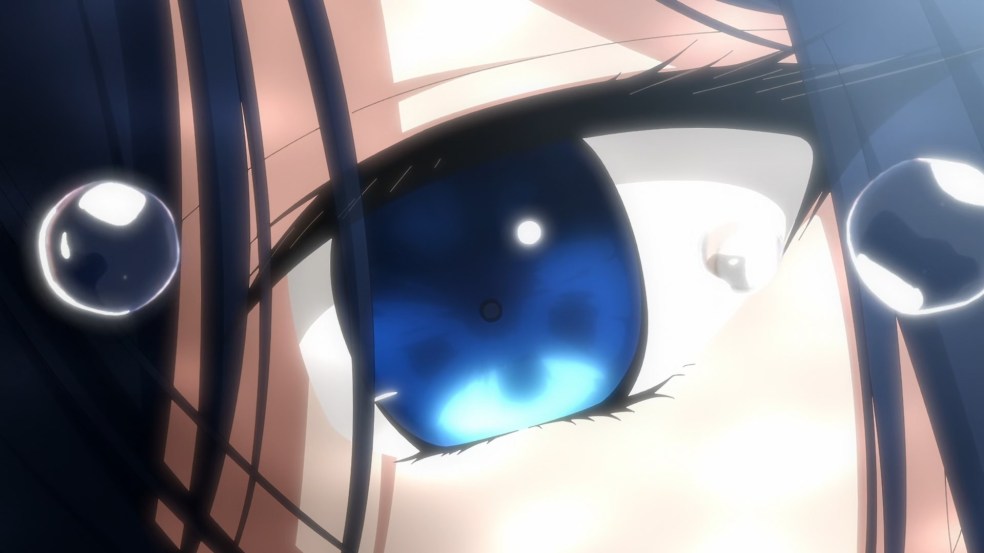


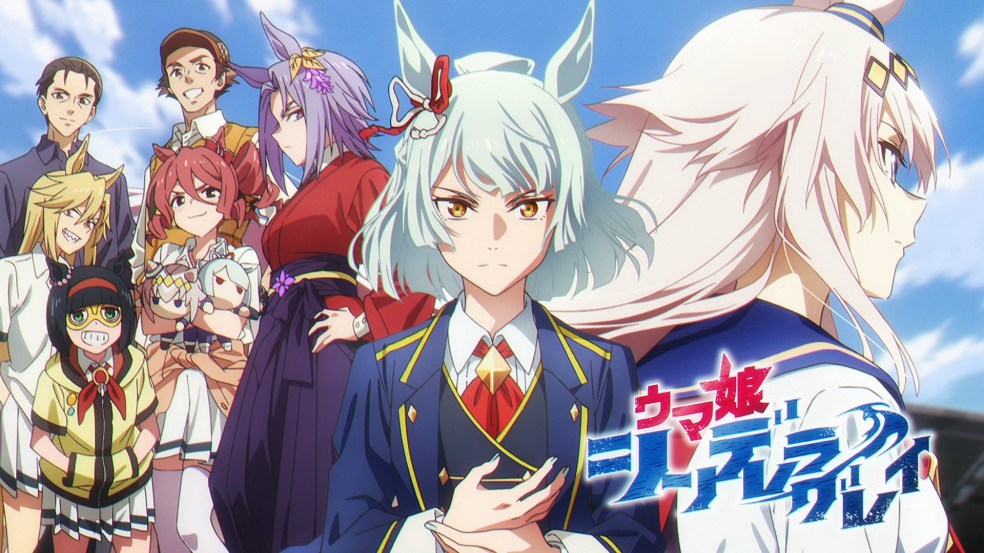


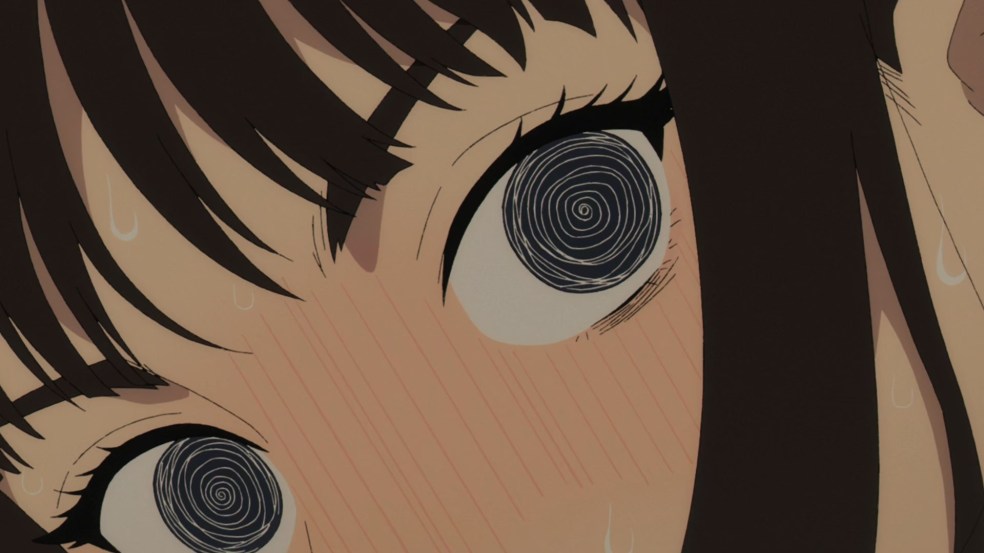


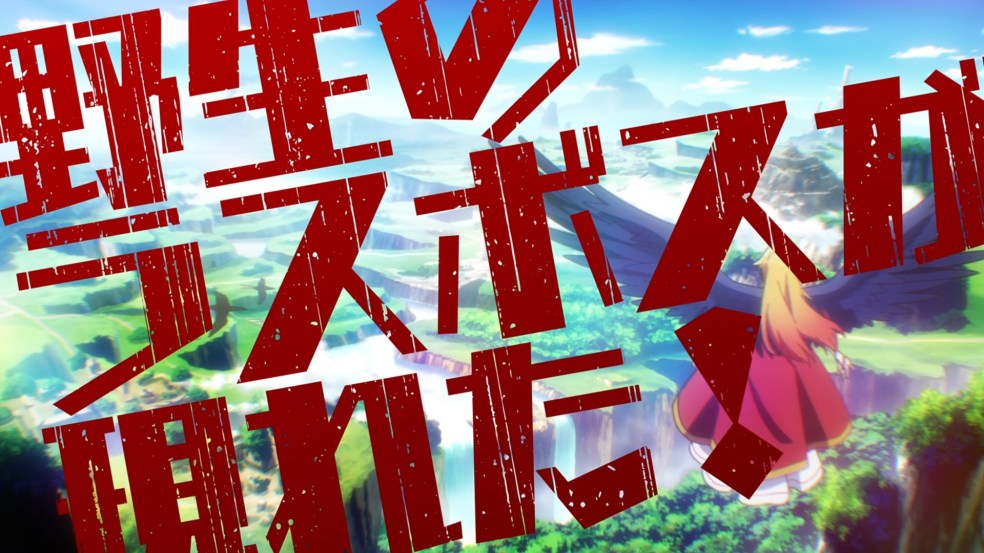


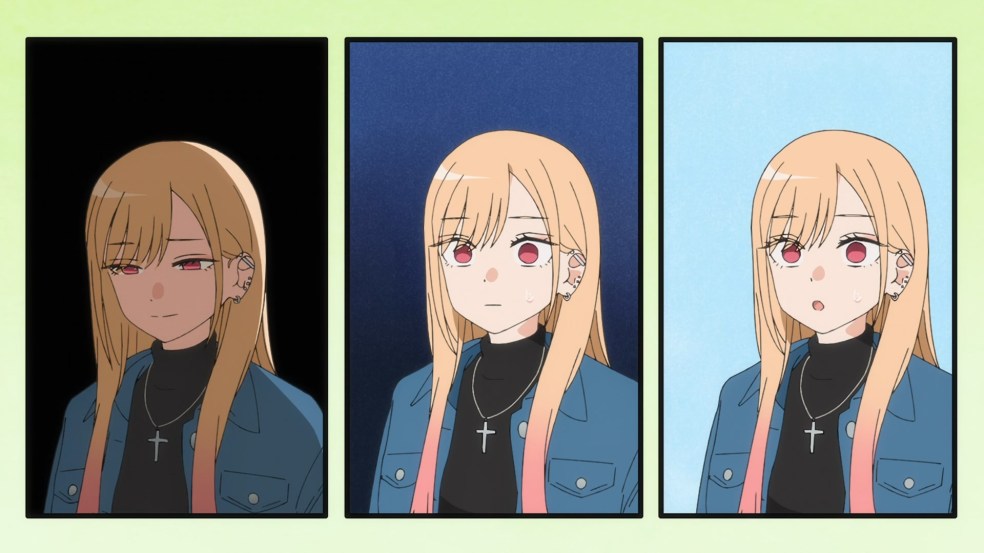





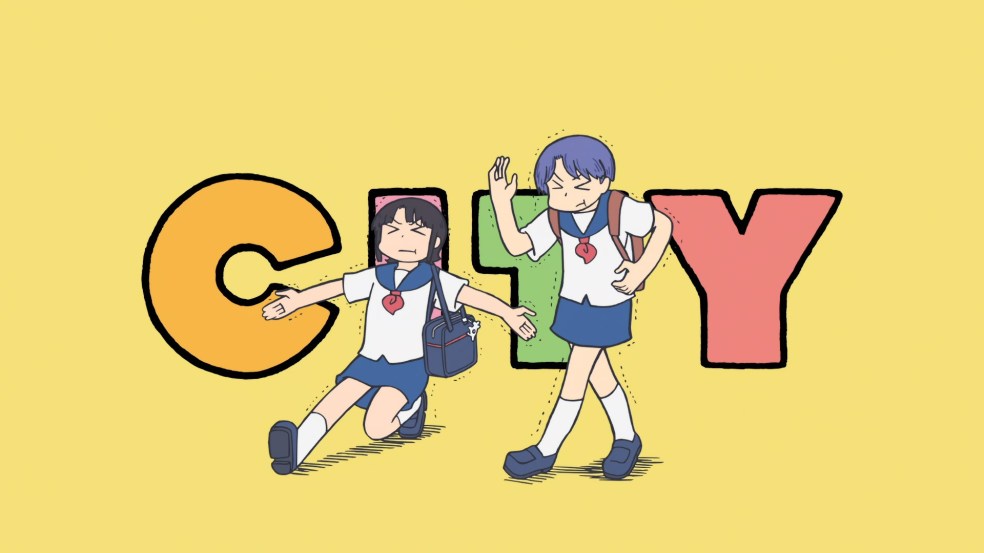


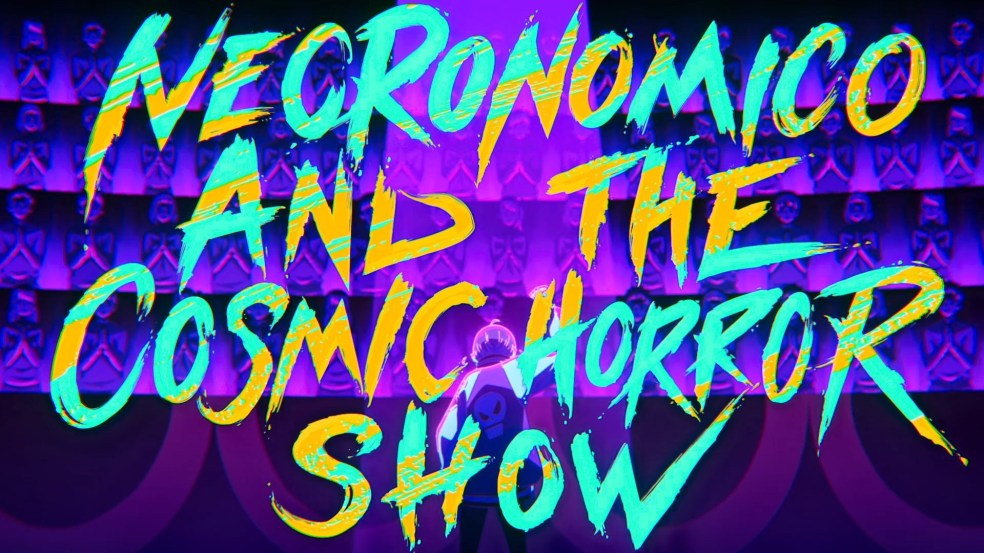


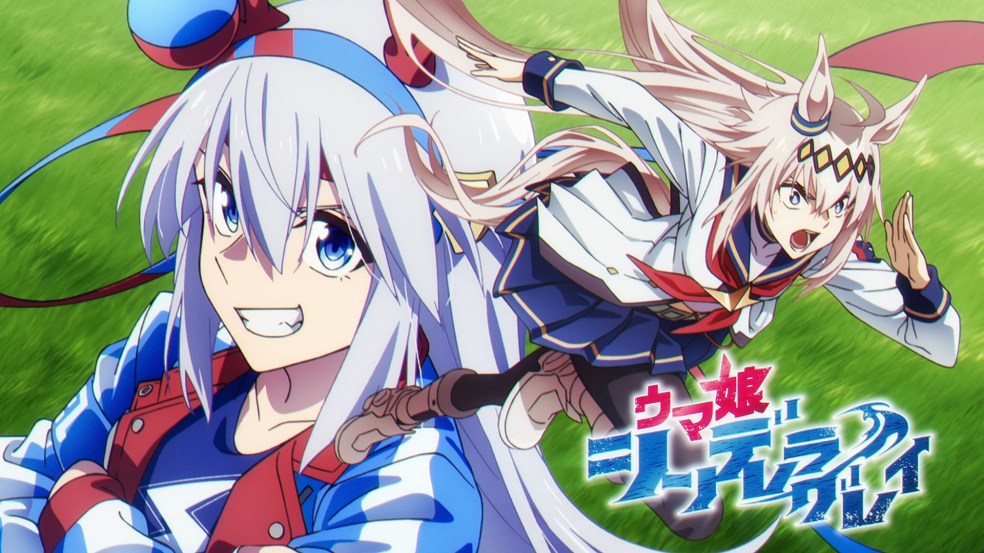


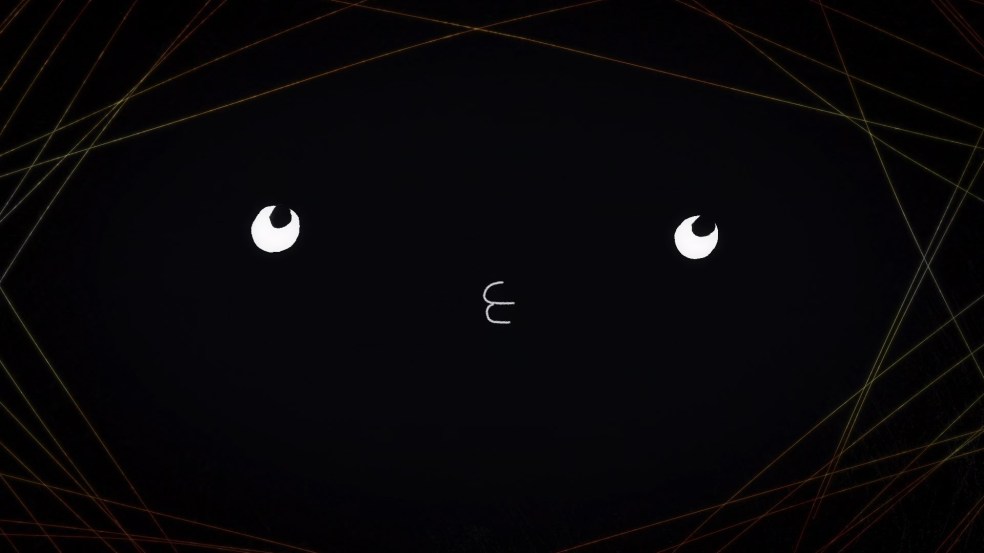


 The Magic Planet