The Weekly Orbit [9/29/25]

The Weekly Orbit is a (sometimes) weekly column collecting and refining my more casual anime- and manga-related thoughts from the previous week. Mostly, these are taken from my tumblr blog, and assume at least some familiarity with the works covered. Be wary of spoilers!


Hello folks! Welcome to the last Weekly Orbit of the season. Most of what we have here today is, accordingly, finales, so I hope you’ll enjoy one last ride with these anime before they leave this blog forever (until the end of the year list).

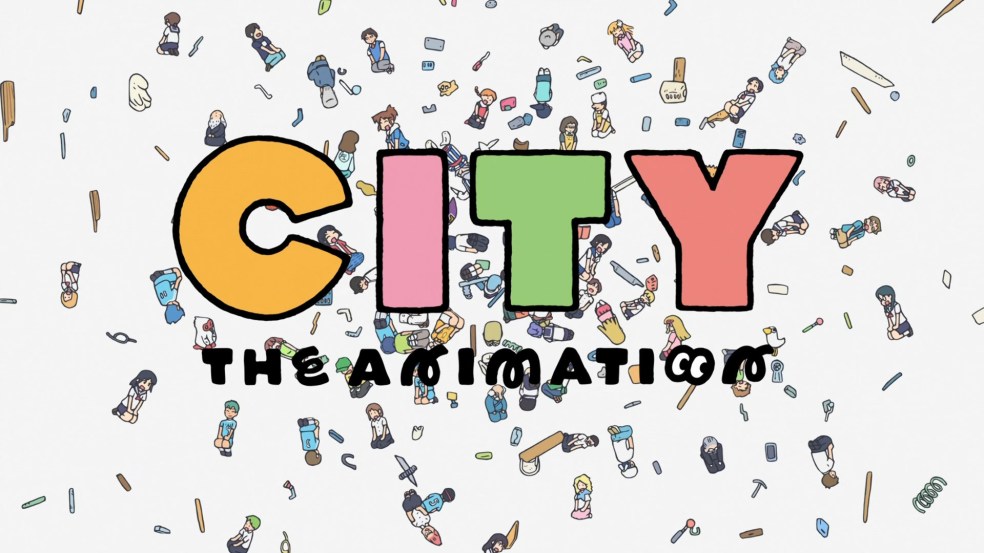
CITY THE ANIMATION – Episode 13 (Finale)

It’s a bit cliché for a comedy series to end on a sad episode. CITY is allergic to cliché, so while we do get a teary send off between Eri and Matsuri here, most of the episode is the same pure joy that the entire rest of the series has spent building up.

CITY, all things considered, is a best case scenario for a manga adaptation, doing things that only an anime can do rather than just trying to replicate the manga as best it can. Eri and Matsuri’s departure is bittersweet, and probably CITY‘s best play at poignance, but the real treat of the finale, for my money, is the massive, rollicking musical number that closes the series out. It’s a truly insane thing, featuring by my count every character introduced to the series’ massive ensemble cast over the previous twelve episodes, a good seven or eight different tunes, and a hilariously dumb plot about the Makabe’s Western restaurant getting what they think is a Michelin star.

If I have a gripe, it’s that this musical number isn’t dubbed (the English voice track just fully switches over to the JP about halfway through the episode. Something I only noticed because this is the rare anime I’ve watched some of dubbed), but given the sheer amount of voice talent involved it’s understandable, if a bit annoying. That quibble aside, this is a fantastic capstone on one of the year’s best anime, something people will point to in ten, twenty years to show others what truly great anime in the 2020s could look like. It’s a warm, joyful thing, something that understands that our daily lives themselves, no matter how mundane or absurd, are, in their way, a series of miracles.

Dusk Beyond The End of The World – Episode 1

Mixed in with all of these endings is a new beginning. It was actually this, not Last Boss, that was the first anime I watched a premiere of this season. Unfortunately, it kinda sucked, and while my opinions on Last Boss are mixed, too, my view of Dusk is dim enough that I didn’t want it to be the article leading the season.

Aside from the fact that a solid 80% of this episode is about if AI Is Good Or Not, an uninteresting subject unless you really handle it well—which this does not seem poised to do—there just isn’t a lot to grab on to here. The main character is in love with his sister who is a super tech genius. Cool, I guess? But I don’t really like or care about either character, so any transgressive charge here doesn’t really matter. The end of the episode sees her getting shot at a tech conference and him (or I think more likely, an android with his memories that looks like him), waking up in the post apocalypse, which is the actual main hook of the show. So the entire first episode feels kind of superfluous and I still don’t really know what we’re going for here, but if this is indicative of the show’s overall priorities and quality I’m not optimistic.

Also, the copy I watched had this bizarre thing going on where most of the episode had two lens-shaped divots cut out of the top and bottom of the screen, making a sort of pseudo curved-monitor effect. I have no idea what the purpose of this is, it’s distracting and ugly.

Ruri Rocks / Introduction to Mineralogy – Episode 13 (Finale)

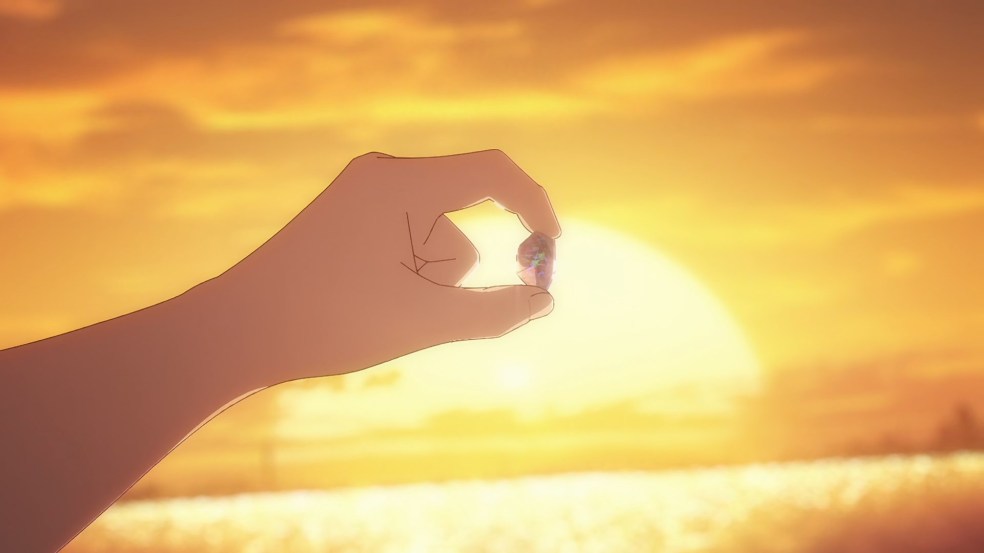
Back when Ruri Rocks first started, I saw a bluesky mutual describe it as being primarily about the poetry of deep time. That’s an existing phrase, but I was a little annoyed with myself for not having thought to affix it to Ruri Rocks myself. The series has been, from its beginning, about the incredible, eons-long processes that create and deposit minerals. In this final episode, Ruri once again learns about minerals, here from the springs of the lovely hotel she’s staying at, and from microscopic meteors from deep space. Both within and above the Earth, these massive, mindboggling systems engage in their geological dance across stretches of time so vast that they’re difficult to understand in human terms. This dance is what Ruri has fallen in love with over the course of the series, and here, her character arc hits a soft, gentle peak when she realizes that it is not just collecting rocks that entrances her, but the knowledge of how they came to be and to be where they are in the first place.

We also get to learn just enough about Nagi here to make her character make perfect sense, too. Someone who dreams of being a professor is going to relish the opportunity to take young people under her wing, and it was nice to see the character’s emotional state dovetail with Ruri’s own.

The momentary flash-forward at the very end of the episode makes the point that these were always similar people, just at very different points in their emotional development.

All told, this was a lovely series. A deep and warm ballad about the forces that shape our world and the necessity of appreciating and understanding them. Quietly, it’s become one of the year’s best anime, but that’s almost secondary to its other strengths. I would not at all be surprised to see Ruri Rocks become a cult classic in the years ahead, as perhaps the peak of mid-2020s iyashikei anime, and if that happens, it will have well deserved it.

There’s No Freaking Way I’ll Be Your Lover! Unless…. / Watanare – Episode 12 (Season Finale)

I have seen a decent number of romcom anime over the past seven or eight years. From this body of experience I say that the ending of the first (hopefully of many?) season of Watanare is up there in terms of throwing me for a loop. I think if there’s a central thesis to this show, it’s that people are extremely complicated. So what is often boiled down to a fairly legible series of simple character dynamics in something like this—even in very good shows like this—is instead here allowed to go full spaghetti.

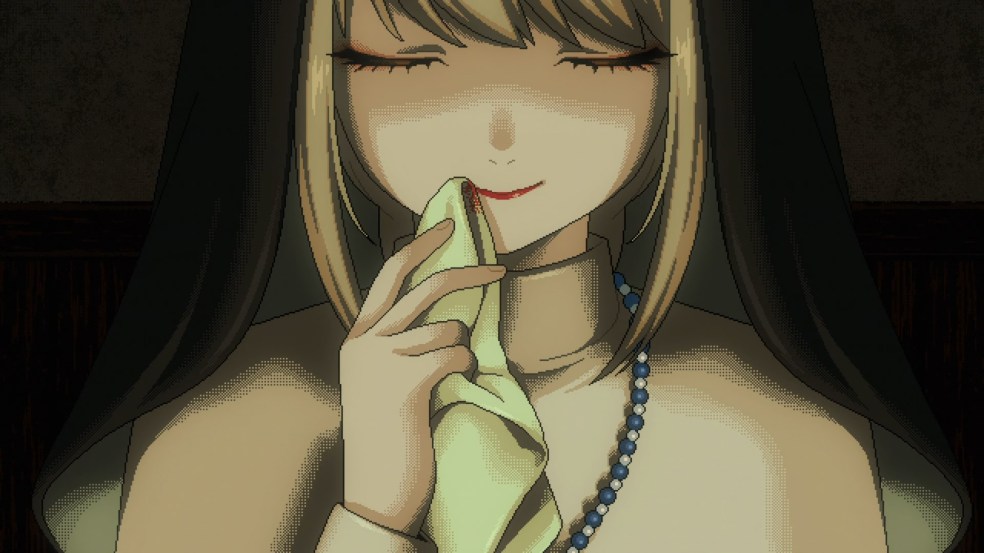
Also, this screenshot is actually from the second to last episode, but it feels worth noting that this happens.

So allowed, Renako’s own somewhat dysfunctional relationship with the idea of romance is the foundational block, but every other character we meet has so much of their own shit going on that the series is basically just this sprawling yarn ball of complicated teenage feelings. It’s brilliant in its way. I think I was maybe really underrating this for most of the season, but it honestly just slaps. I cannot wait to see what the “movie” (it seems like it’s more along the lines of a theatrical release of more episodes, a growing and I must admit somewhat annoying to me personally trend) has in store, and I hope they make more of this after that, too.

As for the finale, itself. Well, hey, spoilers, but haha, what if you pushed your best friend to tell her crush that she loved her, but her crush is also the girl that you’re trying to get to fall for you, but you think it’s fine because there’s no way that girl would ever pick your friend over you. Except the last scene of the show seems to indicate that, actually, she does!

What’s most exciting to me about Watanare is that we’re apparently nowhere near current with the light novels. If they want to make a new season of this every year until we’re caught up, it’d be fine by me. The drama here is just addictive, I really do need more.

Turkey! Time To Strike – Episode 12 (Series Finale)

A friend and I have this pet concept of anime that are perfect 7/10s. They’re not necessarily the most lavish of productions and they are usually constrained to the fairly cramped realm of single-cour seasonal anime writing, but they have a ton of heart, and they tend to do one or two things very well. Turkey! is one of those. It’s honestly one of the better ones in a long time.

About its length, though, I don’t want to make it seem like that’s some kind of straightjacket for Turkey! For many other anime, twelve episodes can be restrictive and you can feel the show scratching at the edges of the format. This is true of even some very good anime. Turkey!, though, knew exactly what it wanted to do. It got in, told the story it wanted to tell, no more and no less, and it got out. Pure professionalism.

Which maybe undersells the fact that this thing made me cry more than once. Turkey is, in the broadest sense, about what we, as people, mean to the other people in our lives. Our family, our friends, even those who we meet only by circumstance. And it explores this through a, frankly, boldly silly mixture of signifiers—do recall this is still the show that’s about bowling and also the Sengoku period. That it takes itself seriously in spite of that is, as in similar cases like Birdie Wing, and—on a much vaster scale—something like Umamusume or even Saki from back in the day, is to be commended. Because it shows that you truly can build a story like this out of just about anything and have it still work.

The finale itself, is the best case scenario for this sort of show. There are moments that are so deathly dramatic that they’re funny—the final throw coming down to, of fucking course, a turkey split? Hilarious. Mai’s “I don’t care about your gods, I care about bowling.” line? Incredible stuff—and then there are moments that are much the same but hit you right in the heart instead. The series’ final twist is one I cannot bring myself to spoil, but I was so delighted that this show still had one last trick up its sleeve, only for the specific way Turkey! played it to make me cry like an idiot. What else can you even say? This was a game well played.

Manga

NakiNagi – Chapters 1-24

I found out the other day that Maki Keigo, the mangaka of the recently-concluded Shikimori’s Not Just A Cutie, had a new series and endeavored to check it out. I haven’t read that manga, but I’ve seen the anime adaptation and, I’ve been happy to discuss with others, was not really a fan, for reasons that I think boil down to the fundamental premise of the work. Fair enough, not everything is for everyone. So, I was curious as to how I would feel about the mangaka working in very different territory.

Which….NakiNagi is that, but it also isn’t. Shikimori was a simple girl-with-a-gimmick romcom. It was originally a twitter comic-a-day strip, so it’s hard to fault the use of a simple formula there. NakiNagi is a lot weirder, but there is here, also, the bones of a romcom setup in that our main character, Nagisa, is in love with a boy in her class, Mozaki. Now, in most stories of this type, the narrative would spend a lot of time and effort to convince you, dear reader, that Mozaki and Nagisa would be a great couple. Those stories would give them chemistry, and they’d make at least a token attempt to flesh out both Nagisa and also Mozaki himself, since we need to understand what she sees in him. Think of something like Dress-Up Darling. Whatever you think of that series or its mian characters, the story goes through a lot of effort to map out why they’re into each other.

NakiNagi doesn’t really do that, though. Because the main couple aren’t actually the main characters. Nagisa is definitely one of the protagonists, but the other is Nakika. Nagisa’s broody best friend and, unbeknownst to her, an immortal sea-witch who’s haunted by her past mistakes. (Mozaki, by comparison, is firmly a side character. He’s enough of a non-presence in some chapters that I had to go look his name up while writing this.) These are two very different tones and genres, and while this is hardly the first manga to try to split the difference between two very different sorts of story—or even the first to do so with specifically romance and supernatural tragedy—what is notable is that so far it really does seem to just swing back and forth between the two. As a romcom, I’d say NakiNagi is competent enough, but when it gets into the creaking, ancient oceanic society that Nakika left behind to live on land (something we learn in a recent chapter she didn’t even do intentionally), it’s about a million times more interesting. This lends the manga an odd see-sawing pace, where several chapters will be dark, dramatic things full of pain and lost love, and several after that will be about, say, a school festival.

Increasingly though, it does seem to be trying to tie these two tones together. Some other sea people have been added to the cast, including a suicidal mermaid and a lovestruck fellow sea witch, which does imply to me that Keigo has big plans for the long-term of this series. The yuri fan in me is extremely frustrated that Mozaki is there at all, but attempting to take the story on its own terms runs into the fact that I don’t really know what those terms are yet. There are many, many beautifully-drawn pages dedicated to how Nakika watches over Nagisa lovingly, almost obsessively, because she reminds her of the mermaid princess that Nakika once loved. Intercut with that are the much more mundane, arguably more realistic, episodes about Nagisa’s clumsy crush on Mozaki, who only gets his first substantial bit of dialogue eighteen chapters into the manga.

I’m suspending any greater judgment for when I have a clearer picture of what NakiNagi is doing. As is, I find it a bit frustrating, but it’s definitely an interesting and weird manga, and I value those qualities a lot. It’s also visibly the work of an artist who is happy to no longer be drawing something that strictly has to be set in a normal high school. (I’ve made the romcom portion of NakiNagi sound more mundane than it actually is, honestly. While it does take place at a high school, it’s a palatial boarding school as opposed to something more humdrum.) It’s definitely not run of the mill, and in its best moments it’s genuinely great. Time will tell if it’s defined more by those or by the lack of them.


That’ll be the last Weekly Orbit for, honestly, a while probably. I don’t think I’m going to be watching enough this Fall season to really warrant doing one of these every week, and while I do like doing them they take an oddly large amount out of me given that I’m mostly just editing down my own thoughts from elsewhere on the internet. All of the formatting, rewriting to fit the more formal tone I use here, etc. can be surprisingly taxing! At least when you’ve got fatigue problems like I do. I’ve also been rethinking whether this format is really particularly great for discoverability. (It’s definitely bad for archiving, as anyone who’s looked at the woefully incomplete archive for the column will no doubt see.) So I am thinking of exploring other presentation formats when I do eventually find myself in a season again when there’s enough going on to warrant all this.

In any case, let’s send things off with one last Bonus Image. We gave CITY the header, so it’s only right to give the bonus to one of the other shows. Please have this shot of Ruri and Shouko wondering if Nagi has had a little too much to drink.


Like what you’re reading? Consider following Magic Planet Anime to get notified when new articles go live. If you’d like to talk to other Magic Planet Anime readers, consider joining my Discord server! Also consider following me on AnilistBlueSky, or Tumblr and supporting me on Ko-Fi. If you want to read more of my work, consider heading over to the Directory to browse by category.

All views expressed on Magic Planet Anime are solely my own opinions and conclusions and should not be taken to reflect the opinions of any other persons, groups, or organizations. All text is manually typed and edited, and no machine learning or other automatic tools are used in the creation of Magic Planet Anime articles, with the exception of a basic spellchecker. However, some articles may have additional tags placed by WordPress. All text, excepting direct quotations, is owned by Magic Planet Anime. Do not duplicate without permission. All images are owned by their original copyright holders.
Seasonal First Impressions: Summoning the Start of a New Season with A WILD LAST BOSS APPEARED!

Seasonal First Impressions is a column where I detail my thoughts, however brief or long, about a currently-airing anime’s first episode or so.


Another season, another isekai thing that starts like a week before every other premiere. I’m not hating, TV anime being what it is, you have to pull out every trick you can think of to get your foot in the door, and sometimes that just means having it there before anybody else. (We’re conveniently ignoring several other anime that have already premiered, which I either did not watch or did watch but had nothing to say about. Still, the general point stands.)

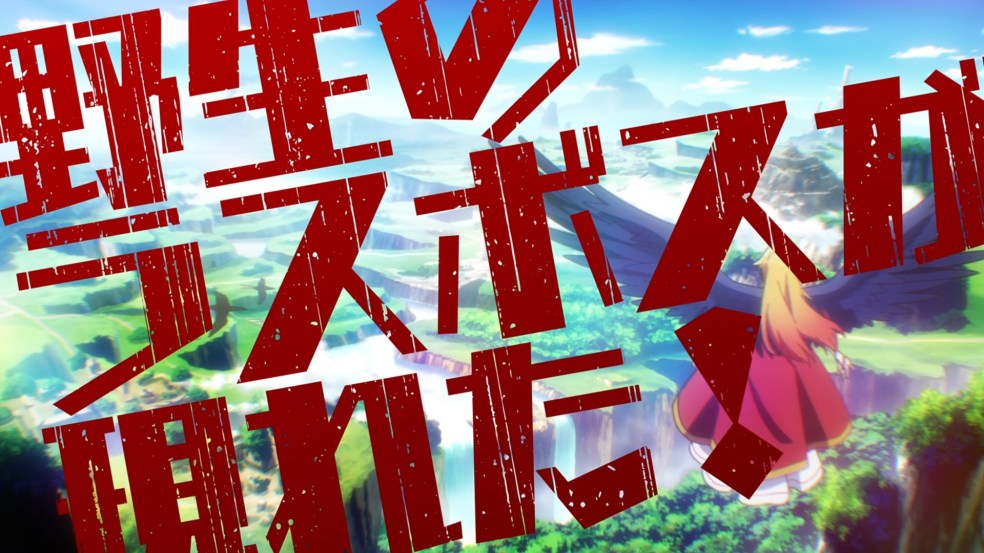
You can glean a lot of what you need to know about A Wild Last Boss Appeared! from its title alone. If it’s bringing to mind images of overpowered protagonists staring at stat screens then, yeah, congratulations, you’ve figured the show’s general deal out pretty well. What is less apparent from a cursory look is that the series does boast a few distinguishing characteristics. First of all, our protagonist was a man in the real world but, upon being isekai’d into his favorite fantasy MMO, Exgate Online, inhabits the body of his female player character Lufas [Koshimizu Ami], a ludicrously-powerful winged person who, among other things, united the entire game world under her banner as a domineering queen before being killed by a party of heroes in a thrilling, violent opening fight scene. The heroes were, of course, other players. (The kind of stuff you can do in an imaginary MMO vs. a real one is truly mindboggling.)

The gender stuff is noteworthy but not entirely out of place, as there have been several “I was a boring, ugly guy on Earth but in the isekai world I’ve been turned into a totally hot babe with a great rack and magical powers” isekai over the past several years. Nonetheless, it’s still a lot rarer than the usual main character these sorts of things have, which remains “just some guy.” Lufas has a solid character design, too, with gigantic black angel wings and a cool red-and-gold outfit that makes her look appropriately regal. Characters like this tend to inspire a lot of hay-making in certain social media circles about whether they “count” as transgender. I have never managed to muster up a strong opinion on this subject in the broad sense despite being a trans woman myself, but, in this case it’s worth noting that Lufas gets over the shock of her transformation extremely quickly. So, if you’re trans and want to project onto her, I’m sure as hell not going to try to stop you.

It’s a magic HRT glowup anyone would envy, honestly. Where are my black angel wings, medical science?

Second and perhaps more important to the success of a show in this genre, Last Boss has a fair amount of production polish. It comes to us from a new-ish but definitely not rookie director, Horiuchi Yuuya, whose prior two directorial credits were on the two seasons of NIJIYON ANIMATION, a chibi spinoff of Love Live Nijigasaki High School Idol Club, which he also served as the assistant director on the second season of. (His team are under WAO World, a studio who have a few sparse credits under their belt since the start of the decade but were responsible for Anime-Gataris back in 2017. That’s barely relevant to this piece, but you better damn well believe that if I can connect Anime-Gataris to a column I’m writing I’m going to do it. Watch Anime-Gataris.) This is all, in any case, basically the long way around of saying that the fight scenes that bookend the episode look good, although in the latter case it might be more appropriate to call it a full-on slaughter scene. (That’s not a compliment. We’ll get to it.) There are also some striking shots in the middle, particularly when Lufas, newly summoned 200 years after her defeat, returns to her old base, a massive tower decked with stained glass windows.

All told, the show looks good enough that, if you were just looking at stills, you might be able to convince yourself it was compellingly-written, too. Anime is after all a visual medium, so if something is strikingly directed and animated, it’s halfway there, right? Arguably more than halfway.

Sadly, this isn’t entirely the case. For one thing, Last Boss falls into the same trap as essentially every other “totally OP protagonist” isekai, which is that if the character is monstrously strong, we already know who’s going to win every conflict, and thus, there aren’t really any stakes to, at least, any physical confrontation. What saves the script from being a total wash is that Lufas does actually have some genuine charisma and dignity. Koshimizu Ami’s performance does a lot to uplift the broad writing of the character in this first episode. She’s commanding and has gravitas, and sitting alone in her all-but-abandoned fortress, you can, briefly, see her how the people of this world might see her. Regal, with a quietly crackling power just waiting to be unleashed.

This itself is, unfortunately, undercut by her interior monologue, which seems to switch between Koshimizu’s narration for Lufas herself and Horie Shun‘s interior speech for Minamijuuji Sei, the #epic #gamer who was Lufas’ real-world player, and whose narration’s generally goofy tone and loose fourth-wall jabbing jibes very badly with the rest of the narrative. The very first scene after Lufas is resurrected actually seems to imply that these are two separate characters somehow, and they seem to briefly be in conflict as Sei struggles to communicate to his summoners in a non-domineering fashion, but after turning off some passive skill or another on Lufas, this problem is immediately overcome and the now seemingly just-one-person Lufas flies off, free.

On its own, this would be easy enough to overlook, but this paper tiger problem of setting up some kind of conflict, only for the main character to interface with a poorly-defined Skill (in the video game / D&D sense) of some kind and then resolve it immediately is illustrative not just of the flaws in Last Boss‘s first episode, but of those in this genre in general. No matter how many times I see a show do this, I am always going to have this base-level negative reaction to it. It’s just no fun to watch.

Handled a little better is Lufas’ relationship with Dina [Usui Yuri, in what seems to be her debut role as a major character]. In the actual MMO, Dina was quite literally just a prop, an NPC that Sei plunked down for decoration in his base and never gave much thought beyond this. But, seemingly because he gave her a loose backstory, Dina is recontextualized in the world of Exgate as Lufas’ advisor, a trusted confidant who is overjoyed to see her ruler once again. It’s nothing terribly complex, but that she has an attachment to Lufas beyond fearing her is a massive step up from essentially every other character in this episode. This is vaguely reminiscent of the whole Machina / Veltol dynamic in Demon Lord 2099, although I’m sure there are other examples across the genre as well.

Other than this, Dina’s ultimately also a fairly basic character, at least in this first episode. The second half of it consists of Lufas taking up adventuring odd jobs. (Because she needs money, because it’s been 200 years since she ruled anything and the coffers Dina was watching over are empty.) Upon entering a tavern, Lufas and Dina take a gander at a quest board, and, ultimately, Lufas decides to do what she does best. Thus, the last few minutes of Last Boss‘s first episode are dedicated to adding to the growing number of anime scenes that just consist of a character brutally slaughtering orcs, goblins, demons, or whatever particular humanoid bugbear the writer has decided are not worth consideration except as cannon fodder.

Sigh.

Look, the fraught-ness of orcs is a well-trod topic and I’ve gone into it and similar things myself on this blog before, so we’ll skip past that for the time being. The problem here is that orcs just aren’t interesting opponents. I have no problem fighting them in a video game, but in an anime, which I am watching and not playing, I want some visual panache to the bad guys at the very least. Not helping matters is that Lufas, upon goring a bunch of them by summoning a huge cluster of glowing swords, feels the need to remark that doing so does not disturb her. Mere seconds after wondering in her mind whether she actually has the stomach to do this. Once again, problem raised and immediately surmounted: can Lufas bring herself to kill living, thinking creatures? Sure seems like it! What a boring thing to write.

Generously, you could say that Lufas’ lack of a reaction is the result of Sei more fully merging with his character, that her mentality has begun to override his. Mostly though, it just feels handwavey. I don’t expect a show like this to get into the ramifications of how it feels to take another life, or what it means for a species to essentially be born evil, a point of view Dina outright reinforces—this, after all, is quite literally the old Tolkien-derived Problem With Orcs, it’s not like this convention is Last Boss‘s fault—but I don’t think it’s too much to ask that, either, the series just not bring this kind of stuff up in the first place, or, if it’s going to do so, actually explore it in some depth rather than just dismiss it out of hand. It is of course possible it will return to these ideas later and actually grapple with them in some way, but if I’m honest, I kind of doubt it.

The word I’ve been dancing around this entire column is “edgy.” It’s very passé, and ironically, kind of childish, to dismiss something out of hand for being edgy. If Last Boss wants to have its protagonist aura farm by slaughtering a bunch of monsters, I’m not going to tell it that it can’t do that. (Aura farming is great, and gets a bad rep.) But there needs to be some craft to this stuff, and while Lufas ruthlessly slaughtering the orcs is definitely striking and well-animated, it’s not actually interesting. They’re not dragons, they’re not sinister-looking demonic beasts. They’re just orcs like you’d find in any other fantasy series. She says herself that she’s not even expending a modicum of effort. Everything interesting about the scene is in spite of the fact that they’re orcs. Why are we going through such lengths to portray the equivalent of killing Level 1 Rats like this? There’s just a mismatch in what’s actually happening and how impressed the show wants you to be. This does not warrant this treatment! Yeah, this is a brilliant and creative way to show the disparity in power that the orc feels as Lufas kills them, but why, if orcs are just brutish pests worth no further consideration, should I care how an orc feels in the first place?

Combined with the fact that a different significant chunk of the episode is taken up by just straight-up exposition about the game systems of Exgate, this all adds up to a first episode that is fun in spots but, overall, is mostly dry and, for something that looks this good, surprisingly boring.

In the end then, I think whether Last Boss can manage to wring a compelling narrative out of its setup is going to boil down to whether or not it’s willing to let Lufas actually struggle a bit. This doesn’t have to be in terms of combat, it could be anything. Just, some way in which she’s not solving every problem the minute it happens. There are some seeds of a longer-term plot in here! Mentions of some of Lufas’ old comrades defecting to the army of the mysterious Devil King, a figure she seems to regard with complete contempt, are something to grasp onto. So I’m not going to dismiss this series out of hand and say that this can’t work as an idea. It clearly can! It does in the show’s opening minutes! It just needs to commit to some actual narrative buildup. The question of course is if it can actually do that. And I do want it to! Fall is looking like a pretty barren season as far as new anime go, I only have three other anime on my personal shortlist, and one of them is a sequel. So I have every reason to want Last Boss to succeed here, but admittedly, I’m keeping my expectations tempered.


Like what you’re reading? Consider following Magic Planet Anime to get notified when new articles go live. If you’d like to talk to other Magic Planet Anime readers, consider joining my Discord server! Also consider following me on AnilistBlueSky, or Tumblr and supporting me on Ko-Fi. If you want to read more of my work, consider heading over to the Directory to browse by category.

All views expressed on Magic Planet Anime are solely my own opinions and conclusions and should not be taken to reflect the opinions of any other persons, groups, or organizations. All text is manually typed and edited, and no machine learning or other automatic tools are used in the creation of Magic Planet Anime articles, with the exception of a basic spellchecker. However, some articles may have additional tags placed by WordPress. All text, excepting direct quotations, is owned by Magic Planet Anime. Do not duplicate without permission. All images are owned by their original copyright holders.

The Weekly Orbit [9/22/25]

The Weekly Orbit is a (sometimes) weekly column collecting and refining my more casual anime- and manga-related thoughts from the previous week. Mostly, these are taken from my tumblr blog, and assume at least some familiarity with the works covered. Be wary of spoilers!


Hi folks, I missed last week, and as I alluded to the week before that, I’m experiencing a bit of end-of-season burnout. Still, I wanted to try to get an at least mostly complete Weekly Orbit to you today. We have some season finales and a few less permanent things. I hope you enjoy.

Anime – Seasonal

Call of The Night – Season 2, Episode 12 (Finale)

A really sweet sendoff for Call of The Night, here.

I really like that we’re not just abandoning Anko as a character now that her arc is “over,” and I will be honest, while it’s not for nearly as grandiose reasons, her comments about feeling like you’ve gotten older but not really grown up, and about wasting the last decade of her life, really hit home very hard for me. Not to be dramatic, but as I’ve sometimes discussed elsewhere on this site I sometimes feel the same way due to my disabilities. Accordingly, I think this is maybe the most I’ve ever liked the character.

As for Nazuna and Ko, I am happy to see their relationship developing as it has. Ending the season by cutting to black on the chomp (because bites are their private thing, now, you see) followed by the “Call of The Night” needle drop was just brilliantly classy. Good episode, good season, good show.

Dandadan – Season 2, Episode 12 (Season Finale)

Another example of that with Dandadan here. A great finale from what’s just been a pretty consistently great season of a great show. A robot vs. kaiju showdown just makes sense as a way to end an arc for something as rambunctious as Dandadan. I particularly like how the robot goes from very toku-esque (and a bit goofy looking) to a very Daicon-y thing with a flaming head by the end of the battle. And of course we end on the introduction of another new character to the anime, who I am excited to get more spotlight next time around.

Admittedly! The upcoming arc is maybe my least favorite of the manga? It’s….an odd one, to say the least. But it has its high points, too, so I’m sure Dandadan will be reliable with delivering bangers for many seasons to come.

My Dress-Up Darling – Season 2, Episode 12 (Season Finale)

And bringing up the third spot on the tic tac toe board, Dress-Up Darling also delivers a lovely end to a lovely season. I don’t have a ton to say about the finale, I’m happy that the two character arcs here resolved the way they did though. I think Akira actually just being a huge lesbian is a pretty unsurprising plot twist, but I was still really delighted with how they handled it. The Coffin cosplay scenes were also really great, I think this is easily the most blood I’ve ever seen in a gentle romcom!

Overall just a fantastic season of television. I’m hoping the third season, should they make more, isn’t too far off. We’ll see!

Necronomico & The Cosmic Horror Show – Episode 12 (Series Finale)

This was the first full-length TV anime of the season to end, at least as far as stuff I was watching. My verdict? This was fine! Not great, not awful. It was fine.

When the show started I said something to the effect of, if you can’t pull off “good,” “weird” is a solid second thing to aim for. I think maybe more than I expected, Necronomico is a great example of that. This is a show that has much less to say than it thinks it does, has generally messy and unfocused characterization, and its core conceits are all just generally kind of stupid. But it was largely entertaining week to week just off of novelty and audacity, and I think that’s worth something. This is a truly textbook Seasonal Anime, capital S, capital A. I cannot imagine anyone remembering this aired by this time next year, except maybe because of the ChatGPT subs controversy when the first episode dropped.

About the final episode, I can’t say I have a ton to comment on. I will say that I think any finale in which the main character gets to pilot her girlfriend, grown to kaiju size for the sake of a fighting game match, is an at least solid finale. I also like that, perhaps intentionally but perhaps not, the game Nyarlathotep—sorry, Tick Tock Man—comes up with seems kind of shitty. Everyone loves fighting games where you have to button mash so hard your fingers bleed, right? I also really appreciated the gag where Miko somehow magics up a proper fight stick after being frustrated with the gamepad. Also the symbol sealing thing felt like a missed opportunity to incorporate the Yellow Sign into the show. That would’ve been a fun gag.

The epilogue was honestly a little much. I appreciated seeing Miko reunited with her girlfriend, and the hints that Cthulu might still be in there (and a similar hint with Gua’s host streamer) are fun and tantalizing if they ever decide they want to follow this show up. (Frankly, it seems very unlikely that this show did well enough to warrant that, but I wouldn’t mind being proven wrong. I think the actual IP is owned by Cygames, so maybe they don’t care about that.) But I really had no desire to see most of the other characters again; the mangaka, the actress, etc. are just not memorable and I think if we really felt the need to establish that they were still alive, a simple montage of a couple seconds, tops, would’ve sufficed just fine. I’m also a little mad they never killed Eita, he really seemed like he was asking for it and if they do make more of this, I simply refuse to buy into any attempted redemption arc. Try harder, man.

In any case, yeah, that’s Necronomico. A solidly decent show that I will probably think about only very occasionally for the remainder of my life. Hardly the worst thing I’ve ever seen, but definitely in the bottom third or so of anime I’ve seen this year. I really liked Cthulu, and that’s probably the most credit I can give it.

Ruri Rocks / Introduction to Mineralogy – Episode 12

I know I’m overusing the word here, but this is another lovely episode from Ruri. Here, Ruri comes across an old crystal radio owned by her grandfather while snooping around her attic. This is a bit of a shift for the show in that this episode is as much about radio as it is about mineralogy, but I think it ties the two fields together very nicely. In addition to exploring the overlap between these fields, this is also the first time Aoi (Ruri’s gyaru-looking friend from school) gets to be much of a character, which is also nice.

I also think that the scene at the end, where Ruri finally gets the radio working again out near a shrine, is a very nice summation of the “point” of Ruri Rocks as an overall work.

What we do today can connect us, however fleetingly, to the endless yesterdays before us, whether that time scale is across human lifetimes or across aeons.

On a more grounded level, it is also nice to see Ruri working through her insecurities: after saying in last week’s episode that what she doesn’t isn’t research because that’s something only “smart people” do, she here opts to take geology as an elective at school. I should also commend the use of the ending theme as diagetic music. That was brilliant.

Turkey! Time to Strike – Episode 11

Have you ever played bowling with your life on the line?

This is truly just a delightful show. I think something that’s largely gone unsaid about it is that despite the very different literal events than most other anime in this broad girls’ drama genre, it is fundamentally wired the same way. The characters have similar arcs and the bonds between them are not unlike what we would have in a much more traditional show in this genre. The main difference is in the stakes, which are outright fatal here as opposed to the much lower ones present in what would otherwise be Turkey‘s peers.

A decade ago—to the month, in fact—SCHOOL-LIVE!, Gakkou Gurashi as it’s also known, pulled off a similar trick. That anime similarly borrows language from outright horror material to obfuscate the fact that it is, fundamentally, still a story about friendship and caring for the people close to you. The difference, of course, is that in most anime where girls compete in sports tournaments, their lives are not literally at stake if they lose.

The latter is what leads to Turkey’s second biggest tonal pivot, coming in behind only the initial switchup in the first episode. Just when things seem like they might be resolved a bit too conveniently by all of our heroes getting strikes in this tournament that the enemy feudal lord has agreed to, he changes the rules and puts them at a marked disadvantage, betraying their trust and any notion that he’s someone that could be seen as respectable.

I am pretty damn sure this is all a fakeout, of course. The finale will end with our heroines battered but not beaten, and they will tearfully depart to their own time. (There is always a second throw, recall.) But if I’m wrong, that’s actually even more interesting, so barring some generational last-episode fumble, I am still deeply interested in what Turkey will do in its last moments.

I mentioned Gakkou Gurashi. That anime is a classic, and I don’t think Turkey! is quite that good, but it’s definitely one of the more interesting things to air this year. I don’t think it’s out of the question to say it’s one of the better ones, too.


Like what you’re reading? Consider following Magic Planet Anime to get notified when new articles go live. If you’d like to talk to other Magic Planet Anime readers, consider joining my Discord server! Also consider following me on AnilistBlueSky, or Tumblr and supporting me on Ko-Fi. If you want to read more of my work, consider heading over to the Directory to browse by category.

All views expressed on Magic Planet Anime are solely my own opinions and conclusions and should not be taken to reflect the opinions of any other persons, groups, or organizations. All text is manually typed and edited, and no machine learning or other automatic tools are used in the creation of Magic Planet Anime articles, with the exception of a basic spellchecker. However, some articles may have additional tags placed by WordPress. All text, excepting direct quotations, is owned by Magic Planet Anime. Do not duplicate without permission. All images are owned by their original copyright holders.

The Weekly Orbit [9/01/25]

The Weekly Orbit is a (sometimes) weekly column collecting and refining my more casual anime- and manga-related thoughts from the previous week. Mostly, these are taken from my tumblr blog, and assume at least some familiarity with the works covered. Be wary of spoilers!


Hey there, friends! Another pretty light week this week, but one in which I’ve got some interesting stuff outside of the usual Seasonal Anime bracket to share as well. Enjoy.


Anime – Seasonal

Call of the Night – Episode 9

Bear with me here. I’ve always found the co-opting of the “arcs” system that shonen anime fans tend to use a little frustrating. Admittedly, I don’t know if this is actually true, but my impression at least has always been that things are sliced up into arcs as a fan-led convention. So when an anime’s English marketing actually refers to something as an “arc,” I roll my eyes a little. All storylines are arcs when you get down to it, so what are we saying here, right?

Well, Call of the Night makes the argument that this part of its story should be called The Halloween Arc because it takes place entirely on Halloween. You know what? Fair enough. I’ll let them have this one.

This is all tangential of course to the fact that this is probably the best Call of the Night has been since its return. (If it’s not, its main competition is episode four. Throughout its second season, Call of The Night has proven to be surprisingly adept at tragic yuri. I would love Kotoyama to attempt a full series in the genre at some point.) Anko springs her plan into motion on the night of a Halloween festival, but we’re still in the dark about what that plan actually is. Thus, most of Anko’s actions throughout this episode—and we see enough of them that she’s basically the second protagonist here—seem engineered to make you, the viewer, wonder what in the utter fuck she’s trying to accomplish. This is more entertaining than it may sound on paper.

It’s been established that a vampire’s main weakness is memorabilia from their human days. With most of the vampiric side of the cast having gone out of their way to dispose of those, Anko begins enacting a strange plan where she actually shoots two of the vampires—Niko and Seri—in full public view. (The public in question, being about as smart as any fictional audience, assume a movie is being filmed Or Something.) They recover, of course. You can’t kill a vampire with something as simple as a revolver. But the provocation has had its intended effect, and by episode’s end Anko is running from Seri’s boyfriend (Takkun, also a vampire) and the rest of the vampires. We end on a confrontation in her and Nazuna’s old classroom, where the two reunite and stare each other down.

It’s a hell of a cliffhanger, and it promises even better things ahead, but what I really need to emphasize here is just how wildly entertaining Anko is during all this? I was a bit slower to warm to the character than a lot of people in my age bracket, but she’s an utter riot here. Sure, she’s the antagonist, but that doesn’t mean she can’t be silly with it. Particular highlights include threatening to shoot some random guy after he hits on a girl half is age only to reveal that that gun is actually just a gun-shaped cigarette lighter, and a sequence near the end of the episode where she just runs like hell after tossing Takkun into a trashcan.

CITY THE ANIMATION – Episode 8

I think I should mention that I’ve been watching the dub of CITY. That’s very relevant in this episode because it ends with a musical number! And to my (pleasant) surprise they actually dubbed it! That’s not always a given in anime dubs.

Now, the number itself was some kind of bizarre Hamilton-meets-Japanese folk tales-meets The Barenaked Ladies’ “One Week” kind of thing, but it’s the thought that counts.

Oh yeah and the rest of the episode was pretty funny, too. The “Bon Jovi” joke in the band names segment got me so hard that I had to pause the video to collect myself. Episode nine is pretty great, too, for the record! I’m hitting my limit for how much writing I can do about anime in a given week here, I think (this is the last bit of writing I’m doing other than the closer before this article goes up), but episode nine is a giant, wacky race. In the vein of something like….well, Wacky Races. The episode sprinkles in some backstory for the characters we’ve gotten to know over CITY’s run and is pretty sweet in addition to the usual humor as a result. This is especially true of our goofball schoolgirl lesbians Matsuri and Eri, who, soon to be parted, enter the race to make some final memories together and end up winning the whole thing. It’s cute!

Dandadan – Episode 9

Despite an absolutely fireworks fight scene at the start of it, episode nine is mostly a slower and more comedic break between the previous and upcoming arcs of Dandadan. This makes sense, and a decision to slow down a little and focus on the series’ character strengths is a good one on the heels of so much fighting.

That’s not to say this episode is devoid of important developments, though. Having finally become strong enough to take him on, Okarun manages to convince Evil Eye to not constantly attempt to slaughter all humans in his vicinity. Instead, the two of them will fight once a week. Like gentlemen. (More or less.) This paves the way for Jiji to return to school, which sets up the often hilarious second half of the episode, wherein Evil Eye emerges at school and Jiji’s classmates have to wonder why he’s suddenly talking about butchering all who stand before him, and why he suddenly looks so goth. It’s basically just one joke iterated upon for several minutes, but it’s a pretty good joke.

in between these things, Mantisian and some of his friends—including the Minecraft Steve-esque Mr. Ludris—rebuild the Ayase household’s home, with the help of an alien wonder-material called nanoskin. While this seems like just a cute way to wave away the whole “no longer having a house” situation that Momo and her grandmother would otherwise be in, it’s actually about to be rather important as a plot device. In the interest of not spoiling the rest of this season, I’ll say no more on that, but overall, yeah, this was a very fun episode. I’m excited to see where we head next.

Necronomico and The Cosmic Horror Show – Episode 9

As I assumed would be the case last week, Episode eight of Necronomico sets us up with what seems to be the structure we’ll be working with for the remainder of the series.

Our four remaining heroes have to tackle the four Old Ones, and they end up splitting up and doing each trial alone. This means that the first half of this episode is actually a focus story about Hastur on the villains’ side, and, on the heroes’ side, Sano Seishirou. Given that the latter’s characterization so far has amounted to a pedophile joke about 5 episodes ago, which even the show itself seems to have forgotten about, this is a good chance to give him some actual characterization.

And you know what? He acquits himself pretty nicely here. Hastur’s game is in of itself not terribly interesting, being essentially the card game War with a smaller deck and some extra steps, but it’s nice to see Seishirou actually fit into the “heroic teacher that goes down fighting” archetype, even as Hastur taunts him all the while. (The drawling, low growl that Okitsu Kazuyuki delivers for how Hastur mockingly calls Seishirou “senseeiii” is one of the best pieces of voice acting in this whole show so far.)

The card game does manage to have some legitimate emotional stakes, especially when Hastur conjures up mental recreations of Seishirou’s family for the final hand. Pretty impressive considering that it just boils down to a coin flip, essentially, but Seishirou ekes out a win by psychoanalyzing his opponent and is free to be reunited with his family.

Except he isn’t, because SURPRISE! HE DOESN’T ACTUALLY HAVE A FAMILY!

In the sort of beautifully brick-stupid twist you only get in this kind of show, it is revealed that Seishirou’s family, who we only met a few minutes prior, are in fact completely imaginary! Surprise! It’s the most hilariously awful system rep of all time!

Suffice to say, I think this is so dumb that it kind of comes back out the other side and becomes funny. How can you hate dialogue like this?

Others will feel differently I’m sure, and Seishirou’s victory over Hastur is pyrrhic anyway: he collapses and dies shortly after Hastur’s disposed of, leaving the remining three Old Ones (and possibly also Tick Tock Man? I wouldn’t put that past this show) for the anime’s final few episodes.

Ruri Rocks / Introduction to Mineralogy – Episode 9

Another complete delight from the slice-of-substrate anime this week. This marks a return to what we might call Ruri Rocks’ usual formula, but the expressiveness of the animation is at an all-time high here, and there are a lot of gorgeous moments throughout the episode. I’m particularly fond of Ruri’s dream of infinite fields of opal and how it eventually reflects itself in reality toward the end of the episode. This is also another episode that deals with a manmade object—this time a massive dam—and its impact on mineralogy, which is a theme the show seems to want to return to again and again. I admit I find it pretty compelling stuff, so I can’t complain. Also, Nagi tries on a bunch of different outfits in this episode and looks gorgeous in all of them, god bless.

There’s No Freaking Way I’ll Be Your Lover! Unless…. – Episode 8

I really enjoy that Satsuki’s evil plan to break Mai’s spirit consists of….telling an embarrassingly sweet story, so she’ll be distracted, so she can headshot her in a video game. Truly, a woman after my own heart (and of course the evil chiptune music makes a return to compliment it).

I find myself short on actual commentary for Watanare, which is a little frustrating because it’s honestly an absolutely fascinating show. In this episode we have a series of amusingly janky Red vs. Blue-ass 3DCGI segments, of our characters playing this video game they’ve agreed to compete at, juxtaposed against sincere emotional stakes, which are themselves complicated by the series’ overall messiness. (A term I normally hate and try to avoid, but I really can’t think of a better adjective to describe the relationships on display here.) If someone handed you just the script for this episode, you might think it was some kind of very bizarre sports anime, given how well the game and the emotional development are woven together.

Turkey! – Episode 8

Turkey has juggled an impressive amount of moods and tones over the course of its run thus far. Episode eight largely sits on the “quiet melancholy” end of the spectrum, before a sudden swerve—a fakeout, I am guessing—into horror at the episode’s end.

This isn’t my favorite episode of the series, and what we learn here is not anything we couldn’t have guessed from context. Still, the reveal of Mai’s backstory is well done, and I like the way everyone is connecting with their feudal counterparts. Also, I’m not sure what it was, but Nanase’s line about liking (or at least acclimating to) living in the past because she “feels useful” there really hit me. There is something immensely sad about that.

Anime – Non-Seasonal

Key The Metal Idol – Episodes 3 & 4

The main thing that has interested me about this show so far is its sheer, overwhelming atmosphere. That’s still true; there’s a real hypnagogic feeling to much of the plot. Key—who may not really be a robot after all? It’s still unclear—suddenly develops psychic powers, which she seems to unintentionally use to kill an idol singer (herself a remote-controlled PPOR android) mid-concert. The sleazy gravure idol manager from episode one hangs on to the lip of a rooftop for dear life. A tech CEO protests that robots don’t need self-awareness, damn it! All the while picking apart the gears of his own robotic “son.” These strange and haunting images, combined with the forceful sheets of pulsing, heavy synthesizer, give the entire thing the energy of a jumbled-up nightmare. I know people compare these two all the time, but it really does feel quite similar to Serial Experiments Lain. The emotional beats are arranged very differently, though, and in general Key the Metal Idol, at least so far, feels in some sense more raw and primitive. Time will tell if that impression holds.

22/7 – Ano Hi no Kanojotachi: day09: Miu Takigawa – Short

It has been five years since early lockdown-era idol anime 22/7 tried, and failed, to reinvent its genre.

22/7 the idol group, though, have ticked on. They still exist, and have persisted through a variety of lineup changes, a notably rocky history that has resulted in a lot of changes in direction for their sound and, admittedly, given them more of a fanbase than you might assume if you don’t follow idol stuff very closely. Takigawa Miu, the group’s center, was one of two remaining original members. She has now left. “Graduated,” as it is somewhat-euphemistically referred to among idol fans.

This short is ostensibly a sendoff. It’s not even narratively related to the 22/7 TV series (it has more in common with, and is presented as, an episode of the 2018 slice of life shorts that were created in the early lifespan of the projects), but it marks the end of something, so it’s still significant, as both a point to reflect on what 22/7 was and is and what its existence can tell us in general about the circles of art and media it is a part of.

Miu’s vocal performances—both voice acting and singing—were provided by Saijou Nagomi. (She technically reprises the role here, but doesn’t speak, contributing only a few soft sobs at one point. These could easily have been provided by a fill-in or pulled from archive audio, but I’m choosing to assume some amount of professionalism here.) Five years is a long time in the entertainment industry, and watching this short, and its quiet melancholy, I cannot help but wonder how she must’ve felt to have it playing behind her during her farewell concert, as that is the context for which it was originally produced.

It is worth noting that Miu is Ms. Saijou’s only voice acting credit of any note, and if she’s ever released any other music, I was not able to find it by doing a cursory search. Still, a glance at her Twitter page indicates she was keeping it professional up until her very last day in the group. There is lots of talk over there of cherishing every moment she spent with her fans and so on. As of the time of this writing, the most recent post is a handful of images from the farewell concert.

The short itself, portrays Miu in transit; first coming home on a bus, and then, after quietly crying to herself in bed, going somewhere that looks an awful lot like a college or new school of some other sort, in what is either a dream sequence or a flash-forward. It’s definitely playing into these sorts of thoughts; where is she going from here? Is she happy? Does she have regrets? On some level, all of that is as much an emotional manipulation as any of the more obvious work done by any number of more traditional idol anime—before or since—that 22/7 sought to surpass. (And we have to give credit to Wonder Egg Priority director Wakabayashi Shin that this is imbued with such emotion in the first place. The short has no dialogue, as mentioned.) Still, it’s overall a surprisingly moving piece of work, and one that feels ever so slightly out of step with where the medium’s sensibilities currently are, with its vibrant and shiny lighting that feels so tied to the visual aesthetics of the last decade as opposed to this one. I said it’s a long time in the entertainment industry, but honestly, five years is a long time for anyone. The short is a potent, if brief, reminder of this.

The last scene of the short shows us Miu, on a bus, looking back at the camera. We don’t know where she’s going, but she is going. It’s hard not to feel happy for her. And as strange as it may be to say, that shot, as it fades out for the final time, is probably the most 22/7 has ever affected me. Perhaps tellingly, it did it without subverting, reinventing, or deconstructing anything.

Manga

Dear Flowers That Bloom in Days of Yore – Chapters 1-10

I think, in a world where there are already a lot of yuri manga doing this, there is a danger that the whole “subversively playing with Class S tropes” setup would start to feel hoary and cliched in its own right. This has not happened broadly, and it certainly hasn’t happened with Dear Flowers That Bloom in Days of Yore. Protagonist Kasumi begins a letter writing relationship with an anonymous “onee-sama” after discovering a note from her in a copy of foundational Class S text Hana Monogatari. In doing so Kasumi and her “onee-sama”, who she eventually meets in person, discovering her to actually be an older middle-schooler named Haruyo. The two wrap themselves in these roles, roles that are heavier, bigger, and older than either of them. Heavier, bigger, and older, but not necessarily more real. And that tension is threatening to tear Kasumi apart.

Were the manga merely playing with Class S tropes, I would think it was clever but not terribly ambitious. Where it clearly excels is in its ability to use this framework to subtly but definitively expose Kasumi’s own internalized homophobia. Something happened to her. We don’t yet know what, but we know it involved a now deceased friend. In the most recent chapters, Kasumi has met another girl who also met her own “special one” through a letter slipped into the copy of Hana Monogatari. I won’t spoil the specifics, but the most recent chapter seems to certainly imply that the girls who meet via this method are doomed to tragedy. The book, in other words, is cursed. Literally or metaphorically? Who knows? The distinction isn’t relevant except for fiddly questions of what genres this manga technically belongs to.

I have gone this whole writeup without mentioning that mangaka Igarashi Jun is….honestly a very rare talent in terms of presentation. Aside from being an absolute master of chiaroscuro—simple but striking contrasts of solid lights and darks recur throughout the manga. You would think this would be very common in a medium that’s solidly black and white, but it really isn’t.—they also employ, admittedly sparsely, a number of paneling techniques I just really don’t see in manga very often. They’re also an expert at conveying mood through visual metaphor; before meeting Haruyo, Kasumi imagines her as a thorned rose bush in the shape of a woman. When the two sink their most firmly into their roles, the scene is wintry and amberlike; beautiful but remote. I think one could recommend this manga alone on the strength of the fact that it’s clearly written by a master of their form, but the subtle and resonant details of the storytelling shouldn’t go unappreciated either.


That’ll be all for today’s column. Have a pleasant week, friends.


Like what you’re reading? Consider following Magic Planet Anime to get notified when new articles go live. If you’d like to talk to other Magic Planet Anime readers, consider joining my Discord server! Also consider following me on AnilistBlueSky, or Tumblr and supporting me on Ko-Fi. If you want to read more of my work, consider heading over to the Directory to browse by category.

All views expressed on Magic Planet Anime are solely my own opinions and conclusions and should not be taken to reflect the opinions of any other persons, groups, or organizations. All text is manually typed and edited, and no machine learning or other automatic tools are used in the creation of Magic Planet Anime articles, with the exception of a basic spellchecker. However, some articles may have additional tags placed by WordPress. All text, excepting direct quotations, is owned by Magic Planet Anime. Do not duplicate without permission. All images are owned by their original copyright holders.