
“Ranking Every Anime” is a yearly column where I rank every single anime I finished from a given year, from the very worst to the absolute best. Expect spoilers for all anime covered.
It’s that time of year again, folks. Namely, it’s the end of the year. Or rather, by the time you’re reading this, the start of a new one. Now, the past couple of times I’ve done these, I’ve given the article a big long prelude where I talk about my year and the state of mind I went into the article with and so on and so forth. I haven’t really done that this year. My year sucked! Everyone’s year sucked! My year sucking is not remarkable! Right up to the end, it kind of sucked! Because unlike most years where I give myself a lot of breathing room to do these lists, this time I crammed all of my work into the last three days of the year, a brilliant decision that I am absolutely fucking never going to make again. Seriously, I’m writing this at 9PM on New Year’s Eve! This and the bit at the end are the last thing I’m writing, but still!
Anyway, let’s just move on, and talk about the anime. Despite my struggles with writing this list, they were consistently a high point of my experiences this year, and I do value that.
I completed a good bit fewer than my average in 2025—only an even 20 this time—and spent a lot of time I would’ve spent on watching seasonals I wasn’t really feeling watching older anime instead. I don’t particularly like the idea that I might be slowly turning into one of those “no one makes good anime anymore” people, but I do have to admit that this seems to largely be a better use of my time. As such, a lot of the anime on this list are sequels this time around. I admit that’s a little boring! But it’s not like I actively planned to only follow stuff like that, it’s just how things shook out. The counterweight to that though, is that I didn’t really finish any anime this year I’d call outright terrible. That’s right, for the first time ever, a full list has absolutely zero shows on it I’d say are just straightforwardly don’t-watch-this bad.
There is one I’d call disappointing, though.
And, as you know, this list goes from worst to best. So let’s start there.
#20: MOBILE SUIT GUNDAM GQUUUUUUX

God help me, even with barely any of the series under my belt, I’ve become one of those people who complains about modern Gundam. Thankfully, the problems with GQuuuuuuX (which I’ll be typing with just one U from here on out) don’t require any deep knowledge of the Gundam back catalog to explain and are instead very modern issues with what is at its core a very modern anime. GQuX, very simply, is one of those anime that was clearly initially conceived of with the expectation that it would have many more episodes than it actually got, and when the word came down that they would only be getting a standard single cour, whatever attempts were made to edit this thing down to that format failed. The alternative explanation is just that no episode count would’ve made this story work, which is not exactly a great consolation prize.
The bizarre thing is that, taken moment by moment, GQuX is actually a lot of fun. The main characters have an interesting dynamic, between the relatively privileged dreamer Machu, the displaced and struggling Nyaan, and Shuji who…is a graffiti artist. The initial battle royale-type setup with the Clan Battles is a good time, as is Machu’s initially coming into possession of the titular Gundam in the first place. The series’ interplay with the older Gundam material is also interesting. As would be expected of something that’s working in the so-called Daicon lineage, (specifically helmed here by director Tsurumaki Kazuya), There are a lot of great action setpieces and interesting bits of character work (Nyaan joining up with Zeon makes everything very weird in a compelling way, for example) even when the story is hard to follow. This is good, because “when the story is hard to follow” is most of the time.
I’m not a big believer in a story having to be 100% legible to everyone at all times, but with GQuX there is a real sense of trying to keep way more plotlines than it can reasonably juggle in the air at once. Concepts, plot beats, and people are introduced in one episode and dropped the next. This can be a strength in this kind of series, but GQuX doesn’t really pull it off. The real issue, as it often is, is that none of this stuff comes together in a way that makes any sense, either thematically or just on a more basic level as a story. And while I do maintain that the textual interplay between this and the older Gundam stuff is interesting, it doesn’t exactly help make GQuX more coherent.
If you’re charitable, this makes GQuX a fun but messy watch, like so many anime in this particular tradition—say, Gurren Lagann or something—if you are much less charitable, and given a particularly indefensible decision in the final episode especially I’d blame no one if they were, it comes off as afraid of committing to anything in particular, or, even worse, being willfully regressive. All of this, even the worst of it, might be forgivable in a show that didn’t come with a name that carries a lot of weight and legacy. We all have our problematic faves after all, but GQuX was not lucky enough to be born so unburdened. If it reminds people of the more amateurish end of fanfiction—and I’ve seen that description thrown around a lot for this show—I can’t really blame them. A benefit of actual fanfiction is that if it’s bad, no one really cares, because it’s a medium with a very low bar to entry, and the standards are not particularly high. And at its best, fanfiction is adventurous and freewheeling. Actual anime can be the latter, but despite some honest efforts, GQuX mostly doesn’t manage it, which is a shame, because it clearly really wants to.
In another lifetime, I might’ve been nicer toward GQuX. I still don’t think it’s terrible or anything. It’s nowhere near as bad as the dreck that’s bottomed out the list in previous years, and if we compare it to, say, Love Flops, it’s a masterpiece. Still, I do feel let down by it.
The Daicon Lineage that stretches back to the original Daicon Film shorts, through GAINAX’s most influential work, and continued to permeate throughout the 2010s via that of Studio TRIGGER, was for a very long time one of my favorite schools of anime period. But increasingly, either as a function of the anime in that lineage genuinely getting less focused over time or, hell, maybe just me getting older, I increasingly feel like I’m being scammed out of an actual, meaningful story by pretty cuts of animation and cool directorial tricks. I enjoyed GQuX week to week while it was airing, but if it has a real legacy for me personally, it’s making me wonder just how much I’m willing to put up with for this kind of thing at all. Maybe blaming the anime itself for my own disillusionment is immature or lame, but I feel how I feel, and this is my list at the end of the day. That, more than anything, is why it’s bringing up the rear here.
#19: NECRONOMICO & THE COSMIC HORROR SHOW

When Necronomico premiered, I mentioned that if you can’t swing “good,” “weird” is a good second option to aim for. What I left unsaid there is that this does imply that the thing in question isn’t actually good. Or at least doesn’t start that way. And indeed, I’d say Necronomico was, by its end, more or less fine—and definitely still weird—but it’s no one’s idea of a masterpiece.
Still, that novelty is worth something. There are lots of death game anime, but the specificity of the “streamers as contestants subjected to the will of the Old Gods” setup is pretty unique. The show’s main strengths lie in its willingness to put its cast into wacky, bizarre life-or-death situations and tie those situations to the characters’ lives. This doesn’t make the writing particularly deep, but it does make it hit when we learn about, say, popular girl Kagurazaka Kanna’s abusive childhood, or the entire thing with the teacher character toward the end of the show. It also keeps main character Kurono “Necronomico” Miko consistent and engaging to follow. The best element of the anime, though, is Cthulu, depicted here not as a tentacle-faced octopus behemoth but as a haughty ojou with green skin and big hair. She’s inhabiting the body of Miko’s main squeeze, which gives the two a pretty incredible toxic yuri dynamic in a show that one would not really expect that from. (It isn’t even the only one of those, but I don’t want to spoil the whole series, you know?) Necronomico ends on a bit of a whimper—and hilariously teases a sequel that will almost certainly never happen—but it was a decent time while it lasted, and if someone liked the show a lot more than I do, I would understand.
Is it really better than GQuX? Honestly I’m not sure. I mostly put it above Machu & Friends on this list because while GQuX actively let me down, I never expected much from Necronomico in the first place, and it actually managed to surprise me a few times. Is that fair? Not really, but I’m the one making the list. Next!
#18: YANO-KUN’S ORDINARY DAYS

There are two no-frills het romcoms on the list this year. This is the worse of the two, but it’s still a solid showing for the genre. The premise here is pretty simple, our boy Yano Tsuyoshi frequently gets in cartoonish accidents and injures himself due to what is vaguely referred to by those around him as “a predisposition”. Yoshida Kiyoko, our female lead, sees this and is promptly injured herself. Though in her case, it’s by Cupid’s arrow.
So begins a show laser-targeted at the sort of person who gets the most joy out of a series when they can screencap its main characters and ask “are they stupid?” about them. I sometimes fit this description too, and accordingly I liked my time with Yano-kun. It has a charming and straightforward appeal that is welcome in pretty much any anime season, and I was happy to have it as a weekly series to close out the year. (I watched it with a friend, in fact. It’s good for that.) There really is not a ton to this show, if you vibe with the relatively direct character dynamics, you’ll like it, and if not, you probably won’t. I did, so I think it was pretty good. Simple stuff.
I do, however, deduct a few points for teasing the audience about Yano’s heterochromia and then never showing it to us. Boo!
#17: THIS MONSTER WANTS TO EAT ME

Despite taking place in the dead of summer, there is a bone-deep cold to Watatabe, chilly as a coastal winter on the other end of the year. I think of Watatabe as a sort of warped fairytale, our despondent princess, Hinako, is not saved from her survivor’s guilt and depression by a knight in shining armor. She isn’t saved at all, really. Instead, the wicked (well, “wicked”) mermaid Shiori seizes upon her sadness, and they proceed to make each other worse in some very interesting ways, as revelations about the incident that led to Hinako’s suicidal nature come to light and continually rearrange what we think we know about these characters. Add to the mix Miko, Hinako’s childhood friend who turns out to be holding more than a few secrets herself, and you’ve got a tightly-wound dramatic character dynamic that not much else this year matched. Impressive, especially when you consider how few moving parts there truly are to this story.
The main reason this isn’t higher on the list? Honestly, just that this was one of a number of anime this year that were visibly fighting against a threadbare production. More than anything else, it’s made me want to read the manga. But when the story at the core of this series is such a coldly compelling chunk of frozen unease, that’s hardly a bad thing.
16: A NINJA & AN ASSASSIN UNDER ONE ROOF

A throwback to the earlier days of the studio’s history in some ways, NinKoro is a modern example of one of SHAFT‘s older specialties, unhinged, no-rules comedies, typified by the likes of Pani Poni Dash or And Yet The Town Moves. It wouldn’t be entirely correct to call NinKoro straightforwardly retro, as many of its sensibilities are very modern (it’s very gay, for one thing), but the spirit of a bygone era of comedy anime is in there. Cold-blooded killer Konoha Koga and airhead ninja Satoko Kusagakure make for a classic odd couple. But I think the show’s actual style is best explained by its favorite running gag; whenever a situation needs an extra dash of chaos, a highly overdesigned ninja from Shirobako’s village will show up and attack our main characters, before promptly being subjected to Konoha’s ruthless efficency, landing somewhere between slapstick and black comedy. There’s a beating heart in this thing too, in that Konoha and Satoko’s relationship is genuinely sweet, which puts NinKoro above being a mere novelty.
In fact, it’s enough to make me wonder, at this point, is that spirit I mentioned really so bygone anymore? Recent examples, albeit mostly from other studios, seem to drop about once or twice a year. In fact, it isn’t even the last one on this list.
15: BAD GIRL

Less outright zany than NinKoro, and perhaps more properly a yuri series with a comedy bent, Bad Girl seemed to go rather overlooked when it premiered in July of this year. That’s a bit of a shame, because while it doesn’t have the production polish of some of the other comedies on this list, it’s another simple charmer driven by a straightforward but strong set of character dynamics.
The setup here is even simpler than some of the other comedies here, shy goody two-shoes Yuutani Yuu is tired of being nice, and wants to go apeshit. She tries to accomplish this by becoming “a delinquent”, which in her mind seems to consist mostly of wearing clip-on earrings and a jacket. At the same time, she’s crushing on Mizutori Atori, the class rep, which throws this whole delinquent thing into question. Add in a childhood friend, a streamer girl who craves attention more than anything, and a blue-haired menace who really seems like she’d rather be in Zenkowa or something, and you’ve got a pretty great set of characters that the show puts through their comedic paces. Often, this entails making Yuu the butt of some joke or another, and more than one character compares her to a small animal. The show is also surprisingly horny, and a recurring gag sees Yuu imagined in a sexy dog-girl outfit, but, given the general light goofing-around vibe and the series’ yuri bent, that’s not really a bad thing. It fits the tone.
Honestly, I like Bad Girl and NinKoro about equally. Why did I give this one a higher spot? Because I watched it with my girlfriend, and I think in a way that’s worth more than any tangible merit of the series itself.
14: TURKEY! TIME TO STRIKE

Every once in a while, an anime drops that just defies any easy categorization. If it seems pat to point out that this is true of Turkey! you’ll have to forgive me for stating the obvious. It is worth stating though, Turkey! spends most of its first episode setting the pins for a sort of MyGO!-for-bowling sports drama thing before making a hard swerve into a time travel historical fiction adventure, and I think it speaks to how well the show pulled it off that anyone stuck around after that. Bait-and-switch twists, even those that early, are devilishly hard to get right.
In its contrasts between past and present, Turkey! asks some interesting questions. As is common for time travel narratives, it draws distinction between the value systems of history and those we live with today, culminating in a really impressive turn around the show’s middle. In episode six for example, sweetheart Ichinose Sayuri helps her warrior friend Suguri defend her village from bandits. This, naturally, entails killing them, and there’s a rich vein of drama in how this kind of breaks Sayuri’s brain, as someone from a relatively privileged modern position, who simply isn’t equipped to reconcile that the kind person she’s grown to know over the show’s first third could do that to someone. The way the series attempts to reconcile this is extremely potent within the episode itself, involving the literal and symbolic image of a white flower stained red with blood.
That stretch of the series is probably the show’s peak, and if it never quite hits that high again—although it comes close—it makes up for any deficiencies with sheer over-the-top style. It also never actually stops being about bowling, incorporating the sport as both a peaceful recreation the girls bring with them to the past and as a serious, sometimes deadly serious synecdoche for its characters’ lives and priorities. Despite how different the events of the series are to most other emotionally-tense girls’ drama anime of this type, Turkey! is one of those, despite the time travel conceit and adventure elements. This leads to some great serious moments, but also a lot of delicious camp. Where else this year were you going to get a line like, from the finale, “I don’t care about your damn gods. I care about bowling.”? That’s all-timer material right there. That, as much as the more serious stuff, is the key to the show’s success.
For these reasons and more, Turkey! is a true army of one, and I would be unsurprised to see it become something of a cult classic in the years ahead.
13: RURI ROCKS

The first, but not the last, gorgeous slice of life series on the list, Ruri Rocks is a slow, contemplative anime about finding value in the natural world. The titular Tanigawa Ruri is interested in gemstones, first just because she thinks they’re pretty. Over the course of the series, however, she comes to appreciate minerals and the grasp processes of geologic deep time, guided by her older friend and mentor figure, Arato Nagi. Each episode focuses, by and large, on a mineral or similar material, moving from placer gold to pyrite, sapphires to sea glass, and so on, as both Ruri and by extension ourselves learn about them. After its first few episodes, the show’s world expands, slowly but surely, adding a few additional characters and broadening Ruri’s perspective.
Tellingly, the single best episode of the show is actually about actual mineralogy only in the loosest of terms, where Ruri finds an old crystal radio that once belonged to her late grandfather. This is another of the show’s main ideas; that what we do today can connect us, however fleetingly, to the endless yesterdays before us, whether that time scale is across human lifetimes or across eons. The result is a warm, gorgeous ballad about the forces that shape our world, and the beauty to be found in appreciating them.
I think some people will be surprised that Ruri Rocks isn’t even higher on the list. But honestly? This entry and onward, the list really becomes a total free-for-all. If someone said Ruri Rocks was their favorite anime of the whole year, I’d completely understand. That’s also true for everything above it on the list. (And honestly, if someone said their favorite anime of the year was Turkey! I’d respect the hell out of that, too.)
12: MONO

And hey, why not put both of the gorgeous iyashikei on the list right next to each other? Is it some contrarian impulse that causes me to rank mono as the slightly higher of the two? Maybe. But to be honest, this is another case where I like the shows about equally.
As Ruri Rocks is about time, we can, if we want to draw a contrast, say mono is about space. Nominally it’s actually about photography and video, but quite unlike the focused nature of its immediate listmate, mono is charmingly rambling in nature, and is content to devote entire episodes to things wholly unrelated to the hobby club that are technically its protagonists. Over the course of the series, we get individual episodes about ghosts (whose existence is just taken as a given in mono), the tribulations of both the mangaka that the main girls know and a few other ones that she knows, road trips gone awry, and much more. The real focus for much of this is on the beauty of the various landscapes mono gets to show off. I’ve described both Ruri Rocks and this series as iyashikei, but the love of rolling green hills and the like here feels of a piece with the spirit of the genre in an ephemeral, hard-to-place way. It’s pretty enough to double as a tourism ad, which makes some sense given that the original manga comes from the pen of Yuru Camp creator AFRO.
11: SHOSHIMIN: HOW TO BECOME ORDINARY, SEASON 2

Straight couples will literally do this rather than go to therapy.
There are a few returnees on the list this year, but this actually isn’t one of them. Shoshimin Series only made the honorable mentions last year, because I hadn’t actually finished the first season of the anime at the time, so this is its first appearance in a year-end list proper. This is maybe a good thing, if we’re going to pretend that these shows somehow care about their standings at all, because I actually thought the first season was kind of a mixed bag!
The anime’s initial setups of low-stakes mysteries, “solved” by our main duo of Kobato Jougorou and Osanai Yuki, didn’t entirely grab me. But, toward the end of that season, Osanai was fucking kidnapped, and the stakes started being appropriately raised. That largely continues into the second season, as Kobato and Osanai’s unusual relationship continues to evolve. Both of them have compulsive playing-detective-brain and struggle to get on with normal people, meaning that the only person who really understands either of them is the other, but they “break up” early into the season, and the bulk of it is done with them apart. This lets some other characters get a bit of focus, including Urino Takahiko, a member of the school newspaper club who makes a fool of himself trying to solve a local arson case, but largely the series’ main interest remains the psychodrama between and around Kobato and Osanai. Osanai, in fact, is a large part of the reason this series is so high in the first place. She is a treat of a character, a total weirdo with a sweet tooth who constantly feels the need to intellectually challenge other people. She’s a fascinating secondary protagonist, but honestly Kobato is a solid lead as well, and it’s probably to both’s benefit that they stick together at the end of the season. I’m not sure anyone else should be involved in the whole thing they have going on by series’ end.
The series’ direction plays a big part in selling all the mind games here, as well. Often, it takes a hallucinatory, bilocational approach, directly inserting the characters into scenes while they speak that aren’t literal representations of where they are but rather of what they’re discussing. This highly stylized approach to visual conversation is something that I feel anime has been missing a bit, lately, as the whole “Monogatari-esque” / Faust magazine-core genre has declined somewhat in the last decade. In that sense as much as anything else, Shoshimin Series was a breath of fresh air.
My understanding is that the two seasons of the anime form a nearly-complete adaptation of the original light novels. So if we ever get more Shoshimin, it probably won’t be for a while. Still, I am glad to have finished it, and glad to get to put it on the list.
10: TATSUKI FUJIMOTO 17-26

The Chainsaw Man movie is not on this list. I know, I specifically didn’t give Chainsaw Man the gold medal back in 2022 because I expected its eventual followup would be even better. And it was! So me not covering films in these lists is really biting me in the ass here. Nonetheless, Chainsaw Man mangaka Tatsuki Fujimoto has found a way to sneak onto the list regardless, thanks to this anthology adapting some of his earlier oneshots.
I did think about excluding Tatsuki Fujimoto 17-26 from the list too. It’s not really a TV series as such, given that it’s an anthology of shorts, and the episodes are of varying lengths. But, it was close enough that I chose to include it. If it wasn’t one of the most original anime productions of the year, I might not have bothered, but by simple fact of being an anthology, with 8 different shorts by 8 different teams, it’s worth serious consideration. That structure did make ranking 17-26 on the whole kind of hard, since some episodes—the explosive romcom-action burst of “Shikaku”, the hormonal psychedelia of “Woke-Up-As-A-Girl Syndrome”, the grounded character drama of “Sisters”, probably the best of the lot—are fantastic, whereas others are just so-so, but even the least of these stories is interesting, and really reinforces Fujimoto’s status as a true original. I would love to see more mangaka anthologies like this get anime, or even just for more anime anthologies to exist in general. The format is severely underutilized in the medium, maybe the success of this one will spur some imitators? We can only hope.
9: DAN DA DAN, SEASON 2

Maybe it’s just me, but whenever I have to rate an actual battle shonen series on these lists, I always feel a little silly. Perhaps because the institution stands slightly apart from the rest of the seasonal churn. Nonetheless, there was more Dandadan this year, and like last year’s Dandadan? It was very good. Dandadan‘s strengths have not really changed, fun and novel character dynamics on top of a bed of intense, often outright surreal action pieces. Highlights from this season include a musical exorcism, the introduction of Evil Eye to the cast, and a huge, multi-part kaiju battle to round out the season. All of this is, genuinely, great stuff, but I think on some level, deeper analysis of the how’s and why’s of Dandadan might be best left to people with a lot more shonen head cred than I have. (The sort of people who have a better idea of what “newgen” means in this context than I do, maybe.) I find myself with a dearth of anything new to say about it compared to last year.
But honestly? Maybe that’s not a problem. There’s no issue with consistently hitting your strengths year after year, and if Dandadan wants to keep doing that, and going on and on, I’d welcome it with open arms.
8: TAKOPI’S ORIGINAL SIN

Most of the time, when I write these lists, I’m reaffirming the thoughts I already had on a work. Here, I’m actually going to do a slight bit of course-correction. When Takopi premiered, I, in hindsight foolishly, hemmed and hawed over actually covering it in any depth because it was so grim. This, with even just a few months of hindsight, is obviously stupid. So let me double down on what became my opinion of Takopi around when it ended. The situations portrayed in Takopi are extreme, and the titular space octopus / Doraemon-core kids’ anime escapee is simply not equipped to handle the tangle of abuse, social ostracization, depression, poverty, and tragedy he wanders into. His attempts to help largely make things worse, and the time loop that takes up the bulk of the show’s plot really takes great pains to express this. “The road to Hell is paved with good intentions” is a stone cliché, but it is so for a reason. You can’t just good vibes your way out of situations this dire.
As much for its affecting story, though, I rank Takopi highly on the basis of its direction. Iino Shinya was largely previously known for his work on the Dr. Stone anime which, no disrespect to that series, is just not playing the same game that this is at all. When Takopi needs to convey dissociation, the entire world of the show will wobble and waver. Overall, it’s just gorgeous, and that it is so in service to this kind of tragedy makes it hit all the harder.
The fact that Takopi isn’t even higher on this list is slightly an olive branch to those who instead find all this drama ridiculous instead of affecting. (I don’t agree, but I do get it. I think stuff like this requires a certain emotional temperament. ie. me being a huge sap, something that is not true of everyone.) But mostly, it’s just a testament to the fact that this year was absurdly stacked with good anime. I was genuinely moved by it, up to actually crying at the finale, and I think it’s going to stick with me for a long while. It makes perfect sense, but it is pretty stark that, faced with the overwhelmingly tragic situations of its protagonists, the only solution that finally works for Takopi is no solution at all. He simply removes himself from the equation, and only then do things begin to work out.
7: MILKY☆SUBWAY: THE GALACTIC LIMITED EXPRESS

Perhaps Takopi‘s polar opposite in terms of tone, Milky Subway is almost certainly the most obscure thing here. Milky Subway is a 3DCG youtube series about a group of convicts who have to figure out what’s going on when the space train that they’re on starts operating by itself. That premise, and the fact that the show takes place in a far off, gee-whiz kind of sci fi future you just don’t see very often anymore, would be enough on its own to set Milky Subway apart. Its real strength is in our main duo, though, the slightly airheaded and a bit whiny (in a cute way) Kujo Chiharu, and her we’ll just say girlfriend Kurusu Makina, a robot girl with a dry sense of humor and a lack of patience for anyone’s nonsense. They’re a blast to follow, and the bizarre situation they find themselves in aboard the train lends itself well to them playing off the rest of the cast as well.
If Milky Subway has a “flaw” (and I don’t really think it is one), it’s that it’s quite short. Each episode is only about three minutes long, and that’s with credits. Still, the result is one of the most unique experiences of the year, one that has as much in common with the broad world of web animation as it does with what I normally cover on this site. It’s also just straight up on Youtube, so if you haven’t seen it, fix that!
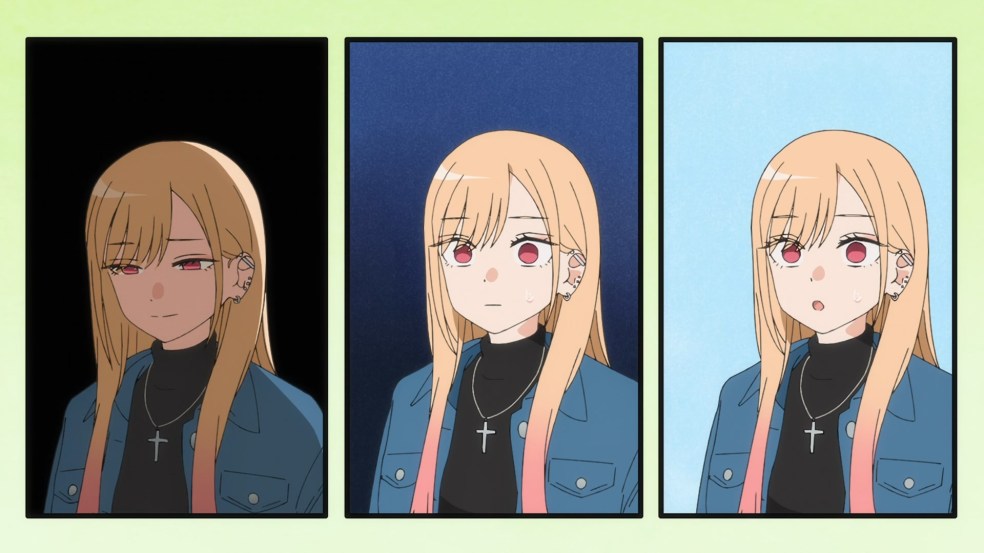
6: MY DRESS-UP DARLING, SEASON 2

We’re in the midst of a run of sequels here. You’ll have to pardon that, they’re not gonna let up as we keep climbing the list. Dress-Up Darling returns to us from 2022 and, perhaps surprisingly, is not the last Class of ’22 alum we’ll see here.
More important than its credentials though are that its fundamental strengths are all still intact. It’s still the radiantly warm, charming, easygoing love story of a pair of complete nerds, Gojo and Marin, who bond over cosplay, Marin’s favorite thing in the whole world, essentially. Far from having suffered from the time away, MDUD actually returned to us this year with even more visually sumptuous treats than it had when we last saw it. While there aren’t any more clips from Flower Princess Blaze in this season—the only fictional anime I’ve ever written a review of—there are plenty more where that came from, including a faux-OVA that kicks off the season. In fact, my favorite arc of this season revolves around one of these impressive bits of pastiche. Marin’s enthusiasm for a horror game called Coffin is central to the season’s final stretch. Coffin has a sort of willfuly faux-retro look I associate with the like of itch.io visual novels and such. To see an aesthetic like that in a series like this is really quite something, even moreso when it’s tied to a truly awesome-looking horror cosplay shoot the characters are involved in.
More than just being visually snappy though, Dress-Up Darling also continues to gently prod at the seams of gender expression. Another arc in this season sees Marin engage in some cross-play as part of a contest. New character Amane Himeno, is also a crossplayer (though if one wants to interpret Amane a bit more LGBT-y, I certainly won’t stop you), his whole backstory about dumping his girlfriend when she learned about his hobby and was disgusted by it is one of several ways that MDUD suggests that this kind of gender essentialism is on its way out. Honestly, more than maybe anything else on this list, I really hope it’s right about the world’s vibes. We needed that sunshine in 2025.
5: CALL OF THE NIGHT, SEASON 2

Of the two unexpected returns from 2022 anime on this list, I was actually more surprised by this one, in a way. Dress-Up Darling was popular, so a sequel at some point felt like a sure thing. Call of The Night, though, always felt like it was just outside the popular kids club.
Which only makes sense, Call of The Night sees the vampire as a stand-in for just about any kind of outcast. That’s why Ko, our male lead, fit in so well with Nazuna and the other vampires back in season one. But its second season took a turn for the queer (explicitly so) and, related to that, the dark. A majority of this season focuses on Nazuna’s past, giving us backstory for herself, but also characters like Hondo Kabura, who we met in season one but didn’t really get to know. (Kabura’s episodes, particularly the first, are some of the best of the year full stop.) In these stories, Call of The Night draws direct parallels between vampirism and queerness, adding it to the list of the many, many things that can get a person cut off from normal society. Anko returns here too, also getting a fully fleshed-out series of flashback episodes that frame her former relationship with Nazuna herself, directly in queer terms. All of that explodes in a final act that is as spine-chilling as anything else to air this year, nearly ending in truly dire terms when it seems like Anko is really willing to throw away everything to exterminate the vampires she’s come to hold in such contempt.
The queerness makes the fact that none of these relationships last, and their arguable replacement with Ko’s and Nazuna’s, sit just slightly uneasily. I don’t think it’s a real flaw, but if someone held it against the series I’m not sure I could blame them. Honestly, that unease is maybe the main reason it’s not in the top three. Still, you can’t argue with the effectiveness of something like this. It’s powerful. And, well, in addition to everything else I’ve said. In the last episode of the season, Anko makes a comment that she feels she’s gotten older but hasn’t really grown up. I relate. So hey, points for that, too.
4: THERE’S NO FREAKING WAY I’LL BE YOUR LOVER! UNLESS….

Here we have a show that’s going out of its way to complicate being on the list at all! Literally today, the day I’m writing this, December 31st, the show better known as Watanare, dropped a five-episode coda to its excellent first season. This was originally a theatrical release, so I’m not really counting it for the purposes of this entry. Just know that here—there’s always somewhere where this is true on the list, it seems, even if I wait until the final day of the year—I’m working off incomplete information.
Even so, Watanare was already fantastic just with the 12 episodes it initially aired with. I’d hesitate to describe Watanare as a romcom, although that’s probably the closest fit in terms of strict genre. If it’s anything, it’s a situationship dramedy, a harem series where girl after girl can simply not help falling under the spell of local dangerous pink thing Amaori Renako. Initially confessed to by overbearing rich girl Ouzuka Mai, Renako’s high school life quickly becomes a ball of un-resolvable romantic entanglement. It’s an absolute charm to watch from start to finish, as one never really knows which of Renako’s seemingly endless parade of girlfriends is going to throw things into a tizzy next.
As much as its writing (which is very good, don’t get me wrong), another important aspect of Watanare is its atmosphere. The series has a slightly unreal visual quality, I’ve previously compared it to city pop album covers and, honestly, I can’t really think of any better way to pin it down. It’s achingly romantic but not cloying, embracing all the messiness that comes with relationships and amplifying it until the knob breaks. It’s one of a couple anime where I’m kicking myself for not putting it at the top of the list! But it is what it is, 2025 was a very good year for the medium. Also, the finale’s conclusion remains an all-time way to end your high school romance show. No notes. Muri muri!
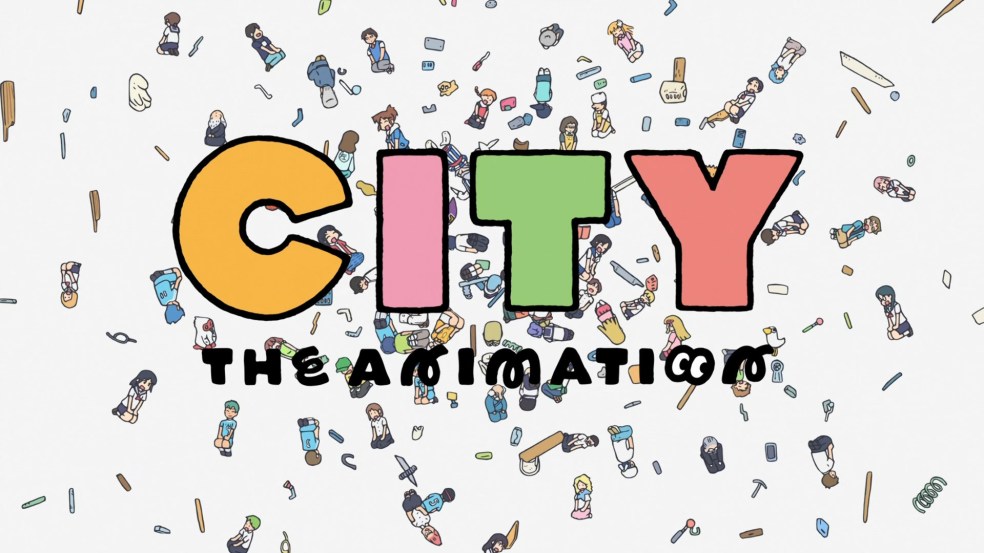
3: CITY: THE ANIMATION

Occasionally, an anime comes along that is both extremely good but also simply so good that it becomes a bit difficult to write about. What is there to say about CITY THE ANIMATION? Do you point out that it’s a massive artistic flex from, take your pick, director Ishidate Taichi who pulls off some truly unhinged stuff here, original mangaka Arawi Keiichi who has now had his work adapted into an era-defining comedy anime twice, just Kyoto Animation in general, putting the lie to any idea that they’re out of new ways to make a show just fucking slap from start to finish?
It’s true that this anime’s vast cast, a widescreen portrait of the titular city on the whole as opposed to just one or two residents, makes known a real joie de vivre that is tough to match in any year’s comedy offerings. It’s true that the directorial stuff really is that crazy, the way the show breaks into sectioned-off visual pieces in episode five only to knit itself back together into a quilt at the end of that episode must be seen to be believed. The same is true of the musical in the final episode, the show’s surprising number of silent segments that rely on expressive animation alone, etc. But at some point we’re just listing things about the show that are impressive, not necessarily the things that are good, and there is a distinction there.
So if I had to pin why I rate it so highly on any one thing in particular, it’s simply this: CITY was one of only a handful of things this year that made me optimistic about the future of anime. It was very easy to be cynical this year, for reasons I’m not really going to get deeply into but which I’m sure you can guess at if you follow the medium at all. In its specific mastery of the fundamentals, it’s a masterpiece in a very old-school, craftsmanship-first way, and I would not be surprised if it eventually emerges as the consensus best anime of 2025. It wasn’t my personal favorite, but it came very, very close.
2: UMAMUSUME: CINDERELLA GRAY

Every year, I do a little thing on social media where I have people try to guess what they think my number one pick is going to be. There were two anime that were highly mentioned this time around, and one of those was Cinderella Gray. In literally any other year, you all would’ve been right.
We’ll get to why you weren’t in a minute, but 2025 was the year I got really into Umamusume. And if I wanted to put this entry at the very top of the list because of that alone, I think I would’ve been justified in doing so. But even if we ignore the entire rest of the series, I think the story of Oguri Cap’s rise to fame is one of the year’s best. Oguri herself is maybe the year’s single best protagonist, a lovable country bumpkin who also happens to be one of the absolute strongest people in her sport.
While the series more than makes sense in aggregate, I think Cinderella Gray is best thought of as a series of moments. (Any of you who just asked “hype moments?”, you’re the people I’m really writing this entry for.) Picture Oguri and a favorite race will spring to mind, one of her beastly final spurts, or a moment of tension. Or maybe you favor one of the other characters instead, and what comes to the forefront is a flash of white lightning, a victory clinched or lost in an instant, the scowling face of a prior era’s ruler. Cinderella Gray is a series of become verbs. Want. Strive. Struggle. Achieve. If I say that Umamusume as a whole enterprise has achieved an almost talismanic importance to me, I sound like a lunatic, so let me just say instead that it lights something in me that I can’t entirely name. Maybe that’s silly, but it’s the truth. For as goofy as Umamusume’s very premise seems and, honestly, is, it is genuinely inspirational in a way that very few things are. (In fact, I’ve said this before, but it is truly incredible that Oguri Cap is still inspiring people some some 30 years after the end of his career. Sure, it’s in a different form, but how many athletes, human or otherwise, can claim that? It’s a pretty exclusive club, and it’s not one he’ll be leaving any time soon.)
The explosive, world-conquering vibe check aside, it really is a great story, too. One that deals with the temporary nature of all of these things just as it effortlessly embodies the thrill of chasing after them. Future seasons of Cinderella Gray—and there will be future seasons, I’m almost certain—will shift the thematic balance in regards to which it emphasizes, but its first season (in two parts. Confusing!) is a triumphant, star-reaching pulse of a thing. It doesn’t hurt that every one of Oguri’s competitors, from her career-defining rivalry with Tamamo Cross to even cool-as-hell one-offs like Obey Your Master, are great characters in their own right. Added together ,what you have here are the first two chapters of an epic. And in fact, that’s the main reason this isn’t at the top of the list. They are going to make more Cinderella Gray, and—spoiler here—as someone who’s read the manga, I have every reason to believe it’s going to be even better than what we have already. Keep running, Oguri Cap, you’re not at the finish line yet.
So, that’s 19 of 20 anime down. As I said, in any ordinary year, everyone who guessed my #1 pick would be Cinderella Gray would be absolutely right, and I hope I’ve conveyed at least some sense of why that’s so. Unfortunately, 2025 was not an ordinary year. So if you want to feel bad for Cinderella Gray, lament only that it was not born in a different era.
Congratulations to everyone who guessed my #1 pick. By my reckoning, that’s my good friends June, Astro, Persica, and Wolfie.
.
.
.
.
.
.
.
.
.
.
.
1: AVE MUJICA -THE DIE IS CAST-
Look. I know, okay?
I am keenly aware of how it looks to have a girl band anime as my show of the year, two years in a row. Back to back girl band dramas! She’s lost it! She should have her anime critic card revoked!
Unfortunately for all of you, there is no license to be an anime blogger. I only write these things because I’m weird enough to want to. So here, at the end of one year and the start of the next, let’s do this whole song and dance one more time.

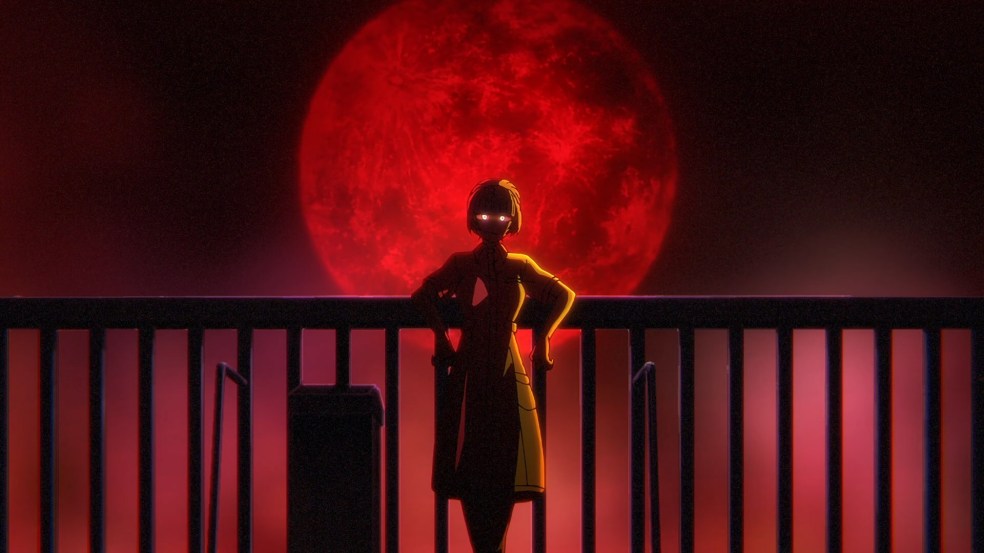
I think there’s a good chance that, at this point, people who read my blog regularly have seen this image of Sakiko more than the people who animated it.

I tried a few different placements of the top three before settling on this one. I would be lying if I said I was perfectly happy with it, but I made up the format of these posts in the first place, so I feel an obligation to stick to them. There are no ties. If I have to single out what I think is the best anime of the year, of those I watched, there really isn’t any doubt. It’s Ave Mujica, whether you want to call it by its marketing-mandated full English title or not, there just really isn’t any other option. Other anime this year were many things. In many years, being merely a work of deep, healing beauty, or being something inspiring enough to remind me to push forward day by day, would be enough to place at the top. That was the case in 2022 with Healer Girl or, yes, in 2024 with Girls Band Cry, and it was the case this year with Cinderella Gray. Nothing I’m about to say is meant to disparage any of those anime, which are all fantastic in their own right. But, this year was different. This year, the demiurge walked among us. She had blue hair and trauma, and she made it everybody’s problem.
Ave Mujica is, technically, yet another anime on the list that’s a sequel, being the followup to 2023’s BanG Dream! It’s MyGO!!!!! MyGO is an excellent series in its own right, and had the subseries stopped there, we would still absolutely be talking about it was one of the best anime of the 2020s. But, MyGO, at the end of the day, was still a band girl anime, the genre label that has emerged for this cluster of anime that deal with young girls processing their pain and sorrow through the power of music. I already went over the basics of MyGO‘s story leading into Ave Mujica during my review-not-a-review of the series, so I won’t repeat myself, but it is worth emphasizing that everything that happened in the first season, as great as it was, was still pretty normal territory for this genre. And then, at the eleventh hour, its final episode turned it into something else.
It does put me in a funny spot, though. More than anything else I’ve ever put this high on the list that I didn’t do literal week-by-week coverage of, I have already written about Ave Mujica extensively. I have arguably written too much about the damn thing. Seriously, it’s a little excessive. But I couldn’t help it! Something about Ave Mujica drove me a little crazy, and maybe that’s a function as much of my own declining mental health as it is anything about the show, but I really do think Ave Mujica is a born classic. The best anime either define their times or embody them, and if there has ever been a better representation of the emotional cement mixer that is the mid-2020s, I’m not aware of it. Under everything, under the arguments about whether this is even really a music anime, under the tedious discourse about its ostensibly “problematic” elements, you have an anime about five people whose teenage emotional fallout, ongoing trauma, and unique neuroses are blown up to first theatrical, and then mythological proportions. It only makes sense that by the end of the season, Sakiko has declared herself a god lording over a walled garden. What else was she going to do?
There’s a further reason, in fact, that I put this at #1, the very real possibility that this all comes crashing down around us, some day very soon. I mentioned in the Cinderella Gray section that I sometimes rate things slightly lower on these lists because I believe they will become even better with subsequent entries. Crucially, I don’t really know if that’s true with Ave Mujica. Everything it’s built up is such a high-wire razor’s-edge balancing act that it feels completely impossible that season three, whatever it will entail, could ever top this. (Spare a thought, also, for Mugendai Mewtype, the other BanG Dream band slated to get an anime in the coming year, who have the unenviable task of following this.) I’ve been wrong before, and I would love to be wrong here, too, but the yawning uncertainty of the future does make me feel like I have to recognize Ave Mujica for what it is now. The dream, remember, is only illusorily eternal. The walled garden only exists until we wake up. Memento mori and all that. Is this the crescendo of this black opera? Do we wait on just the grim conclusion, or somehow, some way, will it find even higher to climb? I don’t know! That uncertainty is a little scary, but it’s also exciting.
So that’s how we close the year, with a screaming, gothic thrash of pain as we rocket toward a cryptic and hazy future. I’ve made a bad habit in the past of trying to directly tie my anime criticism in a given year to my emotional state, but, well, I don’t think a look at this list necessarily needs a genius to interpret. The future will come whether we’re ready for it or not, but, if we’re going down, at least we’re burning in the same fire. That, I think, is perhaps the spirit I’ve taken Ave Mujica (and Ave Mujica) in, and I hope the spirit you’ll take this entry in, as well. And if this all seems rather dramatic to you, well….yeah! It is! I’ve been a lot of things over the course of my ‘career’ as an anime blogger, but I’ve never been a liar. May 2026 be a year where a sunnier best-of pick makes more sense.
And that’s the list. One of the least-stratified I’ve ever done, I think (I truly do think basically anything from Ruri Rocks on up could conceivably be somebody’s anime of the year). As I do every year, I want to thank all of my lovely internet friends, those from the Ave Mujica Scream Zone who were with me every step of the way through experiencing the show itself, my friends from the Witch’s Manor and the other Discord servers related to those two. A big shout out, as well, to my bluesky and tumblr followers, as well as everyone on the Magic Planet Anime Discord. You guys rock, and I wouldn’t be here without you.
As always, consider tossing me a donation if you liked the list. These year-end lists take a lot of effort.
I’ll see you when I see you, anime fans.
Like what you’re reading? Consider following Magic Planet Anime to get notified when new articles go live. If you’d like to talk to other Magic Planet Anime readers, consider joining my Discord server! Also consider following me on Anilist, BlueSky, or Tumblr and supporting me on Ko-Fi. If you want to read more of my work, consider heading over to the Directory to browse by category.
All views expressed on Magic Planet Anime are solely my own opinions and conclusions and should not be taken to reflect the opinions of any other persons, groups, or organizations. All text is manually typed and edited, and no machine learning or other automatic tools are used in the creation of Magic Planet Anime articles, with the exception of a basic spellchecker. However, some articles may have additional tags placed by WordPress. All text, excepting direct quotations, is owned by Magic Planet Anime. Do not duplicate without permission. All images are owned by their original copyright holders.






 The Magic Planet