
The Weekly Orbit is a (sometimes) weekly column collecting and refining my more casual anime- and manga-related thoughts from the previous week. Mostly, these are taken from my tumblr blog, and assume familiarity with the works covered. Be wary of spoilers!
Happy Monday! These are probably going to be going up on Mondays for the rest of the season, provided my energy levels and outside obligations don’t interfere. We’ve got a long one today, with a couple doubles, so I hope you’re ready to read all about the anime I’ve been loving (or even just kinda liking) this week.
Anime – Seasonal
My Dress-Up Darling, Season 2 – Episodes 3-5
This show is so warm. I love the unifying theme between these episodes; cosplay on the boundary of gender expression. Amane’s cosplaying is something he stuck to even as his ex-girlfriend found it creepy and offputting (his cheerful “so I dumped her!” line when explaining this is absolutely hysterical. Queen shit). A contrast is drawn between that attitude, which in the world of the show—I’d like to think in the real world as well, but who can quite say—is quickly fading, and the present reality of Gojo and Marin’s classmates, who both support and are enthusiastic about Marin’s crossplaying for their school festival event. Episode five continues along this path as Gojo has to learn to ask for help while preparing the perfect crossplay for Marin, a storyline that promises to come to a head next episode. I’ve honestly been loving every second of Dress-Up Darling since it came back, I don’t know if I realized I missed it that much.
Ruri Rocks – Episode 4
A more character-driven and comedic episode from the mineralogical slice of life series this week. Still a great one, though, and I particularly appreciate how much of this episode is devoted to teaching Ruri (and by extension the audience) to understand the interconnectedness of place. Grains of sand in a river were once on a mountain. Over the course of millions of years, time and tide have eroded them, and just as natural forces moved them downstream to where Ruri and Nagi collected them, so too is Ruri herself slowly changing from an impatient gemstone-hunter to someone who truly understands the scope and scale of the natural world. Of course, this episode subtly suggests that in doing so she might be moving away from her previous group of friends in the process. But I can’t imagine they’ll stay removed from Ruri’s geological adventures for very long.
Gachiakuta – Episode 3 & 4

Full credit, I liked this a lot more than episode two, and honestly a fair bit more than episode one as well. My feelings are still pretty mixed overall, but I might actually stick with this for a while longer? Depends on how circumstance shakes out. More on that below.
So, straightforward positives. There’s some pretty neat (if not necessarily super original, but that doesn’t really matter for something like this) worldbuilding stuff in this episode. The dynamic between Enjin and Rudo is a very classic somewhat strained mentor and student sort of thing, and I think it works pretty well. We’re introduced to our main monsters-of-the-week here, and Rudo meets a new character, Nijiku Zanka [Matsuoka Yoshitsugu].
My main problem here is still just with the adaptation itself. Politely, it’s a bit lacking in visual urgency, and the muddy color palette—while appropriate, given the subject matter—doesn’t exactly make most of this stuff pop. There’s a nice ambiance to the city itself, but outside of the backgrounds I just don’t love how the show looks overall. Impolitely, it’s giving a bit of Sabikui Bisco. I do somewhat question this production’s ability to stay afloat over the course of two consecutive cours. That said, the Rudo / Zanka fight scene was nice. So maybe this is being planned out better than I’m giving it credit for. Definitionally, there’s no real way to know until we get there.
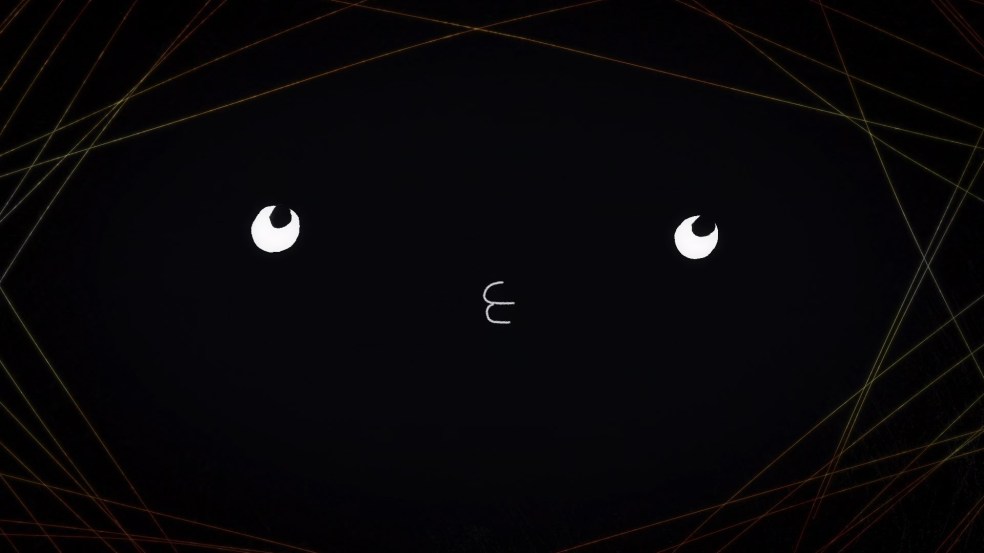
About that fight scene. I liked the quick subversion of the usual cliche where new characters meet and fight before getting to know each other. Rudo actually tries talking to Zanka first, remembering some advice from his father figure Regto as he attempts to talk Zanka down. This works until Rudo tries smiling at him (long story) and is so bad at it that Zanka assumes he’s being mocked, and we thus get back to the usual fight setup. It’s a fun and funny way to work with the expected beats of something like this. And, in Zanka’s defense, Rudo’s “smile” looks like this:

The whole….bit with the plunger, which I am just not going to describe in detail because I dislike toilet humor, is, well, I’d call it the episode’s low point, certainly. The episode ends with Zanka and Rudo kinda-sorta reconciling in Enjin’s jeep as Rudo officially joins the cleaners. Also introduced here briefly is a character whose name I don’t think we get from the episode itself but who Anilist tells me is named Riyou [Hanamori Yumiri]. She is, I believe, the final member of the core cast, and our token Girl. I didn’t get much of an impression of her off of her brief scene here, but she seems neat. (I am perhaps unsurprisingly always a little biased toward the women in battle shonen. We’ll see how Gachiakuta scores in that regard.)
Also, she spends a bunch of time touching Rudo’s hair, which, huge tangent here, is very true to life. Having been on both ends of this—I’m transfem, if you’re a new reader—girls just do love hair. We’re fascinated by it, I’m not sure what it is, it’s just a very interesting thing in a lot of people.

In any case, yeah, Gachiakuta has probably avoided my chopping block for the time being. This is actually slightly annoying, because I was planning to pick up another show—Bad Girl—in the free slot I’d have. But, I may just end up dropping Kamitsubaki City instead. That show, unlike this one which I’m just a bit mixed on, is just genuinely very bad, an incoherent mess at best. And I’m not sure how worth it it is to keep watching just to hear V.W.P.’s songs. (Also, Takopi’s Original Sin ended this week—keep scrolling for more on that—so I’ll have some extra time there, too.)
I’m rambling. If I can make two more quick minor gripes before I end the section on episode three (which has gotten oddly long by the standards of the posts I usually transfer over here), the bit at the start with the old woman who looks like an old man is super cringy, and the episode really had to work to win me back after that. Similarly, the bit about Rudo being able to turn any object he touches into a vital instrument just feels sort of….I don’t know, a little much? Give the guy some limits!
These minor complaints aside, episode three was solid! I’m happy to report much the same is true of episode four, and I think at this point Gachiakuta has fully won me over.
Conceptually, four is a very simple episode. We’re getting Rudo acclimated to the Cleaners as an organization and as allies, so he’s introduced to a few of them and accompanies one of them—Riyou, in fact—on a job to fight some “small” trash beasts.
Of course, said beasts turn out to be anything but small. Even the relatively little ones are iron, skull-faced antelopes that can easily bowl a man over, and the largest in the group is a massive wedge-headed thing that takes all of Riyou’s power and attention. (When she destroys it, she finds that it’s mysteriously powered by a Vital Instrument not unlike the Cleaners’ own, thus nicely setting up a future plot thread.) Riyou is the real star of the show in this episode, and there are some real shades of Kill la Kill with her, given her bombastic design compared to everyone else and the fact that she fights with a giant scissor blade. (Which she mostly wields with her feet? Interesting decisions are being made here.)
Her death blow against the giant trash beast at the end of the episode is probably the best the series has looked so far. Hopefully it continues to stay the course in that regard. All around, the past two episodes have done a lot to persuade me to stick with the series.
CITY The Animation – Episode 4 & 5

Episode four is our first that ends with an actual cliffhanger, thus bringing something of a semblance of an actual, overarching plot to CITY. Regardless of whatever’s in that locket, I think the show will probably continue to be just as wildly zany as it has been, so I’m not too concerned about the (very slight) change in direction.
What of episode five you ask? Total! Sensory! Overload! In the absolute best way possible.
It’s difficult to nail down using written language what CITY mostly says purely visually, but that’s especially so here. This episode’s bursting-at-the-seams color, bonkers animation, and general technical wizardry really have to be seen to be believed. In terms of story we mostly follow Nagumo and the still-unnamed “Nice Man” from a few episodes back. The how is secondary to the what; through a series of zany misadventures, Nagumo and the Nice Guy find themselves having to descend through a tower of increasingly silly obstacles in order to escape. What are they trying to escape? Too much hospitality of course, although Nagumo regrets her decision to try leaving almost as soon as she attempts it, and thus tries to lose on each floor. This makes it all the funnier when the floors mostly solve themselves, starting with a magician whose tricks turn on him and just getting weirder and more surreal from there.
The what, it must be stressed, is also secondary to something else; the presentation. About halfway through the episode, CITY zones itself off into multiple screens, like the picture-in-picture mode on a digital TV, and it just keeps doing this until the episode is following essentially the entire cast of the show up to this point, showcasing events from every possible angle at once before finally breaking down even further into a morass of blobs containing one or two characters each.

In its final scene these blobs finally knit themselves back together as Nagumo, The Nice Man, and Wako (also along for the ride) finally leave the tower only to discover that a huge party has sprung up on the tower’s front lawn.

It’s joyous, full of life, and just an absolutely mindbendingly gorgeous work of art. With this episode, CITY passes through any mere “anime of the season” conversations, demonstrating that it is not content to just hold the torch of its stylistic predecessor Nichijou; it wants to build on and surpass it.
Call of The Night, Season 2 – Episode 5

If there’s one thing Call of The Night seems really keen on, it’s complicating its central metaphor.
Here, continuing the flashback from last week’s episode, Kabura learns from Haru about how she has to hunt on her own. Becoming a vampire, Call of the Night suggests, comes with its own set of rules and obligations, but we don’t actually get to see much of Kabura learning from Haru here.
Instead, Haru leaves Kabura behind. Requesting in the process that she care for her born-vampire child, revealed to be Nazuna. It’s both fascinating and absolutely heartbreaking. This poor woman, someone who spent much of her life cloistered off from other people, has now been abandoned again, explaining both her generally cold demeanor and her self-professed habit of trying to steal potential offspring from other vampires.

Or does it explain all that? Again, it’s just complications on complications here. There’s no easy map for Kabura and Nazuna’s unusual relationship, and at some point it almost feels like the story is trying to actively frustrate any applicability. If you wanted to be uncharitable, you could write all of this off as an around-the-bend way for Ko to still be Nazuna’s perfectly heteronormative first love.
But this, of course, brushes off the complicated and compassionate writing of Kabura herself. Late in the episode, after Kabura has told Nazuna that she hates looking at her because her face brings back painful memories, Ko calls her bluff, describing Kabura’s demeanor as concerned and almost motherly. Kabura admits he’s not entirely wrong, but she, and Call of the Night itself, swat Ko’s “mom” label away as restrictive and insulting. He doesn’t know her, and really, neither do we. At the same time, she ends her conversation with Ko by warmly telling him to build a good relationship with Nazuna. Later on, Nazuna herself seems to know, both from how Kabura always did her hair and how—in a flashback not explicitly from anyone’s point of view in particular—Kabura would hug her tight. Crying for her lost love, sure, but an embrace is an embrace.
All but said outright is that these two facts about Kabura; both her endless brokenhearted frustration with Haru, and the resentment she feels toward Nazuna as a result, and the fact that she nonetheless does genuinely care about Nazuna, are two facets of a very complex person who has lived an equally complex life. (And there is some implication that the story Kabura tells Ko and Nazuna isn’t the whole truth anyway.)

The episode—and thus this short arc about Kabura—ends with an application of that not just to Kabura but to everyone. A short comedic sequence aside, the episode’s remaining runtime is eaten up by Ko wondering what in the vampire-hating detective Anko’s past could have led her to such extremes. There’s a cut to Anko herself, stalking the hospital where Kabura works and barging into the derelict room where Kabura had kept all of her memorabilia from when she was human. Anko sighs with frustration; the room has been emptied. Kabura has already thrown her past away, Anko can’t catch her out either.
Dan Da Dan, Season 2 – Episodes 2 & 3
A huge step up from the second season’s premiere. Evil Eye’s backstory in episode two is particularly well done, and I also love the fight scenes in episode three. Dandadan truly feels like it’s back now and I can’t wait to be fully caught up.
Necronomico & The Cosmic Horror Show – Episode 5

Still mixed on this one, but I think if the show continues on this track I’ll be fully won over before too long. A bit against my own wishes, even.
The obvious “problem” with this show is Eita, right? Eita is just not that interesting of a villain. He definitely sucks, don’t get me wrong, and it’s funny and a bit cathartic when he malds about the game (a twisted quiz show in this episode) being rigged or whatever. But he sucks in such a vapid, air-sucking way that watching him ham it up for the camera during the rest of the episode is exhausting instead of fun. Even the reveal that he went to the guy he magic’d up a car crash on in the hospital and literally yanked his life support, normally the kind of thing that’s so over the top it’d loop back around to being interesting, just comes off as an attempt to gas a fundamentally lame villain. At one point, Gua (the redheaded old god) says that in another life he “might’ve shaped history”, which is a hilariously stupid thing to say about a guy who’s basically an evil version of Ninja.
I do sort of think the show might be gearing up to get rid of him, though, because all he really accomplished this episode was making everyone else angrier at him than they were already. Then again, this genre loves its utterly vile villains, so maybe I’m being overly optimistic.
In the positives column, you’ve got basically everything else. The actual premise of this episode is pretty neat. The idea of a quiz show where all the answers are about the contestants and so what you’re really sacrificing is either goodwill (if the question is about someone else) or your own dignity (if it’s about you) to score points is interesting, much moreso than the tedious lateral thinking puzzle that kicks the episode off, thank god we got past that quickly. Eita shafts another player again, in this case Kanna, but she manages to bounce back by answering a question about herself. In the process, she reveals to the other contestants that she was horribly abused as a child and ran away from home when she was younger, which is also why she lives by herself (how she does that, on a streamer’s earnings, is a question left unanswered). Then at the end of the episode, Miko gives them a pretty good put-down:


At which point they reveal they’ve been livestreaming this entire event, so Kanna did in fact just reveal her domestic abuse to the world. Pretty harsh!
She gets something of a silver lining in that the “Lord of All Things” (I don’t know my Cthulu Mythos very well. I think that’s Azatoth?) intervenes to help her during the quiz itself, and seems to be favoring her in general. I really hope this plot—including some of Cthulu’s more ambiguous comments about it—goes somewhere, because it’s easily the most interesting thing introduced this episode. If I’m writing a wishlist, Kanna turning heel and murdering Eita would be amazing.

Speaking of amazing things, the episode ends on the reveal that a witch hunter from the Vatican is now aware of the Cosmic Horror Show. I think this has the distinction of being the first absolutely fucking hilarious appearance of the Catholic Church in an unexpected place in anime since Pope Leo XIV took office. I’m sure he’s thrilled.
Takopi’s Original Sin – Episode 6 (Finale)

They really got me with this last episode man, I’m not even going to try to pretend otherwise.
Takopi ends on a bittersweet note and, honestly, essentially where it started. In removing himself not just from Shizuka’s life but from everyone on Earth’s life, Takopi leaves her with nothing. Nothing except the time they spent together—now buried in some deep, deep well of the unconscious that just a bit more timeline-shifting-proof than the rest of her mind—some hugs, and the idea that talking to people is a good way to get to know them. Kids shit, basically, but it’s enough for Takopi to finally improve Shizuka and Marina’s lives, even if just a little bit.
Their mutual quasi-memory of Takopi, who lives on as a doodle in one of Shizuka’s notebooks, is enough to finally get the two of them to stop fighting in the new and final timeline. Chappy thus doesn’t die, preventing Shizuka from going past the point of no return, and while all of the other hardships in her and Marina’s lives are still present, The epilogue implies that they’re actually quite close now. Takopi, gone from the world, has finally given them something. Not by trying to directly fix their problems—remember, Takopi’s a kid too, he never really had the ability to do that—but just by being their friend. It’s a beautiful ending to one of 2025’s most complete thoughts.
I will say, as an olive branch to the other half of the audience, I have seen backlash to this show and while I don’t agree with it, I do at least understand how it could at least fail to affect someone as profoundly as it’s affected me. Because, ultimately, the emotional impact of the narrative is contingent on you sympathizing with these kids (and Takopi, again, also a kid) in the first place and I know some have had some difficulty in getting there. I do think it depends on one’s own experiences somewhat.
Personally….I mean, I won’t pretend I had it nearly as bad as Shizuka or Marina, but I had a pretty rough childhood in some aspects and, even more honestly, it’s led to a pretty rough adulthood. So I do see something of myself in all of these kids. It’s not that surprising, this in mind, that Takopi got genuine tears out of me. A fantastic show, overall. Maybe even—although this is a judgement for the long view of history alone—a generational one.
Until we meet again. See you, space octopus.

Anime – Non Seasonal
Key The Metal Idol – Episodes 1 & 2

Key the Metal Idol is a fascinating little OVA I started the other day. Its first episode sets up the premise—our titular robot girl, Key herself [Iwao Junko], must make 30,000 “friends” before her final battery runs out, the last wish of her creator now that he’s no longer around to repair her—but more than its actual story, what has gripped me about the show so far are its palette of moods and a few standout individual moments.
That’s not to say it’s devoid of overarching plot or themes, there are actually about a half-dozen plot threads running even just already by my count, and thematically we’re clearly doing something with dehumanization and the commercialization of bodies—one of the first things that happens to Key in the story is that she’s scouted by a sleazy gravure model manager—but however that might look when it eventually comes to a head, that’s all a way’s off.
So, yeah, moments and moods. In this second episode, Key’s friend(?) and impromptu roommate Kuriyagawa Sakura [Nagasawa Miki] ends up confronting that gravure manager and his hulking bodyguard. Except, she doesn’t actually have to fight him, because quite literally just Some Random Guy [Tataki Shuuichi, Anilist tells me, VA: Morikawa Toshiyuki] who happens to be at the video store she works at goes Bruce Lee on their asses. Because he’s a “martial arts otaku.”
There are moments of deadpan comedy like this throughout Key The Metal Idol thus far; bizarre things presented in a very deadpan way so as to not jostle the otherwise moody and downbeat nature of the episodes. For example, tracking Key for his own reasons is a shadowy figure named Sergei [Kosugi Juurouta] with shady connections to android experiments. This wouldn’t be out of place in any cyberpunk or contemporary sci fi series, but what’s notably weird (and thus funny) about the guy is that he….spits gumballs at things to break them a few times? This isn’t commented on, it just happens and we’re left to either laugh at it or accept it at our leisure. Sometimes the jokes roll over into more serious story beats, thus bending the arc of our attention back to the more thoughtful and emotional aspects of this setting. At one point, Sakura leaves a note for Key that she should take a shower. She does so, but Key being a robot girl who doesn’t really understand much about the world, she stays in the shower all day. On its own? Pretty funny. What’s less so is Key actually passing out for some reason, and Sakura’s duress when she comes home and finds her unconscious in the shower.
The second episode ends with a truly great scene where Key watches a tape of an idol. This idol is introduced earlier in the episode (she seems like she’s going to be important), as is the tape itself. When first introduced, the tape is accompanied by its actual music, a nice little bop that sells the character’s status as this important and unflappably cool musical figure pretty well. But when Key watches it later, we don’t hear the music anymore, just the mechanical whirring of the tape as she studies the idol’s movements in silence. Hologram hands reach out to her as the episode comes to a close, and we get a sense of why the show might be called specifically Key the Metal Idol.

That’s about all for this week, as usual, if you liked what you read here, a donation to my Ko-Fi page is always a huge help. Every penny counts.
One final side note; if you follow me on tumblr and wonder why my Bullet/Bullet writeup didn’t make it into this column, it’s mainly because I’ve been trying to cut down on the amount of things on this blog that are that negative. Although honestly knowing me I’ll probably reverse this particular policy decision in a month or two, I can never quite seem to settle on how to organize this place, and what “counts” for this column or not.
In any case, for the Bonus Screencap this week, I wanted to go with this simple but pleasantly My Neighbor Totoro-esque shot of Takopi and Shizuka. They won’t be appearing in this column again, so it felt only right to give them a nice send off.

When it rains, it pours.
Like what you’re reading? Consider following Magic Planet Anime to get notified when new articles go live. If you’d like to talk to other Magic Planet Anime readers, consider joining my Discord server! Also consider following me on Anilist, BlueSky, or Tumblr and supporting me on Ko-Fi. If you want to read more of my work, consider heading over to the Directory to browse by category.
All views expressed on Magic Planet Anime are solely my own opinions and conclusions and should not be taken to reflect the opinions of any other persons, groups, or organizations. All text is manually typed and edited, and no machine learning or other automatic tools are used in the creation of Magic Planet Anime articles, with the exception of a basic spellchecker. However, some articles may have additional tags placed by WordPress. All text, excepting direct quotations, is owned by Magic Planet Anime. Do not duplicate without permission. All images are owned by their original copyright holders.


 The Magic Planet