
Seasonal First Impressions is a column where I detail my thoughts, however brief or long, about a currently-airing anime’s first episode or so.
Content Warning: This article contains discussion of suicide, child abuse, bullying, and other heavy topics. Please use your discretion before reading.
I’m open to the idea that this is a real “these three points make a line” sort of statement, but in my experience, it seems to me that when a show premieres before the bulk of its season, it’s usually lightweight and lighthearted. Something like Fluffy Paradise, or what have you. Why that is, I couldn’t tell you, but maybe there’s a sentiment that if you’re going to put yourself out there ahead of the pack, it doesn’t make sense to demand too much from viewers. That’s a guess, but it’s the best one I’ve got.
In any case, Takopi’s Original Sin—an ONA adaptation, slated for six episodes, of Taizen 5‘s Jump+ manga—does not follow this pattern. At all. In fact, before I say anything else, let me hit you with the same exact warnings that the show itself does.


Those two content warnings, one from the anime’s production committee and the other, as far as I can tell, inserted by distributors, are not a joke. Takopi is in the running for the heaviest anime I’ve ever covered on this site, and I’m saying that as a statement of fact, not some kind of tasteless “you won’t believe how dark this show is!” clickbait sort of thing. So please, if reading about anything described abvove is distressing to you, or if watching it is distressing, please exercise your judgment. Take care of yourself, alright?
Beyond that, it’s actually the visual element of this show I’d like to discuss first. (Coming to us from director Iino Shinya, previously best known for the Dr. Stone adaptation, and his team at Studio ENISHIYA. As far as I can tell, this is their first work that’s not a music video or something of that nature.) Despite this being an anime blog, I usually save notes on production polish and such for the last few paragraphs, mostly because the ins and outs of how an anime actually gets made are not my specialty, and there are only so many ways for a comparative layman to say something looks good. Takopi is different: its human character designs have a distinctive feel, I’d almost say a weathered appearance, that sets them apart from the norm. They’re not “realistic” per se, but they’re expressive and feel like stories unto themselves, most notably with Kuze Shizuka [Ueda Reina], a fourth-grader and one of our leads; rail-thin, with a stringy mop of black hair, dressed in a battered white t-shirt, and a face that conveys an exhaustion beyond her years. Deliberately cutting against all of that is our non-human lead, Takopi himself [Mamiya Kurumi]. Takopi is a round alien, essentially a pink sphere with some stumpy legs, a mouth, eyes, and two tentacles. He looks like something out of a children’s storybook, and he thinks like one too, most scenes that depict something he imagines do so in this painted, storybook style, and it adds an incredible amount of depth to the show.
As for the alien himself, Takopi comes from The Happy Planet. His mission? To spread joy far and wide across the galaxy.

To that end, he has a bag full of gadgets—Happy Gadgets—that can do just about anything; a wrist band that lets you fly, an instant camera / time machine, a talking moai-like head that gives advice, an infinitely-long ribbon that can make any two people who are fighting resolve their differences. You know, the basic stuff. Takopi is, textually speaking, a literal extraterrestrial. But from the moment he’s introduced to Shizuka’s life, it’s clear that he’s also meant to come off as rather childlike. He’s immensely naïve about how the world works, and his gizmos do little to solve Shizuka’s problems. Still, Shizuka, at least initially, seems to be grateful to have someone to talk to at the very least. Over the course of a few days, she feeds Takopi bread and the little alien offers her various widgets to improve her life. It should be pointed out that she declines to use any of them, other than allowing Takopi to take a picture with the aforementioned camera, for the stated reason that even something like being able to fly through the sky “wouldn’t change anything.”
One gets a sense of what she means when we’re first introduced to Kirarazaka Marina [Kohara Konomi]. Marina, a classmate of Shizuka’s and, it quickly becomes clear to us if not Takopi, her bully. From the very moment she’s introduced, Marina is so awful to Shizuka that it’s almost impressive. One of her first lines is her and an underling talking about how they’ve broken Shizuka’s writing board, about which Marina sneers that she can use her “welfare money” to buy another. Further details like insults scribbled on Shizuka’s bookbag and simply how insistent she is about hiding from Marina paint Shizuka’s school life as a living hell even before we get to actually see it in the episode’s second half.
There’s a sense of suffocation here, and the environment reflects it; a relatively small town where everyone knows everyone else but doesn’t necessarily like them. Shizuka’s home life paints an equally-bleak picture; her only real companion is her dog Chappy, a giant ball of fur and affection that truly seems to be the one light in her life. Her mother, an “escort”, doesn’t really seem to ever be home, and an innocent question about Takopi regarding where her father is is met with “I don’t have a dad.”
Even so. All of this is contrasted with Shizuka’s moments with Takopi, which she does seem to genuinely appreciate. After seeing Shizuka’s home for the first time, Takopi tries to cheer her up by offering to take her to his home planet. He’s rebuffed, but Shizuka, Takopi, and Chappy end that night by walking together under the star-woven night sky. Shizuka smiles, Takopi is overjoyed.

If Takopi’s Original Sin is ever “misleading” in any way—and I really don’t think it is, this is not a show that’s coy about what kind of story it’s trying to tell, but for the sake of argument—it’s probably here. For a few seconds, it seems like things are looking up.
And then tomorrow comes.

Shizuka, badly beaten and clutching an empty dog leash—did Chappy run away? What happened? We aren’t told—meets up with Takopi again. For neither the first nor the last time, Takopi tragically doesn’t really understand what he’s looking at, interpreting her bloody mouth and black eye as “decoration.” Shizuka can only mumble out that she had a “fight” with her “friend,” at which point Takopi likens the way Shizuka’s face has changed to how he blushes when he gets embarrassed. (Moments of this nature, where Takopi just fundamentally misunderstands something about how humanity works, are excellent in how thoroughly they can sink your heart in just a few lines of his cheery delivery, and they’re scattered all up and down the episode.)
He latches on to the “fight with a friend” description, though. Offering Shizuka a “Reconciliation Ribbon” that can make any two people reconcile so long as they each tie it around their fingers. For me at least, this is around where the feelings of unease cultivated by the opening minutes of the episode blossomed into full-blown dread.


Takopi somewhat reluctantly lets Shizuka borrow the ribbon, despite the rules of his mission (as dictated in a flashback by a large, white specimen of his species) saying that the gadgets should never be used without direct supervision. Time passes, and Takopi gets worried.
He eventually makes his way back to Shizuka’s home, only to find it empty. Empty except for the Ribbon, fashioned into a makeshift noose, and except for Shizuka, having hung herself. The scene is harrowing, an explosion of pure, black dread. (I think one can make the case that Takopi’s lending the Ribbon to Shizuka is the titular “original sin,” though given that we’re only one-sixth of the way through this story, I’m sure other interpretations will make themselves known.)
Understandably, the little pink alien panics. He wonders how this happened, blaming himself and lamenting that death is the one constant across the vast universe. He can’t bring back the dead, but there is one thing he can do with his extraordinary gadgetry. The camera’s hidden function as a time machine is revealed here, allowing Takopi to travel back to the moment the photo was taken. (This seems to require him to have the photo on-hand, and it’s said outright that the camera can only store one picture at a time. Both of these facts seem like they’ll eventually be relevant.)
Thus, the second part of this episode revolves around Takopi trying his damnedest to avert Shizuka’s tragic fate, to find a world where she lives. To do this, he feels the need to learn more about her. Traveling back to the past, he accompanies her to school, trying to solve various minor problems he incorrectly pegs as the source of her pain (forgetting her homework, being unable to finish her school lunch, etc.), and one of the episode’s most visually interesting moments consists of a montage juxtaposing these problems and Takopi’s stopgap solutions to them, splitting the video down the middle and showing both at the same time.

But what Takopi still doesn’t entirely get until the episode’s final act is that all of these things are symptoms of a bigger problem that Shizuka is dealing with. Namely, Marina. Everything else that happens to her in school is a direct result of Marina’s bullying; she didn’t forget her homework, Marina stole it. She might be able to actually finish her lunch were it not for Marina and her fellow bullies mocking Shizuka to her face while she’s trying to eat. And so on and so forth.
Takopi, heartbreakingly, doesn’t really understand this either. He assumes that Marina and Shizuka are former friends who’ve had some kind of falling out, and that if he can just get them to talk, things will be fine. The problems with this approach are left unsaid, but are obvious. What if someone just fucking hates you for no obvious reason? What if someone is abusing you because they themselves are abused and you’re just an outlet for their anger? What if someone is mad at some other specific person and you’re just a proxy for their rage? Takopi can’t consider these angles, and when he naively tries to use another of his gizmos (a palette that lets him take the appearance of anyone he wants) to take Shizuka’s place when Marina wants to “talk to her,” it predictably goes very poorly.
I have to confess, as awful and stomach-churning as Shizuka’s suicide was, this was actually the scene that made me pause the episode and necessitated me taking some time to collect myself before resuming. Marina just absolutely beats Takopi-as-Shizuka black and blue, ranting at him about how “she” is the daughter of a “parasite” who’s preying on her father, and concludes her assault by jamming a mechanical pencil in Takopi-Shizuka’s eye. The narrative revelation—that Shizuka’s mother is sleeping with Marina’s father, and this is one of the sources of Marina’s anger—is crammed into the margins by the visceral pummeling she’s giving Takopi-Shizuka, a clouding of cause-and-effect that is all too reflective of how these things can play out in real life. Marina, a child herself, is of course wholly unable to strike back against a grown woman who she thinks is ruining her family. Shizuka, comparatively defenseless, is an easy target.


Takopi simply has no frame of reference for any of this; nothing of this nature happens on his planet, and this single beating is enough to traumatize him. The next time loop around, he can’t make himself move to go help Shizuka, even as he knows exactly what’s happening to her. The best he can eventually think to do is to run and grab a teacher while still disguised as Shizuka. Even this doesn’t really work long term, it just gets Marina off of her for the time being.
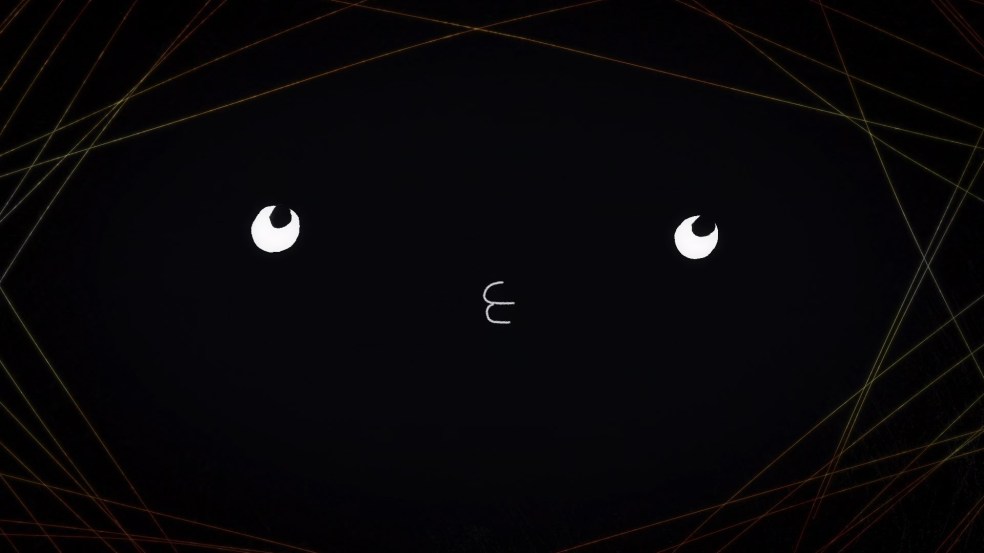
The episode’s closing minutes see Takopi pledge to stay with Shizuka, even though he feels like a failure for not being able to truly protect her. They also follow Marina, further contextualizing her anger as the result of her mother, who is sitting at their dining room table and seething over her husband spending so much time with another woman. The episode ends on two distinct epilogues. Shizuka goes home and falls asleep in her living room with Takopi and Chappy, the closest to being happy we’ve yet seen her. Marina, on the other hand, exits the episode as her mother creepily puts her hand on her face, all about the scene implying that Marina is about to be the target of abuse herself, for nowhere near the first time. She begins crying, headlight-yellow eyes darting away from her mother and, full of fear and resentment, burning holes in the camera.

This show is….a difficult one to discuss productively, for lack of a better term. To be honest, I have felt a touch out of my depth writing this, most anime—including most anime I deeply love—has some escapist element that can make even quite dark storylines go down more easily. There’s a little of that here, and Takopi’s presence provides a dose of pitch-black humor when he’s not just making things worse with his childlike naiveite, but, like I said at the top, this is one of the bleakest things I’ve ever written about on this site. Still, I do hope I’ve made it clear that none of this is a problem. The series is outstanding at what it’s setting out to do, and I think if you can weather the storm Takopi’s Original Sin is putting down, you’ll find easily one of the year’s best premieres. I would not at all be surprised, if it keeps up the quality—and I imagine it will—to find Takopi making a lot of year-end best-of lists come December or so. This story may be dark, but it’s one worth telling.
Like what you’re reading? Consider following Magic Planet Anime to get notified when new articles go live. If you’d like to talk to other Magic Planet Anime readers, consider joining my Discord server! Also consider following me on Anilist, BlueSky, or Tumblr and supporting me on Ko-Fi. If you want to read more of my work, consider heading over to the Directory to browse by category.
All views expressed on Magic Planet Anime are solely my own opinions and conclusions and should not be taken to reflect the opinions of any other persons, groups, or organizations. All text is manually typed and edited, and no machine learning or other automatic tools are used in the creation of Magic Planet Anime articles, with the exception of a basic spellchecker. However, some articles may have additional tags placed by WordPress. All text, excepting direct quotations, is owned by Magic Planet Anime. Do not duplicate without permission. All images are owned by their original copyright holders.


 The Magic Planet