Seasonal First Impressions: Under Cover of Darkness, Enters NINJA KAMUI

Seasonal First Impressions is a column where I detail my thoughts, however brief or long, about a currently-airing anime’s first episode or so.


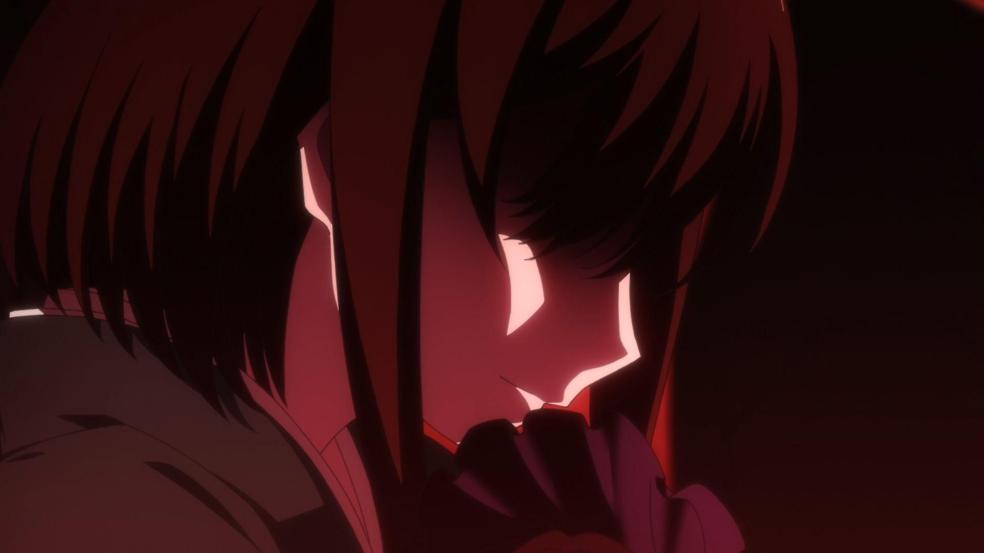
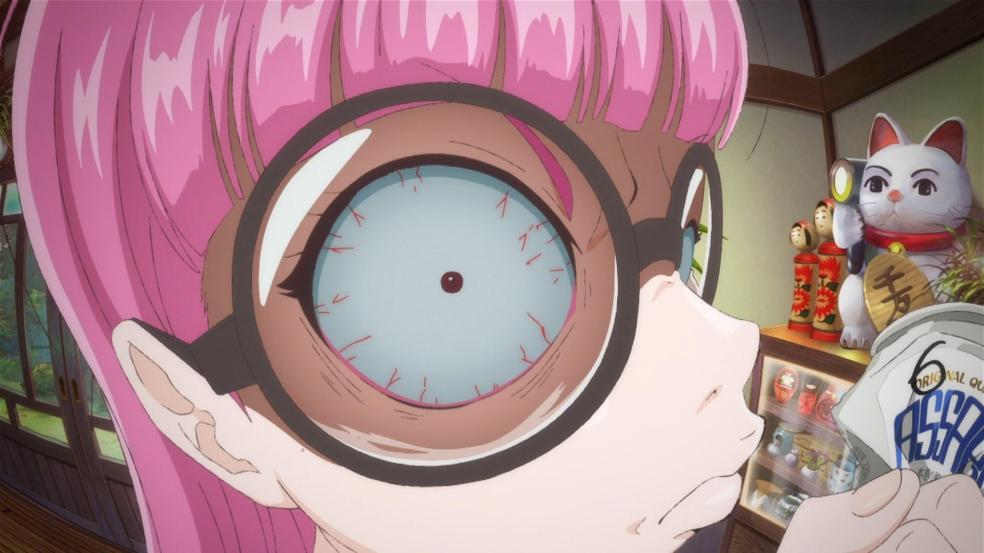
There are a handful of interesting cultural currents running through Ninja Kamui. The most obvious has to do with its status as a Toonami co-fund—this is why it premiered so late in the season—and a likely-deliberate invocation of nostalgia for a bygone era of [adult swim]’s action programming. This might be the shallowest of these currents, however; despite the fact that it really would fit right in with [as]’ late-night action programming in the pre-Toonami revival days, and despite the fact that Main Toonami Guy Jason DeMarco has his name on it, I think Ninja Kamui would exist in some form regardless of Toonami’s involvement, and that’s because of the two other currents running through the anime.

The first is the recent spurt in ninja anime again. Not enough to be called a revival, but perhaps the tip of a trend is starting to show up. Over the past couple years we’ve had the straightforward, shonen-y Shinobi no Ittoki and the, apparently, deeply strange Under Ninja (I haven’t seen it), and now, with Ninja Kamui, we have an invocation of the grittier, bloodier ninja anime of the past. I’m probably not the first person to compare this series to ’93 sleaze classic Ninja Scroll, even if it’s only a distant resemblance. This, too, is only a loose thread, probably more indicative of something in the air than anything else. Again, I think Ninja Kamui would exist with or without those other anime. It would very much not exist, however, without Sunghoo Park, the series’ director and main creative brain.

You don’t come to this blog for in-depth production talk, most likely, (and if you do, you’re in the wrong place. I’m not the Sakugablog guy), but Park is a name that’s been well-known and in the air for a few years now. He is probably best-known as the guy who made a good chunk of the first season of Jujutsu Kaisen look as engaging and kinetic as it did. He’s since left MAPPA (I would also leave MAPPA if I were made to direct God of High School, so I get it), and founded his own studio, E&H Productions. Ninja Kamui is not the first thing E&H have done, but it is the first TV series, and thus, in a sense, their big coming-out party. Ninja Kamui isn’t based on anything, so it’s clear that this series’ story is one that somebody at E&H has had in their back pocket for a minute (I imagine Park himself, though I can’t prove that). So with that creative freedom, what did they deliver?

Well, a pretty good action series, so far.

Ninja Kamui‘s premise is very simple; an ex-ninja, our protagonist Higan [Kenjirou Tsuda] has fled to the United States to live with his wife and kid, using Cyber Ninja DisguisesTM to hide their true identities and live in relative peace. Things are great, until one day, Higan’s past catches up to him, and his wife and son are killed as part of his enemies’ ploy to ruin his life. All told, this is a pretty straightforward revenge tale of a kind that dots the whole history of the medium. While there’s something to be said for the baked-in sexism of having your handsome gruff guy protagonist survive while his family are murdered in cold blood, for the most part this is an effective setup. I don’t love Higan, but I like him, and any excuse to hear Kenjirou Tsuda do his thing for 20 minutes is a welcome one, the guy’s a fantastic voice actor.

The supporting cast is solid as well. The case of Higan’s family being murdered is taken up by the local PD, who are of course very much unequipped to handle secret ninja revenge killings. The one cop we spend any amount of time with is Mike Morris [Atsushi Ono], who, despite the obvious caveat that, you know, ACAB, I actually do kind of like as a character. He’s essentially a pretty basic genre stereotype who voices pretty frequent disbelief with the hyper-violent absurdity around him, and of course he’s the token One Good Cop (along with his assistant) in the force, the rest of which is all too willing to ignore a case they have no hope of solving and are ordered to do so by their mysterious higher-ups. He’s hardly revelatory or anything, but he’s fun.

The second episode sets up a further wrinkle in the plot, implying that the CEO of a virtual reality company is somehow tied to both the deaths of Higan’s family and goings-on in the ninja world more generally. This is a nice little twist that helps the show feel a little more distinct, and it’s not like there’s ever been a better time to make a douchebag tech guy your villain; the world is not exactly overflowing with love for Elon Musk and the like right now.

As for style, the series has what you’d expect from Park; lots of absolutely crazy action, with everything else being a little bit secondary. There are a lot of great “what, he can just do that?” moments, like Higan exhaling some kind of magic smoke that makes him grow extra arms (?!) in the second episode so he can more effectively fight off an assailant. Said assailant is disguised as an off-brand UberEats driver, because Ninja Kamui is also a little bit funny with it. The series is also not afraid to invoke truly ridiculous levels of violence and gore, which again makes it feel very much of a piece with [adult swim]’s late ’00s anime offerings. There is a very memorable bit in episode two where Higan, still recovering from the same attack that killed his family, takes out his anger and frustration by leaving one of the offending enemy ninjas tied, hanging upside-down, from the ceiling of a warehouse. Each day he spends recovering, he stabs the guy with a different knife, which he leaves inside of him after he’s done. Then, on the fifth day, when he’s fully recovered, he just lights the guy on fire! It would be downright Jack Bauer-y if he was doing this as an interrogation thing, but he’s not! It’s strictly a revenge play.

Which gets at the one problem I do have with Ninja Kamui which is that even with everything I just said in mind, it just feels a little….basic? So for all the praise I’ve given it here, I wouldn’t say I’m necessarily super invested. I think it’s being beaten out even in the fairly narrow category of “anime I’m not crazy into but which I enjoy watching for their fight scenes” by Bucchigiri?! Still, if you like by-the-book revenge thrillers, you could probably do a lot worse than this.


Like what you’re reading? Consider following Magic Planet Anime to get notified when new articles go live. If you’d like to talk to other Magic Planet Anime readers, consider joining my Discord server! Also consider following me on AnilistBlueSky, or Tumblr and supporting me on Ko-Fi or Patreon. If you want to read more of my work, consider heading over to the Directory to browse by category.

All views expressed on Magic Planet Anime are solely my own opinions and conclusions and should not be taken to reflect the opinions of any other persons, groups, or organizations. All text is manually typed and edited, and no machine learning or other automatic tools are used in the creation of Magic Planet Anime articles, with the exception of a basic spellchecker. However, some articles may have additional tags placed by WordPress. All text, excepting direct quotations, is owned by Magic Planet Anime. Do not duplicate without permission. All images are owned by their original copyright holders.

Anime Orbit Seasonal Check-in: No, Seriously, What The Hell is Going on in ISHURA?

Anime Orbit is an irregular column where I summarize a stop along my journey through anime, manga, and the related spheres of popular culture over the past week.

Expect spoilers for covered material, where relevant.


Bad anime are fascinating things.

I would argue that there are two pretty distinct types of bad anime. There are anime that are trashy—which have an open disregard for artistic aims beyond “be cool”, a mentality that can lead to shows that are the anime equivalent of empty calories—and there are anime that are boring, which may aim to be Serious Art but profoundly fail at it. ISHURA, an isekai battle royale political intrigue fantasy thing that aired its seventh episode this week, asks; need this be a dichotomy at all? What if, for example, it was possible to be both trashy and sometimes fun, but also tedious and dull? Not at the same time, obviously, but in alteration?

We’ll get into the specifics of that, but in a lot of ways, my main thought about ISHURA, a show I would say I have decidedly mixed feelings on, is just that it is an extremely ’20s anime. Ten years ago, it was not entirely clear how vast the endless appetite for isekai light novel adaptations truly was, so I can’t see it getting made then. Ten years from now, I imagine this market—maybe the entire industry—will have collapsed. Maybe I’m wrong, but that’s just my call on things. ISHURA‘s defenders, however, of which there are a surprising amount, will point to a few merits that make them hold the show in more regard than your run-of-the-mill narou-kei adaptation, and argue these are reasons that ISHURA not only got an adaptation, but deserved to get one. Let’s run those down.

1: the action scenes – ISHURA has, in the rare occasion it’s actually gone full-tilt with them, admittedly had some cool fights. These are, though, uniformly sloppy despite the surface-level wow factor. The direction is there, but it struggles against wonky CGI and inconsistent animation quality. In the most recent episode there was a moment where there was very visibly and obviously a cut missing. If I, a random viewer with no formal animation training whatsoever, can notice that kind of thing, there are issues with your pipeline. In spite of these imperfections, I’ll concede that these are easily the show’s best moments, because they’re fun in spite of all that.

2: the worldbuilding – Frankly, I understand this argument the least. ISHURA‘s plot is a confusing, dull tangle of lore dumps, proper nouns, fantasy geopolitics (complete with our old friend, Ye Olde Fantasy Racisme, although it’s not as major a factor here as it is in many competing isekai), and silly character names that I am not going to do the show the favor of trying to summarize here. The world they take place in is an obvious step up from the infinitely-xeroxed settings of many fantasy isekai, but there is a difference between worldbuilding being interesting and there simply being a lot of it, and I place ISHURA firmly in the latter category, despite a few cool details like the presence of a faction of talking wyverns. I will admit the magic system seems neat, but it’s not interesting enough to devote most of an episode to explaining it at length, which ISHURA of course, does. That particular expository scene takes place in a hot spring, which takes us to our third point.

3: the babes – Many people probably think of themselves as being above watching something because it has attractive women in it. I am not “many people,” and, from what I gather, neither are most ISHURA fans. That said, with one exception, I don’t find ISHURA‘s cast to be a standout in this regard. (Which is kind of weird, because the studio behind this series are longtime ecchi peddlers Studio Passione.) None of the men really do it for me either, sadly.

Let’s talk about that exception, though, because she’s indicative of both ISHURA‘s obvious weaknesses and, conversely, its strengths. I think by looking at her, we see the show itself in microcosm.

This is Nihilo [Rie Takahashi]. Full name Nihilo the Vertical Stampede (no relation to Vash). She has short purple hair, a smug streak a mile wide, and has wires that look like old iPod earbud cords coming out of her back. I think she’s basically the perfect woman and I love her more than every other character in this show put together.

I felt the need to include two screenshots because the first one is so dark that it’s honestly kind of hard to see her. I’m not sure why anime have started taking lighting cues from Game of Thrones, but I hate it.

I will not sit here and pretend that Nihilo is a terribly well-written character. She has an easy to understand motivation (she wants to be treated like a person instead of a living weapon, to very much boil it down), which is nice, but we’re not exactly breaking new ground there, and this is the case for most of the show’s characters. What’s more important than all that is that in the most recent episode, she climbs, naked, into a giant spider mecha that somewhat inexplicably has its own name and title. As she did this, and as she sped off cackling about how she felt free and had her “body” back, it occurred to me that maybe I was just watching ISHURA in the wrong way.

This isn’t a get-out-of-jail free card, to be clear. Episodes 3, 4, 5, and 6—a good chunk of the show—are mostly just unforgivably dull. But, there is a certain “smacking action figures together” appeal to the show’s stronger moments, particularly when any of the shuras (as its various Powered Individuals are called) fight each other. Perhaps that’s all you’re really supposed to get out of ISHURA. Pick a favorite character—or a couple favorite characters, I’m also partial to the in-way-over-his-head, wyvern hating general Harghent [Akio Ootsuka] and the skeletal Shalk [Kouichi Yamadera], who also has a nice turn in this episode as he fights the show’s alleged protagonist—cheer when they’re onscreen, and sit through the rest of the show while just barely paying attention.

That’s not really an endorsement on its own, and I would still describe ISHURA as easily the least essential of the anime I’m watching this season. Plus, if it ever slows down so much that we get back to episodes 3-6 levels of tedium, I will be very sad. But episode 7 is at least, you know, fun? Fun is worth something. The show’s massive ensemble cast also makes it so that you never really know quite what you’re getting with each subsequent episode, and I do get why that appeals to people in a landscape where every isekai feels interchangeable.

ISHURA‘s appeal is, in many ways, the appeal of seasonal anime in general; you really never do know for sure what you’re going to get! Sometimes you get excellent adaptations of great source material (Delicious in Dungeon, Sengoku Youko), solid genre work (The Wrong Way To Use Healing Magic), fun surprises (Brave Bang Bravern!, Bucchigiri?!), or things that are just totally inscrutable (Metallic Rouge). And, sometimes, you get one of these. If I had to compare ISHURA to anything, it would be Big Order, another light novel adaptation, and one that has found cult “so bad it’s good” status in the near decade since it aired. I’m not sure if ISHURA is committed to the bit enough that it could ever get there, but it seems to be making a run for it.

And yet, at the same time, I’m left wondering if that’s really enough to make up for its many obvious deficiencies.

From its instantly-polarizing opening episode, wherein ostensible female lead Yuno [Reina Ueda, in one of the weirdest miscasts in recent memory] sees her girlfriend brutally murdered in front of her by giant, hulking magitek robots, I knew I would have complicated feelings on ISHURA. I’ve wanted to like it in spite of that, because I think people are often too hard on stories that open on a down note. But it’s become clear that ISHURA is really just interested in shock value and spectacle. That first episode really is quite visually impressive, and the most recent follows suit.

Those are fine things to aim for, but is it really so much to ask that the series have decent pacing and just a little more thought put into it, in addition to that? I’m content to classify ISHURA as a guilty sometimes-pleasure, but it would really be nice if it could be more than that. That it’s not just makes me wonder about what could’ve been.


Like what you’re reading? Consider following Magic Planet Anime to get notified when new articles go live. If you’d like to talk to other Magic Planet Anime readers, consider joining my Discord server! Also consider following me on AnilistBlueSky, or Tumblr and supporting me on Ko-Fi or Patreon. If you want to read more of my work, consider heading over to the Directory to browse by category.

All views expressed on Magic Planet Anime are solely my own opinions and conclusions and should not be taken to reflect the opinions of any other persons, groups, or organizations. All text is manually typed and edited, and no machine learning or other automatic tools are used in the creation of Magic Planet Anime articles, with the exception of a basic spellchecker. However, some articles may have additional tags placed by WordPress. All text, excepting direct quotations, is owned by Magic Planet Anime. Do not duplicate without permission. All images are owned by their original copyright holders.

Anime Orbit Seasonal Check-in: METALLIC ROUGE and The Nightmare of Fabrication

Anime Orbit is an irregular column where I summarize a stop along my journey through anime, manga, and the related spheres of popular culture over the past week.

Expect spoilers for covered material, where relevant.


There are a lot of things that Metallic Rouge is not; it isn’t Serial Experiments Lain, it isn’t Ergo Proxy, etc.. But in its cyberpunk themes and non-linear storytelling, it has kinship with those anime and anime like them. This makes it rather unique in the present anime landscape, and it’s why I’ve been rooting so hard for the series despite not always being able to discern what it was trying to do with all its decidedly charged imagery and androids-as-minorities symbol politics.

Indeed, that’s been my sticking point with the show; pulling off actual, meaningful commentary on the contemporary political landscape is difficult, and most shows that try end up with their foots firmly in their mouths. For its first episode, I was willing to give it some grace. Since then, I’ve gone back and forth on how I feel about the series’ use of androids as a distinct social class. There’s a lot to be said about the show’s use of the charged imagery of police brutality and violence visited upon minorities, particularly people of color, how the characters being subjected to this imagery are androids that just look like people of color, and the bizarre worldbuilding choices that make this all the worse. The kindest possible interpretation—which many people will, understandably, not be inclined to take—is that this is a blunt-force tool wielded, somewhat clumsily, by a show that may have its heart in the right place but seems to not really understand entirely what it’s doing. (At the very least, Metallic Rouge seems to understand that things like police brutality and segregation are bad.) Thus, roughly, is my read on the series’ first four episodes.

Episode 5, though, is something else entirely, and I think if the series more solidly finds its footing, it will be off the strength of material like this rather than in political material that it seems unsure of how to handle. For episode 5, we largely (though not entirely) put aside the brewing conflicts in the series’ world. Instead, Rouge finds herself aboard a space-travelling circus, where she’s sedated by the decidedly creepy troupe leader, a character who identifies himself only as The Puppetmaster [Hiroshi Yanaka].

In his decidedly sketchy care, Rouge is plunged into the world of her own memories, and we’re treated to a warped, kaleidoscopic walk through her life story. Doing this instead of giving it to us straight is brilliant. It immediately makes this the most engaging episode of Metallic Rouge so far, and it gives us plausible room to doubt what we’re seeing. It gets us guessing. Are the strange visions Rouge witnesses reasonable reconstructions of actual events, symbolic codes that map to actual events, or just made up entirely, the result of the Puppetmaster rooting around in her mind, looking for the mysterious ‘Eve Code’, as he helpfully tells us he’s doing?

Memories of Rouge’s childhood—such as it was—blend together with conversations with her ‘brother’ Jean [Shunsuke Takeuchi], where vengeance is sworn upon the Nine Immortals who killed the pair’s father. Rouge’s first meeting with Sarah Fitzgerald is inextricably entangled with that of her death, of the blood on Rouge’s own hands. Gene plays a somber song on the piano; a bird drops from the sky into it and dies. A caterpillar crawls up the strut of the piano lid and morphs into a butterfly. People swap in and out freely, to Rouge’s apparent ignorance. The Puppetmaster looks on, trying to coerce what he needs out of Rouge’s subconscious mind.

It’s almost disappointing when the episode snaps back to reality later on, even though it means we get a pretty great fight scene involving a gothic lolita character who I really hope comes back.

It’s too late by then anyway, the Puppetmaster has what he wants, and Rouge cannot remember her ordeal when Naomi finds her again. Metallic Rouge may never get back here, but that it was here at all matters. Sitting alone in his throne room of sorts, the Puppetmaster says that Rouge will find him again when she’s truly free. We are left to wonder if such a thing is possible for Rouge. And here, at the end of what is easily Metallic Rouge’s best episode thus far, it flags in the wind, unanswered.

I don’t want to paint a picture where I say that Metallic Rouge‘s attempts at political commentary are worthless. They’re not, in a landscape where the bar is, unfortunately, often very low, even trying at all counts for something. But it’s definitely thin on the ground. I think what this episode delves into, a more psychological and personal approach to its characters, (along with some of the more genre-y sci fi stuff that I’ve not discussed here, which has been a strength of the series since its first episode) could really benefit the series in the long run as it approaches its halfway mark.


Like what you’re reading? Consider following Magic Planet Anime to get notified when new articles go live. If you’d like to talk to other Magic Planet Anime readers, consider joining my Discord server! Also consider following me on AnilistBlueSky, or Tumblr and supporting me on Ko-Fi or Patreon. If you want to read more of my work, consider heading over to the Directory to browse by category.

All views expressed on Magic Planet Anime are solely my own opinions and conclusions and should not be taken to reflect the opinions of any other persons, groups, or organizations. All text is manually typed and edited, and no machine learning or other automatic tools are used in the creation of Magic Planet Anime articles, with the exception of a basic spellchecker. However, some articles may have additional tags placed by WordPress. All text, excepting direct quotations, is owned by Magic Planet Anime. Do not duplicate without permission. All images are owned by their original copyright holders.

The Manga Shelf: So Long, CIPHER ACADEMY

The Manga Shelf is a column where I go over whatever I’ve been reading recently in the world of manga. Ongoing or complete, good or bad. These articles contain spoilers.


Yes, here we are. It’s the first time I’ve ever written two Manga Shelf columns about the same manga, and it’s for this sad, sad occasion. Funeral for a friend. Or at least, my friend. I get the impression that most Shonen Jump readers would rather chew glass than read all 58 chapters of Cipher Academy, Bakemonogatari author NisioisiN‘s first and, if I had to guess, last contribution to the magazine. Let’s be serious for a moment; I genuinely did like Cipher Academy, in spite of a number of obvious flaws, but there was no way that it was going to last particularly long. It is a terrible fit for Shonen Jump, and is perhaps proof that NisioisiN really just genuinely doesn’t know how to get out of his own way. Especially given that his version of a simple battle shonen plot involves a tangled mess of cryptography and puzzle-solving that only makes any kind of sense about half the time.

That said, it’s easy to claim with hindsight that there was no way Cipher Academy could ever succeed in the context of Jump, but is that actually true? After all, despite its infamously hard to follow “code battles” and goofy storyline, the series does have its fair share of strengths. In particular, Isshin’s ability to hide real character depth inside of weird gimmicks remains unmatched, with characters like Tayuu and her strange, strained friendship with Iroha’s early-antagonist-turned-ally Kyora being a point of genuine interest. And similar examples coincide with the gimmicks themselves being novel, such as Kyora’s filthy mouth and how it contrasts with her ojou-sama demeanor, and how these both belie a fairly caring person underneath that persona. Or Anonymity Requested, who spends most of the manga hidden behind a censor bar both in- and out-of-universe, only for it to become clear that she’s actually both an impulsive hothead and kind of a jerk.

On the other hand, the manga’s biggest weakness is the actual “code battles” themselves, the series’ cutesy name for fast, real-time code-swapping and cracking. A normal battle shonen can rely on any number of visual tricks to make its fights compelling, but Cipher Academy has no access to a majority of those, given that by definition its ‘battles’ are light on actual action. Furthermore, most of them are nakedy convoluted owing to the conceits of the setting. A lot of shonen fights boil down to characters working within sometimes quite complex rulesets in order to outmaneuver and defeat their opponent, but that fact is much easier to hide in something that involves actual combat or a similarly physical activity. In Cipher Academy, it sometimes feels like watching a chess game while only being passingly familiar with the rules.

In general, it both feels markedly less naturalistic and lays bare how dry “a bunch of characters mess around within a given set of rules” can get if not handled carefully. At its worst, the manga devolves into back-and-forth spiderwebs of speech balloons, especially in the case of its many word games. These both suffer greatly in the translation process and also kneecap one of the manga’s best assets; its art. Isshin’s usual, verbose style doesn’t work here, given that this isn’t a light novel.

Furthermore, even later on, when the battles do get a little more visually dynamic, they still suffer from feeling confusing and arbitrary. That’s kind of a problem, given that these puzzles are, on top of everything else, supposed to be user-solvable.

I’ll concede that I have seen some people claim to be able to solve the cryptograms in Cipher Academy, but the fact remains that not only could most people not do so, a good chunk of the readerbase did not even try, and given the way the manga presents these puzzles, it’s tough to blame them. Some of this might be down to the translation—infamously, translating this manga to a satisfactory degree while still keeping MangaPlus’ deadlines was impossible enough that its first official translator walked and had to be replaced—but the manga’s poor performance domestically implies to me that this was a problem across languages. There might also just be a demographic mismatch here; Shonen Jump’s core readership groups are teenagers and people who really like battle shonen as a genre. Neither of these groups are necessarily going to pop for galaxy-brain puzzle solving. Even for those that do, as mentioned, Cipher Academy‘s codes and cryptograms are a mixed bag.

Speaking of “crypto,” we should probably touch on that facet of the manga as well, since, yes, as alluded to in the first chapter, Cipher Academy’s plot does in fact involve cryptocurrency.

Let’s put two facts out there as we do this. One; cryptocurrency is boring. There are people who (incorrectly) think it’s useful or desirable to have, but it’s not interesting in of itself, and if you think otherwise I would love to know how you found my blog from /r/dogecoin. Two; NisiosiN’s writing is not cool. It is a great number of other things; bizarre, ambitious, mysterious, campy, fun, complex, convoluted, goofy, theatrical, self-assured, horny to a sometimes troubling degree, problematic, incredibly autodidactic, impossible to mistake for anyone else’s, etc. But it’s not cool. Isshin is a NEET-ass geek of a writer whose work absolutely drips with evidence that he’s a complete dork. I say this with love, as a fan of some of his work, and as a fellow uncool person, but it’s important to note. NisiosiN’s work has never been and will not ever be cool, and when we’re talking about a Jump manga, that does matter. Combined with the whole crypto / metaverse aspect, I think this was genuinely be a big contributing factor to the manga’s poor performance. You can get away with a lot when you’re writing in this format as long as your stuff is cool. Isshin’s work is fundamentally not.

As for the other stuff, well, cryptocurrency garbage is not quite the PR death sentence over in Japan that it is in the Anglosphere, at least not yet, but that doesn’t mean any regular person actually thinks it’s interesting. At best, they think of it as a way to make money. This fundamentally dull piece of recurring subject matter, when combined with the fact that Isshin is Isshin, plus the generally spotty quality of the puzzles themselves, creates a situation where it’s easy to see how Cipher Academy failed to create and maintain a strong fanbase. There are simply too many hurdles for the average shonen manga reader here. Which would you rather read; this, or a manga where a guy can summon shadow goldfish with a magic katana?

That’s what I thought.

Of course, all this gets at is why the manga failed with its readership at large, which is only half the story. At the top of this article I mentioned that I actually liked Cipher Academy, and that’s mostly true. Why? Well, put plainly, as a fellow-traveler complete dork I tend to find NisiosiN’s particular brand of absurdity more entertainingly silly than obnoxious. But I think, perhaps unfortunately for Isshin, that I’m fairly rare in this regard. At least, rare among the sorts of people who routinely check out new MangaPlus titles.

Cipher Academy‘s central theme is that of code creation as communication. This idea that by hiding things about yourself on purpose, you’re more likely to be honest with people who can see through that obfuscation. The manga does a few interesting things with this, including a really great early moment where Iroha basically sneaks his entire backstory into a code battle a good 30 chapters before we get most of it spelled out in plain-text. Things like this make Cipher Academy‘s best moments feel actively rewarding instead of just convoluted. It’s also worth noting that Yuuji Iwasaki’s art is consistently great and occasionally fantastic, and may be the best part of the series overall.

Unfortunately though, I think trying to get people onboard a manga this willfully obtuse for a handful of moments where what it’s trying to do actually clicks is a tough sell no matter how you slice it. By the end of its run, even I was bored with Cipher Academy, and as it wears on—and the effects of its looming cancellation become more and more obvious as plotlines are condensed and rushed through—it becomes harder and harder to root for. By the conclusion, I was pretty much fed up.

Indeed, if we turn the manga’s theme of the cryptic-as-the clarifying back on the manga itself, we’re left with a decidedly unflattering portrait of its author. The manga’s final chapters offer simple and clean solutions to massive problems; wars end with a handshake, and the real global problem is a lack of mutual respect. This is an uncharitable read, but its emblematic of the problems found in some of Isshin’s less refined work, and “less refined” really does just define Cipher Academy in general. The whole thing ends in a giant, glossed-over shrug, and a decidedly unearned (and very boring) happy endings epilogue, because it has neither the time nor depth to do anything else.

At the end of the day, the problem is obvious. NisiosiN’s greatest strength as a writer is also his greatest weakness, his ability to absorb and scramble basically any kind of theme or subject matter into a fresh and surprising story. Cipher Academy, frustratingly, is those things, it just isn’t terribly coherent. Describing the series to someone else makes it sound like the ramblings of a conspiracy theorist; cryptocurrency vaults, the NSA infiltrating high schools, child soldiers with real guns that look like toys, dancing prisoners of war, superpowered cheerleaders, hyper-advanced spy tool glasses, and so on, but unlike Isshin’s best work, Cipher Academy can’t actually support all of this, and when it tries to, it veers from “goofy” into “just generally wretched.” It’s too brief and too tossed-off to explore most of its ideas in detail, so on the rare occasional it gestures to them, it feels unfinished and almost insulting. Much of the manga ends up reading like a random sampling of whatever ideas happened to furrow their way into Isshin’s head as he wrote it. He’s a ridiculously prolific writer, and this smashed-open spigot approach has led to some great work, but Cipher Academy is a decidedly minor piece of his bibliography.

I won’t discount the possibility that Isshin’s real crime here is greatly overestimating his readerbase (up to and including yours truly), and that if read from a certain angle, Cipher Academy somehow makes more sense and coheres into some kind of wonderful whole. I liked the series for the moments where it clicks, its colorful cast of bizarre characters, and its great art. But—and I can’t say this too loudly—the ugly fact is that those things alone aren’t enough to float a manga in the most competitive magazine in the industry, at least not for very long. As it stands, this is a minor work from a guy who has done much, much more interesting stuff. I doubt anyone but Isshin’s true diehards will remember this manga existed even a few years down the line. So it goes.


Like what you’re reading? Consider following Magic Planet Anime to get notified when new articles go live. If you’d like to talk to other Magic Planet Anime readers, consider joining my Discord server! Also consider following me on AnilistBlueSky, or Tumblr and supporting me on Ko-Fi or Patreon. If you want to read more of my work, consider heading over to the Directory to browse by category.

All views expressed on Magic Planet Anime are solely my own opinions and conclusions and should not be taken to reflect the opinions of any other persons, groups, or organizations. All text is manually typed and edited, and no machine learning or other automatic tools are used in the creation of Magic Planet Anime articles, with the exception of a basic spellchecker. However, some articles may have additional tags placed by WordPress. All text, excepting direct quotations, is owned by Magic Planet Anime. Do not duplicate without permission. All images are owned by their original copyright holders.

Seasonal First Impressions: WONDERFUL PRECURE is Doggone Great

Seasonal First Impressions is a column where I detail my thoughts, however brief or long, about a currently-airing anime’s first episode or so.


Now I do not know whether I was then a man dreaming I was a butterfly, or whether I am now a butterfly, dreaming I am a man.

-Zhuangzhi

After last year’s season proved that adults, magic babies, and even boys can be Precures, Wonderful Precure continues the trend by introducing the first Cure who is buppy. An absolute good girl. A magical woofer. What I’m telling you is that the lead character of this season is a literal dog. Truly, we are breaking new ground here.

It’s a little meaningless to ask ourselves if this is a “gimmick” or not. Precure seasons tend to make pretty heavy use of loose visual themes, so in some sense they’re all gimmicks, other than perhaps the original Futari wa team. (And even they had the whole black/white duality. Plus the hand-holding thing.) It’s more important to acknowledge that, for however silly this premise may seem on its surface, Wonderful Precure‘s first episode is exactly that. It’s a significantly more low-key affair than last year’s opening blast of explosive punch, but it trades that in for a surprising amount of character depth given the relatively short amount of time we get to know the characters in question.

It goes something like this; Iroha [Atsumi Tanezaki] and her cute little dog Komugi [Maria Naganawa] live in the happy burg of Animal Town, a place known for how much its residence love their pets. We open, as so many magical girl anime do, on a typical day. Iroha is late for school, and Komugi wants to play but sadly, her human can’t stay. Anyone who’s ever owned a pet knows this whole song and dance, and it makes for a cute and relatable opening few minutes of the show.

Pictured: The main character of the show, and a human.

Komugi herself, despite still very much being nothing but an ordinary dog at this point, is given a fair bit of internality here as well. While Iroha is away at school, Komugi dreams a sad little dog nightmare about how she and Iroha will always live separate lives. That sadness is here represented by a washed-out shade of denim-y blue-grey, and a pair of shadow girls who look like they’re on leave from Revolutionary Girl Utena, representing Iroha’s human friends.

Iroha herself seems very kind and peppy, it’s clear she loves animals, as in when she hollers a greeting at the cat in a window of a local Pretty Holic shop just opening up in her neighborhood. That cat, Yuki [Satsumi Matsuda], is a haughty little furball in the classic cartoon mold, and seems to lightly scold her own owner Mayu [Reina Ueda] when the latter actually hides upon hearing Iroha’s cheerful how-do-ya-do at her cat. One gets the sense that she’s very shy and anxious, a likely hint toward the direction her own character development will take in later episodes.

Finally, there’s Satoru [Takuma Terashima] and his pet bunny Daifuku, who are introduced as the former studies a local landmark called the Mirror Rock. Satoru seems to be our supporting boy, at the moment, a character archetype many previous seasons of Precure have used to greater or lesser effect. He gets flustered when Iroha chats him up and it’s clear the two already know each other, so if you want to place your bets on who the token puppy-love interest is here, it’s probably him.

Daifuku does rather little in the few minutes they’re on screen, but still manages to convey an immense amount of personality just by Looking Like That.

This early part of the episode is very character-driven, and it does a great job of balancing all of these different introductions, giving us just enough of a look into these characters (both pet and human!) to tell us what they’re like, while firmly foregrounding Komugi and Iroha as the show’s actual leads. Frankly, it’s actually fairly light on any indication that this is even is a magical girl anime. Only a brief cut over to a mysterious, sinister-looking orb and a demonstration of its corrupting effects on a land of magical talking animals reminds us that this is a Precure series we’re watching, and the more typically mahou shoujo genre elements largely only emerge in the episode’s second half. It’s worth noting, though; the orb seals all of these animals in magical black eggs. These are, it would seem, our local plot devices this time around.

In the episode’s second half, Iroha, at a dog park with Komugi, has an encounter with a giant, rampaging sheep that seems to have been taken over by some sort of sinister force, which we shortly learn is termed “garugaru.” (The work of the aforementioned orb, no doubt.)

Iroha is able to distract the beast, helping a local boy out of danger, but she fails to account for the sheer speed of the thing, and the fact she’s now in danger herself. Komugi, initially trembling at the sight of this monster, rushes in to save her owner, despite being outmatched in comparison to this angry ram creature in just about every respect.

You can probably guess what happens next.

That “three, two, wan!” countdown is ungodly cute.

Yes, suddenly filled with magical energy, Komugi becomes a real, entire human girl, and then transforms into a Precure. Every Cure’s first henshin is an event, and Komugi’s is just as much of one as any long-time fan would expect. The new Cure Wonderful’s approach to fighting the monster is novel, as she doesn’t really attack it per se (perhaps owing to the fact that the baddies this time around are, you know, animals). Instead, she blocks its own attacks with a giant, paw-shaped shield and chases it around to wear it out.

Finally, when it’s exhausted and cornered, she realizes it’s in pain, and gives it a gentle hug, which is enough to purify it and turn it back into a regular sheep.

What this simple textual description leaves out is the sheer amount of personality the animation has here. Cure Wonderful is, on the inside at least, still a jumpy little puppy, and she’s drawn as such even as a human and even when in her magical girl form. It’s honestly just absolutely delightful, and if this is any indication of how the character will be written and drawn going forward, we’re in for a year of adorable, fuzzy charm.

But let’s give some credit to Iroha, too, who ends the episode in exactly the fashion you’d expect a baffled middle schooler to respond to their dog suddenly turning into a person. At first, she has no idea who this girl is and wonders where her cute little dog went. Then, as the facts of the situation slowly dawn on her, she is completely dumbfounded. Her expressions really must be seen to be believed, especially when she tries the whole “give me your paw” trick on the newly-human Komugi and the former dog still responds as expected.

All told, and to the surprise of few, Wonderful Precure marks another fantastic opening episode for a series that has gotten very, very good at doing those. It’s already February, but I think I can safely predict that we’re in for a wonderful year.


Like what you’re reading? Consider following Magic Planet Anime to get notified when new articles go live. If you’d like to talk to other Magic Planet Anime readers, consider joining my Discord server! Also consider following me on AnilistBlueSky, or Tumblr and supporting me on Ko-Fi or Patreon. If you want to read more of my work, consider heading over to the Directory to browse by category.

All views expressed on Magic Planet Anime are solely my own opinions and conclusions and should not be taken to reflect the opinions of any other persons, groups, or organizations. All text is manually typed and edited, and no machine learning or other automatic tools are used in the creation of Magic Planet Anime articles, with the exception of a basic spellchecker. However, some articles may have additional tags placed by WordPress. All text, excepting direct quotations, is owned by Magic Planet Anime. Do not duplicate without permission. All images are owned by their original copyright holders.

Seasonal First Impressions: Breaking Down the Madness of BRAVE BANG BRAVERN!

Seasonal First Impressions is a column where I detail my thoughts, however brief or long, about a currently-airing anime’s first episode or so.


Anime with protagonists in the military are a bit of a tough sell for me, for a variety of reasons, with only a couple of exceptions. Thus, when I went into Brave Bang Bravern!, the latest from CygamesPictures (and a rare original from them), it was mostly off the strength of its staff. That studio, Masami Ōbari involved as the director, etc. I had no idea what to expect, since all promotional materials suggested that this was going to be on the “fairly realistic war drama” end of the spectrum, as far as mecha anime go. You know, your Gundams and such.

In hindsight, there were several tells that this wasn’t exactly the case. For one thing, there’s that title; “Bravern” does not sound really sound like the name of a robot in that sort of thing. But I admit that’s a dubious imperfect metric (“Gundam” doesn’t necessarily sound like that either). And secondly, Obari is not really known for being involved in anime that are, in basically any way, down to Earth. So this show, with its JSDF mecha brigade protagonist Isami [Ryouta Suzuki], seemed like an outlier.

All this in my head, I went into Bravern a bit skeptical and very unsure of what to actually expect. To the show’s credit, that uncertainty turned out to be intentional. On the other hand, I’m still not entirely sure to what end precisely it’s doing all this, but there’s something to be said for going for broke, and I think there’s some good evidence that Bravern‘s heart is in the right place, as we’ll get to.

As for what it’s actually about, well, we open in the middle of a joint US / Japan / a couple other countries it’s not totally clear mecha training exercise, as one does, where Isami wins the day in-simulation by storming an enemy position by himself, backed up only by US Titanostrider pilot Lewis Smith [Youhei Azakami]. This opening scene portrays Isami as a classic wild gun, loose cannon sort. He goes against orders to do this, and is duly reprimanded, but the narrative seems to paint him in the opening half of the first episode here as a guy Willing To Do What Must Be Done. You know the sort if you’re familiar with any even vaguely macho military fiction.

As it turns out, this is the first of several fakeouts. The characterization of Lewis as a stock cool guy, on the other hand, seems pretty accurate. The show’s opening minutes do a lot to build up a tense but ultimately still friendly rivalry between the two. At one point, Lewis challenges Isami to a mecha showdown, asking if he’s not “brave enough” to accept, in a bit of fun foreshadowing.

The second fakeout dispels any idea that this is going to be a grounded, politically-driven mecha series. Somewhere in a control room, an alarm suddenly blares and a mysterious object appears on-screen. You know the deal here, too, most likely; an invasion from space, they show no mercy. The same bullet points that indie game ZeroRanger memorably pared down to their barest, most elemental form in its opening cutscene. They’re treated with a similar, perfunctory but punchy approach here. The invasion is swift and brutal, some real War of the Worlds shit as the aliens stride in, coldly levelling anything and anyone in sight with their pinkish UFO-mecha. This is about where most people might assume they’ve got Bravern figured out, if they’re entering sight-unseen. Those people would be wrong.

The situation falls to pieces quickly enough that the group who engaged in training exercises early on are left to fend for themselves. Isami tries and fails to save some of his comrades, including his blue-haired girl buddy Hibiki [Yume Miyamoto]. He does not do well, and it really seems like this is the end for Isami right up until the exact moment that one of the enemy’s blazing lasers is intercepted by an equally-bright green flash from the heavens above. Enter the show’s title character, Bravern [Kenichi Suzumura], a giant robot of a very different sort than we’ve seen up to this point.

Regardless of anything else I have or will ever say about this show, the turn-on-a-dime “what the actual fuck” spectacle of what happens here is absolutely immaculate. It’s the best capital A-M Anime Moment of the year so far. It is some absolutely cool as fuck nonsense. Isami goes from a foot soldier to plunged into the cockpit of Bravern, a dyed-in-the-wool super robot in the classic mold and a character in his own right. He has a flaming sword, he fires blasts of green energy, he arrived on a beam of green energy. He has diegetic in-cockpit theme music. It is a few absolutely wonderful, absurd, totally ridiculous minutes, and even if everything else this show does ends up absolutely paling in comparison, it will always have this.

It’ll also always have its actual, real opening credits, which seem designed with that same classic, old-school mentality in mind; a steel aircraft carrier beneath an azure sky, glowing, neon outlines around a cast of menacing, gargantuan robot silhouettes aglow with neon lines that we have yet to meet. It’s awesome. It promises a lot. Delivering on that is going to be the hard part, but it’s a promising sign that, as he sits in Bravern, Isami realizes that when he was a kid with dreams of justice, he didn’t really want to be a spec. ops. guy, a fighter pilot, a tank driver, or even a Titanostrider operator. He wanted to be a hero.

All of that is to the show’s benefit, because from here on out, starting in episode two which I’m also covering here, figuring out what this series even is becomes a lot more complicated. Because, you see, in addition to being a willful juxtaposition of super robot science-fantasy against a fairly gritty invasion story sort of thing, Bravern is also….a BL-inflected comedy.

No, really. Buckle in, because this is where things get weird weird.

When we see Isami at the start of the second episode, he’s being detained by some shadowy group or another and very literally tortured. This is a pretty sharp tonal departure from the end of the last episode, but what’s intercut with it is even stranger; Bravern, attempting to explain the situation to the group of military officials still gathered on the aircraft carrier and them largely not understanding. To be fair to them, his explanations include a lot of shouting his own name, Isami’s name, and doing things like relating his life story like a literal book complete with chapter titles. Also, his fixation on Isami is very clearly meant to resemble a gay crush, and his description of their first time “piloting” together very quickly becomes laden with so much innuendo that the term ‘subtext’ no longer feels sufficient. The show playing this for comedy is….a little blue, to say the least. (As is the show’s apparent intentional juxtaposition here. Isami is literally being tortured, the military officials are being ‘tortured’ by Bravern’s mannerisms. Eh.) Much of this seems designed to raise the question “what if the super robot you were piloting had a thing for you, and he was kind of annoying about it?”

By contrast, the actual situation Bravern’s explaining is pretty dire. The peril invading their world is an alien invasion of bio-machines, spearheaded by eight ships called Deathdrives, each containing a swarm of mecha and a single more powerful unit. One of which, the blue anti-Bravern called Superbia, we meet here. Superbia and Bravern fight, of course. Since Isami is still being detained by some aloha-shirted torturer guy, Bravern comes very close to losing that fight, as he’s noticeably weaker without someone in the driver’s seat.

Isami has to be convinced to get back in Bravern, in true mecha anime fashion, as his, ahem, “first time,” was not had under the best circumstances and he’s still processing all this stuff. (That’s all text, by the way, I am doing very little interpreting here.) At one point, Lewis tries to pilot Bravern instead, sweet-talking to the big red boyscout with talk of how he, too, wants to save the world and everyone on it. This almost works, and we are treated to a delightfully goofy scene where the whole conversation is rendered like something out of an old shoujo series, but Bravern seems to be monogamous. No one gets in him but Isami, and that’s final.

When he finally does get in Bravern, the dynamic duo kick Superbia’s tailpipe, of course. Including a charming, doofy scene where Bravern goes in for the super move kill and then stops himself because he insists that he do a different one this time. It’s charming, it’s very silly, and I think all this taken together maps out Bravern as being focused on, in roughly this order; being awesome, being gay, and being funny. That’s not a bad thing to be, even if the finer details of its themes remain ambiguous. Isami still has military command to deal with, after all.

My bet, if I can try to manifest something into existence here, is that Isami’s emotional journey will be attached to his learning to grow out of this role he’s built for himself as a soldier—one he’s already very much leaving behind as of episode 2—and into the role of a real hero, and there’s one final piece of evidence that might support that reading.

Just when it seems like the second episode could not possibly get sillier, Isami’s clothes explode in the final minutes of its main closing scene, and he is stuck inside Bravern as the episode ends, in an apparent parody of that one Evangelion episode. A ridiculous gag with no further meaning? A symbol of him being forced to shed his “soldier’s uniform” and confront reality as it truly is? Both of these things, somehow? Bravern’s sheer absurdity practically demands this kind of overanalysis, even as it can absolutely just be enjoyed as pure entertainment.

All told, the operative adjective here is definitely “campy.” And there’s a lot that I haven’t mentioned, including our main mechanic character, Miyu [Ai Kakuma], whose interest in Bravern quickly gets into robotfucker territory. (She thinks he’s handsome. Can you blame her?) There’s a pretty great scene where a German official speculates in her native language with one of her cohorts that this whole thing might be some kind of ploy by the Americans, only for her to be loudly reprimanded with Bravern’s absolutely awful German. There’s the show’s bizarre, maybe intentionally funny? art style dimorphism between the men and the women, where the former look like they’re from a relatively grounded military series and the latter look like they’re from a KyoAni production. (Quite possibly also just reflective of the interests of main character designer Jae-Uk No.) There’s a gag where Bravern cuts off a government official by loudly yelling his transformation phrase (obviously, he can turn into a futuristic jet fighter) and flying away. The fact that this thing is clearly heavily inspired by—and might be part of? I’m not clear on this—the Brave series. The fact that Isami and Bravern’s shouts are out of sync the first time they do their finishing attacks. And on, and on, and on. There’s a lot to like here, a lot to be puzzled over, and a few things to take issue with. It adds up to one of the season’s best premieres, and certainly one of its most ambitious.

It’s totally possible that all of this completely flames out, of course. This has happened before. Giving a story tons of slack because it’s weird or absurd can lead to Magical Destroyers situations, or even, in a worst-case-scenario, a Darling in the FranXX. Still, what’s the point of flying close to the Sun if there’s no risk you’ll be burned? Icarus was a chump.

After a supremely homoerotic ED sequence, Bravern‘s second episode features a brief post-credits scene, where Lewis quite literally stumbles over a girl in a crashed UFO-like ship, by implication, this was the pilot of Superbia, and is our local Rei Ayanami. This fairly standard sci-fi twist after such a weird premiere made me absolutely redouble my commitment. More than anything else that’s premiered this season, for Bravern, I will be there no matter what. I have got to see where this goes. Join me if you’re brave enough.


Like what you’re reading? Consider following Magic Planet Anime to get notified when new articles go live. If you’d like to talk to other Magic Planet Anime readers, consider joining my Discord server! Also consider following me on AnilistBlueSky, or Tumblr and supporting me on Ko-Fi or Patreon. If you want to read more of my work, consider heading over to the Directory to browse by category.

All views expressed on Magic Planet Anime are solely my own opinions and conclusions and should not be taken to reflect the opinions of any other persons, groups, or organizations. All text is manually typed and edited, and no machine learning or other automatic tools are used in the creation of Magic Planet Anime articles, with the exception of a basic spellchecker. However, some articles may have additional tags placed by WordPress. All text, excepting direct quotations, is owned by Magic Planet Anime. Do not duplicate without permission. All images are owned by their original copyright holders.

Let’s Watch DELICIOUS IN DUNGEON Episode 3 – “Living Armor”

Let’s Watch is a weekly recap column where I follow an anime over the course of its runtime. Expect spoilers!


Ah, damn it. I didn’t want to do these anymore.

Let’s Watch used to be my most consistent regular column; but it’s been nearly a year since I last wrote one, and the facts of the anime industry, and my own tendency to randomly burn out toward the end of an anime season, make doing them consistently a fraught prospect. But I couldn’t help myself today, this week’s Dungeon Meshi episode was just too freakin’ pretty. So even if this doesn’t mark the return of the column in general, I hope you’ll enjoy me puffing the series up a bit, here.

This week’s episode, its third, was just an absolute visual treat. It’s one of the best-looking episodes of the year so far in general, actually. TRIGGER continue to deliver absolutely great-looking stuff a decade into their existence as a contemporary studio of note. I suspect it has a different episode director than the prior two; the character animation is noticeably looser and the storyboards seem more willing to deviate from the manga. This was one of my few complaints about the anime so far, that it was sticking maybe a little too close to the source material, so I’m happy to see some extra expression this time around.

The obstacles / menu items for our heroes this time around are suits of living armor. As Senshi so wisely points out in the episode’s opening minutes—and to Laios’ immense disappointment—armor itself is, you know, metal. It’s not food. You literally cannot eat it.

Look at him, he’s so sad about this.

This does little to keep Laios from wondering, though, and since the party inevitably crosses paths with a swarm of suits of living armor guarding the path they’re trying to take further into the dungeon, it’s a somewhat relevant concern. (Actually, what is the term for a group of these things? An armory? A war chest? Who knows.) It’s especially so since they’re acting different from usual; rather than just springing to life when passed by, and returning to wherever they previously stood when the threat passes, these suits of armor seem to be deliberately trying to prevent our heroes from getting through the area. This is especially weird since, as Marcille points out, living armor aren’t alive, they’re magical constructs.

As our party struggles to deal with all this, we get some really nice fight scenes here. Action is not a main focus of Dungeon Meshi, but it is definitely a feature of the series, and it’s nice to see it fleshed out here with some of TRIGGER’s usual flash. There’s a lot of fluidity and style to the main fight scene here, with Marcille specifically often getting in a lot of goofy expressions (even moreso than the norm for this series) contrasted by some genuinely cool moments as she’s fighting the armors. The armors themselves are actually animated in a way that subtly hints as to what’s really going on here by having them move in a jerky, imperfect fashion. Needless to say, this is an absolutely lovely touch.

Particular attention is also paid to Laios’ imagination, which we get to see a little more of than usual here, and is expanded upon slightly from this part of the manga. Laios eventually finds and confronts the apparent ‘queen of the hive’ here, so to speak, which is wearing an ornate, rather Ornstein-ian design as opposed to the regular knights seen up to this point.

Laios happens to spot something on the inside of its tower shield, and we’re treated to a delightfully weird and loopy-looking segment where he flashes back to his childhood.

Doing so helps him put 2 and 2 together; the thing on its shield is an egg sac. A little more work, and he discerns the true identity of these creatures; they’re not the suits of armor themselves, they’re mollusks—things that look a bit like a cross between a sea slug and a scallop, specifically—hiding inside of them and mimicking muscle movements.

This, of course, leads Laios to an important revelation; he totally can eat them.

And so, the episode ends with the usual cooking portion. These creatures are new to Senshi, so only some of their dishes turn out well (an attempt to steam the creatures in the armor’s helmet ends poorly). This also makes Marcille’s usual food skepticism a little more understandable—honestly, as someone with an eating disorder who cannot eat a lot of foods, I always have wished the series was a little nicer to her about this. Maybe it is later on? I am still in the process of reading the manga—and even Chilchuck and Senshi make Laios eat the food first. But everything basically turns out alright, and Laios even picks up a passenger, which he keeps secret from the rest of his party, when he salvages a new sword from the defeated armor mollusks.

Surely, this is not a decision that will have no consequences whatsoever, right?

In any case, anime fans. I don’t necessarily want to sign off with ‘see you next week.’ My schedule remains very much in flux and 2024 promises to be a very busy year for me, but I do have some more articles in the pipeline (including one that should be out tomorrow or so), so I will definitely be seeing you in some capacity, somewhere soon. Ciao!


Like what you’re reading? Consider following Magic Planet Anime to get notified when new articles go live. If you’d like to talk to other Magic Planet Anime readers, consider joining my Discord server! Also consider following me on AnilistBlueSky, or Tumblr and supporting me on Ko-Fi or Patreon. If you want to read more of my work, consider heading over to the Directory to browse by category.

All views expressed on Magic Planet Anime are solely my own opinions and conclusions and should not be taken to reflect the opinions of any other persons, groups, or organizations. All text is manually typed and edited, and no machine learning or other automatic tools are used in the creation of Magic Planet Anime articles, with the exception of a basic spellchecker. However, some articles may have additional tags placed by WordPress. All text, excepting direct quotations, is owned by Magic Planet Anime. Do not duplicate without permission. All images are owned by their original copyright holders.

(REVIEW) Feminism, Football, and FAREWELL, MY DEAR CRAMER: FIRST TOUCH

This review was commissioned. That means I was paid to watch and review the series in question and give my honest thoughts on it. Thank you for your support.


There’s a long, and pretty embarrassing, story behind this particular column.

A solid sixteen months ago, I was commissioned to watch this film by a Twitter follower. I added it to my queue and intended to get to it pretty promptly. After all, movies are pretty short time commitments compared to, say, a whole cour or two of TV anime. Somehow, over the next several months, I’d managed to incorrectly get it in my head that I’d gotten through the entire batch of commissions that I took around that time, instead of just most of them. A fair bit later into 2023, shortly before I had my massive burnout episode in August, I realized I’d never actually finished this, and another commission. (Which will hopefully be up on this site, soon, but is a bit more of a time commitment, being for a whole series instead of just a movie.) Yesterday, in the middle of January, a year and half later, I finally had both the time and motivation to watch and do a writeup on the film.

So that’s why this column exists. At this point, I have no method of contacting the original commissioner (I, a brilliant mind as always, forgot to write their name down, and I don’t have that Twitter account anymore), and thus have no way of letting them know the work has finally been completed. Hopefully, they somehow see this. If not, this is an endeavor I embarked on purely to make myself feel less bad about essentially scamming someone by accident. Genuinely, I feel pretty terrible about this whole thing, and this entire explanation is only that and not an excuse, of which I have none. But I figure the least I can do is give the film an honest go.

And if there’s a silver lining to this entire rigamarole, at least on my end, it’s that I got to watch a pretty decent sports movie. I’ll go farther actually; Farewell, My Dear Cramer: First Touch, is a good sports movie. It’s a fairly typical underdog’s journey kind of thing, with the additional slant that there’s a bit of tackling of sexism in sports here as well.

Our main character, Nozomi [Miyuri Shimabukuro], is forever frustrated that, following an injury in her first year of middle school, she’s not usually allowed to play in official matches with her school’s soccer team with all the boys, despite the fact that she really wants to.

Nozomi’s the one with her arm in a cast.

People tell her, explicitly, many times throughout the movie, that girls are just weaker than boys and that she will never be able to compete on even terms. This is a bit silly, even in-universe, because generally speaking, throughout the film, Nozomi is shown to be very good at soccer. The source of much of the film’s conflict is actually just that her soccer team’s coach [Kouji Yusa] won’t let her play in any serious context. He’s too worried that she’ll get seriously injured and ruin any chances of a future career, apparently ignorant of the psychological damage he’s doing in the present in the process. In his limited defense; Nozomi does get hurt during a game near the start of the film, but it’s hard to read his attitude as anything but condescending when this same incident is still being cited as a reason not to field her months later. It’s only toward the end of the movie that he changes his tune, and how that happens dovetails nicely with First Touch‘s other big thematic point; soccer as an expressive medium.

There’s an old cliché you’re probably familiar with: “it’s not about winning or losing, it’s how you play the game.” In First Touch‘s world, they’re instead about equally important, which is still more consideration of that old chestnut than a lot of sports anime give. Much of this, in the context of the film, is devoted to showing how truly dedicated Nozomi is to playing the game. It’s not just that she’s good at soccer, it’s that she’s passionate about it, and her friend Sawa [Shion Wakayama] describes her play as “inspiring.” A decent stretch of the film is devoted to showcasing her determination; she’ll practice ’til she drops, and if more formal equipment isn’t available she’ll practice kicking against concrete struts beneath a highway bridge under a grey, drizzly sky. It’s a common sort of visual language for this kind of movie, but it’s effective, and it does a lot to drive home that Nozomi cares a lot about soccer. It makes you care, too, even if you’ve never played the game in your entire life.

This isn’t necessarily as effective with some of the film’s other main characters. Take Yasuaki “Namek” Tani [Shinba Tsuchiya] for example, who we could probably call the film’s antagonist of sorts. Namek starts the film, in a before-the-main-story scene that takes place several years prior, as the curly-haired baby of a young Nozomi’s soccer-playing friend group, who nicknames her “Boss.”

When they meet again in the film’s present, he at first tries to be friendly, but when Nozomi, frustrated by the goings-on in her life, is hostile, he very quickly turns nasty and sexist, and some of what he says is downright gross.

Now, let’s be fair here; these characters are middle schoolers, and middle schoolers will absolutely just Say Some Shit to get under each others’ skin. But this whole exchange is definitely deliberately uncomfortable, and sets Namek up as the closest thing we have to an outright bad guy here. The thing is, Namek is also the other main character of this story, and he and Nozomi get about equal screentime. There’s something to be said here about how Namek doesn’t really seem happy with his own attitude, and tellingly, he abandons it at the end of the film. Misogyny does have an emotional impact on the men who propagate it, too, especially when they’re this young. The film’s attempt to address that is blunt, and doesn’t entirely connect, but trying at all is worth something, and it’s usually a decent sign when the worst thing you can say about a film’s thematics is that it’s probably trying a little too hard. This is all perhaps best encapsulated by a flashback to Nozomi rescuing a young Namek from a bunch of bullies by soccerballing them in the face, which is hilarious. Taking all of these things together, it’s clear that he actually idolizes her, which makes his macho disrespect of her just a few years later in life, evidently a cover for his own insecurity, kind of sad.

All of this is fine, on its own. However, as Nozomi and Namek’s rivalry escalates, it quickly gains a romantic overtone that it really probably didn’t really need. I can’t help but wonder if the movie wouldn’t feel more coherent if Nozomi’s rivalry with him lacked this inflection, since it can make the film’s portrayal of Namek a bit muddled and notably less sympathetic, since it feels like it’s trying to build an excuse for him. (The whole “boys pick on girls that they like” trope.) Middle school kids hate each others’ guts for much less good reason than Nozomi has here, there’s no reason to turn it into a romantic thing beyond lacking the imagination to do something else with the plot here, and it’s just a little disappointing to see the movie fall back on cliché in that way. That said, in the final stretch of the film, we do get a very nice scene of Nozomi reminiscing about how far he’s come as a player, actively cut in with the ongoing final game, and it’s very visually striking, so that’s something.

Let’s talk visuals in general, in fact. There’s something notable in how First Touch feels like the starting point for LIDENFILMS’ ongoing flirtation with nighttime settings; enough of the movie takes place at night, including a couple pivotal scenes, that it’s noteworthy, and this seems like foreshadowing of the powers they’d later put to fuller practice with Call of The Night and Afterschool Insomniacs. I know the Farewell, Cramer TV series is not liked specifically because of its production woes, but the movie doesn’t really struggle with that at all, perhaps indicative of shakeups of some sort at LIDEN around that time, although without having any primary sources on hand it’s hard to say for sure.

Sonically, there’s not much to say, other than that First Touch has a heavy reliance on insert music that veers between endearing and cloying. Not exactly a rare phenomenon in this genre, but at its best it does make the soccer feel more impactful.

All told, First Touch is very much at its best when reinforcing the point that competition isn’t all there is to these things. Its highest points highlight soccer’s ability to serve an expressive medium, and its value as, purely, a fun activity. (Again, remember that all of these characters are middle schoolers, we’re talking 14 year olds or so at oldest here. Nobody in these games is actually playing for world championships or anything, despite Nozomi’s Coach’s high hopes for her as the film comes to a close.)

The final game, where Nozomi is able to play in an official school-to-school match by pulling off the brilliantly silly maneuver of stealing her brother’s jersey and sneakily substituting herself in in the second half of the game. Films like this need to have A Sports Moment of this type, where the actual rules of the game are, if not flouted, definitely at least stretched to their limit, in the service of an elevated hyperreality. This moment is basically the only thing First Touch does that’s like this, but it makes it count. In the end, Nozomi’s team loses the game but she wins a far more important emotional victory over Namek. (Honestly I might’ve preferred a clean victory, but whatever.) In First Touch‘s closing minutes, the two reconcile, and Namek sobbingly confesses his love to her in a pretty hysterical cry of “SUKI DA, BOSSU.” This doesn’t change the fact that Nozomi honestly has more chemistry with her gal pal Sawa than she does with Namek—it is after all, Sawa’s cheering that encourages Nozomi to make the inspiring, climactic play that eventually earns her the respect of the rest of her team—but it’s a cute and funny note to end on, enough that it can make some of the film’s writing flaws easy to forgive.

If there’s a downside to this whole ending bit, it’s that the movie is probably a little longer than it needs to be. (Remember what Pompo said about the 90-minute rule.) Personally, I count no less than three points where the movie could’ve ended but felt the need to try stretching its last emotional beats one more time. That’s a reductive and overly mathematical way to qualify these things, of course. The film drags, but it doesn’t overstay its welcome badly enough to undo its stronger points. The film understands the expressive power of sport, and that pulls it through any issues it might have. If not necessarily a great film, it’s firmly a pretty good one.


Like what you’re reading? Consider following Magic Planet Anime to get notified when new articles go live. If you’d like to talk to other Magic Planet Anime readers, consider joining my Discord server! Also consider following me on AnilistBlueSky, or Tumblr and supporting me on Ko-Fi or Patreon. If you want to read more of my work, consider heading over to the Directory to browse by category.

All views expressed on Magic Planet Anime are solely my own opinions and conclusions and should not be taken to reflect the opinions of any other persons, groups, or organizations. All text is manually typed and edited, and no machine learning or other automatic tools are used in the creation of Magic Planet Anime articles, with the exception of a basic spellchecker. However, some articles may have additional tags placed by WordPress. All text, excepting direct quotations, is owned by Magic Planet Anime. Do not duplicate without permission. All images are owned by their original copyright holders.

Seasonal First Impressions: Mysteries on Mars in METALLIC ROUGE

Seasonal First Impressions is a column where I detail my thoughts, however brief or long, about a currently-airing anime’s first episode or so.


Somewhere on Mars, in a sci-fi future, the android Rouge Redstar [Yume Miyamoto] and her human partner Naomi Ortmann [Tomoyo Kurosawa] hunt down nine of Rouge’s own kind, a band of superpowered “immortals” that present a threat too great to let lie.

So says Metallic Rouge‘s summary, at any rate. I’m not sure you’d get much of that at all from the show’s first episode. Rouge is the latest in a long, proud lineage of sci-fi anime that just drop you head-first into things from the start of their first episode and leave filling in the gaps of just what is actually going on to you, the viewer. This can make them a bit disorienting to watch, especially to anyone not used to this storytelling style, but they’ve remained a present force in anime for decades. Even now, we tend to get one or two per year. (Last year, continuing into this very season, it was SynDuality: Noir. The most recent I covered in any detail was Vivy: Flourite Eye’s Song, not exactly a shining example of the form.) That kind of staying power comes from somewhere, and in the case of this particular sort of sci-fi, it’s from the genre’s ability to filter contemporary social problems through the lens of speculative fiction—itself a foundational purpose of sci-fi in general—and combine it with a sense of intrigue descended from film noir. Not for nothing, Naomi appears to be some kind of detective, with Rouge as her naïve but well-meaning assistant.

The setting has a fair bit of noir-y ambiance as well, with the rain-soaked Martian city that our story takes place in recalling the settings of genre classics like Ergo Proxy. The dominant art styles have changed in the past twenty years, so it’s not quite as heavy on the shadow as that show, but it’s at least speaking the same language. If we’re talking aesthetics though, one thing very much sets Metallic Rouge apart. Its very strong, obvious toku influence. I’ll admit I’m out of my wheelhouse here—I’m not a toku watcher, having perhaps not ascended to that level of otaku just yet—but the combat forms that some androids, including Rouge herself, can assume are definitely intentionally reminiscent of your Kamen Riders and such. In the final stretch of the episode, that influence is put to work in a pretty spectacular fight scene, where Rouge takes on the violet, toku armored “Gladiator” form of a singer android named Sarah Fitzgerald [Yuu Shimamura], herself one of the aforementioned immortals.

About Sarah; Metallic Rouge‘s actual plot is, as mentioned, fairly obscure. We’re dropped smack-dab in the middle of things in this first episode, and hit with a barrage of jumbled-up proper nouns and unelaborated-upon plot threads. Rouge seems to be living with Sarah, taken in, apparently-amnesiac, after the two met in a literal alley. Except Rouge’s entire situation here is some sort of deep cover thing; she’s taking orders from Naomi, controlling a talking bird-drone, and keeps tabs on Sarah.

The substance that keeps androids alive—Nectar, also usable by humans as a powerful drug—is involved, too. You have to straighten all of this out yourself, the storytelling is fragmented and seems deliberately obfuscated. Why that’s so is as yet unclear, but it’s not rare for this genre. The only thing we know is that all of this comes to a head in the episode’s last few minutes, where Rouge and Sarah fight. Not without the egging-on of a mysterious Joker-like figure who, one imagines, will be another major force going forward.

It’s too early to draw many conclusions about the show’s narrative or world, but it does seem to be actively attempting to set up dominos that will only really start falling much later on. That’s a nice feeling to open a series on, even if I’m sure it will unfortunately lose some people in the process, and if Rouge is great anything, it’s making you wonder where all this could be going. All told, this is a solid premiere, and it’s very distinct against the backdrop of the rest of the season. I don’t like to just drop my premiere impressions writeups into a solid “watch this” or “don’t watch this” box, but I do think this one is worth checking out.


Like what you’re reading? Consider following Magic Planet Anime to get notified when new articles go live. If you’d like to talk to other Magic Planet Anime readers, consider joining my Discord server! Also consider following me on AnilistBlueSky, or Tumblr and supporting me on Ko-Fi or Patreon. If you want to read more of my work, consider heading over to the Directory to browse by category.

All views expressed on Magic Planet Anime are solely my own opinions and conclusions and should not be taken to reflect the opinions of any other persons, groups, or organizations. All text is manually typed and edited, and no machine learning or other automatic tools are used in the creation of Magic Planet Anime articles, with the exception of a basic spellchecker. However, some articles may have additional tags placed by WordPress. All text, excepting direct quotations, is owned by Magic Planet Anime. Do not duplicate without permission. All images are owned by their original copyright holders.

Seasonal First Impressions: SENGOKU YOUKO is Good, Thank God

Seasonal First Impressions is a column where I detail my thoughts, however brief or long, about a currently-airing anime’s first episode or so.


You who lament this barbarous age; rejoice! Sengoku Youko is pretty good, the work of cult mangaka Satoshi Mizukami will not all be turned into anime sludge in the vein of the previous project to bear his name, the absolutely tragic anime adaptation of The Lucifer & Biscuit Hammer.

To be realistic for a moment, after that debacle, the bar is basically on the floor. Sengoku Youko is playing with a stacked deck, with both the greatly hedged expectations coming off of the last Mizukami adaptation and the fact that Sengoku Youko the manga is probably the least-read of Mizukami’s major works. (It’s the only one that I haven’t read, in fact.) As with Biscuit Hammer, it’s also on the old side to be getting an anime adaptation now, having started back in 2007 and wrapped up almost a decade later, but historical fantasy is a timeless genre on this medium, so this is not really any kind of issue. Given all this, it has a much better chance at making a favorable first impression than its ill-fated sibling. Still, even that in mind, Sengoku Youko’s premiere is just a solid slice of historical fantasy, featuring a great dynamic between its three leads, a couple funky monster designs, and some really nice action animation.

As for what it’s actually about, our setup here is pretty simple. Set in the mid-1500s, during the massively unstable sengoku period (hence the name), Sengoku Youko follows a pair of spirits, the short fox girl Tama Youko [Yuuki Takada] and her ‘little brother’ Jinka Yamato [Souma Saitou], as they fight evil.

Tama is the one with the adorable fox ears.

No, literally, that’s their whole thing, per Tama’s instruction. (Jinka, who is bigoted against the humans they often end up saving, only seems to go along with it with great reluctance.) They’re also joined by a cowardly ronin, Shinsuke Hyoudou [Ryouhei Kimura], who is transfixed by the vast strength that Tama and Jinka display, and hopes to somehow get stronger by going along with them.

The first episode sees Tama break up a bandit ring that turns out to be led by….ah, this.

This leads to some of the episode’s best visuals, in particular a very striking sequence where Tama and Jinka combine their powers, turning Jinka into a white-haired fox warrior that trounces his opposition fairly easily.

A later confrontation with a strange monster menacing some Buddhist monks ends on a cliffhanger, providing a nice hook to get folks coming back next week. That said, I have a suspicion that all is not as it appears in Sengoku Youko. Even if it stays episodic like this, it will probably be a fun time. However, given Mizukami’s usual M.O.—a desire to take genres apart and then stitch them back together in a different shape, exhibited with battle shonen in the Biscuit Hammer manga, reincarnation fantasy in Spirit Circle, and mecha anime in Planet With—I really doubt that it’ll be content to stick to any kind of formula. Time will tell, but I’m interested in finding out, and I can give this first episode no better endorsement than that.


Like what you’re reading? Consider following Magic Planet Anime to get notified when new articles go live. If you’d like to talk to other Magic Planet Anime readers, consider joining my Discord server! Also consider following me on AnilistBlueSky, or Tumblr and supporting me on Ko-Fi or Patreon. If you want to read more of my work, consider heading over to the Directory to browse by category.

All views expressed on Magic Planet Anime are solely my own opinions and conclusions and should not be taken to reflect the opinions of any other persons, groups, or organizations. All text is manually typed and edited, and no machine learning or other automatic tools are used in the creation of Magic Planet Anime articles, with the exception of a basic spellchecker. However, some articles may have additional tags placed by WordPress. All text, excepting direct quotations, is owned by Magic Planet Anime. Do not duplicate without permission. All images are owned by their original copyright holders.