Seasonal First Impressions is a column where I detail my thoughts, however brief or long, about a currently-airing anime’s first episode or so.
The opening few minutes of The Elusive Samurai are mostly setup, to establish our feudal Japanese setting, and some basic character humor. I must stress, not very good character humor. These are all cracks at the expense of one-note stereotypes; an ableist caricature that serves as a puppet ruler, a greedy, homely girl who hounds our main character because she has Mon signs in her eyes over the idea of marrying him someday, etc. I bring this up first not to criticize a Jump adaptation for having Jump manga humor (it’s an unfortunate reality of most things that run in the magazine, honestly), but to point out that Elusive Samurai pulls off a pretty nasty little trick with it, one that I can only respect. By the end of the episode, no matter what you thought of these characters and their flat interjections of comedy the first time around, you’re going to miss them, and appreciate the stabs of comedy that remain, no matter how out of place they’d otherwise seem.
The Elusive Samurai is interesting as an adaptation, essentially holding the manga open and bleeding it. The resulting effect is a series of incredibly strong tones, moods, and single scenes that work excellently in of themselves but only cohere if you take a step back. This isn’t a major departure from the manga, to be clear. Both feature a wild tonal seesaw. But the manga’s visual experimentation in the first chapter is constrained. Panels align to grids, pages are more or less orderly. Ambitious, but typical. The anime, meanwhile, is a shattered, slivered kind of chaos. Everything clashes with everything. All abrupt jolts. A procession of staccato jumps. It’s abrupt. Percussive. An analogy: Elusive Samurai is a song. Its plot beats, the rhythm. Tokiyuki, our lead, is the melody. When the action follows him, it sings and soars. He’s like a rabbit; nimble, ferociously committed to his own survival, and so cute you can’t help but be on his side. Yuikawa Asaki gives him an endearingly boyish voice, which goes a long way to elevating his already strong characterization from the manga.
I’m not trying to downplay that manga; it still does quite a lot with the 50ish pages of its opening chapter. But one gets the clear sense that it’s straining against the format a little1, which simply isn’t true of the anime. Every hook and jab designed to throw you off kilter feels intentional. Around the episode’s halfway point, Tokiyuki and his older brother—the child of a concubine—are playing with a kickball. It ends up on a roof, and it never comes back down. Instead, an ice-cold match cut turns it into a severed head, and from then on, Tokiyuki’s idyllic life is over.
Let’s rewind a little. Hojo Tokiyuki was a real person, a member of the Hojo, a house in 14th century Japan who were, in loose terms, nominal rulers of the country but several steps removed from any actual power. (The Hojo were, and Tokiyuki is the heir of at the start of the story, something absurd like the regents for the shogun for the Emperor. In turn, they, via Tokiyuki’s father, who is here the ableist caricature mentioned up at the top of this article.) The Elusive Samurai is thus, very loosely, historical fiction. Its events comprise the leadup to, and depending on the time period this series spans, possibly the actual events of, the Nanboku-chō Wars.
This friendly-looking tale of straightforward heroism is presented to us at the start of the series as an example of what we will not be seeing here.
This setting contextualizes all of these tone shifts somewhat. On the one hand, Tokiyuki is a child. He’s a boy of scarcely 8 whose tutors, throughout the episode’s bright forehalf, chastise him for being lazy, for running away when he doesn’t want to do something, and just generally being too carefree. But he is also a noble, and while his father’s position is that of a puppet, it is still a position. These expectations must weigh on him, and we get some sense of how when we’re introduced to our other main character.
Suwa Yorishige [Nakamura Yuuichi], a priest, is introduced to us, to Tokiyuki, literally beaming. The boy-prince finds himself in a tree and Yorishige appears suddenly behind him, offering portents of glory and doom in an extremely overbearing, forceful fashion.
A divinity dwells within him and seems to spill out of the screen; when he’s “on,” he emits radiant lights, dimmed somewhat only by his snarky assistant Shizuku [Yano Hinaki], who explains he’s a sham of a priest, but a real oracle. When Yorishige proclaims that Tokiyuki will, in a few years time, be a war hero beloved and feared in alteration, the prince is skeptical, and he promptly darts off once again.
Returning to his castle, we return to the scene of he and his brother playing. We return to the ball, and to the severed head.
When the violence intrudes in the episode’s second half, it is immediate, overwhelming, and oppressive. Like the smoke from a fire, but not like the smoke from a fire, as the city burns in very literal flames. The betrayal of Takauji [Konishi Katsuyuki], a vassal of Tokiyuki’s, marks a massive and irreversible turning point in the individual lives of not just Tokiyuki and every other character, but history itself. The two are juxtaposed; big, white text pops up like news headlines, proclaiming mass death, including of characters we met in the lighthearted first half of the episode. Tokiyuki’s archery teachers? Dead. His father? Committed suicide alongside his retainers. Kiyoko [Matsuda Satsumi], the girl who teases him in the very first main scene of the episode? “Violated and brutally killed,” per the sub track. These things aren’t dwelled on, exactly. They’re just presented as cold facts as the city of Kamakura burns to cinders. (Although it doesn’t feel like a coincidence that many of these characters are the very same who offhandedly called him cowardly in the episode’s first half.) The pounding drums of what’s become a war song.
One can hardly blame Tokiyuki for being completely devastated. When Yorishige appears to rescue him, he initially rejects the offer. He wants to die alongside his father. What’s more surprising is that the sham shaman obliges, pushing the displaced prince off of a cliff and alerting a group of samurai to his presence. In this hopeless situation, does the rabbit lay down and die?
Of course not. The running, ducking, bobbing, hiding, and dodging of the first half of the show comes flooding back. This time, with consequence. The samurai hack and cleave at him, but only hit each other. They go from an indistinct, merged smear of viciousness to cutting each other’s limbs off; both senses of the phrase “bleeding together” bleeding together. Improbably, Tokiyuki escapes. He, Yorishige, and Shizuku retreat into the night. The composition of the show has flipped around; now, Tokiyuki is the percussion, and the melody are the smoldering flames reaching into the night sky as he flees.
Yorishige lays out a plan. Tokiyuki can’t defeat Takauji alone, he must hide, he must flee, he must court allies and deceive his enemies. Tokiyuki must become El-ahrairah; cunning, full of tricks, listener and runner. That’s just how it goes for a prince with a thousand enemies. If it feels hard to read any glory into such a tale, that’s probably the point. A story where the hero is a coward and the villain sends armies to rape and murder townsfolk isn’t the cheeriest thing, no matter how much cheesing for the camera Yorishige might do. Then again, brutal violence is hardly a foreign element to this kind of historical fiction. That’s probably part of the point, too. The show spells it out directly; Tokiyuki is a hero of life. Takauji, his nemesis, one of death.
The series asks us to take on faith that this will be worth it, in the end, that it will tell a satisfying story. It’s a fair point to raise! All of these visual tricks are great and lovely and engaging, but does this story come together? If you take a very big picture view, you can read its dizzying fractiousness as intentional, as I’ve chosen to do here, but we’re in for 11 more episodes of this stuff, so it’s fair to ask what it will all add up to. And there is always the temptation to try to be definitive. If you forecast that a show will do this or that, and then it does, you look like a prophet. (Or, at least, someone who knows their Japanese history, in this case.) The honest answer though is that we won’t know if it feels “worth it” until we get there, and I think looking to divine the future is, in the case of something so freewheeling, probably doomed to frustration. The Elusive Samurai‘s visual element alone gives me more than enough to chew on to want to come back next week, but combined with the plight of Tokiyuki, fleeing into the night with his whole world in smoldering splinters behind him, it becomes magnetic. I have to know more.
1: Although it does experiment in its own way, eg. a raised sword jutting through one panel to pierce another on the opposite page.
Like what you’re reading? Consider following Magic Planet Anime to get notified when new articles go live.If you’d like to talk to other Magic Planet Anime readers, consider joining my Discord server! Also consider following me on Anilist, BlueSky, or Tumblrand supporting me on Ko-Fi or Patreon. If you want to read more of my work, consider heading over to the Directoryto browse by category.
All views expressed on Magic Planet Anime are solely my own opinions and conclusions and should not be taken to reflect the opinions of any other persons, groups, or organizations. All text is manually typed and edited, and no machine learning or other automatic tools are used in the creation of Magic Planet Anime articles, with the exception of a basic spellchecker. However, some articles may have additional tags placed by WordPress. All text, excepting direct quotations, is owned by Magic Planet Anime. Do not duplicate without permission. All images are owned by their original copyright holders.
Seasonal First Impressions is a column where I detail my thoughts, however brief or long, about a currently-airing anime’s first episode or so.
2024 might well be remembered as a quietly strong year for mecha anime. It’s not like the genre’s ever really gone away, despite constant lamentations of its death (mostly from non-fans) dating back decades, and there have been big hits as recently as Witch From Mercury. Still, so far this year—a year that’s just over halfway done—we’ve had three rock solid genre pieces; Brave Bang Bravern!, Rozé of the Recapture, and now Grendizer U.
Of these, Grendizer U is easily the least essential. It’s also the hardest to get ahold of, as its current official English language distribution is presently limited to a single streaming service called Shahid that mostly hosts Arabic-language content. But, it’s definitely part of this discussion. Even if “rock solid” might be the wrong term, given that “hot mess” is right there.
What we have here is a very straightforward incarnation of a long-dormant Go Nagai series. To give you an idea of how far back we’re reaching here, the first Grendizer anime (based directly on Go’s manga), UFO Robo Grendizer, aired in 1975. Grendizer U, despite looking broadly contemporary (I’m sure some diehard Go fans will be annoyed about the “modernization” of the character designs, which I do understand), could pass for being directly from ’75 if you were just looking at the writing. The broad strokes are; Duke Fleed [Irino Miyu], an alien, has crash-landed on Earth after fleeing some great tragedy that he himself seems to have brought about on his homeworld. He is pursued by villainous invaders, the Vega, who proceed to wreck the city he’s staying in (which appears to be Riyadh) and defeat local mecha hero Mazinger Z, also an iconic Nagai creation.
All of this is paced terribly, to an almost comical extent. It’s not clear how much time passes between Fleed arriving on Earth and the invaders showing up, but it seems like quite a lot of ground to be covering in one episode. Still, it doesn’t actually hurt the premiere very much. The details matter less than the overall vibe: extreme, pure, unfiltered cheese. Do you want to watch a robot use a rocket punch in 2024? This might be your only option. Do you want to watch Fleed have a weird nightmare where the silhouette of his fiancé starts bleeding and grimly intones that “you killed me!”? Grendizer U has you covered. Do you want to watch Mazinger itself get destroyed, only for Fleed to summon the titular Grendizer robot and blast the Vega invaders away with something called “Space Thunder”? Look no further. It is worth noting that the show’s entire visual angle is part of what settles it in for a comfortable bronze, as it lacks the standout moments of Bravern or Rozé. “Low stakes” is the operative term, here.
Accordingly, this is less of a first impressions article than a PSA. It won’t win over anyone who already thinks super robot stuff isn’t worth their time, and it also won’t win any favors from the diehards who think this stuff shouldn’t ever be touched by a modern production team. If you’re between those two extremes, Grendizer U is worth a look. Otherwise, you can safely pass it by.
Like what you’re reading? Consider following Magic Planet Anime to get notified when new articles go live.If you’d like to talk to other Magic Planet Anime readers, consider joining my Discord server! Also consider following me on Anilist, BlueSky, or Tumblrand supporting me on Ko-Fi or Patreon. If you want to read more of my work, consider heading over to the Directoryto browse by category.
All views expressed on Magic Planet Anime are solely my own opinions and conclusions and should not be taken to reflect the opinions of any other persons, groups, or organizations. All text is manually typed and edited, and no machine learning or other automatic tools are used in the creation of Magic Planet Anime articles, with the exception of a basic spellchecker. However, some articles may have additional tags placed by WordPress. All text, excepting direct quotations, is owned by Magic Planet Anime. Do not duplicate without permission. All images are owned by their original copyright holders.
Seasonal First Impressions is a column where I detail my thoughts, however brief or long, about a currently-airing anime’s first episode or so.
Let’s start at the end. Dragons—huge, blue, frog-like creatures—attack a humble hillside village. A man, Haga [Ishikawa Kaito], despite a lack of any traditional heroic powers or skills, fights them off with his wits, a large amount of pre-prepared equipment in the form of some barrels of oil, bows, and arrows, and the help of the rest of the village. Everyone thanks him, he’s a hero, a legendary “King Seeker” of popular rumor in the flesh, clearly. One in particular is Nikola [Yano Hinaki]. An inn worker whose everyday life was disrupted—to her terror, but also her excitement—by the attacks. She thanks him. She asks to come with him on his journeys. He says that no, he can’t bring her along, with a voice full of far more sorrow than seems to befit the situation.
Then, she bursts into flames.
Quality Assurance in Another World has some extent of its twist spoiled by its title. What’s more striking is this specific event, and the tone that the series takes after it happens. Haga seems cagey and slightly paranoid throughout the entire first episode. It’s only at the end, as Nikola ignites, that we learn why that is, and what exactly QA-sekai1 here is trying to do. In a riff on the old Sword Art Online setup, it is attempting to recast a simple debugger, imprisoned apparently deliberately within the VR video game he’s supposed to be quality checking, as the protagonist of a quasi-time loop-based tragi-comedy. (Or perhaps a comic tragedy.) That’s a tall ask! I’m not sure if Quality Assurance can pull it off, but seeing it even attempt it is admirable.
Nikola, at the end of the episode, shows up, staggered, at Haga’s hut as he ponders whether or not he’s ever going to get out of this bizarre digital purgatory he’s found himself in. We don’t learn how or why she’s survived, but the questions this leaves us with are obvious. Is Nikola going to come to understand the artificial nature of her reality? Will Haga ever find a way back to his own world? Is the show attempting to directly draw a line between the feudal lords that Haga works for in the game’s universe to his uncaring bosses, exploiting him, in the real world? In a very smart move for a premiere, Quality Assurance raises a lot of questions, a lot of questions that can be answered in many different ways, and which raise more questions of their own. The more you think about it, the better it gets. A friend2 described it as a “disempowerment fantasy.” Time will tell if that descriptor holds up, but when we consider Haga as he is here in episode one, it definitely makes sense. The man’s been broken by his experiences, and in spite of some lighter moments throughout the premiere, I wouldn’t be that surprised if this gets pretty dark.
It’s worth pointing out that the show’s plot firmly notches Quality Assurance within the isekai genre. Which really does drive home the point that the issue with the genre as it stands is not its fundamental underpinnings but just a general lack of desire to do much with them. I have watched the premiere of, and subsequently dropped, several other isekai this season (and far too many over the past six months on the whole). What Quality Assurance has that they do not is some apparent desire to earnestly engage with its own concept. Yes, it’s still funny to hear someone try to voice act a line that calls for the word “debugger” to be delivered with gravitas, but QA-sekai is trying, and I think it deserves credit for doing so.
We should briefly mention the visual style here as well. The show’s looks are solid, and I appreciate the imaginative “dragons.” I am interested to see how convincing the in-game world of Kingseeker Online actually is, once Haga and Nikola venture outside of the village we meet them in here, but I’m optimistic, both in regard to the visuals specifically, and overall.
1: I only found out after writing this article that the series is apparently known as “KonoFuka” for short. I think my abbreviation is better! Oh well.
2: Specifically, sometime-podcast cohost Julian M., of THEM Anime Reviews.
Like what you’re reading? Consider following Magic Planet Anime to get notified when new articles go live.If you’d like to talk to other Magic Planet Anime readers, consider joining my Discord server! Also consider following me on Anilist, BlueSky, or Tumblrand supporting me on Ko-Fi or Patreon. If you want to read more of my work, consider heading over to the Directoryto browse by category.
All views expressed on Magic Planet Anime are solely my own opinions and conclusions and should not be taken to reflect the opinions of any other persons, groups, or organizations. All text is manually typed and edited, and no machine learning or other automatic tools are used in the creation of Magic Planet Anime articles, with the exception of a basic spellchecker. However, some articles may have additional tags placed by WordPress. All text, excepting direct quotations, is owned by Magic Planet Anime. Do not duplicate without permission. All images are owned by their original copyright holders.
Seasonal First Impressions is a column where I detail my thoughts, however brief or long, about a currently-airing anime’s first episode or so.
Something’s in the air. Maybe Dress-Up Darling was the warning shot, but to hear Megan Thee Stallion tell it, the era of the Otaku Hot Girl is upon us. If we are not prepared, that’s probably on us.
Look upon your god and despair.
2.5 Dimensional Seduction, another entry in the “girl with a gimmick” subgenre of romcom, opens with insert narration. Here, our female lead, in voiceover, waxes rhapsodic about cosplay as the ultimate form of transformation and devotion. I don’t know about all that, but it’s certainly a very involved hobby. I don’t have the figure for it, myself, but I can imagine someone caring this much about it pretty easily. When we meet this person a few minutes later, we will find that she cares this much about basically every aspect of otakudom, so it’s certainly in character.
The first character we meet after the OP plays isn’t her, though. It’s Okumura Masamune [Enoki Junya], the president and sole member of his high school’s ‘Manga Research Club.’ Which is to say; he spends his free periods holed up in a club room watching OVAs by himself. In introducing himself to us, he tells us, charmingly, that he doesn’t like real women and only cares about anime girls. In telling us this, he recounts a remarkably quick series of mini-vignettes of romantic rejection and ostracization from his peers. This is as good a place as any to pause.
I already talked at length about the girl-with-a-gimmick setup on the 4th when I wrote about Roshidere, so I won’t repeat myself too much. But it’s worth briefly contrasting these shows to bring up a main difference between them. In Roshidere, the male lead seems to have a reasonable amount of self-esteem, despite being a huge nerd. In 2.5D, this is clearly not the case, or is only the case in that sort of weird sideways way that nerdy people tend to do where we convince ourselves we’re somehow better than everyone else for having slightly unusual interests. The geekboy persecution complex is a whole thing I don’t have the space or desire to get into here1, but there are two key things we should take away here. A. Given everything else we see in this episode, Masamune talking about how he only likes 2D chicks is clearly a coping method for managing rejection. B. Related to that, he is not a reliable narrator of his own feelings. This makes him a bit interesting, because it means, despite his misogynistic sentiments which they are clearly meant to be able to relate to, that he is not just a cipher for the audience to project onto. You’re not as much supposed to think that you are this guy, and more that you’re at least kind of like him. (Even if you’d handle the situation better. Maybe especially if so.) We’re led to both empathize with and look down on him, a perspective that bears some distant relation to the strange, schadenfreude-driven ethos of manga like Rent-a-Girlfriend. Thankfully, despite that, there’s nothing so heavy here. Our main boy is mostly just kind of a twit, and I’m pretty confident that we’re supposed to be laughing at him at least a little, even if the show does assume you’ll also root for him as a sympathetic (and presumably also nerdy, teenage, male) audience.
This becomes more obvious when our female lead, and in many senses our actual main character, Amano Ririsa [Maeda Kaori], barges into the clubroom and into Masamune’s life. They quickly bond, to Masamune’s own frustration, over a shared love of the character Lilliel, a magical girl from a series called Ashword Wars. From Masamune’s own point of view, this is a perfectly Shakespearean tragedy. Here he is, having proudly sworn off real women, only for one that he can’t ignore to crash into his life. Even without that other element that I’m deliberately dancing around this far up the page, this would already be a perfectly serviceable romantic fantasy for this show’s target demo. The two talk about minutiae in the Ashword Wars OVAs. Ririsa compliments Masamune’s frighteningly extensive collection of Lilliel figures, including the one with an exploding outfit. They play a fighting game together. What’s not to love?
In fact, if Masamune were more confident and well-adjusted there almost wouldn’t be a story here at all. There’s a real “Man vs. The Self” element to his inner monologue, which runs throughout much of the episode, in which he denies any attraction to this girl. He acknowledges that she’s attractive, and can even bring himself to say that “despite her gender” (goodness), she’s a true otaku. Were it not, he thinks, for the fact that she just has one too many dimensions, she’d be perfect.
Thus enters the cosplay angle.
I might describe the overall plot of the first episode as “guy gets incredibly freaked out upon learning a girl is way, way more of an otaku than he is.” Ririsa, you see, loves the same sexy heroines that Masamune does, claiming she projects herself onto them. This is—I hope I’m not shocking anyone by saying this—a real thing. Tons and tons and tons of girls, the world over, love and adore female characters who are, in some sense, made to cater to some kind of male fantasy. The world we live in is, unfortunately, patriarchal, and thus dominated by male fantasy. One plays the hand they’re dealt, and active reappropriation of these characters is a thing that any woman engaging with a male-led fandom2 learns to do. It’s second nature at a certain point. I found myself vibing pretty hard with Ririsa here, essentially proving the show’s own point! We’re not otherwise particularly similar people, but I love magical girls a lot, too! If I looked good doing it, I would probably cosplay at least occasionally. All of this is taking the long way around of saying; it is not actually surprising or unrealistic that Ririsa is who she is and loves to cosplay. Her sheer boldness in undressing in front of a male classmate is surprising and unrealistic—as is her taking him at his word when he says he’s not attracted to actual girls—but we can excuse that, as you please, as either naivete on her part or just a necessary narrative greasing of the wheels to make this setup work at all.
Ririsa explains that she truly fell in love with cosplay when a nascent fascination with the idea led her to attend an in-person event. Seeing all the other beautiful girls there dressed up in sexy outfits awakened something in her (I have rarely so quickly decided a character is bisexual), even after she was gently shooed off for being too young to attend. (To give you an idea, one of the cosplayers describes it as a “softcore” event. These girls are selling photoCDs filled with suggestive pictures of themselves, and that’s not something the show avoids talking about.)
Driven by the, ahem, beauty and passion on display she saw that day, she’s determined to eventually sell a photo CD of her own. Honestly, despite the ostensibly saucy subject matter, her attitude toward the whole thing is mostly just cute, but her passion for the hobby is clearly genuine. She ropes Masamune into taking pics of her in not one but several Lilliel outfits, and predictably he gets really into it. Enough so that he conks out from Ririsa calling him “Ashford-sama” (another character in the manga, you understand). Some further developments aside, the episode ends with Ririsa wondering why her heart is pounding so fast when remembering the photoshoot later that day, thus setting us up for future romantic adventures that will presumably involve a lot more photos of Ririsa in kinky outfits.
The fairly straightforward resolution may make one wonder. All of this subtext, the stuff about reappropriation and whatnot, that I’m reading onto the show, is any of it actually intentional? Without a direct line to the mangaka, it’s hard to say, but it also only half matters. A funny side effect of the show’s focus Ririsa is that, despite everything I said earlier about Masamune not being a simple audience stand-in, and despite not being the one with a running inner monologue, she actually comes off as having more interiority than he does, especially given that the interiority he does have is not particularly flattering! Ririsa is certainly the more sympathetic of the two, and I would not be at all shocked if this series picks up a decent-sized periphery of female fans who relate to Ririsa in some loose sense, even as the show, going by various promotional materials, gears up to get racier. This wouldn’t even be the first time such a thing has happened in recent memory.
My Dress-Up Darling, the other hot 2020s property about a guy and his hot cosplayer gf, is the obvious point of comparison here. But what’s striking to me is how different the shows feel. Dress-Up Darling has a lot of delicate character work, but it’s also actually more salacious than 2.5D has been so far. (In terms of the respective anime at least. I’ve read neither manga.) The two halves of that show can, in fact, feel like they fit together uncomfortably, when it’s doing closeups of lovingly-animated boob sweat in one episode and melancholic-romantic train rides home in the next. I can only speak for myself, but when watching that anime I often wished it would settle down a little. It really sings in its more character-driven moments, so the ecchi elements can feel like a distraction except in the rare occasion that they gel just so with everything else that show is doing. Even so, Dress-Up Darling is pretty straightforwardly the better series, and not just because Gojou is a much more likable male lead. I would be very surprised to see 2.5D even attempt to access some of the more complex emotional currents that MDUD consistently manages to, even in its weaker episodes.
2.5D is a series of much more limited ambitions, in general. The goals here, as of now, are to gently push Masamune and Ririsa together and have them engage in Convoluted Horny Situations, goofy antics, or both—in alteration or combination—the entire long way. There’s still a character arc visible from the start here, but Masamune is a much simpler character than Gojou from MDUD, and because he is also an otaku, he and Ririsa are instantly much more on the same page than Gojou and Marin are. Masamune denying his attraction to Ririsa, and then justifying it by claiming she’s a “2.5D girl”, is a bit. Something to make You, The Horny Teenage Boy Watching This Show, think he’s a lucky bastard but laugh at the same time.
A less cut-and-dry way it’s less ambitious lay in its visuals. 2.5D’s first episode has essentially one standout moment—the “headshot” when Masamune sees Ririsa in costume for the first time—against a general temperature of looking pretty good. But it’s not quite as striking as Dress-Up Darling or even Roshidere, so that does count against it a little. Even then, it’s hard to care too much when even “not as good as those other two shows” still looks pretty good. It also doesn’t seem nearly as interested in the finer details of cosplay and costuming as MDUD is, so I could see that being a negative for folks who want an authentic depiction of the experience. Certainly, I found myself missing it.
Overall, though, while I don’t know if I’d call 2.5D a particularly great show, I’m forced to respect its craftsmanship, as an honest critic. I can appreciate that, on some level, it is doing everything in its power to get these two dating. I will also admit to just having a weak spot for shameless audacity, and because 2.5D’s audacity isn’t tying a romance narrative I like a lot more down (so far, anyway), I am more charitable toward it than I might be if it were trying to do more things at once. Is that unfair? Yes! But that’s just how these things go sometimes. I think this show is alright; long may the Otaku Hot Girls reign.
1: For one thing, it’s not unique to otaku, at least not in the loanword sense of that term. When I was in high school, people were just as willing to get this kind of defensive over liking comic books, D&D, fantasy literature, alternative music, even video games well past the point where those had gone firmly mainstream. I imagine the boys at the younger end of Gen Z are fighting this particular fight even still, as we speak.
2: Which is most fandoms. Because the patriarchy privileges men in any given hierarchical system, you see.
Like what you’re reading? Consider following Magic Planet Anime to get notified when new articles go live.If you’d like to talk to other Magic Planet Anime readers, consider joining my Discord server! Also consider following me on Anilist, BlueSky, or Tumblrand supporting me on Ko-Fi or Patreon. If you want to read more of my work, consider heading over to the Directoryto browse by category.
All views expressed on Magic Planet Anime are solely my own opinions and conclusions and should not be taken to reflect the opinions of any other persons, groups, or organizations. All text is manually typed and edited, and no machine learning or other automatic tools are used in the creation of Magic Planet Anime articles, with the exception of a basic spellchecker. However, some articles may have additional tags placed by WordPress. All text, excepting direct quotations, is owned by Magic Planet Anime. Do not duplicate without permission. All images are owned by their original copyright holders.
Seasonal First Impressions is a column where I detail my thoughts, however brief or long, about a currently-airing anime’s first episode or so.
The girl-with-a-gimmick romcom is a staple of the modern seasonal anime environment. Several times a year, we are given the opportunity to watch an earnest but somewhat emotionally dim boy attempt to win the affections of a girl who has some standout quirky trait. Some of these traits are quirkier than others.
Being honest, I rarely touch this kind of thing. Occasionally, as in the case of My Dress-Up Darling, I will develop an affection for them because the characters work well together. Sometimes, as in The Girl I Like Forgot Her Glasses, they are simply strange in a way that is only tangentially connected to their setup. A lot of the time, though, as in the case of say, Shikimori’s Not Just a Cutie, I just find them vaguely grating, usually because the quirk isn’t actually that interesting. To go back to that comic we just mentioned, Shikimori, which began life as a Twitter comic, tried to hitch its entire series to the fact that Shikimori herself was nebulously masculine in some way, which mostly just meant that she was athletic and nominally good at keeping her extremely feminine boyfriend out of danger. The best parts of the series had nothing to do with her.
Since Shikimori, I’ve mostly avoided actually talking about these shows on this blog (again, with the exception of Glasses Girl, may it rest in Hell), because more than most anime, I’m keenly aware that I am way out of the target demographic of these things, which is teenage boys who are just discovering love and attraction for the first time. Most other popular genres of anime are also aimed at teenage boys, but most of these; battle shonen, for example, have a sizable peripheral demographic that also enjoy them, because things like “people with cool powers fight” transcend experience somewhat. In those cases, I’m at least somewhat a part of that periphery. That isn’t the case with gimmick romcoms. I’ve just never been able to get there.
Nonetheless, I’ve made an active effort this season toward pushing myself to write about things I’d normally pass over, and Alya Sometimes Hides Her Feelings in Russian, alias Roshidere, is part of that. Ultimately, all of what I’ve called gimmicks when discussing these anime are actually aspects of some kind of romantic (and/or sexual) fantasy. You want an otaku girlfriend, you tune in to Dress-Up Darling. You want a cool girlfriend who’s more assertive than you, you put on Shikimori. You want a weird baby-creature that looks like she was drawn by an alien, you watch The Girl I Like Forgot Her Glasses. All of this is pretty straightforward, and Roshidere centers a trope that’s so obvious that I’m a little shocked I’ve never seen one of these anime use it as their main thing before; the fantasy of dating the hot foreign chick in your class. Most classes in my experience do not actually have hot foreign chicks, but having been a boy up to a certain point, I can attest that unfortunately, teenage boys will make do by being exoticizing weirdos about almost anyone who looks different from them. Thankfully for the basic palatability of this show, Kuze Masachika [Amasaki Kouhei] does not have to be an exoticizing weirdo. He is our lead character, and, quite unlike every teenage boy I personally knew growing up, the hot foreign girl in his class is actually interested in him. (The Hot Foreign Girl In My Class is Actually Interested in Me?! would be a workable alternate title for this anime. I’m glad it’s not called that because its real title is better, but in a nearby reality that’s just slightly worse than ours, that’s the name of the show I’m writing about today.)
Alisa Mikhailovna Kujou [major Russophile Uesaka Sumire, in what I must imagine is a dream role], nicknamed Alya, is our title character. She thinks Kuze, a complete nerd who spends his time playing gacha games and watching late-night anime, is pretty cute. It’s easy to be uncharitable about this kind of series, and I think I’ve been a bit hard on them so far, so I want to head an easy non-criticism off at the pass; this is not “proof that the writer has never talked to a woman” or whatever in of itself. I met my girlfriend on a message board because we were talking about Gundam 00, and our case is far from unique. Girls can like nerdy guys, and given who this series was written by and for, it makes complete sense that Alya is one such girl. To give her further credit, while Kuze does not have the most striking design in the world, he’s passingly handsome, fairly funny, and is considerate of others’ feelings. Together, the two have a nice, snarky repartee going. As the viewer, I can put myself enough in her shoes to understand what she sees in him.
Our basic premise is very simple here. These two sit next to each other in class. Alya is very straight-laced and is on the student council. Kuze is an otaku who doesn’t give much a damn about school. They have a lot of comedic back and forth. Kuze will do something foolish or nerdy; fall asleep during a chemistry lesson, start playing a gacha game during a between-class break, etc. Alya will chastise him, and they will have some mildly witty exchange. After which she will say something to herself in Russian that reveals her true feelings, hence the show’s title. So far, so simple, and even on this level the two do have a nice little rhythm going. But there’s a complication; unbeknownst to Alya, Kuze also speaks Russian. He can’t bring himself to actually admit this, because he assumes Alya would be deathly embarrassed that Kuze knows that she’s been calling him a cutie or what-have-you in another language this entire time. It’s a fun little dynamic, and it comes off as a bit of a lightly Kaguya-sama-inspired element in that it makes a sort of layered mind game thing (albeit one with very low stakes) part of the narrative. The two aren’t explicitly thinking of this as a race to make the other person confess their feelings first, but there’s something loosely like that happening as a result of this twist.
(Incidentally, I’ve decided this deserves an entire parenthetical aside. When Kuze is rolling on the gacha in something that’s clearly Fate Grand Order, he pulls the in-universe game’s version of Tsukuyomi, who looks basically identical to Alya aside from having fox ears. Alya questions the design, wondering why she has silver hair, and Kuze replies that it’s probably an allusion to the color of the Moon, but brushes the question off as unimportant because the fact that she’s cute matters more. Alya mutters to herself, in Russian, that she has silver hair too, and calls him a “cheater.” This matters to me because it’s a rather rare example of an anime explicitly calling attention to, and confirming the in-universe reality of, unconventional hair colors. This is maybe the most fascinating thing in the show, and I don’t say that as an insult. It’s especially odd because most of the other characters have very realistic hair tones. Before she said that line, I assumed her silver-white hair was intended to be a stylized blonde and didn’t really question it. A later scene even implies that this might actually be the case, so, what gives? It doesn’t ultimately matter, but it will distract me. Anime hair color is one of those things that is just endlessly interesting to me.)
A recurring thought I had while watching this is that both Kuze and Alya struggle to honestly express themselves, and in attempting to do so, lapse into extremely goofy behavior, hiding their feelings not so much in any specific language but in jokes, and just generally screwing around with each other. Sometimes this is cute, sometimes this sees the show lapse into shameless cliché. Something that very much teeters on the edge is the requisite Fanservice Bit, here toward the end of the episode, where the situation contrives itself such that Alya is sitting with one of her stockings removed in a classroom that only herself and Kuze are present in. She teases him (again) and things end with the camera spending way too much time on her foot and a panty shot that was so sudden that it felt like a jumpscare. (She also kicks him in the face, but that’s a lot less surprising.) I’m not going to criticize the show just for attempting to be salacious, but there’s something about the integration of it into the other material that feels jarring. Then again, as I keep saying, I’m not the horny teenage boy that this kind of thing is aimed at anymore. I dimly remember being like that, a period of my life where I would’ve defended Love Hina to the death as an important work of art because there’s, like, dude, there’s totally a scene where you can see Motoko in a hot spring, but not only is it hard to return to that mentality some 15 years later, I don’t really have any desire to. Does this stuff work for its target audience? I have no idea, if it does, good for them. I don’t wanna see Alya’s feet.
On the other hand, that light mind game element is still present even during this scene, and I think if they had played the whole thing a little more subtly it might have felt a little less out of place. In the middle of all this, and in between freaking out about Girl Legs, Kuze has a stray thought where he basically psychoanalyzes Alya and tries to get to the bottom of why she’s doing this whole muttering-in-Russian thing in the first place. Are his conclusions correct? Who knows! But I like that even during what’s probably its scene that is most easy to object to, the show still treats Alya as a character.
On the other other hand, there are also areas where the show feels more like it’s objectifying Alya, and really the female half of the cast in general, than treating them like people.1 During a scene in the school cafeteria, one of Kuze’s friends, a kid with a shaved head named Maruyama Takeshi [Sakai Koudai], is a fountain of what sometimes gets called locker room talk. He talks about Alya and two other characters and how badly he wishes he had a shot with them, he ranks the three, preferring Kuze’s childhood friend Suou Yuki [Maruoka Wakana], and just generally acts like an ass. My initial impression was that we were supposed to sort of think this guy was a loser. In light of the scene described above, and just the fact that Roshidere lingers on this guy’s yapping for so long, I’m less sure. This, to me, was much grosser than the whole foot thing. A series does not need to explicitly condemn characters like this in order to be good, but in context with everything else, it does make me see Roshidere in a slightly less charitable light.
Ultimately, it doesn’t matter. I can appreciate a fair number of aspects of this show, certainly. I haven’t talked much about its presentation, but said presentation is quite solid. “A high school” is perhaps the most ISO standard setting in anime, but Roshidere‘s feels distinct and has a genuine sense of place. This is also true of the flashback scenes, late in the episode, that depict a young Kuze hanging out with a person who is probably a young Alya in a park at dusk. The “chase sequence” that ends the episode is also pretty strikingly directed and animated, and I’ll admit to being a sucker for strong action sequences in non-action shows. It feels worth noting as well that the OP is a ridiculous, incredibly elaborate thing that promises all sorts of fantastical scenarios that, barring some sort of full-on genre shift (wouldn’t that be interesting), we will never get in the show itself. The ED—apparently one of twelve, they’re giving this the Monogatari treatment—is similarly grandiose. These sequences are fun on their own, but their presence feels telling, in a way, as though the story’s actual charms weren’t quite considered enough to carry it. (Some might remember I had basically the same thought with regard to Shikimori‘s elaborate fantasy OP. These two shows come from some of the same people at Doga Kobo, which may have something to do with it.)
On the writing side, I like a majority of Alya and Kuze’s dynamic, and some of the ancillary characters seem like they’ll eventually be fun to follow even if Takeshi is absolutely unbearable. I bring all this up to say, I might actually finish this! It’s entirely possible I don’t, we have a busy season ahead of us and most of what I’m looking forward to the most still hasn’t premiered, but it’s not impossible. Even if I do, though, this series isn’t for me, to an even greater degree than most of what I cover on this site. So I again have to come back to my keen awareness that what I think of it just doesn’t matter that much. Ultimately what I specifically think of any anime doesn’t matter that much. (If it did, Healer Girl would be widely hailed as a modern classic.) Still, much more than usual, I find myself with a shortage of strong opinions here. I’m sure it will do fine in a broader sense. But will it appear on Magic Planet Anime again? Who knows, stranger things have happened.
1: Some people would read this line and ask, “isn’t that what every anime like this does?” To which I would reply no, it really is not.
Like what you’re reading? Consider following Magic Planet Anime to get notified when new articles go live.If you’d like to talk to other Magic Planet Anime readers, consider joining my Discord server! Also consider following me on Anilist, BlueSky, or Tumblrand supporting me on Ko-Fi or Patreon. If you want to read more of my work, consider heading over to the Directoryto browse by category.
All views expressed on Magic Planet Anime are solely my own opinions and conclusions and should not be taken to reflect the opinions of any other persons, groups, or organizations. All text is manually typed and edited, and no machine learning or other automatic tools are used in the creation of Magic Planet Anime articles, with the exception of a basic spellchecker. However, some articles may have additional tags placed by WordPress. All text, excepting direct quotations, is owned by Magic Planet Anime. Do not duplicate without permission. All images are owned by their original copyright holders.
Seasonal First Impressions is a column where I detail my thoughts, however brief or long, about a currently-airing anime’s first episode or so.
Certain typographical features of the below post are intentional.
The uneasy thickness of a nightmare permeates the scene, and a synthesized voice pushes a dinner tray into view. Singed metal and corrosion lay on a plate, served like a tidy meal. It’s a head; a human head, or at least something in the shape of one, smoldering and smoking, a revolting bon appetit for an unwilling customer. This is the kind of thing that would send anyone screaming awake, so when Takuma [Toyonaga Toshiyuki] does, it’s no surprise. For him, jolting awake is a moment of relief. Proof that he was just dreaming, that this jarring and disquieting interlude wasn’t real. That’s the problem though; with Takuma’s thoughts and with My Wife Has No Emotion in general. I’m not sure he’s right about that. (edited) [4:02 AM]
This moment, a surreal and genuinely disturbing dream sequence, is hidden in the middle of My Wife Has No Emotion‘s first episode like a knife between book pages. It colors everything that follows, and makes us see what came before in a different light, its influence spilling out from both chronological sides of the event. Look carefully, though, and it’s clear that the seeds for it were planted before the footage even began rolling. Go look at that key visual; note how Takuma’s eyes are closed and his hands squeeze his robot-wife in an apparent expression of domestic bliss that is nonetheless decidedly paternalistic and controlling. She, meanwhile, stares out at us. It’s a cold, creepy stare, but not necessarily a judgmental one. It almost seems like she just really wants to know. “Do you like this? Is this what you’re here for?”
In a sense, all of this is subtextual. Run the tape back and revisit our basic setup and you’ll see the familiar ingredients of a friendly rom-com with a sci-fi twist. Even then, though, simply describing the premise raises alarm bells. Lonely salaryman buys—has bought, this happens before the start of the show—an “appliance” as he calls her, a human-shaped robot to cook and clean for him. He is an overworked, pitiable mess of a man inhabiting a desolately empty apartment, and Mina [Inagaki Konomi], the robot maid in question, responds to him with, accordingly, pity, but also a towering amount of passive aggression. Assuming that’s not just me doing what Takuma may very well be doing: projecting our own thoughts onto a being that is, at the end of the day, not actually sapient. Akin to trying to “date” ChatGTP. In a show presented even slightly differently, I would have no trouble at all thinking this was supposed to be straightforward wish fulfillment despite all of these complications. Maybe it is, for a certain kind of person, but the second the show raises the possibility that this entire domestic setup is cover for something sinister, it’s impossible to stow the notion away, even if the anime itself might like to.
My Wife Has No Emotion should not, by all rights, be causing me to have these thoughts. Questions of meant—is this what the author meant to do here, is this how the author meant to make me feel—can be a trap. Without speaking to the original mangaka directly, we cannot know for sure what is meant by any single thing in this show’s first episode. Previously, I’ve treated questions of whether or not a show is Doing Something as a puzzle to be solved. We can do that here, too. We can observe how, despite the ostensibly simple setup of boy-meets-robo-chef, there is a strong air of the denpa all over this thing. A pronounced unease, a sadness that is at one point said aloud but is obvious from the outset. We can look at Takuma’s mostly-empty apartment. We can nod thoughtfully at his drinking problem and Mina’s attempts to curb it later in the episode. (Out of genuine concern, or is she just obeying her programming?) We can consider this setup in the context of the oft-slandered “rehabilitation” genre (I’m hardly a fan myself). We can compare it to past works in the medium to tackle the sapience of artificial, robotic humanoids; Chobits, Mahoromatic, Time of Eve. All of this, ultimately, might be like trying to search for sharks in a swimming pool. [4:13 AM] Speculation is speculation. We’re not going to know for sure if My Wife Has No Emotion will go there unless it does.
The nightmare in the middle of this first episode is strange, but to even go so far as to say it’s intentionally disturbing is to speculate. This is ultimately a work with an ambiguous, or more charitably, a very multilayered tone. Takuma lives alone and openly laments being lonely, so he projects this loneliness onto Mina. (Since the entire show is wholly from Takuma’s perspective we don’t know, and maybe can’t know, if she reciprocates.) He mentions having once had a girl over, but that this did not work out. We can make the reasonable assumption that being shot down made him not want to even try anymore. He’s clearly also at least a little scared of Mina, though. Is that a fear of the unknown—of not knowing how much agency truly lies behind those big, cameralike robotic eyes—or is it a much more basic fear of women? Is it both? Conflating the two wouldn’t be out of character, given what we learn of him here. [4:16 AM]
There’s also the presentation to consider. Mina’s character design is decidedly in the uncanny valley, even by the bug-eyed standards of moe designs, a feeling only reinforced by the moody staging, lighting, and backgrounds, and ramped up even further by the in-spots minimal, all-Casio-presets soundtrack. It switches to a fuller, more traditional romcom OST late in the episode, and that somehow feels even more artificial. Likewise, that scene sees the show gets “raunchy” in its final few minutes, and in doing so, it feels even more awkward. Like an intentional bit of self-sabotage. Message #anime-notes
My Wife Has No Emotion is a weird series that may or may not at some point bring that weirdness to the forefront for an extended time. But ultimately, that’s a gamble, and it’s going to be difficult to not feel suckered if this uneasy tone is a fakeout, bar an extreme strengthening of the series’ writing chops. Usually, I end these articles by offering a pithy summary and a blunt “should you watch this” yes/no recommendation. I’m not going to do that here, I think you already know if this bet is one you’ll take.
Like what you’re reading? Consider following Magic Planet Anime to get notified when new articles go live.If you’d like to talk to other Magic Planet Anime readers, consider joining my Discord server! Also consider following me on Anilist, BlueSky, or Tumblrand supporting me on Ko-Fi or Patreon. If you want to read more of my work, consider heading over to the Directoryto browse by category.
All views expressed on Magic Planet Anime are solely my own opinions and conclusions and should not be taken to reflect the opinions of any other persons, groups, or organizations. All text is manually typed and edited, and no machine learning or other automatic tools are used in the creation of Magic Planet Anime articles, with the exception of a basic spellchecker. However, some articles may have additional tags placed by WordPress. All text, excepting direct quotations, is owned by Magic Planet Anime. Do not duplicate without permission. All images are owned by their original copyright holders.
This review contains spoilers for the reviewed material. This is your only warning.
“We believe there’s a place where we belong. That’s why we sing.”
There is something fitting about the fact that, as of the time I’m writing this after the anime’s just ended, there is no way to legally watch Girls Band Cry in the west. It’s completely meaningless to call anything, much less an anime—the end result of many, many corporate machinations at the end of the day—“punk” in 2024, but there is something at least a little rock ‘n roll about how if you wanted to watch Girls Band Cry as it aired and you lived in North America, the UK, or many other parts of the world, you had to pirate it. Steal This Anime, they’ll call the documentary.
It’s appropriate because Girls Band Cry is a thirteen episode ode to the power of rock music, of youthful indiscretion, of the power of spite—of doing something just because everyone tells you you can’t—of love, of rebellion. I’m 30 years old, now, so I can’t speak to how Girls Band Cry may or may not be resonating with the actual teenagers of today, but I can say that for myself, for a generation that grew up on the pop-punk explosion, perhaps rock n’ roll’s last gasp of any real cultural relevance in the United States, it hits like revelation. The very short version is that this is an absolutely kickass tour de force, a complete triumph for Toei’s burgeoning 3D department, proof that Sakai Kazuo (also of Love Live! Sunshine!! fame, among other things) still has it and that his best work is ahead of him. This is a show that cements itself as an instant, iconic classic, and a series that other anime will build on in the future. If you haven’t watched this, you need to. Go look around, or ask a friend in the know if you don’t know where to search. You’ll find it, and it’ll find you. It’s a story about teenage rebellion. It’s a straightforward underdog rock band story, the best we’ve gotten in years, and a rare recent example to feel truly connected to the real world. It’s also, if you’re paying attention, a love story. Suffice to say, as is obvious from my effusive praise, I think Girls Band Cry is great. I could nitpick various things, and I don’t think it’s literally flawless, but it’s about as perfect as anime gets for me, at least. It’s an admirably dense text for its genre, too; thirteen episodes of the most emotionally resonant shit you’ve ever felt in your life. It’s an electric, nervy thing with a ton of heart. I love it.
Would you believe it all starts with a middle finger?
There’s an entire sub-article to be written about how Girls Band Cry makes use of the middle finger gesture. It starts as a running joke in the first episode, before being traded off for its more polite counterpart, giving someone the pinky finger. But then that becomes an in-group thing, something Togenashi Togeari, the band in Girls Band Cry (the name means something like ‘spineless spiny ant,’ I’m told), use to identify themselves, each other, their fans, their supporters. It becomes a fandom thing, a scene thing. A sign of belonging.
But before even that much, there’s Nina [Rina, in her first-ever anime role. All of Girls Band Cry‘s voice actresses go by mononyms and are new to the industry], a lonely girl keenly aware of her place in a world that is much, much bigger than she is. As our story begins, she’s just arrived in Tokyo, leaving behind a complicated home situation that we won’t learn more about until near the end of the series. The more specific reasons aside, the main sense we get early on is that the real reason Nina struck out on her own in the big city is just a sense that she felt like she didn’t belong in her hometown. Given some stuff later in the show, it is really easy to read Nina as a closeted (maybe even to herself) lesbian, but more generally, she definitely at least feels like a stranger in her own home. Getting away from it all makes an amount of sense. Much, much later in the series, we’ll learn that this all stems from trying to stick up for a girl in her class who was being bullied and being smacked down hard by the school system (and more literally, the actual bullies) for doing so. It quickly becomes clear that Nina is a pretty angry little thing, and that most of this anger is a justified expression of disgust with a deeply unfair world. That kind of anger can ignite a fire in a person, and I’ve always found these stick-to-your-guns-at-all-costs types admirable. I have a few friends like that, and they’re some of my favorite people.
Something that gives Nina relief from the general, well, pain of being herself, is the music of rock band Diamond Dust. Or at least, Diamond Dust as they used to be, before they replaced their lead vocalist Momoka [Yuuri] over what we later learn was a falling out about a shift in style at the behest of their label.
Nina, a real head, is a fan of their older stuff with Momoka, particularly the original version of their song “Void”, which makes things pretty astounding for her when she meets Momoka on a street corner, putting on a street performance. Nina introduces herself, starstruck, extremely awkward, and maybe a little smitten. The two hit it off pretty well, but Momoka plans to leave town the next day and quit the music business entirely.
Suffice to say, that doesn’t happen. Over the course of the remaining 12 episodes, Togenashi Togeari (who only actually get that name a fair ways into the series), gain three additional members; drummer Subaru [Mirei], keyboardist Tomo [Natsu], and bassist Rupa [Shuri]. All are fantastic characters, although they don’t get an even split of focus, as this is mostly Nina’s story, at the end of the day. Before we get more into that, though, we should actually talk about how this story is told, since the presentation is so important here.
Any anime is to some extent defined by its visual identity, and the sound work is always important as well, but both of these are particularly crucial to Girls Band Cry, which is genuinely attempting something new on the visual front, and sonically requires its viewers to buy into the idea of Togenashi Togeari as a credible rock band. The look of the show is the most notable thing about it, I’d argue (aside from that other elephant in the room we already addressed, anyhow). If you are one of the people who has held off on GBC because “it’s CGI” or “it just doesn’t look good,” this is me telling you, as politely as possible, that you are having an Goofball Moment and need to gently shake yourself out of it. I’ve long been a defender of 3D CGI in anime, but this is not a case like say, Estab Life, where the series is using CG to emulate the traditional “anime” look. Instead, Girls Band Cry focuses on capturing the feeling of being an anime, as opposed to clinging to techniques that don’t necessarily work in its particular format. This is obvious in details as basic as its apparent framerate. The common 3D CG shortcut of halving the final product’s framerate to make it look more like a series of traditional anime cuts is not present here, as Girls Band Cry‘s visuals are able to capture that look without relying on doing that. In general, the CG is fluid, cartoony, and wonderfully expressive. Not every trick it tries works perfectly, but it has an astoundingly high hit-rate for something that’s basically extending anime’s visual language on its own as it goes.
In more general terms of style, the show manages to pull off keeping things relatively grounded on a presentational level while still feeling cartoony. Some of the usual anime hallmarks are absent here—no one but post-Momoka-split Diamond Dust have any of the usual anime hair colors, for instance, and in their case there’s decent reason to think it’s dyed—and the backgrounds in particular lean toward the realistic. Despite this though, GBC is perfectly willing to break that illusion of restraint whenever it has a reason to. This can be as simple as a character making a goofy pull-face (something the show is shockingly good at considering how hard that is to do in 3D), or giving a character a literal aura that radiates off of them and impresses the other characters or telegraphs an emotional state to us, the audience. In one scene, for example, Momoka is given a gentle, cool lavender aura. We don’t need Nina to directly tell us that she thinks Momoka is beautiful and admirable. The entire series is loosely from her perspective, and devices like this let us directly see how she feels. This is even more obvious in the “rage spikes” the show draws around Nina when she’s angry; she literally brims with red and black needles, representing the barely-contained boil of her temper flares.
Girls Band Cry can and does use traditional 2D animation as well, but only in very specific contexts; the idealized, crystallized memories that we all have as part of our core personalities, very occasional flights of fancy when the show dreams up what “real rock stuff” looks like, including the opening theme, and for minor characters. If we interpret the show as being from Nina’s perspective, we can think of the 2D segments as her romantic notions filling in the gaps as she’s telling us her story, even in remembering minor characters she has no real extended contact with. It is certainly not a compromise or a concession, which is what a lot of people—myself included—might’ve initially thought, as it’s important that these are the only times when Girls Band Cry uses these techniques.
In terms of sound, Togenashi Togeari are surprisingly believable as a rock band. Obviously, despite the show’s gestures toward an independent rocker spirit—gestures that become more and more important as the show goes on—this is an anime series, and those need to be backed by corporate money, so they’re not, like, The Clash or anything. They’re pretty fucking good, though! It takes several episodes for their sound to really come together, as it doesn’t entirely click until they pick up Tomo for keyboards and Rupa for a real bass about a third of the way through the series. In the great Girls Band Anime Power Rankings I’d put them somewhere above (don’t kill me here) honestly most of the BanG Dream groups, and Kessoku Band, but below Ave Mujica, Raise a Suilen, and Sick Hack, bands whose very existence kind of feels like the series they’re from is getting away with something. (Even accounting for the last of these having only one song.) TogeToge aren’t that, but they’re great as the protagonists of this kind of thing, since they make straight-down-the-middle, fist-pumping, angst-shedding alt-rock of a kind that’s basically extinct as anything with any real cultural currency in the United States but remains a viable commercial and artistic force in other parts of the world, obviously including East Asia. Their biggest asset is Nina’s vocals; clear, piercing, incisive, bright as a shooting star. She sings like her vocal chords are trying to climb out of her throat to strangle everyone else in the room, and while she lacks the complete knockout punch holler of someone like, say, real-world rock star LiSA, she more than makes up for that in knowing her instrument and in her sheer on-mic charisma. This all rounds together as TogeToge being a pretty damn good band, I’ve found myself spinning their songs both from the show and from their album Togeari a fair bit, which is more than I can say of a great number of in-fiction acts from anime in this genre.
The important thing to note here is that TogeToge don’t have to be better than every other rock band from every other series, though. The main thing they have to do is be better than Diamond Dust, as over the course of its central narrative, Diamond Dust become TogeToge’s main rivals despite appearing only very rarely; TogeToge’s opposites in approach and philosophy, and also subject to a personal grudge from both Nina and to a lesser extent Momoka. This, TogeToge easily pull off. To the point where I feel a little bad for the actual people behind Diamond Dust, as DD’s music is just not nearly as good or interesting. (It’s polished and professional, certainly, but it lacks the magnetism that TogeToge eventually develop, and their own lead is a much less compelling vocalist.) The deck is clearly stacked in TogeToge’s favor in this way, but that’s not a bad thing. I think stoking a bit of fannish partisanship within its viewers is likely intentional, in fact. As though you’re supposed to hear Diamond Dust and think “what, people would rather listen to this than our girls?!” Given that Girls Band Cry clearly takes place in some version of ‘the real world,’ it’s distressingly plausible! It’s a fun little story-hack, and it makes GBC a nice exception to the trend of band anime main character bands being the least interesting groups in their own shows.
There’s a level of cognitive dissonance here that merits a quick aside. TogeToge, despite the show’s own themes, are, in fact, exactly as much a commercial product as Diamond Dust. The main reason this doesn’t really matter is that getting you to buy into the illusion that they aren’t is something the show goes through great lengths to accomplish, and I’d actually argue this is the main reason the show works at all. (It’s also why it took a few episodes to click for me! Nina is such an incredibly polished and talented vocalist right off the bat that I found it a little unbelievable. Imagine my shock upon learning that her voice actress is actually a year younger than she is.) I will confess that I think I’d like TogeToge even more if they had a little more grit in their sound, but that’s a personal preference.
In any case, the story of Togenashi Togeari has elements of a traditional up-from-the-bottom rock underdog story, but more important is the band’s members using music to process their personal traumas. Nina has the whole bullying situation, as well as an overbearing family and an equally-stubborn father who are not supportive of her sudden decision to drop out of school and pursue rock music when they learn about it. Momoka has the lingering pain of leaving the original Diamond Dust, and ends up projecting her own experiences onto Nina who she clearly sees as a slightly younger version of herself. Subaru is the granddaughter of a famous actress, and is expected to follow in her grandma’s footsteps despite her own disinterest in the profession. (She calls it “embarrassing”, even!) Tomo is living separated from her family for reasons we only get a very broad picture of, and has previously dealt with people cutting her off when they can’t handle her frank personality. Rupa, Tomo’s roommate and easily the most mysterious character of the main five, is originally from Nepal, and lost her mother in an unspecified tragedy before moving to Japan with her father. A common thread here is that of seizing your life, every minute of it, to do what matters to you, not bowing to anyone else’s whims. In one of the most casually-devastating lines in a series full of those, Rupa lays things out in one sentence.
In other words; Girls Band Cry will be romantic, because it clearly cares about that starry-eyed rocker girl shit a lot, but it’s not going to bullshit you. The window for anyone to make an actual rock band and have it work out in any way is very short, and Girls Band Cry is keenly aware of that. This frank attitude extends to the characters’ personal problems as well, and each has an issue they struggle with over the course of the show. Nina is a cute anime girl and she’s ridiculously fun to watch, but her prickly personality makes it hard for other people to get along with her and she tends to retreat into her anger when in difficult situations. Momoka is genuinely a beautiful and cool rocker lesbian1, but she also actively uses that persona to deflect tough conversations that she doesn’t want to have, and as mentioned she tends to project her own hangups onto Nina. Subaru is easily the funniest character in the series, a lovable goofball who gets most of the show’s most comedic moments, but her screwy attitude seems to stem from feeling repressed in her home life, and it’s downright uncanny how she acts around her grandmother. Tomo is similar to Nina in a lot of ways, as her blunt, often critical way of talking about things with people can make her seem rude or thoughtless to those not attuned to how she thinks. Rupa, lastly, actually seems to be the most well-adjusted member of the group, but there are a few moments when the façade cracks and it’s clear that something, perhaps the loss of her mother, is still weighing on her. It’s also worth noting that she drinks a lot, and while the show mostly plays this for laughs, it’s hard not to read a certain level of coping mechanism into it. The show’s command of characterization is just excellent overall, and it reminds me a lot of another anime original with a script by screenwriter Hanada Jukki, A Place Further Than The Universe, which also had a cast of strong characters and a deft hand with staging conversations.
Our central story is actually fairly straightforward, compared to all of this complex characterization. For the most part, we’re tracking TogeToge’s formation, relative rise, and as it turns out, very brief time on a major label here. I don’t want to bleed the anime of its specifics, but the short version is that the first 2/3rds of the show focus largely on Nina and Momoka’s relationship, which goes from that initial meeting to a sort of strained friendship before the two come to accept each other in episodes seven through nine.
We need to talk about one other character here, Mine [Sawashiro Miyuki], a singer-songwriter whose time in the show is brief but makes a huge impact, especially on Nina. In episode seven, Mine, who is an indie musician getting by even if she’s not famous, explains to Nina, after a joint show, that the reason she still does music for a living even if it’s very hard is that it feels like she has to. She goes into some detail about how she tried to compromise with herself, to take up a teaching position or something else more “stable”, but she couldn’t do it. Making songs, performing those songs, connecting with people via her art. It was too important. Nina seems to really internalize this. I’d argue it’s also basically the thesis of Girls Band Cry itself. Everything else is extraneous, what matters about making music—or any kind of art—is that you’re getting something of yourself, your soul, across to your audience. That’s what Nina got from the original version of “Void,” and that’s what she hopes to do with TogeToge.
Momoka can’t quite see that. She spends most of the early series convinced that Togenashi Togeari are destined to fail. Not just fail, crash and burn. Because she failed with Diamond Dust, and can’t seem to consider that the only data point she’s working off of is her own. Given what little we see of Diamond Dust, who mostly seem to be happy with their new direction, it’s entirely possible that Momoka splitting off was actually the best thing for both her and the band, but Momoka just can’t see it and continues to insist that she’s going to quit TogeToge in the near future. At one point, Nina is so fed up with all this that she just slaps Momoka across the face.
Would you believe that doing so actually makes their relationship much stronger? In fact, you can pretty easily argue that shortly after this, they become more than just friends. Nina, in episode eight, straightforwardly confesses to Momoka in the middle of a very hectic scene that I can’t bring myself to spoil the minutiae of. If you see people call Girls Band Cry a yuri series, that’s why. Does Momoka reciprocate? Well, she never actually says so, and I know that the lack of verbal confirmation will disqualify it in the minds of some, but based on what we actually see throughout the rest of the show; the two affectionately leaning on each other at various points, the fact that Nina has Momoka’s name circled on a calendar and a note reading “spend time with Momoka after practice” jotted down at one point, etc., I think the situation is fairly obvious. Maybe more than any of that is Momoka’s constant reassurance that she loves Nina’s voice. It’s clear that she’s not just talking about her literal vocals—although probably those, too—but Nina’s point of view, her passion, and her inner fire.
In fact, after this point the entire band seem to form a really coherent unit not just musically but as friends. I saw another fan of the series mention that the way you can really tell that TogeToge get along is that they’re comfortable being jerks around each other. And that’s honestly, completely true! TogeToge love to mess with each other, but it’s also obvious that they really do care. This is most obvious, at least it was to me, in episode ten, where Momoka has to be stopped from driving all the way back to Nina’s hometown by herself to pick her up. You don’t do long highway trips for people you only kind of care about.
About that; episode ten sees Nina return home to try to explain her situation to her parents, mostly her dad. Nina’s father is another great character who really shines despite a limited lack of screentime, and I’m absolutely in love with how the show stages the first conversation between the two where they’re not really listening to each other. How does Girls Band Cry communicate that? By sticking them on opposite sides of a sliding door. Subtlety is for losers.
The entire episode is fantastic, but the key points touched upon here, particularly where Nina says that the original Diamond Dust’s music saved her when she was feeling—she says this explicitly—suicidal in the aftermath of the bullying situation at school. That is the real power of art. That’s what TogeToge are seeking to channel, and episode ten is where Nina really starts understanding that. The self-acceptance she shows here is hard-won, and this is the sort of thing I refer to when I say that Girls Band Cry is really Nina’s show at the end of the day. I have rarely felt proud of an anime character, an emotion-object combination that just objectively doesn’t make any sense, but Girls Band Cry got it out of me.
As for the band themselves, they eventually sign with a real publishing company. (Or are they a label? To be honest, I am a little unclear on this point, but it doesn’t really matter.) The episode after this is where all of this buildup—the character arcs themselves, the emotional peaks, the sound, the love, the lightning—hit their climactic note. This is the best episode of the series, the best anime episode of the year so far, and one of the best of the ’20s in general. They play a festival, with TogeToge on a B-stage, in what is nonetheless the biggest moment of their careers. Diamond Dust are at the festival, too, but we only get to see a very brief glimpse of them playing, because this is not their story, and they’re not our real stars.
Togenashi Togeari aren’t up on the main stage, they aren’t playing to the biggest crowd, and they aren’t the main attraction, but for the three minutes and ten seconds of “Void & Catharsis”, their big roaring emotional fireworks display that is, in its own way, a response to Diamond Dust’s own “Void”, they feel like the best and most important band in the world. The entire series hinges on this concert scene, which is good, because it’s one of the best of its kind, and “Void & Catharsis” is TogeToge’s best song. It’s been weeks since I first saw it and it still blows me away. I might go as far as saying that it’s the best in-show rock band concert since the iconic performance of “God Knows” in The Melancholy of Haruhi Suzumiya, a full eighteen years ago. If it’s not, it’s definitely at bare minimum the best of this decade so far, and it’s hard to imagine it being topped by anyone any time soon.
It’s not just the visual tricks the show pulls out here; wild, zooming camera angles, cuts to 2D-animated segments that dramatize the girls’ own backstories and traumas in the way that so much great art does, some of the most raw rock poster animation I’ve ever seen in any television series, etc. It’s the song itself, a screaming and, yes, cathartic anthem about rebellion as personal salvation. Nina has no time for anyone’s bullshit. She’s busy screaming about insubordination as admiration, how telling someone they’re aiming too high is a rotten thing to do. She won’t be obedient but she’s scared to even try to resist. She doesn’t want to die. She wants to live so bad it hurts. She inhabits not just her own trauma but her bandmates’ as well, singing brief sections of the second verse from the perspective of Momoka, then Subaru, then Tomo, then Rupa. She channels the painful split Momoka endured from the original Diamond Dust, the towering expectations placed on Subaru, the forced clamping up that Tomo put herself through, and the unimaginable tragedy of Rupa’s loss of her mother. She’s not just a singer, she’s a medium. She takes on their pain as her own and lets every razor sharp line bleed her voice until there’s more blood on the stage than sweat. In a particularly astounding lyrical turn that I’m not entirely sure of the intentionality of, there’s a line in the chorus that is a completely coherent sentence in Japanese, translating very roughly to something like “because my anger can’t be stopped”, but sounds phonetically like the English phrase “so I can die young.” That kind of intentional bending of language, to facilitate a bilingual pun that calls back to and reinforces an earlier line, no less, is normally the domain of rappers. Particularly heady, lyrical ones (the likes of Kendrick Lamar or Lupe Fiasco or such), so part of me wonders if it’s not just an astounding coincidence. But if it’s not, that’s some 5D chess shit, and I feel wrong not pointing it out even if it is an accident because, holy fuck, what an accident.
It must also be said, she looks amazing throughout the entire concert scene; an honest-to-god icon of rock n’ roll rebellion in an age where the very idea should be a laughable archaism. She pumps her fist both toward the crowd and back at her own band to egg them on. She stomps around on the stage like she can barely control her anger. She glares at her audience, maybe Diamond Dust specifically, since they’re also watching, like she’s trying to kill them with her mind. All this while rocking a billowing yakuza shirt and with quick-apply teal dye that I must imagine smells like an unfathomable mix of chemicals slapped on the underside of her hair. In one particularly great moment, she makes an open-palmed gesture toward the crowd and then clenches her fist tight. It’s clear that not only is she insanely good at this, she really loves doing it. For all of her fury and thunder it’s also obvious that she’s having the time of her life on that stage, and who could possibly blame her? She gets to be in a rock band. Who wouldn’t love that? That feeling itself is embedded in “Void & Catharsis” as much as the righteous anger stuff. It’s subtextual, but it’s definitely there.
All this about Nina and barely a word about the other girls. The truth is that despite being a hobbyist musician myself I’m not much of a music theory gal, so I can comment only in generalities. Still, Rupa’s pounding, oscillating, heavy bassline grounds the song, as do Subaru’s nimble drums. Tomo’s key work—some of her best—provides some much needed texture to contrast the main sonic palette of the song, Momoka’s guitar, and have a sparkling, star-like quality that really reinforces the piece’s sky-looking aspirations. On the note of Momoka’s guitar, holy shit Momoka’s guitar. For the most part her riffs here are the song’s muscles, they give it strength and fullness and make it more than just a bed for Nina’s vocals, but there’s a really great moment where Momoka gets a full-on solo, a sparking piece of pyrotechnics that really sends “Void & Catharsis” over the top. I have it on authority from a guitarist acquaintance that it’s also fairly technically tricky, and I have no reason to doubt them.
All this to serve a song and a scene that streaks across the show like a comet. 3 minutes isn’t that long for a rock tune! I listened to the song a number of times while writing this piece and I was always astounded by how brief it is. Because in the moment, in the context of the show, it feels monumental and eternal. It’s not, though. When Nina hits that last note, the song ends, and in fact episode 11 on the whole ends. We are left with the feeling that we’ve just witnessed something rare and special. I wonder if the crowd that TogeToge attract during the show feel the same.
The rest of the show, really, is denouement. Falling action, of a sort, something that single cour anime have largely forgotten how to do. Episode 11 is the show’s peak both emotionally and qualitatively, but the miniature drama that follows, where TogeToge are briefly part of a real label, have their first single flop hard, and then quit to return to the indie grind, is compelling on its own. It’s a full extension of the show’s passion-driven spirit, and it also allows Nina to reconnect with an old friend.
Hina [Kondou Reina], the vocalist for the incarnation of Diamond Dust that TogeToge spend the entire show in the shadow of, was a classmate of Nina’s. She was there during the whole bullying thing, and she told Nina not to get involved. Nina, as we know, did get involved, and this led to a rift between the two that still doesn’t fully heal even by the end of the series. Honestly, in her sole on-screen appearance of any length, Hina comes across as a pretty nasty piece of work! Some of this is clearly affect, and the show’s final minutes state outright that she was deliberately pushing Nina’s buttons during their one meetup, but still! I would say that Hina would be the main character if this were an idol anime, but frankly I don’t think most idol anime have it in them to portray their characters with this much honesty. (Shinepost did, which is why Shinepost rules.)
The charitable read is that she’s a realist. Someone who knows how to play the game, someone who is actually interested in the monetary side of the whole industry, someone who wants to be famous. In pretty much every sense, she’s Nina’s complete opposite. Their meeting is enough to convince Nina that she was in the right back then, and she’s in the right now. This also concludes an entire plot about a dual Diamond Dust / Togenashi Togeari concert, that ends with TogeToge amicably leaving their label. Momoka, in one of her last lines in the entire series, gently teases Nina by suggesting that this whole thing was Hina trying to extend the Diamond Dust / TogeToge rivalry, partly because she enjoys playing the part, but also partly because Hina really loved Diamond Dust’s music too! Maybe not in the same way, maybe not to the same extent, but she did, and this is a commonality that connects the two similarly-named vocalists permanently, whether they like it or not.
This, then, is how the series ends, with Togenashi Togeari back on the indie circuit, a cult phenomenon at most. We will never know if they achieve success beyond this, although we do know they’ll keep trying. Either way, at the end of the day, part of the very point of this show is that success is secondary to being able to look yourself in the mirror. Nina is ridiculously, astoundingly, monstrously stubborn, but she sticks to her principles. In one of the flashbacks that dots the finale, Hina tells her that Nina’s intense “spikes” of justice make her feel like the bad guy. The thing is, in those flashbacks, Hina is the bad guy. She seems to even know this, on some level, given how she does everything she does in the last episode specifically to prod Nina into sticking to her guns. Arguably, that’s a pretty cold mercenary move too—after all, TogeToge and Diamond Dust are direct competition—but I choose to take it both ways. Yes, Hina is conveniently knocking a rival band down a peg, but she really does seem to care about Nina, too, in her own way. (Implicitly, there’s also some reason to wonder how happy Hina really is about having basically sold out, despite her own claims in the finale about how important success is. We may never know for sure.)
By design, we don’t see the rest of Togenashi Togeari’s story. We could write it ourselves, we could choose to extend the show’s text into the real world and keep an eye on how the inevitable actual touring version of the band do. You could argue, well, hey, Diamond Dust aren’t the ones with a Spotify ad or the goddamn branded earbuds. You could even argue there’s room for a hypothetical second season (there is, but I think people get way too caught up in that particular discussion). Ultimately all of that, all of the money and fame and success and legacy and popularity and on and on, is less important than the show’s overall dedication to sticking to the spirit of rock n’ roll in a time when that is a fast-fading phenomenon in even the most vestigial sense. These girls appreciate music as art, as life. They’d die without it. Even if TogeToge are never bigger than they are in episode 11, I have no trouble at all believing they will play together for the rest of their lives. In their very last concert of the series, in the middle of a charmingly awkward monologue, Nina declares her audience rebels and misfits, and while that’s true of TogeToge in a very different way than it was for rock and roll’s originators many years ago, it is still true, and it’s true of Girls Band Cry itself, too. In one very specific sense, TogeToge have a luxury that real bands don’t have. They get to ride off into the sunset and into our memories forever. The ED is something of a very short postscript, and it seems to suggest that TogeToge will soldier on together, living that indie rocker life, into eternity. That’s a bit ironic for a series that’s also in decent part about seizing life while you still can, but hey, it’s one of the perks of being an anime character instead of a flesh and blood human being.
All this said and there is so, so much I haven’t touched on. I think time might risk forgetting how funny Girls Band Cry is (seriously, it’s borderline a slapstick series in some spots). The girls have incredible costuming both in their day to day life and especially on stage. I didn’t talk at all about Subaru’s character arc, nearly as important to the show as Nina and Momoka’s. I didn’t talk about Tomo or Rupa that much even though they’re probably my favorite characters (one of the very few criticisms I could make of the show is that I wish it were just a bit longer so Rupa could’ve gotten an episode). I didn’t talk about Tomo’s pet snake or the fact that her outfit for the festival concert is an extended reference to Undertale. I didn’t talk about Rupa’s legion of gay fangirls, a real, canonical thing that we are shown in the series. Even in the parts of the plot I did go over, I skipped a lot of details. Hell, if I’m honest, I could write a whole other article about the sleazy indie rocker sex appeal of Momoka’s stupid fucking trucker hat that she wears while piss-drunk and acting like a jackass in one of the episodes. Like any good rock band, TogeToge have way more to them than any single writeup, video, whatever, could reasonably cover. The list is endless! But this review is not, and I need to stop somewhere, even if any point is ultimately going to feel arbitrary.
If this is the end of the series the fact remains that we were all here to see this, together. The moments themselves are more important than any lofty discussions of success or legacy, and if the show does find a long tail, which I really hope it will, it will be because it feels so huge and fiery in the moment. If you’re going to make an impact, make it electric. Connect with people, find your voice, live your life. Everything else is fluff.
1: Source: I’m Gay And I Can Fucking Tell, OK?
Like what you’re reading? Consider following Magic Planet Anime to get notified when new articles go live.If you’d like to talk to other Magic Planet Anime readers, consider joining my Discord server! Also consider following me on Anilist, BlueSky, or Tumblrand supporting me on Ko-Fi or Patreon. If you want to read more of my work, consider heading over to the Directoryto browse by category.
All views expressed on Magic Planet Anime are solely my own opinions and conclusions and should not be taken to reflect the opinions of any other persons, groups, or organizations. All text is manually typed and edited, and no machine learning or other automatic tools are used in the creation of Magic Planet Anime articles, with the exception of a basic spellchecker. However, some articles may have additional tags placed by WordPress. All text, excepting direct quotations, is owned by Magic Planet Anime. Do not duplicate without permission. All images are owned by their original copyright holders.
This review contains spoilers for the reviewed material. This is your only warning.
We aren’t there yet, so it’s an educated guess at most, but I wouldn’t be surprised if the Spring 2024 season is remembered in hindsight as that of the yuri-inflected girl band series. You had the return of Hibike Euphonium, you had Girls Band Cry, you had Whisper Me A Love Song, for what little it contributed, but Jellyfish Can’t Swim in The Night was, we’ll remember, there as well. For its first half dozen or so episodes, you could easily have argued that it was in fact the most beloved of all of the new entries here, as Girls Band Cry‘s anglosphere cult following had not yet reached fever pitch. In an even broader view, I wouldn’t be surprised if the long view of history lumps Jellyfish together with an even wider circle of anime; Bocchi the Rock!, It’sMyGO, whatever becomes of the Ave Mujica anime slated for next year, etc. Grouping all of these anime together is, of course, ultimately reductive, but something I’ve learned over the several years that I’ve been writing about anime is this; nothing escapes the context in which it is created.
This is particularly unfair to Jellyfish for a number of reasons, but one of them is that on a basic premise level, Jellyfish differs a bit from its contemporaries. JELEE, the “band” in Jellyfish, is really more of an arts collective centered around a pseudonymous vocalist. My immediate point of comparison was ZUTOMAYO, but really, any of the night scene bands that followed in their wake are a decent point of reference. Like some of those (but unlike ZTMY itself), JELEE’s membership is fairly small, consisting of vocalist Yamanouchi Kano [Takahashi Rie], composer and keyboardist Takanashi Kim Anouk Mei [Shimabukuro Miyuri], visual artist Kouzuki Mahiru, who also goes by Yoru [Itou Miku], and social media wizard Watase Kiui, who is also a VTuber under the name Nox Ryugasaki [Tomita Miyu].
The show is divided roughly into two parts, with the former half focused on JELEE coming together and then attempting to make a name for themselves, and the latter with the emotional fallout of Kano’s former career as an idol under the emotionally abusive management of her mother. Bluntly, the former works a lot better, and while there are a number of threads and subplots here, the ones that are successful share a certain verisimilitude. They focus more on things that seem like actual issues a contemporary pop group would encounter while trying to find a foothold in the uncaring ocean of the modern internet. These are generally simple. Some are pragmatic questions of how to get your music out there, others are more abstract and deal with things like finding artistic drive within yourself, being unashamed to express yourself for who you truly are, etc. The common element is pursuing your passions in a world that may be apathetic or even actively hostile to your doing so.
This takes different forms depending on the character. For Mahiru, who is perhaps the show’s “main protagonist” in as much as it really has one, it’s as simple as a lack of self-esteem and a tall order of impostor syndrome. For Kano, it’s significantly more complicated; she struggles to be noticed as an utaite1, making cover songs in the aftermath of her failed idol career, there with a group called the Sunflower Dolls that she left under decidedly acrimonious terms after slugging one of the other members in the face. Mei and Kiui2 have it hard, too. We meet the former after years of burying herself in fandom for “Nonoka,” Kano’s old idol persona, as a coping method for dealing with the bullying she endured in school for being “weird” (read: neurodivergent) and for being biracial. We meet the latter, Mahiru’s childhood friend, constantly lying their ass off through the other side of a computer screen. Kiui spends most of the early show immersed in their VTuber persona and telling tall tales about how popular they are at school and such. (They aren’t.)
Jellyfish splits its time unevenly between these characters—not inherently an issue—with most of the early show focusing on Mahiru and most of the latter half of the series focusing on Kano. It’s not a clean split, as episodes primarily about Kiui are sprinkled throughout. Mei gets the short end of the stick, with only her introductory episode and a handful of stray scenes later on really focusing on her as a person.
For the first part of the show, the main thrust of the plot is the formation of JELEE itself, the arts collective that the girls create as a vehicle for Kano’s singing, Mei’s composition, and Mahiru’s visual art. JELEE finds a fair amount of early success, and this early phase of the show hits its peak during one of Mahiru’s bouts of self-doubt. Admitting that she resents that other artists can draw JELEE-chan—the jellyfish-themed mascot she created for the group—better than she can, she and Kano have a heart to heart in the snow, and Kano kisses Mahiru on the cheek. (Followups to that particular development are indirect, manifesting in such forms as Mahiru gently teasing her about it an episode or two later.)
Throughout all of this, the traumatic fallout from Kano’s previous career as an idol remains a lurking background element, but it’s only when her mother, Yukine [Kaida Yuuko], is properly introduced as a character, a fair ways into the anime, that it really becomes a central focus, and the anime shifts gears to reorient around this. It’s hard to call this change in direction a mistake, exactly, since it leads to some of the anime’s best scenes, and probably its overall best episode in its ninth, but it’s definitely a stark change, and the show handles it unevenly.
Throughout the ninth episode, we get flashbacks of how Kano came to be the original center for the Sunflower Dolls and how she was eventually kicked out of the group. Here, Kano becomes “Nonoka.” Her mother controls her style and manipulates her talents for her own ends in a plainly vile way that paints a very clear picture of her as an old-school slimeball record exec. Really, the moment that seals the deal in hindsight is when she lays out her goals to Kano. “I want to one day nurture an artist who sings to 50,000 people.” (Jellyfish floats a lot of numbers around over the course of its runtime, but that one, the 50,000 associated with the maximum seating capacity of the Tokyo Dome, is the one it runs back most frequently.) Unfortunately, Kano’s time with the Sunflower Dolls comes to an unceremonious end when she discovers that Mero, one of the other girls in the group, has been running a Youtube page that spreads gossip and inflames scandals about rival acts. Enraged, Kano punches her—the incident we’ve known about for the whole show, but only then get the full context for—and her career in the traditional idol industry ends in an instant. She’s so overcome with shame and emotion that the show actually switches art styles. In a compelling, lightly experimental touch, the visuals seem to turn into something like a burning oil painting, as though Kano is physically igniting under the harsh, dispassionate glare of her mother.
All of this portrays Kano as a victim in an industry that is certainly no stranger to victimizing even its youngest performers, and paints Yukine as, at best, deeply callous about her daughter’s suffering, and at worst, an outright abusive figure, a gender-flipped version of the archetypal sinister record executive-patriarch. It’ll make you want to scream “leave Kano alone!” at your TV, if you’re anything like me.
It’s worth noting that all of these flashbacks are broadly from Kano’s own point of view, but there’s relatively little evidence of some kind of unreliable narrator thing going on, and the trauma Kano endures from all of these events is obviously very real. This is unfortunate in its own way, because it feeling so raw and so emotionally resonant means that when the show tries to tie Kano and Yukine’s relationship up with minimal fuss in the last episode it really doesn’t work, as we’ll come back to. And as a further side note; we have no reason to directly suspect that Yukine was encouraging Mero’s little side activity in running the Youtube channel, but it so clearly seems like the kind of thing she’d do, given what little we have to go on, that I have a hard time imagining at least some of the story here isn’t trying to imply that.
Back in the show’s present, Yukine approaches Mahiru with an offer to do some visual work for the current incarnation of the Sunflower Dolls. (One with Mero as the center, mind you.) Yukine certainly seems to have ulterior motives for doing this, and when Mahiru tells Kano about her plans to take the job offer—pushing back a release of one of JELEE’s own songs in the process—Kano absolutely blows up at her, calling Mahiru a liar and ranting about how she’s the only reason anyone knows Mahiru’s art in the first place. It is legitimately hard to watch, and in the moment, it made quite the strong impression on me. (Especially when coupled with the absolutely diabolical editing decision to have that episode’s outro mostly be a montage of the two calling each other’s names.) With hindsight though, I actually think this is where Jellyfish starts to fall apart. Kano and Mahiru don’t really get many scenes together in the episodes after this, and those that do are brief and feel unsatisfying. Is that realistic? Sure, maybe, and if the series wanted to lean in to the emotional hurt there, and make it seem like these two would never be close again, that would also be a valid artistic decision. The problem is that it doesn’t really do either of these things, as we’ll circle back to.
Not every plot the show tries is derailed in this manner, of course. Kiui gets a great arc wherein they manage to overcome some of their severe social anxiety. The work with JELEE brings them out of their shell somewhat, but they really begin to undergo some proper character development during a small arc where they’re attempting to get a motorcycle license, staying at a driving school for a time, with Kano, in pursuit of that goal. There, they meet an older woman named Koharu [Seto Asami]. Koharu is an interesting, if minor figure in Jellyfish, an all-but-outright-stated-to-be-trans woman who’s an implied former yakuza and who hits on Kiui basically as soon as they show up. The two hit it off, and their budding romance is a very small but legitimately sweet part of the show, and the few conversations they have over the course of the series feel very lived-in, especially when they get into nerdy areas of discussion like denpa visual novels and the like. (Even this isn’t perfect and I might rewrite some of Koharu’s dialogue, to put it mildly, but you take what you can get with these things.)
Kiui even gets what is probably the last great moment in the series. In episode 11, they and Mahiru are at an arcade and run into some former classmates of theirs. Jellyfish takes a moment to get extremely real here, as the kids hate Kiui not just for how they’re generally “weird” but also for their apparent lack of conforming to the gender binary.
Kiui, in a minor moment of triumph, gathers the inner conviction to tell them off by tapping into her own VTuber persona, which, they seem to realize in doing so, is in some ways more “real” than their outward physical self. That kind of thing, with a constructed persona that feels more in tune with “who you really are” than your actual body does, is extremely common among a certain kind of internet-native queer person. I’m speaking from experience here, and I think this plot is probably the best single thing that Jellyfish pulls off. Making people feel seen is valuable.
Mahiru and Kano’s ongoing tension, meanwhile, goes largely unaddressed during all of this, and they appear to forgive each other in the final episode—after the big, emotional finale, which, with a few days of hindsight behind me, feels quite flat—based on….vibes, I suppose? They don’t really talk anything out! And I’m not the sort of person to demand lengthy on-screen Healthy Emotional Communication, but something a bit more substantial than the little we get here would be nice, and that really is my central problem with Jellyfish. It has all of these moments that are good to great, but they don’t cohere, because the show either can’t make them fit together in a way that feels holistic or it simply drops them entirely.
If I had to guess, what Jellyfish wants to do is use this act of simply stopping at a certain point as a statement unto itself. In the last moments of the show there are clearly still some unaddressed problems. Kano, for instance, obsesses over her performance in the finale being seen by over 50,000 people—that magic number her mom planted in her head as a kid—and the rest of JELEE are rightly weirded out by the whole thing. But we’re clearly also supposed to feel that this is essentially a happy ending for them, as the show’s last real scene is JELEE banding together to paint over the jellyfish mural—an old piece of Mahiru’s art—that inspired their endeavor to begin with. It’s beautifully drawn and composed, and it tries so hard to sell these big emotions, but it feels almost perfunctory, regardless. As though Jellyfish is doing this because it can’t stomach showing us an actual unhappy ending, or because it thinks we’d be angry if it did so.
Whether one wants to see Jellyfish as an anime that is sabotaged by this flaw or one that manages to work in spite of it is largely a matter of perspective. Can you ignore Yukine’s abuse going unaddressed? Can you ignore that the show never circles back around to Mero torpedo’ing the careers of the Rainbow Girls? Can you ignore the unshakeable feeling that this whole thing really needed another six episodes or so to really breathe? That it really clearly does not have the space to do everything it wants to do? All of that is going to depend on the person. For some, this is going to come off as extreme nitpicking and I will seem very shrill. I must again stress however that I’m fine with these things not being solved on-screen, I just want the show to follow up on them, any of them, in some form.
For me, the clearly stitched-together nature of the writing in the show’s latter half kills much of the emotional resonance I felt in its best moments. Some anime are camp enough, strange enough, or challenging enough to get away with ending on what’s essentially a shrug. If it clicked enough with you, you can say “well, the show is messy” and declare its flaws ignorable. Unfortunately, the emotional math involved here just doesn’t work for me. The fact that the Rainbow Girls are not characters in this narrative because we’re just supposed to write them off after their single appearance does not work for me. The fact that Kano and Mero never even really directly talk, but that we’re clearly supposed to assume they’ve somehow reconciled does not work for me. The fact that Kano and Mahiru are, in fact, entirely kept apart for most of the show’s final third does not work for me. The fact that Kano’s lack of forgiveness to her mother is signified by nothing more than playfully brushing her off in the show’s closing minutes after she sends a goddamn limo to Kano’s school does not work for me. None of this works for me! That’s really frustrating!
Let’s circle back to the term “messy”, in fact. “Messy” is often used, as a descriptor, to smooth over the rough edges of art we love. A way to excuse conflict and problematica because the art resonates hard enough with us that we have cause to explain its uncomfortable aspects away. You could call Jellyfish “messy,” for certain, and there are parts of it I’d apply that label to (Koharu and Kiui’s relationship, perhaps), but for the most part there’s not a lot of what I’d call messiness in Jellyfish. All of these aspects that don’t work are not messy, they’re just some shit that happens that the show gets in over its head in trying to address. This is why it feels unsatisfying on the whole despite a number of strong moments. The actual tone the show is going for gets lost somewhere in the shuffle.
The show attempts to do right by its queer audience in spite of all this; mostly in terms of Kiui’s subplot, but I think people have been a little unfair in labeling the show ‘queerbaity’ in the fairly subtle way it handles Mahiru and Kano’s relationship, as well. This, and the other more general ways the series fails to come together, creates a situation that practically begs for baseless, conspiratorial thinking. Did some suit decide the show was Too Gay, prompting a last-minute rewrite? Was there some kind of cut in episode number that impacted the narrative? Did network censors object? There’s no actual reason to believe these things, but they are the sort of theorizing that tends to pop up in the wake of an anime ending like this, because it’s an explanation. An explanation, no matter how convoluted, seems to make more sense than what appears to be the actual case; the show just faceplanted in its final stretch without a single specific cause. It happens. My personal theory is that primary scriptwriter Yaku Yuki, best known as the novelist behind Bottom-tier Character Tomozaki, had trouble adapting to the switch in format. There’s not really any more evidence for this than any of these other theories, but it would make sense, and would account for the show’s sometimes cramped and overstuffed writing. (In fact, I have somehow gone this entire review without mentioning the weird little side plot of Miiko [Uesaka Sumire], the 30-something idol that JELEE butt heads with a few times and eventually become friends with. The whole plot is actually pretty much fine, if not necessarily a highlight of the show. But a longer anime could have things like that without it feeling so incongruous with the rest of the series.)
I’ve spent a lot of time wracking my brain about what exactly my takeaway from Jellyfish has been without simply turning in basic qualitative assessments. It’s true that it’s probably always going to be considered in the broader “girl band anime” context, and that it isn’t the best series in that subgenre by any means. (I will also quickly make the point that, on the other hand, this is not a Metallic Rouge situation where hindsight makes it clear that the show never had any idea of what it was doing.) But putting it in those terms feels incredibly reductive! I’ve said a lot that’s negative about the show, but there is a lot to like as well! Visually, it’s pretty damn incredible! I’ve already mentioned its shift into a moving oil painting during one of Kano’s flashbacks, but it uses quite a few interesting tricks throughout, from video effects like a simulated VHS tape in the first episode, being drawn as though shot on a smartphone in the last, to rapid animation cuts to signify time passing quickly (often because Mei is enthusing over something), there’s a good amount to enjoy here in the visual dimension. The soundtrack is great, too! While I wasn’t enthused about JELEE’s music for the most part, the actual BGM is a weird, synth-heavy, analog-sounding thing that burbles and strains and hums expressively throughout essentially the whole show.
Generally speaking, the show is very stylish! The first episode in particular is a masterclass in visual storytelling! And even back on the writing end, the series’ portrayal of the suffocating smoke of having a controlling parent be absolutely furious with you is spot on! Kano pecking Mahiru on the cheek seriously does matter even if the followup isn’t as strong as we may have wanted it to be! Kiui’s complex gender identity is some of the best representation of its type I’ve ever seen in an anime! All of this is just as true as the show’s more frustrating aspects, and I think if the series develops a cult following in the years to come (and I would be unsurprised to see that happen) it will be off of these strengths. Those people will watch Jellyfish in a different way than I did. It’s true that nothing really escapes the context it’s created in, but we often only have a clear picture of that context in hindsight. Maybe, somewhere between all the aspects that frustrated me so much, is a better show that is only visible with some remove.
So that’s where we’re at. I wanted to like Jellyfish more than I did, and that’s admittedly an annoying position to be in. Because I simultaneously feel like I’m giving the show more of a pass than I should be and also being way too hard on it. But that’s the way things go sometimes! If any part of Jellyfish Can’t Swim in the Night is truly encapsulated by the term ‘messy,’ it might be that very relationship that I, and many other viewers, have to the series in of itself. It’s obvious, but, sometimes art is not strictly good or bad! Sometimes it gets in your head in a way that causes you to spout a gushing torrent of thoughts that only barely cohere and sometimes outright contradict each other. I have said things of this nature many times on this blog, and I’ll probably say them many times more. Maybe, if all Jellyfish wanted to do was leave an impression—to shine a little, to borrow Mahiru’s own words—then my big judgy opinion about whether it’s peak or mid, man, matters less than the fact that it made me think this much about it at all. Jellyfish can’t swim, night or day. But sometimes it’s nice to just drift in the currents of the ocean and let them take you where they will; you can’t complain too much about choppy waters.
1: A kind of internet-based singer, originally associated with NicoNicoDouga, now common on Youtube as well. Perhaps the most famous utaite-turned-professional in contemporary J-pop is Ado, apparently a deliberate influence, in the case of this anime.
2: I’ve mostly spelled it “Kiwi” up until this point on this site, but “Kiui” with a U is apparently the official romanization. As for my use of they/them pronouns for the character throughout this piece, it’s clear to me that Kiui is some sort of genderqueer or nonconforming. Since it is impossible to ask a fictional character their preferred pronouns, and we’re unlikely to get official word on the subject for a variety of reasons, I am being as general as possible.
Like what you’re reading? Consider following Magic Planet Anime to get notified when new articles go live.If you’d like to talk to other Magic Planet Anime readers, consider joining my Discord server! Also consider following me on Anilist, BlueSky, or Tumblrand supporting me on Ko-Fi or Patreon. If you want to read more of my work, consider heading over to the Directoryto browse by category.
All views expressed on Magic Planet Anime are solely my own opinions and conclusions and should not be taken to reflect the opinions of any other persons, groups, or organizations. All text is manually typed and edited, and no machine learning or other automatic tools are used in the creation of Magic Planet Anime articles, with the exception of a basic spellchecker. However, some articles may have additional tags placed by WordPress. All text, excepting direct quotations, is owned by Magic Planet Anime. Do not duplicate without permission. All images are owned by their original copyright holders.
Seasonal First Impressions is a column where I detail my thoughts, however brief or long, about a currently-airing anime’s first episode or so.
They fucking got me again.
Let me explain. Nearly 20 years ago, a little anime called Code Geass (subtitled Lelouch of The Rebellion) premiered, and it barged into the hearts and minds of myself and so many other impressionable young teens with reckless abandon. Short of perhaps Death Note, no anime was more synonymous with a certain kind of mid-aughts I’m 14 And This Is Deep chuuni shit. Quite unlike its former chief contender, Code Geass has remained an active franchise in the years since.1 I haven’t seen them myself, but the Akito the Exiled spinoff films have their following, and the series has kept chugging along with various ancillary media too, some available in English and some not. In 2019, the Lelouch of the Re;surrection film staked out an alternate continuity where Lelouch comes back to life. That movie was a bit of an up-and-down experience, and mostly succeeded off the strength of being a movie full of Lelouch doing Lelouch Shit, but its best moments were classic Code Geass camp and proved that the franchise still had some life left in it. Code Geass has been around, so the existence of Rozé of the Recapture, a new series of theatrical OVAs that are also being streamed week to week as a regular TV series (don’t ask me how this works, I don’t know), is not too surprising.
It’s also probably not too surprising to any longtime readers of this blog that I, the Magia Record defender, think that the first episode of what some would deride as a pointless spinoff project is actually really fucking good. In hindsight, I don’t know why I ever doubted the project. I am still the same person I was in 8th grade in one very important way; I love campy goofball shit, and Code Geass is and always has been some Grade-A campy goofball shit.
Rozé of The Recapture takes place many years after some version of the original series’ events—I’m not totally clear on how many, but it’s been long enough to let some additional light sci-fi elements seep into the setting—but rehashes the same fundamental premise. A resurgent “Neo-Britannian”2 empire has once again conquered and subjugated Japan (or at least Hokkaido), once again rebranding the region itself as Area 11 and its citizens as second-class Elevens. Once again, an underground cadre of resistance fighters struggle against their imperial overlords. There are some extra elements this time around (such as a gigantic energy barrier called the Situmpe Wall that surrounds Area 11), but the fundamental premise is the same. And once again, it’s up to a Britannian outsider to help the resistance win the day. More or less. We’ll come back to that part.
The main difference is the most obvious one. There’s no Lelouch, here. He’s gone. The emperor is dead.
In his place we have a mysterious pair of Britannian siblings named Rozé [Amasaki Kouhei] and Ash [Furukawa Makoto]. Ash has yet to make much of an impression on me, but his brother is a different story. Rozé is not Lelouch—nobody could be Lelouch, that’s an impossible pair of shoes to fill—but he’s a pretty fun protagonist so far, with a whimsical and playful personality that belies the brain of a serious tactician. Rozé, however, commands a battlefield that is significantly weathered from his predecessor’s day. In general, Rozé of the Recapture has a marginally more grim aesthetic sensibility than the original series. It’s as though the order was to make it just as camp but twice as dark. Everyone still dresses like a lunatic, and the show has that same love of cutting from battlefield to command room shenanigans to domestic scene and back at a wild pace that the original did, and it even also has its love of bold—perhaps reckless—incorporation of very bleak imagery into something that’s otherwise so fun, but it does feel a bit less bright, even literally, than the original Code Geass did. It’s as though Code Geass knows it is returning to a world that is, if you can believe it, even bleaker than the one it left in 2008. Having not seen them, I can’t comment on how directly this follows from the sensibilities of the Akito the Exiled side series, but I wouldn’t be shocked if those have been quietly building a bridge from the original series’ point of view to that of this anime.
As for the actual events of this episode, despite the slightly updated setting they’ll be very familiar to any returning Code Geass heads. We open with some exposition, and after the OP, a pretty grim scene of Britannian noble siblings—both of a class of knight called Einbergs, something that seems like it will be a recurring thing over the course of this show—Greede and Gran Kirkwayne [Nojima Hirofumi and Ono Yuuki, respectively] being absolutely horrible to a group of random Japanese citizens. This culminates with Gran, the more hotheaded of the two, shooting a man he’s holding hostage in the head. When his wife cries out in grief, Greede makes a token effort to perfunctorily apologize, only to then shoot her when she understandably spits on him. The scene ends with Greede ordering his men to unceremoniously massacre the rest of the gathered group. The message is pretty clear; the Kirkwaynes are bad people, power-drunk authoritarians and bigots with no redeeming qualities whatsoever. Fair enough.
So of course, our protagonists are tasked by the fabulously-named Seven Shining Stars resistance group with taking them out. Their infiltration into the Britannian base, to the extent that it even counts as infiltration, is classic Code Geass. Ash’s knightmare frame emerges from a wrapped-up present box and Rozé spends much of the scene dressed like a clown; you can’t ask for much better than that. Rozé does eventually actually properly infiltrate the base, confronting Greede, the brains of the operation, directly.
The two have a very classically Geassian back and forth. The series’ famous chess motifs return here, as absolutely ridiculously goofball as they were in 2006. Rozé and Greede strategize while poking at some kind of holographic tabletop chess display. When the moment is right, Rozé orders his brother to go all out, and back in the actual battlefield we get some genuinely riveting mecha action, complete with Ash skewering Gran and his knightmare frame with a pair of its own swords after laying down some pretty fantastic shit-talk about how Gran’s a worthless coward.
The robot is pretty cool too. We don’t get a name for it here, but look at it!
Back in the base, we get a fantastic twist here as Rozé, with Greede at gunpoint, offers the Britannian noble a choice. Or, perhaps it’s better to say that he doesn’t give him a choice per se. Because Rozé doesn’t do anything per se. There is no Rozé.
Meet Sumeragi Sakuya [Ueda Reina], the actual protagonist of Rozé of the Recapture.
I am almost never at a loss for words when writing these columns. There’s a lot to say about even fairly uninteresting anime, and Rozé of the Recapture is anything but that so far. But seriously, what the hell does anyone want me to say? They made a character who looks like Lelouch a woman and had her crossdress for most of the first episode. I’m in love, sue me. I’ve seen the phrase “Lelouch of the Transition” drift around the Internet in regards to this twist and, I mean, what can I possibly say that’s better than that? (It does say a lot that this random tweet showcasing the scene immediately following this has done more marketing for Rozé of The Recapture than Disney+, who are distributing it in North America, have, but that is perhaps unsurprising, given their track record.) This scene is what made it truly obvious to me that the show is dedicated to recapturing that spirit of the original as much as possible, hopefully without too-directly rehashing many of its plot points. Rozé of The Recapture does basically nothing at all here to endear itself to any new audiences, and it definitely isn’t going to change the opinion of anyone in the “Code Geass sucks, actually” crowd, but I honestly think that is fine. Code Geass is so entirely itself that trying to “adapt to the times” would’ve been doomed to fail. Call this the rare Millennial nostalgia play that I’m fully onboard for.
In any case, Sakuya shows off her Geass. We don’t know how she got it or precisely how it works—my reverse-engineering attempt here is that it somehow forces the target to choose between two options if they hear her give a command—but she offers Greede the choice of saving a hundred times more Japanese people than he’s ordered dead or killing himself. Suffice to say, Mr. Kirkwayne does not survive to the end of the episode.
We close on Sakuya—back in-character as Rozé—talking to the Stars. She says that she and Ash knew from the jump that this entire mission was more of a test than anything else, and asks what the real objective they’re being hired for is. The answer? To liberate an Alcatraz-like offshore prison to free some of the Stars’ comrades. It just so happens that someone that Sakuya euphemistically calls a ‘friend’—someone named Sakura, who looks so similar to Sakuya that they could be mistaken for each other—is also being held there, under the pretense that she’s Sakuya. The amount of hilarious shenanigans this is setting up is truly dizzying to consider, but the main takeaway is one very important thing; if Code Geass isn’t back per se, that’s only because it never really left.
1: Technically, there actually have been a few short story collections and one-shots and things. But I think there’s a reason that there’s no Death Note spinoff airing right now. Lelouch would whip Light’s ass in any serious battle of wits, by the way. Just saying.
2: I will be using the series’ ridiculous alternate history terminology religiously while discussing it as it airs, thank you.
Like what you’re reading? Consider following Magic Planet Anime to get notified when new articles go live.If you’d like to talk to other Magic Planet Anime readers, consider joining my Discord server! Also consider following me on Anilist, BlueSky, or Tumblrand supporting me on Ko-Fi or Patreon. If you want to read more of my work, consider heading over to the Directoryto browse by category.
All views expressed on Magic Planet Anime are solely my own opinions and conclusions and should not be taken to reflect the opinions of any other persons, groups, or organizations. All text is manually typed and edited, and no machine learning or other automatic tools are used in the creation of Magic Planet Anime articles, with the exception of a basic spellchecker. However, some articles may have additional tags placed by WordPress. All text, excepting direct quotations, is owned by Magic Planet Anime. Do not duplicate without permission. All images are owned by their original copyright holders.
Hello anime fans, it’s another light week here on Magic Planet Anime as I fight against the raging tide of getting sucked into playing Hades II all day every day. Anyhow, here’s what I do have to report on this week. Enjoy!
Anime
Delicious in Dungeon – Episode 19
We’ve got a split episode this time. Firstly dealing with Izutsumi joining the party.
I have to say, I think somebody on the staff is a bit thirsty for her. I can’t precisely explain why I think that but it has something to do with how her face is drawn compared to how it’s drawn in the manga, or even in scenes after this opening one.
The directing in the first half of this episode is otherwise actually a bit dry, but the second more than makes up for it.
The decision to render Marcille’s nightmare in black and white is bold. I don’t think many other studios would’ve even tried it, but it pays dividends here. Not just because it enhances the alternating terror and, yes, comedy of the nightmare. (Do keep in mind that against the backdrop of Marcille running from a monster symbolic of her fear of death we also have Laios Being Laios. Poor guy.) The moment where she retrieves the book from the monster, and it’s a golden yellow in contrast to the black and white dream is just absolutely brilliant. I love it.
Also, the Falin doll is really, really cute.
GO! GO! Loser Ranger! – Episode 4
God Suzukiri is so good here. Anyway!
The transition to Red just laying into the guy mouthing off to him is very sudden and I think it’s effective in how out of nowhere it is. This is the first time we really see unambiguously that the Rangers are deeply corrupt.
Thus begins Loser Ranger‘s flirtation with political metaphor. It’s, uh, a lot. The Invaders are genuinely a threat here; we see so in Hibiki’s flashback as their general murders his whole family. Yet, he clearly bears individual invaders like Footsoldier D no ill will.
What is the show trying to say by this being the case? Hard to say. This is very slight manga spoilers, but the series’ worldview eventually develops into what I’d call nuanced (although not without problems), but it takes a while to get there.
In any case, the fights remain tricky and full of surprising little twists and turns, and by episode’s end we’ve got D and Hibiki set up as our Lelouch and Suzaku (so to speak) respectively. Fun times all around.
Girls Band Cry – Episode 4
The fact that Momoka’s high school band photo is 2D and is thus literally a window into a prior era of the girls band genre is pretty great. I wonder how intentional that is.
We here meet the stern aristocratic grandma. Who is also a minor himejoshi, if her choice for the improv scene that she makes the girls act out is any indication.
Said scene is genuinely so intense with the secondhand embarrassment that I had to mute the audio on the first bit. The second half where it turns into Nina just putting Subaru on blast is brilliant though. (Also, hm, comparing being in a band to dating. Interesting angle for a show airing in The Yuri Season to take.)
There’s something about the visual of an anime girl saying she doesn’t like acting “because it’s embarrassing” and calmly turning off the TV behind her. Interesting stuff.
I was repeatedly warned by people that this episode has a “weird resolution.” I don’t really agree, Subaru clearly is more conflicted on her split loyalties than she’s actually letting on, and the final scene is Nina realizing that. I will grant that it’s an unusual emotional expression to hitch an entire episode on, but it’s far from the strangest I’ve ever seen.
Also, Nina being a serial meddler is going to come back to bite her at some point. Sadly, it doesn’t seem like SobsPlease have gotten to episode 5 yet. If they still haven’t fairly soon I might try out the other group fansubbing this. It would be a shame though, I really like SobsPlease’s work thus far.
Mysterious Disappearances – Episode 5
This adaptation reminds absolutely confounding.
In what I assume is some attempt to get around broadcast standards, the bath scene that should chronologically have been in the last episode has been split up in two, and the longer half has been wedged in here. It takes up a good half of the episode, isn’t titillating, and is only “comedic” in a very technical sense.
What survives the transition are little character moments; Oto’s friend getting annoyed that she can’t peep on the girls undressing, Oto herself being wooed by snacks into visiting the teacher’s apartment and later leaving some of those snacks at the altar of her late grandmother, etc.
In the episode’s last third, Oto is scared awake by haunting knocking and disembodied footsteps in the rain, creating a tension that is completely shattered the second that a new character is introduced by rushing at Oto, sans context.
There’s some other stuff in here. But for the most part, Mysterious Disappearances is so far mostly an example of the truism that horror anime are never anywhere near as good as horror manga. The original manga is trashy but fun. The anime has been mostly a series of puzzling decisions that dull the manga’s strong points and create new weaknesses. There’s still time for it to recover, of course, but this weak opening half is going to make it a hard sell to anyone who’s not already a pretty big fan.
A Salad Bowl of Eccentrics – Episode 6
Is your favorite girl band anime this season Girls Band Cry or Jellyfish? If you’re undecided, can I interest you in a dark horse candidate?
Salad Bowl is thankfully back on track this week, and quite honestly this episode is a complete odyssey, more than making up for last week. I’m never going to claim that an obsessive lesbian cult leader like Noa is good rep, exactly, but in The Yuri Season it’s as on-tone as anything else. The sugar mama arrangement that Livia stumbles into with Noa is pretty fantastic, whether it’s in the realm of taking her clothes off so Noa can 3D scan her and make dolls of her or convincing Noa, who is also a bedroom musician, to join Puriketsu’s faltering band.
This episode is the best of Salad Bowl as a series and as a concept. Pure uncut zaniness, no chaser.
As a side note, this is really the first time I’ve bought into Livia being hot. Maybe it’s the sharper visuals here than in prior episodes, maybe she just looks good with a guitar. You decide!
Pokémon Horizons – Episode 49
Dot episodes are always fun, and I’m a sucker for anything that even remotely touches on the performer / performance dichotomy, as this episode does with the dichotomy between Dot and Nidothing. So this episode was just an all-around hit with me. Also it’s a 2-parter! Cool!
That’s it for this week. Please bask in the glory of this week’s bonus thought before you go.
Like what you’re reading? Consider following Magic Planet Anime to get notified when new articles go live.If you’d like to talk to other Magic Planet Anime readers, consider joining my Discord server! Also consider following me on Anilist, BlueSky, or Tumblrand supporting me on Ko-Fi or Patreon. If you want to read more of my work, consider heading over to the Directoryto browse by category.
All views expressed on Magic Planet Anime are solely my own opinions and conclusions and should not be taken to reflect the opinions of any other persons, groups, or organizations. All text is manually typed and edited, and no machine learning or other automatic tools are used in the creation of Magic Planet Anime articles, with the exception of a basic spellchecker. However, some articles may have additional tags placed by WordPress. All text, excepting direct quotations, is owned by Magic Planet Anime. Do not duplicate without permission. All images are owned by their original copyright holders.






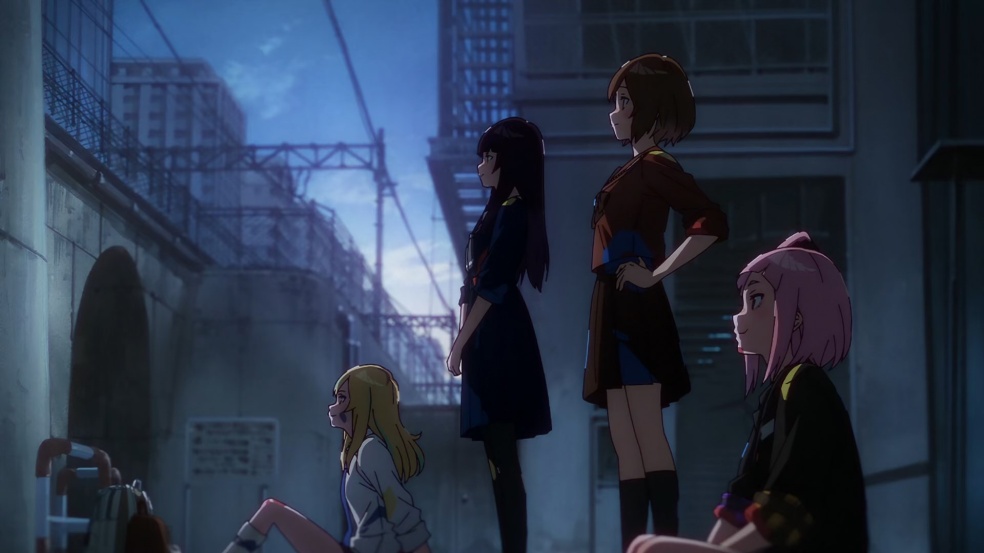




 The Magic Planet