The Weekly Orbit is a (sometimes) weekly column collecting and refining my more casual anime- and manga-related thoughts from the previous week. Mostly, these are taken from my tumblr blog, and assume at least some familiarity with the works covered. Be wary of spoilers!
Hi folks, bit of a light week here, and also one with not very many pictures. Hopefully that’s fine, I’ve been going through it a little bit.
Anime – Seasonal
Call of The Night – Season 2, Episode 8
Call of The Night does not go full horror anime very often, but when it does….brr.
So, yeah, Kyouko Mejiro is Anko. We could probably have seen this coming, but this episode confirms it in a tragic, delirious fever dream of blood and violence. I honestly have very little to say here, other than to remark that this episode absolutely excelled at imparting just how tragic Kyouko and Nazuna’s falling out was. I also suspect that there’s more to Kyouko’s father suddenly becoming a blood-starved vampire than we were shown here. After all, how exactly he was turned is a bit up in the air.
Dandadan – Season 2, Episode 8
I don’t think I remember the fight featured throughout the bulk of episode eight here being as memorable as this in the manga.
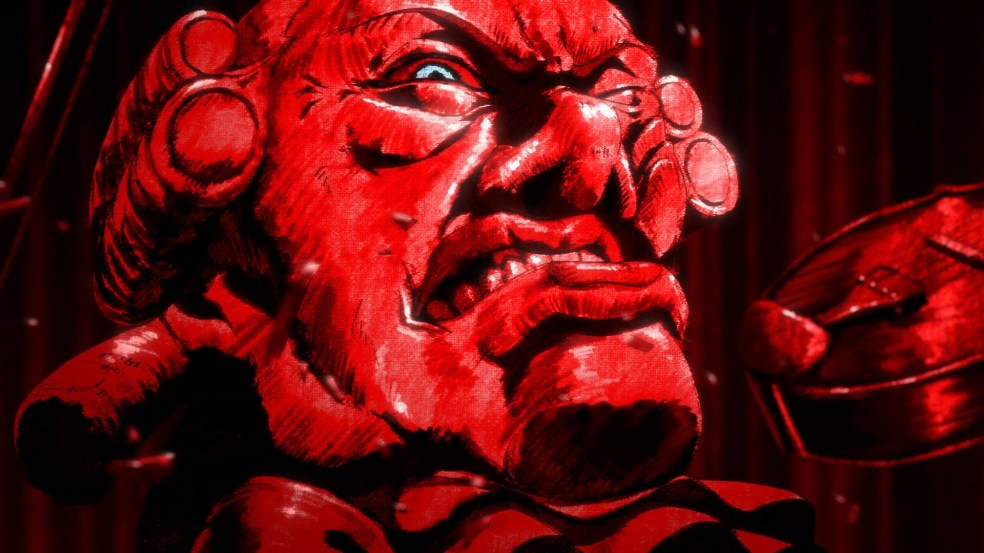
Which is strange, because when considered on its own terms, it’s pretty unique even for Dandadan. What we have here is a strength-building throwdown against a cadre of ghosts, taking the form of classical musicians. Primarily, this fight serves to do two things; give Aira something to do in this storyline, since she’s been absent for much of season two so far, and, more importantly, build and her and Okarun’s sense of “rhythm” to make them better fighters.
The show accomplishes this in a delightfully literal way with the ghost musicians, and I have to say that the chalk-white look really works well for the surreality of this episode. At about the halfway mark, the ghost of Beethoven summons a quartet of singing giants, who break into “Ode to Joy”, one of the ancestral bangers of western music, and it was around then that I realized I was watching another casual triumph in an anime absolutely stuffed with them.
If you want pure hype, though, next week is looking to top even this, as Okarun finishes this episode by promising to use his newfound strength to throw down with Evil Eye. Predictably—though not in an unwelcome way—we end things on a cliffhanger.
Necronomico & The Cosmic Horror Show – Episode 8
If we want to say that Necronomico & The Cosmic Horror Show has a main flaw, and I think we probably do, I would say it’s that it has a poor command of its own strengths.
What the show is good at: putting its characters into wacky (and life-threatening) situations, basic and broad character writing, effectively tying the death games’ stakes to the lives of its characters.
What Necronomico is not good at: social commentary, more complex character writing, anything with immediate (that is to say, visible to us) stakes outside the lives of its own characters.
This is a problem, because episode eight is mostly about the latter group of things. We zoom out here, taking a broad view of the world as seen in Necronomico. Our main heroines go on a TV show and the series attempts to recontextualize its own past writing, shaming its audience by having a sleazeball TV exec character refer to Kanna as a marketable tragic heroine. The problem there is that “marketable tragic heroine” is pretty much exactly what Kanna is. Her more complex traits—relatively speaking—mostly consist of being a bit rude sometimes. She’s not a perfect angel, but that’s hardly an actual character flaw. Puzzlingly, Necronomico seems to think it is.
Similarly, the attempt to drag and drop Eita into the role of a cult leader is just baffling. I’m not going to say it’s unrealistic—the rise of Elon Musk has proven that people will bleed and die even for the dorkiest and least charismatic leaders possible as long as they give them suitable permission to enact violence—but it’s not necessarily super compelling. He remains a dead spot in the series’ cast.
And there’s not really a lot that happens in this episode other than these two things? Sure, getting a proper introduction to our Vatican witch hunter type character, Joe, is nice, but beyond that it’s all setup. Thankfully, the final game seems suitably deranged, as our cast have been dropped in a freezing wasteland—Kadath, in fact—and have to somehow take down the four main Old God antagonists on their own. So I am hoping this episode is more of a speedbump than a sign that the show’s final third is going to suck. At bare minimum, I hope we at least get to see Cthulu show off at some point during this game, as she was mostly absent from this episode.
Ruri Rocks / Introduction to Mineralogy – Episode 8
We continue the theme of artificial minerals in this week’s Ruri Rocks. To be honest, most of this episode didn’t capture my imagination terribly much despite being perfectly fine, but I liked the scenes in the factory at the end. Ruri’s concern over whether she’s “allowed” to like Zincite reminds me, funnily enough, of some similar thoughts I’ve had about, say, Detroit agate.
There’s No Freaking Way I’ll Be Your Lover! Unless…. – Episode 7
I’m not entirely sure what to think of this plot development, but the scene with Mai and Satsuki fighting over Renako is pretty great. I have to give a special nod to the, I’m not even sure what to call it, evil Super Nintendo music? It plays when Satsuki shows Mai the photo of her and Renako kissing. A great scene in an episode I thought was merely pretty good, which when the last several have been great is a slight step down.
Anime – Non-Seasonal
Dominion Tank Police (OVA)
Well, this was just a bit puzzling. An interesting thing about these old OVAs is that they’re often baffling in ways that, on the surface, seem completely different from how a contemporary anime would be baffling, but taken in a broader view you end up with a lot of the same root causes.
For Dominion Tank Police, that’s basic incoherence. I can only guess here, but I think the two story arcs adapted for this four part OVA must be from quite far apart in the original manga, since that’s the only way I can think to account for this thing’s bizarre tone. We start with an extremely politically-charged argument between a mayor and a police chief about the role of police in society, wherein the chief advocates using nukes on criminals(!!), and from there it seems like the series is attempting to sort of hamfistedly parody buddy cop narratives. But this reading doesn’t really survive contact with episode two, which seems to take the cops’ side.
We ditch all this entirely for the second part of the series, consisting of episodes three and four, which exchange the over-the-top comedy action of the first half for something slower and more philosophical. I wouldn’t say the change in tone works to the show’s favor exactly, but it makes a kind of half-sense in the moment, even if it does leave almost the entire cast feeling like they’ve been replaced with different characters halfway through. I particularly like the weird explorations into conceptual sci fi toward the end; artificial humans, a winged environmental fairy named Greenpeace, blunt and unsubtle musings on the nature of man. Will any of this be elaborated upon to feel “satisfying” in the conventional sense? No, and given the, to put it lightly, troubling political sympathies of the series, I can’t cleanly recommend Dominion Tank Police. But I admit it’s entertaining on a moment to moment basis in a stoner-flick kind of way, and I appreciate that about it. Again, not something I’d show to just anyone, but it has its charms. Charms helped along, admittedly, by the across-the-board strong visual presentation. A sakuga-head watching this would find enough to enthuse over to keep their attention, and even if that’s not your specific focus, the show is sharply directed throughout and has a great use of strong color; lots of dark navy blues and purples, burnt oranges, and fluorescent blues and reds. (Like a police siren, you see.)
Even aside from everything else I’ve outlined here, the catgirl criminals are an excellent pair of characters (and so fashionable!) and the show’s music is unimpeachable.
Manga
Big Love From Ultra Deep Space – Chapters 1-5
This….is okay!
Only five chapters in, it’s hard to make many claims about Big Love From Ultra Deep Space. The manga is about an alien princesses being betrothed to an ordinary (if gloomy) high school girl. So far, my main takeaways are that the character designs are all lovely, and tonally it’s pretty cute, with a lot of nice domestic scenes between our leads as the princess settles into her life on Earth.
It does however try to tackle some more serious subject matter, too, with the pair’s classmates initially harboring some suspicion of the princess, the lead girl having a troubled past, and so on. Unfortunately the handling of these aspects has so far been a bit contrived. There’s definitely still time for the manga to improve in this regard, and the fifth and most recent chapter is definitely a bit better than the previous four, so it may be a case of the mangaka—Ashidaka Woz, no relation to Scott The, presumably—finding their narrative legs.
If the manga has a central theme, it’s this:
There’s something really beautiful in the sentiment expressed here, the idea that just inherently, we often need others to see the best parts of ourselves. That people mean different things to different other people. I think if it pursues this core theme, Deep Space could really put together something special.
As is, it’s mostly cute and not a lot else, but we’ll see how it develops as time goes on. If nothing else, the art is beautiful, so it’s not hard to recommend off the back of that alone.
Like what you’re reading? Consider following Magic Planet Anime to get notified when new articles go live.If you’d like to talk to other Magic Planet Anime readers, consider joining my Discord server! Also consider following me on Anilist, BlueSky, or Tumblrand supporting me on Ko-Fi. If you want to read more of my work, consider heading over to the Directoryto browse by category.
All views expressed on Magic Planet Anime are solely my own opinions and conclusions and should not be taken to reflect the opinions of any other persons, groups, or organizations. All text is manually typed and edited, and no machine learning or other automatic tools are used in the creation of Magic Planet Anime articles, with the exception of a basic spellchecker. However, some articles may have additional tags placed by WordPress. All text, excepting direct quotations, is owned by Magic Planet Anime. Do not duplicate without permission. All images are owned by their original copyright holders.
The Weekly Orbit is a (sometimes) weekly column collecting and refining my more casual anime- and manga-related thoughts from the previous week. Mostly, these are taken from my tumblr blog, and assume at least some familiarity with the works covered. Be wary of spoilers!
Hello, folks! I don’t have much of a message here, this week, other than to note that I’m happy to be caught up on my seasonals. (With the exception of a few things I’m watching with other people, more on one of those below.) If I’m to direct you to any of the subheadings below in particular, I really do recommend reading about Turkey! which went supernova this week in what I’m hoping is a permanent level up from “good” to “great.”
Other than that, I’m relishing in the feeling of caught-up-ness for the couple hours until another episode of Watanare airs and plunges me right back into the mines. But hey, that’s just how it goes.
Anime – Seasonal
Bad Girl – Episodes 1-5
I’ve been watching this show over the past week or so with my girlfriend. I like it! The central premise of a goody two-shoes trying to pretend to be a delinquent to get her class rep’s attention is a little staid, but the execution is solid. It’s very cute, just funny enough to keep things moving, and it’s snappily paced. The production could use a shot in the arm, but that’s a reality of almost any seasonal anime in this day and age outside the absolute A-Tier, so it is what it is.
Episode five is probably my favorite yet, as new character Sumiki Kiyoraka [Lynn] feels slightly out-of-step with the world of the show in a delightful way. With her loose snake motif and ara-ara-ing, she really seems like she’d rather be in a toxic yuri series of some kind, the sort that’s boiling over with sex and intrigue, as opposed to a sometimes somewhat horny schoolgirl comedy where most of the other characters are dumb as a box of rocks. Still, she gets farther along in her little plot to seduce protagonist Yutani Yuu [Tachibana Azusa] than I’d have expected, and I’m excited to see how she integrates into the rest of the cast going forward.
Call of the Night – Season 2, Episode 7
I don’t know what direction I expected Call of the Night to take after its last arc, but it certainly wasn’t this.
The bulk of this episode concerns Nazuna’s relative youth at a night school, and is a flashback to that time, where she met and interacted with—and maybe fell for, the idea is at least floated—an upperclassman named Mejiro Kyoko. Kyoko is a reserved and bookish sort, but she comes from a home presently undergoing some difficulties. Since those difficulties include her father possibly having an affair, she doesn’t really like guys very much. She does like Nazuna, though, whose puzzling combination of cynicism and wide-eyed naivete at the world she finds charming.
The episode essentially ends just as it’s raising its most heightened questions. We learn that a vampire killed Kyoko’s parents, with the very real possibility being that “the vampire” was Nazuna, somehow and for some reason. Likewise, Kyoko’s hair color, love of detective novels, and clear motive practically scream that there is some connection between her and Uguisu Anko, the murderous vampire hunter / “detective” who’s been a looming presence throughout this entire season. Either or both of these connections could be red herrings, but the episode’s end point—with Kyoko and Nazuna caught by an unexpected guest as they’re snooping around, trying to find evidence of Kyoko’s father’s affair. The series is clearly setting up something of a miniature mystery here, and I’m definitely going to be turning it over in my head over the next few days while we wait for resolution.
Dandadan – Season 2, Episodes 4-6
With this, I am officially caught up with the Dandadan anime!
This in mind, despite liking basically all of these episodes, I have remarkably little to say. This week’s episode, the seventh of season two, is a much quieter and moodier episode than usual from the series, and I did appreciate that; lots of piano pieces in the soundtrack and nightscapes on the drawing board here. I also like that for the fight against the musician ghosts next episode we’re teaming up Okarun and Aira, a somewhat unorthodox pairing for the show. It looks to be fun!
On another visual note, I must also say that I really enjoy the return of the show’s trademark electric greens and purples, they really tie the anime together and I was kind of missing them during the Serpent Lord Arc (or whatever we’re calling it). Even so, the frozen-out grayscale-with-some-color episode seven cut to as it closed here was also great, so I’m excited for next week, regardless of what direction we’re getting.
Gachiakuta – Episode 6
A theme Gachiakuta frequently returns to is worth. The worth of objects, of people. Self-worth, the value we place in each others’ lives, the value of the roles we give to ourselves, and so on. The show has, thus far, batted this around but not really engaged with it directly all that much. Here, it does so via a major plot development for the first time.
Zanka’s assailant from last week is formally introduced to us here as Jabber Wong [Shin Yuuki]—what a name—and we learn that his vital instrument is a set of Edwardy scissor hands. Cool stuff, moreso when they’re revealed to be laced with a neurotoxin that incapacitates his victims. I’m not huge on his design beyond the knife hands themselves—anime, and honestly media in general, could probably stand to do the “big dreadlocks = scary crazy guy” thing less often—but the core concept more or less works. He makes a villainous little speech about how much he values (there’s our watch word) strength, and how much he doesn’t value people like Gris, the non-powered support Cleaner we’ve been following for a couple episodes now. This serves to establish Jabber as the kind of sadomasochistic combat freak so common in these sorts of stories. Then, to establish him as a genuine threat, he makes a lunge for Gris, who he seemingly kills.
Gris’ death initially lacks much impact. (And he might not actually be dead at all, when we last see him in this episode he’s still bleeding out. You know how shonen anime can be with that kind of thing.) Sure, we got to know him a little bit recently, but he’s ultimately a minor character of a sort that is essentially written to be disposable. But, after the OP ends we cut to a slow-motion look at the scene that blends it with the traumatic memory of the death of Rudo’s mentor. The series briefly adopts a wonderfully stark, pure ink sketch-on-paper black and white look for this, and it’s probably the best creative decision Gachiakuta has yet made.
This is then followed by a flashback where we learn that Rudo’s affinity for discarded objects comes from identifying himself with them; his violent instincts restrained, he feels worthless, and there’s a pretty gnarly scene of self-harm here as the flashback opens, with Rudo bashing his head into a cobblework wall.
The fight scene that follows all of this is not quite as good a payoff as you might hope, but it’s still solid. Gachiakuta is mangaka Urana Kei‘s first serial. So to me, this sequence, where Rudo transforms Gris’ protective talisman into a floating, golem-like ward that protects him from hostile intent, reads as someone figuring out the general paces and expected beats of their genre in real time. As, too, does Jabber’s eventual solution to this; to poison himself with his own neurotoxin, not enough to die, but enough to put him at the threshold of consciousness so he can thrash around mindlessly. These kind of battles, that are much wars of magic-like semantics as they are actual fights, can be very entertaining when done well. Gachiakuta‘s display of the form here won’t rank as an all-time great, but for a relative beginner, it’s good.
We end on Jabber making that play, so any resolution of this fight is going to have to wait until next week. Still, despite my qualms, if Gachiakuta can keep up this level of entertaining visual storytelling, it’ll be a worthwhile watch overall.
My Dress-Up Darling – Episode 7
Lots of thoughts with Dress-Up Darling this week. Not all of them positive, but I like this show, and I think people (including me, in the past) are often unfair to it, so I’m going to start with what I like here.
The last third or so of episode seven sees Marin and Gojo on a very cute park date where Marin surprises her still-not-technically-bf by revealing that she’s bought a fancy camera. For several minutes, the show is done entirely from Gojo’s perspective as he clicks the shutter. He’s in love with the new camera, sure, but he’s mostly in love with Marin, and it’s a sweet reminder of the genuine, gentle love the two clearly have for each other. It’s a culmination of what we’ve seen so far, and an indication of where we’re heading next. All told, it is absolutely lovely.
That being said, I really did not like the rest of this episode, so it’s good that the part I just discussed was at the end.
This is a weight loss episode. I know. Sigh with me. I don’t like them either.
I am marginally less down on this particular instance than I would be in many similar shows for two reasons. One; Marin is a model, so very specific weight goals do actually, genuinely matter for her, as opposed to just being an insecurity. Even if that doesn’t neatly box away the “are we really doing this?” vibe across this plot, it at least provides a coherent reason for it being here in the first place as opposed to coming out of nowhere. (And we’ve seen her eating with Gojo and his grandfather a lot recently, so again, there’s an actual logical through-line here at least.) Two; this is a series with a lot of empathy for its characters. Usually that means Gojo, but it does mean Marin, too, and the show has been pretty careful with, for everything that could potentially be criticized about it—the horny framing, etc.—making sure that you the viewer understand that cosplay really does mean a lot to her. (In fact, as much as her modeling job giving her grief is a cause for concern, it’s Gojo’s cosplay outfits getting tight on her that really gets to her.) Where I’m going with that is that I think the show is trying to do a bit of an inspirational message, or perhaps mining this material for relatability, as opposed to just ridiculing Marin.
That said, it’s still pretty unpleasant. I’ll admit some amount of my yuck reaction to this particular stock plot is insecurity about my own weight (I am a fairly hefty trans woman. It comes with the territory), so maybe I’m not being totally fair. Still, this did feel like one of the show’s relatively meaner episodes. Compared to a lot of stuff in this vein, the jokes at Marin’s expense are relatively light. (This is not Sailor Moon’s weight loss episode, for example.) But still, things like illustrating her recent eating patterns with “chomp chomp” sound effects just come off bad no matter how lightly you intend them. I’m sure at least some part of this is lived experience, but if I, twice Marin’s age, felt a little hit, can you imagine someone watching this and getting hit with these vibes if they’re actually sixteen?
I feel the need to temper my criticism, because this plot doesn’t actually get resolved by episode’s end. So it’s possible I’ll feel differently about it next week depending on where this goes, even setting aside the fact that I’m aware I’m sensitive to this kind of stuff. Still, for a show that’s normally so sweet, even slight sourness can seem very bitter. I’m hoping that either the series is going somewhere meaningful with this or, failing that, that we just tie this up quickly and get back to the actually fun parts of this anime.
Necronomico & The Cosmic Horror Show – Episode 7
I think I’m finally deep enough into my anime fandom that I have started getting just a little annoyed at Akira bike slide homages.
After 4 1/2 episodes of Eita doing his I Am An Alpha Gamer shtick, it was immensely gratifying in this week’s episode of Necronomico to see him a) be run over with a motorcycle and b) have his eye(s?) gouged out. That’s the kind of karma you love to see. (I’m sure they’re going to try to make us feel bad for him later. I will not be falling for it.)
That particular development aside, episode seven was a good but also relatively standard one for Necronomico. The tower defense game setup was pretty fun, I enjoyed the various little twists and turns like Gua getting shot with a high-powered sniper rifle and Kanna being secretly from Kyoto. The latter dovetails nicely into the episode’s last and meanest twist, that the damage done to VR Kyoto also carries over to real Kyoto. I admit it’s not hard to see coming, but it’s cruelly effective nonetheless.
Ruri Rocks / Introduction to Mineralogy – Episode 7
Like Gachiakuta, Ruri Rocks is another anime that centers value as a theme. (This is about the only thing they have in common, but it is a similarity nonetheless.) In previous episodes, this has consisted of Ruri learning to find value in minerals beyond the strictly monetary or aesthetic, and she’s come to appreciate everything from pyrite to fluorite in the process. This week, the show introduces a new character and, in doing so, also shifts to focusing on a different sort of rock. As opposed to being about earth minerals, this week’s episode is about a man-made phenomenon; sea glass.
The new character in question, Seto Shouko [Hayashi Saki, in what seems to be her debut role], is introduced with a broadly Tomori-esque flashback sequence where, as a child, she wants to play with some pretty rocks she’s collected at preschool, but she’s pulled away from them by her teacher. Her parents don’t approve either, and she overhears them talking about how they hope she doesn’t become a mineralogist something like that for a career, given that there’s “no money” in it.
Only the most normal of parental conversations here.
This is all a tad silly—it certainly doesn’t reach the world-through-her-eyes pathos of the aforementioned Bang Dream episode—but as a tone setter and a quick backstory, it works just fine. Shouko is introduced, in the story’s present, as a classmate of Ruri’s but not anyone she’s ever really engaged with. When Shouko happens to spot her holding a piece of sea glass at the beach, she remarks on it. Ruri rather stubbornly insists it’s agate. And later, she takes it to Nagi and learns, nope, it really just is sea glass. Nonetheless, this prompts Imari to propose looking for further specimens of sea glass, and this becomes the trio’s latest adventure. As you might expect, Ruri Rocks applies the same level of care and detail to sea glass as it does to natural minerals, and the episode has all of the usual charm one would expect from the series, especially when Shouko eventually joins our usual crew.
Throughout, an implicit comparison is made between sea glass and Shouko. Shouko doesn’t seem to think of her rock-collecting hobby (which she’s kept up in the present day) as meaning very much, but when she meets Imari, she learns that it can be both a passion and a career, thus highlighting that in both of these cases, the personal worth of the subject is what gives it meaning. In more literal terms, Shouko’s delight that she is not just allowed, but encouraged to value minerals and her collection of them, to the point of considering it as a career, is also a classic “passion ignited” sequence—wherein a character, often but not always the protagonist, is awakened to the joy and wonder inherent in whatever field a given hobby anime happens to be about—and it can stand with the best of them.
The ending of the episode, coming after some truly gorgeous character animation during a scene where our heroines rake the beach looking for more glass, makes this comparison more explicit. Both Shouko and Ruri, Nagi points out, have names explicitly connected to glass; Shouko’s contains the kanji for the word, whereas “ruri” is an old term for blue glass. It’s another small, jewel-like detail in a series full of them.
There’s No Freaking Way I’ll Be Your Lover! Unless…. – Episodes 5 & 6
If I could compare the experience of watching Watanare to anything, it would be a tennis match.
Renako, our main character, keeps getting batted back and forth between the mind games of the various scheming girls in her friend group. She is a ball flying through the air between them. All of these girls also seem to have their own emotional baggage between each other that Renako is not necessarily privy to, which is an important complicating factor.
Thus, this storyline, which follows up Renako having dated Mai in a strange, convoluted way, with her doing the same to Satsuki, the conniving, underhanded one of the group, who wants Renako on her arm to hurt Mai’s feelings. Satsuki acquits herself amazingly across these two episodes and she genuinely comes off like a real bitch at certain points. (I mean that in a loving way, something like this isn’t entertaining unless the characters can be believably nasty at least some of the time.)
As you might suspect, Satsuki begins dating Renako by strong-arming her and playing on her guilt. But what beigns as an obligation (one Mai claims to be fine with, in fact, even as she’s obviously not) turns particularly spicy in episode six where Renako happens to catch Satsuki working at a donut shop late at night. This ends with Satsuki taking Renako home (where the pair briefly meet Satsuki’s notably young single mother) and, of course, shenanigans ensue.
Aside from Satsuki herself being great, Renako and her gallery of Bocchian wild takes are absolutely essential here. In providing a sugary comedic overtone, they serve to make the actual emotional development more subtle. Satsuki consequently gets much closer to Renako than she even intended to. The house visit becomes a sleepover, and by the time of the cold, dreamy sensuality of a shared bath and Renako unintentionally stealing Satsuki’s first kiss, the goalposts have already moved pretty damn far. The show’s real strength is in the moments where the comedic mask drops away; Satsuki unintentionally hurting Renako’s feelings by telling her that her attempts to come off as an extrovert are only half working, Renako’s simple and clear explanation of why she wanted to be an “extrovert” in the first place, the aforementioned bath scene and swiped first kiss, Satsuki’s clear and genuine affection for her airheaded but kindly and diligent mother, and so on. That it’s maybe the first anime in a decade to actually get a laugh out of me with a “protagonist falls on a girl and accidentally feels up her boobs” joke is more a nice bonus than the main reason this thing is so good.
Turkey! Time to Strike – Episodes 5 & 6
At the start of the season, Turkey surprised me—and many—with its genre switch. Here, at its halfway point, it surprises again, this time with one of the year’s single best episodes.
A common concern of the time travel narrative is that of the dissonant value systems of those in the past compared to those who live today. This episode deals with this dichotomy, in its many forms, from its beginning to its end, starting with relatively simple examples—Sumomo being betrothed to someone she’s never met, for instance—and slowly snowballing up until the episode’s final, harsh climax. The relevant early example is that Sayuri has her period here, and initially panics because she’s not really sure what to do about that in a time before pads were invented. Suguri is there to help, thankfully, and is revealed to be a woman—ordered by her father to play a man’s role as a protector and warrior of the estate—in the process.
Were that all this episode did, we’d already be approaching rare territory for an anime (think of how many anime bring that particular subject up at all. It’s not zero, but it’s not exactly a thriving club). But episode six’s masterstroke is instead in drawing a connection between that blood and blood of a very different kind. After Suguri and Sayuri’s initial connection and bonding over their shared womanhood, a group of bandits threatens the estate, forcing Suguri and her men to take defensive action. This, of course, entails killing them.
Perhaps understandably for someone growing up in the relatively privileged position of being a high school girl in modern Japan, this sort of breaks Sayuri’s brain. She lashes out at Suguri, simply not understanding how such a kind and caring person can be so willing to take a human life. (And, for perhaps the first time, she processes the death of the bandits in the second episode as something other than horror-movie shock.)
She initially finds Sugiri’s counterargument, that protecting someone necessarily entails that you may have to harm or even kill someone else, unconvincing, and runs away in tears. It is thus left to not a single character but the show itself to explain how these traits coexist in a person.
Turkey‘s answer to this dichotomy is that because the bloody period the girls are trapped in will one day become the gentle times they grew up in, any one person—Suguri, Sayuri, anybody—is exempt from blame. It articulates this, quite deftly I would argue, with its final scene. One of the bandits who survived Sugiri’s forces’ initial attack threatens her again, and in order to save Sugiri, Sayuri heaves a massive rock at the bandit, allowing Sugiri to finish him off. (The sound work deserves a check in particular, here, the bandit’s death gurgle is absolutely grisly.) The fight scene is equal parts stylish and over the top and positively ghoulish, a reminder that the relatively pampered lives we now live are the exception, rather than the norm, of human history. (And, it must of course be said, it’s not like those are a universal human experience in of themselves.) By putting blood on Sayuri’s hands, symbolized by it dripping down and staining the petals of a pure white flower, Turkey has involved her directly in the period’s violence. In doing so, it asks, even if our girls ever do return home, will they ever be the same? But the stained flower is the show’s answer; unchanged, no, but the same at their core, yes.
It is a thesis Turkey will need to spend the remainder of its runtime proving or, perhaps, disproving, but this episode proves it can pull off this kind of subject matter. So I await what is to come with anticipation and bated breath. Godspeed, girls.
And that’s it for this week! As always, I ask that if you enjoyed the column, please consider a donation, as this site is my only consistent source of income. Beyond that, I hope your week is lovely. Hang in there, friends! 🙂
This week’s Bonus Screencap comes from Dandadan. I mentioned really loving the show’s use of greens and purples in the writeup, but didn’t get to fit any screenshots showcasing that into the writeup itself. So here’s one now!
Like what you’re reading? Consider following Magic Planet Anime to get notified when new articles go live.If you’d like to talk to other Magic Planet Anime readers, consider joining my Discord server! Also consider following me on Anilist, BlueSky, or Tumblrand supporting me on Ko-Fi. If you want to read more of my work, consider heading over to the Directoryto browse by category.
All views expressed on Magic Planet Anime are solely my own opinions and conclusions and should not be taken to reflect the opinions of any other persons, groups, or organizations. All text is manually typed and edited, and no machine learning or other automatic tools are used in the creation of Magic Planet Anime articles, with the exception of a basic spellchecker. However, some articles may have additional tags placed by WordPress. All text, excepting direct quotations, is owned by Magic Planet Anime. Do not duplicate without permission. All images are owned by their original copyright holders.
The Weekly Orbit is a (sometimes) weekly column collecting and refining my more casual anime- and manga-related thoughts from the previous week. Mostly, these are taken from my tumblr blog, and assume familiarity with the works covered. Be wary of spoilers!
A much lighter lineup this week, but there’s a real doozy down in that “Non-Seasonal” section to make up for the comparatively slower seasonal episodes here. I hope you enjoy reading, and have a lovely week.
Anime – Seasonal
Call of the Night – Season 2, Episode 6
Call of the Night presents a much goofier episode this week than most of what it’s been laying down recently. That’s just fine, a breather after the fairly intense arc that just ended is welcome. Love Green [Sugita Tomokazu], the otaku vampire introduced here, is a fun if slightly one-note character, and he and Midori, who returns here for the first time in a while, do indeed make a cute pair. On top of this, there are some fun visual gags. I particularly like Nazuna’s desire to impersonate an extremely dated otaku stereotype (that L.G. happens to fit, in part).
It’s interesting to note that even here, in a much less serious episode than the show’s recent norm, we do get a few bits that seem designed to spur on some real thinking. Kabura tells Nazuna that her parents are no longer alive at the start of the episode. Later, in a much sillier scene, we are reminded through L.G.’s antics that a vampire’s memory is highly fallible. This seems important, I’d say.
CITY THE ANIMATION – Episode 6
Episode six marks a return to the standard for CITY. For the most part, this sees the show operating in its usual mode of discrete, gag-focused “chapters” as composing the bulk of the episode. There are some real highlights here, especially in the soccer team sketch, but also a few less-great gags that are more light chuckles than hearty guffaws. Not a serious problem, but something to keep tabs on.
The end of the episode is the real standout, though. In it, the series gains a true plot development, in that the schoolgirl Eri is moving away to England, taking her from her synchronized dumbass lesbian bestie Matsuri. Most of that sketch is silly too, but the simple reveal that Matsuri’s shenanigans during it are just her masking that she’s sad about her friend leaving is good stuff. An endpoint high note to an otherwise fairly median episode.
My Dress-Up Darling – Season 2, Episode 6
Gojo locking in to do Marin’s makeup—with an audience!—is a really nice scene to end this arc on. Marin’s great as “Rei-sama” too, she absolutely serves in the outfit Gojo made for her, winning the pageant and bringing this particular part of the story to a close.
I also really enjoy the end scene where Marin really wants to take some pictures in a photobooth with Gojo but gets sabotaged by the many, many friends she and Gojo have made since the start of the series crowding along too. It’s extremely cute! I love these two.
Gachiakuta – Episode 5
I have very little to say here, this week. There’s a cool fight scene between Zanka and a pair of bandits here that takes up the back third or so of this episode, so that’s quite nice. The bandits have solid designs, and I like the senior bandit’s ability to create and control mud automata. Other than that, this was an oddly slow episode by Gachiakuta‘s standards and I don’t think I really like that about it. This series is simply not good enough at emotional moments to get me super onboard for them.
I’m also not sure I like what we seem to be doing with the other villain here, but I’m going to keep mum about that until they actually properly reveal him next week.
Kamitsubaki City Under Construction – Episodes 4 & 5
The past two weeks have seen future hard Anime Music Quiz round Kamitsubaki City Under Construction continue to be wildly disappointing, albeit in distinct ways.
In the middle of episode four (actually the fifth episode, because this show’s episode count began at episode zero), one scene stands out in the midst of everything else going on. Koko gets a nice, quiet scene with her familiar—“familier” per the show’s spelling—Kugel as the two of them get some udon while talking about the events that have transpired over the course of the series so far. (Or what passes for “events” in a show this scrambled, anyway.) It’s downbeat, moody, and effective. The second it ends, the show goes back to being a chaotic nightmare whorl of proper nouns, leaden exposition, and aura farming (dig the familiers just hanging out on a crane). Kugel’s betrayal and subsequent death in episode five undercuts most of this, despite being largely more coherent overall. For once, the show slows down enough to actually make narrative sense for a majority of the episode. Which is impressive, given that we’ve gotten time travel (or parallel worlds? One or the other) involved. When the plot doesn’t make literal sense, it can cobble together a kind of sleepwalking nightmare logic, made of images of hapless citizens exploding into blood and literal witch hunts. This episode is impressively gory all around, actually, which hey, that’s something.
Let’s keep the praise tempered, though, because having traded away “incoherent” for “maudlin”, the ending of episode five sees Kugel kill himself in one of the most shamelessly cliché scenes I’ve seen in recent memory. We end on a song again, as Koko cries over his dead body. The show having lost what little emotional charge it had, this feels more hollow than ever. I’m not sure what’s keeping me motivated to watch this show at this point, and I would be unsurprised if it doesn’t return here next week.
Necronomico & The Cosmic Horror Show – Episode 6
If I can reveal something that was probably already obvious to most of the people who read these, I mainly watch this show for Cthulu. Cthulu is a great villain, but this is actually the first episode where we’ve gotten to see her do much, and I appreciate that about episode six a lot.
The conceit of this episode is that the Great Old Ones take a day off in temporary semi-human bodies to kick around Japan and see what Earth is like. Most of these diversions aren’t too interesting. Gua’s in fact actively annoyed me. Several times while she’s taking Kei on a foodie tour she whips out the old “we are to humans as humans are to ants” chestnut, which is a lot less convincing coming from the eldritch terror in the first place. Even more so when the Old God in question is chowing down on udon or whatever. Cthulu’s though is great, because she chooses to spend her day off hanging out with and also tormenting Miko. Why?
Because she has a crush on her.
Yeah, really!
Now Cthulu’s not stupid, so she openly wonders whether these are her own yearnings or those of the body she’s possessing—Miko’s relationship with Mayu is referred to in textually romantic terms here, stripping any remaining ambiguity that may have remained about that—but she doesn’t really seem to care! In fact, because Cthulu is, you know, evil, she seems to take a lot of delight in the fact that Miko is attracted to her despite hating her guts. This reaches its apex when she forces a kiss on Miko. Miko is obviously very distraught by this, which just winds Cthulu up more! She’s the fucking worst! I love her!
This season was hardly lacking in yuri, but more of it from a place as relatively unexpected as a death game anime is always nice. Doubly so when it’s this toxic.
Some other stuff happens in this episode too—Eita defects to the Old Gods’ side for whatever good that’ll do him, as if anyone could care—but none of it matters nearly as much to me as Cthulu’s gleeful tormenting of her new pet.
Ruri Rocks / Introduction to Mineralogy – Episode 6
A lovely episode from Ruri Rocks this week concludes what I’m going to loosely term the sapphire arc. (Is two episodes an arc? I’ll say so.) In addition to all of the show’s usual strengths in showcasing the effectiveness of hard work and the scientific method, this episode also incorporates some really interesting stuff about the mythology of sapphires. Particularly, how—per the episode anyway, I haven’t double checked this but I have no reason to assume it’s not true—in some parts of Japan, sapphires were once taken to be the bones of dragons.
It’s interesting stuff. It’s also nicely tied in with the actual location of the episode, which is near a dragon shrine. I’d be remiss to mention that on top of all of that, it’s also nicely serendipitous with some of the other things I’ve been watching and reading this week. Scroll down to the “Non-Seasonal” section for more on that.
There’s No Freaking Way I’ll Be Your Lover! Unless…. – Episode 4
I’m a bit behind on Watanare here (I’m waiting on fansubs. With bated breath, because I am to understand episode five is a doozy), but I like where its head is at right now. Renako and Mai make up in characteristically messy fashion, and the pool scene toward the end of this episode is one of the best bits of vibrant emotional work to come from any anime this year.
Anime – Non-Seasonal
Land of the Lustrous
It feels strange to call anime that’s not even yet a decade old a classic, but Houseki no Kuni has very much stood an already-impressive test of time1, and as I found out after finally crossing it off my plan-to-watch list this week, that’s for very good reason.
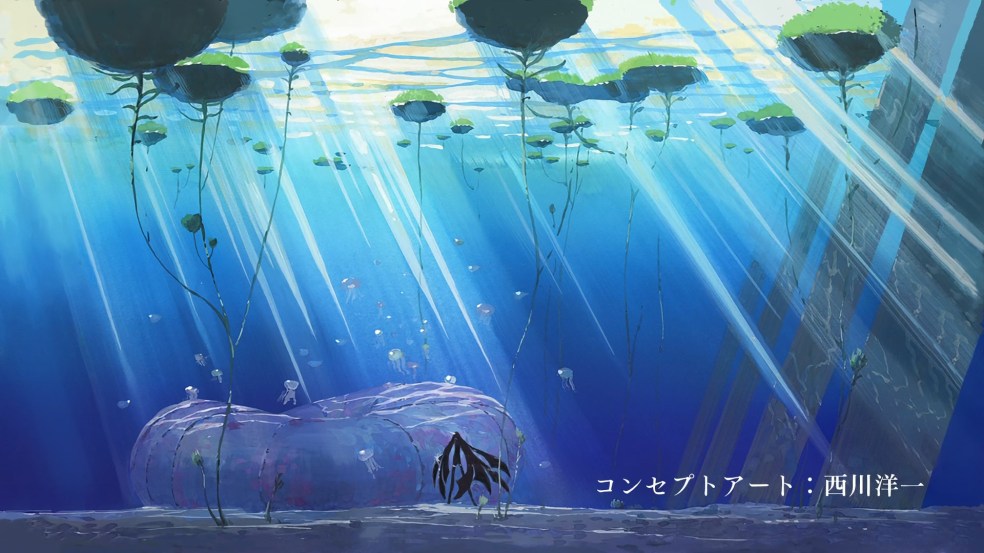
A lot could be said about Houseki no Kuni‘s story—I’m particularly fond of the way main protagonist Phos, by the end of the anime, has started to become an amalgam of everyone they looked up to—but I’m actually more interested in the look of the series here. The anime opts to translate the shadow-heavy and stark visual style of the manga into something hypnagogic and hazy, defined by the bone-white architecture of the compound the Lustrous call their home, the pearlescent mirror-shards that they shatter into when harmed, and the frightful fractals their Lunarian adversaries spring from. Zoom in anywhere across this anime’s twelve episodes and you’ll see something like this; the warm but curiously lifeless sea of its first half, the Caspar Friedrich ice floes of the winter arc, the yawning night that hangs above the beaches Cinnabar patrols alone. These are the qualities that have seen it persist over the past eight years, the same that will ensure it persists for many more.
Yet, that very same misty atmosphere also means that Houseki no Kuni is unique among its ostensible peers and descendants. There are other aspects to its presentation as well, of course; the series has a curiously loose, sometimes loping directorial style. It locks in for the dizzying, David vs. Goliath action sequences and knows when to freeze a good shot in place for an emotional conversation, make no mistake, but many of its more incidental shots have a candidness to them that, at least to my knowledge, has yet to really be replicated. A candidness that carries all the way to the anime’s end. The final episode, after a climactic emotional confrontation between Phos and Cinnabar, ends the morning after, mid-sentence and mid-thought, leaving a million disquieting images and unanswered questions in the air. It disappears like a dream under the morning Sun. An elegant and triumphant form all its own, its incompleteness nonetheless casts a shadow. Like it was bigger than our own imaginations could sustain. Like it was never there at all.
It was, of course. The manga ran for another seven years after the anime concluded, and the TV series adapts only 30-some of its 108 chapters. Houseki no Kuni must truly win some kind of award for “anime that the most people want a longshot second season of,” but there’s no indication Studio Orange, or really anyone else, are in any particular hurry to make one. Having since read the rest of the manga, I can say only that capturing its atmosphere, its emotional highs and lows, and especially the most abstract parts of its final chapters, would be an incredible challenge. Still, these are hypotheticals, and it’s all too easy to let what-ifs distract from the artistry that’s actually there. Any comment about the anime’s incompleteness ignores one key fact, one that any collector natural gemstones would know: sometimes the flawed specimen is the most beautiful one.
That’s all for this week. As I always say, if you can afford it, a donation to my Ko-Fi page is always immensely welcome.
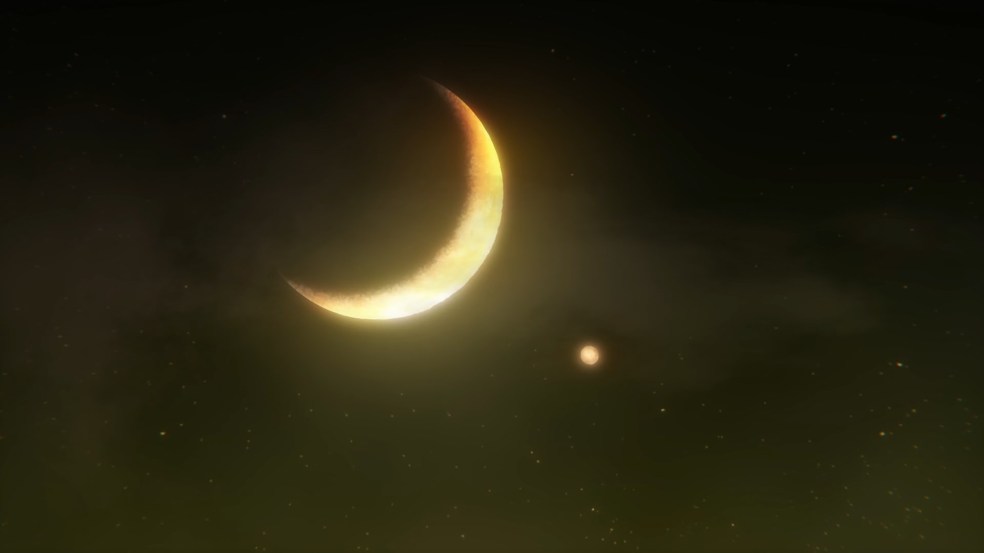
As for the all-important Bonus Image, I don’t usually do this, but we’re going to make this week’s picture something from the Non-Seasonal section. Please look at Phos, dignified and proud under the acidic moon. And do look closely, because barring a miracle, we won’t see them in this column again.
If you know….you know.
1: That’s not to say it was the only heavy hitter to air in Fall of 2017, of course.Girls’ Last Tour, another anime people have been begging for a second season of since it finished, aired that same season. Also of note to me, personally, from that same season, is the ever-underrated Anime-Gataris.
Like what you’re reading? Consider following Magic Planet Anime to get notified when new articles go live.If you’d like to talk to other Magic Planet Anime readers, consider joining my Discord server! Also consider following me on Anilist, BlueSky, or Tumblrand supporting me on Ko-Fi. If you want to read more of my work, consider heading over to the Directoryto browse by category.
All views expressed on Magic Planet Anime are solely my own opinions and conclusions and should not be taken to reflect the opinions of any other persons, groups, or organizations. All text is manually typed and edited, and no machine learning or other automatic tools are used in the creation of Magic Planet Anime articles, with the exception of a basic spellchecker. However, some articles may have additional tags placed by WordPress. All text, excepting direct quotations, is owned by Magic Planet Anime. Do not duplicate without permission. All images are owned by their original copyright holders.
The Weekly Orbit is a (sometimes) weekly column collecting and refining my more casual anime- and manga-related thoughts from the previous week. Mostly, these are taken from my tumblr blog, and assume familiarity with the works covered. Be wary of spoilers!
Happy Monday! These are probably going to be going up on Mondays for the rest of the season, provided my energy levels and outside obligations don’t interfere. We’ve got a long one today, with a couple doubles, so I hope you’re ready to read all about the anime I’ve been loving (or even just kinda liking) this week.
Anime – Seasonal
My Dress-Up Darling, Season 2 – Episodes 3-5
This show is so warm. I love the unifying theme between these episodes; cosplay on the boundary of gender expression. Amane’s cosplaying is something he stuck to even as his ex-girlfriend found it creepy and offputting (his cheerful “so I dumped her!” line when explaining this is absolutely hysterical. Queen shit). A contrast is drawn between that attitude, which in the world of the show—I’d like to think in the real world as well, but who can quite say—is quickly fading, and the present reality of Gojo and Marin’s classmates, who both support and are enthusiastic about Marin’s crossplaying for their school festival event. Episode five continues along this path as Gojo has to learn to ask for help while preparing the perfect crossplay for Marin, a storyline that promises to come to a head next episode. I’ve honestly been loving every second of Dress-Up Darling since it came back, I don’t know if I realized I missed it that much.
Ruri Rocks – Episode 4
A more character-driven and comedic episode from the mineralogical slice of life series this week. Still a great one, though, and I particularly appreciate how much of this episode is devoted to teaching Ruri (and by extension the audience) to understand the interconnectedness of place. Grains of sand in a river were once on a mountain. Over the course of millions of years, time and tide have eroded them, and just as natural forces moved them downstream to where Ruri and Nagi collected them, so too is Ruri herself slowly changing from an impatient gemstone-hunter to someone who truly understands the scope and scale of the natural world. Of course, this episode subtly suggests that in doing so she might be moving away from her previous group of friends in the process. But I can’t imagine they’ll stay removed from Ruri’s geological adventures for very long.
Gachiakuta – Episode 3 & 4
Full credit, I liked this a lot more than episode two, and honestly a fair bit more than episode one as well. My feelings are still pretty mixed overall, but I might actually stick with this for a while longer? Depends on how circumstance shakes out. More on that below.
So, straightforward positives. There’s some pretty neat (if not necessarily super original, but that doesn’t really matter for something like this) worldbuilding stuff in this episode. The dynamic between Enjin and Rudo is a very classic somewhat strained mentor and student sort of thing, and I think it works pretty well. We’re introduced to our main monsters-of-the-week here, and Rudo meets a new character, Nijiku Zanka [Matsuoka Yoshitsugu].
My main problem here is still just with the adaptation itself. Politely, it’s a bit lacking in visual urgency, and the muddy color palette—while appropriate, given the subject matter—doesn’t exactly make most of this stuff pop. There’s a nice ambiance to the city itself, but outside of the backgrounds I just don’t love how the show looks overall. Impolitely, it’s giving a bit of Sabikui Bisco. I do somewhat question this production’s ability to stay afloat over the course of two consecutive cours. That said, the Rudo / Zanka fight scene was nice. So maybe this is being planned out better than I’m giving it credit for. Definitionally, there’s no real way to know until we get there.
About that fight scene. I liked the quick subversion of the usual cliche where new characters meet and fight before getting to know each other. Rudo actually tries talking to Zanka first, remembering some advice from his father figure Regto as he attempts to talk Zanka down. This works until Rudo tries smiling at him (long story) and is so bad at it that Zanka assumes he’s being mocked, and we thus get back to the usual fight setup. It’s a fun and funny way to work with the expected beats of something like this. And, in Zanka’s defense, Rudo’s “smile” looks like this:
The whole….bit with the plunger, which I am just not going to describe in detail because I dislike toilet humor, is, well, I’d call it the episode’s low point, certainly. The episode ends with Zanka and Rudo kinda-sorta reconciling in Enjin’s jeep as Rudo officially joins the cleaners. Also introduced here briefly is a character whose name I don’t think we get from the episode itself but who Anilist tells me is named Riyou [Hanamori Yumiri]. She is, I believe, the final member of the core cast, and our token Girl. I didn’t get much of an impression of her off of her brief scene here, but she seems neat. (I am perhaps unsurprisingly always a little biased toward the women in battle shonen. We’ll see how Gachiakuta scores in that regard.)
Also, she spends a bunch of time touching Rudo’s hair, which, huge tangent here, is very true to life. Having been on both ends of this—I’m transfem, if you’re a new reader—girls just do love hair. We’re fascinated by it, I’m not sure what it is, it’s just a very interesting thing in a lot of people.
In any case, yeah, Gachiakuta has probably avoided my chopping block for the time being. This is actually slightly annoying, because I was planning to pick up another show—Bad Girl—in the free slot I’d have. But, I may just end up dropping Kamitsubaki City instead. That show, unlike this one which I’m just a bit mixed on, is just genuinely very bad, an incoherent mess at best. And I’m not sure how worth it it is to keep watching just to hear V.W.P.’s songs. (Also, Takopi’s Original Sin ended this week—keep scrolling for more on that—so I’ll have some extra time there, too.)
I’m rambling. If I can make two more quick minor gripes before I end the section on episode three (which has gotten oddly long by the standards of the posts I usually transfer over here), the bit at the start with the old woman who looks like an old man is super cringy, and the episode really had to work to win me back after that. Similarly, the bit about Rudo being able to turn any object he touches into a vital instrument just feels sort of….I don’t know, a little much? Give the guy some limits!
These minor complaints aside, episode three was solid! I’m happy to report much the same is true of episode four, and I think at this point Gachiakuta has fully won me over.
Conceptually, four is a very simple episode. We’re getting Rudo acclimated to the Cleaners as an organization and as allies, so he’s introduced to a few of them and accompanies one of them—Riyou, in fact—on a job to fight some “small” trash beasts.
Of course, said beasts turn out to be anything but small. Even the relatively little ones are iron, skull-faced antelopes that can easily bowl a man over, and the largest in the group is a massive wedge-headed thing that takes all of Riyou’s power and attention. (When she destroys it, she finds that it’s mysteriously powered by a Vital Instrument not unlike the Cleaners’ own, thus nicely setting up a future plot thread.) Riyou is the real star of the show in this episode, and there are some real shades of Kill la Kill with her, given her bombastic design compared to everyone else and the fact that she fights with a giant scissor blade. (Which she mostly wields with her feet? Interesting decisions are being made here.)
Her death blow against the giant trash beast at the end of the episode is probably the best the series has looked so far. Hopefully it continues to stay the course in that regard. All around, the past two episodes have done a lot to persuade me to stick with the series.
CITY The Animation – Episode 4 & 5
Episode four is our first that ends with an actual cliffhanger, thus bringing something of a semblance of an actual, overarching plot to CITY. Regardless of whatever’s in that locket, I think the show will probably continue to be just as wildly zany as it has been, so I’m not too concerned about the (very slight) change in direction.
What of episode five you ask? Total! Sensory! Overload! In the absolute best way possible.
It’s difficult to nail down using written language what CITY mostly says purely visually, but that’s especially so here. This episode’s bursting-at-the-seams color, bonkers animation, and general technical wizardry really have to be seen to be believed. In terms of story we mostly follow Nagumo and the still-unnamed “Nice Man” from a few episodes back. The how is secondary to the what; through a series of zany misadventures, Nagumo and the Nice Guy find themselves having to descend through a tower of increasingly silly obstacles in order to escape. What are they trying to escape? Too much hospitality of course, although Nagumo regrets her decision to try leaving almost as soon as she attempts it, and thus tries to lose on each floor. This makes it all the funnier when the floors mostly solve themselves, starting with a magician whose tricks turn on him and just getting weirder and more surreal from there.
The what, it must be stressed, is also secondary to something else; the presentation. About halfway through the episode, CITY zones itself off into multiple screens, like the picture-in-picture mode on a digital TV, and it just keeps doing this until the episode is following essentially the entire cast of the show up to this point, showcasing events from every possible angle at once before finally breaking down even further into a morass of blobs containing one or two characters each.
In its final scene these blobs finally knit themselves back together as Nagumo, The Nice Man, and Wako (also along for the ride) finally leave the tower only to discover that a huge party has sprung up on the tower’s front lawn.
It’s joyous, full of life, and just an absolutely mindbendingly gorgeous work of art. With this episode, CITY passes through any mere “anime of the season” conversations, demonstrating that it is not content to just hold the torch of its stylistic predecessor Nichijou; it wants to build on and surpass it.
Call of The Night, Season 2 – Episode 5
If there’s one thing Call of The Night seems really keen on, it’s complicating its central metaphor.
Here, continuing the flashback from last week’s episode, Kabura learns from Haru about how she has to hunt on her own. Becoming a vampire, Call of the Night suggests, comes with its own set of rules and obligations, but we don’t actually get to see much of Kabura learning from Haru here.
Instead, Haru leaves Kabura behind. Requesting in the process that she care for her born-vampire child, revealed to be Nazuna. It’s both fascinating and absolutely heartbreaking. This poor woman, someone who spent much of her life cloistered off from other people, has now been abandoned again, explaining both her generally cold demeanor and her self-professed habit of trying to steal potential offspring from other vampires.
Or does it explain all that? Again, it’s just complications on complications here. There’s no easy map for Kabura and Nazuna’s unusual relationship, and at some point it almost feels like the story is trying to actively frustrate any applicability. If you wanted to be uncharitable, you could write all of this off as an around-the-bend way for Ko to still be Nazuna’s perfectly heteronormative first love.
But this, of course, brushes off the complicated and compassionate writing of Kabura herself. Late in the episode, after Kabura has told Nazuna that she hates looking at her because her face brings back painful memories, Ko calls her bluff, describing Kabura’s demeanor as concerned and almost motherly. Kabura admits he’s not entirely wrong, but she, and Call of the Night itself, swat Ko’s “mom” label away as restrictive and insulting. He doesn’t know her, and really, neither do we. At the same time, she ends her conversation with Ko by warmly telling him to build a good relationship with Nazuna. Later on, Nazuna herself seems to know, both from how Kabura always did her hair and how—in a flashback not explicitly from anyone’s point of view in particular—Kabura would hug her tight. Crying for her lost love, sure, but an embrace is an embrace.
All but said outright is that these two facts about Kabura; both her endless brokenhearted frustration with Haru, and the resentment she feels toward Nazuna as a result, and the fact that she nonetheless does genuinely care about Nazuna, are two facets of a very complex person who has lived an equally complex life. (And there is some implication that the story Kabura tells Ko and Nazuna isn’t the whole truth anyway.)
The episode—and thus this short arc about Kabura—ends with an application of that not just to Kabura but to everyone. A short comedic sequence aside, the episode’s remaining runtime is eaten up by Ko wondering what in the vampire-hating detective Anko’s past could have led her to such extremes. There’s a cut to Anko herself, stalking the hospital where Kabura works and barging into the derelict room where Kabura had kept all of her memorabilia from when she was human. Anko sighs with frustration; the room has been emptied. Kabura has already thrown her past away, Anko can’t catch her out either.
Dan Da Dan, Season 2 – Episodes 2 & 3
A huge step up from the second season’s premiere. Evil Eye’s backstory in episode two is particularly well done, and I also love the fight scenes in episode three. Dandadan truly feels like it’s back now and I can’t wait to be fully caught up.
Necronomico & The Cosmic Horror Show – Episode 5
Still mixed on this one, but I think if the show continues on this track I’ll be fully won over before too long. A bit against my own wishes, even.
The obvious “problem” with this show is Eita, right? Eita is just not that interesting of a villain. He definitely sucks, don’t get me wrong, and it’s funny and a bit cathartic when he malds about the game (a twisted quiz show in this episode) being rigged or whatever. But he sucks in such a vapid, air-sucking way that watching him ham it up for the camera during the rest of the episode is exhausting instead of fun. Even the reveal that he went to the guy he magic’d up a car crash on in the hospital and literally yanked his life support, normally the kind of thing that’s so over the top it’d loop back around to being interesting, just comes off as an attempt to gas a fundamentally lame villain. At one point, Gua (the redheaded old god) says that in another life he “might’ve shaped history”, which is a hilariously stupid thing to say about a guy who’s basically an evil version of Ninja.
I do sort of think the show might be gearing up to get rid of him, though, because all he really accomplished this episode was making everyone else angrier at him than they were already. Then again, this genre loves its utterly vile villains, so maybe I’m being overly optimistic.
In the positives column, you’ve got basically everything else. The actual premise of this episode is pretty neat. The idea of a quiz show where all the answers are about the contestants and so what you’re really sacrificing is either goodwill (if the question is about someone else) or your own dignity (if it’s about you) to score points is interesting, much moreso than the tedious lateral thinking puzzle that kicks the episode off, thank god we got past that quickly. Eita shafts another player again, in this case Kanna, but she manages to bounce back by answering a question about herself. In the process, she reveals to the other contestants that she was horribly abused as a child and ran away from home when she was younger, which is also why she lives by herself (how she does that, on a streamer’s earnings, is a question left unanswered). Then at the end of the episode, Miko gives them a pretty good put-down:
At which point they reveal they’ve been livestreaming this entire event, so Kanna did in fact just reveal her domestic abuse to the world. Pretty harsh!
She gets something of a silver lining in that the “Lord of All Things” (I don’t know my Cthulu Mythos very well. I think that’s Azatoth?) intervenes to help her during the quiz itself, and seems to be favoring her in general. I really hope this plot—including some of Cthulu’s more ambiguous comments about it—goes somewhere, because it’s easily the most interesting thing introduced this episode. If I’m writing a wishlist, Kanna turning heel and murdering Eita would be amazing.
Speaking of amazing things, the episode ends on the reveal that a witch hunter from the Vatican is now aware of the Cosmic Horror Show. I think this has the distinction of being the first absolutely fucking hilarious appearance of the Catholic Church in an unexpected place in anime since Pope Leo XIV took office. I’m sure he’s thrilled.
Takopi’s Original Sin – Episode 6 (Finale)
They really got me with this last episode man, I’m not even going to try to pretend otherwise.
Takopi ends on a bittersweet note and, honestly, essentially where it started. In removing himself not just from Shizuka’s life but from everyone on Earth’s life, Takopi leaves her with nothing. Nothing except the time they spent together—now buried in some deep, deep well of the unconscious that just a bit more timeline-shifting-proof than the rest of her mind—some hugs, and the idea that talking to people is a good way to get to know them. Kids shit, basically, but it’s enough for Takopi to finally improve Shizuka and Marina’s lives, even if just a little bit.
Their mutual quasi-memory of Takopi, who lives on as a doodle in one of Shizuka’s notebooks, is enough to finally get the two of them to stop fighting in the new and final timeline. Chappy thus doesn’t die, preventing Shizuka from going past the point of no return, and while all of the other hardships in her and Marina’s lives are still present, The epilogue implies that they’re actually quite close now. Takopi, gone from the world, has finally given them something. Not by trying to directly fix their problems—remember, Takopi’s a kid too, he never really had the ability to do that—but just by being their friend. It’s a beautiful ending to one of 2025’s most complete thoughts.
I will say, as an olive branch to the other half of the audience, I have seen backlash to this show and while I don’t agree with it, I do at least understand how it could at least fail to affect someone as profoundly as it’s affected me. Because, ultimately, the emotional impact of the narrative is contingent on you sympathizing with these kids (and Takopi, again, also a kid) in the first place and I know some have had some difficulty in getting there. I do think it depends on one’s own experiences somewhat.
Personally….I mean, I won’t pretend I had it nearly as bad as Shizuka or Marina, but I had a pretty rough childhood in some aspects and, even more honestly, it’s led to a pretty rough adulthood. So I do see something of myself in all of these kids. It’s not that surprising, this in mind, that Takopi got genuine tears out of me. A fantastic show, overall. Maybe even—although this is a judgement for the long view of history alone—a generational one.
Until we meet again. See you, space octopus.
Anime – Non Seasonal
Key The Metal Idol – Episodes 1 & 2
Key the Metal Idol is a fascinating little OVA I started the other day. Its first episode sets up the premise—our titular robot girl, Key herself [Iwao Junko], must make 30,000 “friends” before her final battery runs out, the last wish of her creator now that he’s no longer around to repair her—but more than its actual story, what has gripped me about the show so far are its palette of moods and a few standout individual moments.
That’s not to say it’s devoid of overarching plot or themes, there are actually about a half-dozen plot threads running even just already by my count, and thematically we’re clearly doing something with dehumanization and the commercialization of bodies—one of the first things that happens to Key in the story is that she’s scouted by a sleazy gravure model manager—but however that might look when it eventually comes to a head, that’s all a way’s off.
So, yeah, moments and moods. In this second episode, Key’s friend(?) and impromptu roommate Kuriyagawa Sakura [Nagasawa Miki] ends up confronting that gravure manager and his hulking bodyguard. Except, she doesn’t actually have to fight him, because quite literally just Some Random Guy [Tataki Shuuichi, Anilist tells me, VA: Morikawa Toshiyuki] who happens to be at the video store she works at goes Bruce Lee on their asses. Because he’s a “martial arts otaku.”
There are moments of deadpan comedy like this throughout Key The Metal Idol thus far; bizarre things presented in a very deadpan way so as to not jostle the otherwise moody and downbeat nature of the episodes. For example, tracking Key for his own reasons is a shadowy figure named Sergei [Kosugi Juurouta] with shady connections to android experiments. This wouldn’t be out of place in any cyberpunk or contemporary sci fi series, but what’s notably weird (and thus funny) about the guy is that he….spits gumballs at things to break them a few times? This isn’t commented on, it just happens and we’re left to either laugh at it or accept it at our leisure. Sometimes the jokes roll over into more serious story beats, thus bending the arc of our attention back to the more thoughtful and emotional aspects of this setting. At one point, Sakura leaves a note for Key that she should take a shower. She does so, but Key being a robot girl who doesn’t really understand much about the world, she stays in the shower all day. On its own? Pretty funny. What’s less so is Key actually passing out for some reason, and Sakura’s duress when she comes home and finds her unconscious in the shower.
The second episode ends with a truly great scene where Key watches a tape of an idol. This idol is introduced earlier in the episode (she seems like she’s going to be important), as is the tape itself. When first introduced, the tape is accompanied by its actual music, a nice little bop that sells the character’s status as this important and unflappably cool musical figure pretty well. But when Key watches it later, we don’t hear the music anymore, just the mechanical whirring of the tape as she studies the idol’s movements in silence. Hologram hands reach out to her as the episode comes to a close, and we get a sense of why the show might be called specifically Key the Metal Idol.
That’s about all for this week, as usual, if you liked what you read here, a donation to my Ko-Fi page is always a huge help. Every penny counts.
One final side note; if you follow me on tumblr and wonder why my Bullet/Bullet writeup didn’t make it into this column, it’s mainly because I’ve been trying to cut down on the amount of things on this blog that are that negative. Although honestly knowing me I’ll probably reverse this particular policy decision in a month or two, I can never quite seem to settle on how to organize this place, and what “counts” for this column or not.
In any case, for the Bonus Screencap this week, I wanted to go with this simple but pleasantly My Neighbor Totoro-esque shot of Takopi and Shizuka. They won’t be appearing in this column again, so it felt only right to give them a nice send off.
When it rains, it pours.
Like what you’re reading? Consider following Magic Planet Anime to get notified when new articles go live.If you’d like to talk to other Magic Planet Anime readers, consider joining my Discord server! Also consider following me on Anilist, BlueSky, or Tumblrand supporting me on Ko-Fi. If you want to read more of my work, consider heading over to the Directoryto browse by category.
All views expressed on Magic Planet Anime are solely my own opinions and conclusions and should not be taken to reflect the opinions of any other persons, groups, or organizations. All text is manually typed and edited, and no machine learning or other automatic tools are used in the creation of Magic Planet Anime articles, with the exception of a basic spellchecker. However, some articles may have additional tags placed by WordPress. All text, excepting direct quotations, is owned by Magic Planet Anime. Do not duplicate without permission. All images are owned by their original copyright holders.







 The Magic Planet