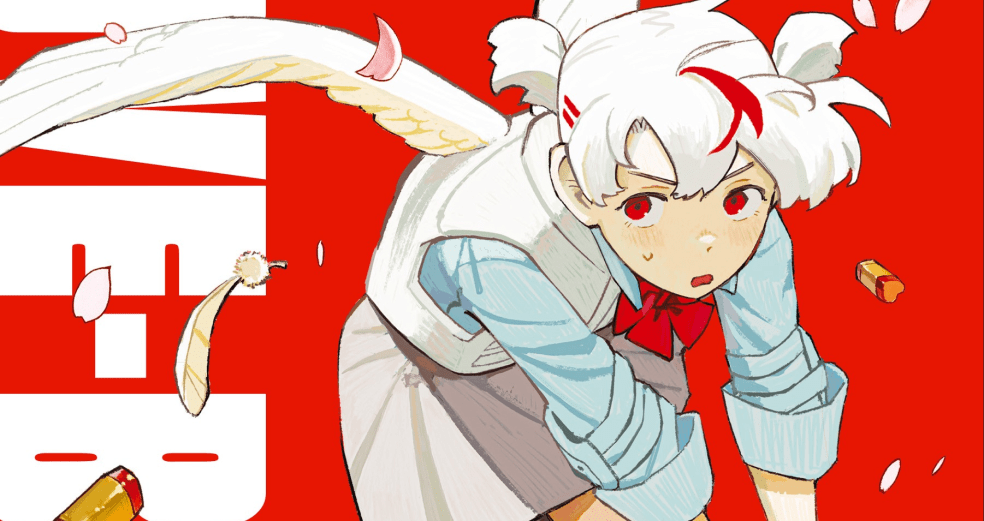
New Manga First Impressions: Shot Through The Heart – Love, Loss, and the Ephemeral Beauty of a Grassroots Fandom: The Story of LOVE BULLET

A Disclaimer: I don’t usually do this sort of thing, but even moreso than usual, if you’re just looking for a simple “is this good or bad? Thumbs up or thumbs down?” kind of thing, I would actually urge you to go read this manga as it currently exists before reading this article. It’s quite short so far (only a single volume), and well worth it. I get into a lot of minutiae about the plot below, and I’d hate to spoil the experience for anybody.

New Manga First Impressions is a column where I detail my thoughts, however brief or long, about the first chapter volume or so of a new manga.


Love, to hear it told, is war. It’s a battlefield. It stinks, It hurts. It bites and bleeds. It’s rough going, in other words. It’s a little surprising, considering all that, that it’s taken this long for someone to have the idea of giving Cupid a handgun. But that is the basic concept of Love Bullet, the manga from newcomer inee that’s recently blown up in certain circles, depending on where you are on the internet. This is a case where the story outside the story is almost as interesting as the work itself, but we’ll save getting into all that for the end of this article. Here’s the, if you’ll forgive the pun, bullet points: Love Bullet follows a group of supernatural beings called cupids. Their task, armed as they are with a variety of firearms and explosives decorated with heart motifs, is to observe their targets in the human world and, with careful observation, decide who the best partner for them would be before pulling the trigger, as doing so makes the targets fall in love. There’s an additional twist to this, however. The cupids themselves are former humans, those who died before their time with some unresolved love of their own still in their hearts.

Becoming a cupid thus offers those who suffer this fate a second chance. And the pilot “0th” chapter goes some further way to laying out our premise and cast. Koharu, our main girl, is the rookie on the job. Kanna, her mentor, is laid back and does her best to help Koharu through the twists and turns of her new profession, there’s also the conscientious Ena, as well as Chiyo, who is, we’ll say, rambunctious.

Chapter 0 sees these four disagree over how precisely to resolve a love triangle of teenagers at a local not-McDonald’s. Three of the four cupids are in favor of pairing Hina, their target, with one of her childhood two childhood friends, Aoi or Daito. (The casual bisexuality of almost every ‘target’ character is worth mentioning, here, as an aside. It feels like an unshowy but powerful acknowledgement that the whims of the heart are often too complex to be so easily pinned down.)

Setting Hina up with either of these two would break the heart of the other, so this isn’t a decision to be made lightly. When the cupids are unable to come to an agreement, Chiyo, the one of the three who most likes to talk with her fists, starts a fight.

Fights between cupids aren’t lethal or anything—cupids can’t fall in love, so being shot or blown up or whatever with their equipment instead renders them temporarily indisposed by making them ridiculously jealous—so some trickery on the part of her mentor eventually gives Koharu, who is determined to somehow solve this problem in a way that doesn’t compromise Hina’s friendships, the deciding shot. Thinking outside of the box, she pulls the trigger between Hina and one of the younger employees at the McDonald’s, saving her friendships and setting her up with a sudden-onset crush instead. The takeaway here is this; Koharu has a good eye for unconventional solutions, something that will serve her well as a cupid in the stories of romance-to-be to come.

However, those stories don’t actually exist yet. The first main arc of the series—which comprises the first and currently only volume of the manga—is actually an origin story for our inventive matchmaker, and this is where Love Bullet goes from merely interesting to positively arresting.

Things begin simply enough. Koharu reminisces on her days as human high school girl Sakurada Koharu. She had a reputation as a matchmaker even then, and her talent for noticing these things put her in enough demand that we see her best friend, one Tamaki Aki, having to occasionally step in.

Koharu in fact seems so wrapped up in this little role she’s made for herself that she doesn’t really consider her own feelings very often. Aki directly says as much to her, only for Koharu to self-deprecatingly reply that beyond this talent of hers, there’s not much to her as a person. This is pretty blatantly untrue, but it gives us a good first look at someone who clearly struggles with her own self-worth. For her part, Aki also has ulterior motives behind trying to get Koharu to put herself first a bit more. Those motives? The obvious, Aki wants Koharu to like herself because Aki likes Koharu.

Unfortunately for both Koharu and Aki, however, this is where the series really earns that “doomed yuri” descriptor. Not a full minute after Aki admits her feelings, Koharu, frozen with indecision, promptly has a head-first meeting with the consequences of choosing to have long talks with your friend next to a construction site, and she promptly dies.

This is perhaps the one writing decision in this arc that I could, writing this a few days after having first read it, think of someone perhaps finding cheesy or even contrived. Honestly it kind of is! But that’s not really a criticism, at least it’s not coming from me, because Love Bullet uses this moment to explode into a bomb-burst of grief. A demonstration of how the world absolutely stops when someone you love leaves it. Love Bullet can afford to be a little loose with the actual literalities of how we get to that point, because, setting aside any fundamentally silly complaints about a lack of realism—people die in freak accidents every day—the actual point of all this stuff is to explore the feelings themselves.

This also marks a notable shift in style for the manga. As Koharu passes away, Love Bullet reveals one of its best visual tricks. The four-page sequence where Koharu dies is a pair of mirrored halves, and is just an absolutely excellent execution of this technique, to such a degree that I am surprised to see it from someone who’s relatively new to the medium1. On the first of these pages, three vertically stacked panels depict Aki’s grief-stricken face as she sees the life fade from her best friend. On the second, Koharu lies at the center of the page’s sole panel, in the midst of a heart-shaped pool of blood, finally realizing that she wanted to fall in love too. On the third, cherry blossom petals fall around her as she awakes, again in the center of a monopanel, newly sporting angel wings. Lastly, on the fourth page, three vertically stacked panels again herald the arrival of Kanna, Koharu’s new mentor, here to induct her into the cupids and thus begin our proper story. In the final signal that Sakurada Koharu the human is dead, Kanna addresses her as just “Koharu.” The scanlators helpfully point out that this change is even more drastic than it seems in English. “Sakurada Koharu” is of course a person’s name and is thus written with Kanji in its native Japanese, but “Koharu”, the cupid she’s just become, is addressed with her name written only in katakana, thus reducing it to pure phonics and making it clear that in some profound metaphysical sense, Koharu the human and Koharu the cupid aren’t precisely identical.

We don’t simply leave Aki behind as the story progresses, though. Koharu’s first assignment as a cupid is, in fact, to help Aki herself find a new love. What’s worse—or better, perhaps, depending on your perspective—is that time has not stood still for the human world between Koharu’s death and resurrection. In fact, it’s been half a decade. There’s again a brilliant use of mirroring here. Aki, now a college student at a prestigious art school who looks drastically different than she did just five years prior, is visually contrasted with Koharu, now an eternally-young angelic being, who looks more or less the same aside from her hair, eyes, and, of course, wings. Even their color schemes are stark opposites!

What’s more, successfully matchmaking as a cupid earns that cupid “karma.” Get enough, and history is casually rewritten such that you’re brought back to your human life. Of course, that doesn’t reverse the time that’s passed since then. Even when the prospect of becoming human again is dangled in front of Koharu, it’s very clear that for the most part, these changes that have happened are permanent. Kanna, who seems to style herself an upright mentor type, reveals that she’s actually the one who chose Aki as Koharu’s first target. From both a practical and personal point of view it makes sense; Koharu knew Aki very well, and there are few people more qualified to pick out a partner for her. On an emotional level, Koharu has to deal with the loss eventually, so she might as well take it head on. Still, it does all feel a little cruel, too. Of course, that too is almost certainly the exact reaction we’re supposed to have, and it’s one that gives this whole scenario some extra resonance. The feelings involved in romance, present or past, are rarely straightforward.

Eventually, by peeking at a “data record” that the cupids are given about their targets, Koharu learns that Aki has held a flame for her this entire time. This only makes sense, a person never really “gets over” something like that, but enough time has finally passed that, presumably with no small amount of effort from Aki herself, she’s able to move on to a new person to at least some extent. Kanna is able to gently coax Koharu into accepting her role as a cupid, and she resolves to find the best partner for Aki that she possibly can.

This is where we meet Chiyo.

You give love a bad name.

Chiyo serves as, more or less, the antagonist of this first arc, and is established as “battle-crazy” bad news who doesn’t really care about the people she’s ostensibly trying to partner up. In fact, when initially targeting Koharu here, she taunts that she thinks it would be “more fun” to just pair her up with somebody at random. According to Kanna, this kind of situation isn’t terribly uncommon. Cupids might technically all have the same job, but fights break out over who gets the karma payout off of claiming a particular heart.

All of this, of course, makes Chiyo a perfect counterpart to Koharu. The wild, battle-hungry fighter who’s here for a good time but not a long one vs. the shy newbie who has some actual investment in the fate of Aki’s love life. It’s actually Kanna who does most of the fighting with Chiyo, though, which would seem like a missed opportunity if they didn’t clearly have some sort of shared history of their own. (Chiyo calls Kanna out on trying to act like “a goodie two-shoes.”) Kanna is able to get Chiyo mostly off of Koharu’s trail by challenging her to a straight-up fistfight, which the heavily armed angel finds interesting enough to agree to.

Koharu, meanwhile, is sent to infiltrate the school with some angel magic. She can actually use this “cupid’s charm” to disguise herself as a human and interact with the college students, including Aki herself. (Who, in another melancholy development, can’t recognize her under the glamour.) Koharu is able to get a general sense of Aki’s current state in life by doing this, and while tons of Aki’s classmates are head over heels for her straightforward, honest nature and deep knowledge of art, most of them are pretty forward about trying to earn her affection, something she doesn’t really seem to care for. Koharu gets the sense that Aki needs someone more reserved and on the quieter side. In another brilliant little page-to-page compositional trick, the thought balloon that begins with “It’s like they need to be someone more reserved. Someone like–” is interrupted by another student calling Koharu’s name on the next page.

It’s perhaps unsurprising that Sakura there, a reserved and shy girl not terribly unlike Koharu herself, is who Koharu eventually picks as Aki’s love interest. I worry that reducing the setup to who “wins” though might make it sound like Koharu is being selfish or even living vicariously through Sakura. In actuality, the manga goes some length to demonstrate that Koharu’s decision is one she comes to after careful consideration. (And after Kanna wins her little bout with Chiyo in a very fun sequence I’ll leave unspoiled.) What gives her the conviction to finally pull the trigger is a conversation between Sakura and Aki herself. By this point, she’s shed her human guise, and the two thus can’t see her. As such, she’s given the surreal experience of hearing Aki recount her own death, and how she’s been dealing with the aftermath since then. It’s a beautiful scene, Aki quietly lays out how she managed to come to terms with Koharu’s passing, and Koharu, improbably, is there to hear all of it.

What really makes this work is how it helps Koharu come to terms with her own loss. In the final moments before she shoots, Aki’s feelings of loss seem to overlap with her own. Aki’s loss of Koharu reflects Koharu’s loss of Aki, the time that’s now forever lost between them, and both of their respective needs to continue onward in spite of all that. To put it bluntly, this all really, really got to me. I don’t cry over fiction easily, but that last page, where Koharu finally pulls the love pistol’s trigger and destines Aki and Sakura to fall for each other, made me start sobbing.

If you love something, set it free.

This, all of it, is fantasy in the purest sense. We don’t know, by the very nature of these things, whether our departed loved ones would want us to move on from them, but the idea that they would seems to be common across cultures, and these ideas that hit so close to the root of the human experience that they’re nearly universal are much of what I come to anime and manga for in the first place. Love Bullet is written by someone who is in all ways quite a different person from me, but the pain at the back of our minds, when we remember those who aren’t with us anymore, connects me to a girl in this story. That means something, and shouldn’t be dismissed.

Case in point: over a decade ago, an internet friend of mine vanished after being grievously harassed in the way that was all too common back then. Shortly before leaving, she told me she’d been crushing on me since we met. That was a very long time ago, and I don’t really have any way of knowing what happened to her, as this was before having all of your alternate social media accounts listed in some convenient place was common. Suffice it to say, my situation and Aki’s are quite different. But the fact that her story stirred this memory in me at all is a testament to the power of the narrative being put together here.

It is, I hope I’ve made clear, excellent stuff. These feelings are what art is for. What’s most impressive about Love Bullet is how it’s clearly the product of a unique and mature artistic voice, from someone who is clearly incredibly talented despite being relatively early on in her career. But what makes it worth reading are those moments of connection, the ones that hit you in the heart.

Obviously, I love this thing to death and want it to continue very, very badly. Inee has mentioned that she has a whole saga for Koharu planned out. (Plus there are so many opportunities for other interesting stories here as well. I am sure Chiyo, for example, has some heart-stompingly sad backstory that I simply need to see.) Unfortunately, though, this is where we get to the part of the article that’s not about the manga itself. Love Bullet, you see, is serialized in a magazine, and thus like any manga bound to that format, is subject to the whims of various people working on the business side of that endeavor. Those people are, often, absolutely ruthless about axing any manga that threatens to underperform. (A counterproductive approach that tends to part ongoing manga from their audiences right as they’re getting to know each other, it must be pointed out.) Love Bullet has, apparently, been underperforming in its volume 1 sales, and its future is therefore rather uncertain.

This is upsetting not just because it’s a fantastic story but also because, god damn it, I’m an author too. One of a very different kind, of course, but it’s impossible for me to see this person writing this story, pouring their entire heart into it, only for it to be threatened by the scythe of capitalism, and just sit here and do nothing. Rarely if ever are my articles capable of affecting tangible, direct change on the world. But this might be an uncommon exception. Sancho Step, the group responsible for scanlating the manga and thus bringing it to international attention (and whose scans I’ve been showing off here), have a very handy guide to purchasing the first volume either physically or digitally. Sancho Step have already done a lot for Love Bullet, and I’m under no delusion that my site has a massive reach, especially not compared to the #ReadLoveBullet campaign they’ve already had well under way for some time now. Still, if I can help move even one copy of the manga and possibly forestall its demise, that’s worth it. Good, impactful, resonant art is worth it, and Love Bullet is absolutely every single one of those things.


1: As is the case with most mangaka who get a debut serial, there is ample evidence that inee published some amount of independent oneshots and such before writing Love Bullet, so it’s not like she’d never picked up a pen before drawing it. Still, the command of panel composition displayed here is exceptional.


Like what you’re reading? Consider following Magic Planet Anime to get notified when new articles go live. If you’d like to talk to other Magic Planet Anime readers, consider joining my Discord server! Also consider following me on AnilistBlueSkyTumblr, or Twitter and supporting me on Ko-Fi. If you do the latter soon enough after this article goes up, I will probably use the donation to buy a copy of Love Bullet, so thanks 🙂 If you want to read more of my work, consider heading over to the Directory to browse by category.

All views expressed on Magic Planet Anime are solely my own opinions and conclusions and should not be taken to reflect the opinions of any other persons, groups, or organizations. All text is manually typed and edited, and no machine learning or other automatic tools are used in the creation of Magic Planet Anime articles, with the exception of a basic spellchecker. However, some articles may have additional tags placed by WordPress. All text, excepting direct quotations, is owned by Magic Planet Anime. Do not duplicate without permission. All images are owned by their original copyright holders.
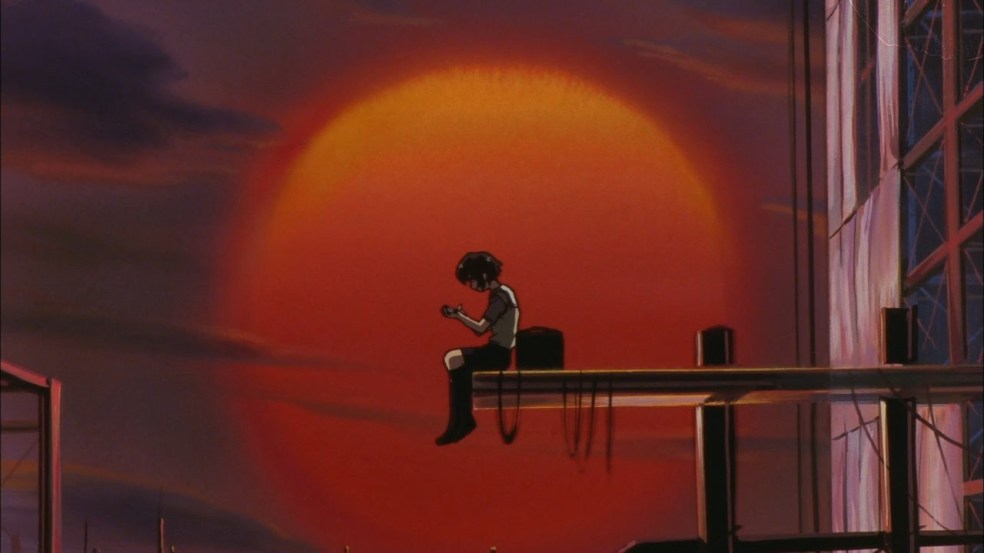
(REVIEW) The Black Thread of Fate: Death, Past and Present, in NOIR

This review contains spoilers for the reviewed material. This is your only warning.

Note: this is a review of the English dub.


In the shadows, nameless assassins load their pistols. The bullets in the chamber end the lives of the rich, the powerful, the damned. It happens everywhere; abandoned construction sites in Japan, the coasts of South America, the heart of Paris, just outside the Arc de Triomphe, the glittering skyscrapers of New York City, the cold landscape of Russia, just before winter’s first snowfall. It happens by the hands of two women, hitmen without equal, twin goddesses of death. The result? Something between an action movie and a slow-burn nightmare, filled with pinging gunshots, glinting dagger blades, and poisonous incense. Enter this dreamy vein and you find Noir; a haunting, gauzy series whose emotional and literal palette is dark and thick as tar pitch. Fitting enough for something whose title is just the French word for “black.”

The reference point here is of course film noir, the genre of black and white movies. But Noir‘s inspiration is less a direct aping of tropes and more a signal that it intends to replicate that movement’s sense of mood and place. Indeed, even as Noir‘s marriage of action movie tropes and dramatic, philosophical dialogue spins out into a storyline of rival assassins and inherited codenames spanning the globe and across time, it never loses that sense of dreaminess, underscored by the lack of blood despite all the violence. This is the aspirational case for highly stylish death-dealing as compelling psychodrama. Firefights are frequent enough to be something you can set your watch to, but every one punctuates big-question themes of loss, fate, memory, revenge, and of course, death.

Our twin deathbirds are Yuumura Kirika [Monica Rial] and Mireille Bouquet [Shelley Calene-Black]. Kirika is an amnesiac Japanese high schooler whose almost supernatural abilities as a hitman seem impossible for someone her age. Mireille, the older of the two by a good five years, is the only remaining member of a powerful Corsican crime family. Together, the two work under the codename Noir, the moniker of a legendary assassin who’s stalked Europe for a thousand years, and take on various hit jobs to make ends meet while pursuing their deeper goals. All the while, their alliance is an uneasy one; sometimes friends, sometimes more than friends, and yet other times keeping each other at arm’s length, they are united by a sworn pact and, as eventually becomes clear, a shared history.

Kirika is introduced to us when she sends Mireille an e-mail, containing a cryptic comment about taking a pilgrimmage to their respective pasts and an audio file, recorded from a silver pocket watch, that plays a haunting melody from Mireille’s own. When they meet, they’re almost immediately attacked by throngs of faceless assailants. This opening action piece sets the tone in many ways, as all of the elements Noir will follow are here; Kirika being so good at killing that she can hang a man by his necktie without a second thought, Mireille holding her own but being equal parts stunned and unnerved by Kirika’s abilities. All this while the two exchange gunfire with the nameless men pursuing them in a construction site that serves as a murderous, surreal jungle gym. Even the use of light and shadow, the look of Noir itself, is laid out in these first fifteen or so minutes. Eventually, the gunsmoke clears, and Mireille offers Kirika her terms: the two will help each other discover who the amnesiac Kirika really is and why she has a pocket watch once owned by Mireille’s late parents. Then, when the truth is clearer than light, Mireille will kill Kirika. The schoolgirl accepts, and our story begins.

Thus set is the stage for a heavy, dramatic narrative. Both of our leads are seeking answers from their pasts. Kirika wants to know who she is, the ordinary self she’s convinced lies underneath all of the murderous conditioning. Mireille has a more concrete goal; she wants to know who killed her parents and brother, and why they did it. These two seemingly parallel roads meet under the sinister gaze of Les Soldats, the show’s assassin-death cult-Illuminati, a powerful force that veils the entire world in a suffocating black shroud, and the main antagonists of the series.

Early episodes, though, touch on the Soldats only briefly, or not at all. They aren’t introduced until several episodes in, and they’re more of a background presence throughout the first half of the series. These earlier, episodic adventures are more defined by the locales the main duo visit and who they take out while they’re there, emphasizing action and mood-setting as opposed to the strong central through-line that soon develops.

Even still, there’s a streak of profound melancholy that runs through Noir from its very first episode. Despite its excellent action, this is not a show that boils down to a mindless exchange of bullets. Kirika’s quest for identity in particular is central to the series from its very beginning. An early episode sees her befriend a lost cat, first comparing herself to it and then remarking that since the cat is only lost physically, they aren’t truly that similar at all.

That cat belongs to a former Soviet prison camp commander, one who used that position to further an ethnic conflict between his own people and another group, rounding up the latter and sending them to their deaths. When the duo, tasked with killing this man, actually meet him, what they find is an old man who devotes his every waking hour to feeding the poor and homeless.

Setting aside that these kind of complete moral 180s don’t really happen very often in the real world, Noir asks a very pointed question here, the first hint at a larger overall theme. Does this turnaround actually matter? It is certainly a good thing to be helping the needy, but it doesn’t revive the people he’s murdered. This one of the show’s more extreme extensions of one of its basic ideas, that of killers of all sorts are notably distinct from regular society in a way that isn’t reversible. The notion permeates Noir. So too does the dichotomy between this underworld and the “daylight” world of ordinary people, who are rarely ever particularly relevant in this series. When they are, it’s to draw attention to this painful contrast.

Take, for example, in episode 4 when Kirika and Mireille fly to South America. There, they assassinate the head of a private military company called Atride, who are aiding an ongoing coup d’etat. After killing the man, Kirika unknowingly crosses paths with his daughter, who doesn’t yet know that her father is dead. We never see her reaction at all, in fact. The emphasis is not put on the victims, or those they leave behind. The grieving families are left implied, and the pain permeates the series in only an indirect way. Instead, the focus is squarely on the staining of the killers’ hands, and, by implication, their souls.

This isn’t to say that Noir is moralizing. It really isn’t, certainly not in comparison to some other anime from this time period that I’ve reviewed on this site. It’s more of a question than a strong stance; are these methods worth it? Does it ever result in anything but violence begetting violence, down through the generations, again and again? Noir is much more an interrogative work than it is one that’s keen to offer up clear, simple solutions.

If you, personally, want to either exonerate or condemn the Noir duo, you’re certainly free to. As the series hands you more than enough evidence to do either. In the former column, the world is arguably better off without most of the people they kill; the aforementioned PMC CEO and prison camp commander, French right-wing extremists, Mafia dons, Triad elders, etc. In the latter column, there’s the obvious counter that they’re still killing people extrajudicially based on not even their own judgement but the judgement of those who hire them. But making moral calls like this, in either direction, risks getting lost in the weeds. It’s fair to raise the point that if Noir does not want to be seen as endorsing some form of real world politics, it should not have its main characters involve themselves with so many political conflicts, but the series’ focus on the question of violence as an acceptable tool (or not) of change is more general and philosophical than tied to any movement in particular. Again, it must be emphasized that this is a recurring idea throughout the series. The notion that violence begets itself. As one of the duo’s one-arc enemies—Silvana [Heather LeMaster], the scion of a Mafia family—puts it, only blood can wash out blood.

Noir thrives on contrasts such as these. Once again, this is most obvious with Kirika, whose dark talents are always juxtaposed against her desire for an ordinary life. Sometimes simply represented by her high school ID (a highly symbolic object, the lone remnant of a normal life she may have lived, however briefly), and other times personified by connections that she makes which are ripped away, such as when she learns to draw from tragic character-of-the-day Milosh [Jay Hickman], who naturally does not survive his debut episode. It’s present with Mireille too, however, as her comparative involvement with ordinary society is always cut against how profoundly the loss of her parents stung her, and how her past sometimes pops up in unexpected ways to fill her with dread. The largest of all of these contrasts however, is much bigger than any single character. Rather, it’s the twin notions of self-determination and fatalism. The opening spiel at the start of each episode tells us that Noir is “the name of an ancient fate”, and that’s a thought the anime takes very seriously.

In episode 11, around the show’s halfway point, we’re introduced to Chloe [Hilary Haag], our third main character.

Chloe, like Kirika, is a teenage girl who is also a ridiculously skilled hitman, possibly to an even greater extent than Kirika herself. Quite unlike Kirika, Chloe is a Soldat, under the thumb of one of the Soldat leaders, the mysterious priestess Altena [Tiffany Lynn Grant]. Chloe and Kirika are quite quickly established to have a mysterious connection that is only elaborated upon at length toward the very end of the series. They’re on a similar wavelength in general, a fact that clearly disturbs Mireille. All the more troubling is Chloe’s claim of being a “true Noir.” As we eventually learn, that name was originally given to the pairs of agents serving the Soldat high priestess. Our main duo are thus left to consider the idea that their meeting and adopting the Noir codename was determined from the very beginning, a suggestion that only becomes more likely as the show crams detail upon detail into the margins of the characters’ pasts, most especially Mireille’s backstory. I can imagine a certain kind of person finding this overbearing, even convoluted. I’m inclined to accept it for what it is; a further reinforcement of the dreamlike, haunted nature of this entire story.

It’s worth pointing out, too, how all of these characters—our leads of course, but also Chloe and her mysterious handler Altena—are weomen. Noir features a fairly intense homoeroticism, culminating in, when the main duo temporarily break up during the final arc, Kirika referring to Mireille as “my dear Mireille” in a tearful letter. I’ve seen it claimed that Noir has “yuri undertones,” but frankly this seems far too cautious, the show simply has romantic yearning as another thread of its emotional tapestry. This marriage of themes isn’t coincidental, either. Noir seems to suggest that its characters being queer reinforces their outcast nature within society. As queer people, we are present in society’s clockwork, but not truly a part of it, and that separation is only further reinforced by the girls’ occupations. It’d be easy to assume the contrary, that Noir was conflating homosexuality and the girls’ professions to condemn both of them, but this is at odds with the immense humanity that all of these relationships are written with. (And Noir‘s complicated views on violence.) Even the spiny, borderline-yandere obsession Silvana has with Mireille is well-considered, and it goes without saying that Mireille and Kirika’s relationship is the center of the series. Chloe, too, gets a lot of consideration, and when she dies in the final episode, seemingly as punishment for daring to kiss Kirika on the lips just fifteen or so realtime minutes before, it feels less like Noir spitting on a character’s grave and more simply a grim reflection that there are times and places where this sort of thing does, in fact, get you killed.

That last arc is where Noir tries to answer at least a few of the many questions it raised earlier in the story. To leave out a great many details (both for the sake of preserving some of the show’s tricks and to not bog this article down with any further length), Kirika is eventually revealed as being another of the Soldats’ trained-from-birth assassins. What’s more surprising is that this is also true of Mireille, and her parents’ murder stems directly from their refusal, when she was a child, to hand her over to Altena. Altena is revealed to be behind this program of “saplings” in the first place. This raises the obvious question of why she’s doing this, and what the Soldats are actually seeking to gain.

Just as our leads take jobs from whoever will pay for them, and pursue no coherent agenda but what they’re seeking from their own pasts, the Soldats, similarly, don’t seem to be shaping the world to anyone’s ends but their own. Power not only corrupts, Noir ventures, it blinds. The Soldats, despite their mystical trappings and Illuminati-coded global reach, are not really any different from any other group of soldiers or guerillas. Lethal violence to reinforce the power of the group is the order of the day, and all else is bloviating self-justification. Altena, despite the motherly countenance she puts on throughout the series, and her own claims that the Soldats were once champions of the oppressed, isn’t really doing much more than lying to herself.

Altena is only given a fairly subtle characterization, in fact. Without close viewing I imagine some might come away from Noir finding her actions nonsensical. The only direct look at Altena’s past we get is through a handful of un-narrated, brief flashbacks. Despite their brevity, they paint a bleak picture; a girl whose home was destroyed by invading soldiers, and whose innocence was stolen from her at gunpoint. How she fell in with the Soldats from there goes unsaid, but it’s easy to make the leap that learning this organization existed, and that they didn’t help her and her people despite their lofty ideals, simply broke her. In her role as a leader of the Soldats, she passes this pain onto her “saplings” in motherly guise. In the final episode, she outlines the real purpose of, at least, her version of the “true Noir.” To simply be a scapegoat for humanity’s worst impulses, to kill for no reason but to perpetuate the killing, again and again, across the globe, and through time.

That fatalistic outlook runs counter to the nihilism (in the neutral sense) of Noir itself, so it’s unsurprising that she doesn’t succeed. In the final episode, Altena’s grand plans come to little, and the final sacrificial victim of her “ritual” is the woman herself. Neither Mireille nor Kirika kill her directly, in doing so breaking Altena’s hold on their lives. Instead, cornered, Altena attempts to get Kirika to shoot her.

Kirika refuses this, choosing to shoulder her actions not under the codename Noir but as herself, attempting to sacrifice herself while saving Mireille and stopping Altena’s plans. In the end, Kirika is saved, and Altena dies without her intervention. The threat gone, our girls cast off the mantle of Noir, and declining any alliance with the remaining factions of the Soldats that remain, they strike out on their own. They may never know peace, but they have each other. In a sense, they are free.

It’s a very open ended conclusion to a show that asks many questions but offers few answers, only that we must all ultimately take responsibility for what we do (or indeed what we don’t), regardless of our choices.

Time has done curious things to the legacy of Noir, perhaps appropriately for an anime so concerned with the past. In its day, the series seems to have been both widely-liked and fairly widely-watched, but “its day” was more than 20 years ago, and unlike some other anime of roughly that vintage that prominently feature f/f pairings (say Revolutionary Girl Utena from a few years prior), Noir seems to have been largely written out of the history books, at least in the anglosphere.1 Despite this, its reputation was still such that as recently as 2012, Starz, the American network, hadn’t fully given up on trying to adapt the series to live action for American audiences, well before the “anime live action remake” became a trend and then a punchline. It was clearly a success for its studio, the late Bee Train, as well, as positive reception prompted the creation of two spiritual sequels in the form of Madlax and El Cazador de la Bruja. And from a fandom perspective, it’s historically important, as it indirectly led to the creation of Yuri Hime.2 So while it’s a shame that Noir doesn’t come up more in retrospectives of yuri as an umbrella term, or just in discussions of early aughts anime in general, it can’t really be said to have left no footprint. Stories that have aged this well will probably always be waiting to be rediscovered by each subsequent generation. I doubt Noir will truly fade from the collective awareness of the dedicated anime fan any time soon. Indeed, I only came across the show by total serendipity myself. It happened to be airing on one of PlutoTV’s anime channels, and I was instantly hooked off of the few episodes I saw there. (Maybe that’s the real magic planet of anime at work right there.)

There is, to be sure, also a lot I’ve left unsaid here. It’s nearly criminal that I haven’t mentioned Kajiura Yuki‘s soundtrack up to this point, as its ghostly choirs and mysterious melodies not only presage what she’d later do on Puella Magi Madoka Magica, they’re just as crucial to establishing the show’s atmosphere as the delicate visual work of, most especially, the painterly backgrounds. There’s also a few nitpicks I could make, but they’re minor enough that I’ve left them by the wayside here, because the series does so much right that they truly do feel like nitpicks as opposed to major complaints. That’s Noir, arresting, haunting, cool as hell, worth counting as among the standouts of its generation. It’s probably not going to truly go away anytime soon.


1: My hunch is that this is at least partly because of the noticeable age gap in the main pairing of Kirika/Mireille. It’s not the sort of thing that bothers me—and honestly I’d argue there are bigger obstacles to those two having a relationship you could truly call healthy—but I can imagine others minding it. Also maybe Chloe’s death? I am of the impression that my reading of that plot beat is not universal or necessarily even common. A cynical part of me wonders if Kirika seemingly crushing on Milosh in his one episode might be part of it, too. But I’d prefer not to think so.

2: See the translated portion of this article excerpted here in this tumblr post.


Like what you’re reading? Consider following Magic Planet Anime to get notified when new articles go live. If you’d like to talk to other Magic Planet Anime readers, consider joining my Discord server! Also consider following me on AnilistBlueSkyTumblr, or Twitter and supporting me on Ko-Fi. If you want to read more of my work, consider heading over to the Directory to browse by category.

All views expressed on Magic Planet Anime are solely my own opinions and conclusions and should not be taken to reflect the opinions of any other persons, groups, or organizations. All text is manually typed and edited, and no machine learning or other automatic tools are used in the creation of Magic Planet Anime articles, with the exception of a basic spellchecker. However, some articles may have additional tags placed by WordPress. All text, excepting direct quotations, is owned by Magic Planet Anime. Do not duplicate without permission. All images are owned by their original copyright holders.

Big Feelings in Small Moments – A Short (REVIEW) of the Short & Sweet HONOBONO LOG

This review contains spoilers for the reviewed material. This is your only warning.


It’s a cliché to begin any piece of writing on a short anime with defense of the form, but to indulge in that cliché a bit, sometimes a premise dictates that an anime’s episodes only really need to be somewhere on the order of 60-120 seconds. So it is with Honobono Log, a series with a not quite a cour’s worth of 2-minute scenes that, consequently, doesn’t even total a full half hour in length. I didn’t know going into Honobono Log that it was adapted from a picture book, but it makes complete sense looking at the show on the whole. The episodes present extremely brief vignettes; tiny windows into the lives of couples and families for us to peer at single, specific scenes from their time together. Animation is limited, backgrounds even moreso; the vast majority of the show’s lean runtime takes place against a solid yellow backdrop. But this isn’t so much a flaw as it is a strength in disguise, by cutting down on extraneous elements both spatial and temporal, Honobono Log leaves us with what really matters; these brief flashes of some emotion or another between two or more people who truly care about each other.

An exhaustive list of these situations would completely spoil the point of the show, but they include aquarium dates, father/child disputes over gumdrops, and brief goodnights over the phone. In each case, the emphasis is less on the intensity of the emotion displayed and more on its casualness. None of these scenes involve anything along the nature of a romantic confession or, really, any identifiable romcom tropes as such at all. Hands intertwine, boyfriends reluctantly run an errand, fidgety girls are hugged, a mother comforts a daughter whose crush has gotten with someone else.

What’s truly being drawn attention to here is the brevity—but also the importance—of these actions themselves, through naturalistic, understated voice acting and simple, unflashy animation that nonetheless takes joy in its movements. Any single one of these moments could crystallize into a memory for someone involved in it, and the show can in fact be taken as a memory catalogue of sorts, not for any one person but for humanity on the whole. One could find flaws in this—for something that clearly reaches for universal experience, all of the couples are straight, for one thing—but these minor criticisms are easily dismissed as flaws of absence. Points to be improved on, as opposed to things wrong per se. No, what we have here are ten tiny miracles. Little wisps of personable warmth and nostalgia, whenever you need them.


Like what you’re reading? Consider following Magic Planet Anime to get notified when new articles go live. If you’d like to talk to other Magic Planet Anime readers, consider joining my Discord server! Also consider following me on AnilistBlueSkyTumblr, or Twitter and supporting me on Ko-Fi or Patreon. If you want to read more of my work, consider heading over to the Directory to browse by category.

All views expressed on Magic Planet Anime are solely my own opinions and conclusions and should not be taken to reflect the opinions of any other persons, groups, or organizations. All text is manually typed and edited, and no machine learning or other automatic tools are used in the creation of Magic Planet Anime articles, with the exception of a basic spellchecker. However, some articles may have additional tags placed by WordPress. All text, excepting direct quotations, is owned by Magic Planet Anime. Do not duplicate without permission. All images are owned by their original copyright holders.