The Frontline Report [11/29/21]

The Frontline Report is a weekly column where I summarize my journey through anime, manga, and the related spheres of popular culture over the past week. Expect spoilers for covered material.


Hello again, anime fans. I don’t have terribly much to say in my lead-in here. It’s been a bit of a week and I’m a bit struck by the winter blues. I hope you won’t begrudge me that this week’s column is only about two shows. For what it’s worth, I think they’re some of the best that have aired this year. One of 2021’s great stories comes to an end and another begins to hit its stride….

The Heike Story

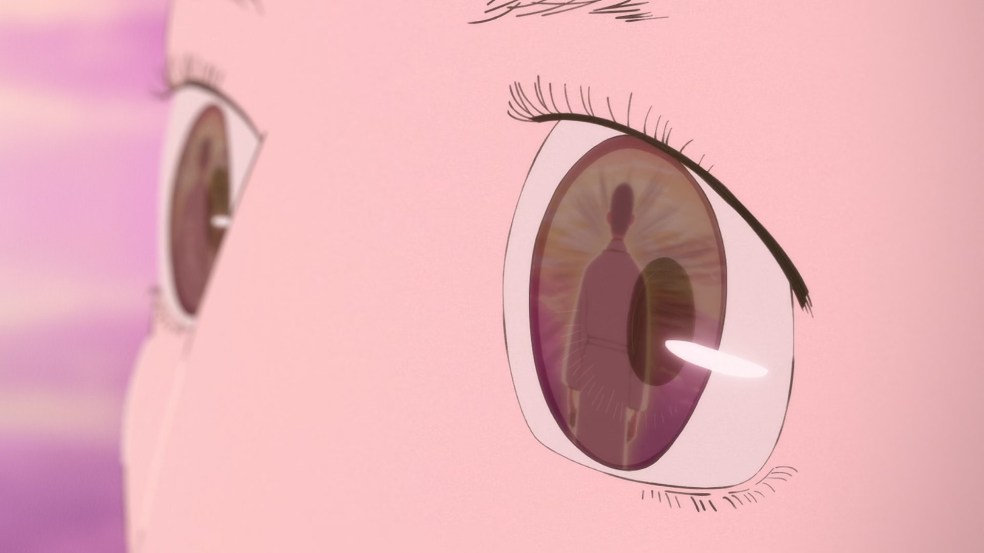
A common nugget of wisdom holds to show, not tell, when weaving a story. But it’s a false dichotomy in some ways. In the Heike Monogatari, now concluded after eleven weeks, the showing and the telling are one in the same. Never has this been more true than in the series’ final act, where Biwa, fully embracing her role as a chronicler of fate, tells us of the Heike’s demise as we see it happen; two perspectives unified like the visions from her own mystical eyes.

The series’ finale is a thing of beauty. The Heike Clan make their final stand in a battle at sea. They lose, as we knew they would from day one. Many, including the young Emperor, cast themselves into the sea. It is not what you’d call a happy ending.

A common criticism I saw of Heike Monogatari during its airing is why, exactly, Biwa did not “do more” to help the Heike who are, after all, her adopted family. As a critique it makes some sense on the surface. She can see the future, and if anime has trained us to expect anything it’s that those with heterochromia and mysterious powers will intervene to stop bad things from happening. But I cannot help but think this is a simplistic view of both Biwa’s personhood and her situation. She is a witness to history; as we all are, in spite of whatever unique talents we may or may not have. Many of us could “do more” to change things with our own talents, yet we do not. If it is a character flaw on her part, it is one most of us share.

And then there’s the series’ moral, such as it is. A fundamental truth of the world; all things are impermanent. Everything dies, empires rise only to fall. What remains are the stories we pass down and the feelings we hold with us. That, truly, is all.

This is a theme that has run through some seventy years of anime history, but if one wanted to find contemporary examples, they would not need to look all that hard. Surely critics who have studied more classical literature than I have will point out that this is a “very Japanese” and “very Buddhist” theme. Perhaps these things are true, the series is based on a historical epic after all and such things are very much informed by their era and place. I also think, though, it may also be a warning against self-importance akin to what we often grant ourselves here in the Anglosphere. We treat ourselves as living at history’s end, but it continues to happen every day in spite of us.

Heike Monogatari‘s true triumph is to delve into the minds of those gone by; to make the past feel real by showing us the human beings behind history’s academic brushstrokes. In doing so, it reminds us that we are all mortal, and we are all witnesses. Like Biwa, many of us will live to see the fall of all kinds of empires. The only question is whether we will deign to sing about it.

I do my best to sing. Do you?

Ranking of Kings

I don’t usually pick shows up mid-season, but Ranking of Kings (known as the somewhat snappier Ousama Ranking in its home country) just didn’t give me much of a choice. “Positive buzz” is one thing, but Ranking on a pure visual level does not look like most anime. This is a reflection of the source material, which seems to draw both on a western-influenced fairy tale book influence and on older strains of anime, not many of which have particularly many artistic descendants in the modern day. So provably, even speaking aesthetically, Ranking stands apart from the usual seasonal grind. This would be interesting on its own, but without a strong story to back it up, it wouldn’t be worth much. Thankfully, Ranking stands as a buzzer-beater candidate for one of the year’s most unique anime from just about every angle. Its visual style could fool one into thinking it’s a happy, straightforward story, but the truth of the matter is that it’s more of a deliberate contrast against the complex character writing and political machinations that our lead, the Deaf Prince Bojji, finds himself caught in.

It’s an utterly fascinating little show, and eight episodes in I can confidently say I have no idea where it’s going to go from here. But what I can do is tell you where it’s been. Doing so alone should be enough for any skeptics to hop aboard the Bojji Train before it’s too late.

Our setup is pretty simple. Bojji is the eldest son of Bosse, the king of a nameless kingdom of which he was the founder. In the show’s opening act, Bosse dies, leaving the question of succession a difficult one. Bojji is Deaf, physically small, and has the misfortune of living in a distinctly fantasy-medieval setting. (Ranking effortlessly pulls off letting us into Bojji’s inner world without any spoken dialogue, but many of the adults around him tend to treat him with vague disdain, or at best, an infantilizing overprotectiveness.) He’s also not much of a swordsman, despite the guideship of his trainer Domas. Though interestingly, he’s great at dodging, a skill that has yet to quite pay dividends narratively but is sure to later.

In contrast to Bojji, there is his younger half-brother, Prince Daida. Daida is much more in the image of a traditional heir to the throne than Bojji. It is thus unsurprising that when Bosse passes away, the kingdom’s council of advisors votes to install Daida as the king instead of his older brother. One might initially think that the story’s central conflict will come down to Bojji’s quest to reclaim his rightful throne, and it may still circle back around to that eventually, but something that simple would not do justice to the sheer amount of stuff this series has covered so far.

For instance; adding fuel to the movement to replace Bojji as the heir apparent is that when Bosse passes away, a massive red devil appears and gestures at the prince. What does this mean? We still don’t know a good half-cour later.

Which is good, because that’s how you build some genuine mystery. Details like this are packed into every minute of Ranking’s runtime and things are only explained directly if absolutely necessary. As a watching experience, it’s engrossing, and doesn’t have much recent competition. I haven’t even brought up Bojji’s plus-one, his shadowy friend Kage who the prince won over with his kindness, and whose obligate backstory episode is one of the show’s highlights.

Some of this attention to detail might come down to Ranking‘s runtime; it’d feel rushed were it only one cour, but it’s thankfully two. (This sadly puts it out of the running for my top five list I’ll be publishing at the end of December. I’m sure the folks at Wit Studio are just heartbroken.)

I have to admit that I considered doing a writeup of this week’s episode as well, but in deference to those who have perhaps not started watching the show yet but might find it interesting based on what I’ve said, I will not do so. Next week, though, you have my promise! Stay strong in the meantime, Prince Bojji!

He’s a mighty little man.


Wanna talk to other Magic Planet Anime readers? Consider joining my Discord server! Also consider following me on Twitter and supporting me on Ko-Fi or Patreon. If you want to read more of my work, consider heading over to the Directory to browse by category.

All views expressed on Magic Planet Anime are solely my own opinions and conclusions and should not be taken to reflect the opinions of any other persons, groups, or organizations. All text, excepting direct quotations, is owned by Magic Planet Anime. Do not duplicate without permission. All images are owned by their original copyright holders.

Let’s Watch TAKT OP.DESTINY: Episode 8

Let’s Watch is a weekly recap column where I follow an anime for the course of its entire runtime. Expect spoilers!


There’s a simple trick that anime sometimes use to signal that the episode you’re about to watch is intense. If an anime’s OP is either skipped entirely or played right at the top of an episode, you know you’re in for quite a time. takt op.Destiny does the latter here with its eighth episode, “Destiny -Cosette-“, and it delivers on all counts.

We pick up immediately after last week’s cliffhanger. Takt–quite understandably given what we learned in that episode–has lost it. He charges into battle like a madman and, perhaps predictably, this is not a great approach against the more skilled Shindler and the just generally very strong Hell. He’s beaten within an inch of his life before Destiny carries him off.

Takt, thus, spends a good chunk of episode 8 bleeding out and delirious. Anime characters have pulled off compelling turns in more unlikely circumstances, so it’s not really a huge shock that for the third episode in a row we get some interesting insight into Takt’s character here as Destiny tries her best to nurse him back to health. Even while Takt, barely-conscious, mistakes her for Cosette. All of this takes place over the episode’s relatively brief middle third, and packs a pretty impressive amount of emotional character work into just a dozen or so minutes. The dark atmosphere of the cave that Destiny drags Takt into helps, admittedly, providing a suitably transitional backdrop for the emotional development in question.

It hasn’t been hard to intuit that Takt is still hung up on the late Cosette. Admittedly, with how these things sometimes work in anime it was hard to initially be totally certain that she was even actually dead. (takt op.Destiny would not have been the first anime to pull this sort of double bait-and-switch maneuver.) But as the show’s gone on it’s become clear that Takt really misses the girl. We get some elaboration on the “why” here, and some questioning into if holding that old flame is at all healthy.

On the one hand, yes, it was Cosette who pulled Takt out of his depression while Anna was taking care of him. But these feelings are complicated and muddy, and Takt has never been able to sort them out. Wisely, they’re not given any specific name here, which would risk cheapening them and would turn Cosette’s early-series death into little more then a vehicle for cheap tears.

It may be a touch surprising to add takt op to the list of anime this year that understand that emotional connections are not clear-cut things, but it’s welcome. When people leave our lives, we remember their shadows as much as the real person. Things left unsaid must remain so, and Takt’s inability to deal with that has held him back from genuine connection with the people who need him now. Chiefly Destiny herself, but also Anna and the scores of people they’ve met along their journey.

It’d be easy to criticize all of this as fairly standard “male lead gets all the depth” stuff, but I think looking at Destiny and her own struggles both throughout this episode and in prior ones makes it pretty clear that that isn’t true. Her loyalty and earnestness are not traits she has because she’s in a role that expects them, but because she lives them full-heartedly. Plus, there are little details that could easily have been played up for easy romantic tension but aren’t. When Destiny has to give Takt mouth-to-mouth, for instance, it is refreshingly devoid of any blushy hemming and hawing, something a lesser show would absolutely indulge in.

Random aside to remind you that mid-distance models are great, actually.

Instead, the closest the two are here is when Takt finally calls Destiny by her real name for the first time. I have to confess that I’ve been pretty “meh” on the idea of the two as a couple (the entire “a new person living in the body of Takt’s dead crush” thing is, admittedly, weird) but this scene is the best case for it that takt op has ever made. It feels natural in a way that the light hinting toward the pairing in prior episodes hasn’t.

If I could make one complaint, it’s that Anna does continue to get the short end of the character screen-time stick, as she’s physically quite far away from the action here. Although her own mini-plot here is quite good as well. She confronts her own insensitive habit of calling Destiny “Cosette” as a way of ignoring that the latter is truly gone, and at episode’s end she calls Destiny by her proper name too, bringing this ongoing subplot to a warm close.

(I would like to take an aside here to brag about being six or so episodes ahead of the actual characters in terms of referring to Destiny and Cosette as two different people. But hey, I’m not an anime character and thus have agency of my own. Not everyone is so lucky. 😛 )

Most of that in just the middle of the episode. So how does it actually end?

Well, let’s discuss its antagonist first. It should not be news to any readers who’ve been keeping up with the show that Shindler sucks. He’s a petty, grasping would-be authoritarian shitheel with no regard for other people, and whose hatred of Takt stems from jealousy at the boy’s talent and perceived importance. He is not a subtle or deep character, but he is very easy to hate, which happens to be a good trait for an arc villain to have. We also learn in this episode that he apparently actually hates music full stop. Sure, why not.

Hell, his Musicart, is entertaining, although she leans a bit too hard on the “sadomasochistic berserker” archetype that seems to pop up in every action anime. Her fun design and incredible choice of weaponry (I’m still not over the heel-mounted blades) make her a good counterbalance to Shindler.

Isn’t she just the worst, folks?

Why relitigate these characters? Because the episode ends with a rematch, of course. Destiny initially confronts Hell and Shindler alone. Unable to transform with Takt still recovering in the cave, she comes out swinging a pair of woodchopping axes* and nothing else. It’s commendably confident, but she can’t stand up to Hell’s full power by herself. Naturally, Takt staggers in to lend his power. Also naturally, Destiny chews him out for not taking care of himself and calls him an idiot. (Sidenote to the show-writers: if you’re going to make them a couple in the four episodes we have left. They need to keep this dynamic.) Naturally again, Shindler gets angry because they’re arguing with each other instead of paying attention to him. Naturally one more time, Leonard and Titan make their grand return in the nick of time, the foreshadowing from last episode (and, to be fair, some appearances earlier in this episode that I haven’t discussed) paying off wonderfully.

This machine kills fascists.

And then, honestly, the sort of scene that words cannot really do full justice to. This is where the aforementioned bit where Takt calls Destiny by her real name comes in, and the renewed connection between the two lets them re-enter the fray with full force. The fight scene is just superb, capping off with one of those huge energy blast vs. differently-colored huge energy blast sequences that, just speaking personally, I’ve loved since I watched Dragon Ball Z with my stepdad as a kid and have never stopped loving.

The fight ends here, not because Hell is entirely defeated but because a mysterious Musicart intervenes. Given this show’s general lack of subtlety her name is, of course, Heaven. Heaven’s proper debut here makes quite the impression; she apparently has the authority to both strip Shindler of his rank and to requisition his Musicart, both of which she does, leaving the now-former Conductor a stuttering mess. He promptly has a breakdown, which, honestly, after all of the nonsense he’s put our cast through, feels about right. Leonard and Titan are reprimanded too, apparently more for interacting with Takt than anything else.

We conclude on a note of triumph and catharsis tinged with an ominous shadow. Our heroes have succeeded for today, and are closer than ever as Takt silently vows to Cosette that he’s going to move forward from now on.

Also, and I cannot stress this enough, Anna and Destiny hug and it’s very cute.

Ah, but the final shot of the episode is this, revealing that Takt’s scarring is getting worse. Perhaps implying that using Destiny so much has really started to take a toll on him.

What will the consequences of all this be? It’s hard to know for certain, but I hope we’ll find out together, anime fans.

(Minor programming note: You may have noticed this week’s column was delayed by a day. That is a product of some personal stuff going on and I don’t expect it to repeat next week. Fingers crossed!)


Wanna talk to other Magic Planet Anime readers? Consider joining my Discord server! Also consider following me on Twitter and supporting me on Ko-Fi or Patreon. If you want to read more of my work, consider heading over to the Directory to browse by category.

All views expressed on Magic Planet Anime are solely my own opinions and conclusions and should not be taken to reflect the opinions of any other persons, groups, or organizations. All text, excepting direct quotations, is owned by Magic Planet Anime. Do not duplicate without permission. All images are owned by their original copyright holders.

The Manga Shelf: Down and Tapped Out in WIZARD’S SOUL ~HOLY WAR OF LOVE~

The Manga Shelf is a column where I go over whatever I’ve been reading recently in the world of manga. Ongoing or complete, good or bad. These articles contain spoilers.


104.3a A player can concede the game at any time.
-The Comprehensive Rules of Magic The Gathering

I rarely find reason to bring it up on this blog, but I really like trading card games. I have since I was young, when a nascent infatuation with Yu-Gi-Oh! led me to the medium and I developed a fondness for the Empty Jar deck type as soon as I knew enough about the game to know how it worked. There is something compelling, even slightly mystical, about TCGs. And beneath all the corporate politics that drive the practical, business side of their development and proliferation, card games have a magnetism that is rare in popular leisure. They combine the strategy of classic board games like Chess with the brain-teasing presence of concealed information inherited from age-old traditional playing card games. They’re good fun.

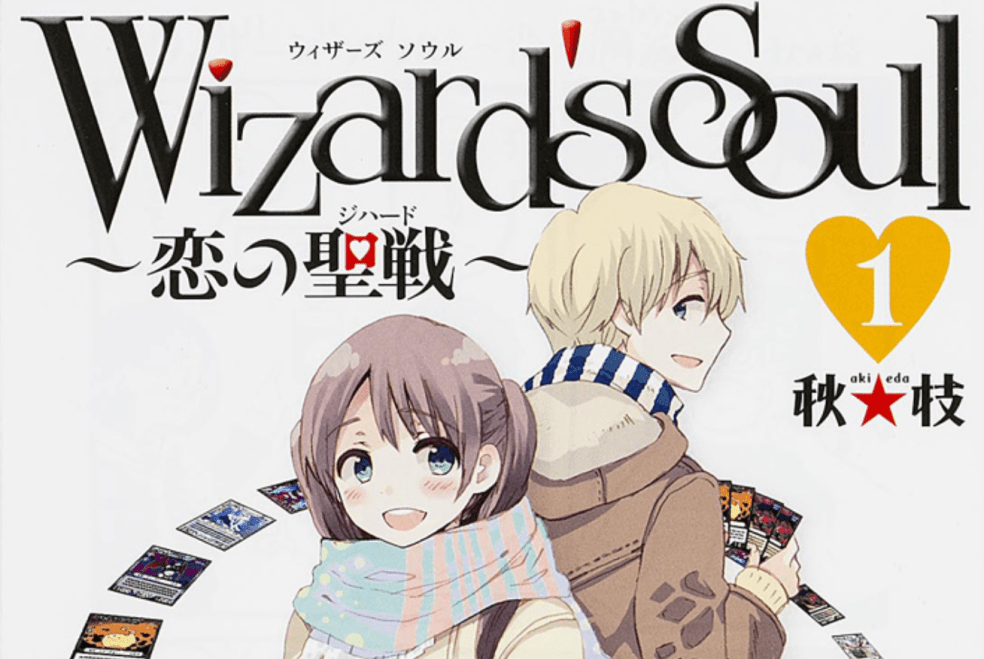
But all this is true of me, and even I think that we don’t really seem to appreciate TCGs here in the west to quite the same level that they do over in Japan. Some would blame, again, Yu-Gi-Oh! I’d be more inclined to thank it. For whatever reason, while the anglophone scene has always been dominated by Magic The Gathering, YGO imports, the Pokémon TCG, and more recently, Hearthstone and its competitors, Japan has developed dozens upon dozens of TCGs which seem to wax and wane in popularity with fair regularity. In doing so, they have gained a foothold in popular culture rare for a pure leisure activity. Naturally, this has an influence on anime and manga. Once again, the original Yu-Gi-Oh! anime is by far the most well-known, but there truly are quite a few of these things. And in the manga format, where there is less pressure to actually push product and more allowance to simply tell a story, the card game genre has taken on some interesting forms. Near the top of the year I covered Destroy All of Humanity, It Can’t Be Regenerated, a romcom with an official blessing from Wizards of The Coast and a title nicked from one of the most famous Magic cards of all time. A fair bit older than Humanity is the subject of today’s column; Wizard’s Soul ~Holy War of Love~. It comes to us from back in 2013, and from the pen of Aki Eda, probably best known as the artist for one of the official Touhou manga, Silent Sinner in Blue. Technically, it is also a romance manga. Besides that, it and Humanity have shockingly little in common. (Although like that series, non-TCG aficionados may find themselves a bit lost with this one.)

Frankly, while it does meet the genre’s criteria in a very technical sense, calling Wizard’s Soul a “romance manga” seems fundamentally misaimed. There is romance in it, but the real focus is on our lead, Manaka Ichinose, in a more general sense. She’s a wonderfully full character, and even at her lowest it’s a serious treat to spend most of the series’ relatively brief 22 chapters by her side.

Wizard’s Soul setting is genre-typical. Like the King of Games before it, everyone in Wizard’s Soul takes the titular card game extremely seriously. Skill in “Wizard’s Soul” can ensure entrance to a good college, defines one’s social groups, and informs one’s outlook on life. It’s a bit less camp than the most extreme examples of the genre (a good recent example of the far end of the scale being this season’s Build Divide: Code Black), and there are no supernatural elements, but the core elements of the setup remain. The game itself is some hodgepodged mix of, yes, Magic The Gathering and Yu-Gi-Oh!, with a few other elements from other games sewn into the fabric for good measure. The rules are never detailed to us at length (although a dedicated reader might be able to reconstruct most of them from what we do learn), because they’re less important than the general feelings of playing a trading card game. Feelings both positive and, importantly, negative.

Manaka herself sticks out by dint of being a card game manga protagonist who has a complicated, thorny relationship with the game that defines her world. There are several aspects to this part of her character, and it’s worth going over them in detail and one at a time.

For one, she does not play the game much at manga’s start. And it’s implied that on the rare occasion she does sit down to play “Wizard’s Soul”–mostly with her younger siblings or occasional customers at the card shop she works at–she deliberately softballs, not caring terribly much about winning. This in spite of the fact that, as we learn, she’s actually very good.

For two, she is that widely-reviled archetype of TCG player. Her specialty is permission control, and it is hilarious how seriously some characters in the earlier parts of the manga take this revelation, acting as they do that her being the equivalent of a mono blue player is “disgusting” and “twisted.”

And the most important bit. Manaka learned how to play WS from her late mother, also a deadly-serious permission player who spent most of her daughter’s childhood holed up in a hospital with some unspecified but evidently very serious illness. Manaka’s mother is an absolutely merciless opponent, and over the course of a number of flashbacks we learn that Manaka never beat her even once. Her mother spent her waning days on Earth beating her daughter in a card game over and over again, offering thorough, detailed criticism each and every time. She pairs this with a superstition that the worse her luck is in real life, the better her card draws are. We see her essentially playing the game on her deathbed, and it’s genuinely pretty disturbing!

This has, understandably, given Manaka quite the complex about playing WS. The specific feelings she describes; remembering positive experiences with the game only as vague blurs but her constant losses to her mother and the ensuing sharp criticism with haunting clarity, almost scan as abusive. (If that sounds silly, consider that the terminally ill angle aside, this is roughly similar to something that happens in real life with chess prodigies.) I’m not sure she’s meant to be read that way, but the signs match up. As the only real opponent that Manaka never beat, and now never can beat, she hangs over the darker parts of the manga like a ghost.

What does all this add up to? A monstrously skilled protagonist who borderline loathes something she’s very good at. And worse, something that is supposed to be fun. We do get little hints that she somewhat still enjoys WS in spite of herself, but only with a pretty heavy sidecart of guilt until the very end of the series.

So what pushes her into actually playing more “Wizard’s Soul” and kicking off our plot? Well, her father falls for a scam and plunges her entire family into debt. A WS tournament–and the associated prize money–offer a simple, if not necessarily easy, way out. Wizard’s Soul, then, is us rooting for her to overcome these impossible odds and the social stigma that comes with even trying. While her playstyle is a million miles away from that of the flashy card combinations that are the norm for the more bombastic angles of the genre, Manaka is a true card game protagonist with regard to her near-prodigal skill. She remains quite compelling to follow throughout the whole series.

About that tournament; to secure enough “ranking points” to be able to enter it, she challenges and, of course, swiftly defeats the strongest player she knows; her close friend and (unknowingly mutual) crush, a boy named Eita. Wizard’s Soul from here on out takes on the structure of a tournament arc. We get into Manaka’s head as she builds and tweaks her deck and, during her matches, gain similar (though more limited) insight into her opponents’ minds as well.

Manaka reworks her deck several times over the course of the manga. Here, she’s reworked it into a mill deck. As an aside, I couldn’t help myself from thinking about how WS must allow a crazy amount of sideboarding.

All of this leads to a rather complicated knot of human drama where the card game is both part of “the point” in of itself but also a lens through which this is all explored. (Not a new innovation in this genre by any means, but more grounded here than most examples.) Manaka is unable to truly enjoy “Wizard’s Soul” itself because playing it dredges up memories of her late mother’s brutal tutoring lessons. Eita is probably actually the most adjusted of the group, as he gets over the sting of his abrupt loss to Manaka rather quickly, before eventually coming over to her corner as a silent cheerer-on during her run in the tournament. Eita’s “fangirl” Koba attempts to sabotage Manaka’s play at every turn, hating her for stealing his attention and affection and then seemingly spurning it.

Her opponents run the gamut in both character archetype and play style. There’s a “romance decker” named Roman who stubbornly refuses to build anything that’s not a convoluted, flashy combo deck, a snooty metagamer, a big-fish-small-pond incarnate in the form of a country girl who’s hit her skill ceiling, an overweight girl who loves playing huge, direct creatures and smashing her enemies’ faces in (and is subject to more than one fat joke, one of the manga’s few real negatives), and many more besides. A lot of them also underestimate her; dismissing her skill as the product of either fluke luck or metagaming. Something that is both true-to-life, and which generally ends quite badly for them.

Manaka triumphs over all of them eventually, furthering both her own personal growth and with the help of Eita himself, who also slips her a rare card into her deckbuilding box at one point.

That card–“Holy War”, from which the manga derives its subtitle–is a pretty direct riff on MTG’s own “Wrath of God”. Which means that improbably, Wizard’s Soul is the second manga I’ve covered this year to indirectly derive its title from this same specific Magic The Gathering card. TCG nerds; eat your heart out. Manaka in fact becomes decently close with almost all of her opponents. “Wizard’s Soul” is, after all, a game, and it’s through her friendship with these people; people she actually has something in common with, that she can grow as a person.

They eventually help her build a new deck, partly out of some of their own spare cards. It’s symbolic, y’see.

This particular plot development is, in fact, about as close as Manaka and Eita ever get, some fluff in the final few pages aside. But if the romance feels perfunctory, perhaps that’s because equally important to Manaka learning to love Eita is her learning to love play again; something sorely resonant to a person like me, who was raised in a pretty work-first, no-nonsense household. (That’s without accounting for the added layer that I, too, enjoy trading card games.) Honestly I suspect it’s a more broadly relatable theme than one might first assume, given the sheer amount of millennials with ‘productiveness’-related anxiety that I know.

If there’s a takeaway here, it’d be that. Wizard’s Soul will probably never be considered a classic, but it’s certainly a worthwhile manga. As one, it’s a fascinating reminder of how we can find reflections of ourselves even in unlikely places, and a study on the difficulty of slipping out from under anxiety. It’s all quite nicely done; a tournament finish if ever there was one.


Wanna talk to other Magic Planet Anime readers? Consider joining my Discord server! Also consider following me on Twitter and supporting me on Ko-Fi or Patreon. If you want to read more of my work, consider heading over to the Directory to browse by category.

All views expressed on Magic Planet Anime are solely my own opinions and conclusions and should not be taken to reflect the opinions of any other persons, groups, or organizations. All text, excepting direct quotations, is owned by Magic Planet Anime. Do not duplicate without permission. All images are owned by their original copyright holders.

Let’s Watch TAKT OP.DESTINY: Episode 7

Let’s Watch is a weekly recap column where I follow an anime for the course of its entire runtime. Expect spoilers!


Or: The one where things start getting kinda nuts.

Remember Shindler? The weird wannabe authoritarian we were introduced to a few weeks ago? takt op.Destiny certainly does, because he and his Musicart Hell return here, and in spectacularly awful fashion. But getting to the heart of why his return here is impactful requires us to talk about the rest of the episode first. “Truth -Noise-” is in fact, aside from its sharp turn in its final few minutes, otherwise another fairly sedate and character-driven episode.

The focus here, as it often is, is on our leads and their relationship to each other, which takes on a few new dimensions here as the trio roll into a town somewhere in the Appalachians that has been recently beset by D2s.

A few things happen here. Takt is wrapped up in attempts to compose a song since last week’s episode, and relentless mental improvisation (combined with his habit of tapping out the notes he’s “playing” in his head) have left him exhausted.

Takt, seen here looking like every college student I’ve ever known.

Destiny and Anna’s relationship has been somewhat strained by the latter being unwilling to let go of the idea that Destiny somehow still “is” Cosette (and in her defense it’s possible she’s right. We don’t really know enough about the mechanics of how Musicarts awaken. Either way, it’s clear Destiny doesn’t like it.)

Destiny and Takt’s relationship, meanwhile, feels like it’s opening up. When Takt gets ahold of an instrument this episode (a melodica, of all things, rather than the pianos he’s used to), it turns out to be because Destiny borrowed it from someone. It’s clear the two care about each other even if they’re not very good at showing it, which really gives their interactions some depth. Much of Destiny’s other character work this episode involves her helping some of the town’s residents–in particular, the mother of a young baby–out with procuring some basic supplies like food and such. It’s really lovely to see, and she remains a great character. (One of the very few ways this show could realistically greatly disappoint me is if they were to simply make Destiny disappear in a proverbial puff of smoke if Cosette were to come back.)

And about those D2s. We learn that, surprise: Shindler has been able to lead them around by the nose this entire time.

One of Hell’s abilities as it turns out, is to “wake up” sleeping D2s with her tuning fork. Cleverly, we actually saw this in action way back in episode three, but it was there devoid of any context, so we didn’t know what was happening. Shindler rants and raves about how the world is “impoverished” and how there’s no room for the poor and unproductive in it, and how he’s the real hero here and blah blah blah. He stops just short of saying something like “history will vindicate me.” As a portrait of a pretentious blowhard who’s convinced himself that his petty narcissistic impulses are for the greater good, it’s spot-on.

Some will decry the revelation that Shindler also awoke the D2s that lead to Takt’s hometown being ransacked in the first place (and to Cosette being killed and turned into Destiny) as overly convenient. What I think should not go unmentioned here is that in the episode’s opener we see Shindler told to avoid Takt by his superior, who praises the boy as “rare.” There is clearly something going on farther up in the hierarchy of the Symphonica as well, it’s just a question of what form it will take when it finally bubbles to the surface.

Takt naturally wants to kill Shindler. It’s hard to fault him–the man murdered a town of innocent people for basically no reason at all–and the episode ends on a cliffhanger as the two are about to face off. Thus, unlucky number 7 comes to an end. And wow quite a lot happens in this episode, doesn’t it? I haven’t even gotten the chance to mention that Leonard and Titan return for a brief cameo, presumably setting up a role in next week’s episode.

I’m here to look grim and chew bubblegum, and I’m all outta bubblegum.

Until then, anime fans.


Wanna talk to other Magic Planet Anime readers? Consider joining my Discord server! Also consider following me on Twitter and supporting me on Ko-Fi or Patreon. If you want to read more of my work, consider heading over to the Directory to browse by category.

All views expressed on Magic Planet Anime are solely my own opinions and conclusions and should not be taken to reflect the opinions of any other persons, groups, or organizations. All text, excepting direct quotations, is owned by Magic Planet Anime. Do not duplicate without permission. All images are owned by their original copyright holders.

The Frontline Report [11/15/21]

The Frontline Report is a weekly column where I summarize my journey through anime, manga, and the related spheres of popular culture over the past week. Expect spoilers for covered material.


Hello folks. Quick programming note before we get started here: Frontline Report is going to be a Mondays column from now on, since it fits a bit better with my schedule. This week’s column is, we’ll say, medium length? And primarily about Rumble Garanndoll. Listen; some weeks you don’t choose the anime, the anime chooses you.

Hope you’re all doing well out there, anime fans.

Rumble Garanndoll

Most anime that suffer from the problems that Rumble Garanndoll did a few weeks back are not helped by introducing more characters. Especially not if they’re also girls with some amount of tease-y maybe-chemistry with the male lead. Yet, doing just that has put the series back on track, and its past two episodes are probably the most interesting the show has ever been. If nothing else, Rumble Garanndoll thus continues to defy expectations.

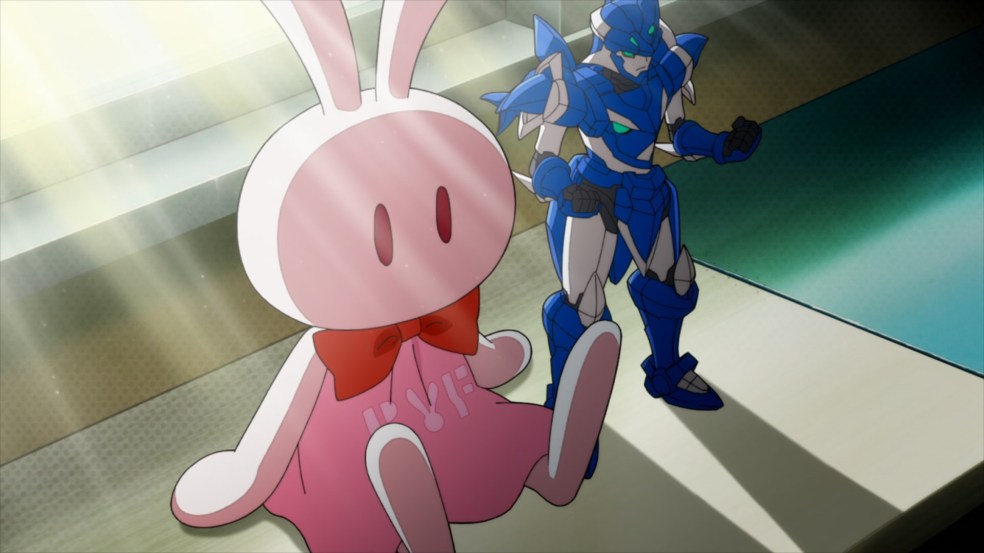
Last week’s episode, its fifth, concluded the miniature story arc of Yuki Aoba. Second-introduced battery girl, and quite possibly Japan’s last surviving idol singer. The natural self-doubt that comes with being an entertainer is compounded by the wildly difficult circumstances of Garanndoll’s setting, and so Hosomichi’s task is to get her back on track when she briefly gives the idol life up. It would be easy to do this by appealing to her imagined responsibility to her fans, or to simple nostalgia for better times, and Hosomichi does in fact try both. What eventually wins her over though is the fact that Yuki as an idol is how she’s happiest with herself, anyone else be damned. Her fans love her because she is a flawed, human person, not because of the artifice. This being Garanndoll, all of this climaxes with Yuki’s own version of the reconfigurable titular mecha–the Rabbit Two–blasting a True Army general to the ground with a rabbit-shaped beam made out of pure Idol Energy. As always, Rumble Garanndoll is at its best when it’s being least subtle.

And speaking of that, the show’s sixth episode is….well, it certainly is something.

I’ve previously commended Garanndoll for its general worldview as one of the show’s strengths. But if one ever thought that it was holding back, today’s episode tosses all subtlety to the window. This is very much a “backstory” episode, and an interlude between the series’ more bombastic moments. But in between usual interstitial fare like fun character interactions (and here, a harem series dynamic that only just manages to stay on the right side of the endearingly cheesy / annoyingly irritating divide), we get Rumble Garanndoll’s take on Japanese Nationalism.

Yes, you read that right.

It will shock no one who’s been following the series that it’s not a worldview the show holds in high regard. But even I was rather surprised at how blunt this sequence is. The conceit here is that one of the resistance’s members has smuggled in a propaganda film from the so-called True Country. There’s been some indication that they were from another world / another timeline / something like that. What’s made clear here, as the black-and-white war reel opens with a declaration that it was made in Year 90 of the “Eternal Showa Era,” is that this other world is one where Japan (and by implication, their allies as well) won World War II. Quite literally, the Japan of Rumble Garanndoll has been invaded by its own fascistic past. If that’s not quite condemnatory enough, here is what resistance commander Balzac says, word for word from the English sub track.

And coming in for the final blow is this interjection from Hosomichi’s “boss,” probably the most morally questionable character on the protagonists’ side of the show.

He perhaps has a talent for understatement.

The propaganda video itself is all monochrome authoritarian bluster. Captain Akatsuki Shinonome, our running background antagonist, decries the people of Garanndoll’s Japan–the declared “Illusory Country,” a heavy-handed erasure of the worth of millions of people–as failures with a “loser mentality.” If the show’s drawn lines from otaku culture to antifascist resistance have ever seemed silly (and I wouldn’t blame anyone for thinking they were), it’s worth noting that the rhetoric here is rooted in real examples. Moral panics about pop media permeate conservative regimes on both sides of the Pacific.

The propaganda film itself is eerily well-done, too. All monochrome except, of course, for the politically-charged imagery of blazing pink sakura blossoms.

Lest you think I’m giving the show too much credit for the “obvious” stance of being pro-democracy and freedom and anti-authoritarianist and censorship, I would point out that it is vanishingly rare for any country’s popular media to engage in such an openly condemnatory way with the dark parts of its own past. Nor does being “obvious” detract from its relevance and importance in a period of time where fascist talking points are increasingly resurfacing worldwide.

All this in the same episode that has a rather silly and drawn-out bath scene. What can I say? The show contains multitudes.

Mieruko-chan

In its more comedic moments, Mieruko-chan can struggle somewhat to justify its own existence as an adaption. At most things that make the series what it is; the creeping tension cut with enough comedy to keep it from being overwhelming, the manga is simply the better option. What Mieruko-chan the anime does offer though, if episode six is any indication, is a real treat on the rare occasions when the supernatural is helping Miko, in as much as it ever does.

The “Shrine Gods” chapter is adapted here, and it’s easily the standout sequence of the series so far. Miko bears witness to a pair–and then a trio–of shrine deities exorcising one of the most frightening phantoms she’s yet encountered. All while Hana remains naïve to the entire affair; fiddling with her phone camera and talking about Instagram while what’s essentially a horror’d up version of a shonen fight scene happens mere feet away. It’s funny, sure, but in moments like this Mieruko-chan feels like it’s exploring something a bit more worthwhile than the more disposable episodes of the anime adaption so far. Let’s hope it keeps that up.

Manga

Spy X Family

Wow, I know! A manga entry in a week where I’m not doing an actual manga shelf column. There’s a reason for that, though. I don’t have a ton to say about Spy x Family. I think it’s cute, charming, and funny. I picked it up again (after something of a false start a year or two ago) because I was interested in checking out the upcoming anime adaption. I can definitely see where enhancements and changes might be made, in particular with regard to Anya’s very good habit of looking incredibly smug. (And of course, I am very eager to see the beautiful Lor in animated form. 😊) Other than that? Everything you’ve heard about this one is true, I recommend checking it out if you have a chance.


Wanna talk to other Magic Planet Anime readers? Consider joining my Discord server! Also consider following me on Twitter and supporting me on Ko-Fi or Patreon. If you want to read more of my work, consider heading over to the Directory to browse by category.

All views expressed on Magic Planet Anime are solely my own opinions and conclusions and should not be taken to reflect the opinions of any other persons, groups, or organizations. All text, excepting direct quotations, is owned by Magic Planet Anime. Do not duplicate without permission. All images are owned by their original copyright holders.

Let’s Watch TAKT OP.DESTINY: Episode 6

Let’s Watch is a weekly recap column where I follow an anime for the course of its entire runtime. Expect spoilers!


Before we begin, an administrative note. I somehow managed to hurt my hand a few days ago, and on top of that am presently sick. This is why there was no Frontline Report this week. I ask your patience if I seem a little less sharp than usual, and if my articles are accordingly a bit shorter for a while.

In any case, takt op.Destiny‘s sixth episode, “Sunrise -Rooster-“, for the most part, focused on minor bits of character building and some small dollops of backstory both for Takt specifically and the show’s setting in general. Most of it is building on old ideas, rather than introducing new ones. But that shouldn’t be taken to mean it’s minor. The emotional beats hit here are arguably more important than the actual narrative developments seen in episodes like last week’s. (Something I have come to realize about takt op is that I prefer its more low-key, traveler story-like episodes to its more “plot-important” ones.)

Following on from what we saw of Vegas a few episodes back, New Orleans, which our heroes reach here, is fairly desolate. Quite unlike Vegas though, there are remnants of the city’s past scattered about in a way that feels lived-in rather than superficial. Takt notes New Orleans as the birthplace of jazz, a fact that perhaps unsurprisingly, becomes relevant in the episode’s midsection. I should also quickly note here that, while we don’t meet a huge quantity of characters here, the episode does fairly well capture the racial diversity of an American city. That’s something that a lot of American media doesn’t do, so it’s worth praising here.

We follow two different paths through New Orleans over the course of the episode. Anna and Destiny leave Takt in the car while they go to pick up groceries, and their side of things unwinds into a chain of them helping out the various elderly residents of the city. Most of this is more cute than anything, but the third person they run into–an old woman with what appears to be dementia who mistakes Anna for her daughter–Destiny is eventually able to emotionally open up for one of the first times in the series. She has no shortage of praise for Anna, calling her strong, saying she protects her and that she knows many useful things. But it’s what she says about Takt himself that’s most revealing.

It’s been easy to get the impression that Takt and Destiny don’t really like each other very much, but that idea is put to rest here. Speaking honestly about her “Maestro”, Destiny praises the passion he puts into his piano-playing, and how it translates into her own experience on the battlefield. As she puts it, she is the music. It’s so poetic that it’s easy to forget that it’s almost literal. Without a doubt, this is one of takt op’s best pieces of character work so far.

Takt himself meanwhile ends up in what’s essentially a speakeasy. A small bar with shelves stocked higher with records and CDs than they are with liquor. The episode’s other two standout characters make their debut here as well. One is an enthusiastic bartender, who happily raves about a performance he once saw from Takt’s father once the Maestro lets slip that he’s Ken Asahina’s son. The other is the contemplative Joe, a former horn player who once played alongside Ken. He is, perhaps more than most, hit hard by the music ban.

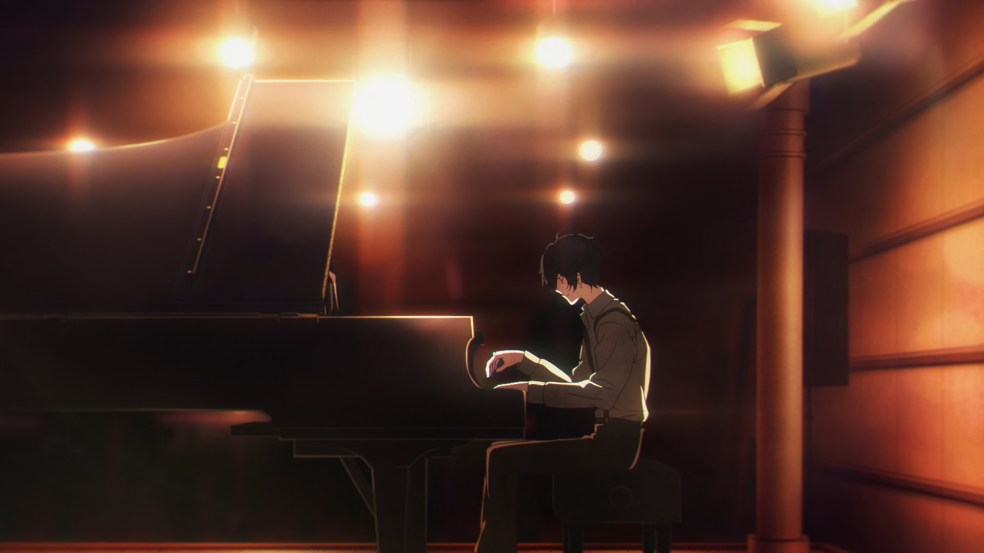
Takt connects to both in his own way (although he’s rather cold to the former). When he’s given the opportunity to play a piano he, of course, takes it, and the resulting concert is one of the few times in takt op.Destiny where we’ve seen its first title character seem genuinely happy. Perhaps unsurprisingly, that joy spreads to his audience, and Joe especially is moved by his performance. (You may note that on another level, the performance of the entire cast spreads joy to us, the audience of the entire anime. Popular media is more cleverly meta than it’s often given credit for.) As thanks, the bartender offers him some music composition paper, something sure to come up again later.

It’d be easy to write this off as a “minor” or “filler” episode, but, as I mentioned in the first paragraph, I think these emotional moments are ultimately what give the visual showmanship the series is known for its meaning. Music, animation, and so on. We’ve all got art in our bones.

The episode closes with a rather ominous aside. We sneak a peek at the offices of the Grand Symphonica, where its leader learns that the only son of Ken “The Rooster” Asahina–which is to say, Takt–is still alive. Mention is made of “proper countermeasures,” it all feels very heavy and foreboding. Yet the episode itself is the very opposite of that; just for today, Takt, Destiny, and Anna all seem genuinely happy. It may or may not last, but it’s wise to appreciate the calm before the storm hits.


Wanna talk to other Magic Planet Anime readers? Consider joining my Discord server! Also consider following me on Twitter and supporting me on Ko-Fi or Patreon. If you want to read more of my work, consider heading over to the Directory to browse by category.

All views expressed on Magic Planet Anime are solely my own opinions and conclusions and should not be taken to reflect the opinions of any other persons, groups, or organizations. All text, excepting direct quotations, is owned by Magic Planet Anime. Do not duplicate without permission. All images are owned by their original copyright holders.

The Manga Shelf: Paperback Love in MARIA KODAMA LITERARY CORPUS

The Manga Shelf is a column where I go over whatever I’ve been reading recently in the world of manga. Ongoing or complete, good or bad. These articles contain spoilers.


There are numerous ways to start a work of fiction. You have your classics; “once upon a time”, “it was a dark and stormy night” and such that are true arch-clichés. Then, far, far on the other end of the spectrum, you have real head-scratchers. Unique opening lines that make you spit out a mental “huh?” before you even know what kind of thing you’re reading. The Maria Kodama Literary Corpus starts with one of those.

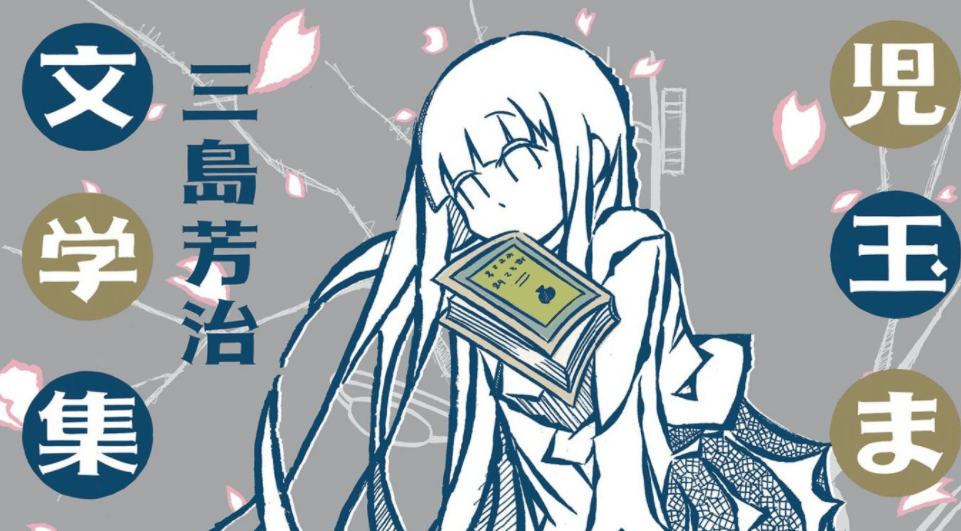
“These leaves are like Jupiter, aren’t they?” Asks the title character. Before you go flipping this particular simile over in your mind, trying to untangle it, know that that’s not really the sort of story Kodama Literary Corpus is. Corpus revolves around both Kodama herself and her male companion, our ostensible main character, Fueda. Together they make up the sole members of the school’s Literary Club, and their conversations comprise the bulk of the series. Fueda is something of a dazed everyman (although it eventually becomes clear that he’s stranger than might first be obvious), awestruck by the evident brilliance (and perhaps more obvious to us than him, the mercuriality) of Kodama. They have a fun dynamic that shines through even their more convoluted interactions. It’s cute, which is a good beating heart for any romantic comedy to have.

Of course descriptors like “romantic comedy” and “school life comedy” only loosely apply to Kodama Literary Corpus. It is perhaps more accurate to say that it uses their structure to examine topics that ordinary entries in those genres would not. In this way, it is somewhat reminiscent of Imitation Crystal’s work in the school life genre, though it’s far less emotionally dire than something like Game Club. (More distantly, it has a cousin in the more downtempo, conversational parts of Bakemonogatari.) Much of those topics consist of the structure of literature and storytelling itself, something that Kodama is keenly interested in, and is what gives the manga its name. She’s fond of blithely quipping “it’s literature.” when laying another lesson in the subject on Fueda. This is the core “storytelling loop” of Corpus, although there are other aspects to the manga as well.

The series’ somewhat flippant attitude towards fairly serious subjects (such as teenage drinking, here) in the non-Kodama/Fueda sections also pushes it further toward the IC camp of subversive pseudo-school life manga which use the format to accomplish non-traditional things.

Corpus even comes with its own dedicated “recommended reading” list, in the form of the books namechecked underneath each after-chapter doodle. This is perhaps the rare school life manga it is possible to be under-read for. (And lest it sound like I’m trying to make myself seem smart; I may well fall in that category myself. I have read just one of the books the manga mentions, and some of them I’ve never even heard of.)

The series sometimes likes to poke at its own format’s tropes as well. For example; at one point Fueda’s sister is introduced, and he takes a thoughtful lean against the fourth wall to ponder whether or not he even had a sister until a few days prior. There are also occasional shorter segments that offer looser, more surreal ideas. These are fun, although not the norm for the manga. It also picks at its romantic comedy side on occasion. One chapter establishes that Fueda can’t see very well and probably should be wearing glasses. It’s his perspective that the manga is filtered through, so the person we see as “Maria Kodama”, the long-haired school beauty, is in part his own wishful thinking, and isn’t how she actually looks in reality. Despite this, Kodama claims at one point that Fueda’s delusions “protect her”, giving away that she cares for him more than she might outwardly admit. To really nail home the point that Fueda is not purely in love with his idea of Kodama rather than the girl herself, we eventually learn that he does know what she actually looks like, and even has a picture of her reading at her desk.

Of what currently exists in English of Kodama Literary Corpus, the eleventh chapter is perhaps both its best and most representative. This chapter features a storyline wherein Fueda is asked to improve his schoolday diary. Kodama suggests he do this by thinking of the many mundane tasks he and his classmates do through a mythological, literary lens. In other words; Literary Corpus takes a chapter to analyze itself, taking a critical scalpel to its own worldbuilding and by extension those aforementioned genres. (You may notice this also means it’s basically doing my job for me, but hey, I’ve never been above an easy mark.) Fueda’s writing is greatly improved by doing this, but more importantly Kodama brings the entire thing back around to her and his relationship. She ends the chapter with another quip of “that’s literature”, and in a very real way, she’s right.

All but explicitly stated here is the idea that stories are how we connect to each other; Kodama understands that more than most, so it’s not unreasonable (or even uncharitable) to read this entire endeavor she sets upon Fueda as simply a way to bring them closer together. After all, these are the final two pages of the chapter.

The after-chapter doodle also (half-jokingly?) claims a kinship with James Joyce’s Ulysses, drawing a line between two wildly different literary traditions in a way that only an oddball underground manga could. Given the presence of both a fixation on the goings-on of daily life, and a tendency to subvert or reanalyze those expectations present in both works, it’s not really an inaccurate comparison, either. (Whether Literary Corpus is anywhere near as good as Ulysses, or indeed, vice versa, is up to you, of course.)

Not that Kodama’s intentions are all good. A few chapters after this, she slyly destroys a burgeoning poet’s interest in the form, simultaneously using Fueda as a mouthpiece to do so and doing so specifically so he doesn’t take an interest in her. It’s hard to say, the work still incomplete, whether this mildly darker undertone will be explored in detail. One could also quite easily argue given what we see that Kodama is–by intention or by side effect–saving the girl from a fairly lonely life. After all, Kodama doesn’t entirely seem to think that her own being a “literature girl” is an admirable thing, as previously established in several chapters. (And either point of view assumes this will even stick. It’s hard to say if Inoue, as the girl’s named, will return as a character in any major capacity.)

Maria Kodama Literary Corpus, all told, is a unique little thing. And really, I have no reason for writing about it here beyond that fact. Strange little underground manga like this are perhaps my favorite thing in the medium, and if I can share them with my readerbase, all the better.


Wanna talk to other Magic Planet Anime readers? Consider joining my Discord server! Also consider following me on Twitter and supporting me on Ko-Fi or Patreon. If you want to read more of my work, consider heading over to the Directory to browse by category.

All views expressed on Magic Planet Anime are solely my own opinions and conclusions and should not be taken to reflect the opinions of any other persons, groups, or organizations. All text, excepting direct quotations, is owned by Magic Planet Anime. Do not duplicate without permission. All images are owned by their original copyright holders.

Let’s Watch TAKT OP.DESTINY: Episode 5

Let’s Watch is a weekly recap column where I follow an anime for the course of its entire runtime. Expect spoilers!


There is an inherent push and pull at the heart of takt op.Destiny. The show is at its best when it’s giving us pure style. It’s much less remarkable as an actual story, where what we’ve seen so far has been solid but rarely amazing. That continues here in episode 5, “-Equitation -Valkyrie-“. takt op clearly wants it both ways, but the fact of the matter is that it’s a lot better at the former than the latter, so any dose of Plot has to be backed up by at least as much of its visual pyrotechnics. Episode 5 does stay on the right side of that line, and much of what I’m about to say can be chalked up to this being an episode that establishes new elements rather than fleshing them out. But its less inspired moments are a good reminder of why the show has to maintain that balance in the first place.

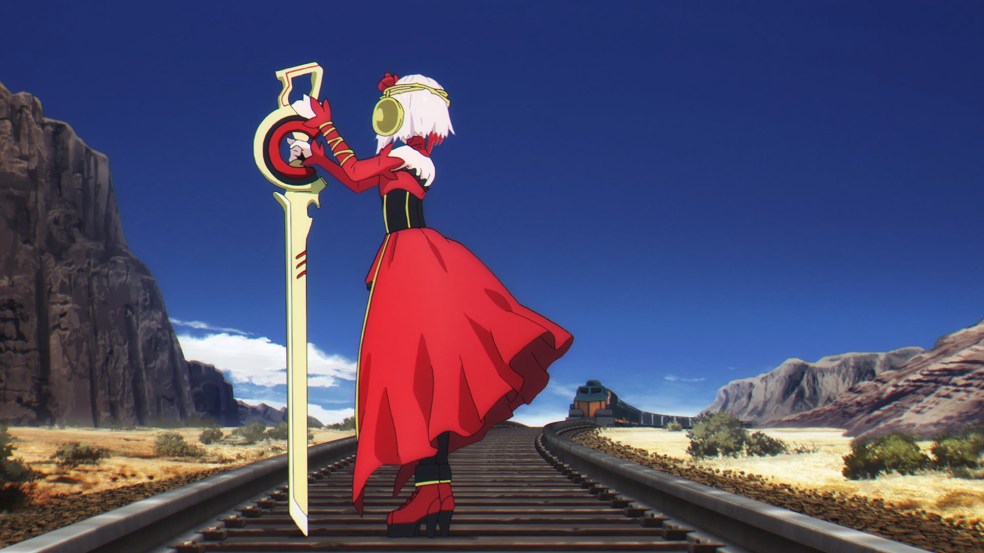
When takt op ends and people need to refer to this specific episode, they’ll call it “the one where they’re on a train.” Early on, Destiny fights off some D2s, and ends up standing on some train tracks after finishing them all off. Being how she is, she doesn’t move out of the way when a Symphonica train running important cargo (Black Night Siderite, as we soon learn) chugs toward her, so it has to stop. This rather astounding coincidence is how the show deigns to introduce three new characters, all of whom I suspect will be rather important in the weeks to come.

The first of these is Walkure. We learn several things about Musicarts in general through the lens of other characters talking about her; she’s a “conductor-less” Musicart, meaning that while she seems to take orders from another character and perhaps Symphonica-certified Conductors in general, she’s not actually “bonded” with any. Walkure is very straight-laced and by-the-book. She only ever refers to Takt as a disrespectful form of the word “You”* and is generally annoyed when he and Destiny act without official authorization. Later in the episode Takt and Destiny earn her respect after repelling another wave of D2s, and she melts like an ice cream cone in July after a very mild compliment from Takt himself, classic tsundere-style. It’s a little much, but she’s a likable enough character.

Offering that authorization is the conductor Felix Shindler. Shindler is obviously, cartoonishly shady, basically forcing Takt and Co. to “tag along” on his train as it hauls its cargo into Houston. (Our leads are New Orleans-bound, so he argues it’s only logical, given that Texas is on the way to Louisiana.) We don’t get much of a sense as to what he wants here. It’s clear from his monologues and his discussions with first one of his subordinates in the pre-opening, and later with his own Musicart, that he is concerned about Takt because he’s an “unauthorized” conductor.

It’s not totally clear whether that’s actually some kind of problem in the sense that the Symphonica itself would consider it one too, or if Shindler is just a petty wannabe authoritarian. The former would square with the general running implication that there’s something sinister about the Symphonica in general, and the latter would with his characterization here. It’s possible both are true.

As mentioned, the third character here is Shindler’s own Musicart. Her name is Hell. Yes, really. The “vaguely ‘psycho’ berserker” archetype is one that many action anime make use of, and I’ve never been terribly fond of it. We briefly saw Hell for a few minutes back in episode 3, but this is the first time we get any sense of what her deal is. While Shindler is certainly her Conductor she appears to have an agenda of her own, something the show rather hilariously telegraphs by having her play solitaire at one point and flip up a Joker card. I suspect she may end up being more important to the series overall than Shindler is, but if that’ll be the case, only the very seeds of such a development are planted here.

She also gets a genuinely very creepy line where she suggests to Takt that he should bond with Walkure “by force.” Thankfully he’s not interested, but still, it’s kind of out-of-nowhere. Far more arresting than her limited characterization is the fact that her heels turn into….what I will tentatively term “combat rollerblades.”

I don’t think this is what ZZ Top had in mind when writing “Legs”, but perhaps it should’ve been.

Which brings me to my general thoughts on this episode. Most of what we learn was already fairly obvious by implication, and the few new pieces of explicit information we learn aren’t real gamechangers. Takt may or may not be “rogue” in some sense from the Symphonica, but we kinda already knew that. Shindler seems like he’ll be a decent antagonist, but he’s certainly not a terribly deep character, at least not yet. What remains untouchable in takt op.Destiny are the visuals. And true to form, the climactic fight scene of this episode, where Takt, Destiny, and Walkure defend the train from a swarm of flying D2s, is one of the show’s best so far. There are only so many ways to say that a show looks really great, but takt op still does. I suspect it will continue to.

Other than this there are some fun or interesting moments with our main cast scattered throughout. I’d be doing the episode a disservice if I did not at least briefly mention Destiny’s moment of pure euphoria upon eating a new kind of sweet for the first time.

Her and Takt’s relationship continues to soomewhat fluctuate between “bickering siblings” and “a pair of hurt people who take that out on each other because they’re not really on the same page, emotionally.” The whiplash is a little odd, but not so much as to detract from their general chemistry. They work in both modes.

The episode ends with Walkure being coldly dismissed from her post by Shindler and left, I suppose, essentially unemployed?

In the meantime, our main trio get back on the road, still bound for New Orleans. I suspect we’ll be seeing more of all these characters in future episodes. As such, it’s no insult to say that aside from its fight scenes “-Equitation -Valkyrie-” feels a lot like a chunk of setup that has not yet paid off. This is just something that happens when watching a seasonal week-by-week, and it is not really a criticism, merely a fact of the format. Thankfully, the series has enough eye candy to make even an episode like this still feel like a treat.

Until next week, anime fans.


*I don’t speak Japanese, but I believe what she’s saying is “kisama”, a very disrespectful second-person pronoun that, when it shows up in anime, is harsh enough to sometimes be translated as “you bastard” or the like.


Wanna talk to other Magic Planet Anime readers? Consider joining my Discord server! Also consider following me on Twitter and supporting me on Ko-Fi or Patreon. If you want to read more of my work, consider heading over to the Directory to browse by category.

All views expressed on Magic Planet Anime are solely my own opinions and conclusions and should not be taken to reflect the opinions of any other persons, groups, or organizations. All text, excepting direct quotations, is owned by Magic Planet Anime. Do not duplicate without permission. All images are owned by their original copyright holders.