
The Frontline Report is a weekly column where I briefly summarize the past week of my personal journey through anime, manga, and the related spheres of pop culture. Expect some degree of spoilers for the covered shows.
Hello folks. Not much to say this week, it’s just been a good, solid week of anime. I’ve got some full-on reviews planned for the weeks ahead, but we’re not quite at the finale of any anime of this season yet. In fact, one started this week, which is quite unusual, but Science SARU can just do what they want, apparently.
I’m also trying a slightly different format with the show writeups this week, now that they’ve developed the habit of exceeding a single paragraph in length (whoops). Hopefully you’ll find the new format a little more readable.
Heike Monogatari

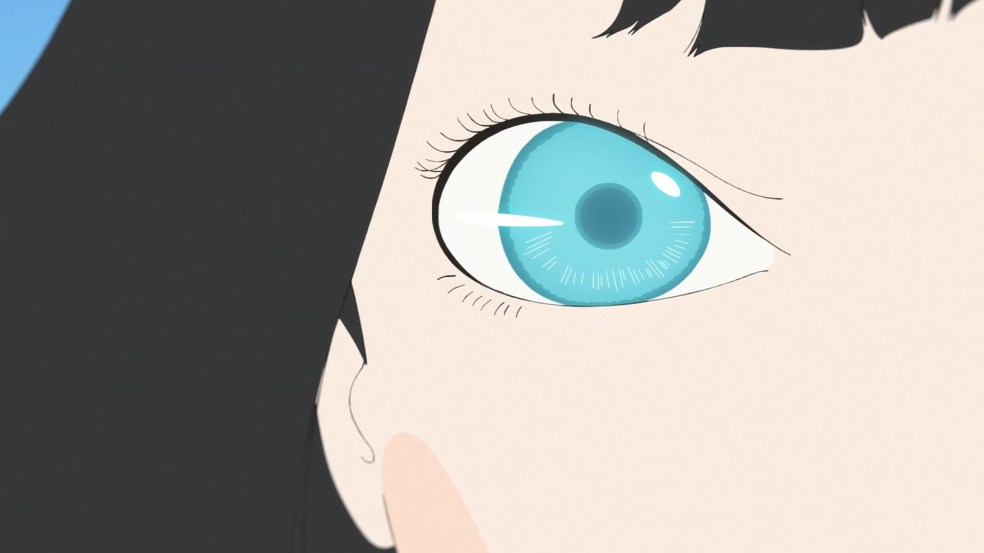
The advantage of a show starting with a public execution is that you immediately know what you’re in for. Heike Monogatari is all period-piece Japanese political drama and haunting omens of future ruin. This story of the prophet-eyed orphan Biwa and her benefactor (Shigemori, a prince of the very same Heike clan that kill her father in the opening. He sees dead people) is backed by a deliberately-anachronistic soundtrack that blends the biwa music after which she’s named with head-down, guitars-plucked shoegazey indie rock.
In general, Science SARU’s work is always distinct, but this is a positively enrapturing first episode. War is coming like storm clouds on the horizon. Biwa can see it, but can’t stop it. This is to say nothing of the other colorful characters we’ve already been introduced to. There’s Shigemori’s father, the immediately-unlikable, obnoxious, head of the Heike, prone to calling things “amusing.” There’s Biwa’s surrogate siblings in her new family. And lastly there’s the mysterious white-haired figure chanting those prophecies of war, death, and violence, who may well be Biwa herself. As for all of us? Well, I suggest giving this thing a look. You won’t regret it.
Kageki Shoujo!!

The most recent episode and a half of Kageki Shoujo!! essentially consists of running the same scene of Romeo & Juliet, performed in-audition by the cast, back to back several times.
There are many reasons this should absolutely not work. Structurally, showing your audience the same thing more than once in a row is a nightmarish prospect. Doing it multiple times is narrative suicide. But Kageki Shoujo!! can pull it off, because it remembers an important truth of the arts. Any work that engages with acting will eventually hit upon the question of what acting is. The reason we can watch the same scene run back multiple times without getting bored is because each time, a different subset of the cast is highlighted. The focus is ostensibly on the characters’ actual performances of Romeo & Juliet, but the real gem is their meta-performances. For an actor, the stage is everywhere. Both the characters themselves and their own actors–the seiyuu who voice them–understand this. This is the point where all the blood, sweat, and tears becomes worth it. What redeems the amount of pressure they’ve had to put themselves under and the things they’ve had to neglect or discard to get here.
Each character who is spotlighted grapples with the question of how to best portray their character in their own way. Ai channeling Juliet by remembering the strong impression Sarasa made on her and Yamada doing the same by reflecting on her first love (and a love lost) are both show-wide highlights.
I never wholly bought into the narrative, perpetuated on some corners of the internet, that Kageki Shoujo!! was the “hidden gem of the season” or anything like that. It has, in my view, too many flaws for that (and a particularly nasty dead spot in episodes 8 and 9 are why I haven’t covered it on this column in a while.) But if it does gain a cult following over the years, it will be on the backs of both its harrowing depiction of Ai’s trauma in its first half, and on these final few episodes. They present the show’s core thesis in as concise, yet resonant, fashion as is possible. The only thing left for the series to do is stick the landing.
Love Live Superstar!

People don’t always believe me when I tell them that I make every effort to appreciate the anime I watch. Sometimes the secret to really “getting” a show is a change in perspective. I’ve previously been a little sour on Superstar because it doesn’t quite nail the more comparatively serious character moments the way I’d like it to. (And that’s true in this week’s episode too, where we’re treated to an unintentionally hilarious sequence where our cast spies on future group addition Ren Hazuki as she details her life story to her own maid, who almost certainly knows it already.) But as a comedy I think I’ve been under-appreciating it. It’s easy to take Superstar‘s very visual sense of humor for granted. Rewatching some bits from earlier episodes, I found myself liking them more. This week also had a truly excellent sequence in which the perennially silly Keke Tang imagines herself and her fellow idols as the victim of some kind of AKB0048-esque crackdown on school idol stuff.

Also; even if you’re not watching this show at all, take a moment of your day to appreciate the performance at the end of episode six. The CGI choreography for this stuff has gotten a lot more advanced over the years, and while it’s not quite to the level of Nijigasaki‘s full-on music video dreamscapes, it’s still a really impressive bit of visual showmanship.

Elsewhere on MPA
Magic Planet Monthly Movies: WORDS BUBBLE UP LIKE SODA POP is Simple Summer Sweetness – This is, as the first half of its title implies, the start of a new recurring column for the site. I feel like the central conceit is pretty explanatory; I plan to watch an anime film per month and review it. We’ll see how it goes! I’ve also retroactively added last month’s Evangelion 3+1 review to the tag, just because it happened to fit. Words Bubble Up Like Soda Pop is a wonderful movie, by the way. Give it a watch if you have the time.
If you like my work, consider following me here on WordPress or on Twitter, supporting me on Ko-Fi, or checking out my other anime-related work on Anilist or for The Geek Girl Authority.
All views expressed on Magic Planet Anime are solely my own opinions and conclusions and should not be taken to reflect the opinions of any other persons, groups, or organizations. All text is owned by Magic Planet Anime. Do not duplicate without permission. All images are owned by their original copyright holders.




 The Magic Planet