
Anime Orbit is an irregular column where I summarize a stop along my journey through anime, manga, and the related spheres of popular culture over the past week. Expect spoilers for covered material, where relevant.
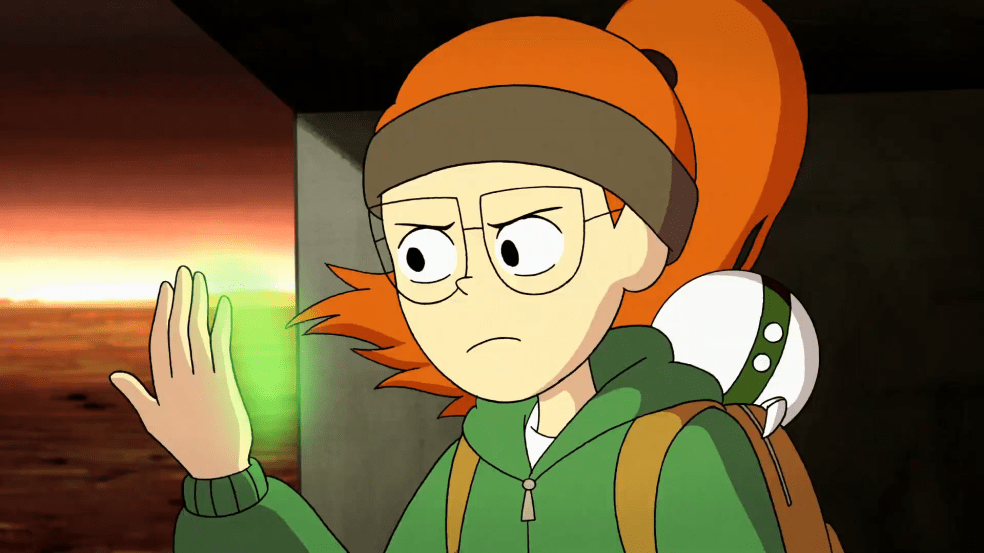
Here’s two things I rarely talk about on this site; western animation and media preservation. But they’ve been thrust to the forefront of the media conversation following HBO Max‘s utterly morally bankrupt decision to simply delete and delist a sizable swathe of programs, thirty-six as of right now, including a number of well-liked Cartoon Network series such as Infinity Train, OK KO! -Let’s Be Heroes-, Uncle Grandpa—which was briefly the last man standing of the whole purge—and once-and-future coverage recipient Mao Mao, Heroes of Pure Heart.
Obviously, for all involved, this sucks. Both for the fans, who no longer have a legal way to watch the shows in question, and for the creators, who are quite deliberately being shafted by this move, as HBO Max is removing the shows in question to save on residual fees.
But this is a blog about anime and manga, so you might wonder what, exactly, any of this has to do with anything I cover here. The simple fact of the matter is – everything.
Easy and legal access to subtitled (or dubbed) anime is a fairly recent thing, dating back to not much more then ten years ago. Before that, what anime, if any, were legally available in the English-speaking world was a total tossup. Dubs and subs were certainly made, many of them were quite widely-watched, too, but outside of mainstream action fare things got dicey fast. For every anime that got a solid English dub and ran on Toonami, there were many more that were relegated to DVD releases that tended to quickly go out of print once the initial runs were sold out.
As such, the fate of any anime that was not one of the very few that became a long-running staple of American television (a title held by Dragonball Z, Naruto, Bleach, and that’s kind of it), was, at least to the English-speaking world, generally up in the air. Plenty of anime have fallen into legal limbo in this manner, many of them not even particularly obscure. Obviously, this is less of a problem in recent years, with streaming services snatching up the distribution rights to all manner of anime, new and old, at least one, RetroCrush, even specializes in older anime that other services might not be inclined to pick up. So, at present, the outlook is pretty sunny, right?
But the question, of course, is for how long.
Make no mistake. We live in a largely corporate-run world, and companies do not do things For You, The Fans. They do them to make money. Presently, we are in the midst of a second anime-in-the-Anglosphere boom. There is some evidence that this one is less ephemeral than the rush of 4Kids localizations and Toonami pickups of the 90s, but there is also plenty that it really isn’t. It’s a mistake to assume that just because it has lasted longer so far that it will not eventually fizzle. Consumer trends come and go, and even more than that, besuited executives often make decisions based on charts and graphs that come across to those of us on the ground as, at best, cryptic. This is to say nothing of the fact that the anime industry itself is in a state of perpetual crisis, as the production bubble continues to balloon with no end in sight, something is going to give somewhere eventually. It is mostly a matter of time.
It is not doomsaying then, to ask the question. If, eventually, this bubble pops, and corporations on this side of the Pacific suddenly decide that investing in anime is not profitable for them anymore, what are we to do then?
Well, perhaps it is time to reconsider the role of the media pirate.
To some of you, the very notion will seem ludicrous. It’s not like filesharing has ever gone away, but with the rise of streaming a decent amount of people in the world have convinced themselves that not only is the practice illegal, but that it’s also immoral. I strongly disagree with such a notion to begin with, but in cases like these, where legal access to the media in question is being actively prevented, it goes from a debatably excusable practice to one that is functionally a necessity. We here enter the paradigm of the media pirate as media archivist.
For anime fans, this should be more obvious than to most. Plenty of anime, even with the existence of RetroCrush et. al., have remained in legal limbo in the Anglosphere for years. For instance, if one wanted to watch Cardcaptor Sakura-by-way-of-ReBoot curio Corrector Yui, you were pretty much totally out of luck until very recently. Even then, somewhat sketchy Amazon listings for DVD volumes are not exactly the most accessible method of watching anything. The more obscure a show gets, the more dire the prospects are. Another magical girl anime from around the same time, for example, Cosmic Baton Girl Princess Comet, is simply not available anywhere, barring dubious secondhand BD volume pickups.
I could easily make a whole series of columns out of just listing anime that are not easily accessible, legally, anywhere in the Anglosphere, and sometimes not even in their home country. At this point, filesharing as an ethical imperative becomes almost obvious a conclusion.
Because if we continue to beat the drum of legal availability as king, a situation not unlike what’s just transpired on HBO Max is less of a possibility and more of an eventuality. That’s something we would all do well to remember.
Like what you’re reading? Consider following Magic Planet Anime to get notified when new articles go live. If you’d like to talk to other Magic Planet Anime readers, consider joining my Discord server! Also consider following me on Twitter and supporting me on Ko-Fi or Patreon. If you want to read more of my work, consider heading over to the Directory to browse by category.
All views expressed on Magic Planet Anime are solely my own opinions and conclusions and should not be taken to reflect the opinions of any other persons, groups, or organizations. All text, excepting direct quotations, is owned by Magic Planet Anime. Do not duplicate without permission. All images are owned by their original copyright holders.
 The Magic Planet