The Frontline Report is a weekly column where I briefly summarize the past week of my personal journey through anime, manga, and the related spheres of pop culture.
I’ll be straight with ya, folks. It’s my second week of battling what I’m like 99% sure is mono, so I haven’t had the most energy for anime-think-about-‘ing. Still, I hope the three brief paragraphs below on some airing seasonals will give you something to contemplate. Let me know what you think in the comments!
—
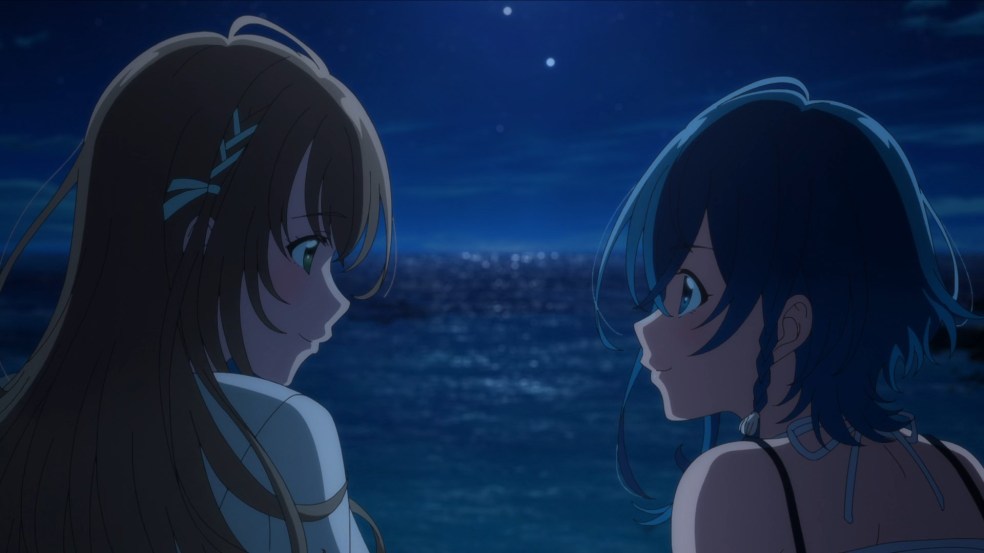
Blue Reflection Ray – Call it the little show that could, the most unsung anime of 2021, or whatever you will. Fifteen episodes into its two-cour run, Blue Reflection Ray decided to drop one of the most delicate episodes about depression I’ve ever seen. Sadly, I think it will probably go mostly-unwatched, like the rest of the anime has been. Is there any hope that this thing might find the audience that would appreciate it, this late in the game? It’s hard to say. I’m not optimistic, but it doesn’t diminish the quality of BRR itself. Shine on, girls.
Kageki Shojo!! – Is it fair to call Kageki Shojo!! “complicated”? It feels fair. There’s a distinction between wanting to tackle difficult, complex subject matter and actually doing so, and I’ve kinda been worried up to this point that Kageki Shojo!! would fall on the wrong side of that divide. The series has a really unfortunate tendency to have male characters support its primary, almost entirely female, cast in a way that feels somewhat detrimental to both. Consequently, it can feel contrived at times. But on the other hand, if you’re willing to reckon with this flaw the point remains that Kageki Shojo!! is dealing with some really heavy stuff and it’s not holding back in doing so, and I think that’s commendable. This week’s episode, the fourth, is probably the best of the series so far, and is the first to markedly develop the leads’ relationship. I’m hoping it’s a sign of things to come.
Sonny Boy – Sonny Boy is the rare anime I feel underqualified to discuss. It draws on an obvious, long lineage (one I’m mostly unfamiliar with) of “society in a jar” stories that dates back at least as far as Lord of The Flies. (And in anime and manga, at least as far as The Drifting Classroom.) I’m not really super familiar with this stuff, so it’s hard to gauge how “original” Sonny Boy truly is in this regard. But what it’s not hard to gauge is how interesting the show is, in addition to the central mystery I’ve been really impressed with the brilliant little loops the show’s character writing keeps creating. The way it’s edited is doing a lot of the heavy lifting here, but that’s not a bad thing, and it keeps everything coherent even with such a huge cast.
All views expressed on Magic Planet Anime are solely my own opinions and conclusions and should not be taken to reflect the opinions of any other persons, groups, or organizations. All text is owned by Magic Planet Anime. Do not duplicate without permission. All images are owned by their original copyright holders.
The Frontline Report is a weekly column where I briefly summarize the past week of my personal journey through anime, manga, and the related spheres of pop culture.
It’s been a while! Yes, this is the spiritual successor (or whatever you’d care to call it) if my old Weekly Round-up posts. I want these to be more casual in tone, and they’ll often be on the brief side, but I do want to keep everyone up to date on where I’m at lately, anime-wise. First though, the seasonals that’ve been on my mind this week.
–
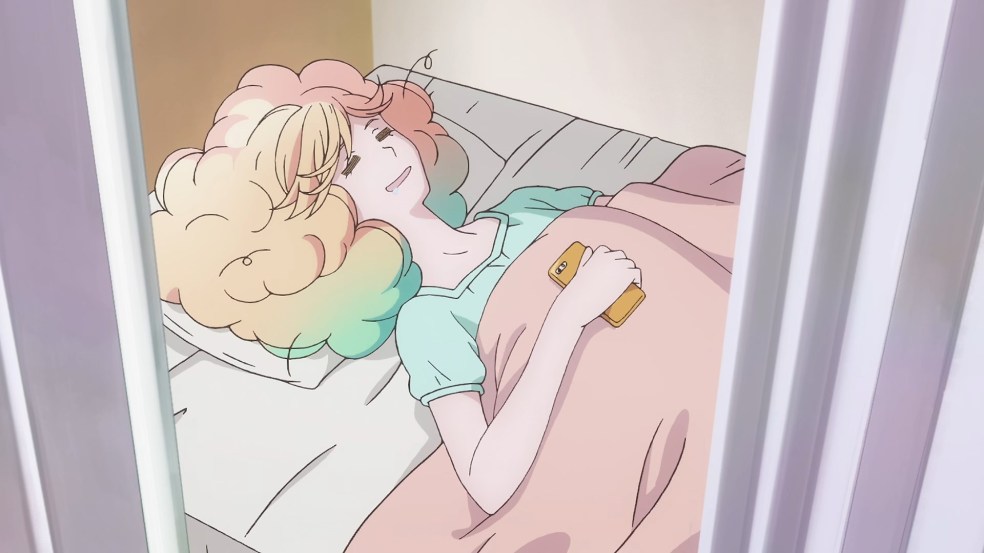
The aquatope on white sand – I wrote a column earlier this week detailing how I found myself unexpectedly relating to aquatope’s main character, Fuuka. I have to say I’m pleased that I’m vibing with the show a bit more now than I was when it first premiered. I wasn’t quite as blown away as most folks seemed to be, but I do think this will be a good anime, and its two-cour length gives it time to stretch its legs. No rush, y’know?
Girlfriend Girlfriend – I kind of still don’t entirely know who this show is for. I have seen it praised as a crucial step for bringing polyamory into the public conversation and also disparaged as a completely empty male power fantasy. Personally, while I don’t dislike the show, it is definitely in the lower half as far as my early personal seasonal rankings. Less because of any moral qualms I have and more just because the comedy really likes to skirt right up to the edge of “obnoxious”, and sometimes goes over it.
Sonny Boy – This just debuted this past week, and it’s easily the strongest opening episode of the season. The premise is a fairly direct riff on The Drifting Classroom, but it’s stark, abstract visual style is what’s really going to win people over here. Seriously consider checking this out, a half hour isn’t much to ask for something this intriguing.
The Detective is Already Dead – A recipe for a hospital visit: take a shot any time this show drops its own title or someone is referred to as a “legendary detective”. Detective probably qualifies as the season’s oddball. If you’re more cynical than I am you can go ahead and upgrade that to “trainwreck in progress”. As a character-driven mystery, Detective is pretty pat. As a series with no clear endgoal in sight and no method of achieving anything it might want to, it’s borderline mesmerizing. As the second episode in a row that consists mostly of characters talking circles around each other and very little actually happening, it’s probably safe to say this is a series that’s fallen off most peoples’ radars. I intend to stubbornly stick with it even as the only reference points I can reach for turn into Blast of Tempest and In/Spectre. I will never claim I know what’s good for me.
–
Elsewhere, I finished Fate/Zero this week after watching it a few episodes at a time over the last several. (I did a little live-tweeting of it if that’s your thing. Obviously spoiler-laden, though.) I haven’t seen enough of the Fate franchise to know if its reputation as the best-written iteration of it is entirely earned, but the show is definitely very, very good. A common thread among Fate media is characters having their worldviews challenged, and that’s ramped up here to having them just straight-up destroyed. With one exception, everyone goes through the wringer here and for that reason I wouldn’t exactly call it an easy watch, even if I do think it’s a worthwhile one.
–
And as far as actual anime, that’s about all for this week. It’s been a rough one personally speaking with troubles around the apartment and such, so I haven’t had quite as much energy as I’d like. Still, I hope this return of the weekly roundup posts (under a slightly different name!) excites you. My hope is that there’ll be many more to come.
All views expressed on Magic Planet Anime are solely my own opinions and conclusions and should not be taken to reflect the opinions of any other persons, groups, or organizations. All text is owned by Magic Planet Anime. Do not duplicate without permission. All images are owned by their original copyright holders.
When I was eighteen, I wanted to be a rap producer. In hindsight, with the self-awareness I now have nearly ten years later, it was a stupid idea. Like a lot of people whose ambition far outstrips their capability, I went to school for this doomed little fantasy. Perhaps predictably, I barely lasted six months, and a decade on the only thing I have to show for this part of myself that I mostly keep buried from public view is a lengthy bandcamp page of music no one listens to and a cloud of student debt that will loom over me for the rest of my life.
I bring this personal anecdote up not to needlessly self-deprecate, but to explain something about The aquatope on white sand, and how I find myself unexpectedly relating to it. Fundamentally, most popular fiction that deals with aspiration deals with fulfillment of that aspiration. It makes for an easy-to-plan story arc and it concludes in a satisfying ending. Your protagonist(s) want to become a dancer, or a singer, or an actor, or whatever. Across some amount of story-units, they struggle and fight, that distant mountain still in reach, and they eventually achieve their dream. In anime a common manifestation of this particular story-type is that of the idol anime genre (of which there is one airing right now), relevant here because aquatope‘s protagonist, Fuuka Miyazawa, is a former idol.
And that “former” is very important here. Fuuka begins aquatope with her brief career as an idol already in the past tense, her departure from the industry uneventful but bitter. (Its depiction in the first episode reminded me no small amount of one-off character Mana in Oshi No Ko.) She is adrift for much of the first two episodes, eventually settling in with the other lead, Kukuru Misatino, simply because the latter is willing to take her in. She’s hired by Kukuru’s aquarium, which is in financial tatters, and threatens to close at the end of the summer season.
At the tail end of the second episode, Fuuka realizes that even if she cannot fulfill her dream, she can help Kukuru with her aspiration of keeping the aquarium open. Where all of this will eventually go is not yet clear–aquatope is planned for a nowadays-rare two cours, so it has plenty of time to stretch its legs–but it’s clear that the series fundamentally understands that Fuuka’s renewed sense of purpose here is just as valid as her original goal to become an idol. That’s important, because the easy thing to do here would be to try to route her back into the industry, and treat that as the only valid form of “fulfillment”. That aquatope doesn’t do that is an excellent sign. (And gives me a lot more faith that its supernatural elements, which I haven’t mentioned up ’til now, will have some greater point, as opposed to merely being window dressing.)
Also, I suppose, naive as it may be, that I just see a commonality between myself and Fuuka. Criticism, or at least the mode of criticism I prefer to write in, is nothing if not the promotion of someone else’s dream. Uncountable hours go into any even remotely professional anime production, it is not a stretch to say that one making it to screen is the culmination of not just one dream but many. My approach makes for decidedly less interesting television, of course.
In its attitude toward Fuuka we find the first traces of what I suspect aquatope will eventually forge into its core thesis; the idea that in selfless lifting up of others’ passions one can find a way to rekindle, or reshape, their own. I am quite confident that by the series’ end, Fuuka will have found something new that fulfills her and brings her life meaning. And, yeah, I do relate to that, as someone who has turned this strange hobby that I picked up on a whim into a kind-of career without ever consciously planning to, I empathize with Fuuka quite a lot.
Beyond my own personal emotional mire; character writing this delicate is a rare thing, and while plenty of anime are good natured, not nearly as many can work in shades of compassion that are this subtle. aquatope is one to keep your eye on.
All views expressed on Magic Planet Anime are solely my own opinions and conclusions and should not be taken to reflect the opinions of any other persons, groups, or organizations. All text is owned by Magic Planet Anime. Do not duplicate without permission. All images are owned by their original copyright holders.
This review contains spoilers for, and assumes familiarity with, the reviewed material. This is your only warning.
“Sometimes adults seem like a different species.”
Six months that now feel like a decade ago, the first episode of Wonder Egg Priority premiered on Nippon TV. No one, least of all myself, really knew what to expect. Most pre-release scuttlebutt came from the odd title and charming character designs. (Courtesy of Saki Takahashi, and still excellent.) Some smaller amount came from its intriguing staff list and its status as an original project from CloverWorks. I don’t think anyone, really, expected the bizarre technicolor magical girl psychodrama we were given.
Many people ran to the series with an outstretched hand, myself included. When I wrote about that first episode not long after its premiere, the horizon was endless before us. Wonder Egg Priority could have been anything, and as long as you had the patience for a little bit of overt artiness, you could join the ride. And many people did! I made quite a few friends and acquaintances over the course of watching this series, some of whom are quite possibly now reading this article. A sizable amount of them now dislike, or at least are no longer fond of the series. Asking “what happened?” is the easy, but in my view incorrect, thing to do.
And for this series, which meant–and still means–so much to me personally, I do not want to take the easy way out. I have been workshopping different versions of my notes since the original twelve-episode run of the series concluded. But I wanted to wait until its finale–unlucky number 13, delayed after a truly awful production fiasco–aired to make any last calls. As I’m writing this opening trio of paragraphs, I sit in a limbo, aware of the sharply divisive reactions the ending has brought on but not having seen it myself. What will I think of it? It almost doesn’t matter, self-defeating as that may sound. The fire is out and the wizard is dead. Wonder Egg Priority seems tragically destined to exist as a footnote in popcultural memory.
But enough of that. Let’s start with the very first note I wrote, when the series had just ended its original run, over a month ago.
The world is a vampire. Those in power prey on the marginalized, who often feel helpless to escape their situation. If they do, it is often by opting out of existence entirely, either directly via suicide or indirectly via other self-destructive behaviors.
That thought out in the world, it is natural to ask what can save us. Wonder Egg Priority does not answer that question, and indeed I think the great contributor to the finale’s negative reputation is that it doesn’t actually try to. A fact I think many are finding frustrating and alienating.
The natural human impulse to seek an end to a story finds no recourse here. Wonder Egg draws on a long lineage; from Perfect Blue to Revolutionary Girl Utena, from Puella Magi Madoka Magica to Flip Flappers. But the key distinction to be made is that Wonder Egg Priority does not draw a conclusion in the same way that these works do. Utena, most dramatically among these, famously advocates rejection of and escape from oppressive systems entirely.
What is Wonder Egg‘s contribution here? Well, from this point of view, nothing. Wonder Egg Priority ends where it began, the only major change made being who protagonist Ai Ohto is seeking to find again.
Instead, it captures a strange, extremely specific feeling. The series’ final minutes billow and dissolve in the air like a dream the night after a tragedy. Was anything in Wonder Egg Priority “real” to begin with? It’s a fair question to ask, and if the answer one comes up with is “no” they might well feel cheated.
But perhaps we should back up a bit. Let us remind ourselves of the actual facts of the series, its characters and narratives.
As you know, Wonder Egg Priority is the story of Ai, a heterochromiac hikikomori. Before the series begins, her only friend Koito Nagase throws herself from her school’s rooftop, adding Wonder Egg Priority to a long list of anime from the past twenty-five years that fixate on suicide. Ai is given a chance by a pair of mysterious, magical benefactors to bring her friend back to life. The only catch? She has to purge monsters from the strange mental elseworlds of the recently-suicided, in a bizarre funhouse mirror of a typical modern magical girl setup. It’s quite the premise, bearing a passing but notable resemblance to the aforementioned Madoka Magica, but otherwise escaping easy description.
Eventually, she is joined by three other young girls, who form what becomes her new friend group; the playful and blunt Rikka, a former idol, the stern and serious Neiru, the young nominal head of a corporation, and the androgynous Momoe, whose gender nonconformance forms a plot point all its own.
Thematically, the topic of suicide is made mystical and ascribed a sinister, sapient character, named The Temptation of Death here. All else leads back to this, and understanding that is key to understanding the bulk of Wonder Egg Priority. The truth the main run of the show wishes to shine a spotlight on is a very simple one; people, particularly young women, are cast into idealized shapes by the world we live in. If they do not conform to them, they are punished and ostracized. Their eventual death by their own hand is seen as a tragic inevitability, rather than a preventable, active action on the part of the ostracizers. Those who survive eventually become the oppressors themselves, and the cycle repeats. (This, roughly, is what happened to the character of Frill. She is an oppressed-turned-oppressor.)
So all this in mind, what do we make of the show’s ending?
Ai and her friends, in a literal sense, solve very little. Frill, implied to be responsible for the Temptation of Death phenomenon, is not stopped. Acca and Ur-Acca, the maintainers of the entire eggs-and-elseworlds system, are not openly rebelled against, and Ai ends up back on their doorstep at the end of the show. (One might even indeed read certain things as implying that this has happened many times, and the main run of Wonder Egg Priority is just a single one of these iterations.) Even the less supernatural driving questions, such as why Koito killed herself, and whether Sawaki, Ai and Koito’s teacher, is a sexual predator, are not directly answered. Everything remains obscure. One might, not unreasonably, demand to know what the point of all this was. After all, the middle of the show seems to criticize these systems so sharply. What is the point of offering no solution, or even any obvious catharsis?
Well, rarely do I reach for the author(s) in cases like this. But Director Shin Wakabayashi offers this thought, and I find it illuminating:
On the surface it’s a curious notion, given the actual events depicted. But if considered in the proper light, it makes sense.
When Ai finds the garden in which she meets Acca and Ur-Acca in the first episode, she is distraught and directionless. When she returns in the finale, it is after much time has passed, and despite surface appearances, it is on her own terms. Note, specifically, the lack of the Acca-possessed beetle in her second arrival to the garden.
Whether or not she will succeed “this time” is not terribly relevant. She has returned to the unconquered mountain to try again. In her life, it is all she can be asked to do. The same is true of all of us in ours.
Evaluating whether Wonder Egg Priority “works”. Whether or not it “earns” its right to hash through all this difficult material and provide no definitive answers, and so on, is difficult. The series, especially its ending, is challenging and highly unconventional. I do not mean to suggest anything as pedestrian as those disappointed by the ending simply “not understanding it”, but I do think it deserves time and patience that it is not necessarily being given.
To go back to my opening remarks, I have never more in my brief career as a critic wanted to be wrong about the afterlife of an anime. Nothing would make me happier than five, ten, twenty years from now learning of some director, writer, or animator citing Wonder Egg Priority as an influence. But even if that never comes to pass, those to whom this series would speak will find it, I am confident of that much.
Even if we take Wakabayashi’s tweet as the series’ sole artistic aim, it well succeeded. Ai, Rika, Neiru, and Momoe will live forever in a certain corner of my mind for the rest of my life. As is true of all truly impactful works of fiction. If that was all the team went for, well, mission accomplished.
In these ephemeral, fleeting lives of ours, all that we can truly ask of each other is understanding. More than maybe any anime I’ve ever seen, Wonder Egg Priority understands that, if nothing else, on a deep level. In the end, it asks of us just two things; do your best, and take care of each other.
All views expressed on Magic Planet Anime are solely my own opinions and conclusions and should not be taken to reflect the opinions of any other persons, groups, or organizations. All text is owned by Magic Planet Anime. Do not duplicate without permission. All images are owned by their original copyright holders.
This review contains spoilers for the reviewed material. This is your only warning.
“We’ve already decided on our destination. The farthest end of Japan our Cub can take us.”
It’s about three minutes into Super Cub‘s first episode before anyone says anything. It’s nearly twelve before any kind of background music kicks in. That alone, and the show’s locale–rural Japan, somewhere along the Chuo Line–will clue you in that Super Cub is not merely your average slice of life series. This is an iyashikei, a tone genre that focuses on producing a healing, meditative effect. Any iyashikei is a thing of note; it’s not a particularly saturated genre. A genuinely good one is a precious treasure.
I must confess though, I went into Super Cub skeptical. I’m not afraid to admit I’m something of a snob about the genre, and not always in a good way. In my defense, the very first thing I learned about Super Cub was that it was sponsored by Honda. A “Super Cub”, as both we and protagonist Koguma quickly learn, is a sort of motorbike. Models have been consistently produced for 50-some years, and as more than one character goes over, they’re widely liked and appreciated even outside of Japan itself. Super Cub riding is a hobby in its own right, and if you’re already part of the Cult of the Cub you probably won’t need more convincing to watch this anime.
But, just speaking personally, it’s Koguma herself who won me over. Super Cub has a fascinating little trick that it uses to indirectly convey her mood; the show’s color saturation is directly tied to it. When we meet her at the start of the first episode, she is visibly extremely depressed. She lives alone, apparently abandoned by her parents. With, as she puts it, no hobbies, and very little money. The colors are, for most of the episode, muted and grayed. When a generous old shop proprietor sells her the titular used scooter, the simple feeling of sitting on it literally lights her world up, and the colors bloom into full saturation. It’s a wonderful technique, and it’s one the show uses enough times to fairly call it a signature. For the still-young Studio KAI, it’s a promising visual showing.
Also of note is Reiko, to whom Koguma is extremely married.
Super Cub, like any good story about vehicles, knows that it’s not really about the vehicles. They’re about the freedom and liberation that comes with being able to go where you want with very few limits. Koguma’s story is one of a girl breaking out of her shell with the help of her new hobby, it’s a tale as old as the medium itself. And its best episodes and moments tend to reflect this. Things as mundane as trips to an unfamiliar grocery store, or, later on, an unplanned highway trip, can be magical in the right context. This understanding bleeds into the series’ very aesthetic. Both its soundtrack, which is excellent, and its tour of Japan’s vistas, most exemplified by the road trip in the final episode. It is in this context, with this understanding of its appeal, that Super Cub truly shines.
But it doesn’t always shine, unfortunately. In less impressive moments, it does have the misfortune of feeling like an ad. Which, in its defense, it sort of is. There is fun hobby talk; the sort that tells us as much about the characters as it does about what they’re discussing, and there is dull hobby talk. For Super Cub, this manifests as occasionally becoming dangerously close to replicating the feeling of loitering around an AutoZone. The line between the two is razor thin and Super Cub sometimes crosses it and back again multiple times within the span of a single conversation. It’s believable that a teenager might want to squeeze more power out of their motorbike. A teenager complaining about “environmental regulations” that lead to less powerful engines, as Reiko does at one point, is less so.
It doesn’t cut Super Cub‘s engine, thankfully, but it does occasionally make it feel more corporate than cozy, which is unfortunate. It is the show’s only real weakness, but it’s a notable one.
But, conversely, even at its comparative lowest, Super Cub is simply too odd and too thoughtful to really write off. Weird asides like the character Shii’s family of europhiles, Reiko’s attempts to conquer Mt. Fuji, and so on, prevent the shop talk from ever overtaking the core narrative. Koguma herself, too, develops into something of a snarky, playful type, at least in the presence of friends, over the course of the series. A notable progression from her status as a near-silent protagonist in the opening episodes of the show.
It also picks up something of a dramatic streak in its final few episodes. If the more serious turns here don’t entirely fit the series like a glove, they do reinvigorate it through its final stretch. Koguma’s broadly philosophical musings on her relationship with Shii, the series’ own use of different vehicles as metaphors for moving through life at different “speeds”, and the eventual use of Spring as both a literal coming change and a proverbial “light at the end of the tunnel” all tie together wonderfully. Flaws and all, Super Cub cannot be said to have its heart anywhere but the right place.
So if it’s a rocky journey, it’s still a worthwhile one. It seems doubtful that Super Cub will ever rock anyone’s world, but it’s not trying to and doesn’t need to. All it’s trying to do is offer a small comfort in the harsh times we live in. Koguma closes the series by musing that a Cub is not some kind of magical do-it-all machine. The desire to turn an unfamiliar corner must come from within. All told, that is a pretty satisfying note for such an unassuming series to end on. And hey, if it can sell you a bike too, all the better.
All views expressed on Magic Planet Anime are solely my own opinions and conclusions and should not be taken to reflect the opinions of any other persons, groups, or organizations. All text is owned by Magic Planet Anime. Do not duplicate without permission. All images are owned by their original copyright holders.
This review contains spoilers for the reviewed material. This is your only warning.
“….Goodbye, shattered dreams….”
To evaluate art, you must first understand what it is trying to do. This is a simple maxim of modern criticism and is one applied by myself and many thousands of other writers up and down the length of the medium and beyond. It borders on a truism.
So, then, the question practically asks itself. What do you do when “what it’s trying to do” turns out to be “not very much”? This is a conundrum I struggled with throughout Vivy – Flourite Eye’s Song as it neared its conclusion. But, let’s not get ahead of ourselves.
First, the craftsmanship side of things. It’s a Wit Studio production, and looks it. Vivy joins last year’s The Great Pretender as a resoundingly stylish visual affair. The series looks and sounds great and is extremely well-directed. In particular, if all you’re looking for is a fun brain-teaser plot that you don’t intend to take too seriously, and some excellent action pieces and fun character animation, there’s enough to love here to keep you happy.
But what’s it about?
That is a surprisingly tough question.
Vivy is a sci-fi series. In a purely literal sense, it’s about AI, meaning generally androids with artificial intelligence here. It joins a long lineage of anime that tackle this topic, going back to the dawn of the medium.
Vivy herself, the title character, also called Diva, is a singing AI, whose “life mission” (all AI here get one, and only one) is to make people happy with her songs. She’s also the agent chosen by Matsumoto, a cube-shaped automaton who somewhat resembles a cubified version of Wheatley from Portal 2, for a seemingly-impossible task. A century in the future, a war will break out between AIs and humankind. The AIs will decidedly win.
Matsumoto has been sent back in time by his own creator to prevent this, and Diva essentially must help him, or else the future will be doomed. Across a baker’s dozen episodes, she does so. Vivy is the very image of a reluctant adventure protagonist. She rescues politicians, evacuates satellite-hotels as they fall out of orbit, confronts super-factories of autonomous drones, and so on. As a pure spectacle, it’s easy to make a case for Vivy.
The unfortunate, if perhaps predictable, rejoinder to that then, is that despite this Vivy still falls well short of its goal of being a truly new spin on the AI-focused part of the sci-fi genre. Unlike a lot of fiction that tackles this topic, Vivy is keenly uninterested in asking any hard questions of itself, or of its audience. No thought is given to the AIs as their own characters, except in service to their human masters. For Vivy herself the problem is slightly more abstract, but still present.
The series has what I can only call a perspective problem; while Vivy‘s literal plot is tightly-written, at least until it falls on its face in the series’ final third, the actual ideas it presents often come up short. Thinking you have something to say, and actually having such, are, after all, different things.
At the series’ two-thirds mark, it is established that Diva and Vivy are, in fact, different people. What is still often incorrectly referred to as a “split personality” situation but is more properly called plurality. We spend most of the series with Vivy, but starting at episode eight we spend a significant amount of time with Diva, too. Just an episode and a half later, at the climax of episode nine, she dies, done in by a virus that deletes her “personality construct” from the shared body.
On its own, there is nothing inherently wrong with killing a character as the take-a-bow moment to finish out a story arc. In certain genres, and in the proper context, it can work very well. When I say Vivy‘s problem is one of perspective, what I mean is that the trope as used here resoundingly doesn’t. The narrative wrings her for pathos, and when it can no longer think of a way to do that, she gets the proverbial gun to the temple.
The actual scene itself–where Diva and Vivy briefly meet for the first time as the former sings her heart out even as her code unravels by the second–is an audio-visual triumph, one might go so far as to say it’s powerful. But when the songs fade and you catch your breath, you are left with the fact that you’ve just watched a character die because the story could not see fit to let her live. It feels pointless, offensive even, with the benefit of even a few minutes of hindsight.
The scene I outline above is certainly the worst of these that punctuates Vivy, but it’s not the only one, and the series’ habit of killing characters willy-nilly for no good reason is a bad Achilles’ Heel for an anime to have. It doesn’t tank Vivy entirely, as that production aspect is still there, but it completely neuters the series as a narrative piece. It’s genuinely impressive how irrelevant to the current moment it feels in a world overrun with algorithms, deepfakes, and machine learning.
In general, the broadness of Vivy‘s view is tied directly to its success. In the rare moments when it remembers to actually humanize all of its characters, not just the ones who are literally human, it sings.
When it does not, it feels crushingly lonely in the worst way possible. It never finds a real core in any of this death and twisted metal. It’s all story beats run through with impressive, but mechanical precision. In a somewhat grim irony, given its subject matter, it feels like a facsimile of a better anime. It has no soul.
In the end, Vivy‘s narrowness is its undoing. In its final few episodes even the previously solid plot begins to unravel, and the ending escapes being worth detailed analysis. It’s a hodge-podge of garden variety time-loop nonsense, the series’ audacious but completely unearned attempt to transmute flashbacks into an AMV of itself, and finally, of course, the death of Vivy herself. I will leave the issue of whether her resurrection, with amnesia, in a post-credits scene makes this slightly better or even worse to you, the reader.
When Vivy began some naysayers made a called shot about what the problem would be; that Vivy would be a slickly produced series with nothing at all interesting to actually say. With the further note that the series lacks warmth or empathy, I’d now say those people were unfortunately correct, regardless of if they were actually foreseeing potential issues or simply guessing and being right by happenstance. The series has enough merits to avoid being a total waste of time, but conversely I cannot imagine it enduring the march of history for long. Nor does it deserve to.
It is a shame. Speaking only for myself, I go into every anime I watch with the assumption that it will become the best version of itself. That decidedly did not happen with Vivy – Flourite Eye’s Song. Perhaps, someone, someday, will extract its worthy elements and build a better AI anime out of them. But Vivy is not, and can not be, that series of the future. Only just concluded, it is already long obsolete.
All views expressed on Magic Planet Anime are solely my own opinions and conclusions and should not be taken to reflect the opinions of any other persons, groups, or organizations. All text is owned by Magic Planet Anime. Do not duplicate without permission. All images are owned by their original copyright holders.
This review contains spoilers for the reviewed material. This is your only warning.
“An arrow to end God’s tyranny.”
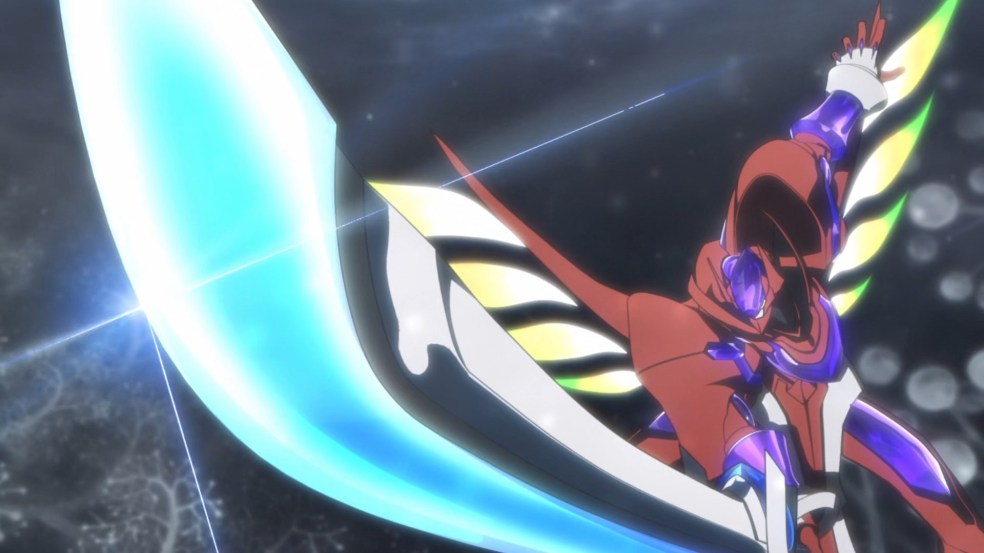
BACK ARROW, its name proudly and pointedly stylized in all capital letters, is a gem. Not a gem in the “hidden gem” sense where it’s a fantastic show that’s underappreciated by the masses, (although certainly some might say it is that also) but a gem in the way that you might call your quirky friend who’s a little too into conspiracy theories a gem. It’s not the best show of the Spring 2021 season, and not a personal favorite (I more respect it than anything else), but it’s among the most unique. It’s also by far the one I most expect to pick up a cult following.
On one level, BACK ARROW is a perfectly logical synthesis of the previous work of its two main creative minds; Gorou Taniguchi, creator and director of Code Geass on the one hand, and Kazuki Nakashima, scriptwriter of a number of Studio TRIGGER’s most famous work, notably Kill la Kill, on the other. The result, as anyone familiar with both of these things might guess, is a decidedly strange fusion. BACK ARROW is political, silly, grandiose, philosophical, and ridiculous. This puts it in the same broad thematic space as most of its “parent” anime, like the aforementioned Code Geass and Kill la Kill as well as some work in a similar vein (say, Symphogear). It’s not quite as good as any of those, but it manages to make a strong showing of things regardless.
BACK ARROW concerns the geopolitics–and eventually, the cosmology–of a world known as Lingalind. It is surrounded in its entirety by a massive wall. Were it not for the presence of mecha conjured up via magic circlets called Bind Warpers, Lingalind would be a fairly typical fantasy setting for an anime. I suspect this is deliberate, as one of BACK ARROW‘s aims is to explore the logical conclusions of such a setup. There are two main nations; Rekka and Lutoh, (respectively loosely based on China and a general mish-mash of Western Europe) as well as a number of smaller powers. The mecha are powered by a force known as Conviction, and each owner of a Bind Warper has a statement that they hold as a sort of personal code which changes their mecha’s form and what it can do. (As an example, Atlee, a green-haired sheriff girl, has a conviction of “I’ll manage somehow!”)
Do you like GIANT ROBOTS throwing DARK ORBS? BACK ARROW might be for you.
None of this is all that complex on its own. However, when BACK ARROW‘s title character, Back Arrow (a homophonic pun name on baka ero, “perverted idiot”) arrives, Superman-style, in a capsule from the sky, things quickly change. Across twenty-four episodes, Back Arrow goes on a capital-J Journey across and eventually beyond Lingalind. Along the way, he helps dramatically reshape the world’s political landscape, and eventually comes face to face with a man named Rudolph, who claims to be “God’s arbitrator”. What this means in practice is that Rudolph–a villain so deeply goofy that at one point he drinks wine with his shoulders–plans to destroy the world.
If you thought any part of that was a joke, nope! Completely, literally true.
Things go well and truly off the rails as the series enters its latter half, and if you’re the sort of person who values sheer scale above all else, BACK ARROW will be a likely anime of the year contender for you.
BACK ARROW‘s only main flaw is a sort of inarticulateness. It is fairly hard to say what the point of the series is, exactly, until its very end. Ultimately, it is the same message that almost all of Nakashima’s work imparts; no matter how great the force that holds us down, by coming together, we can overcome it. A simple message of unity in the face of any odds met that settles well with BACK ARROW‘s inherent silliness.
An acquaintance put it best, Nakashima’s main strength as a writer is “to script things that make enough sense internally even if they sound completely wild and dumb when taken out of context.” I could sit here all day and relay miniature stories of conviction particles and nested giant mecha and baby gods, but there’d be no point. These things tie together surprisingly well in the moment, but make little sense outside of them. This is the man who penned what was translated as “kick reason to the curb”, after all.
You understand by now whether or not you’d get anything out of BACK ARROW. If it is a minor work in its creators’ body thereof, that really only speaks to the strength of the competition.
I suspect in the months and years to come, those who would appreciate it will, indeed, find it. It has a magnetism to it, and like attracts like. Don’t be surprised if, five or ten years down the line, you see BACK ARROW topping a lot of “underrated anime” lists. Until then, it flies on, like an arrow in the face of an angry god.
All views expressed on Magic Planet Anime are solely my own opinions and conclusions and should not be taken to reflect the opinions of any other persons, groups, or organizations. All text is owned by Magic Planet Anime. Do not duplicate without permission. All images are owned by their original copyright holders.
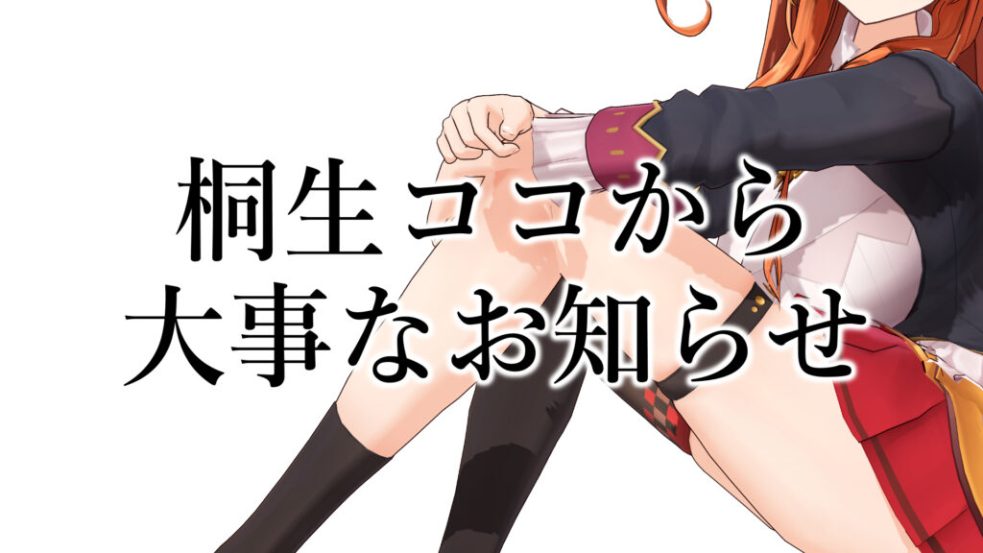
This is an anime blog, and consequently I don’t write about things that aren’t anime (or at least, related to it, say, manga.) very often. Consequently, I do feel out of my depth here, for more reasons than one. You may or may not know who Kiryu Coco is, why she’s leaving the talent agency (Hololive) she’s a part of, or why any of that matters, but if you’re familiar with Virtual Youtubers at all, you’ve probably at least seen a few of her clips.
Coco is an international superstar in a medium where that’s still a very new idea. She is probably the single most visible VTuber to ever retire (“graduate” in idol industry parlance, which the virtual talent industry has a habit of nicking). There is a hole that will be left in the digital landscape in her absence, and that’s worth contemplating. And, well, I’m reasonably sure she’d find the idea of “contemplating holes” to be at least kinda funny.
In truth, I’ve written and scrapped an entire other version of this article already. Talking about my personal feelings felt like the wrong approach; I am a fan of Coco, but not a diehard, and I know people who are going to take the loss of her talent much harder than I am. But, having typed out the objectively-minded from-a-distance version of this piece, that felt wrong too. So back to personal feelings we go. I figure exposing my own weaknesses as a VTuber fan is a small price to pay. She deserves this much, at least.
I first became aware of Coco not long after Hololive’s official English branch debuted. I was a latecomer to the phenomenon, and had just kind of assumed that like the idol agencies that virtual talent agencies loosely base themselves on, that most VTubers were, you know, idol-y. Pure, sweet, and definitely talented, but scrupulously professional. Maybe a little boring.
HoloMyth, as the EN branch is called, broke some of that illusion for me, but if one still thinks as I did, they should watch some of Coco’s work. She speaks in an odd, always slightly-strained sounding pitch, with a southern drawl even in Japanese. While she’s definitely capable of being genuine when the occasion calls for it, and seems like a nice person at heart, most people get into Coco because she is loud, rude, and swears like a sailor. “Good morning, motherfuckers!” is not a catchphrase someone takes up lightly.
Coco’s activities, I soon learned, supplemented the usual idol / streamer VTuber routine with a metric ton of assorted shenanigans. She reviewed reddit memes, casually fucked with other Hololive members, moved in with one of her genmates, sold drugs, got low during her 3D debut, and in one particularly memorable instance to me personally, streamed while tripped out on sleeping aids. Which she later re-streamed with her own mildly alarmed meta commentary.
One might naively assume that this sense of humor–very stereotypically “American”–would have made it hard for her to get a domestic fanbase, but she stands as one of Hololive’s most popular talents, both in Japan and abroad. Being funny but also having a big heart, as it turns out, is kind of a universal language.
Not that everyone is a fan, of course. I could, if I wanted to “do my job as a critic”, trot out the various controversies she’s been involved in, none of which were her own fault. I could even make (mostly quite minor) criticisms of my own. But why? Now is hardly the time.
It is clear, even to a casual observer, that being part of Hololive meant a lot to Coco. I could speculate on her reasons for leaving (Cover Corp claims it was a mutual agreement, and as cynical about companies of this nature as I can certainly be, I don’t disbelieve them), but to do so would feel disrespectful. What I will say is that I suspect she is irreplaceable. There will never be another Kaichou, and that is, from any reasonable point of view, a loss for Hololive, for virtual entertainment as an artform, for us the fans, for her fellow idols, and so on.
There’s a lot of pithy advice one could toss out. “Don’t cry because it’s over, smile because it happened” and so on, but it would not change the fact that this sucks. People have a right to tears, if they feel the need to cry.
The one silver lining for this, in as much as there is one, is that retirement is not death. While Hololive’s anonymity policies prevent her from explicitly saying where or when she will pop up next if she decides to ever pursue a career in the industry again, if she does, people will know. If she doesn’t, we can only wish her the best in life. And it is indeed our responsibility to do so, as fans.
Finally, as mentioned at the beginning of this article, Coco stands as perhaps the single most famous virtual entertainer to ever retire. There’s something to be said for going out on a high note.
I always struggle with ending articles, especially if they’re not happy ones. So, instead of worrying myself with what prose is the prettiest, I would like to share just one more Coco moment I’m inordinately fond of. Her first appearance in the HoloGraffiti shorts (one of sadly only a very few). In which she inexplicably decides to “do a raid”. It’s a cavalcade of wonderful nonsense, as most of the HoloGra shorts are, featuring fellow Hololiver Fubuki dropping “fun facts” and Coco herself doing….things. At one point there’s a T. Rex. Hearing her particular pronunciation of “Jurassic” is a delight, too.
I really can’t think of much else to say. Rarely do we get to dictate the circumstances of our meetings and leavings in this life. So in that one sense, and that sense alone, we can at least take some comfort.
Until we meet again, Kaichou.
This article isn’t very indicative of my general work. But if you liked it, you can consider following me here on WordPress or on Twitter.
When I first wrote about the series just a month ago, I said I felt like Blue Reflection Ray had not entirely found its audience. Rather than doing so per se, several weeks later as it nears its halfway point, it almost seems to be growing more esoteric and hard to place by the episode. Blue Reflection Ray, in both its best and worst moments, feels like a show destined for cult fandom. It is still airing, and already has the aura of an anime forgotten by time.
How accurate that feeling will prove to be remains to be seen, we’re still in the first cour after all. But, BRR itself has taken no steps to make itself more accessible. It’s certainly not the best anime airing this season, but Blue Reflection Ray might be the anime airing right now that is the most its own thing. As it’s gone on, it’s drifted ever farther from the obvious touchpoints I and others previously named. Comparisons that may have done it more harm than good early on to begin with. But, that ambiguous approach may in fact be closer to familiar ground than many viewers (even myself) have realized.
At the time of this writing, the most recent episode of Blue Reflection Ray is its ninth. It’s a classic bombshell-style plot twist sort of episode. But even before then, there were signs that BRR was not content to just rotely copy anything, touchstone or no. Episode six gave us the emotionally scalding backstory of Nina Yamada, one of the “evil” red Reflectors. Most anime do not try to handle episodes juggling such topics as child abuse, the young girls of the world who are lost to sexual exploitation, and codependency. Blue Reflection Ray did. Was it entirely equipped to do so? Well, I suspect many would find the episode in question problematic, or at the very least in over its head. They may even be right to, but I myself cannot help but respect something with that level of self-confidence. A bat was swung, and it was for the fences.
And that self-belief is important, because no matter what else can be said about it, Blue Reflection Ray always scans as genuine, which allows it to succeed even when making surprisingly ambitious narrative plays like those, that well outstrip what something of its fairly limited production values “should” be able to accomplish.1 That brings us to episode nine.
Fundamentally, “What She Said”, as the episode is called, is two characters challenging each others’ worldviews. On one side is Mio Hirahara, the leader of the red Reflectors and main character Hiori’s sister. On the other side is Momo Tanabe, ex-delinquent and most senior of the blue Reflectors.
The moral differences here are stark, and while Momo’s red Reflectors’ actions are not excused, the series does paint them in a more sympathetic light than one might expect, even if they are still ultimately “the bad guys” in a narrative sense. It does this mostly by way of what is essentially an expository monologue on Mio’s part. As a sidenote; it’s to the credit of the show’s director (Risako Yoshida) that this somehow feels gripping and compelling instead of dry.
These revelations are, themselves, plot points. There is a lot to process here; time loops, monsters called Sephira (briefly shown without explanation way back in episode one), the mysterious “Door to the Common” that Mio and her Reflectors are working to open, the confirmation that Mio and Momo were partners–as we now know, quite literally in another life, in the previous timeline–the ominous fact that three days in the future is when Mio and Momo originally lost to the Sephirot. It’s all quite much.
What remains true regardless of the literal plot developments, is that Blue Reflection Ray is a portrait of emotional dysfunction gone horribly wrong. In this specific way, it actually is similar to many of its contemporaries, and it’s here that we can most understand what it’s trying to do. Only what every magical girl series does; prove the worth of human connectedness in a world that has forgotten it. Its route is just more circuitous than most.
Of course, the obvious caveats apply. Sure, the series could crash and burn in its second cour. It’s possible there really isn’t a plan and I am simply reading too much onto a production with low ambitions. But, with all respect to this hypothetical negative reader, that is true of almost any anime with truly few exceptions. I would, a million times over, make the mistake of giving something too much credit than the inverse.
Blue Reflection Ray‘s first cour is approaching its end, and I suspect we may finally have at least some answers soon. Until then? The Door to the Common remains closed, and all we can do is wait for it to be unlocked.
1: I like Blue Reflection Ray‘s visuals. I think its watercolor palette, the general shoujo aesthetic of the character designs, and the gaudy computer art mish-mash of the Leap Ranges are all strengths. However, if an anime eventually comes along that will rehabilitate J.C. Staff’s reputation for odd, spacey, and sometimes just straight-up bad animation, it will not be this one.
All views expressed on Magic Planet Anime are solely my own opinions and conclusions and should not be taken to reflect the opinions of any other persons, groups, or organizations. All text is owned by Magic Planet Anime. Do not duplicate without permission. All images are owned by their original copyright holders.
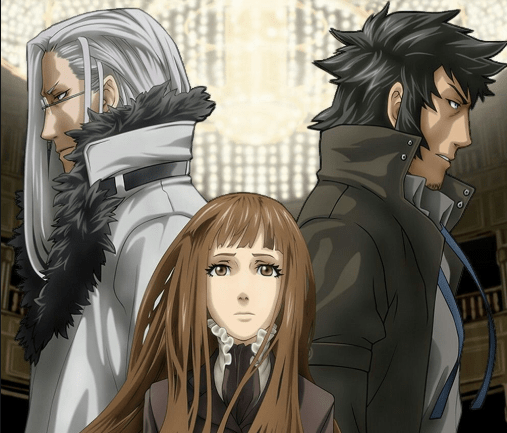
You gotta believe us, folks. Speed Grapher is not the sort of thing we started this podcast to cover. I’m kind of amazed we got to something this bad this early! In this episode of KeyFramesForgotten “planet” Jane-Michelle and Julian discuss a long-forgotten mid-aughts action anime with a dark aesthetic and a serious chip on its shoulder.
On the more technical side of things, we’re still working out a better audio setup. But on the plus side, we’re now available, uh, well, lots of places! Anchor’s one-click linker has put us on Spotify, among other Podcast-Having Areas. Plus, the traditional mirror on Youtube is still up as well. Listen wherever you please below. Major NSFW warning and general content warnings for sexual violence and child abuse all up and down this episode.
KeyFramesForgotten is a podcast about anime you haven’t thought about in a while. Join anime nerds Jane-Michelle and Julian as they discuss anime from the recent or not-so-recent past that the general public has forgotten about. We discuss the merits of these anime, why the public has left them behind, and whether we think they’re worth a second look.
You can follow Jane on Twitterhereand Julian on Twitter here.